Imagine a house that has crossed the ocean. Not a person, not a piece of furniture, but an entire building.
That is what happened with this Virginia manor. It was built in England during the 1400s, stood there for centuries, and then someone decided to take it apart brick by brick and ship it across the Atlantic.
The reassembled manor now sits on the banks of the James River, looking as out of place as it is beautiful. Tudor architecture, leaded glass windows, and a history that spans two continents.
I walked through the rooms trying to wrap my head around the logistics. Moving a house is hard enough.
Moving an ocean away is something else entirely.
The Incredible Origin Story of a Manor That Crossed an Ocean
Most historic houses stay put. Agecroft Hall had other plans.
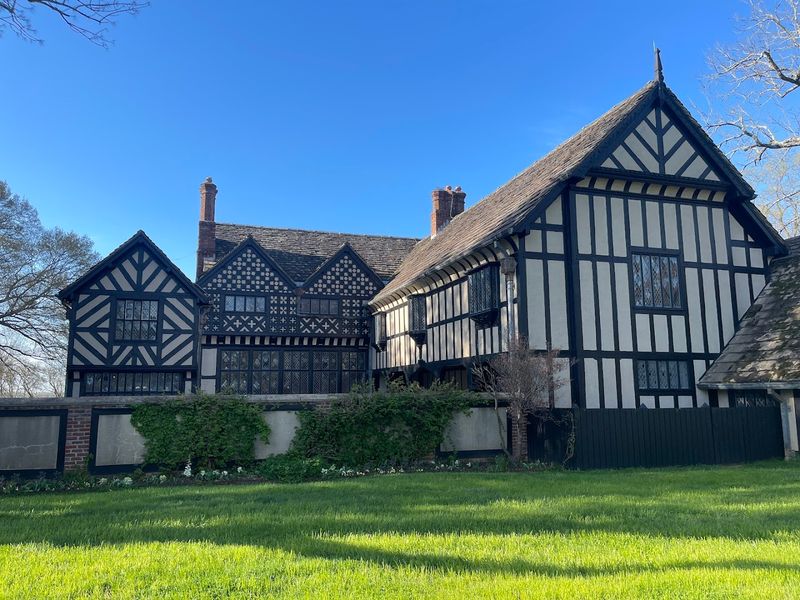
Originally constructed in Lancashire, England, during the late 15th century under the reign of King Henry VII, this Tudor manor lived through centuries of English history before its most dramatic chapter began.
By the early 20th century, the estate had fallen into serious disrepair. Coal mining and industrial expansion crept right up to its doorstep, leaving the once-grand property crumbling and unoccupied.
The situation looked bleak, and a demolition auction seemed to seal its fate.
That is where Richmond businessman Thomas C. Williams Jr. enters the story.
Spotting an advertisement for the auction, he made a decision that sounds almost unbelievable today. He purchased the entire manor, had it carefully disassembled piece by piece, crated up, and shipped across the Atlantic Ocean to Virginia.
The name Agecroft itself comes from an Old English phrase meaning “field of wild celery,” which adds a wonderfully quirky footnote to this already extraordinary tale. The earliest recorded mention of the estate dates back to a deed from 1376, making its survival into the 21st century nothing short of miraculous.
Virginia gained an irreplaceable treasure because one man refused to let history disappear.
Tudor Architecture That Stops You Dead in Your Tracks
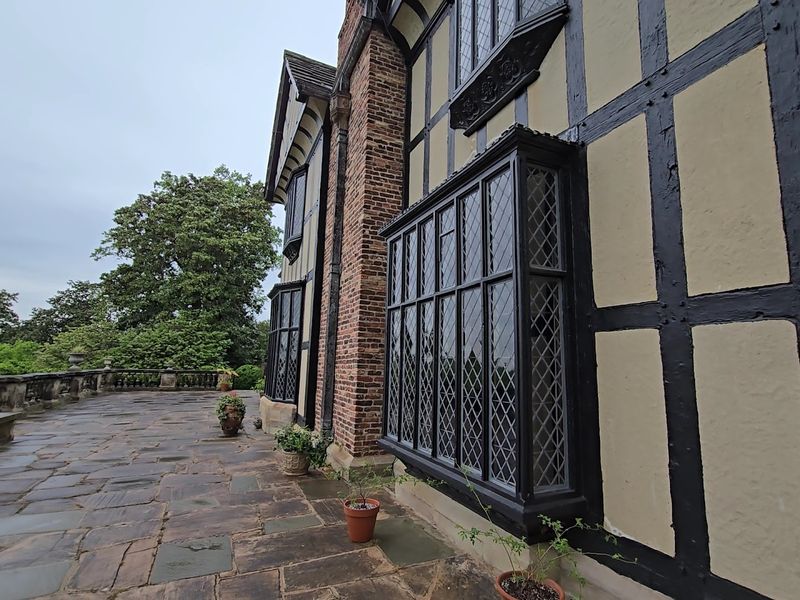
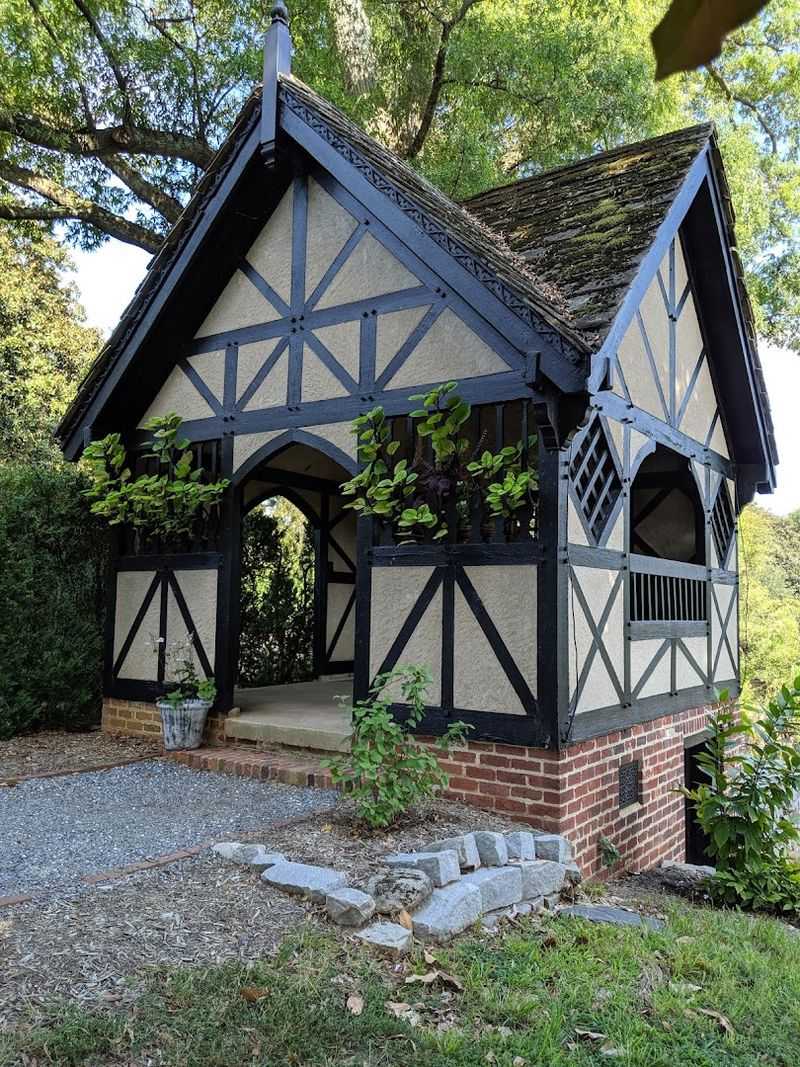
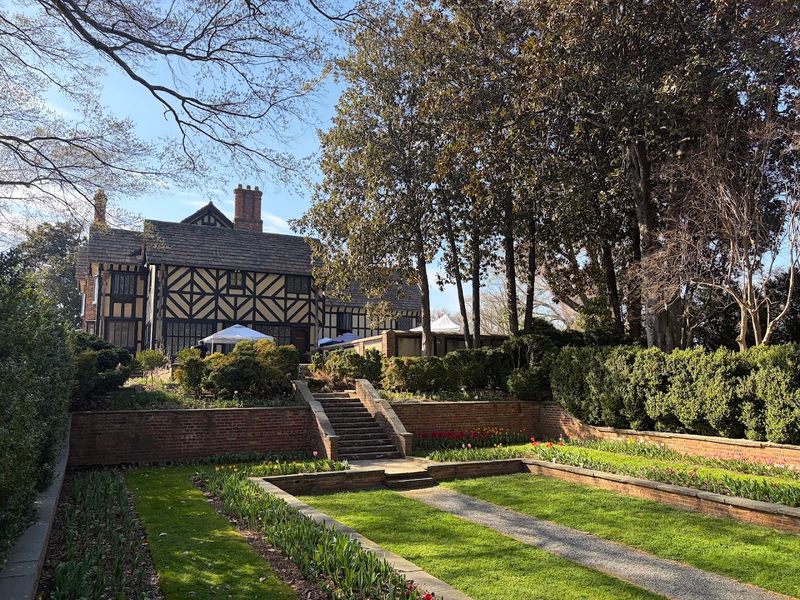
Standing in front of Agecroft Hall for the first time genuinely takes your breath away. The steeply pitched gables, intricate half-timbering, and those gorgeous wavy leaded glass windows create a silhouette that feels completely out of place in Virginia, in the absolute best way possible.
Every architectural detail tells a story about 15th and 16th century craftsmanship. The carved woodwork throughout the building is extraordinarily precise, reflecting the skill of artisans who worked without modern tools or technology.
Ornate fireplaces anchor each major room, and the paneled hallways carry that unmistakable atmosphere of old English grandeur.
When architect Henry G. Morse oversaw the reassembly in Richmond, he made thoughtful adaptations to accommodate 20th-century conveniences without stripping away the soul of the original structure.
The result is a building that feels genuinely historic rather than like a theme-park recreation.
Photographers absolutely lose their minds here, and honestly, who can blame them? The combination of elegant architecture, lush surrounding greenery, and changing seasonal light creates endless visual drama.
Agecroft Hall rewards slow, careful looking. The more time you spend examining its surfaces and details, the more extraordinary craftsmanship you discover tucked into every corner and crevice.
How the Manor Was Dismantled, Shipped, and Rebuilt
The logistics behind moving Agecroft Hall from England to Virginia read like the plot of an adventure novel. Every timber, stone, and decorative element had to be carefully catalogued, numbered, and packed for an ocean crossing.
The level of organizational precision required was staggering by any era’s standards.
Thomas Williams Jr. spared no expense in ensuring the manor survived its transatlantic journey intact. Skilled workers methodically took apart centuries of construction, treating each piece with the care you would give a priceless museum artifact, because that is precisely what it was.
Once the crates arrived in Virginia, architect Henry G. Morse faced the enormous challenge of reassembly.
Rather than recreating the exact original floor plan, Morse adapted the structure intelligently to suit its new Richmond setting and the practical needs of a modern household. Hidden staircases originally used by household staff were preserved, along with pull chains and bell systems that once allowed residents to summon help from across the estate.
The result was a building that honored its English roots while finding a confident new identity on American soil. Agecroft Hall became something genuinely unique: an authentic piece of Tudor England permanently rooted in the heart of the American South, ready to tell its story to anyone willing to listen.
The Stunning Gardens Designed by Charles Gillette
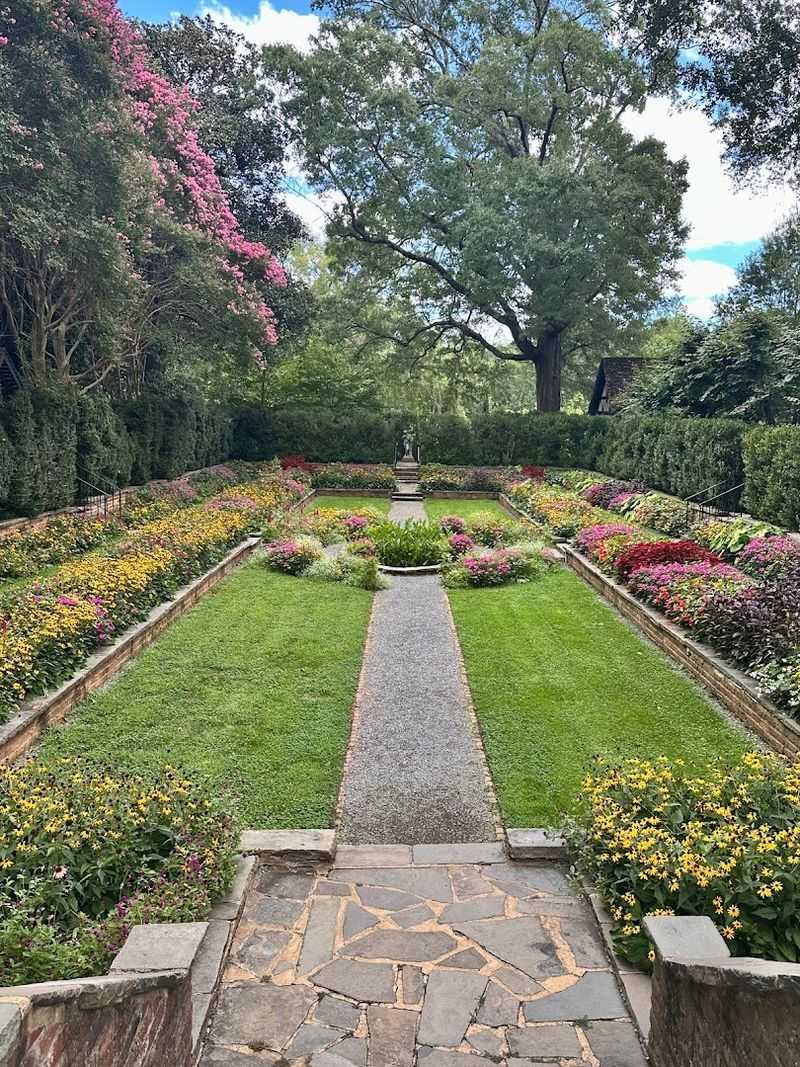
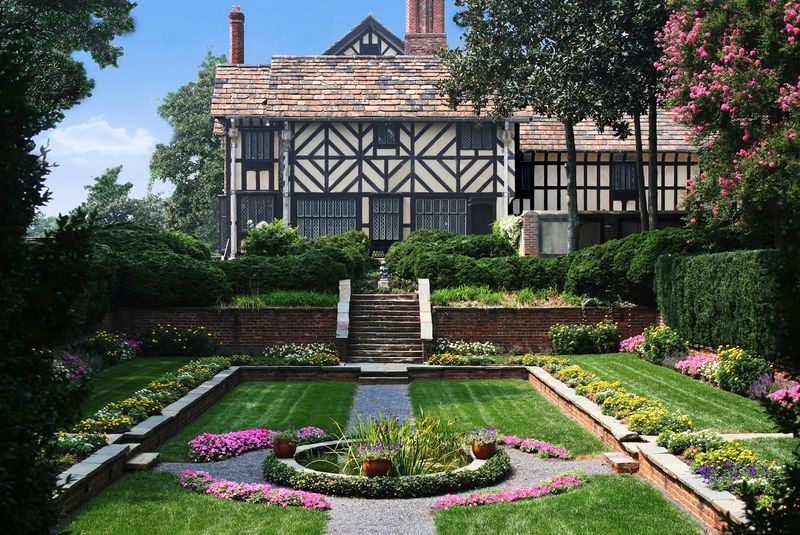
Outside the manor walls, the gardens at Agecroft Hall deliver a completely separate kind of magic. Designed in the 1930s by celebrated Virginia landscape architect Charles Gillette, the grounds draw inspiration directly from Tudor garden traditions, creating a setting that feels like stepping into an illuminated manuscript.
Massive magnolia trees spread their branches across the manicured lawns, providing dramatic scale and deep shade on warm Virginia afternoons. The herb garden is a particular sensory delight, filling the air with earthy, aromatic richness that makes lingering feel irresistible.
Spring brings an explosion of tulips that transforms the grounds into something almost painterly. Autumn is equally spectacular, with a red leaf maple meadow and golden foliage that photographers and casual visitors alike find absolutely irresistible.
Even late October visits reward those willing to explore.
Trails wind along the James River bank, offering peaceful walks through mature woodland with lovely water views. The lawn areas actively encourage picnicking, and the estate genuinely welcomes visitors to spread out, relax, and absorb the atmosphere at their own pace.
Garden admission is separate from the house tour, meaning you can spend an entire afternoon outdoors without ever stepping inside. Virginia rarely serves up a more serene outdoor experience than this.
Inside the Manor: Rooms Full of 16th-Century Treasures
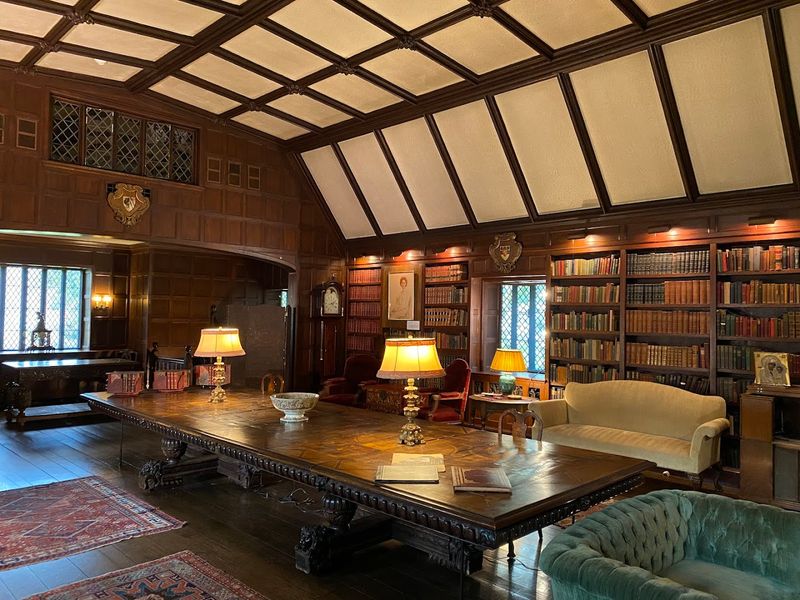
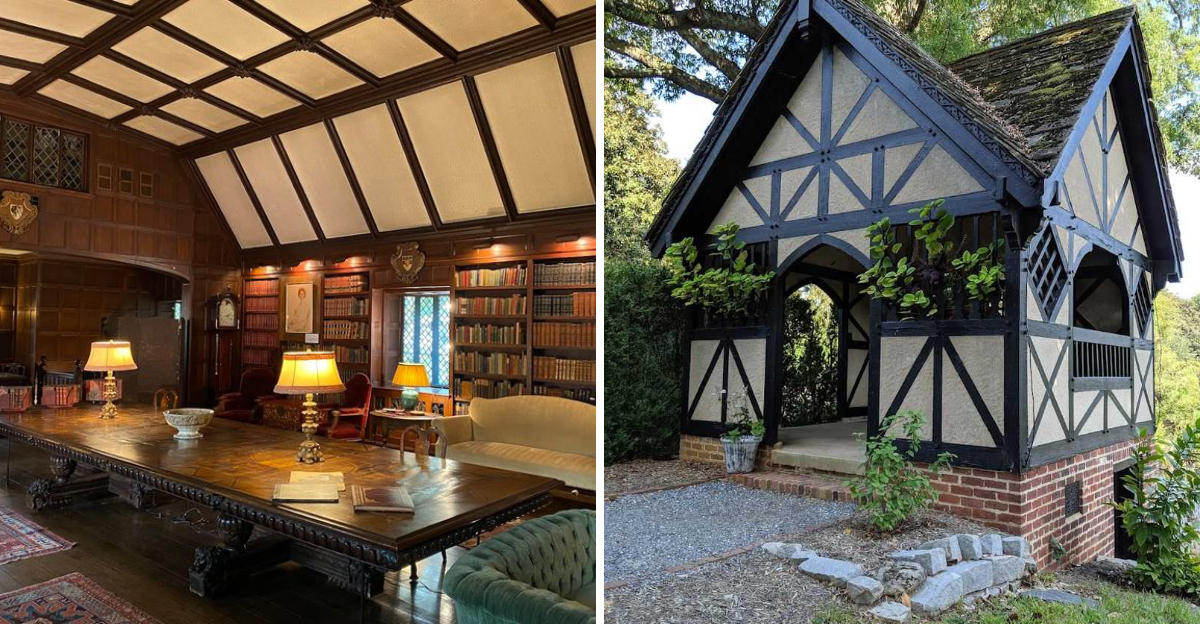
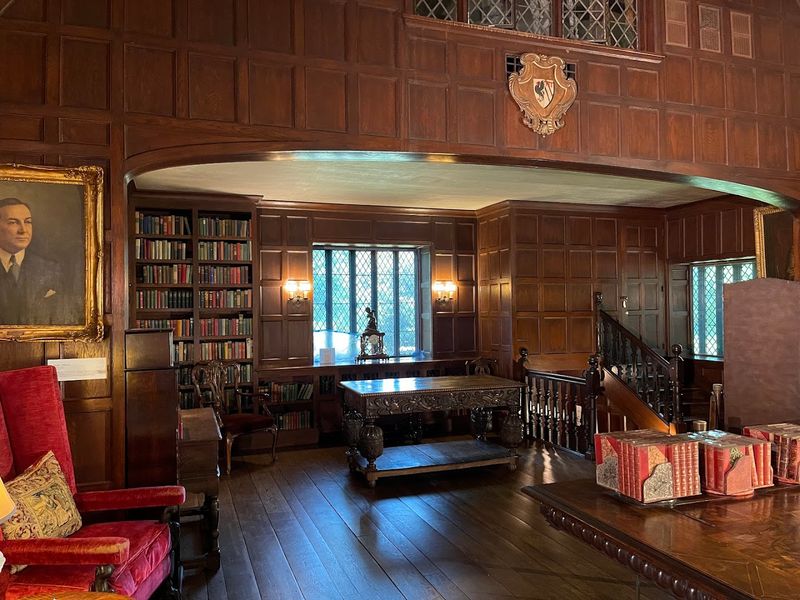
Crossing the threshold into Agecroft Hall feels like the entire world shifts several centuries backward. The interior is filled with authentic 16th and 17th century English furniture, paintings, historical documents, and carefully curated artifacts that transform each room into a living time capsule.
The library stands out as a showstopper, housing an impressive collection of period books that would have graced any well-established English estate of the era. Floor-to-ceiling shelving, rich wood paneling, and the weight of accumulated knowledge make this room feel both scholarly and deeply atmospheric.
The kitchen is another crowd favorite, offering fascinating insight into the practical realities of Tudor domestic life. Original pull chains and bell systems remain intact throughout the house, connecting rooms in ways that reveal exactly how a large household once operated.
Small hidden staircases allowed staff to move discreetly between floors, a detail that sparks genuine delight in curious visitors.
Every single room rewards close attention. Ornate fireplaces, intricate carvings, and thoughtfully staged furnishings build an immersive atmosphere that feels cinematic without ever feeling staged.
Agecroft Hall treats its collection with enormous respect, presenting each artifact in context rather than simply behind glass. The result is a museum experience that genuinely transports rather than just informs.
The Windsor Farms Neighborhood Setting Adds Extra Charm
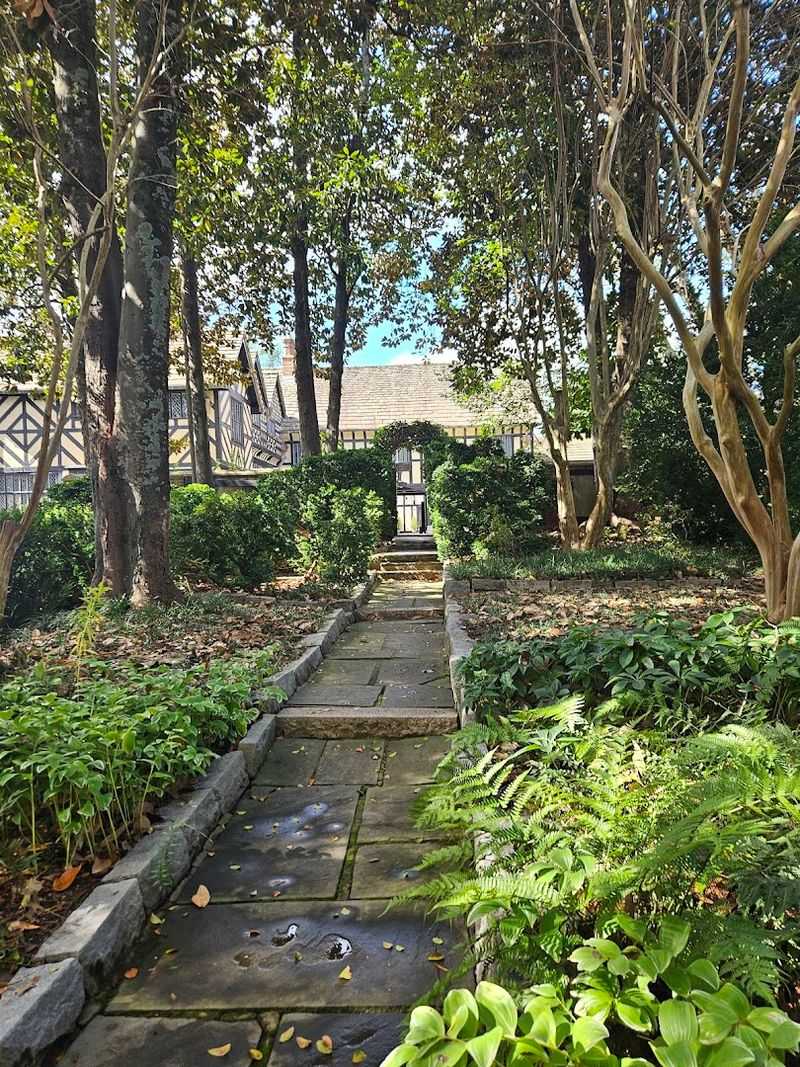
Location matters enormously when it comes to historic properties, and Agecroft Hall landed in one of Richmond’s most beautiful residential neighborhoods. Windsor Farms was developed as an upscale community in the early 20th century, and its leafy streets and gracious homes provide a quietly elegant backdrop for the Tudor manor.
Perched on a bluff overlooking the James River, the estate enjoys views that would have satisfied even the most demanding English aristocrat. The river adds a sense of natural grandeur that perfectly complements the architectural drama of the manor itself.
Walking through the surrounding neighborhood to reach the estate, particularly during holiday events when parking fills quickly, is genuinely part of the experience. The streets are lined with mature trees and handsome architecture that ease you gently into the right frame of mind before you even reach the gate.
Virginia’s capital city is already packed with remarkable history, but the Windsor Farms setting gives Agecroft Hall a particular kind of quiet distinction. There is no commercial clutter nearby, no competing attractions jostling for attention.
Just a beautifully preserved Tudor manor sitting confidently on its bluff, doing exactly what it has done for centuries: impressing absolutely everyone who comes to pay their respects.
Events, Festivals, and the Richmond Shakespeare Festival
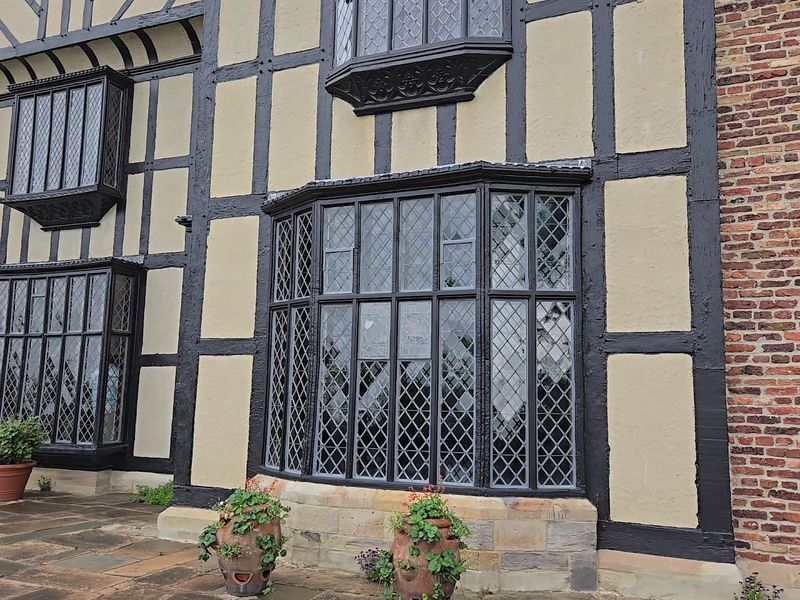
Agecroft Hall is far more than a static museum. The estate buzzes with activity throughout the year, hosting an impressive calendar of events that bring its Tudor atmosphere to vivid, theatrical life.
Few settings in Virginia can match the drama of watching live performance against a genuine 15th-century backdrop.
The annual Richmond Shakespeare Festival is the crown jewel of the events calendar. Performances staged on the manor grounds, with the half-timbered facade glowing behind the actors, create an atmosphere that feels almost impossibly perfect for the Bard’s work.
Even the bleacher seating becomes part of the charm, connecting audiences to the communal spirit of Elizabethan theater.
Beyond Shakespeare, the estate hosts concerts, Tudor history conferences, family programs, and the beloved Yuletides holiday open house. The Yuletides event draws crowds eager to experience the manor decorated for a Tudor Christmas, complete with period music, costumed interpreters, and a genuinely festive atmosphere.
Musicians have performed on the grounds, including lutist Ronn McFarlane playing period music under the open sky at dusk, which sounds like an evening pulled straight from a Renaissance painting. Agecroft Hall understands that history comes alive through experience, and every event it hosts reinforces that philosophy with tremendous skill and obvious enthusiasm.
A Museum That Takes Tudor Education Seriously
Agecroft Hall opened its doors as a public museum in 1969 with a clear and ambitious mission: to interpret what daily life actually looked like inside a Tudor manor house. Decades later, that commitment to authentic, engaged education remains the beating heart of everything the estate does.
Docents stationed throughout the rooms bring enormous depth of knowledge to every tour. They speak with clarity and genuine enthusiasm about architecture, social history, and the cultural context of the artifacts surrounding them.
My own experience exploring the rooms confirmed that these guides elevate the visit from interesting to genuinely memorable.
Self-guided exploration is equally rewarding for independent visitors. Printed information throughout the house provides solid context, and the staging of each room is thoughtful enough to communicate its purpose without requiring constant narration.
Private guided tours are also available for those wanting a deeper, more personalized experience.
Educational programs bring school groups and families into direct contact with Tudor history in ways that textbooks simply cannot replicate. Handling period-inspired materials, observing staged domestic spaces, and hearing passionate guides explain the mechanics of 16th-century life creates the kind of learning that sticks.
Virginia schools and families consistently find Agecroft Hall to be one of the region’s most rewarding educational destinations, and the estate richly deserves that reputation.
Visiting Agecroft Hall: What to Expect and Plan For
Planning a visit to Agecroft Hall is refreshingly straightforward, but a few insider tips make the difference between a good trip and a great one. Tours of the house run on a schedule, so arriving at the right time ensures you catch a full guided experience rather than waiting around.
The gardens are free to explore and genuinely worth extended time on their own. Bring a blanket or lawn chairs if the weather cooperates, because the estate actively encourages picnicking on the grounds.
The atmosphere rewards a slow, unhurried pace rather than a quick walk-through.
Spring visits during tulip season and autumn visits during the red maple meadow season both deliver spectacular visual rewards. Summer visitors appreciate the air-conditioned interior as a welcome break from Virginia’s famously enthusiastic heat.
The gift shop is small but carefully curated, stocking items that genuinely reflect the estate’s character.
Military service members receive complimentary admission, a policy that earns well-deserved appreciation from the community. Parking is available on site, though popular events may require street parking in the surrounding neighborhood.
Agecroft Hall is located at 4305 Sulgrave Road, Richmond, VA, and is open Tuesday through Sunday from noon to five in the afternoon. A phone call to confirm tour schedules before your visit is always a smart move.
Celebrating a Century in Virginia: The 2026 Centennial
April 2026 marks an extraordinary milestone for Agecroft Hall: one hundred years since the manor was reconstructed on Virginia soil. A centennial anniversary is always worth celebrating, but this one carries a particular weight given the sheer improbability of the estate’s survival and relocation story.
One century of welcoming visitors, educating students, hosting performances, and preserving an irreplaceable piece of Tudor heritage in the American South is a remarkable achievement by any measure. The estate has grown from a private residence into one of Virginia’s most beloved cultural landmarks, and the centennial feels like a moment to genuinely honor that journey.
Events and programming tied to the centennial promise to make 2026 an especially memorable year for anyone with a passion for history, architecture, or simply great storytelling. Watching a manor that once faced demolition in England celebrate its 100th anniversary in Virginia carries the kind of poetic satisfaction that makes history feel genuinely alive.
Agecroft Hall has always been about more than bricks and timber. It represents the stubborn human impulse to preserve beauty and meaning across generations, continents, and centuries.
Visiting during the centennial year adds an extra layer of significance to an already deeply rewarding experience. Virginia’s most unlikely historic treasure is very much worth the trip.
