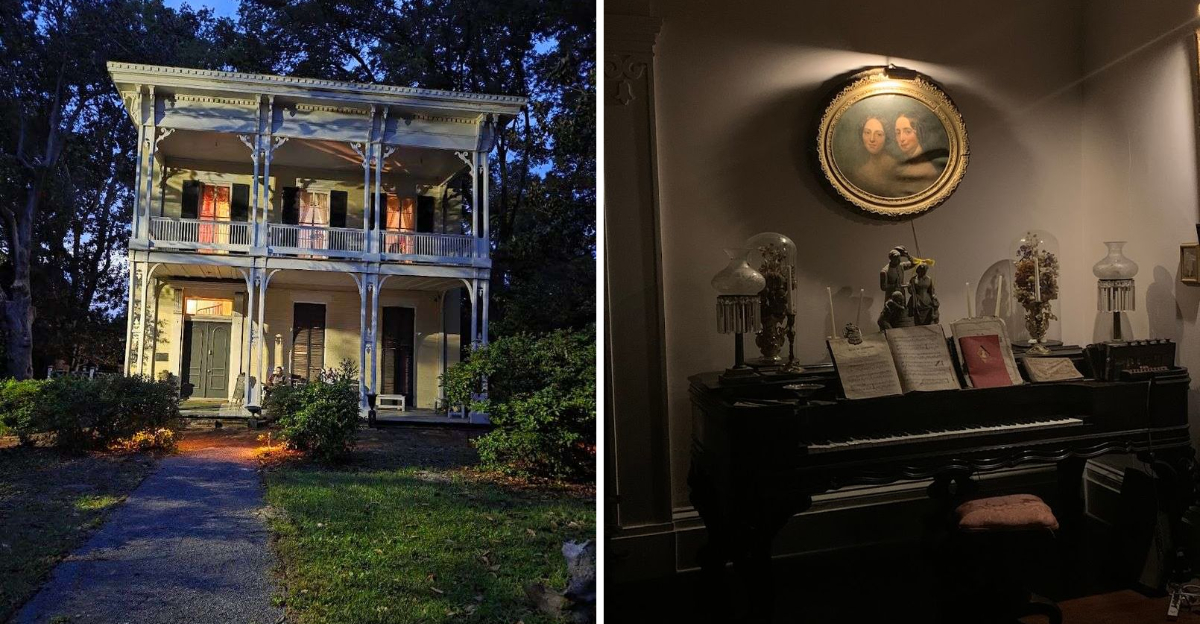
Mississippi has old homes. Plantations.
Antebellum mansions. But this one is different.
Built in 1797, it has seen more than two centuries of joy, sorrow, and probably a few things nobody talks about. The current owners do not advertise the hauntings.
They do not need to. Guests report cold spots, strange noises, and the feeling of being watched in rooms that should be empty. A figure in period clothing has been seen standing at a second floor window.
Doors open and close on their own. I toured the house in broad daylight, and even then, the silence felt heavy.
Mississippi has plenty of historic homes. This one might still have its original residents.
The Mysterious Origins of Andrew Glass and the 1797 Frontier Structure
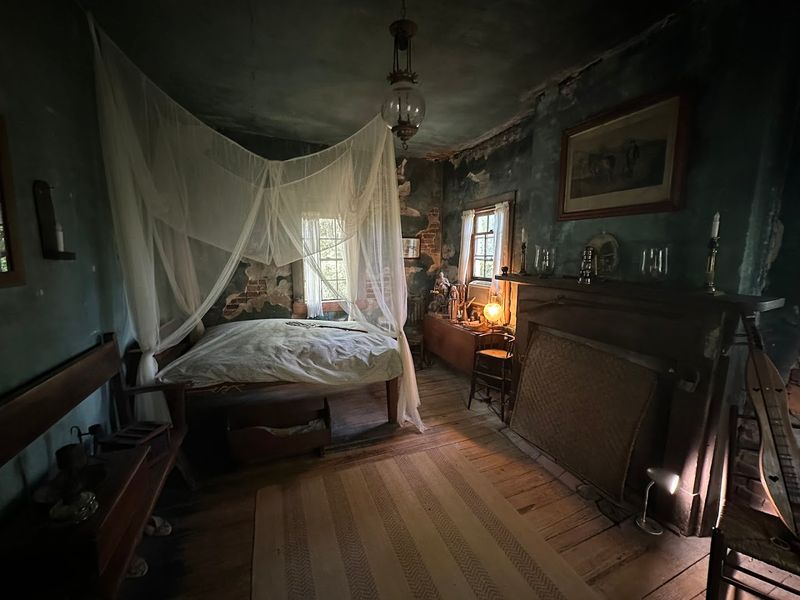
Long before ghost tours and candlelight evenings, McRaven House started as something far more dangerous. Andrew Glass built the original structure in 1797, and he was no ordinary homeowner.
Rumor had it he operated as a highwayman along the Natchez Trace, robbing travelers under cover of darkness.
His passing was as murky as his life, and many believe his spirit never truly left the property. Visitors who enter the oldest section of the house often describe a heavy, oppressive feeling that is hard to shake.
The original plaster walls still carry their blueberry-tinted color, untouched and preserved like a frozen moment in time.
Glass is reportedly one of the more aggressive presences in the house. Tour guides have shared accounts of guests feeling sudden pressure or discomfort in the rooms he once occupied.
The space carries an energy that is hard to describe rationally. Whether you believe in hauntings or not, the raw, unpolished frontier character of this section is genuinely unlike anything you will find in a typical historic home tour.
Mary Elizabeth Howard and the Saddest Chapter in the House’s History
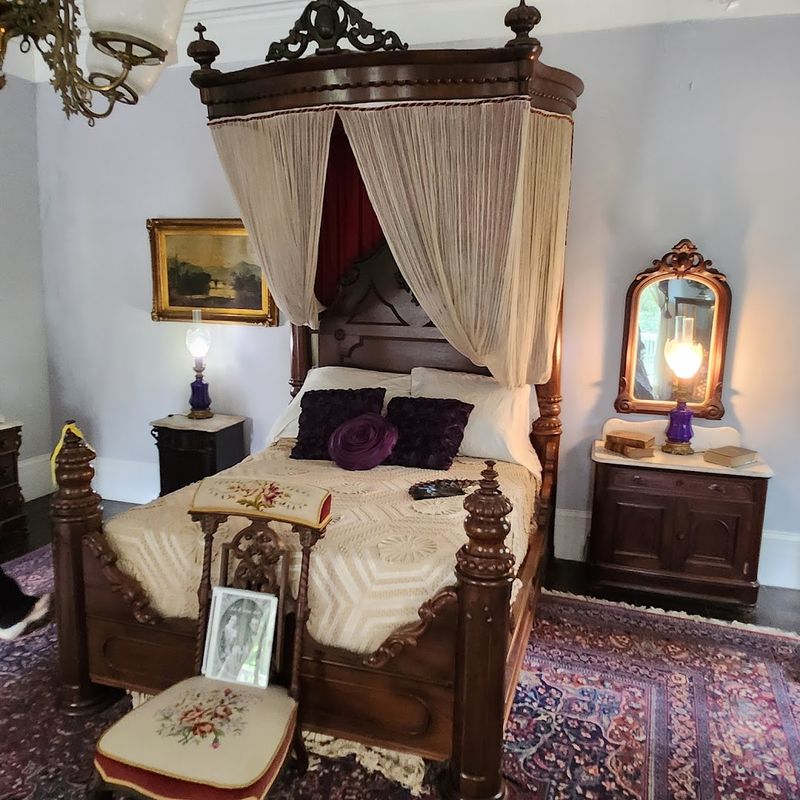
Of all the stories attached to McRaven House, the one about Mary Elizabeth Howard is the one that lingers longest. She was just 15 years old when she passed away in childbirth inside these walls in 1836.
Her husband, Sheriff Stephen Howard, had expanded the house that same year, adding the Greek Revival section that still stands today.
Mary’s personal belongings remain in the home, including her wedding shawl, and they are said to be closely tied to the paranormal activity that guests experience most often. Her ghost is described as playful rather than frightening.
People report feeling a light brush against their clothing or a gentle tug, as if someone is trying to get their attention.
She is considered the most active spirit in the house, and her presence feels less like a haunting and more like a lingering warmth that never quite found its way out. Guides speak about her with a kind of quiet tenderness.
Her room draws visitors in with its period furnishings and soft, melancholy beauty. It is one of those spaces where history feels genuinely personal rather than distant.
John H. Bobb, the Civil War, and a House Turned Battlefield
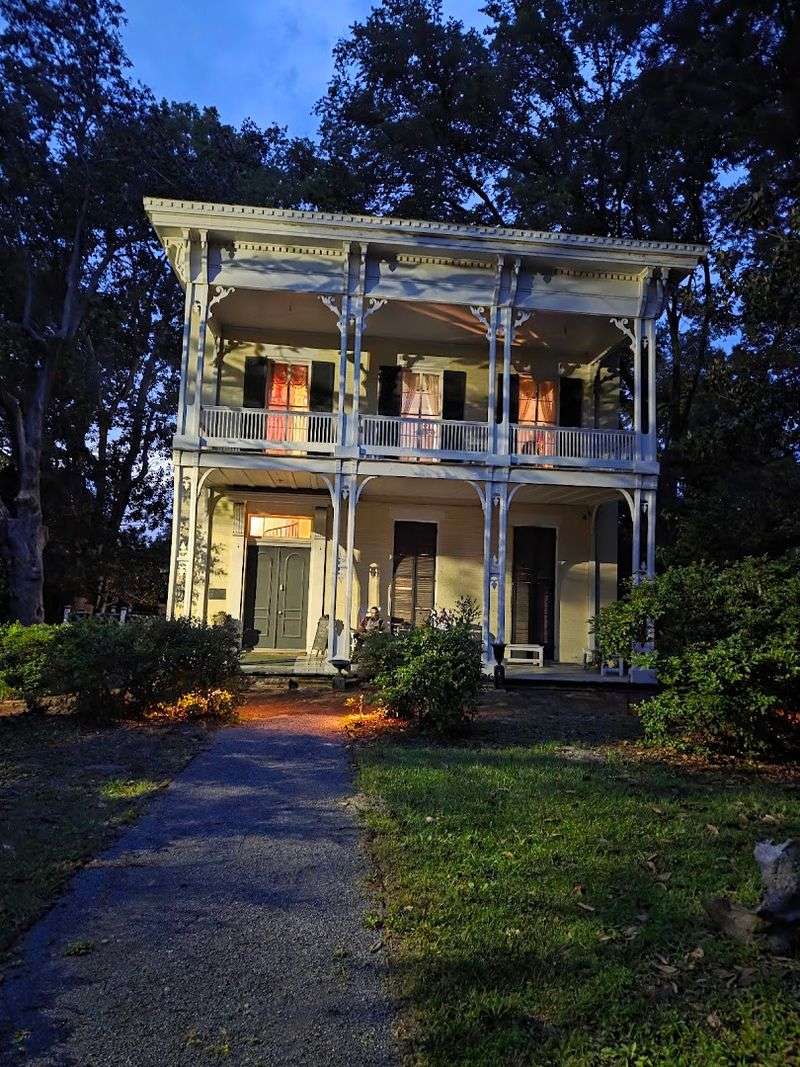
By 1849, brick manufacturer John H. Bobb had added the final wing to McRaven House in the Empire style, completing the architectural trio that makes the building so visually striking.
But the peace that came with that expansion did not last long. The Civil War arrived in Vicksburg with brutal force in 1863.
During the Siege of Vicksburg, McRaven House served as a Confederate field hospital and campsite. Cannon fire struck the property, and the grounds absorbed the suffering of countless soldiers.
Bobb himself was shot and killed by Union troops near the house in 1864, adding his name to the long list of those who passed connected to this place.
The three-acre garden still holds secrets from that era. Guides have mentioned that the property’s gardener has occasionally uncovered bones while working the grounds.
That detail alone gives the gardens a weight that a casual stroll does not immediately reveal. The Civil War layer of McRaven’s history is not just a chapter in a book here.
It is embedded in the soil, the brickwork, and the air that hangs over the property on quiet afternoons.
The Murray Family and the Piano That Plays Itself
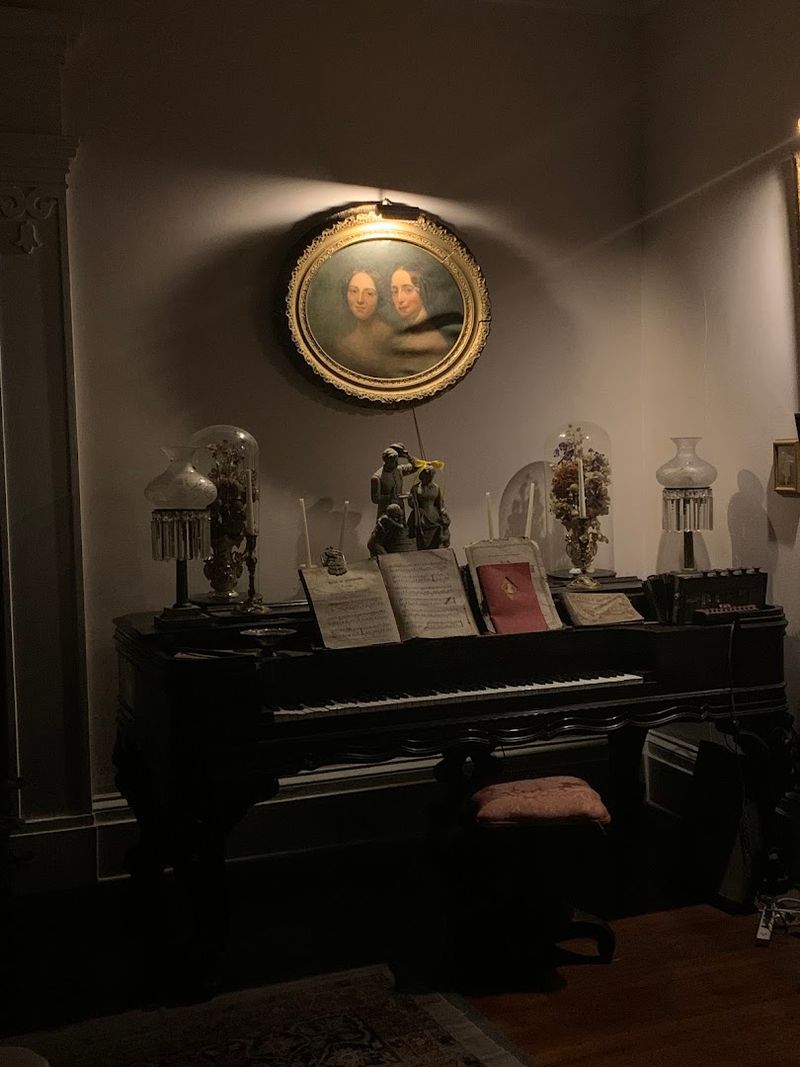
William Murray purchased McRaven House in 1882, and his family’s chapter here is one of the most quietly unsettling. Murray, his wife Ellen, and two of their children all reportedly passed away within the walls of this home.
His daughters, Ella and Annie Murray, stayed on as the last residents until 1960, living among the memories and the growing reputation of the house.
Both sisters are said to haunt the property to this day. Their presence is often felt in the gardens, where they reportedly spent much of their time.
But the detail that tends to stop people mid-sentence is the piano. Visitors and staff have described hearing it play on its own, with no one seated at the keys and no logical explanation nearby.
The Murray family’s long residency gave McRaven House a layer of domestic history that feels deeply human. These were real people who ate breakfast, tended their garden, and grew old here.
The fact that their energy seems to remain makes the house feel less like a museum and more like a home that simply refused to let go of its past. The piano, sitting quietly in the parlor, is easy to stare at for longer than you expect.
Three Architectural Eras Under One Roof
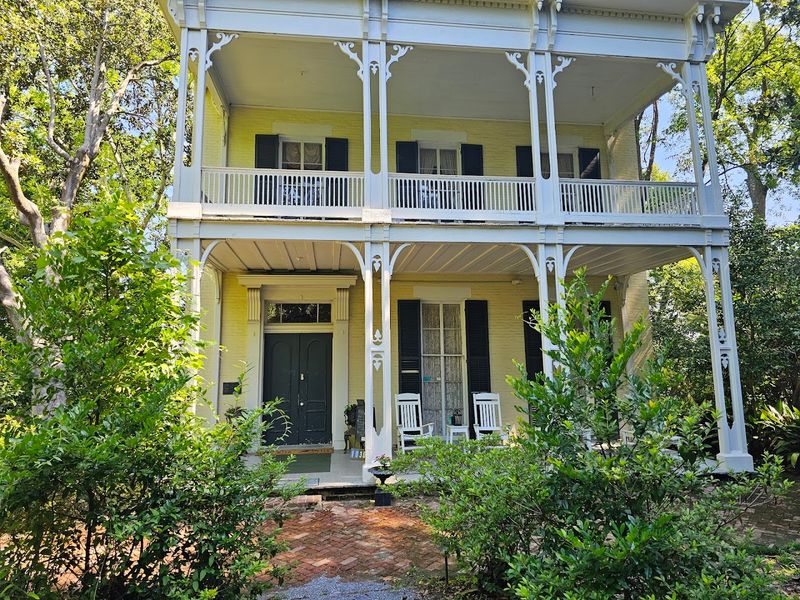
One of the most genuinely fascinating things about McRaven House is that it is not just one building in terms of style or period. It is three distinct homes fused together across more than fifty years of construction.
The 1797 frontier section, the 1836 Greek Revival addition, and the 1849 Empire-style wing each have their own personality, their own materials, and their own atmosphere.
When each new section was added, the previous one was left completely intact. That decision, whether intentional or simply practical, created something extraordinary.
You can walk from one room to the next and feel the decades shift around you. The oldest section still has its original plaster.
The newer wings carry the refined details of their respective eras.
National Geographic recognized this quality when they called McRaven the Time Capsule of the South, and it is easy to understand why. Most historic homes have been renovated or updated over the years.
McRaven largely has not. What you see is what the original residents saw, which makes every doorway feel like a small act of time travel.
For anyone who enjoys architecture, design history, or just the feeling of standing inside something genuinely old and unaltered, this house delivers in a way that is hard to replicate.
The Tours That Bring McRaven’s Stories to Life
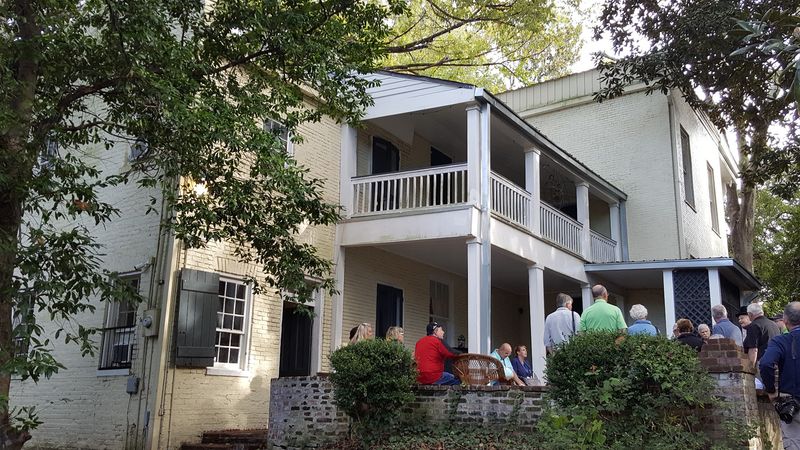
McRaven House offers several different ways to experience its history, and the variety is part of what makes it worth planning around. Daytime history tours give visitors a thorough walkthrough of the home’s three architectural periods, filled with details about the families who lived here and the antiques that remain from each era.
Guides are knowledgeable and genuinely passionate about the place.
Evening haunted tours are a different experience entirely. Guides dress in period costumes and lead groups through the house by lantern light, sharing the stories of Andrew Glass, Mary Elizabeth Howard, and the others whose presence supposedly lingers.
Candlelight tours add another layer of atmosphere, and private paranormal investigations are available for those who want a more hands-on encounter with whatever might be waiting in the dark.
Reviews from visitors consistently praise the guides for their depth of knowledge and their storytelling ability. Small group sizes mean the tours rarely feel rushed or impersonal.
The house is open Monday through Thursday from noon to five, Friday and Saturday from ten to five, and Sunday from one to five. Evening tours run on select nights.
Flat, comfortable shoes are genuinely recommended given the uneven brick walkways and older staircases throughout the property.
What Visitors Have Actually Experienced Inside the Walls
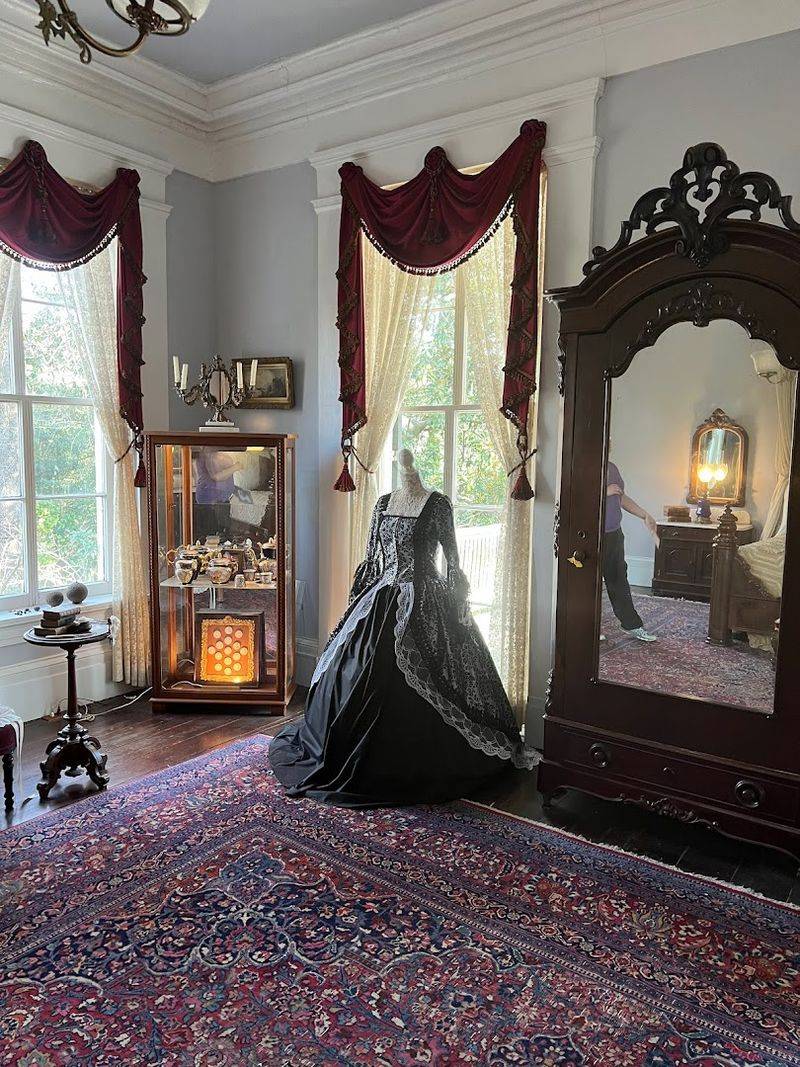
Guest experiences at McRaven House range from mildly curious to genuinely difficult to explain. Some visitors report nothing unusual at all and leave with a solid appreciation for the history.
Others describe things that are harder to file away neatly. Lights turning off on their own in Mary’s bedroom.
A crushing, weighted sensation in Andrew Glass’s room that lifts the moment you step back into the hallway.
One visitor shared that they captured a photograph in the kitchen that appeared to show an outstretched hand near their leg, despite being there with only two other people and no one positioned where the hand appeared. Another guest on a candlelight tour described smelling a sharp mix of ammonia and flowers that no one else around them could detect.
A faint woman’s voice heard in an empty bathroom is another detail that comes up more than once.
These accounts are not dramatized for marketing purposes. They come directly from people who visited with varying levels of belief in the paranormal.
Some were skeptics who left shaken. Others came hoping for something and found it.
The house has a 4.6 rating across hundreds of reviews, which suggests that even without the ghost angle, something about McRaven keeps people talking long after they leave.
Planning Your Visit to the Most Haunted House in Mississippi
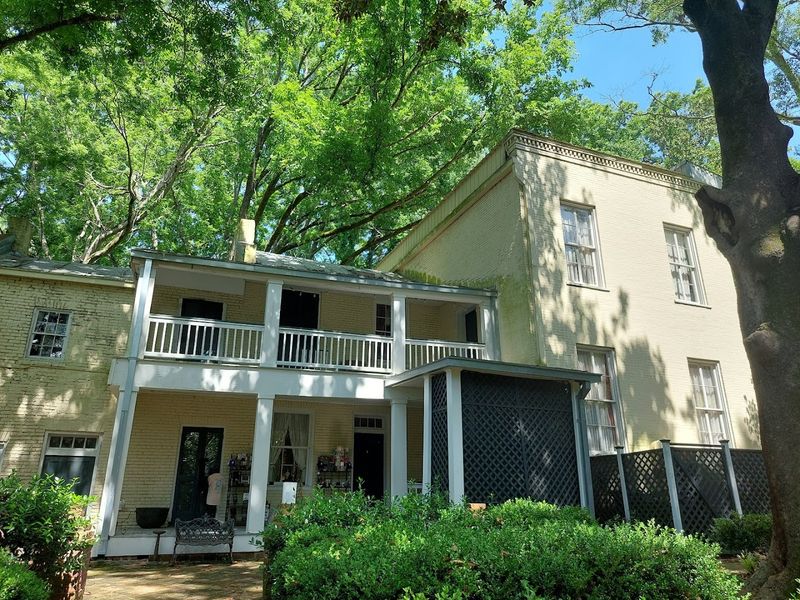
Getting to McRaven House is a small adventure on its own. The home sits tucked at the end of a residential stretch on Harrison Street, partially hidden behind a gated tree line that makes it feel genuinely removed from the modern world.
Parking is available at the end of the road, and the walk to the front door is short but atmospheric, especially if you visit in the evening.
The front door stays locked, so first-time visitors are advised to knock or call the number posted at the entrance. Rocking chairs on the front porch make the wait pleasant, and the surrounding garden gives you something to take in while you settle into the mood of the place.
The three-acre grounds are worth exploring on their own, particularly given their Civil War history.
Dr. and Mrs. Reed have owned the property since 2015 and have put genuine care into maintaining both the house and the visitor experience. The staff’s warmth comes through clearly in how they talk about the home.
McRaven is not a manufactured haunted attraction. It is a real, preserved, deeply layered historic site that happens to have a lot of unexplained company.
Address: 1445 Harrison Street, Vicksburg, Mississippi.
