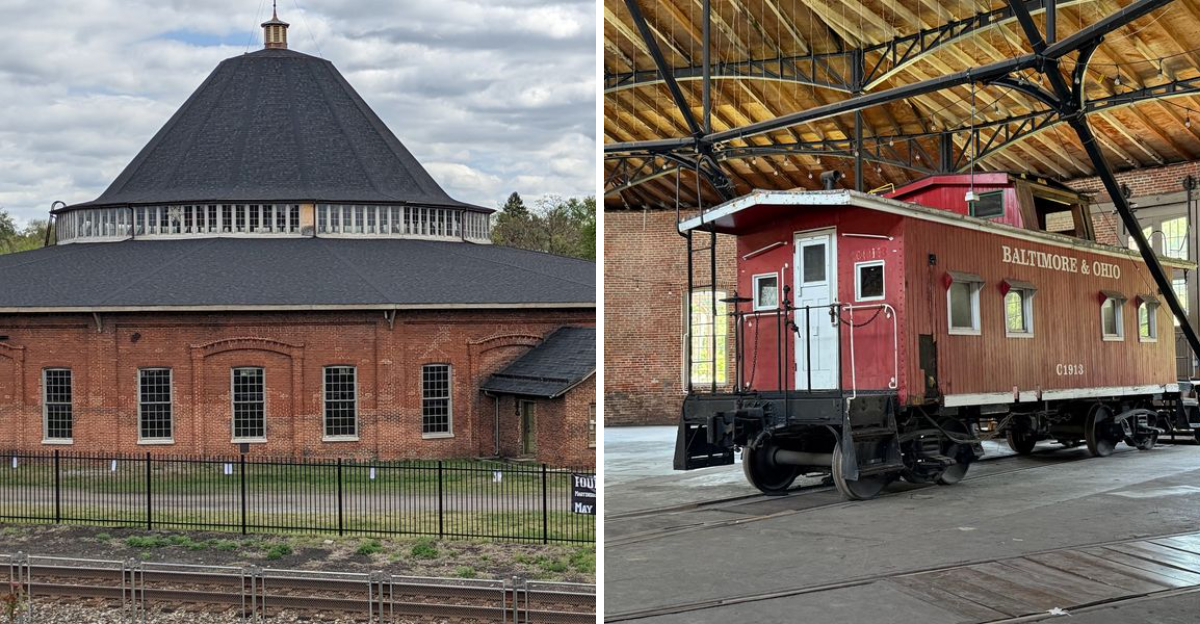
Step inside this West Virginia roundhouse and prepare to have your mind blown.
It is a massive circular brick building with a towering domed roof that feels like stepping into a cathedral built for trains.
The design was so ahead of its time, it actually helped pave the way for modern skyscrapers.
Yes, really.
Inside, an enormous open space surrounds a central turntable, with bays once filled with giant locomotives.
It is the oldest surviving domed roundhouse of its kind anywhere on the planet.
This place is a true engineering marvel. It even played a role in one of the biggest labor strikes in American history.
Walk through its doors and feel the raw power of the Industrial Revolution.
History has never looked so cool. Or so round.
Built For The Age Of Steam
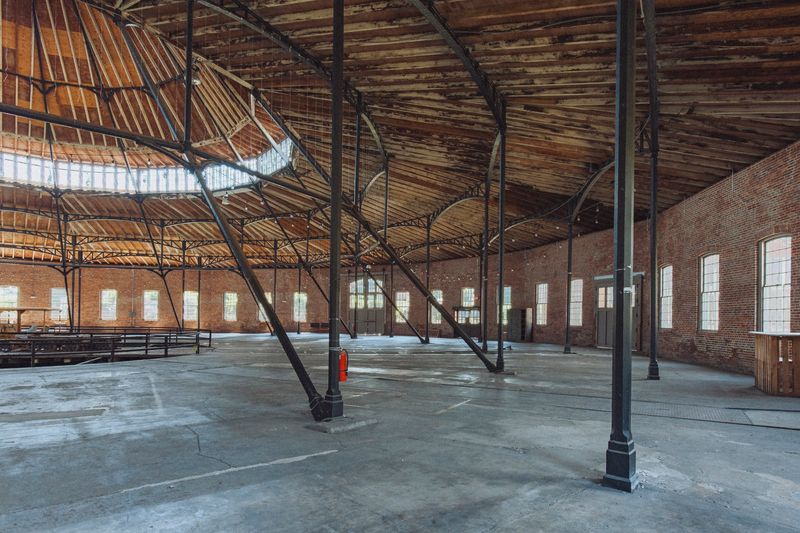
Walking through the doors, the first impression is scale. The floor stretches out wide and open, built to hold entire locomotives at once rather than a handful of tools.
Rebuilt in 1866 after the previous shops were destroyed during the Civil War, the structure rose again for one clear purpose: keeping the Baltimore and Ohio Railroad’s steam engines running. Those machines were the muscle of a growing country, and they needed constant attention.
Coal dust, hot metal, and hissing steam once filled this air daily. Engines rolled in tired and rolled out ready for another long haul across the mountains.
What makes the place hit harder than a museum display is that the building itself did the work. Nothing here was decorative for the sake of it.
A little practical tip for visitors: give yourself a slow first lap around the perimeter before looking at anything specific. The sense of space is easier to feel when you are not busy reading.
It sets up everything else you will see.
A Roundhouse Unlike Any Other
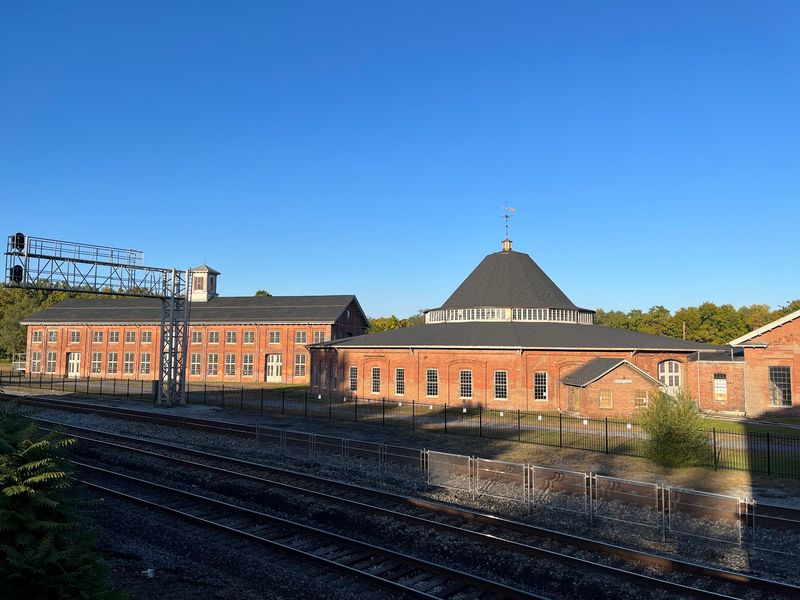
Plenty of roundhouses were built across America. Almost none of them wore a dome.
The Martinsburg Roundhouse holds the title of the oldest surviving domed roundhouse in the United States, and by most accounts the oldest anywhere in the world.
The Baltimore and Ohio Railroad used this design at a few other sites, yet time, fire, and demolition took every one of them except this survivor.
The shape is not just for looks. A complete circle let engines be positioned around a central pivot, so crews could reach any of them without shuffling a whole line of heavy machinery.
From the outside, the roof reads almost like a giant lid set gently on brick walls. From inside, it feels like standing under a great umbrella.
Photographers will want to circle the building fully, because the profile changes noticeably depending on where you stand. Late afternoon tends to bring out the texture of the brick beautifully.
Bring a wide lens if you have one.
Where Railroad History Still Stands
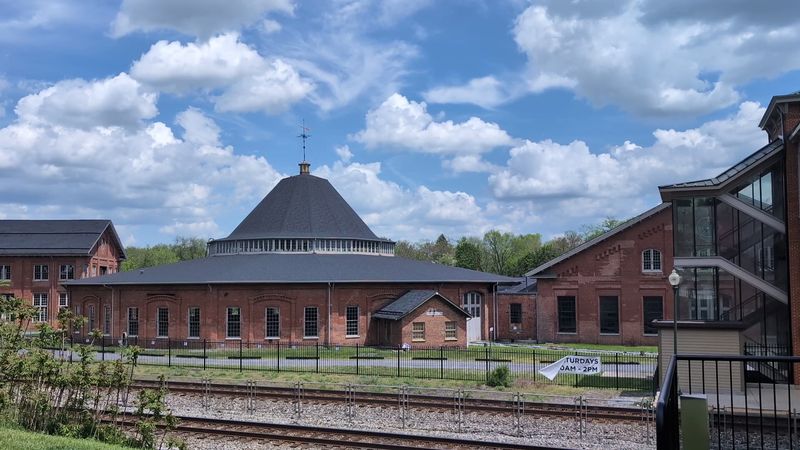
Some buildings hold history. A few actually made it.
Tracks first reached Martinsburg in 1842, and the town quickly turned into a key junction on the Baltimore and Ohio line. The railroad chose this spot as a central maintenance point between Baltimore and Cumberland, Maryland, which is why the shops here grew so large.
The original facilities were destroyed during the Civil War, a hard reminder of how valuable rail lines were to both sides. Rebuilding in 1866 was a statement that Martinsburg would keep its place on the map.
There is another layer too. This complex is recognized as the starting point of the Great Railroad Strike of 1877, one of the most significant moments in American labor history.
Standing on the floor knowing that, the quiet feels different. Visitors interested in that chapter should ask about it during a tour, since the story is tied directly to these grounds.
It changes how the whole site reads.
The Engineering Behind The Dome
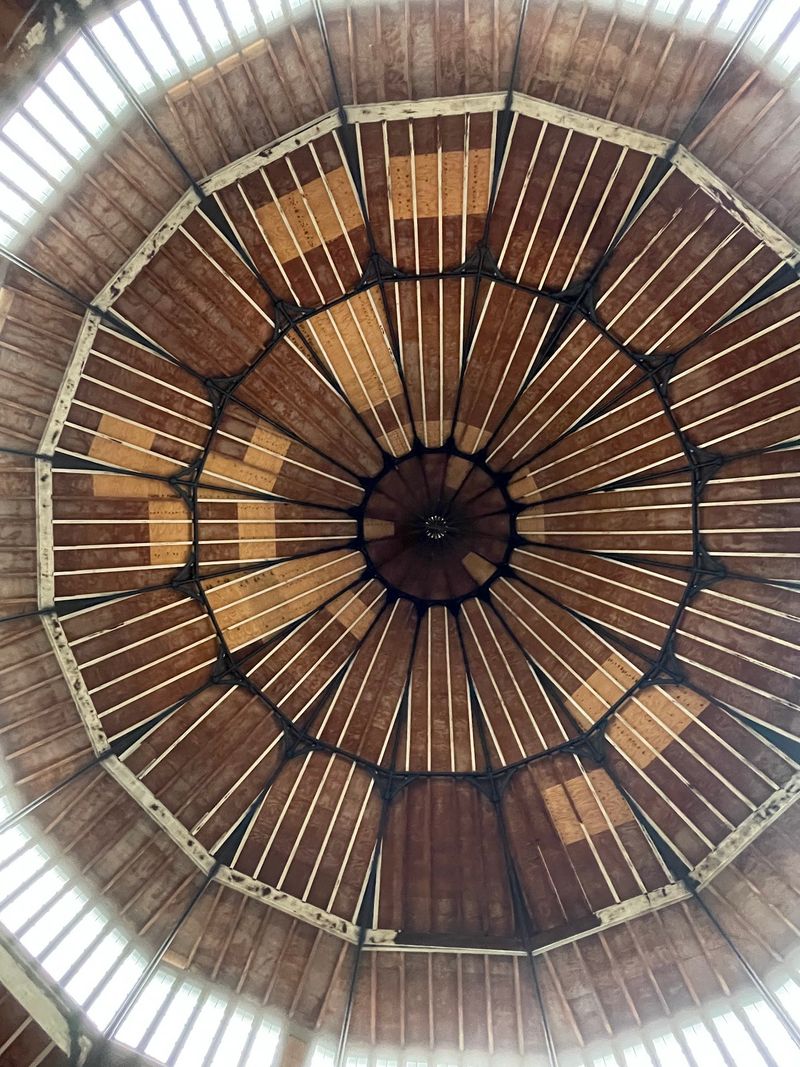
Look straight up and the roof turns into geometry. Thin cast-iron members fan out from the center like the spokes of an enormous wheel, meeting the outer walls in a pattern that genuinely resembles a spiderweb.
Credit goes to Albert Fink, a German-born civil engineer whose reputation came from bridge building. He carried those same ideas about tension, load, and iron framing into a roof design first developed in the 1850s.
The result covers more than 20,000 square feet with almost no interior columns interrupting the floor. For the 1860s, that was extraordinary.
Engineers often point out that this kind of iron skeleton framing was an early ancestor of the steel structures behind modern skyscrapers. A humble railroad shop quietly previewed the future of tall buildings.
If you enjoy structural details, take a moment near the center of the floor and follow one iron rib from the middle outward. Tracing a single line makes the whole system click.
It is the best free lesson in the building.
Inside A 19th-Century Rail Landmark
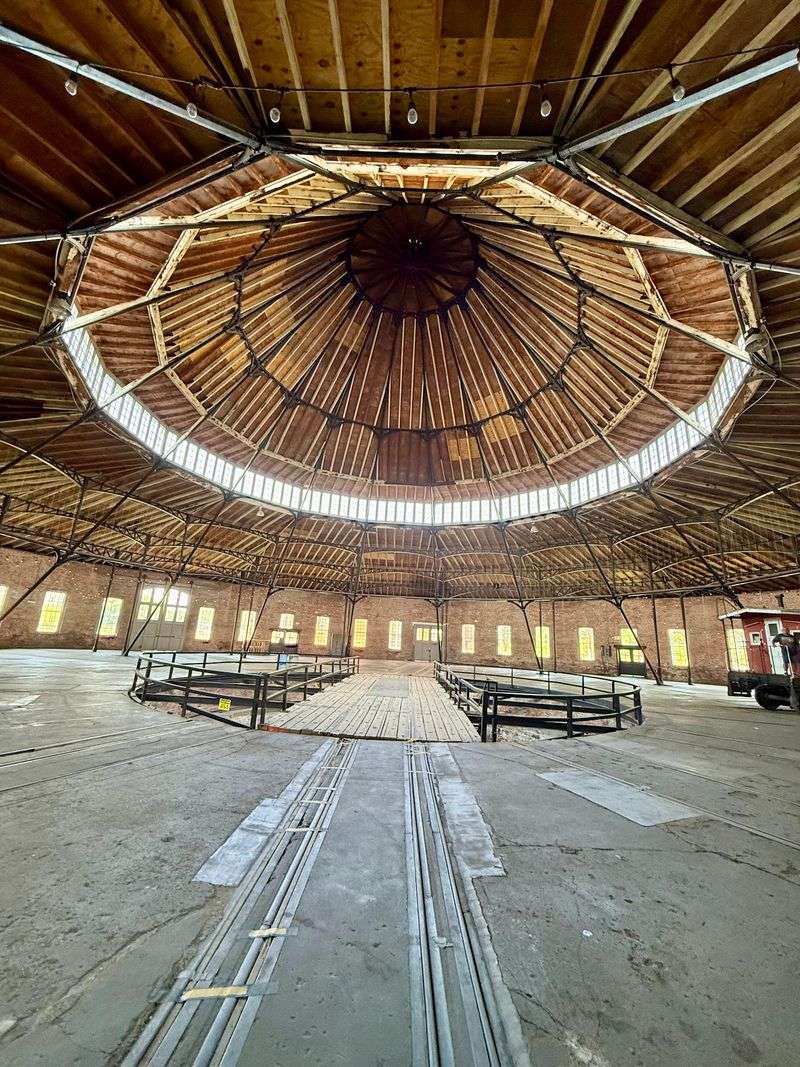
The middle of the floor is where everything makes sense. A fifty-foot turntable once sat at the heart of the building, with sixteen locomotive bays radiating outward like slices of a pie.
Engines rolled onto the turntable, got spun toward an open bay, and were inspected, oiled, and fueled before heading back out. Simple in concept, remarkable in execution.
High overhead, vents in the dome once let steam escape so the interior did not turn into a permanent cloud. Practical engineering, though it also gave the space a certain drama.
Today the building often fills with tables, vendors, and visitors instead of machinery, and honestly the contrast is part of the charm. Fresh bread and produce sitting where locomotives once rested feels like a friendly kind of reuse.
Wear comfortable shoes, because the floor is authentic and uneven in places. Doors open midweek through the weekend, so checking hours before driving over saves disappointment.
Sunday afternoons run a little later than other days.
When Martinsburg Became A Railroad Hub
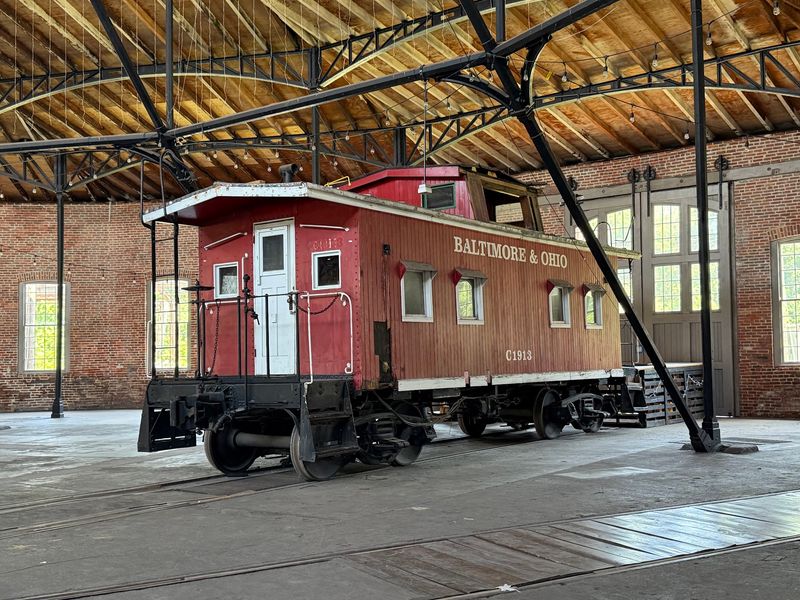
May 21, 1842. That is the date the Baltimore and Ohio Railroad rolled into Martinsburg, and the town was never quite the same.
Within a few years the railroad recognized how useful the location was. By 1848 it had expanded facilities here, making Martinsburg the main maintenance center for the stretch between Baltimore and Cumberland, Maryland.
An engine shed came first, followed by a machine shop for heavier repairs. Each addition pulled more work, more skilled labor, and more importance into a modest West Virginia town.
Everything moved to the rhythm of steam schedules. Freight, passengers, mail, and machinery all passed through, connecting communities that once felt impossibly far apart.
Understanding that background makes the roundhouse feel less like an isolated curiosity and more like the anchor of an entire working district. The site sits right where the action was, near the tracks that made it necessary.
Ask a guide about the shops timeline if you want the full picture. The dates tell a surprisingly good story.
Surviving More Than 150 Years
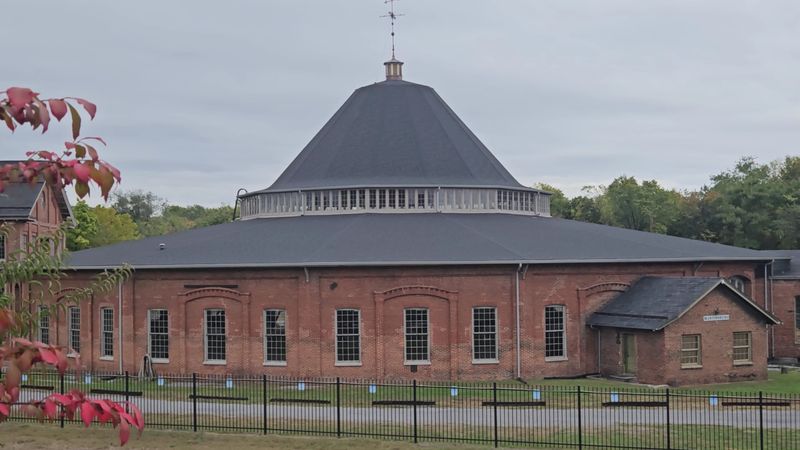
Survival was never guaranteed here. The original shops and roundhouse were destroyed by Confederate troops under Stonewall Jackson in 1861 and again in 1862, proof of how much military value a railroad carried.
Rebuilt in 1866, the roundhouse serviced locomotives until 1899. Rather than fading away, it adapted, shifting in the early twentieth century toward bridge work and car repair.
Railroad use continued all the way into the mid-1980s. That is well over a century of active service for a single industrial building, which is almost unheard of.
Abandonment followed, along with years of uncertainty and weather doing what weather does to brick and iron. A sister structure on the property suffered fire damage during that stretch.
Somehow the dome held. Standing beneath it now, you can spot patched areas and repaired sections that quietly record the rough decades.
Visitors who like their history unpolished tend to love this place most. Nothing here pretends to be new, and that honesty is the appeal.
Details Hidden In The Architecture
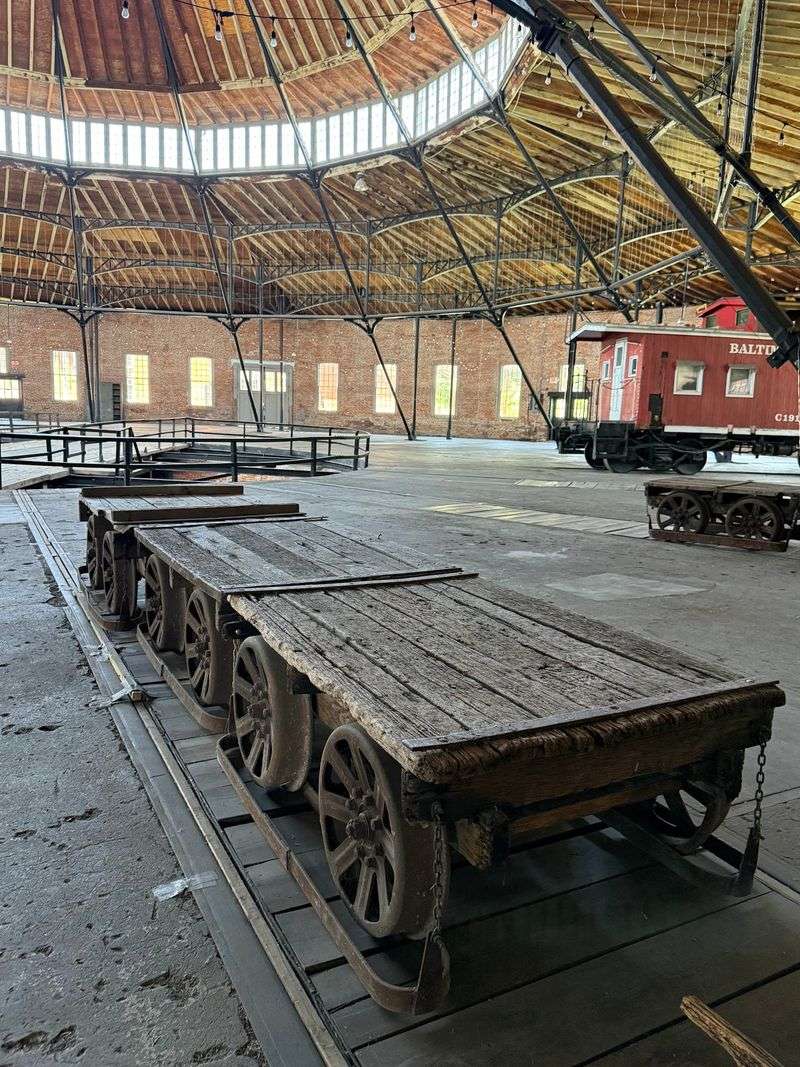
Count the walls sometime. The exterior is not truly round, it is sixteen-sided, a clever bit of practicality that creates a circular interior using straight brick sections.
That polygonal shell gives the turntable and radiating bays the room they need while keeping construction manageable for masons working in the 1860s. Smart, and almost invisible unless you look for it.
Arched window openings let daylight fall across the floor in shifting bands, which does wonderful things for photographs around midday. The brickwork itself varies subtly depending on repairs made across different eras.
Inside, Fink’s iron framing steals attention, and rightly so. Every rib and connector was designed to carry weight outward toward those thick walls rather than down through the middle of the workspace.
A column-free interior in a building this old still feels like a magic trick. Grandeur was never the goal, yet the result is undeniably grand.
Slow down near the walls and the small stuff starts revealing itself.
How The Roundhouse Was Preserved
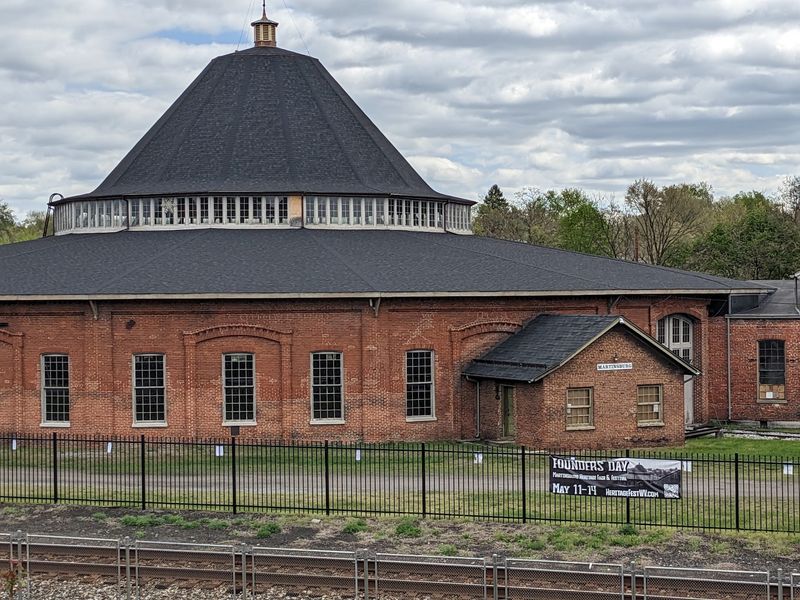
By the late 1980s, after CSX walked away from the property, the roundhouse had no job and no clear future. Buildings in that position usually disappear.
Local determination changed the ending. The Berkeley County Commission purchased the historic railroad property in 1999, then transferred it to the Berkeley County Roundhouse Authority, a nonprofit public corporation created specifically to protect and revive the site.
Restoration work followed, careful and ongoing, with the goal of respecting the original architecture instead of modernizing it into something unrecognizable. Roof stabilization, masonry repair, and making the space usable again all mattered.
Progress continues, funded partly through events and donations, which means every visit contributes something to the effort. Tours are typically free with donations welcomed.
Guides here clearly enjoy the building and answer questions patiently, which makes a walkthrough far richer than reading a plaque.
Anyone who appreciates preservation work will find this a genuinely encouraging story. Saving something this large takes stubborn, unglamorous commitment.
Why This Structure Still Matters
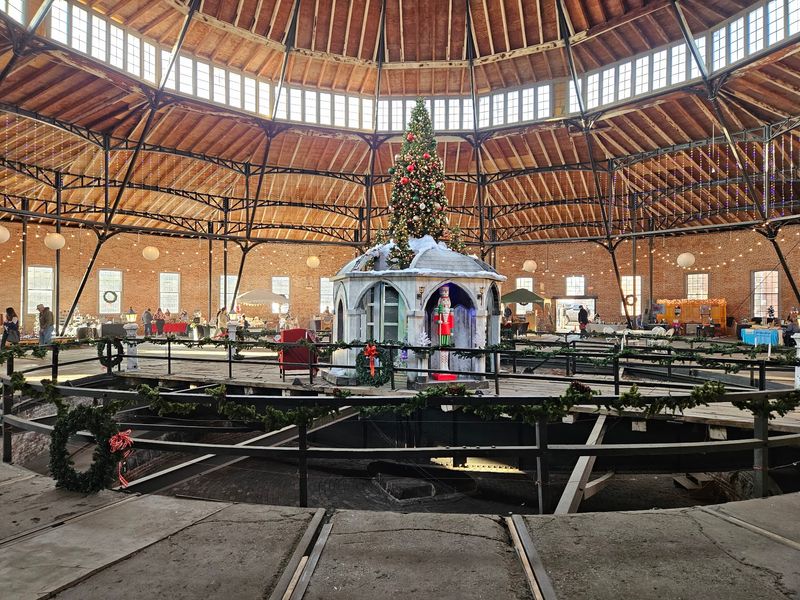
Recognition arrived properly in 2001, when the roundhouse was named a National Historic Civil Engineering Landmark. Two years later the wider B&O Railroad Martinsburg Shops earned National Historic Landmark status.
Titles are nice, but daily life is better. The building now hosts events, private rentals, and community gatherings, including the Roundhouse Night Market with its lineup of local food trucks.
The Merry Makers Market brings baked goods, produce, and craft meats under the dome, and the Martinsburg Farmers Market runs weekly inside the historic building from April through October. Growers, bakeries, and artisans set up where engines once cooled down.
Buying a warm loaf beneath 1866 ironwork is a small pleasure worth planning a Saturday around. Food, history, and architecture rarely share a room this gracefully.
Weddings happen here too, which tells you something about the atmosphere.
Keeping the space useful is exactly what keeps it standing, and every market day adds another chapter.
Address: 100 E Liberty St, Martinsburg, West Virginia
