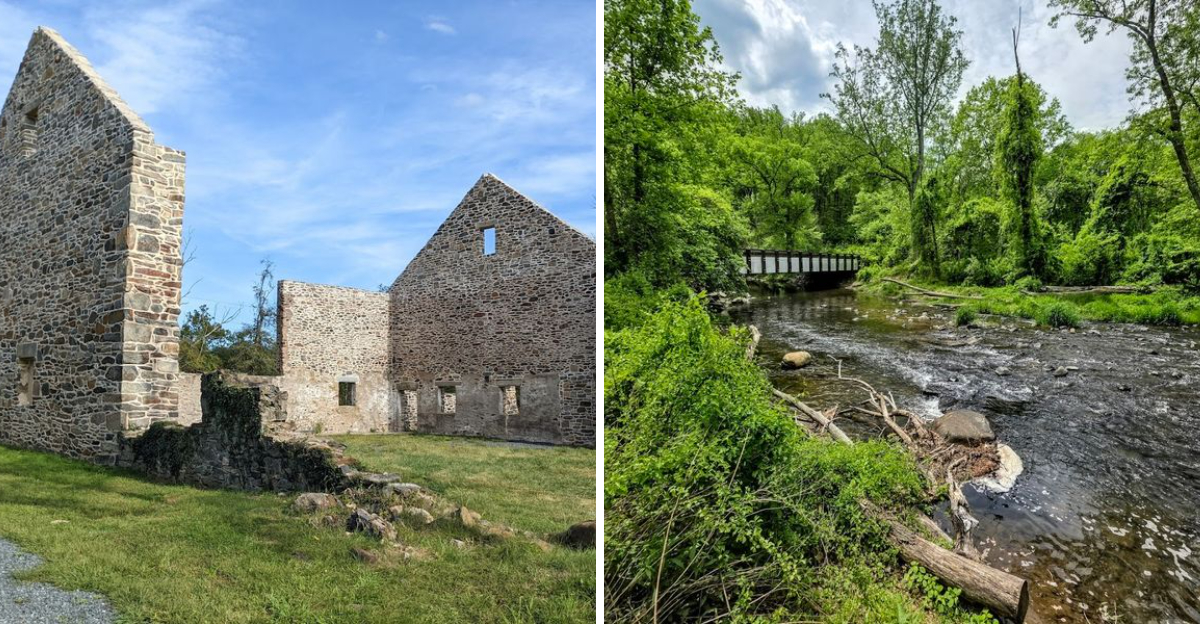
History buffs usually have to pay admission fees. Not here.
This Maryland mill village has been standing for over two centuries, and it is still free to wander around. Old stone buildings, a creaky waterwheel, and trails that follow the river.
You can peek inside the blacksmith shop, walk across the bridge, and pretend you live in a different century for an afternoon. No crowds, no gift shop pushing overpriced trinkets, just quiet history waiting for you to show up.
Locals keep this place to themselves, which is probably why it still feels so peaceful. Pack a picnic, bring a camera, and take your time exploring.
That is the best kind of Maryland adventure. Free, fascinating, and far from the tourist maps.
The Gristmill That Started It All in 1772
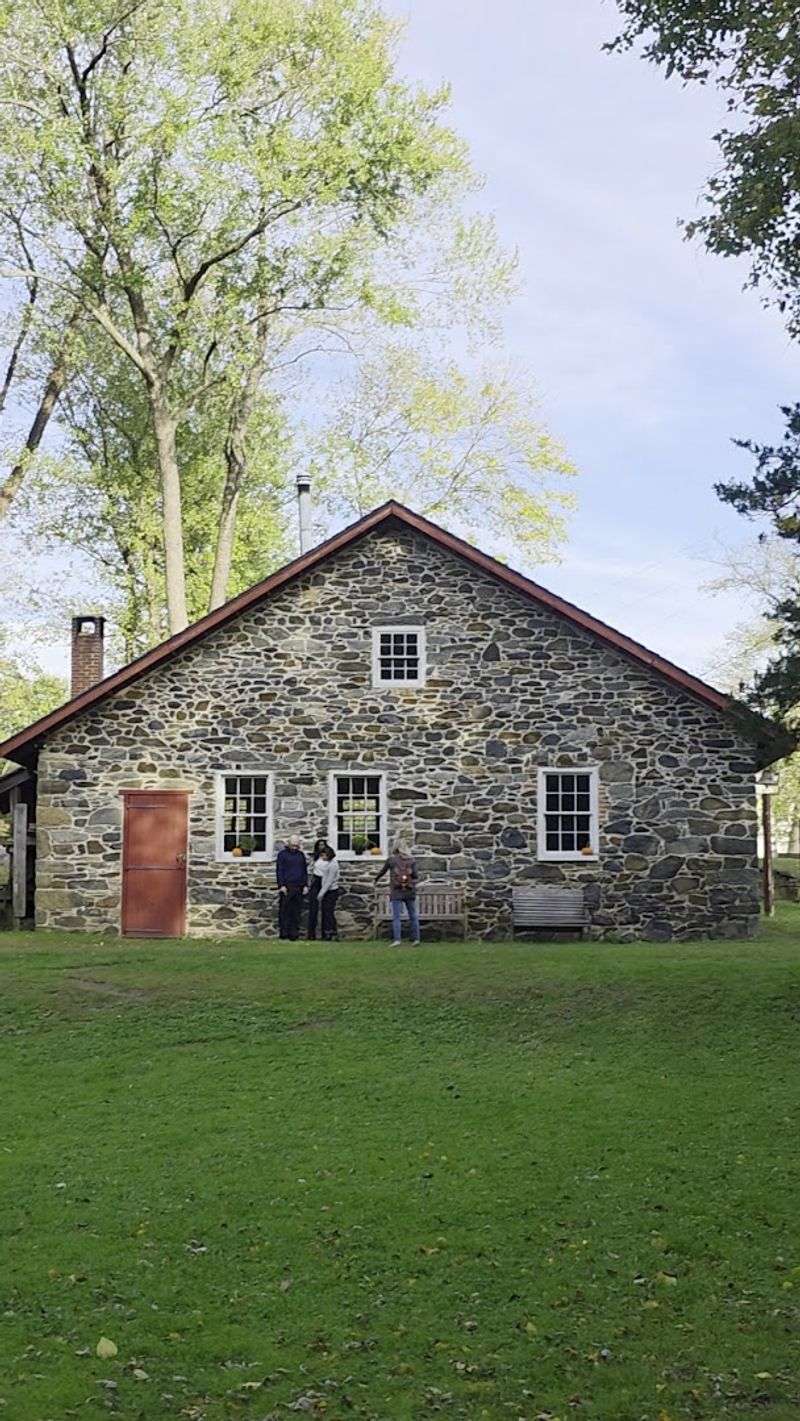
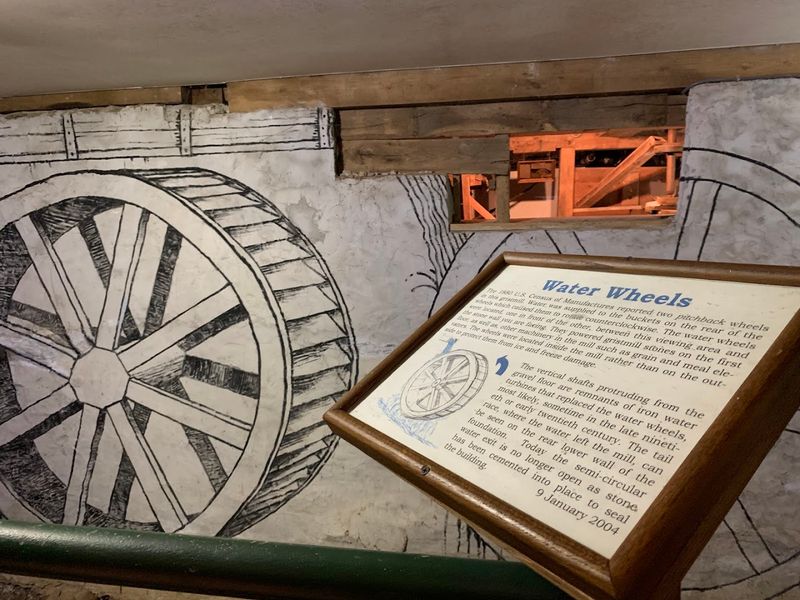
Built in 1772, the gristmill at Jerusalem Mill is older than the country itself. Originally called Lee’s Merchant Mill, it served the surrounding community for nearly two centuries before the State of Maryland acquired it in 1961.
That kind of staying power deserves some serious respect.
Today, the mill houses the Visitor Center and Museum, which is open Saturdays from 10 am to 4 pm and Sundays and Mondays from 1 pm to 4 pm. Inside, you can learn about how grain was processed, how the community depended on this building, and how the whole village grew up around it.
The exhibits are approachable and genuinely interesting, even for younger visitors.
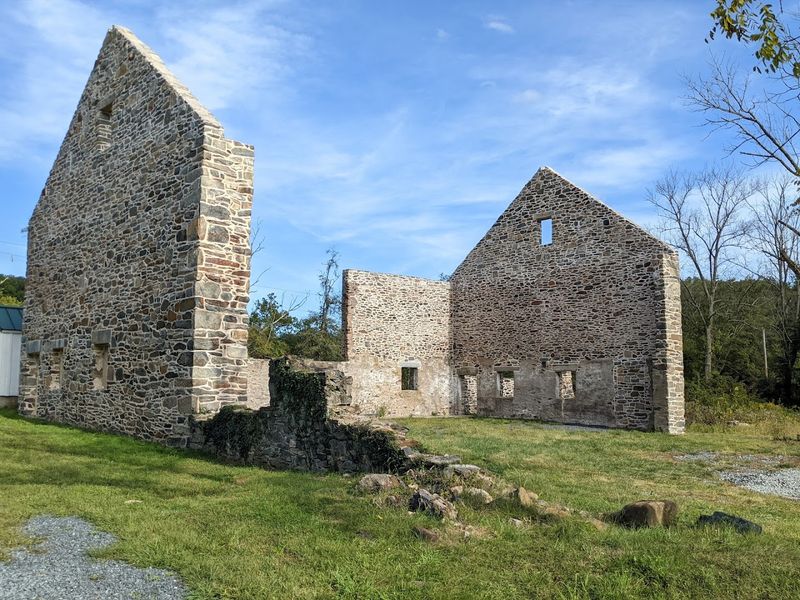
What strikes me most about this building is how solid it feels. The stone walls look like they could hold up for another 200 years without much trouble.
There is something grounding about standing inside a structure that witnessed the Revolutionary War, the Civil War, and everything in between.
The mill is listed on the National Register of Historic Places, along with every other building in the village. That designation is not just a formality here.
It reflects real effort from the Friends of Jerusalem Mill, an all-volunteer nonprofit that has been restoring and preserving these buildings since 1986. Their work shows in every carefully maintained wall and window.
Even if you only have an hour, starting your visit at the gristmill gives the whole place a meaningful anchor. Everything else in the village radiates outward from this one remarkable building.
A Blacksmith Shop That Actually Still Works
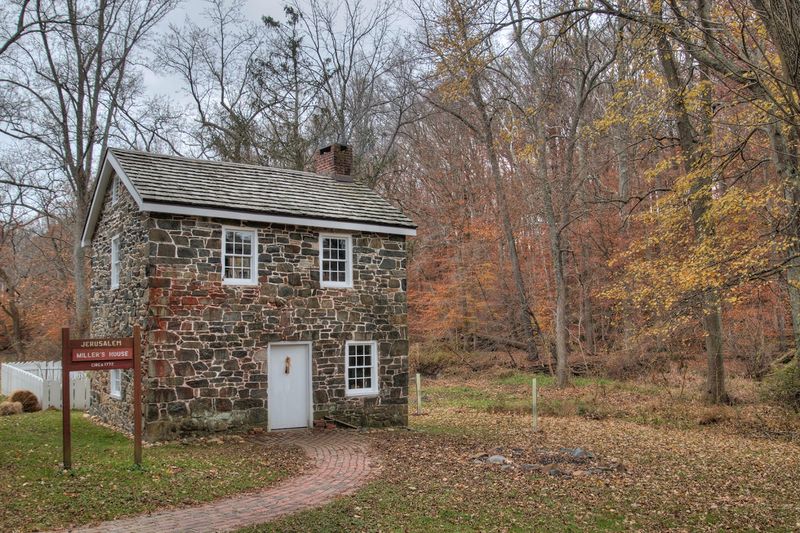
There is something almost magnetic about watching a blacksmith work. The heat, the rhythm of the hammer, the way a shapeless piece of iron slowly becomes something useful.
At Jerusalem Mill, the blacksmith shop is not just a display. It is a functioning workshop where real demonstrations happen.
The shop is one of the most memorable stops in the village, and it tends to draw a crowd when demonstrations are running. Kids especially seem transfixed by the whole process.
It is hard not to be. Watching someone shape metal by hand over an open forge feels like watching a skill from another world.
During special events and scheduled programs, the smiths here show visitors traditional techniques that have barely changed in hundreds of years.
The Friends of Jerusalem Mill organize these demonstrations regularly, and checking their event calendar before your visit is genuinely worth the extra minute of planning.
Timing your arrival around a live blacksmithing session adds a whole new layer to the experience.
Even when no demonstration is scheduled, the shop itself is worth peeking into. The tools, the forge, the layout of the space all tell their own story about how essential this trade was to a self-sufficient community.
Iron hardware, farm tools, and everyday objects all came from places like this. It is a reminder that skilled craftwork was once the backbone of daily life, not a novelty or a hobby.
The blacksmith shop at Jerusalem Mill keeps that tradition alive in a way that feels completely genuine.
McCourtney’s General Store and Its Civil War Chapter
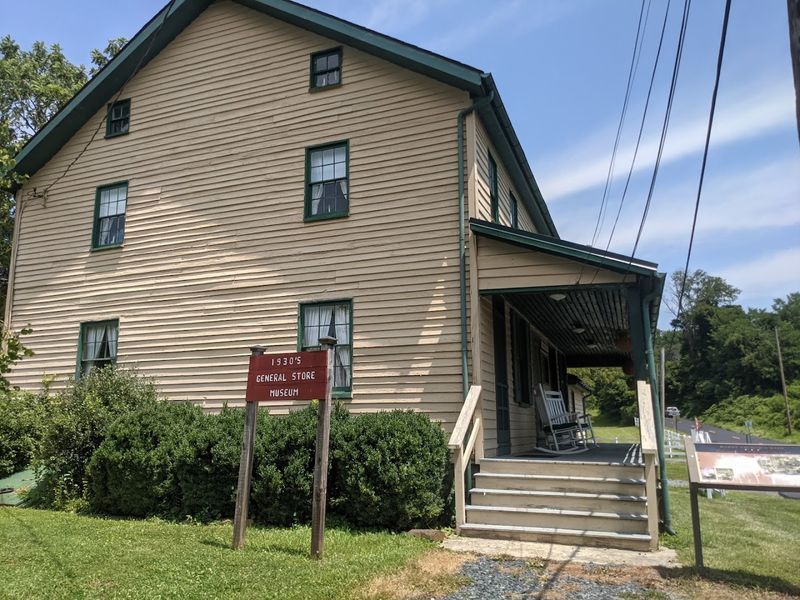
McCourtney’s General Store has a story that reads like something out of a history novel. During the Civil War, Confederate troops under Colonel Harry W.
Gilmor raided the store, taking goods and horses as they passed through the area. That single event left a mark on the village that is still talked about today.
Now operating as a museum and gift shop, the store is open on Saturdays and Sundays from 1 pm to 4 pm, though hours can shift seasonally.
The space has been carefully restored to reflect its original character, and browsing through it feels like flipping through a chapter of American history that does not always make it into textbooks.
The gift shop side offers a nice selection of items that support the Friends of Jerusalem Mill and their ongoing preservation work.
What makes this stop feel different from a typical museum shop is the context. You are standing in a building that was actually looted by Confederate soldiers.
That is not a reenactment or a recreation. The walls here absorbed real history, and that weight is noticeable in a quiet, unassuming way.
The store sits comfortably within the village layout, easy to find and easy to spend time in. Whether you are picking up a small souvenir or just soaking in the period details, it earns its place as one of the village highlights.
Pair a visit here with the gristmill museum and the blacksmith shop for a solid half-day of genuinely engaging history.
The Miller’s House and Garden on Sunday Afternoons
The Miller’s House is one of those spots that rewards visitors who pay attention to the details. Typically open on Sunday afternoons, the house features period-attired interpreters who bring the space to life in a way that static exhibits simply cannot.
Seeing someone move through a historic home in the clothing of the era shifts your perspective almost immediately.
The garden attached to the house is a quiet highlight. Planted with herbs and plants that would have been practical staples for a miller’s family, it reflects a lifestyle built entirely around what the land could provide.
There is something genuinely calming about wandering through it, especially in the warmer months when everything is in bloom.
The house itself dates back to the 1700s and reflects the modest but functional design that was common for working families of the period. The rooms are furnished to match the era, and the interpreters are knowledgeable without being overwhelming.
If you ask questions, they tend to give real, interesting answers rather than rehearsed scripts.
Sunday visits to Jerusalem Mill feel a little fuller because of the Miller’s House being open. It adds a human dimension to the village that the other buildings, as impressive as they are, do not always provide on their own.
Watching someone prepare a period recipe or demonstrate a household task from the 1700s connects the history to real daily life in a way that sticks with you long after you leave. It is one of the gentler surprises the village offers.
The Jericho Covered Bridge Right Next Door
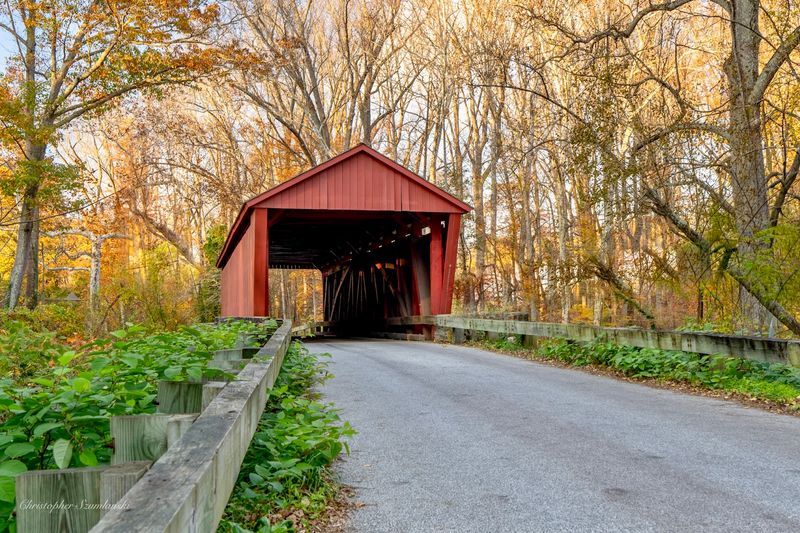
Just a short distance from the village sits one of Maryland’s few remaining covered bridges, the Jericho Covered Bridge. It is the kind of structure that makes you slow down instinctively.
Old wooden beams, a narrow passage, and a setting that feels completely removed from the modern world. Honestly, it is one of the most photogenic spots in all of Harford County.
Covered bridges were built with their roofs to protect the wooden structure from rain and weather, extending their lifespan by decades. The Jericho bridge has survived remarkably well, and visiting it alongside Jerusalem Mill makes for a natural pairing.
Both feel like they belong to the same unhurried world.
The bridge sits along a quiet rural road, and the surrounding landscape adds to its appeal in every season. Fall visits are especially striking when the trees overhead are turning.
Spring brings its own soft beauty, with the creek running clear and the vegetation just starting to fill in. Even a quick stop on a summer afternoon has a cooling, shaded quality that feels like a small gift.
Photographers tend to love this spot, and it is easy to see why. The combination of weathered wood, dappled light, and rural quiet creates a scene that does not need any editing to look beautiful.
If you are making the trip to Jerusalem Mill, adding the Jericho Covered Bridge to your route costs nothing and takes maybe fifteen extra minutes. Few detours in Maryland are this rewarding.
Trails Along the Little Gunpowder Falls River
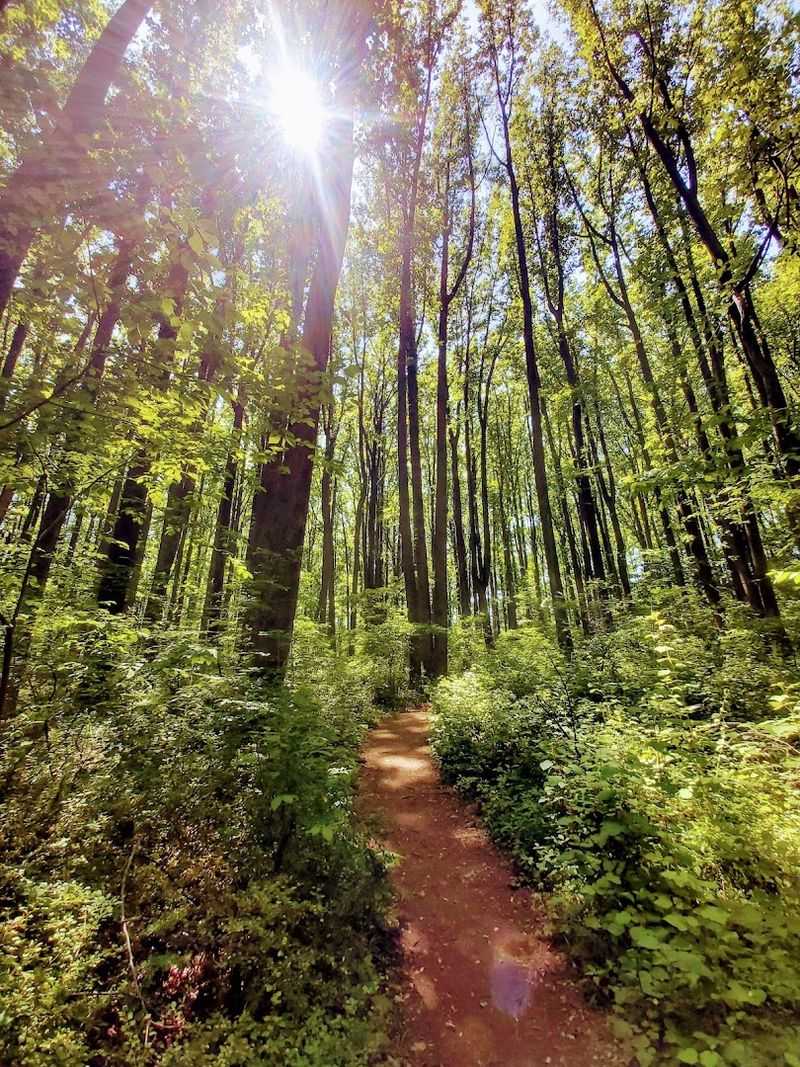
The trails running along the Little Gunpowder Falls River are some of the most underappreciated in the entire Baltimore region. Part of Gunpowder Falls State Park, they stretch for miles through mature forest with the river providing a constant, calming soundtrack.
Whether you are hiking, biking, or riding horses, the terrain here accommodates a range of outdoor preferences without feeling overcrowded.
The trails near Jerusalem Mill are accessible directly from the village grounds, which makes it easy to combine a history visit with some time outdoors. You can spend an hour exploring the buildings and then transition almost immediately into a peaceful riverside walk.
That flexibility is one of the things that makes this place genuinely special.
The river itself is shallow and clear in many stretches, and families with young children often wade in during summer months. It is not a dramatic whitewater experience.
It is more like the kind of easy, refreshing creek time that kids remember years later as one of the best parts of a summer day.
Trail conditions are generally well-maintained, and the park draws hikers year-round. Early mornings in spring and fall are particularly lovely, when the light filters through the canopy and the air still carries a cool edge.
Bringing water and wearing comfortable shoes is about all the preparation you need. There are no steep climbs or technical sections near the village, so the trails here are genuinely accessible to most visitors regardless of fitness level.
It is outdoor time without any pressure attached.
Free Admission and What That Actually Means Here
Free admission is a phrase that sometimes comes with hidden asterisks. Not here.
The grounds at Jerusalem Mill are open daily from sunrise to sunset at absolutely no cost, and free parking is available on-site. The publicly accessible buildings, including the gristmill museum, are open during their posted hours without any entry fee either.
Some events and concerts held throughout the year do carry admission charges, which is a fair trade for what the Friends of Jerusalem Mill put into organizing them.
But the core experience, walking the village, exploring the buildings during open hours, hiking the trails, and visiting the covered bridge, is completely free.
That is rare for a place this well-preserved and this historically significant.
The no-cost access is part of what keeps Jerusalem Mill feeling unhurried and unpretentious. There is no pressure to justify the trip financially.
You can wander at your own pace, linger in the garden, sit by the river, or spend an extra thirty minutes in the blacksmith shop without feeling like the clock is running on a paid ticket.
For families, this kind of destination is a genuine find. A full afternoon of history, nature, and exploration without a dent in the budget is not easy to come by.
The village also makes a strong case for why public stewardship of historic places matters. The fact that a site this significant and this beautiful remains accessible to everyone without a fee is worth appreciating every single time you visit.
The Revolutionary War Connection Most Visitors Miss
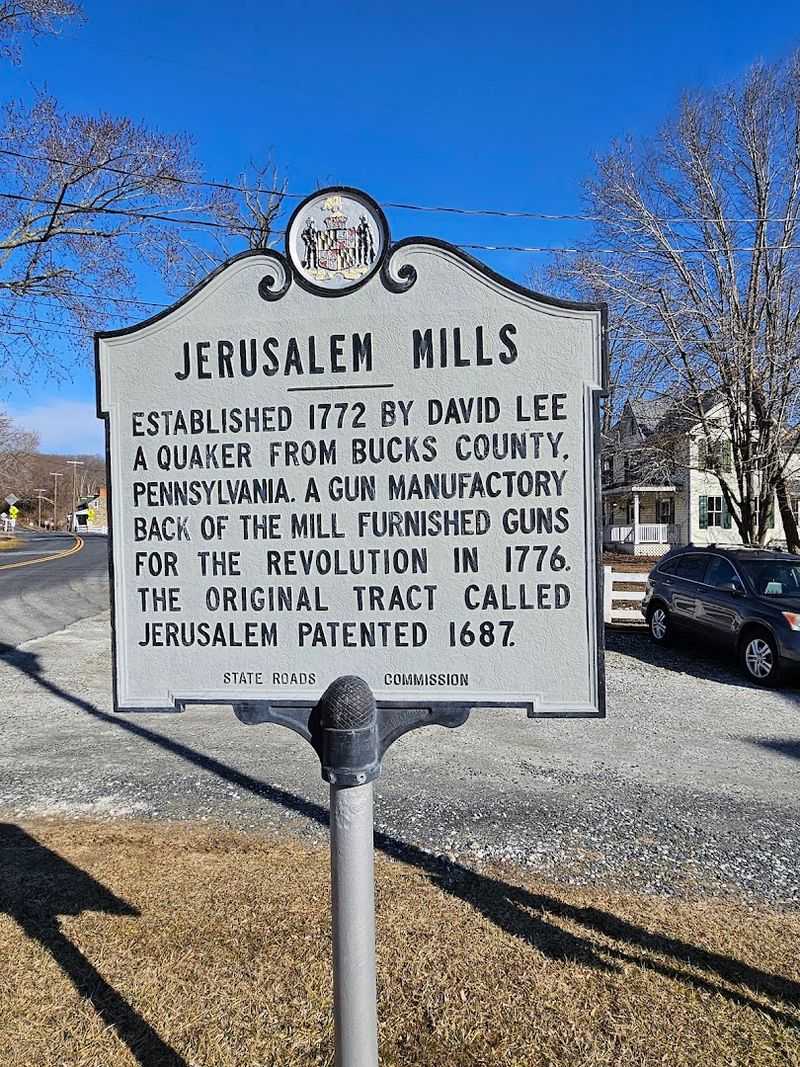
Most people arrive at Jerusalem Mill knowing it is old. Fewer realize just how deep the roots go.
The village predates not only Harford County but the United States itself. That fact alone reframes everything you look at while walking the grounds.
During the Revolutionary War, the village’s cooperage was reportedly used to produce gunstocks for the Maryland Militia. That connection to the founding of the country is not just a footnote.
It places Jerusalem Mill directly in the story of American independence, as a working, contributing part of the war effort rather than a bystander.
The cooperage is one of the buildings that visitors often overlook in favor of the more visually prominent gristmill and blacksmith shop. But knowing what was allegedly made there adds a dimension to the visit that is hard to shake.
You are walking through a place where people worked toward something enormous, not knowing how it would turn out.
The Friends of Jerusalem Mill do a thoughtful job of weaving this history into the interpretive materials available at the Visitor Center. The exhibits do not sensationalize the Revolutionary War connection, which actually makes it land harder.
Straightforward history, presented honestly, tends to be more affecting than dramatized versions. If you spend any time in the museum, this piece of the village’s story will stick with you.
It is one of those details that makes you want to come back and look more carefully the second time around.
Why This Place Keeps Flying Under the Radar
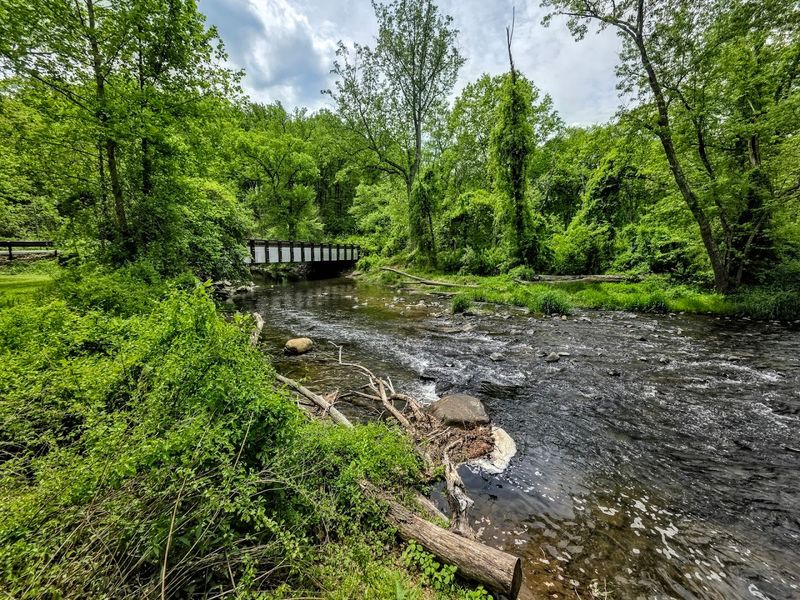
Jerusalem Mill has been called a hidden treasure by people who stumble onto it, and that description feels accurate every time. Despite being listed on the National Register of Historic Places and noted as one of the most photographed parks in Maryland, it remains genuinely uncrowded on most visits.
That combination is almost unheard of.
Part of what keeps it under the radar is its location. Kingsville, Maryland is not a destination that shows up on most weekend trip lists.
It sits comfortably off the beaten path, which means the people who do make the effort tend to be the kind of visitors who actually appreciate what they find. The energy at Jerusalem Mill reflects that.
Quiet, curious, unhurried.
There is also something about the lack of commercialization that keeps the crowds manageable. No big signs on the highway, no major marketing push, no chain restaurants nearby turning it into a tourist corridor.
The village exists mostly on word of mouth and the genuine enthusiasm of the volunteers who keep it running.
For anyone looking for a day trip that delivers real depth without the performance of a major attraction, Jerusalem Mill is difficult to beat. The history is legitimate, the setting is beautiful, and the experience feels personal rather than packaged.
I left my first visit already thinking about when I could come back, which is not something I say about many places. If you are within driving distance of Harford County, this one belongs on your list.
Address: 2813 Jerusalem Rd, Kingsville, MD 21087
