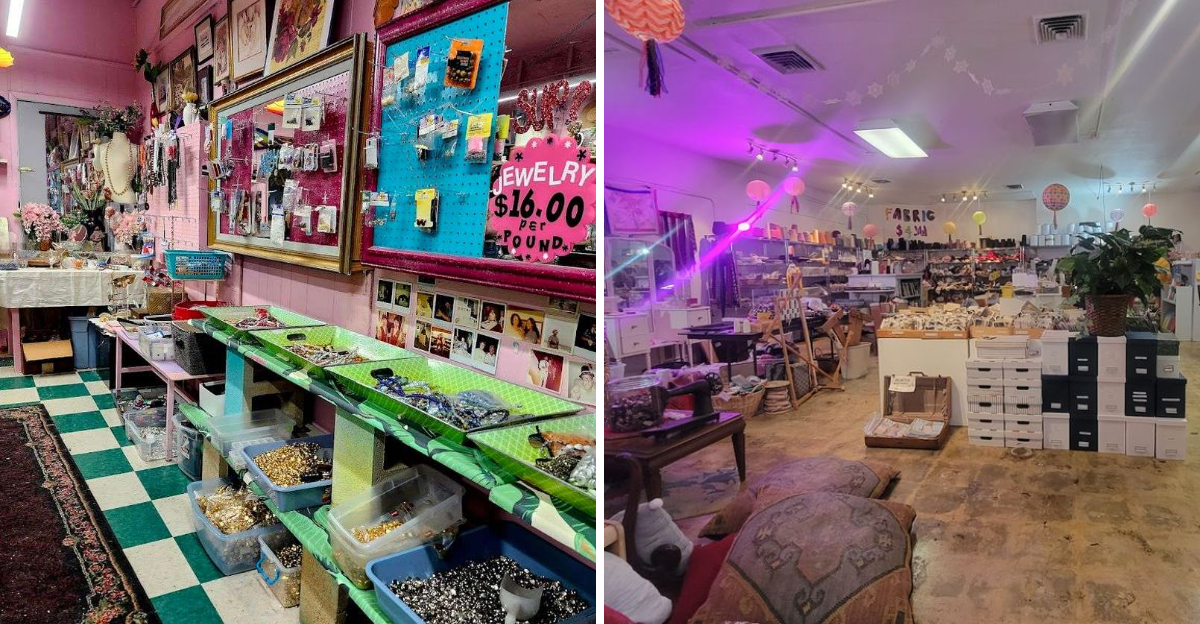
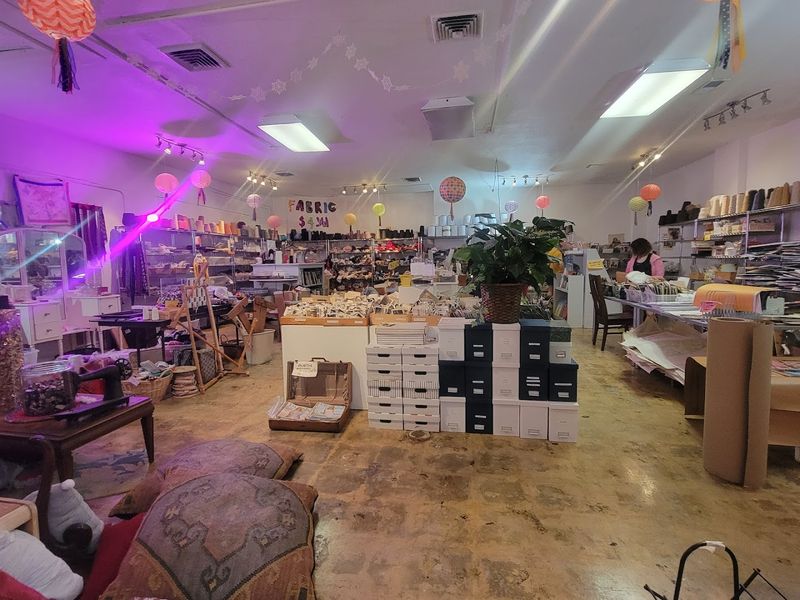
You walk in and your brain immediately shifts into treasure hunt mode. Rows of random objects, half finished projects, and bins full of things you did not know you needed.
This is not a typical craft store with identical products stacked neatly on shelves. Everything here was donated, rescued, or leftover from someone else’s creative life.
You can find pieces of history, industrial scraps, and strange odds and ends that would never appear in a big box store. Artists, teachers, and hobbyists wander the aisles with glazed eyes and full baskets.
It is a 6,000 square foot playground for anyone who likes to make things differently.
A Building With a Past Life Worth Knowing
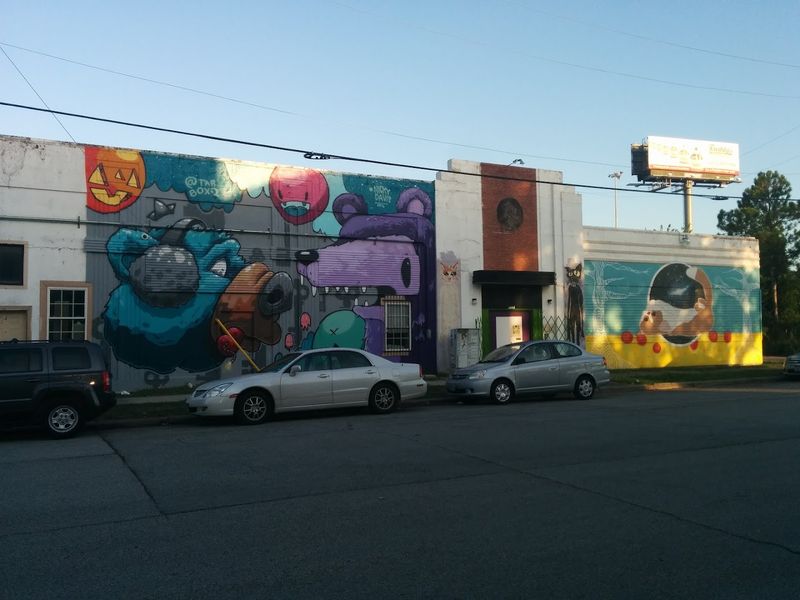
Some buildings carry their history on the outside, and the Texas Art Asylum is one of them. The structure is a historically-registered Art Deco building that originally opened in the 1930s as The Houston Coffin Company.
That detail alone stops most first-time visitors in their tracks.
The building became home to Texas Art Asylum in February 2013, and the contrast between its original purpose and its current one is genuinely striking. A place once associated with endings now buzzes with the energy of people making things, reimagining materials, and giving discarded objects a second life.
The Art Deco bones of the building add a layer of visual interest that most modern warehouse spaces completely lack. High ceilings, sturdy architecture, and a sense of old Houston character make the space feel grounded in something real.
It is not just a store inside a building; the building itself is part of the experience. Knowing the history before you arrive makes the whole visit feel richer, like you are stepping into a story that started long before the paint tubes and doll parts arrived.
Creative Reuse Is the Whole Point Here
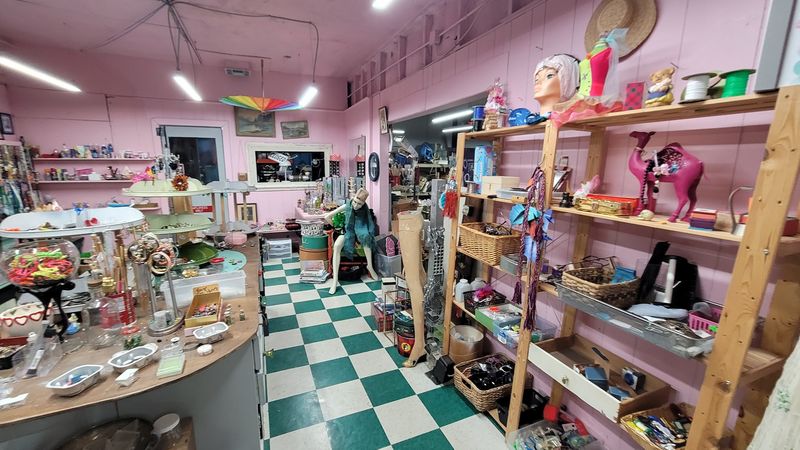
The concept behind Texas Art Asylum is simple but genuinely powerful. Instead of letting usable materials end up in landfills, the center collects clean, second-hand art and craft supplies from businesses, institutions, and individuals, then offers them back to the public at accessible prices.
Since its founding in 2009, the center has diverted over 3.4 million pounds of reusable materials from Houston’s landfills. That number is staggering when you actually sit with it.
Every button, every spool of yarn, every half-used tube of acrylic paint represents something that did not become waste.
The mission connects directly to the Houston Center for Creative Reuse, a 501(c)3 nonprofit that receives donations on the Asylum’s behalf. The nonprofit also runs a Teacher’s Warehouse, where educators can pick up free supplies for their classrooms.
So every purchase made inside the store quietly supports a much larger ecosystem of creativity and sustainability. It is the kind of place where spending money actually feels responsible, which is a rare and satisfying combination for anyone who loves making things.
The Inventory That Makes Artists Stop and Stare
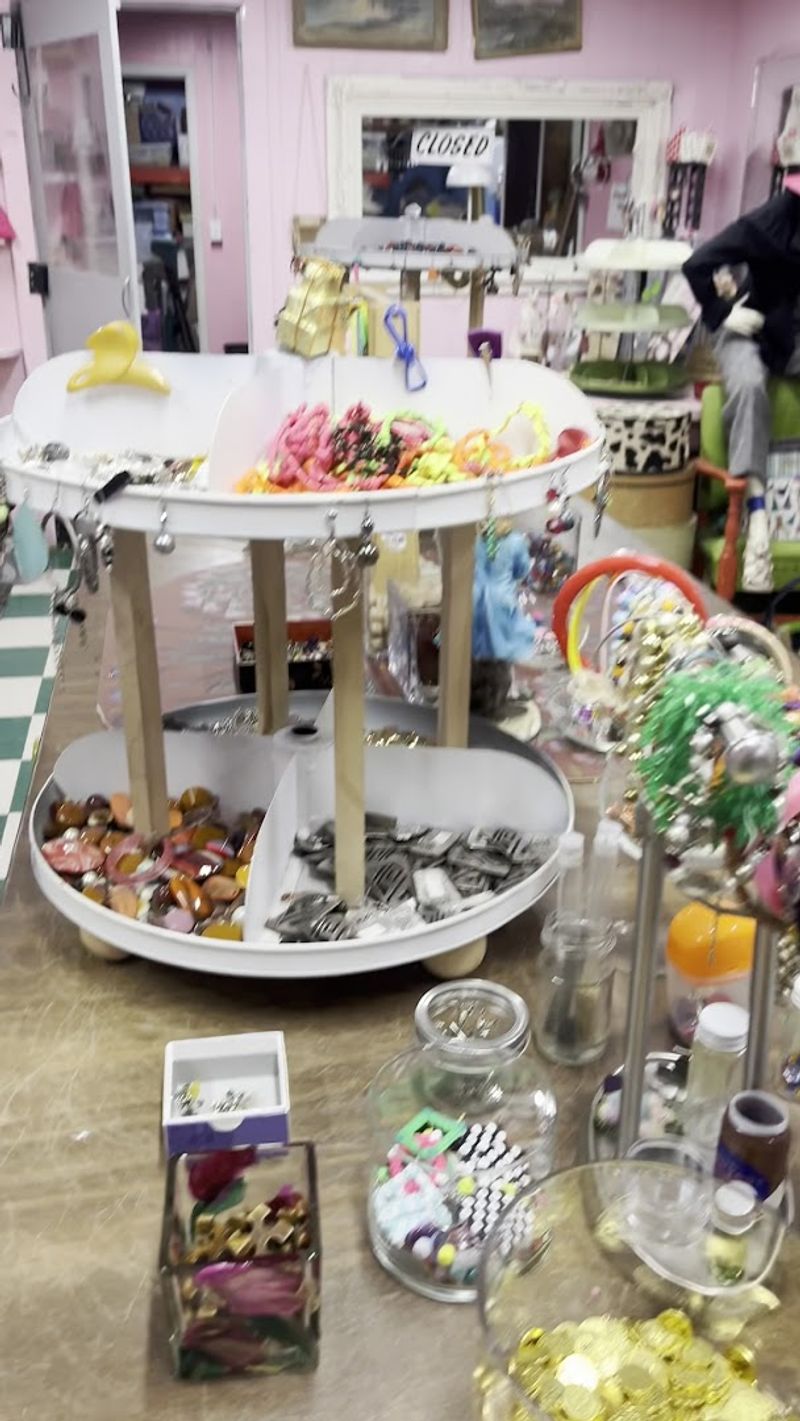
Nothing quite prepares you for the actual inventory inside Texas Art Asylum. Plaster dental molds sit next to antique glass test tubes.
Vintage wooden wig blocks share shelf space with mannequin parts and antlers. Poker chips, playing cards, and decorative letters are piled near holiday chocolate tins and antique door knobs.
The sheer variety is almost dizzying in the best possible way. I found myself picking up objects I could not immediately identify, turning them over, imagining what they might become in the right hands.
That is exactly the feeling the space is designed to produce.
Buttons, beads, beans, keys, mirror scraps, tile samples, salvaged lamp parts, vintage frames, and antique classroom chalkboards round out a collection that changes constantly as new donations arrive. No two visits are exactly the same, which is part of what keeps people coming back.
This is not a store where you walk in knowing what you need. You arrive open to possibility, and the inventory does the rest.
For mixed-media artists, prop makers, teachers, and curious crafters, the selection here is genuinely unlike anything a standard art supply chain can offer.
Priced by the Pound, Which Changes Everything
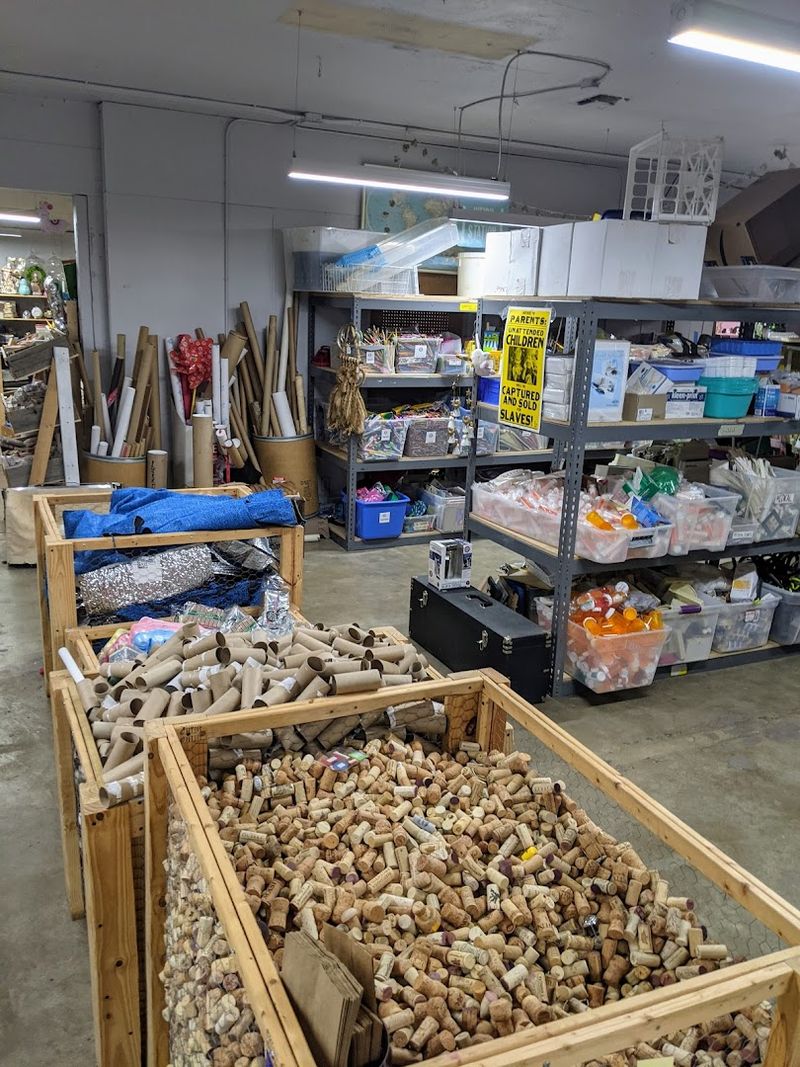
One of the most interesting things about shopping at Texas Art Asylum is the pricing structure inside the big room. Many items are not priced individually.
Instead, you fill a container and pay by the pound, which turns the whole shopping experience into something closer to a treasure hunt with a budget.
Art, craft, and scrapbooking supplies are priced at a certain rate per pound. Yarn, fine art supplies, and ephemera fall into a slightly different tier.
Beads and jewelry cost a bit more per pound, while loose paper and stained glass are priced at the lower end of the scale. Fabric is sold by the yard, and books are generally a flat rate each.
This system rewards patience and a good eye. The more carefully you sort through a bin, the better your haul tends to be.
For artists working on tight budgets, or teachers stocking a classroom, or parents looking for a rainy-day project, the pound-pricing model makes experimentation feel genuinely affordable.
There is something almost meditative about digging through a bin of buttons or beads, knowing that the more you find, the more value you are walking out with.
Vintage and Unexpected Finds Around Every Corner
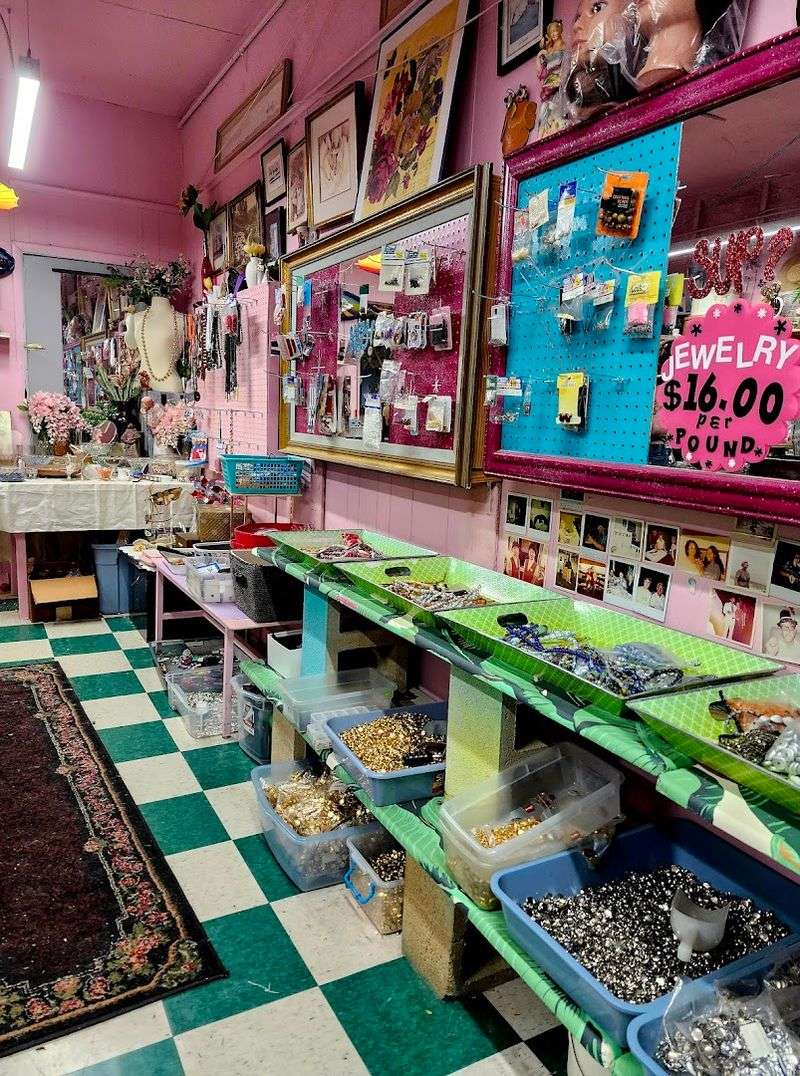
Part of what makes Texas Art Asylum feel different from any other craft store is the vintage layer running through everything. Vintage cigar boxes with worn labels.
Antique door knobs with decades of patina. Old playing cards with designs you would never find in a modern deck.
These are not reproductions or decorative knock-offs; they are the real thing.
The vintage items come from the same donation pipeline as everything else, which means the selection shifts constantly. One week there might be a stack of old classroom chalkboards.
The next, a collection of retro glass blocks or salvaged lamp parts that look like they belong in a mid-century workshop. You genuinely never know what will be waiting on the shelves.
For collage artists, mixed-media makers, and set designers, this unpredictability is a feature rather than a flaw. The vintage finds add texture, history, and character to any project in a way that brand-new materials simply cannot replicate.
I have talked to people who drive from outside Houston specifically to browse the vintage section, treating each visit like a mini-expedition. That kind of loyalty says everything about how special the inventory really is.
Supporting Teachers and Classrooms Across Houston
One of the quieter but more meaningful parts of what Texas Art Asylum supports is the Teacher’s Warehouse, run through the Houston Center for Creative Reuse.
Educators can visit and pick up free supplies for their classrooms, which is a genuinely significant resource in a city as large and diverse as Houston.
Art education budgets in public schools are often stretched thin. The idea that teachers can walk out of a warehouse with usable materials at no cost is not a small thing.
It directly affects what students get to experience in the classroom, and that ripple effect is hard to overstate.
The partnership between Texas Art Asylum and the nonprofit adds a layer of community purpose to every transaction that happens in the store. When a customer buys a pound of beads or a stack of vintage frames, that purchase helps sustain a system that also gives free supplies to teachers.
It is a loop worth understanding before you visit, because it reframes the whole experience. Shopping here is not just about finding cool stuff for your own projects.
It is about being part of something that invests back into Houston’s creative community in a very practical way.
The 6,000 Square Feet That Rewards Slow Exploration
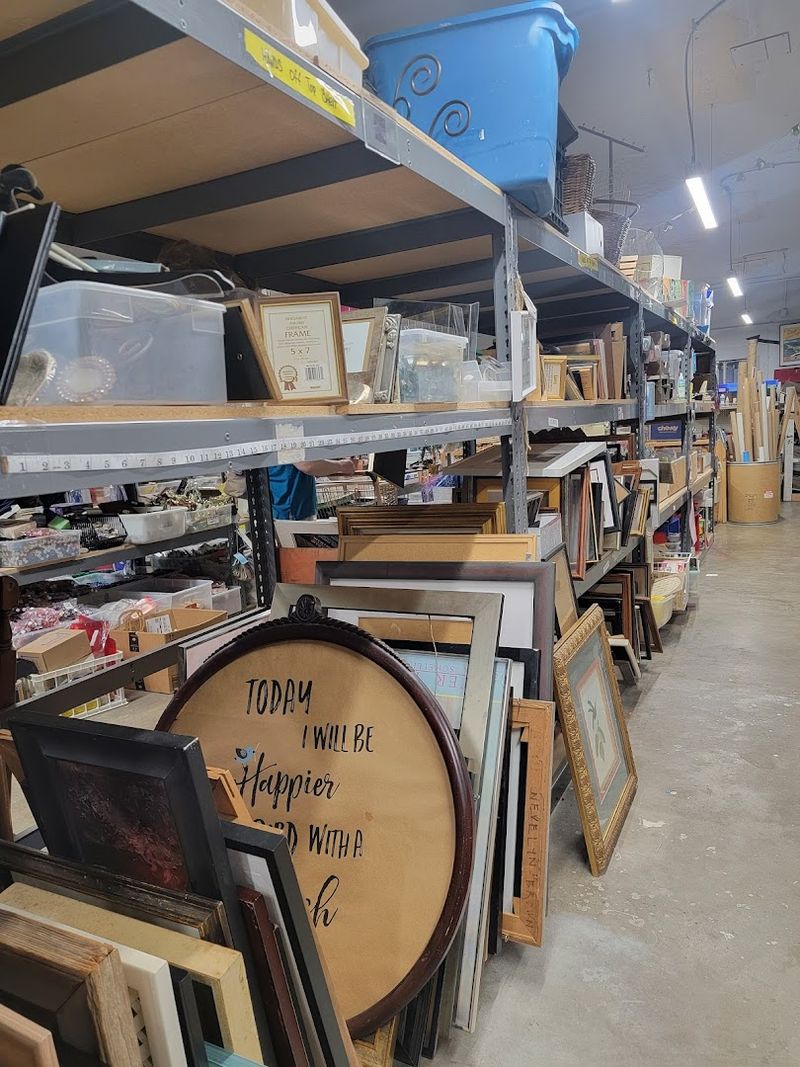
Six thousand square feet sounds like a lot until you are actually inside and realize how densely every corner is packed. The Texas Art Asylum warehouse does not feel sparse or clinical the way big-box stores do.
It feels lived-in, layered, and full of things that demand a second look.
The layout rewards slow movement. Rushing through would mean missing the glass test tubes hidden behind the mannequin parts, or the stack of vintage frames leaning against a wall near the salvaged lamp components.
There is a rhythm to exploring the space that becomes clear after the first ten minutes.
I noticed that the people who seemed happiest inside were the ones who had given themselves plenty of time. No agenda, no shopping list, just a genuine openness to whatever the space decided to offer that day.
The warehouse format means sightlines are long but the details are close, so you end up in this interesting mode of zooming in and out constantly. It is physically tiring in the best way, like a museum where everything is for sale and nothing costs what you expect.
Plan for at least an hour, maybe two.
Why Houston’s Creative Community Keeps Coming Back
Texas Art Asylum has built a genuinely loyal following in Houston, and the reasons are not hard to understand once you have spent time there. The combination of affordability, unusual inventory, and a mission rooted in sustainability creates something that feels rare in a city full of options.
Artists, crafters, educators, prop stylists, hobbyists, and curious wanderers all find something worth coming back for. The fact that the inventory changes with each new wave of donations means there is always a reason to return.
No visit is a repeat of the last one.
The space also carries a certain energy that is hard to manufacture. It is not trendy or curated in the way that boutique creative stores sometimes feel.
It is honest and slightly unpredictable, which is exactly what a lot of creative people are looking for when they are stuck or uninspired. Sometimes the best thing for a creative block is a place that surprises you, and Texas Art Asylum does that consistently.
For anyone visiting Houston with even a passing interest in art, craft, or sustainability, this warehouse on Live Oak Street is one of the most genuinely interesting stops in the city.
Address: 1719 Live Oak Street, Houston, Texas
