You will not find this place on Google Maps. There is no sign, no parking lot, no trail marker telling you where to go.
You just have to know someone who knows, or get lucky, or drive down a certain road at the right time of day and notice something off in the woods. That is how you find abandoned places in Maine. Not through a website.
Through a feeling. The spot is small, just a foundation and a chimney and a few scattered stones where a house once stood.
The trees have grown up around it, swallowing the evidence. But when you stand there, something settles in your chest.
A quiet. A weight. The sense that people lived here once, and maybe they never really left.
Maine has plenty of forgotten corners. This one has no address, just a feeling.
The Railroad That Time Forgot
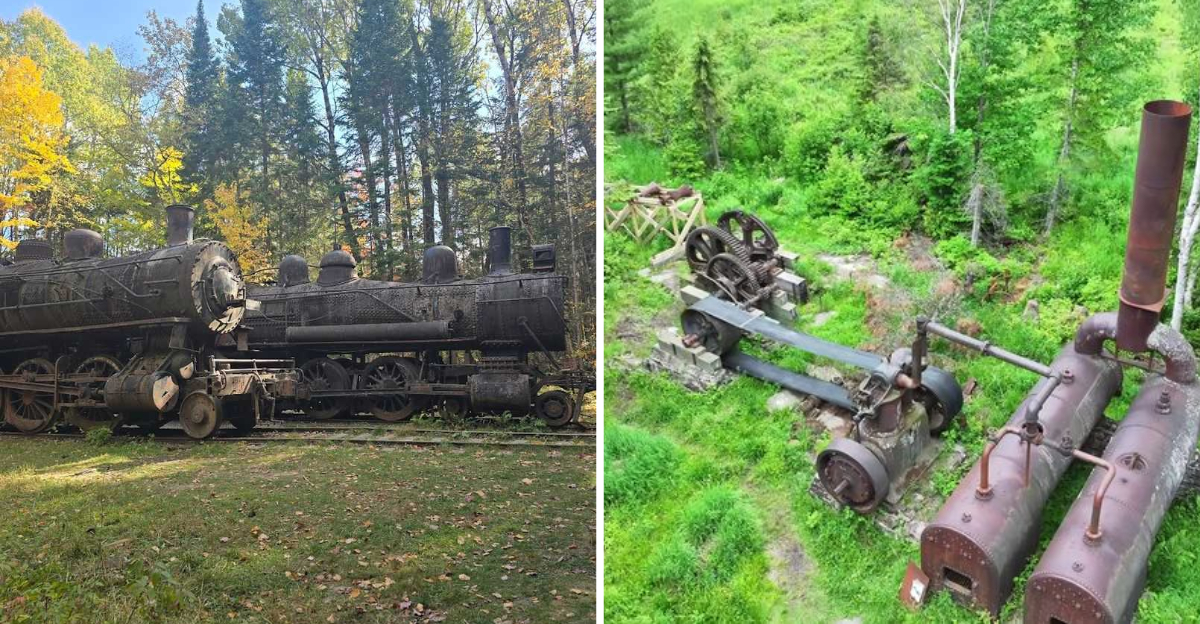
Some places carry their history quietly, and the Eagle Lake and West Branch Railroad is one of them. Built in 1927, this short-line railroad was the brainchild of Edouard “King” Lacroix, a timber baron who needed a faster way to move pulpwood through the remote North Maine Woods.
The line stretched between Eagle Lake and Umbazooksus Lake, serving paper mills that depended on a steady supply of raw timber from the Allagash region.
The whole operation only lasted six years. By 1933, the Great Depression had made the railroad economically impossible to keep running.
Removing the locomotives from such a remote location would have cost more than they were worth, so they were simply left behind. The forest slowly moved in around them.
What makes this story so compelling is not just the abandonment but the sheer remoteness of it. These trains were not forgotten in a town or on a siding near a road.
They were left deep in the wilderness, where almost no one would pass by for decades. The railroad itself represents a brief but intense moment in Maine’s logging history, when industry pushed hard into the most isolated corners of the state.
That ambition collapsed almost as quickly as it arrived, and what remains is a pair of iron machines slowly merging with the landscape around them.
Two Locomotives Built Before the Automobile Age
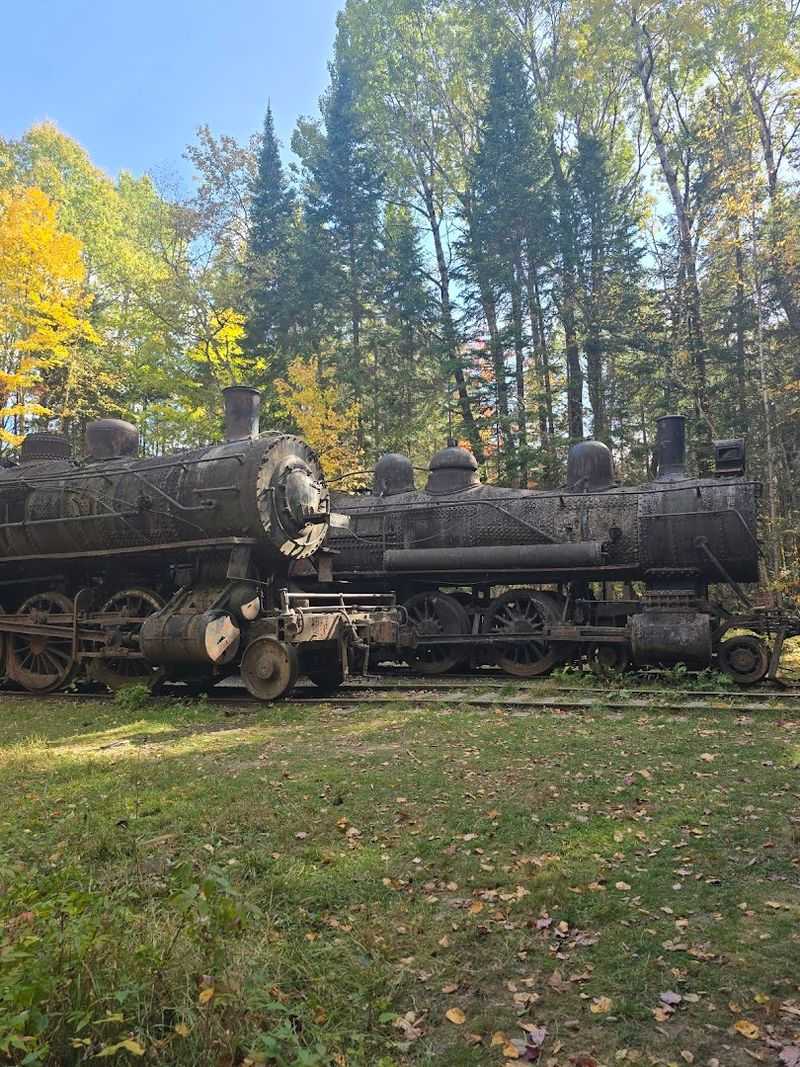
Both locomotives at Eagle Lake were built long before most people had ever seen a car. One dates to 1897 and the other to 1901, making them genuinely ancient pieces of machinery that somehow survived more than a century in one of the harshest climates in the northeastern United States.
They were not built for this railroad specifically. They were brought in to do a job and then never brought back out.
For years, the machines sat exposed to Maine winters and spring floods, rusting and slowly sinking into the soft forest floor. A shed was built over them at some point to slow the deterioration, but that shed burned down in 1966, leaving the locomotives fully exposed again.
The Maine Parks and Recreation Commission stepped in three years later, painting the trains to help protect the remaining metal.
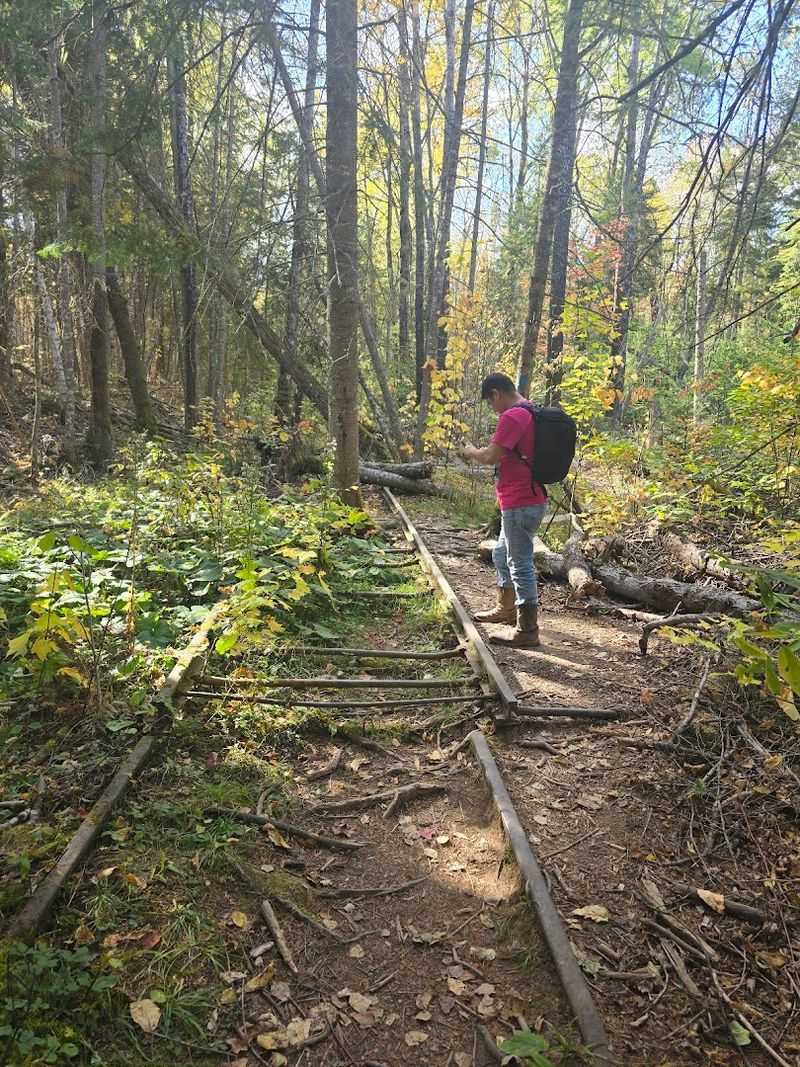
In 1995, the boiler jackets and asbestos lagging were removed as a safety measure. Then in 2012, volunteers came out to the site and lifted the locomotives back onto sections of track, giving them a more dignified resting position after years of sitting tilted and partially buried.
The fact that people cared enough to haul equipment into the deep wilderness just to right these old machines says something meaningful about how much this site matters to those who know about it. These are not just hunks of old iron.
They are touchstones for an entire era of Maine’s working past.
Getting There Is Half the Adventure
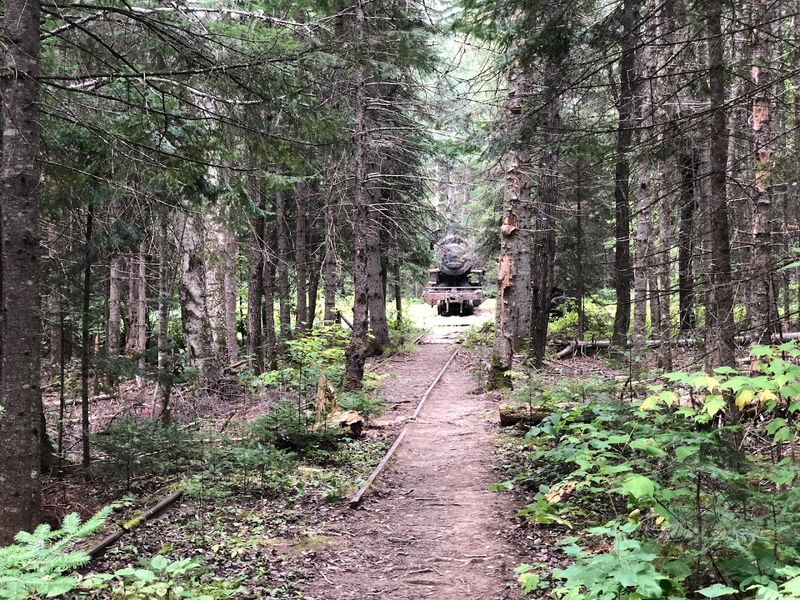
The trailhead parking area for the Ghost Trains sits off Tramway Road in Northwest Piscataquis County, near coordinates 46.3274834, -69.3901758, but do not expect Google Maps to hold your hand the whole way. Cell service disappears well before you reach the site, and the roads leading in are unpaved logging routes that require an AWD or 4WD vehicle.
A regular sedan will struggle badly out here.
Most visitors recommend picking up a physical pamphlet at one of the North Maine Woods checkpoints and using it alongside a downloaded offline map. The connector road runs about 14 miles before a key junction that catches people off guard.
Staying alert to trail signs and road forks is essential because a wrong turn in this part of Maine can add a very long time to your trip.
There is also a fee to enter the North Maine Woods at designated checkpoints, so plan for that before you head out. The hike from the trailhead to the locomotives is short and manageable, described by visitors as easy and well-marked.
But the drive itself is long, winding, and beautiful in a way that feels genuinely remote. Tall spruce trees line the roads, and the silence out there is the kind you rarely experience close to a city.
The effort required to reach this place is actually part of what makes it feel so special once you finally arrive.
The Tramway That Came Before the Trains
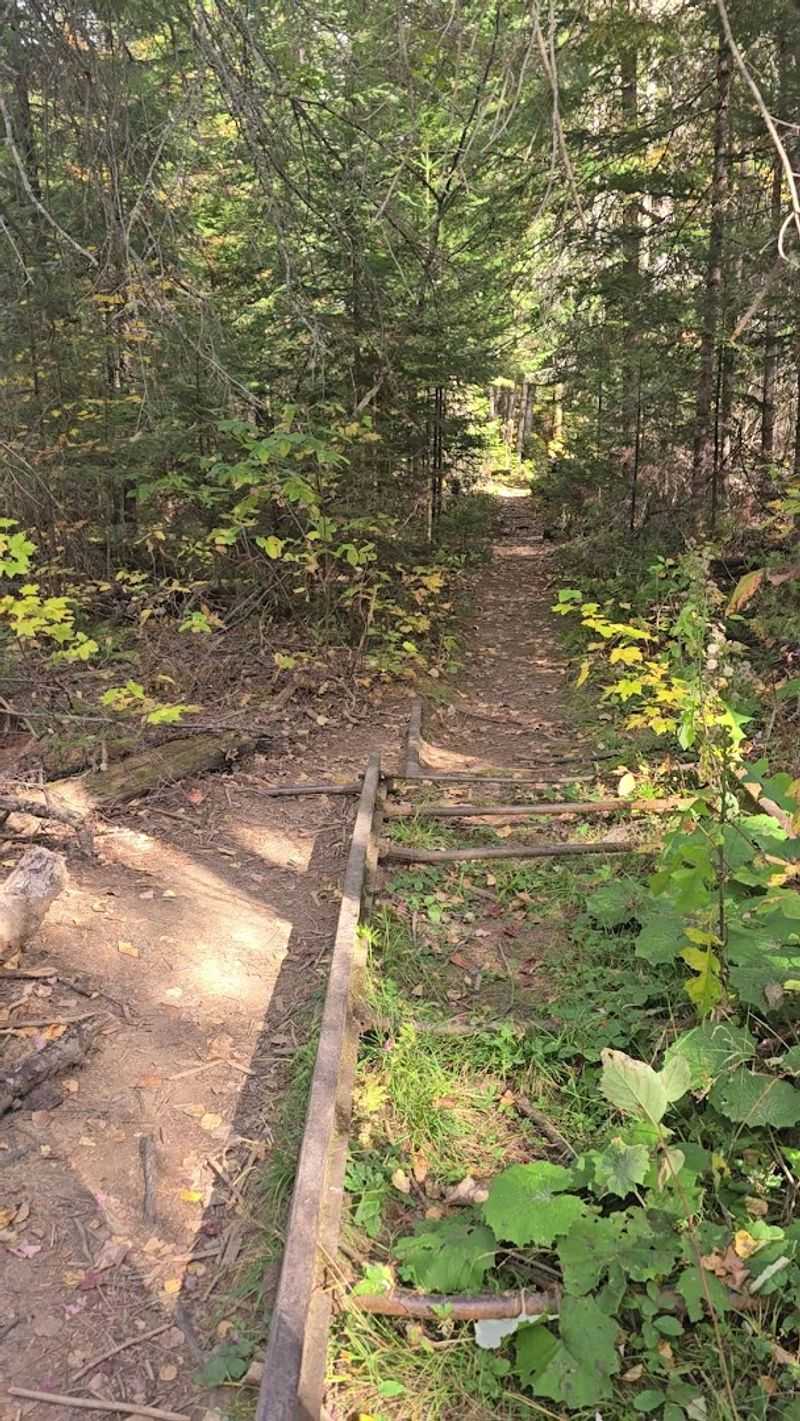
Before the locomotives ever arrived at Eagle Lake, there was an even older piece of industrial history already at work in the same area. The Eagle Lake Tramway was a steam-powered log transfer system that operated from 1902 to 1925, predating the railroad by several years.
Its job was to move logs from one body of water to another, bridging the gap in the waterway system that loggers depended on to float timber toward mills.
Remnants of this tramway can still be found near the locomotive site, adding another layer of depth to an already fascinating location. These older fragments are easy to overlook at first, blending into the forest floor with the patience of things that have not moved in a very long time.
But once you start noticing them, the whole area starts to feel like an open-air museum with no curator and no labels.
The tramway and the railroad together paint a picture of how relentlessly industry worked to extract timber from this wilderness over the course of several decades. Each system replaced or supplemented the last, driven by the same basic need: get the wood out faster and cheaper than before.
When the economics finally collapsed, both systems were left in place. The forest does not judge.
It simply grew back around the gears and timbers and iron rails, covering everything with the same patient green that covers everything else in the Allagash.
The Trestle Over Chamberlain Lake
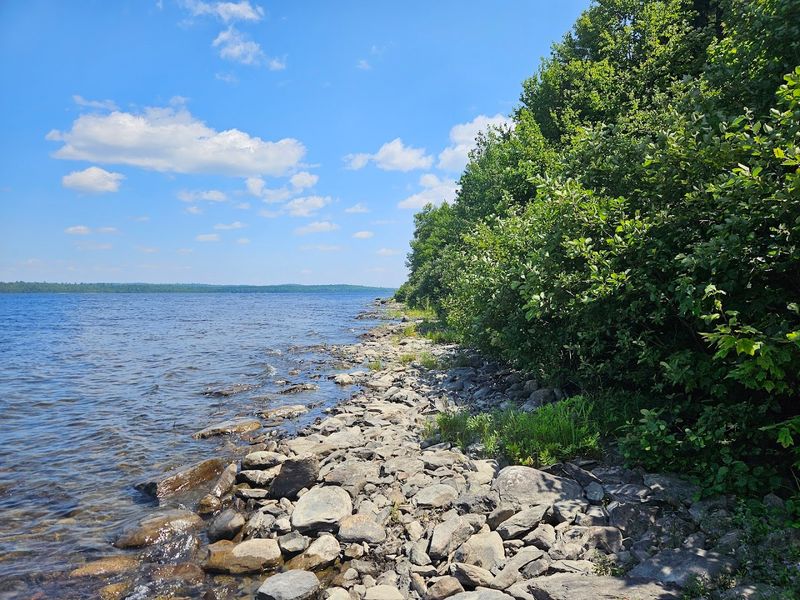
One of the most atmospheric remnants connected to the Eagle Lake and West Branch Railroad is what remains of the 1,500-foot trestle that once carried the rail line over Chamberlain Lake. Trestles like this were engineering achievements for their time, built to carry heavy loads of timber across water in a landscape where building anything permanent was a serious undertaking.
Today, the pilings that remain stick up from the lake like quiet monuments to a project that burned bright and burned out fast.
Seeing those old timber pilings from a canoe or from the shoreline gives you a very different sense of the scale of this operation. A 1,500-foot trestle is not a small thing.
It required significant planning, materials, and labor, all brought into one of the most isolated corners of New England. The fact that it was used for only six years makes the whole effort feel almost poignant.
For visitors who arrive by canoe, which is one of the more popular ways to reach the area in warmer months, the trestle remnants can serve as a visual landmark before the final approach to the locomotive site. The lake itself is stunning, surrounded by unbroken forest and almost entirely free of development.
Paddling toward those old pilings with the quiet of the Allagash around you is the kind of moment that stays with you long after the trip is over. It earns its place in memory without trying hard at all.
What Volunteers Have Done to Preserve the Site
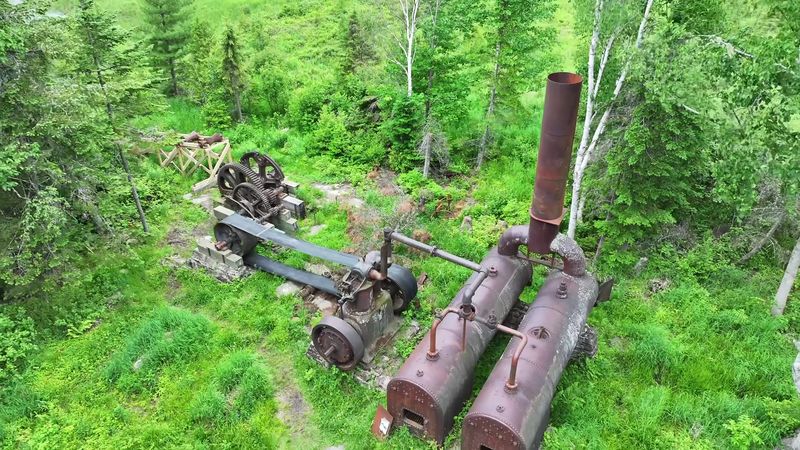
The Ghost Trains of Eagle Lake have not survived this long purely by accident. People have cared for them.
After the original shed burned in 1966 and the locomotives were left fully exposed, the Maine Parks and Recreation Commission painted them in 1969 to slow the rusting process. That kind of intervention takes both intention and effort, especially when the site is hours from the nearest town.
The 2012 effort to lift the locomotives back onto sections of track was an even bigger undertaking. Getting heavy equipment and a crew of volunteers to a location with no paved roads, no services, and no cell signal requires serious coordination.
The people who did that work clearly felt the site was worth protecting, and the results show. Visitors today consistently describe the area as well-kept and surprisingly tidy for such a remote location.
There is something quietly moving about that kind of stewardship. Nobody is getting paid to care about these trains.
The site has no admission booth, no ranger on duty, and no interpretive center. It relies on people who feel a personal connection to Maine’s logging history and want to make sure future visitors can experience it too.
Reviews from people who have made the trip mention that the site feels respectful and preserved. One visitor even noted that their grandfather helped right one of the locomotives, a small reminder that history here is not just academic.
It belongs to real families and real communities.
Why This Place Stays With You
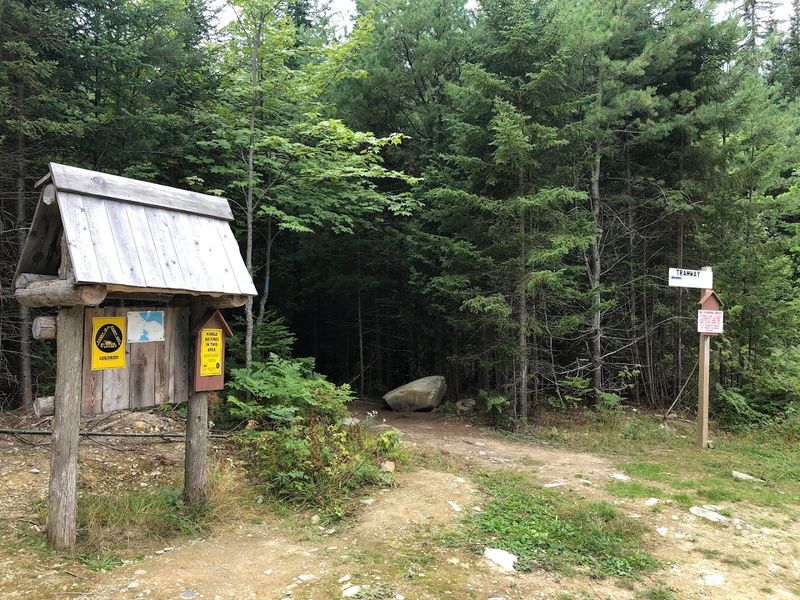
Most tourist destinations try to tell you exactly how to feel. Signs explain the history, arrows point to the highlights, and benches are placed at scenic viewpoints so you never have to figure anything out on your own.
Eagle Lake is nothing like that. There are no interpretive panels waiting at the end of the trail.
The trains just sit there, enormous and rusted and absolutely real, and you get to decide what they mean to you.
That openness is rare. It makes the experience feel personal in a way that carefully managed historic sites rarely do.
You are not consuming a packaged story. You are standing in front of something that was left behind and somehow survived, and the weight of that lands differently depending on what you bring to it.
Some people feel the history of Maine’s logging industry. Others feel the strangeness of time.
The remoteness also changes how you feel about getting there. By the time you reach the locomotives, you have already driven long logging roads, navigated without cell service, and hiked into genuine wilderness.
That journey builds something. It makes the arrival feel earned rather than convenient.
Visitors leave reviews that use words like “rewarding” and “mind-blowing,” and those reactions make sense. This is not a place that impresses you with polish.
It impresses you with honesty, with the raw fact of its existence out there in the deep Maine woods, unchanged and unhurried.
Address: Tramway Road, Northwest Piscataquis, ME
