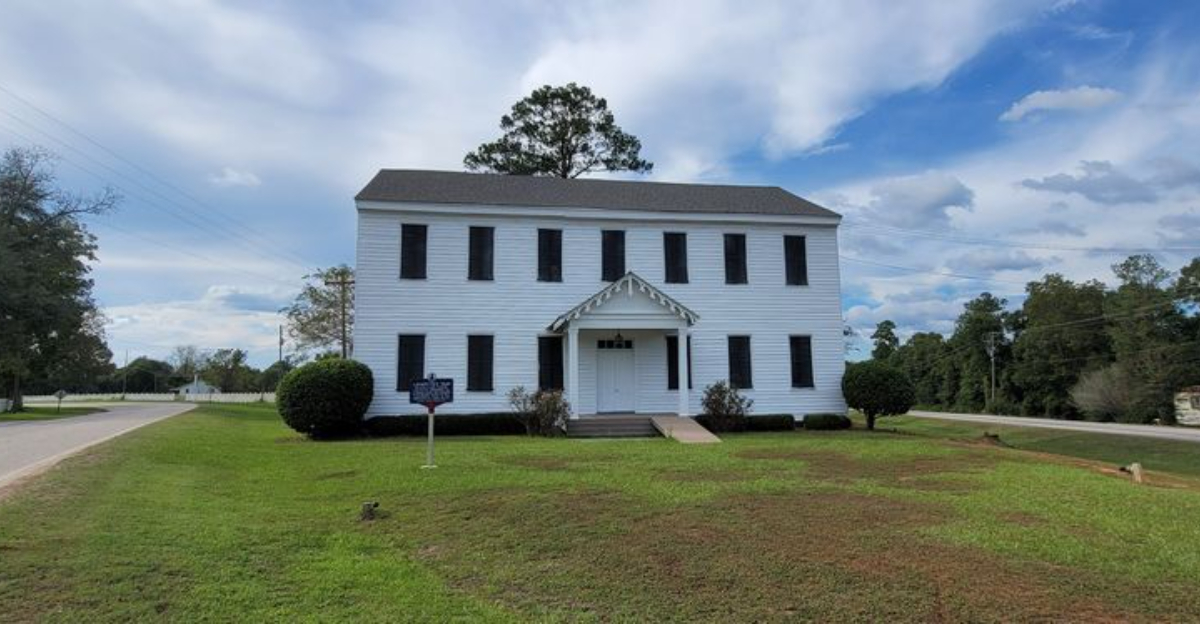
Hidden in a small community in southwestern Alabama, a weathered two-story building has quietly outlasted the town that once surrounded it.
What remains today is the last surviving structure from a river port that was once among the region’s most important destinations, a place where commerce, politics, and daily life once thrived along the waterfront.
More than two centuries later, the building still stands as a rare connection to that forgotten era, preserving stories that stretch from the early days of the nation to the rise and fall of an entire community.
For visitors who enjoy history, mystery, and places that seem untouched by time, it offers a fascinating glimpse into a world that has largely disappeared.
You Should Know What Stood Here Before
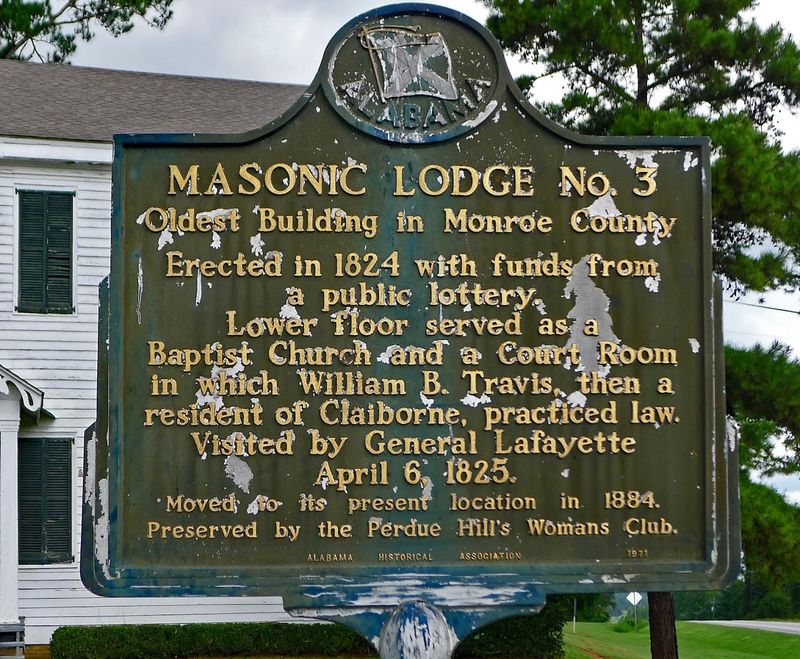
Before you visit the lodge, knowing what once surrounded it makes the experience hit differently. Old Claiborne was not a small backwoods settlement.
During its peak in the 1830s, this river town had a population of between 5,000 and 6,000 people, making it one of the largest cities in Alabama at the time.
Claiborne grew from Fort Claiborne, a military post established in 1816 during the Creek War. It quickly became a major cotton port and trading hub on the Alabama River.
Steamboats lined the bluffs. Merchants, lawyers, and politicians called it home.
The energy of the place was real and powerful.
Then came yellow fever outbreaks, cholera epidemics, and the Civil War. Union soldiers looted the town heavily.
The final blow came when the railroad bypassed Claiborne entirely, making river shipping obsolete almost overnight. Businesses packed up.
Families left. The town simply stopped existing.
Today, only a few original homes, three 19th-century cemeteries, and scattered historical markers remain where thousands once lived. The Masonic Lodge at 42 Co Rd 1, Perdue Hill, AL 36470 is the most complete surviving structure from that era.
Standing in front of it, you are looking at the last solid proof that a thriving city once existed just two miles away. That feeling is hard to replicate anywhere else in Alabama.
Come Ready To Hear About Lafayette
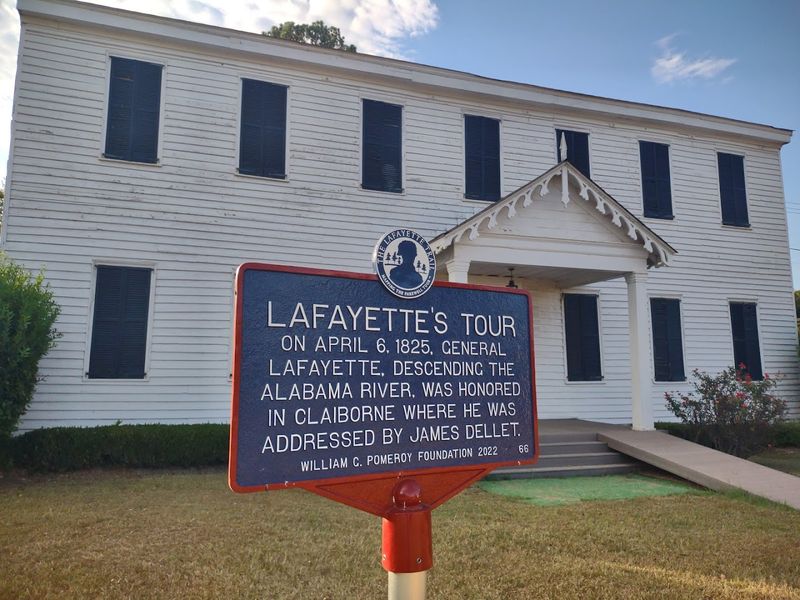
On April 6, 1825, one of the most celebrated figures of the American Revolution walked through the doors of this very building.
General Lafayette, the French military hero who fought alongside George Washington, attended a ball held in his honor at the Claiborne Masonic Lodge during his grand tour of the 24 United States.
That single event connects this Alabama structure to one of the most famous farewell tours in American history.
Lafayette was treated like royalty everywhere he traveled during that tour. Crowds lined the streets.
Banquets were thrown. In Claiborne, the Masonic Lodge was the grandest venue available, and the community used it to give the general a proper celebration.
Knowing that the same wooden floors you stand on today once held that event is genuinely remarkable.
In 2025, a special ceremony was held at the lodge to honor the 200th anniversary of Lafayette’s visit. The event drew attention to just how significant this building remains in the broader story of American history.
It is not just an Alabama landmark. It is a place with connections that stretch all the way back to the founding era of the nation.
If you appreciate stories where history and place intersect in an almost unbelievable way, the Lafayette connection alone gives you a strong reason to make the drive to Perdue Hill and see this building for yourself.
Do Not Skip The William Barret Travis Story
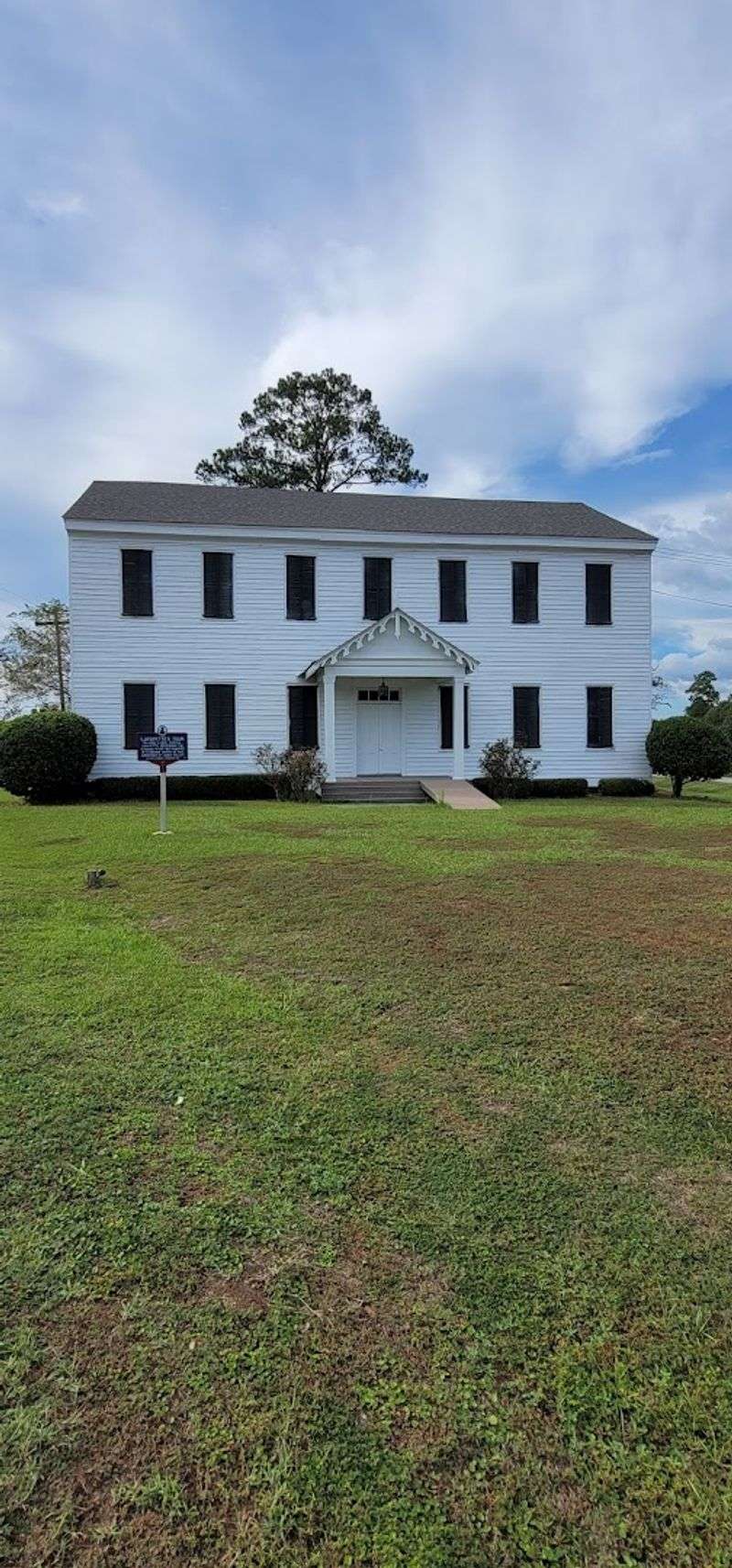
Before William Barret Travis became a legend at the Alamo, he was a young lawyer practicing in Claiborne, Alabama. Travis lived and worked in Claiborne around 1825, and the lower floor of the Masonic Lodge served as the Monroe County Courthouse at the time.
That means Travis almost certainly argued cases in the very room you can visit today.
Think about that for a moment. A man who would later become one of the most iconic figures of the Texas Revolution, the commander who reportedly drew a line in the sand at the Alamo and asked men to cross it, once stood in this modest Alabama building trying to build a legal career.
History has a way of hiding its biggest characters in quiet corners before the world finds out who they are.
The connection between Travis and Lafayette is what makes this building especially fascinating. Both men were reportedly in Claiborne in April 1825.
Travis practicing law. Lafayette attending his celebratory ball.
Two figures from two entirely different chapters of American history, possibly in the same building at the same time.
Whether you know the story of the Alamo well or are hearing about Travis for the first time, standing in the space where he once worked adds a layer of meaning to your visit that no museum exhibit can fully replicate.
The Claiborne Masonic Lodge holds this story with no fanfare, and that quiet honesty makes it even more powerful.
Plan A Trip For The Architecture Alone
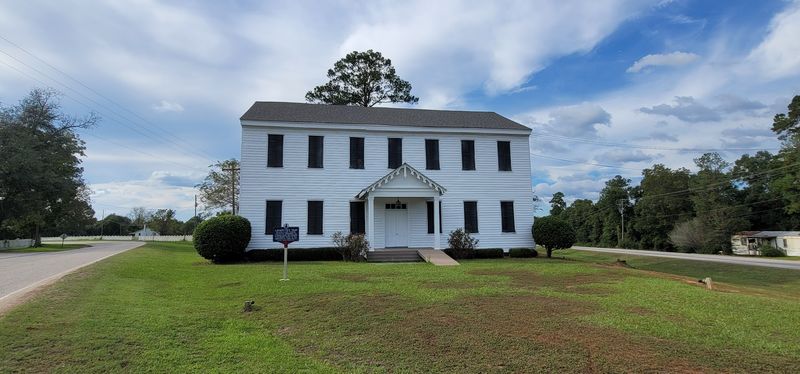
Some buildings speak before you even walk through the door. The Claiborne Masonic Lodge is a two-story wooden frame structure built in 1824, and it carries every one of those 200 years with quiet dignity.
The craftsmanship reflects early 19th-century construction methods that most people have only read about in textbooks.
The building was documented in the Historic American Buildings Survey, known as HABS, back in 1934. That survey was a federal program designed to record architecturally significant structures across the country.
Being included placed this lodge among buildings considered worth preserving for future generations, and that recognition still holds weight today.
What makes the architecture even more remarkable is its survival story. In 1884, when Old Claiborne was clearly declining, community members made the decision to dismantle the entire building and move it approximately two miles south to Perdue Hill.
Piece by piece, they relocated it rather than let it fall into ruin. That kind of community commitment to preservation is rare in any era.
The lodge was restored again in 1981 by the Perdue Hill-Claiborne Foundation, a non-profit group formed specifically to protect the structure.
Walking around the building, you can appreciate the original framing, the proportions of the windows, and the sturdy simplicity that defines Alabama frontier construction.
It is not flashy. It is honest, and that honesty is exactly what makes it worth your time.
Make Time For The Multiple Roles This Building Played
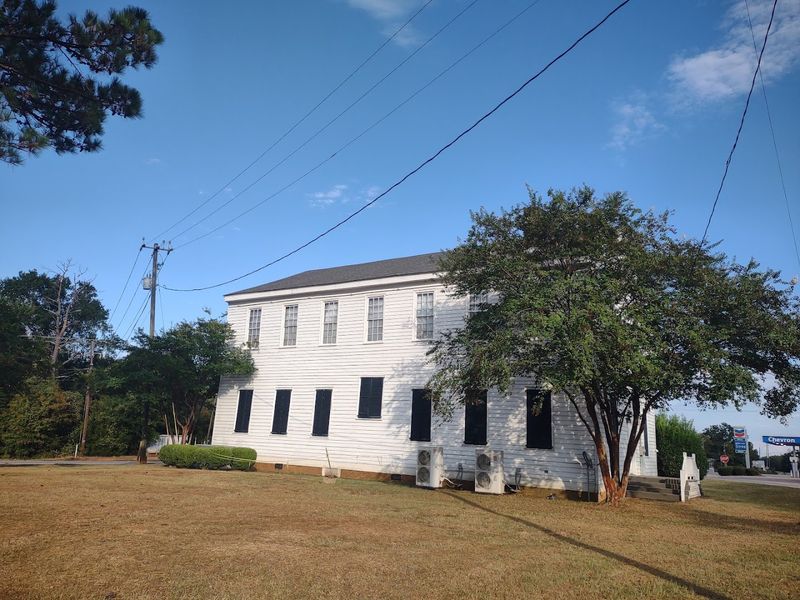
Most historic buildings had one purpose. The Claiborne Masonic Lodge had at least five.
Over its long life, the lower floor of this single structure served as the Monroe County Courthouse, a town hall, a school, and a Baptist Church. The upper floor was used exclusively by the Masons until around 1919.
That kind of multi-purpose history packed into one building is almost unheard of.
Understanding those layers changes the way you look at the space. When you stand on the lower floor, you are standing where local laws were debated, where community decisions were made, where children learned to read, and where a congregation gathered to worship.
Each of those uses left an invisible mark on the atmosphere of the place.
The Masonic side of the story is equally rich. Claiborne Lodge No. 51 was chartered in 1819, five years before the building itself was constructed.
The upper floor was a private and sacred space for Freemasons in the region for a full century. That tradition of brotherhood, ritual, and community service ran quietly alongside all the civic activity happening downstairs.
Buildings that served this many purposes tell us something important about frontier life. Communities on the Alabama frontier did not have the luxury of separate institutions for every need.
They shared what they had, and they built things to last. The Claiborne Masonic Lodge is living proof that they succeeded on both counts.
Skip The Crowds And Find Real Quiet History
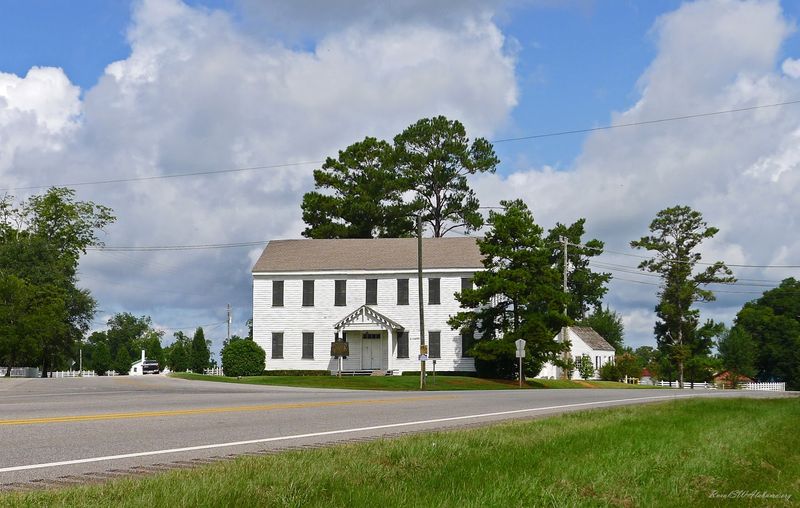
Not every meaningful historical site comes with a gift shop, a ticket booth, or a crowd of tourists. The Claiborne Masonic Lodge is the kind of place where you can actually hear yourself think.
Located in the small community of Perdue Hill in Monroe County, Alabama, the lodge sits away from the noise of major highways and tourist corridors.
That quietness is part of what makes a visit feel so personal. There is no recorded audio tour looping in the background.
No costumed actors walking you through a scripted narrative. Just you, the building, and 200 years of history that you can take in at your own pace.
For history lovers who prefer depth over spectacle, this is exactly the kind of stop that stays with you long after you drive home.
The lodge is currently open for special events, so checking ahead before your visit is a smart move. The Perdue Hill-Claiborne Foundation manages the property and has worked for decades to keep the building accessible and preserved.
Reaching out to them in advance can also connect you with more detailed local knowledge about the site and its surroundings.
The nearby area also has three 19th-century cemeteries and historical markers related to Old Claiborne that are worth exploring during the same trip. Pairing those stops with the lodge gives you a fuller picture of what this stretch of Monroe County once looked like when it was the center of Alabama river life.
Try Connecting The Past To The Present Here
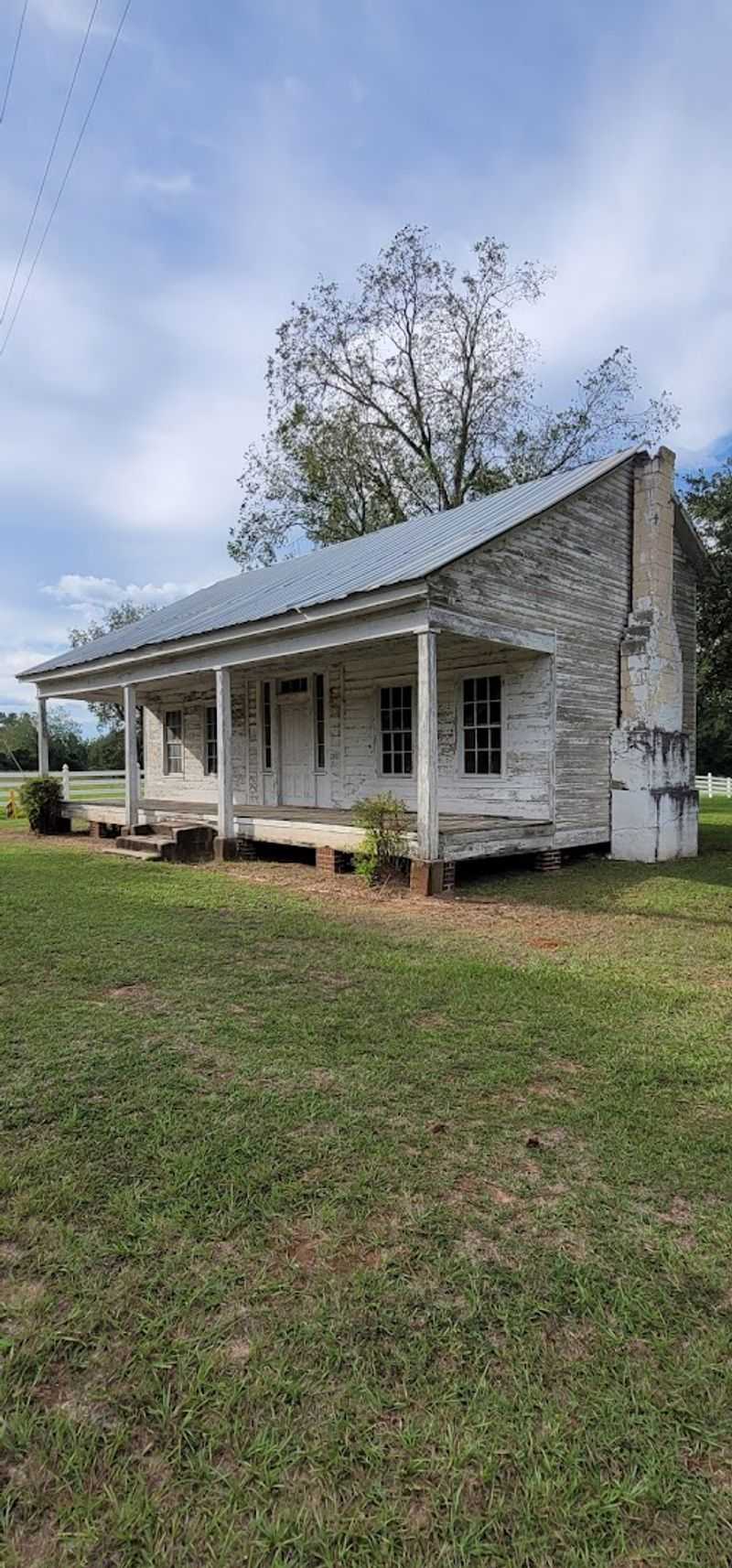
There is something rare about visiting a place where you can feel the full weight of time. The Claiborne Masonic Lodge is listed on the Alabama Register of Landmarks and Heritage, which means the state officially recognizes its importance to Alabama’s cultural and historical identity.
That designation is not given lightly, and it signals that what you are visiting matters beyond local pride.
The building was originally constructed in 1824 in a town that no longer exists. It was moved in 1884 to save it.
It was restored in 1981 to preserve it. Every decade of its survival represents a conscious choice by someone to keep this piece of history alive.
That chain of care stretching across nearly two centuries is itself a story worth honoring.
Visiting the lodge also connects you to a broader conversation about what gets remembered and what gets forgotten. Claiborne was once one of the biggest cities in Alabama.
Today, most people in the state have never heard of it. The lodge is the most powerful argument that the town existed at all, that real people built real lives there, and that their community mattered.
Coming here is not just a history lesson. It is a reminder that places can vanish, that time moves fast, and that the buildings we choose to protect say something about the values we carry forward.
The Claiborne Masonic Lodge makes that point better than any textbook ever could.
