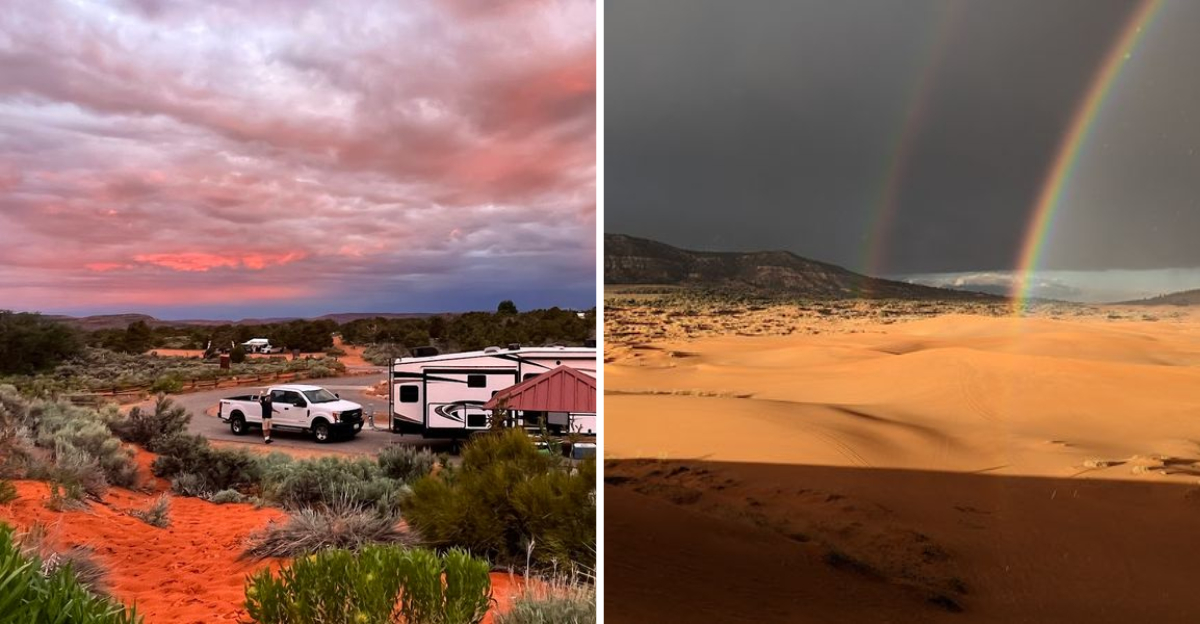
Sand that looks like it was mixed with a sunset and left to cool overnight. Coral pink dunes rolling out beneath a wide Utah sky.
The color is not a filter. It is real.
Warm. Almost glowing. I stopped walking the first time I saw it.
Just stood there taking it in. Morning light makes it glow.
Sunset makes it burn. The dunes shift and move with the wind, always changing, never the same twice. There are no crowds here, just sand and sky and that impossible color stretching in every direction.
If you are anywhere near southern Utah and you skip this place, you will regret it the moment you see someone else’s photos.
The Otherworldly Color That Makes This Park Impossible to Forget
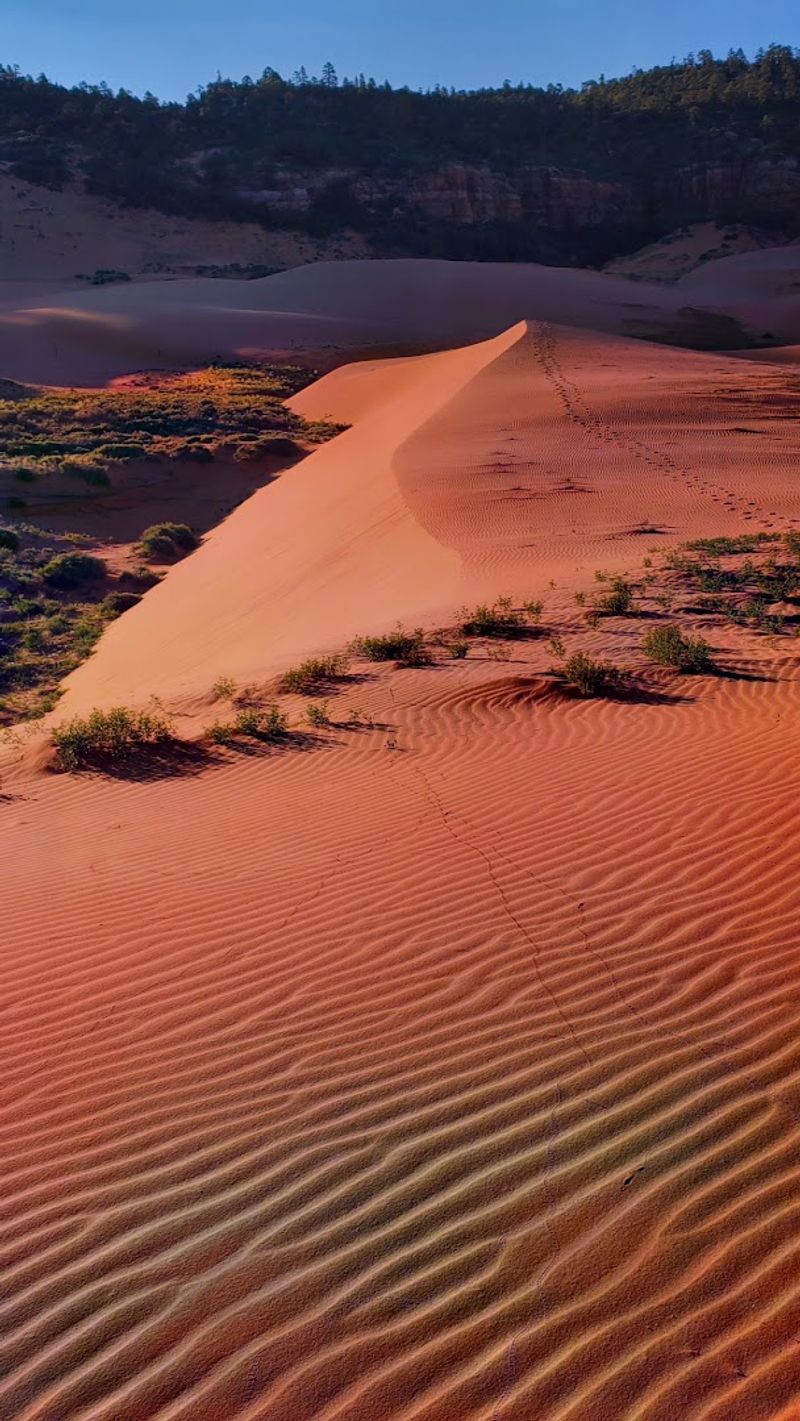
Most people expect sand to be beige. What you find at Coral Pink Sand Dunes is something completely different, almost startling in the best possible way.
The sand carries a warm, rosy hue that shifts between coral, peach, and soft orange depending on the time of day you visit.
That color comes from iron oxide locked inside the surrounding Navajo Sandstone. Over thousands of years, wind eroded those rust-tinged rocks and carried the particles into this valley, layering them into dunes that now glow like embers in the afternoon light.
The science behind it is fascinating, but honestly, standing there, it just feels like magic.
The color is at its richest during the golden hours, right after sunrise and just before sunset. Midday light flattens things out a little, so timing your visit matters.
I went in the late afternoon and watched the dunes shift from soft pink to deep coral as the sun dropped lower. No photo fully captures it.
The only way to really understand what makes this place so visually striking is to go yourself and see it with your own eyes.
How 10,000 Years of Wind Built These Remarkable Dunes
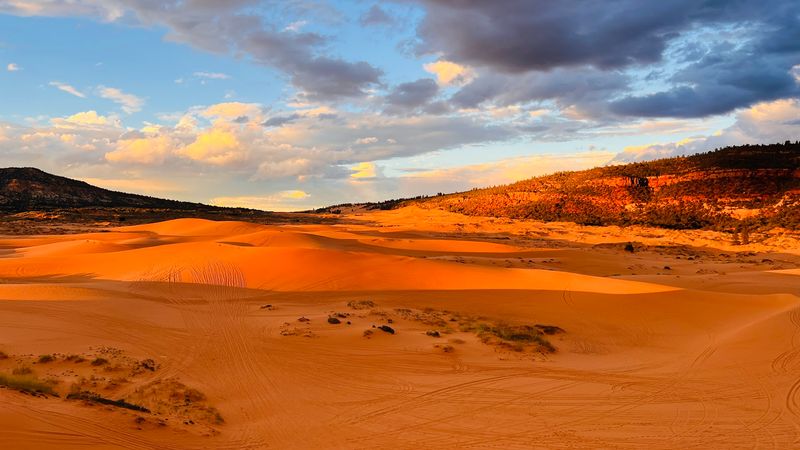
These dunes did not appear overnight. They have been building for somewhere between 10,000 and 15,000 years, shaped entirely by wind funneling through a natural gap in the Moquith and Moccasin Mountains nearby.
That gap acts like a nozzle, accelerating the wind in what geologists call the Venturi Effect.
The accelerated air picks up eroded sandstone particles and deposits them in the valley below, grain by grain, season by season. The result is a dune field that covers roughly 1,200 acres and shifts as much as 50 feet in a single year.
You can actually watch the surface change between visits if you pay close attention to the ripple patterns.
Coral Pink Sand Dunes holds a pretty remarkable geological title. It is the only major sand dune field found on the entire Colorado Plateau, a region better known for canyons, mesas, and red rock formations.
That distinction makes it genuinely rare, not just scenic. The dunes are still active and moving today, which means the landscape you see on one trip will look subtly different the next time you return.
That kind of living, shifting terrain is part of what makes this park so compelling to explore.
Sandboarding, OHV Riding, and Every Way to Actually Play Here
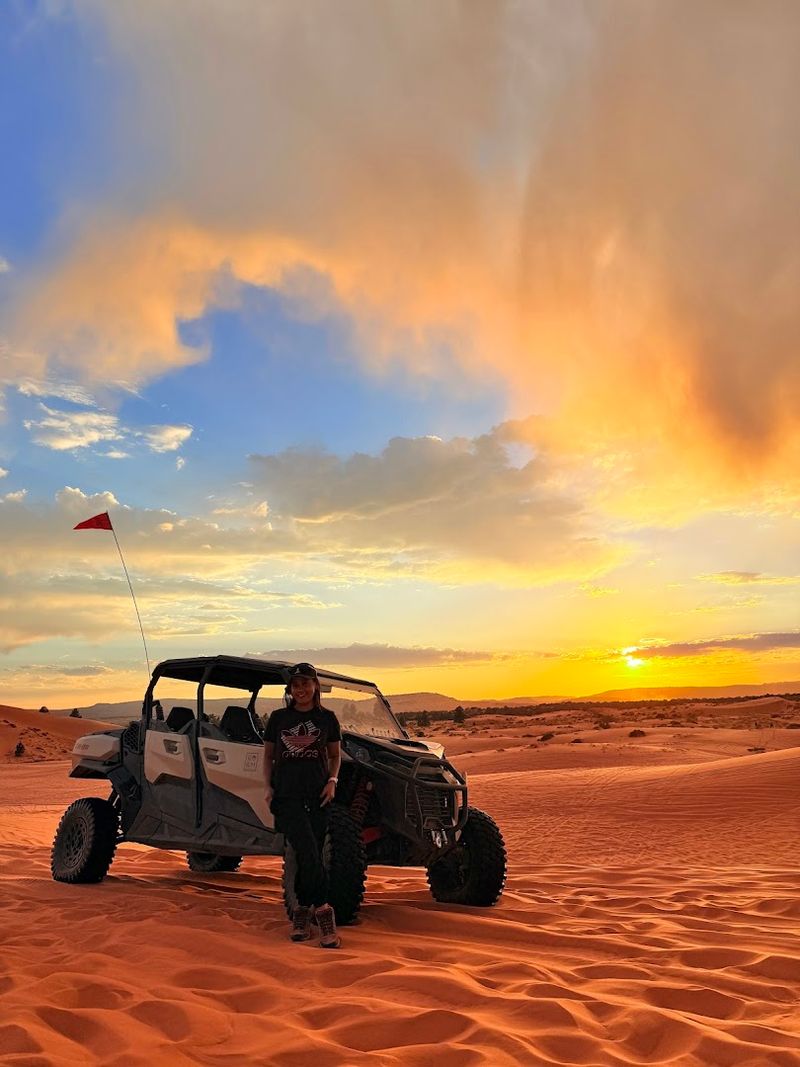
This is not the kind of park where you just look at things from behind a rope. About 90 percent of the dunes are open to off-highway vehicles, making it a genuinely popular destination for ATV and UTV riders who want wide-open terrain and something more interesting than a dirt road.
For those who prefer something a little more low-tech, sandboarding is the big draw. The visitor center rents out sandboards and sand sleds, and the dunes offer slopes at all different heights, so beginners and more adventurous riders both have plenty of options.
Climbing back up after each run is a workout, no question about it, but the ride down makes every breathless step worth it.
Hiking is another solid option, especially if you want to explore without the noise of engines nearby. Heading deeper into the dunes puts you in a quieter zone where the only sounds are wind and the soft crunch of sand underfoot.
Families tend to love this place because there is genuinely something for everyone, from toddlers who just want to dig in the sand to adults chasing sunset views from the top of the highest ridge. Bring water, wear sunscreen, and plan to stay longer than you think you will.
Wildlife You Would Never Expect to Find in a Desert Sand Dune
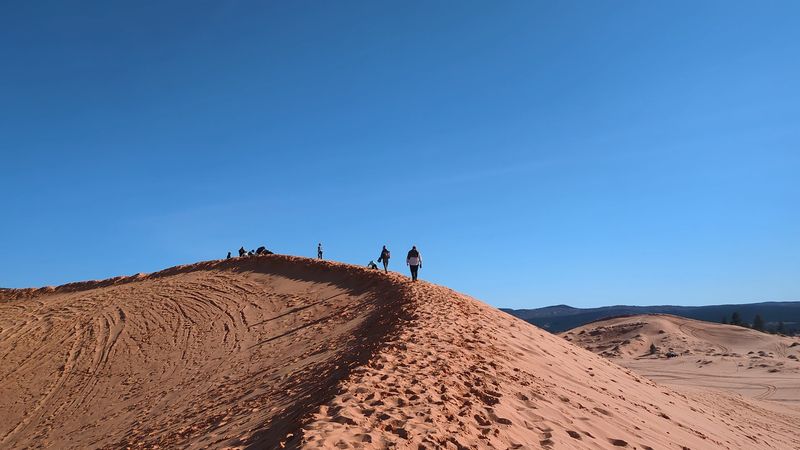
At first glance, a field of shifting sand does not look like prime wildlife habitat. But Coral Pink Sand Dunes supports a surprisingly diverse community of animals and plants, including a few species found absolutely nowhere else on Earth.
The most famous resident is the Coral Pink Sand Dunes tiger beetle, known scientifically as Cicindela albissima. This small insect is endemic to the park, meaning this specific patch of coral sand is the only place in the world where it naturally exists.
That alone gives the park a kind of ecological weight that goes beyond its visual appeal.
Welsh’s milkweed, a federally listed threatened plant, also grows here, clinging to the sandy soil in a way that surprises most visitors who expect nothing but bare dunes. Wild mustangs, bighorn sheep, mule deer, and desert tortoises round out the wildlife roster.
Seeing a mule deer trot across the dunes at dusk is one of those unexpected moments that sticks with you long after the trip ends. The park asks visitors to stay aware of the animals sharing the space, especially along the roads leading in and out, where wildlife crossings are common, particularly in the early morning and evening hours.
Sunset and Stargazing Experiences That Genuinely Surprise People
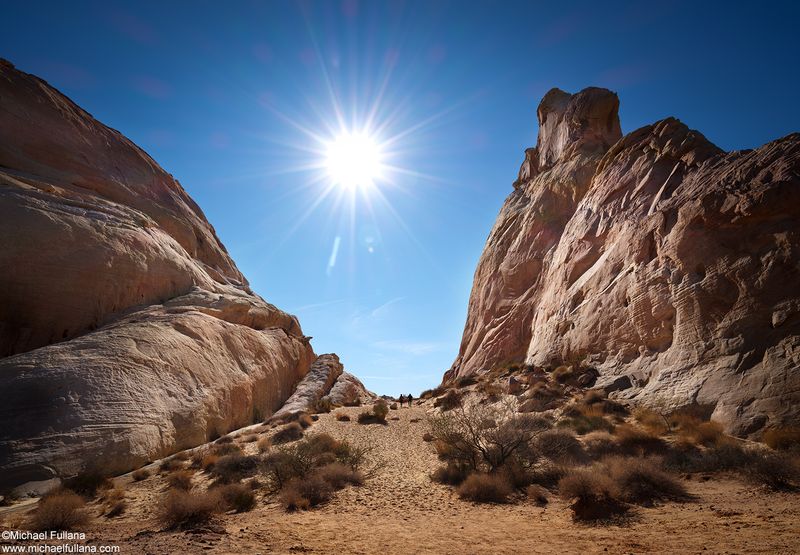
Sunset at this park is the kind of thing people talk about for years. The dunes absorb the low-angle light and respond with colors that shift from soft coral to deep amber and eventually a rich burnt orange as the sun sinks below the horizon.
It is one of those rare moments where a place actually exceeds the photos you have seen of it.
After the sun goes down, the sky takes over. The park sits at 6,000 feet elevation in a remote part of southwestern Utah, far from city light pollution, which makes the night sky here genuinely breathtaking.
On clear nights, the stars are dense and bright enough to feel close. Visitors have even encountered impromptu stargazing events hosted by astronomy enthusiasts near the viewing platform by the parking area.
If you are planning a visit, build in time for both. Arrive a couple of hours before sunset so you can hike out to a good vantage point without rushing.
Return your sandboard rentals before dark since the visitor center closes, then head back out to the dunes for the stars. That combination of a glowing sunset followed by a sky full of stars makes for one of the most complete outdoor evenings you can have in southern Utah.
Camping Under the Stars at One of Utah’s Most Underrated Parks
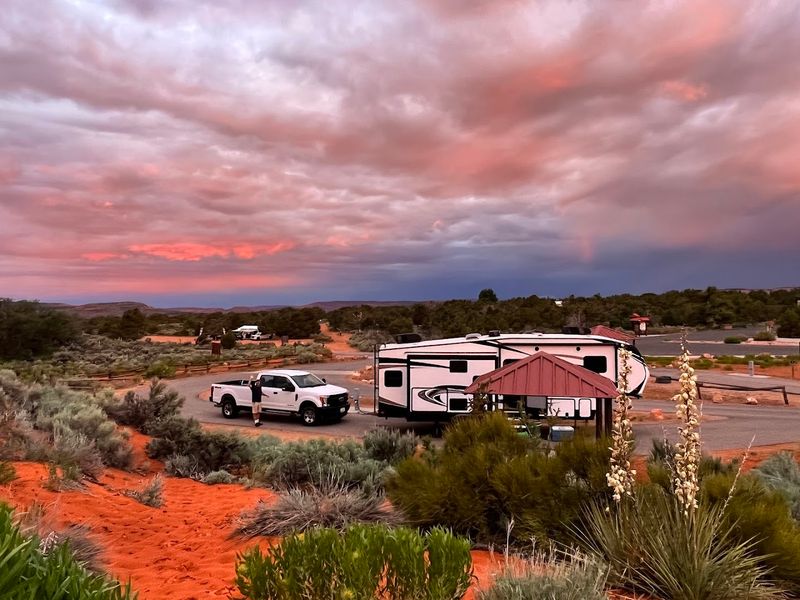
Spending the night at Coral Pink Sand Dunes is a different experience than just stopping in for the afternoon. The park has a campground with clean facilities, including bathrooms and shower access, which is honestly a pleasant surprise for a park this remote and low-key.
The sites do not have sewer hookups, but there is a dump station on the property. Water pressure can be inconsistent, so if you are coming in an RV, it is worth filling your tanks before arrival or planning to use your own pump.
Cell service is limited or nonexistent in the area, so download offline maps and save your directions before you leave town.
What the campground lacks in connectivity, it more than makes up for in atmosphere. Waking up surrounded by pink sand dunes with no city noise and a sky that was full of stars just hours before is the kind of morning that resets something in you.
Deer wander through the area regularly, so early risers often get quiet wildlife encounters right from their campsite. The camp hosts have a reputation for being helpful and keeping things tidy.
If you are exploring the Kanab region over multiple days, staying in the park overnight is absolutely the move.
Tips and Practical Info to Make Your Visit Smooth and Memorable
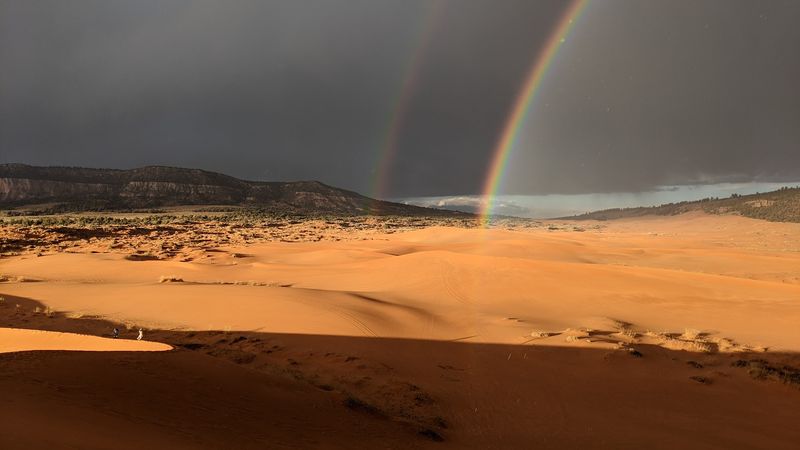
A few small planning decisions can make a big difference at this park. The heat in summer is real, and the dunes offer almost no shade once you are out on the sand.
Bring more water than you think you need, apply sunscreen before you leave the car, and wear shoes you do not mind filling with fine pink sand.
The best light for photography and the most comfortable temperatures for hiking happen in the early morning and late afternoon. Midday is manageable in cooler months but can be rough in summer.
If sandboarding is your main goal, check conditions before you go since wet sand after rain does not allow boards to slide properly, and rentals may be paused on those days.
The park sits about 12 miles from Kanab, which is a solid base for exploring the wider region including Zion National Park and the Grand Staircase-Escalante area. Save your navigation directions before you leave town since cell service disappears as you approach the park.
There is a small entry fee at the gate, and sandboard rentals are available at the visitor center. Arriving with a full tank of gas, a charged camera, and no particular rush is genuinely the best way to experience everything this place has to offer.
Address: Kanab, UT 84741
