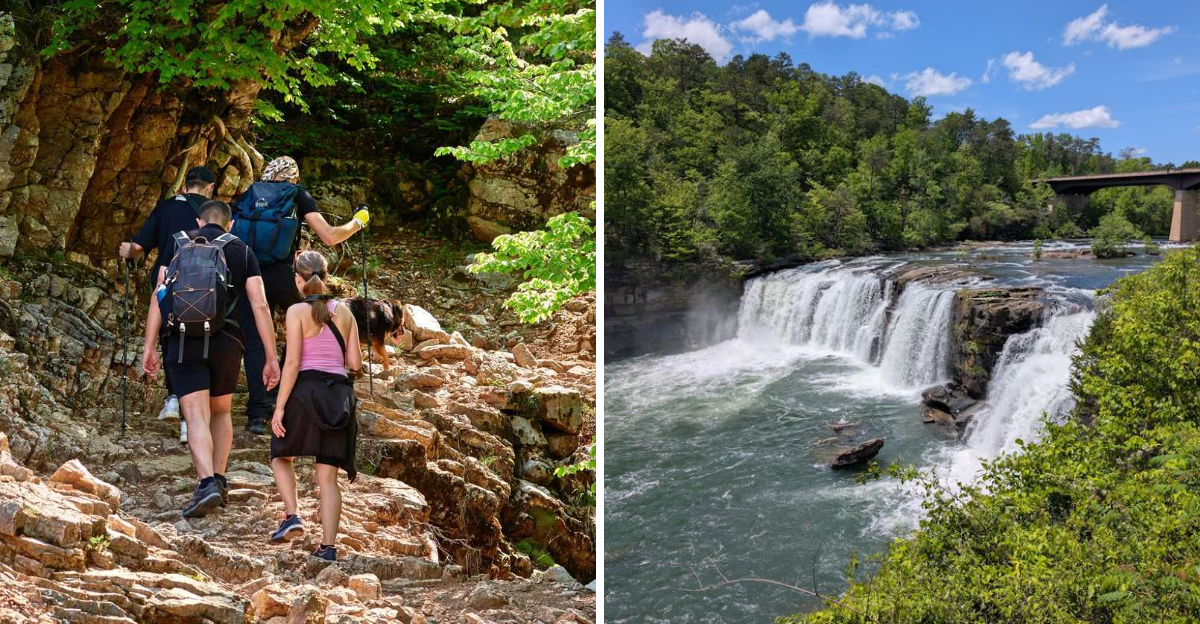
The kids did not complain once. That might be the most impressive part.
The trail is short, shaded, and smooth, with a boardwalk leading toward the sound of rushing water. Then the trees open up and there is a 45-foot waterfall below, pouring into a sandstone canyon that stretches far beyond the railing.
You do not need hiking boots built for battle. You do not need hours of free time.
You just need enough patience to follow the sound. This Alabama nature spot gives families, grandparents, and casual walkers the same reward serious hikers spend hours chasing.
Follow an Easy Half-Mile Trail to the View
Trails that promise big views usually come with a catch. Steep switchbacks.
Loose rock. Knees that complain for two days afterward.
The Bridge Trail skips all of that. Roughly half a mile one way, starting near the Little River Canyon Center and rolling gently through quiet hardwood forest, it stays flat and forgiving for most of its length.
Early stretches are packed dirt, smooth enough that conversation never gets interrupted by watching where feet land. Birdsong fills the gaps between footsteps.
Partway along, the dirt gives way to a built boardwalk that carries walkers under the Highway 35 bridge without anyone stepping near traffic. It is a clever bit of design that removes the one part of the route that could have felt sketchy.
Past the bridge, the boardwalk curves upward toward the northern abutment, and the first slices of canyon start appearing through the trees. Small teasers before the main event.
Because the distance is short, plenty of visitors treat it as a warm-up before a scenic drive or a longer hike elsewhere in the preserve. Others make it the whole outing and never regret it.
Sturdy shoes still help after rain, since roots and rock can turn slick. Otherwise, sneakers do the job just fine.
Bring water, take the pace slowly, and let the sound of the falls pull the walk forward.
Little River Falls, The Tallest Waterfall In Alabama
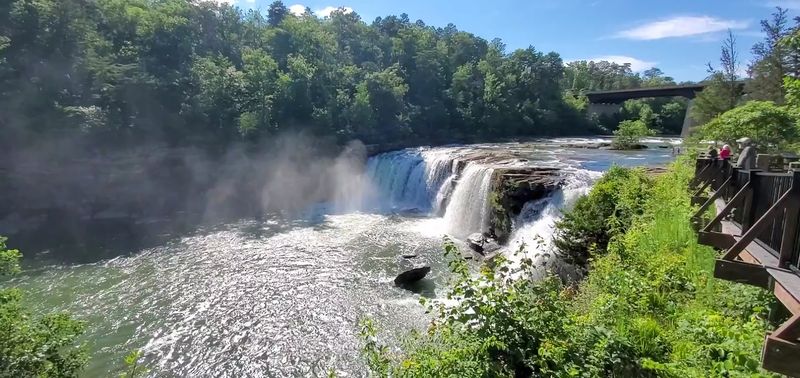
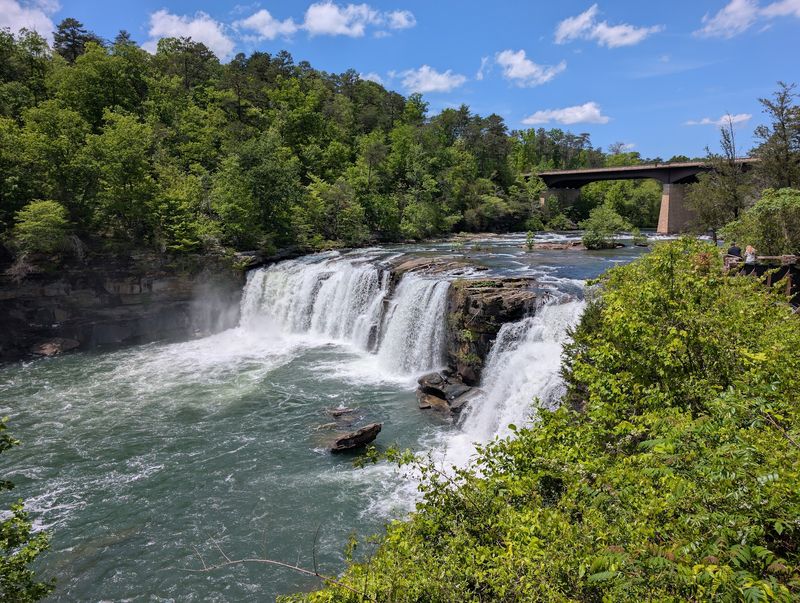
Forty-five feet does not sound enormous on paper. In person, with the water spread wide across a sandstone ledge and hammering into the pool below, the number stops mattering.
Little River Falls holds the title of tallest waterfall in Alabama, and the observation deck beside the Highway 35 bridge delivers what many regulars consider the best angle on it anywhere in the preserve.
The falls change personality with the seasons. After heavy spring rain, the whole ledge turns into a thundering white curtain that throws mist onto the viewing platform.
Late summer brings a quieter version, thinner ribbons sliding over exposed rock, revealing the strange scooped shapes the water has carved over thousands of years. Both versions are worth seeing, just for different reasons.
Morning light tends to be softest, and on bright days the spray sometimes catches the sun and throws a short-lived rainbow above the churn. Photographers who arrive early or stay until the light goes gold get the most dramatic frames.
Listen for a moment before reaching for a camera. The roar bounces off the canyon walls and fills the whole clearing, which is a big part of why the spot sticks in memory.
Railings along the deck are solid, making it a comfortable place to linger with children while everyone takes in the view.
Take a Stroll Beneath the Highway 35 Bridge
Bridges rarely count as scenery. Something about walking directly beneath this one changes the equation.
The Highway 35 span crosses Little River right at the falls, and the boardwalk tucks underneath its arch, giving an unusual worm’s-eye look at concrete curves framing green forest on the far side.
Its design was ahead of its time for Alabama. Recycled steel went into the support beams and rebar, and recycled asphalt was used for the driving surface, choices that fit a structure sitting inside a protected preserve.
Only a single pier stands in the streambed, which keeps the river flowing more or less as it always has. From below, that restraint is easy to appreciate.
Up top, a dedicated pedestrian lane runs the length of the bridge with three separate viewing areas and benches spaced along it. Sitting there puts the whole upper canyon in view at once.
Combining both perspectives makes the visit richer. Walk the boardwalk underneath, then climb up and cross the pedestrian lane for the wide-open version.
Traffic noise is present but never overwhelming, mostly drowned out by water. Kids tend to love the tunnel-like feeling of passing under the arch, and it is a good spot to pause when the sun gets strong.
Engineering and wilderness sharing space this comfortably is not something every park manages.
A River That Runs Along The Top Of A Mountain
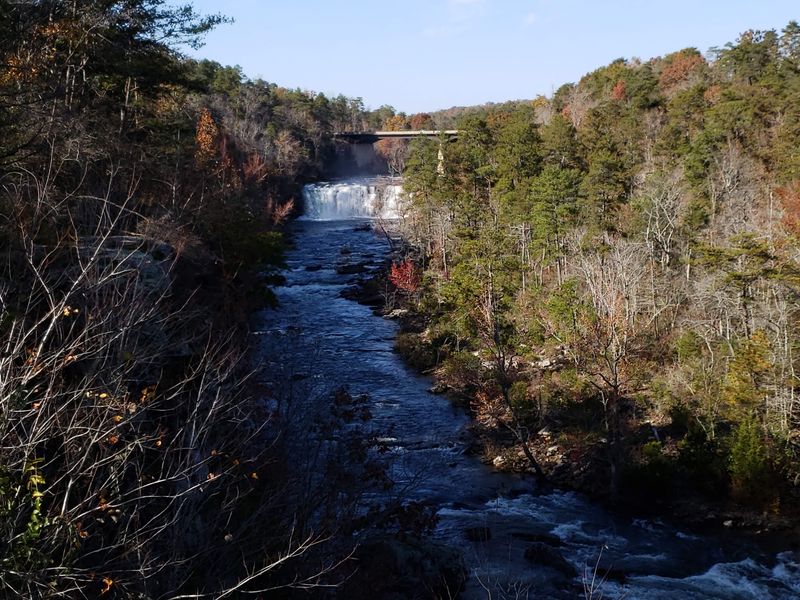
Here is the oddity that hooks geology fans. Little River forms on a mountaintop and flows nearly its entire length along the top of a mountain plateau, a pattern found nowhere else in the United States.
Most rivers gather in valleys. This one starts high on Lookout Mountain and stays high, slicing straight down through sandstone instead of wandering across lowlands.
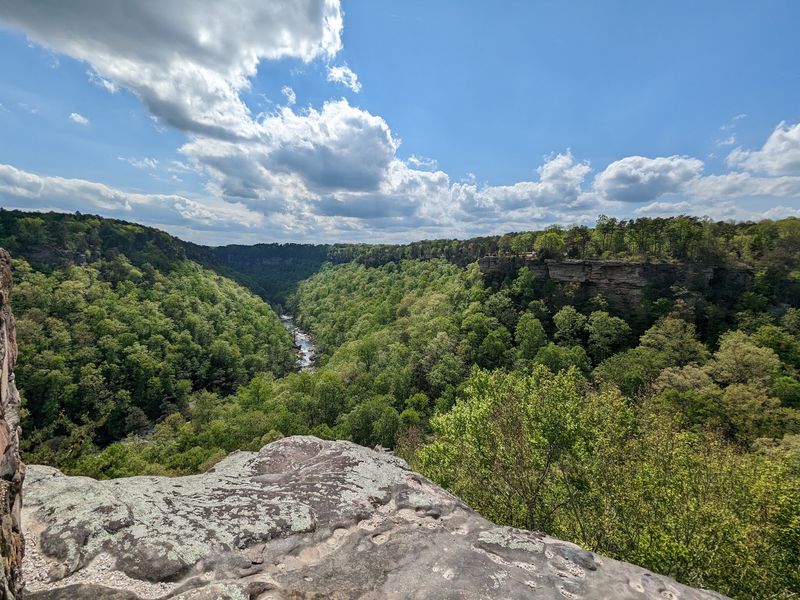
The result is one of the deepest canyons east of the Mississippi, cut by a river that never left the ridge. Every overlook along the trail is essentially a window into that slow, stubborn process.
Water quality here is notably good, and the river is often described as among the cleanest and wildest in the Southern United States. No major dams interrupt its run through the preserve, so the current behaves the way it always has.
That freedom supports a lively mix of fish, salamanders, mussels, and the plant life clinging to wet rock along the banks. Watch the shallows and small movements show up quickly.
From the trail, the river reads as clear water sliding across flat stone shelves before it reaches the drop. Simple looking, geologically remarkable.
Anyone curious about how landscapes get made will find plenty to think about while standing above it. The story is written right into the rock.
Take In 600-Foot Canyon Walls Through Every Season
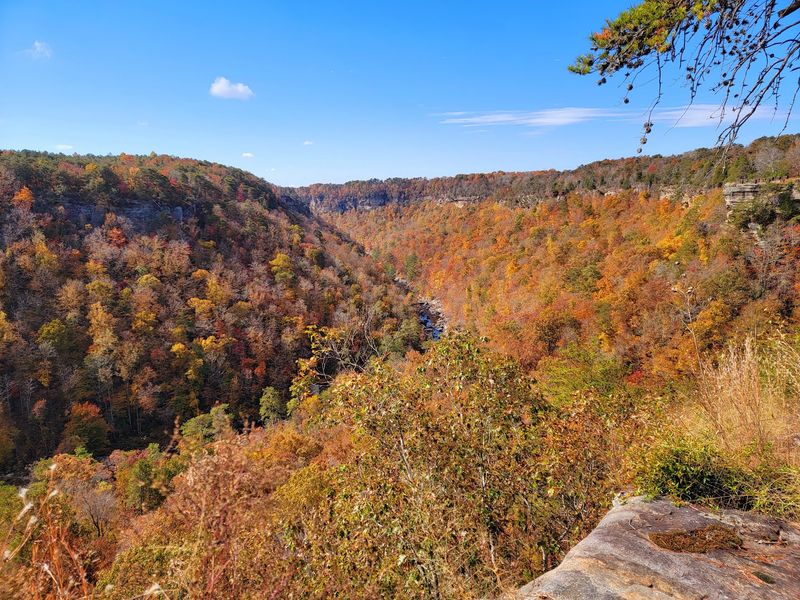
Depth is the thing photographs struggle to capture. Sandstone walls climb as high as 600 feet above the narrow canyon floor, and from the viewpoints near the bridge that scale finally registers.
Layer after layer of ancient rock stacks up along the sides, each band a record of time nobody alive can really picture. Water and wind did the carving, patiently.
Light does half the work in making the canyon interesting. Morning shadows pool deep in the gorge, midday flattens everything out, and late afternoon paints the western wall in warm color.
Autumn is the showstopper. Hardwoods gripping the cliffs turn orange, red, and gold, and the whole gorge looks lit from within, which is why October visits get planned a year ahead.
Spring and summer trade fire for green, with dense canopy pressing against bare stone in a contrast that is just as striking. Wildflowers pop up along the rim in the warmer months.
Winter has its own advantage: leafless trees mean more visible rock and clearer sightlines into the canyon’s folds.
Bring a wide lens if photography matters, though phone cameras still manage decent results from the railings. Mostly, though, it rewards standing still for a few minutes.
Scale like this puts everyday concerns in a smaller box, at least temporarily.
Use It As A Launchpad For Bigger Adventures
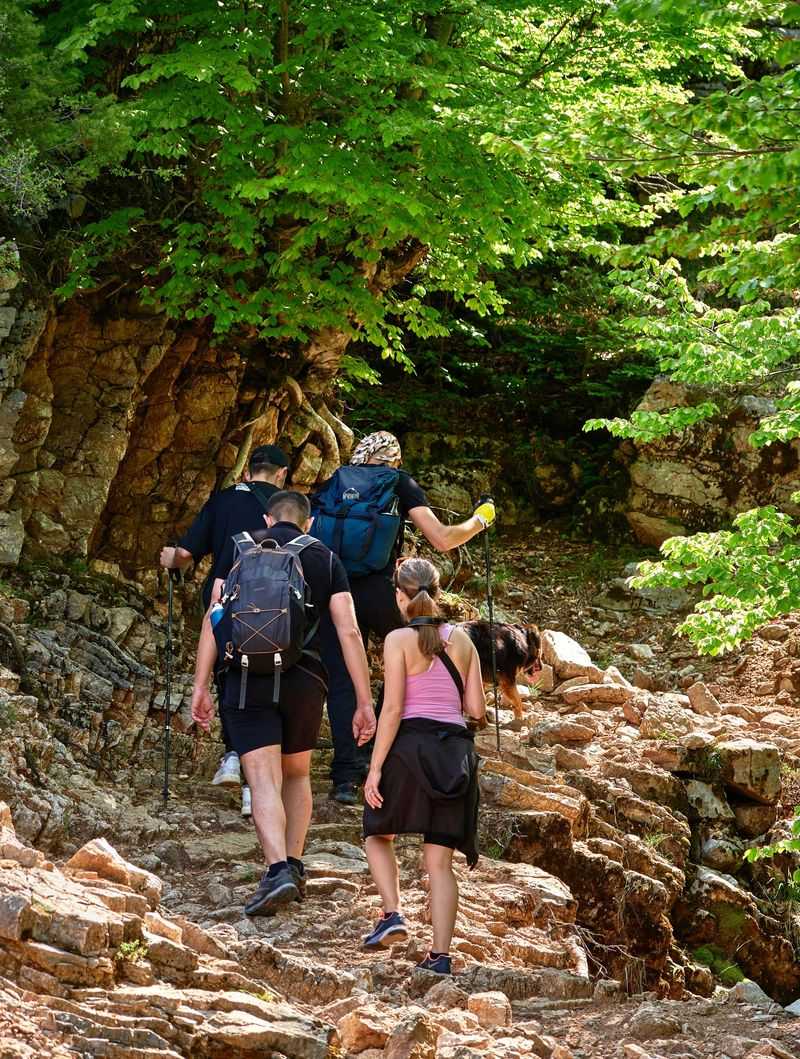
Plenty of visitors finish the Bridge Trail and immediately want more. Conveniently, more is right there.
The Little Falls Trail branches off near the boardwalk and runs roughly a mile and a half round trip, dropping toward the water below the main falls. Rocky footing and a set of stone steps near the bottom make it moderate rather than easy, but the reward is a close, intimate view of the river.
Elsewhere in the preserve, the Beaver Pond Trail offers a mellow loop through changing habitats, while the Eberhart Trail heads straight down to the canyon floor for hikers who want a real workout.
Then there is the Canyon Rim Parkway, an 11-mile drive lined with overlooks that each frame the gorge differently. Slow driving is recommended, since curves come fast and some pull-offs appear suddenly.
Cooler months bring whitewater kayakers to the river. Climbers work the sandstone cliffs, anglers cast from the banks, and birders scan the canopy year round.
Designated swimming areas exist, and one popular spot sits below the falls, though no lifeguards are on duty and rocks get slippery. Caution matters more than confidence.
Think of the Bridge Trail as the front door rather than the whole house. It opens onto a preserve big enough to fill several days.
Begin Your Visit With Maps, Exhibits, and Local Tips
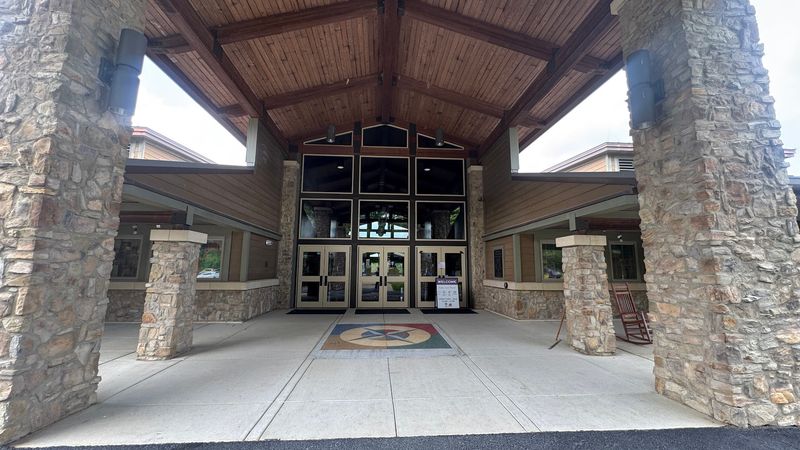
Skipping visitor centers is a habit worth breaking here. The Little River Canyon Center sits at the trailhead end of things and genuinely improves the day.
Trail maps, current conditions, and straight answers about which routes suit which abilities are all available inside, which saves guesswork later.
Exhibits cover the geology, plants, animals, and human history of the canyon in a way that makes the scenery outside more readable. Knowing why the rock looks the way it does changes how the overlook feels.
Staff and rangers can point out what is blooming, where water levels stand, and which overlooks are catching good light that afternoon. Those small tips add up.
A short film and a gift shop round out the stop, and restrooms are clean and reliable, which matters more than anyone admits.
One practical note: hours vary by season and the center is not open every day of the week, so checking ahead prevents a locked-door surprise. It also sits slightly apart from the scenic drive, near a university campus, rather than directly on the parkway.
Navigation apps occasionally aim drivers at an entrance now used as an exit. Keep going, watch for the large sign, and the correct turn appears shortly after.
Address: 4322 Little River Trail NE, Suite 100, Fort Payne, Alabama 35967
