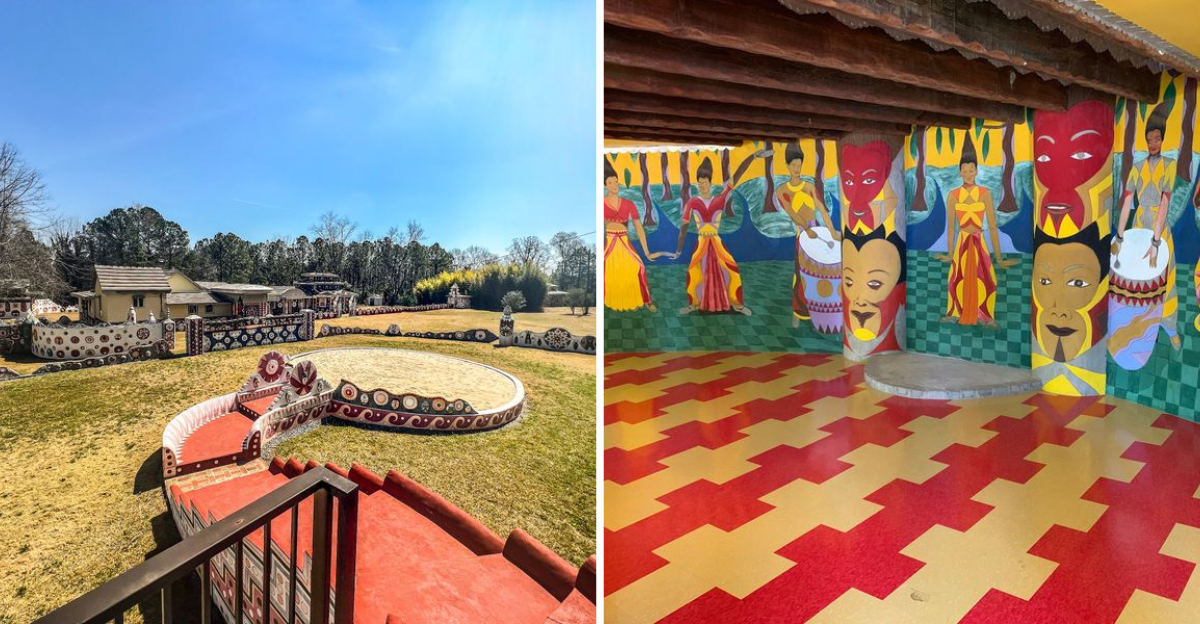
Orange, turquoise, and gold appeared through the Georgia pines, painted with faces and swirling circles that seemed to hum in the afternoon heat.
I had turned off the two-lane road expecting my directions to have failed me, and instead I found seven acres of concrete, bottles, tin, and paint, the life’s work of a farm boy who went to New York, came back with visions, and spent three decades making them real.
There are towers and spheres, painted heads and patterned walls, and the whole place feels like a dream that refused to stay inside someone’s head. I have visited a lot of quirky roadside stops, and none of them feel this personal or this alive.
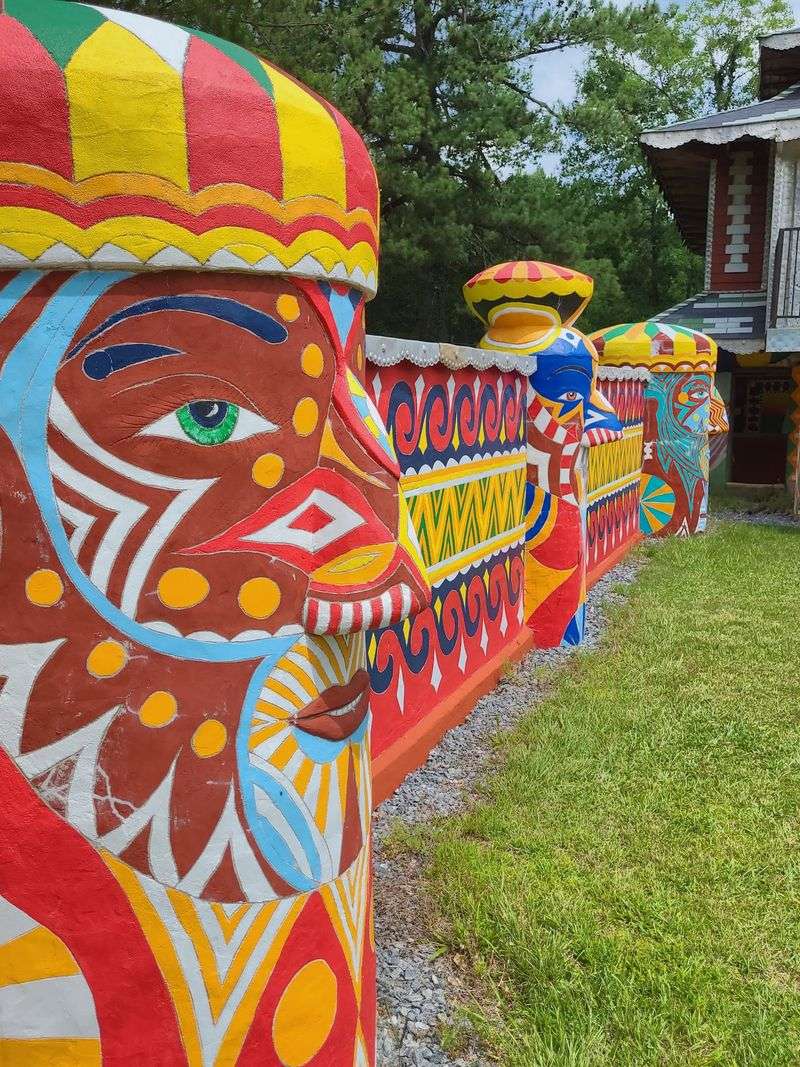
The quiet out there lets you hear the wind while you stare up at a twelve-foot painted face. The artist covered every surface he could reach, and the colors still hold their intensity decades later.
Art that comes straight from someone’s imagination with no filter tends to stick with you for years, and this place does exactly that.
The Farm Boy Who Became St. EOM
Eddie Owens Martin was born in Marion County, Georgia, in 1908, and by fourteen he had hitchhiked all the way to New York City. That single decision changed everything about the art you see today at Pasaquan.
In New York he made a living partly as a fortune teller, and he soaked up the museums, the street life, and the mix of cultures around him. Those years gave him a visual vocabulary far bigger than anything he could have picked up on a small Georgia farm.
Then came the 1930s, when a bad fever brought on a series of vivid visions. He described tall futuristic beings he called Pasaquoyans, who told him to change direction and build something new.
Out of that experience came Pasaquoyanism, his own belief system centered on harmony between people, the earth, and the universe. He took the name St. EOM, built from his initials, and treated art as his way of showing a peaceful future.
I always suggest reading a little about him before you arrive, because knowing the backstory turns strange shapes into meaningful symbols. Visitors say the same thing in reviews again and again.
What sticks with me is how ordinary his starting point was. No art school, no gallery backing, just a stubborn man with a shovel, a paintbrush, and a very clear picture in his head of what the world could look like.
Understanding the person makes the place feel less like a curiosity and more like a message someone left behind for the rest of us.
Three Decades of Concrete, Tin, and Bottles
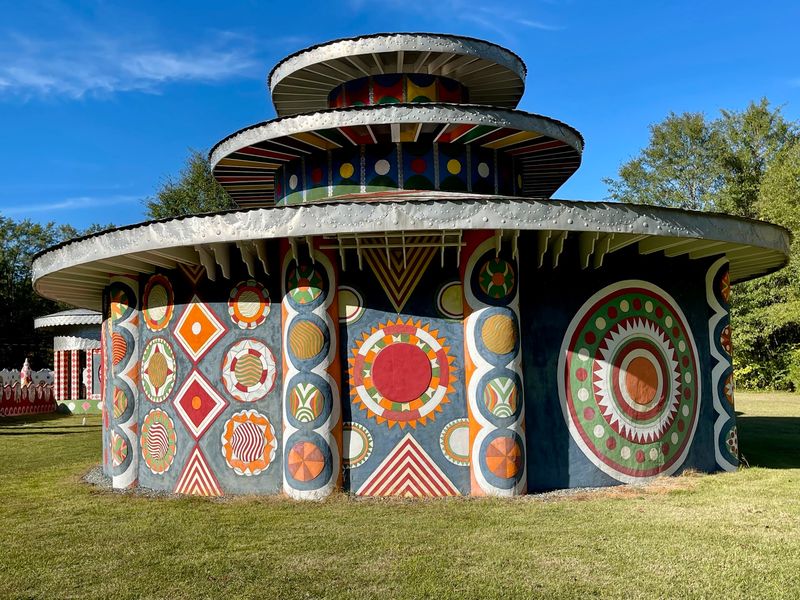
Here is the detail that makes my jaw drop every visit: the whole compound was built by hand, mostly with materials anyone could find. Concrete, bottles, scrap tin, wire, and wood became temples, totems, and towers.
St. EOM came back to Georgia in 1957 and started reworking the family land he had inherited. The 1885 farmhouse became his canvas first, and from there the project spread outward across the property.
Six major structures now stand on the seven-acre site, along with more than 900 feet of painted masonry walls. Walkways, planters, and freestanding sculptures fill in the space between them.
He funded the work largely through fortune telling, which he continued to do right there on the site. That means no grant money, no patron, no committee approving designs.
Thirty years of steady labor in Georgia heat and humidity is hard to picture until you see the sheer square footage of hand-mixed concrete around you. I found myself running my fingers along a wall just to confirm it was real.
The bottle bottoms catch afternoon light in a way photos never quite capture. Same with the pressed tin, which throws little flashes of color as you walk past.
For anyone who has ever half-finished a backyard project, the persistence on display is genuinely humbling. He kept going for three decades because he believed the work mattered, and the proof is standing there in the trees.
A Swirl of Symbols From Around the World
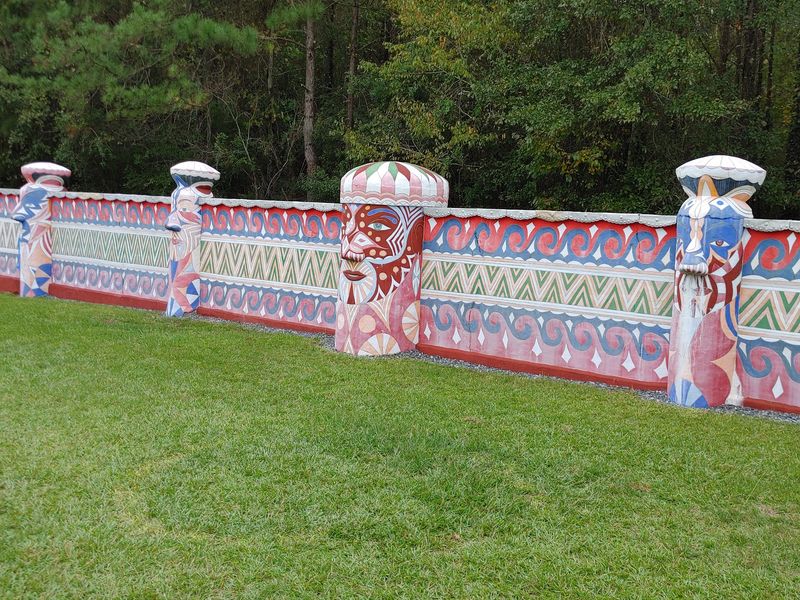
Look closely at any wall and you start playing a guessing game about where each shape came from. African patterns, Native American motifs, Eastern religious imagery, and pre-Columbian Mexican forms all sit side by side.
St. EOM also read books about the mythical Lost Continent of Mu and folded those ideas into his designs. He was not copying any single tradition, he was inventing a mythology of his own.
The site has been described as a mock-precolumbian psychedelic wonderland, which is a mouthful, but it fits. Giant faces, undulating snakes, and spinning mandalas cover nearly every surface.
What surprised me was how the colors work together instead of clashing. Reds sit beside turquoise, gold beside deep green, and somehow the whole thing feels balanced rather than chaotic.
I recommend picking one wall and studying it for a full five minutes before moving on. Details keep surfacing, small eyes, hidden circles, repeating rhythms you missed at first glance.
Interpretive signs around the grounds explain some of his reasoning, and reading them changes how the rest of the visit lands. Several reviewers mention wanting to read every single one.
One heads-up worth knowing: some of the artwork includes nude figures and frank human forms, so families with very young children may want to plan accordingly. It is all part of his ideas about the body and nature, not shock for its own sake.
Rescued From Fading Paint and Time
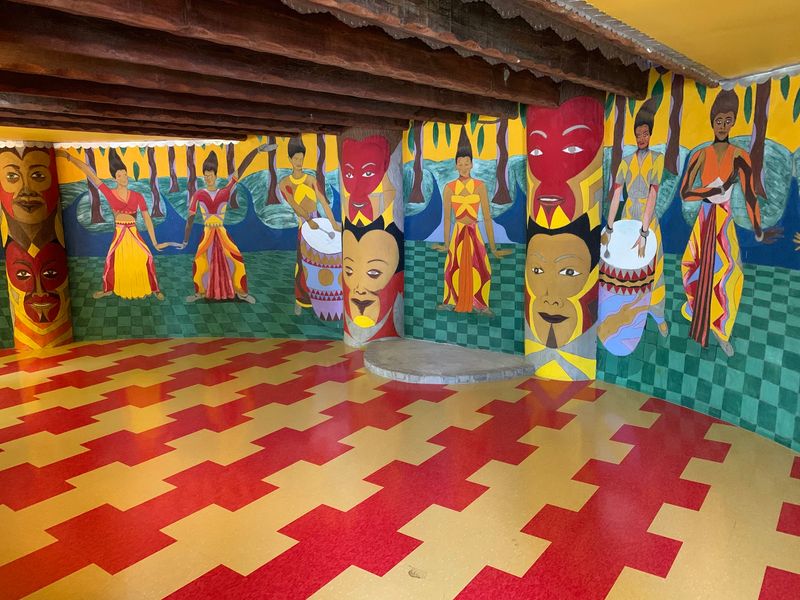
St. EOM died in 1986, and for a while the Georgia weather did what Georgia weather does. Paint faded, concrete cracked, and the whole vision started slipping away.
A group of supporters formed the Pasaquan Preservation Society to keep it from disappearing. Their work helped the site earn a spot on the National Register of Historic Places in 2008.
The real turning point came in 2014, when the Kohler Foundation partnered with Columbus State University on a full restoration. Conservators and skilled craftspeople spent about two and a half years on the job.
They stabilized structures, matched original colors, and repaired thousands of square feet of painted masonry. It ranks among the largest and most complicated projects the Kohler Foundation has taken on.
Because of that effort, the colors you see now are close to what St. EOM intended, not a washed-out ghost of them. I think that matters, since the intensity of the color is half the experience.
Pasaquan reopened to the public in October 2016 and was gifted to Columbus State University, which now serves as steward. An artist lives on site in the guest cottage, keeping an eye on things year-round.
Knowing the restoration story gave me a different kind of respect for the place. Someone built it alone, then a whole team of strangers decided it was worth saving, which says something hopeful about how art outlives its maker.
Planning the Drive Out to Buena Vista
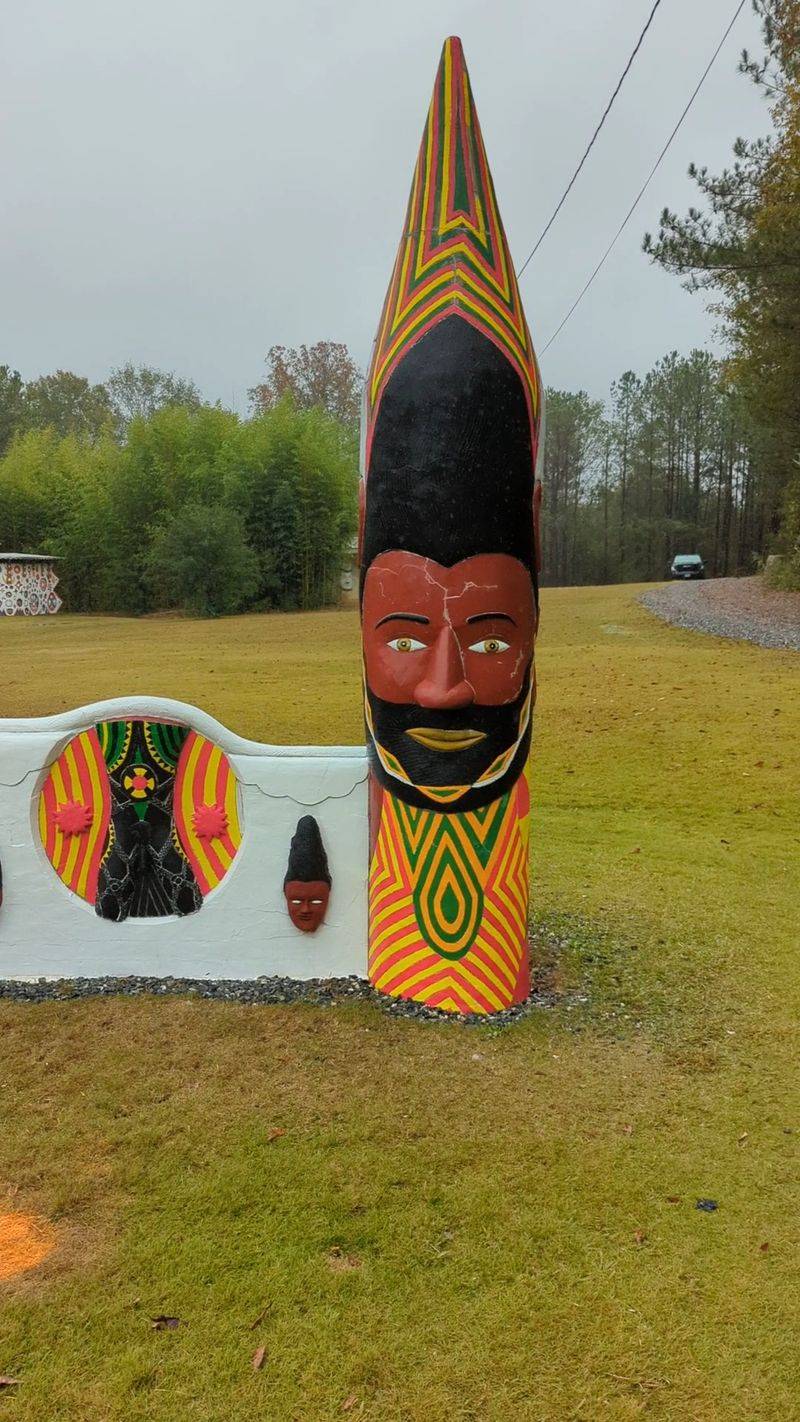
Let me save you some trouble: this is genuinely out in the country, so fill up the tank and use the restroom before you go. There are no restrooms or snack shops on the property.
The site sits in rural Marion County, roughly thirty miles northwest of Americus and just outside the town of Buena Vista. Cell service can get patchy, so download your directions ahead of time.
Hours run Friday through Sunday, 10 a.m. to 5 p.m., and the site is closed Monday through Thursday. I learned to double-check the Columbus State University page before driving out, especially around holidays and event weekends.
Parking is free and there is plenty of it, which is a relief after the narrow approach road. The lot sits close to the house, so there is no long walk in.
Give yourself at least an hour, though I have easily spent two poking around and reading signs. Photographers should plan on longer, because the light shifts dramatically through the afternoon.
Pack a lunch if you can. Picnic tables on the grounds make this one of the more unusual spots in Georgia to eat a sandwich, surrounded by painted totems and quiet pines.
One practical note from other visitors: watch your step on the grass and around walls, since snakes do turn up in this part of the state. Closed shoes are the smart call.
The Quiet That Nobody Warns You About
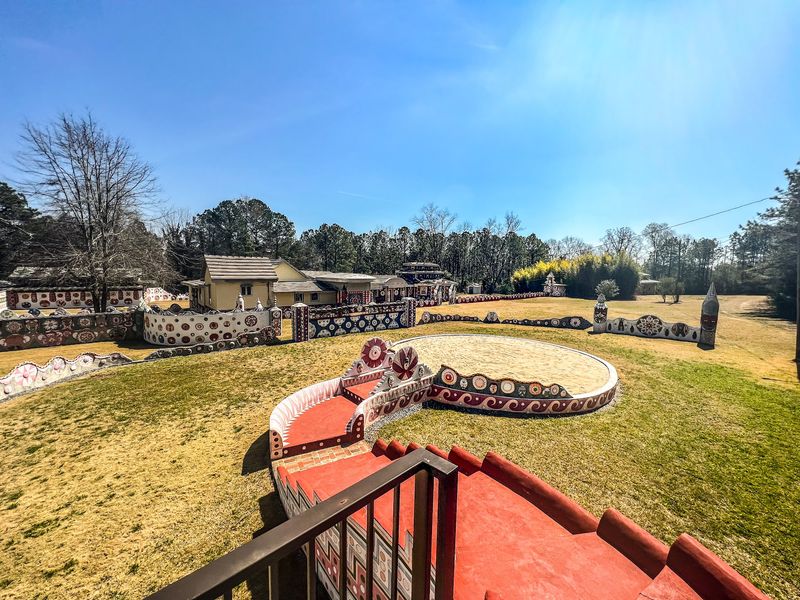
Most write-ups focus on the color, but the thing I remember most is the silence. Wind in the pines, a few birds, and almost nothing else.
That stillness changes how the art hits you. Instead of a noisy attraction, it feels closer to a garden built for thinking, which is more or less what St. EOM had in mind.
On one visit my group had the grounds almost entirely to ourselves, free to wander at our own pace. The caretakers on site are happy to share history if you ask, and their knowledge adds a lot.
Interiors are open too, and the painted rooms inside the buildings are just as detailed as the exterior walls. I would go inside first, get the background, then head out to the grounds.
Something about the combination of bright pigment and deep quiet makes people slow way down. Visitors regularly describe the atmosphere as calming and rejuvenating, and I found that to be true.
Donations keep the gates open, so bringing a little cash is a kind thing to do. Handmade bead necklaces are sometimes available as a small souvenir.
Driving away, I kept thinking about how one determined person with concrete and salvaged materials made something no museum could plan. Georgia has plenty of famous stops, but few feel this handmade or this sincere.
Address: 1065 Pasaquan Trail, Buena Vista, Georgia
