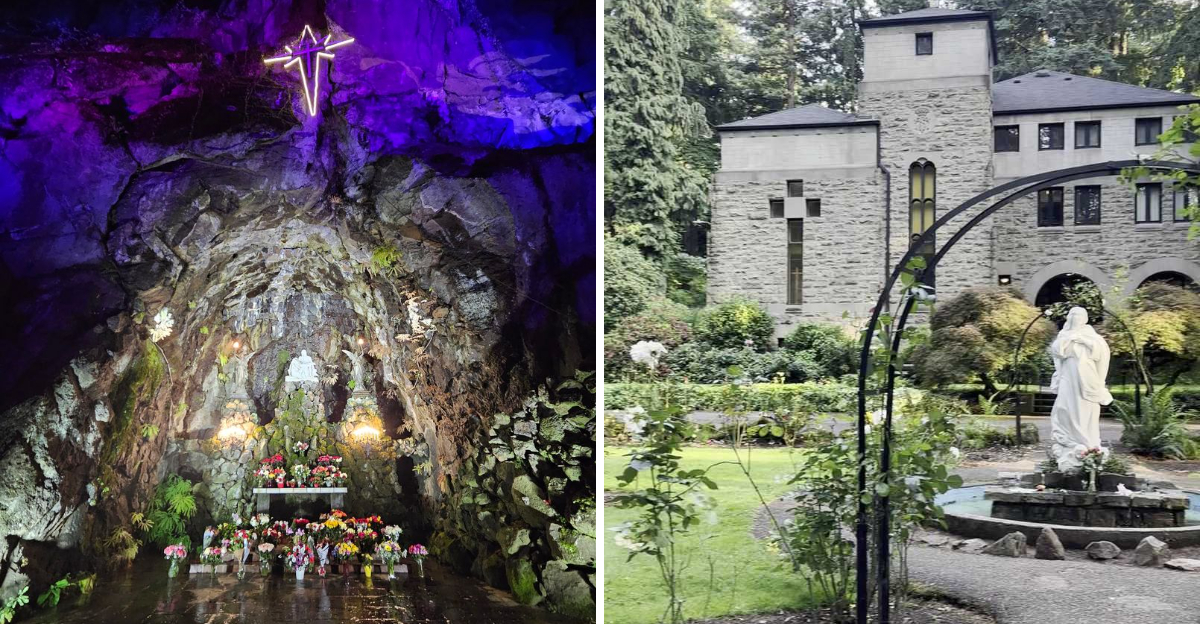
Sometimes the most magical places aren’t hidden in remote forests or along windswept coasts. Sometimes they’re carved right into the side of a cliff, in the middle of a city. This Oregon chapel is one of those places.
Its heart is a shrine nestled in a cave within a towering basalt cliff, featuring a beautiful replica of a famous sculpture. The sanctuary offers a unique two-level experience: a serene lower garden with the famous grotto, and an upper level of botanical gardens reached by an elevator built into the rock.
This is a place that transcends its religious roots, offering a peaceful escape for anyone seeking quiet and beauty. The views from the upper gardens stretch for miles, and the whole place feels like a sanctuary for the spirit.
It’s sacred, yes, but even more, it’s a place that feels like it belongs to everyone who visits.
A cliffside sanctuary tucked into Northeast Portland
Getting there took barely fifteen minutes from the airport side of town, and the change in mood was immediate. Traffic noise fades behind a stone wall, and suddenly there are firs overhead and moss on everything.
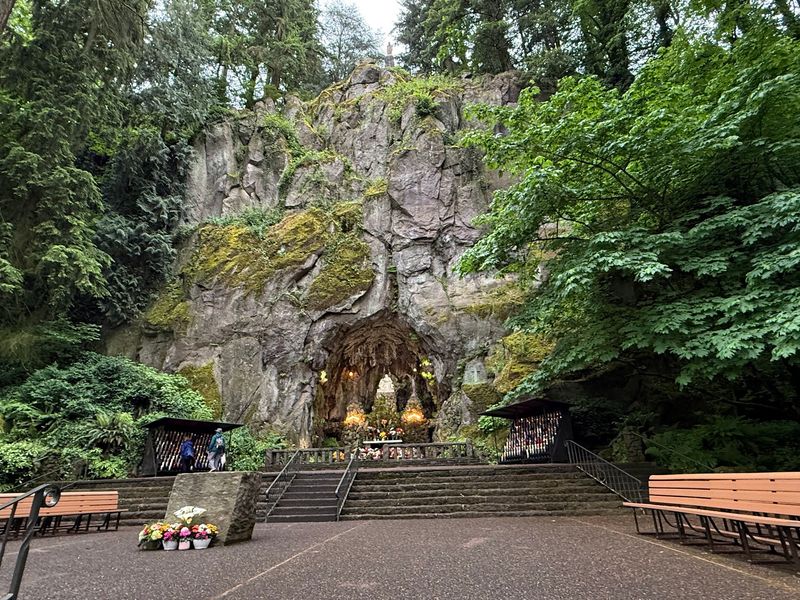
The sanctuary sits at the base of a basalt cliff that rises straight up, sheer and dark, with a garden spread out below it.
Nothing about the surrounding streets hints at what waits inside the gates. Bus lines, houses, an industrial edge or two, then a quiet green pocket that covers dozens of acres.
The ground level is open to walk through, and paths loop past statues, benches, and tall trees that have clearly been here a long while. I liked that it never felt staged. Volunteers keep the plantings tidy, but the moss and ferns do what they want.
Give yourself more time than you think you need. Some visitors breeze through in an hour, while others settle in for most of an afternoon, and both approaches work depending on your mood. Wear shoes you don’t mind getting damp, since Portland rain lingers on the pathways.
Candles, matches and other small rituals

Small rituals happen constantly here, and they are easy to join. A candle can be bought near the plaza, and staff hand over a match with it, which feels wonderfully old fashioned.
Lighting one and setting it on the rack takes ten seconds. Watching it burn takes longer, and that is rather the point. Petitions get written on slips of paper and dropped in a box, a habit visitors of all backgrounds seem to pick up quickly.
Benches sit scattered under the trees, angled away from paths so you are not staring at passing shoes. I noticed how many people came alone. Some read, some just sat.
Nobody polices behavior, though the general mood asks for quiet voices and phones on silent. Children manage fine, especially with space to wander between statues.
Holy water and blessed oil are available at the shop for those who want them, and medallions make small, easy souvenirs. The candle rack glows brightest on gray winter afternoons.
Whatever your beliefs, participating a little makes the visit stick in memory far more than photographing it from a distance.
The cave carved right into the basalt wall
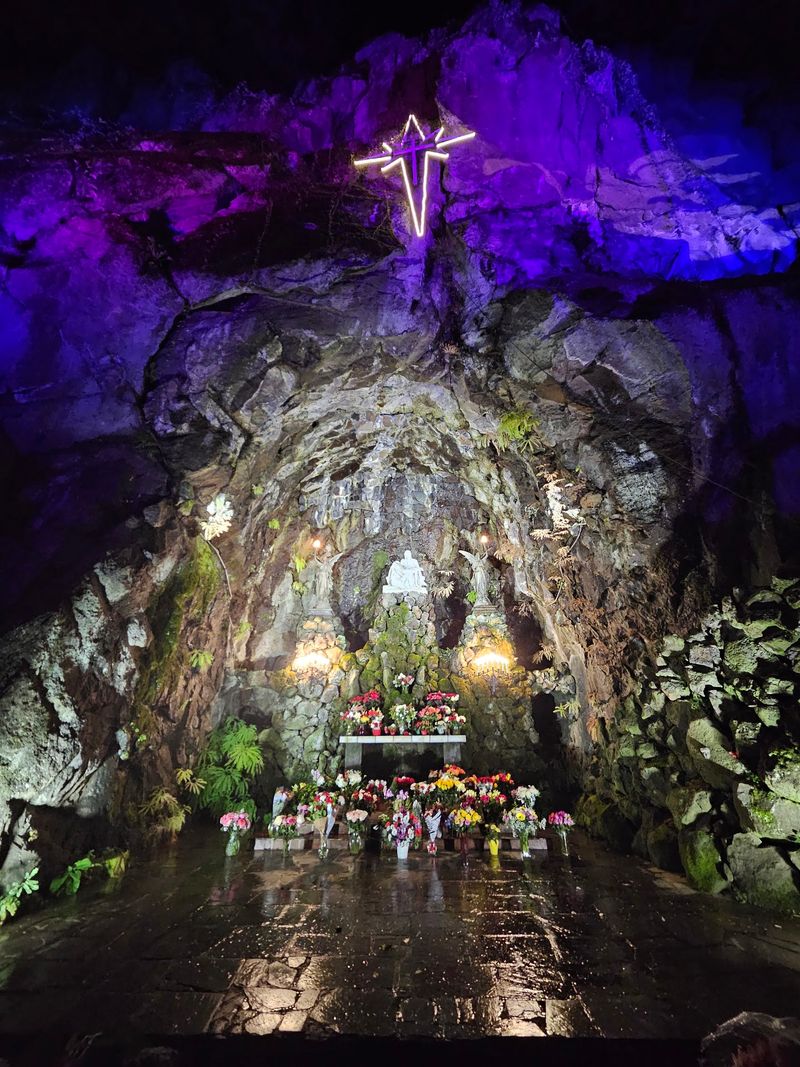
The main grotto is a hollow scooped out of the cliff, and the temperature drops a few degrees as you step under it. Inside sits a marble replica of the Pieta, pale against wet black rock. Candles flicker along the ledges in rows, some fresh, some burned down to stubs.
Pews face the cave from the open air, so services here happen with birds and wind as background. Rain barely matters, since the overhang shelters the altar. What struck me was the silence people keep on their own. Nobody asks for it.
Ferns grow out of cracks above the statue, and water seeps down the stone in dark streaks. That combination of rough geology and careful sculpture is unusual, and it stays with you. The cave was blasted out of the cliff back in the early 1920s, which is hard to imagine now.
Bring a light layer if you plan to sit for a while, because shade plus stone equals cool air even in July. Photos rarely capture the scale, so take a minute to just look up before reaching for a phone.
Riding the elevator up the rock face
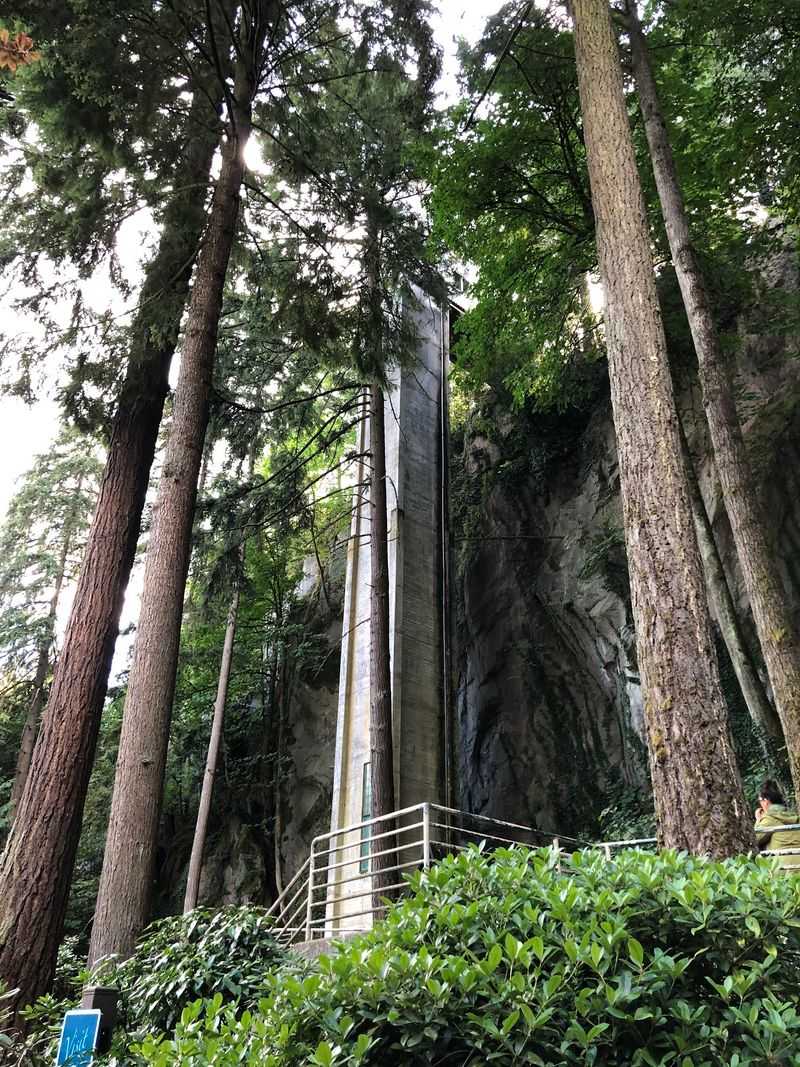
Riding the elevator is genuinely part of the fun. A token gets you into a small cab that climbs the face of the cliff, and the doors open onto a completely different level of the property. Capacity is limited to about eight people at a time.
That means a line during busy weekends, so aim for a weekday morning if patience is not your strength. Late afternoons tend to thin out too.
Access to the upper garden requires a ticket, while the lower level stays open without one. Plenty of visitors stop below and leave happy, but the top holds the botanical gardens, the wide views, and most of the shrines.
I would ride it again without thinking twice. The trip itself lasts seconds, though the payoff up top is hours long. Anyone hoping to hike up instead will be disappointed, since the trail routes are not open for general use.
Strollers and wheelchairs fit, and the whole upper loop is mostly flat and paved, which makes it friendlier than most viewpoint gardens around Portland.
Upper gardens where the city disappears
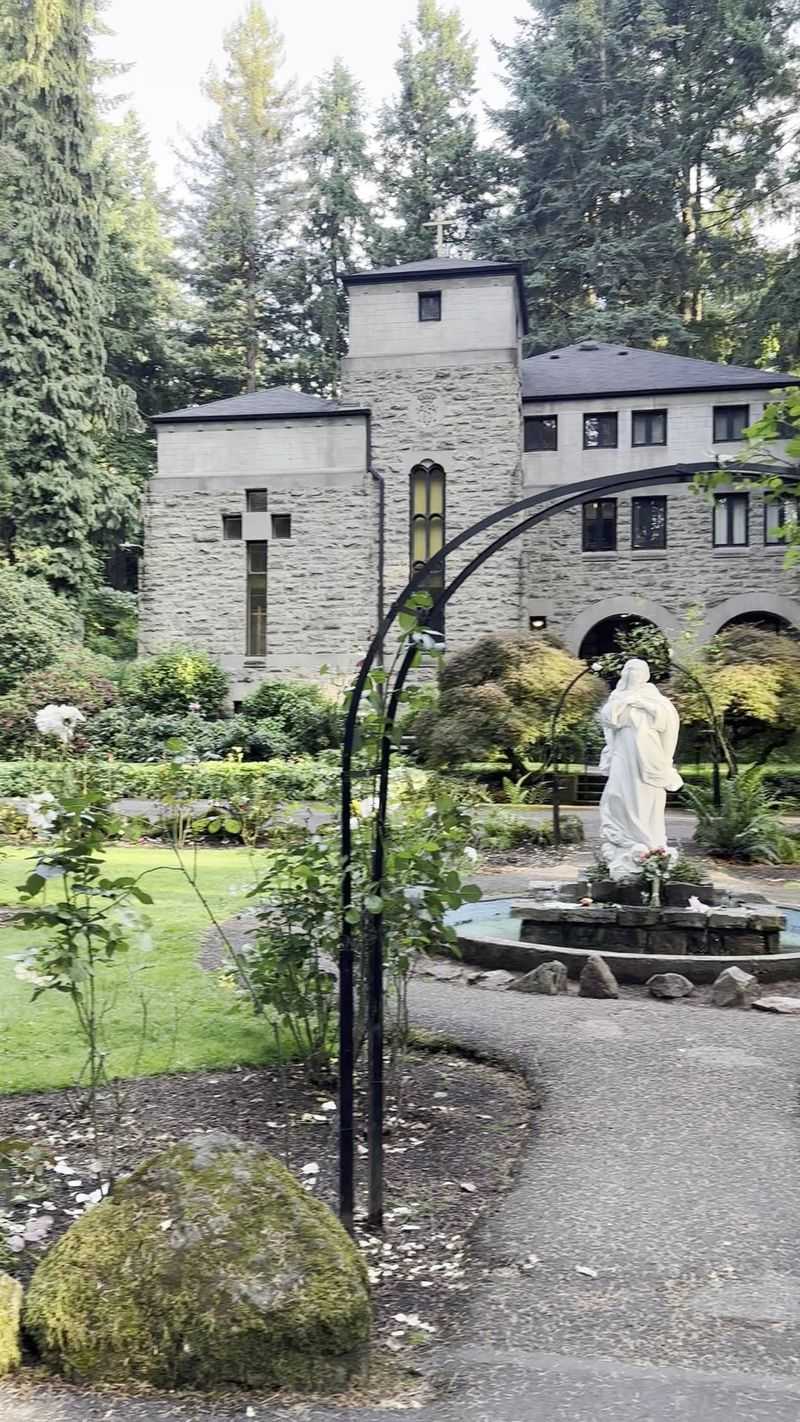
Up top, the noise of the city drops away almost completely. Paths wind between rhododendrons, Japanese maples, and firs that must be well over a century old. A reflecting pond sits near the middle, still enough to double the trees above it.
Benches appear right where your legs start asking for one. Someone clearly thought about that. On clear days there is a view stretching north over the Columbia River valley toward Washington, framed by an overlook at the cliff edge.
Spring brings blossoms and heavy scent, autumn turns the maples orange, and winter strips things back to moss and bare branches, which has its own quiet appeal. Volunteers do much of the garden work, and it shows in the trimmed edges and healthy beds.
Squirrels here are bold, borderline theatrical, and they will pose for photos. My favorite stretch was a narrow path lined with ferns where traffic sounds vanish entirely.
Allow at least an hour for the upper loop if you like reading plaques and stopping often, less if you move quickly, though rushing here seems like a waste.
Inside the Chapel of Mary
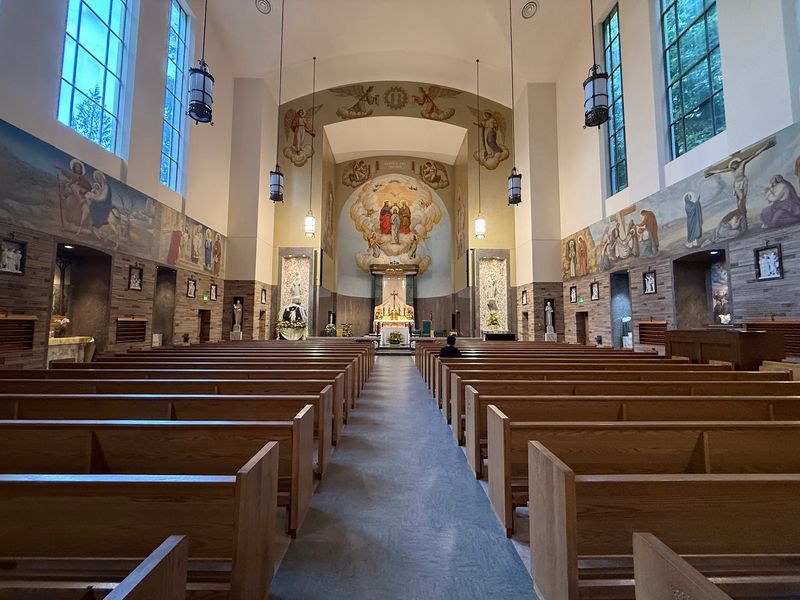
The Chapel of Mary sits on the plaza level, and its interior surprised me. Stained glass throws colored light across the floor, and the acoustics carry a single voice all the way to the back wall. Services take place regularly, with additional ones on certain Saturdays.
Music sounds especially good in there, which regular visitors clearly know, since holiday services fill the pews fast. Arriving early is the only reliable strategy. Even outside of service times the doors are usually open for quiet visits. Sitting in an empty church has its own kind of calm.
Details reward a slow look, from the woodwork to the mosaic behind the altar and the marble that catches the light differently through the day. Some masses happen outdoors on the plaza instead, weather permitting, which turns the whole grove into a congregation space.
Dress however you like, though modest layers feel appropriate and practical given how cool the shaded areas stay. Photography inside is fine when no service is running, but the mood asks for discretion rather than flash.
A shaded walk along the Stations of the Cross
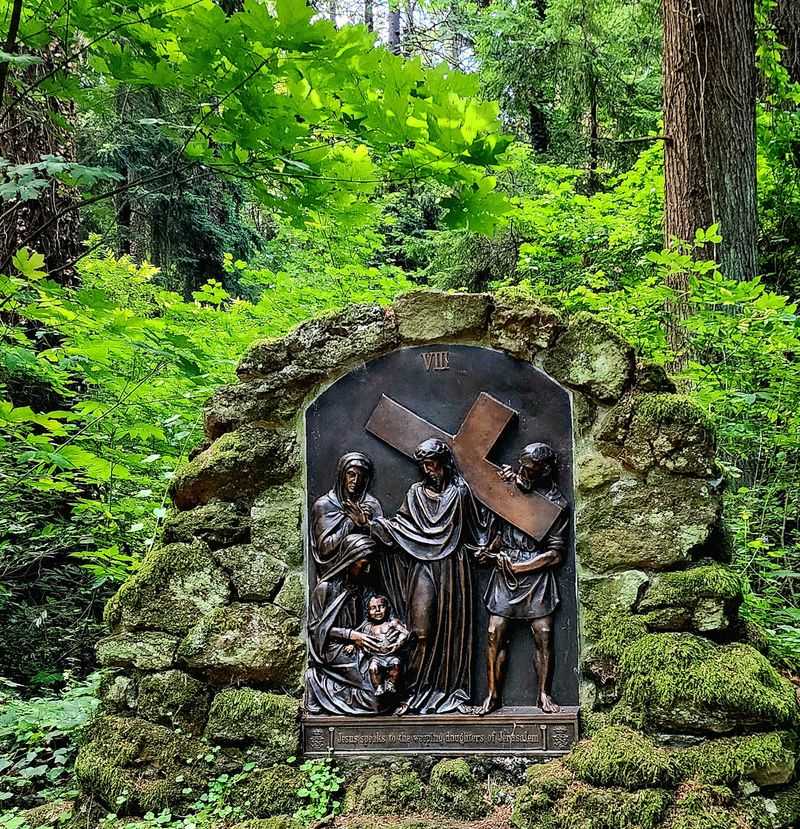
Following the Stations of the Cross felt less like a religious exercise and more like a slow forest walk with pauses built in. Fourteen carved scenes line a shaded path on the lower grounds, spaced far enough apart to make you stroll between them.
Doug firs tower overhead, and the light comes through in patches. Each panel is worth a close look for the craftsmanship alone. The stone weathers beautifully. Visitors of every background walk this route, some praying, others simply enjoying a shaded loop with something to look at.
The path is flat and stroller friendly, which makes it one of the easiest garden walks in the city. I appreciated how uncrowded it stayed. Most people head straight for the cave. Morning light works best for photos here, filtering low through the trunks before the crowd builds.
Count on twenty minutes if you linger at each carving, maybe half that otherwise. Nearby you will also find statues honoring saints, plus little clearings where nothing much happens except birdsong, which is exactly the appeal.
Shrines built in styles from around the world
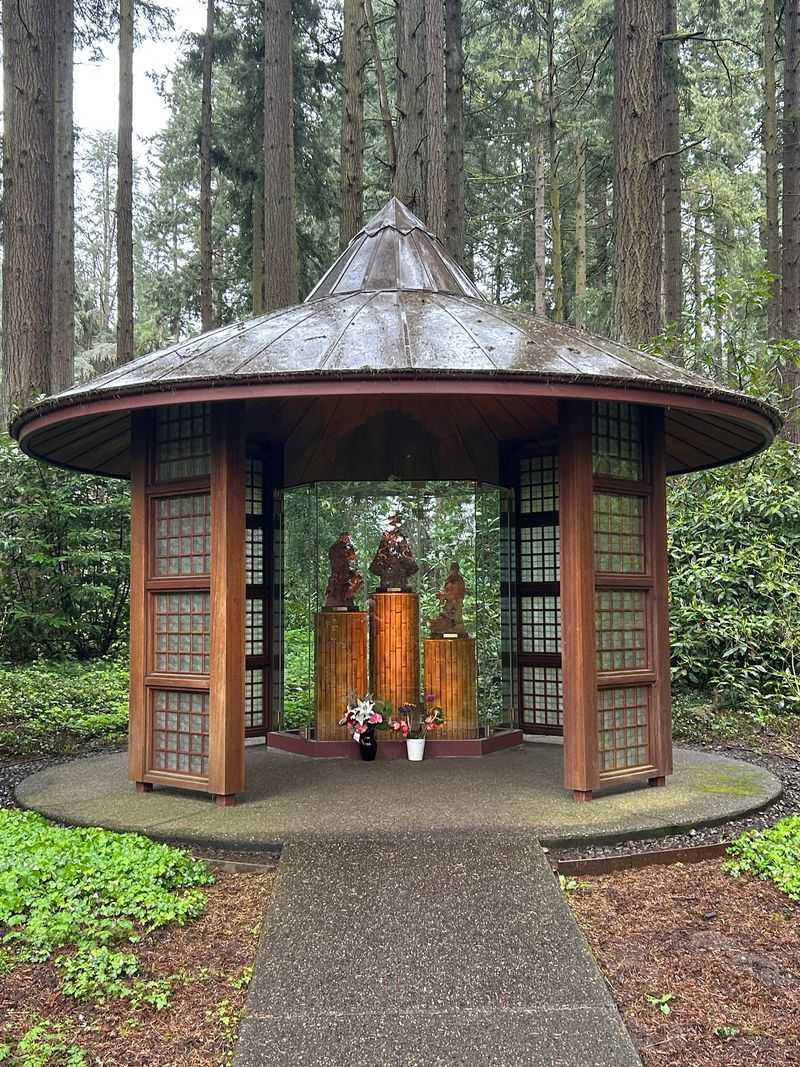
Scattered through the upper garden are shrines built in styles borrowed from around the world, and spotting them becomes a small game. A Japanese inspired structure sits near a stone lantern, while elsewhere a Nordic style chapel shows off dark timber and steep angles.
Statues honor figures connected to Poland, Ireland, Vietnam, Mexico and beyond. The mix says a lot about Portland’s immigrant communities. Faith travels with people. Plaques explain most of the pieces briefly, enough to give context without turning the walk into homework.
The Peace Garden section is where I lingered longest, partly for the views and partly because it feels open in a place otherwise full of tall trees. Kids tend to like this area, since each shrine looks different and there are corners to peek around.
Benches near the Nordic chapel catch afternoon sun, a rare thing under this canopy. Do not rush past the smaller ones tucked behind hedges, because a few of the most detailed carvings hide in the least obvious spots.
Timing your visit for the best experience
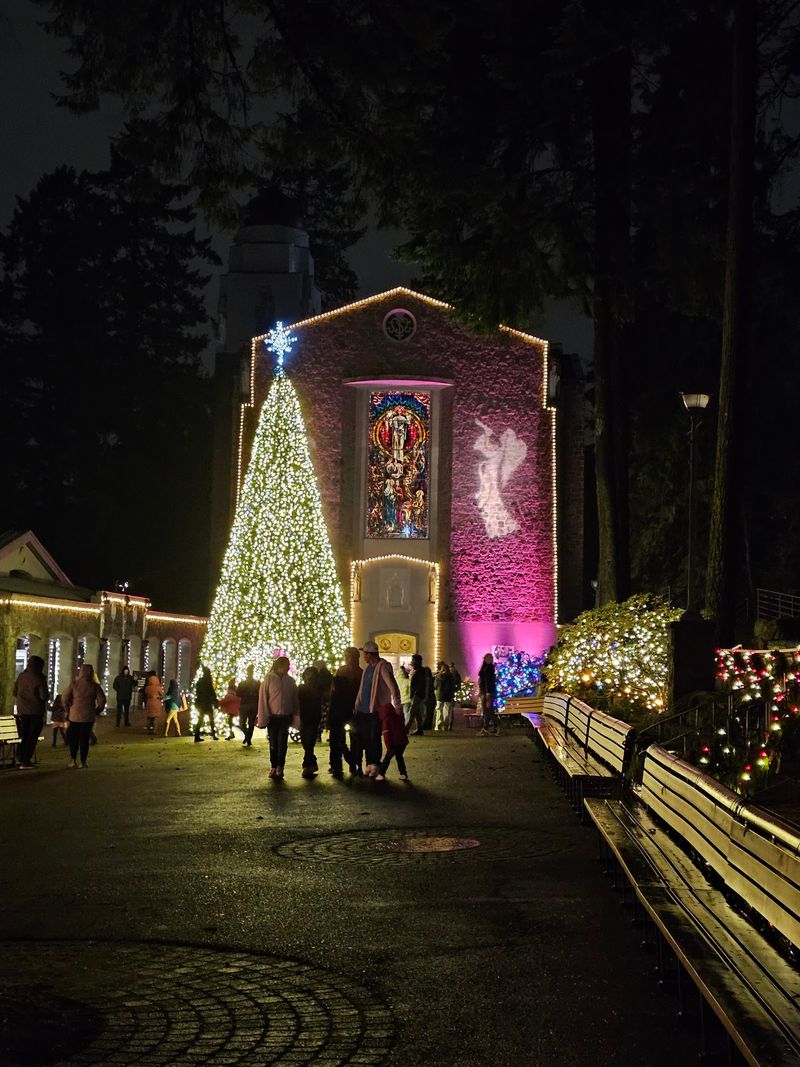
Practical stuff makes this visit easy. Gates open in the morning and stay open into the evening every day of the week, and parking on site is free, which is rare anywhere near Portland. December is the showstopper, when the grounds glow with a festival of lights and choirs perform indoors.
Expect company then, so arrive early or come on a weeknight. Summer mornings are the calmest window overall. Rain gear beats an umbrella under the trees, and shoes with grip help on damp pavement.
Food is not the focus here, so eat before or after, and give the gift shop a look for small keepsakes. Two hours covers the highlights comfortably, while half a day suits anyone who wants to sit, read, or wander twice.
I left calmer than I arrived, which is not something most city attractions manage. Whether you come for the gardens, the sculptures, the quiet, or all three, it is one of the most unusual green spaces in Oregon.
Address: 8840 NE Skidmore St, Portland, Oregon
