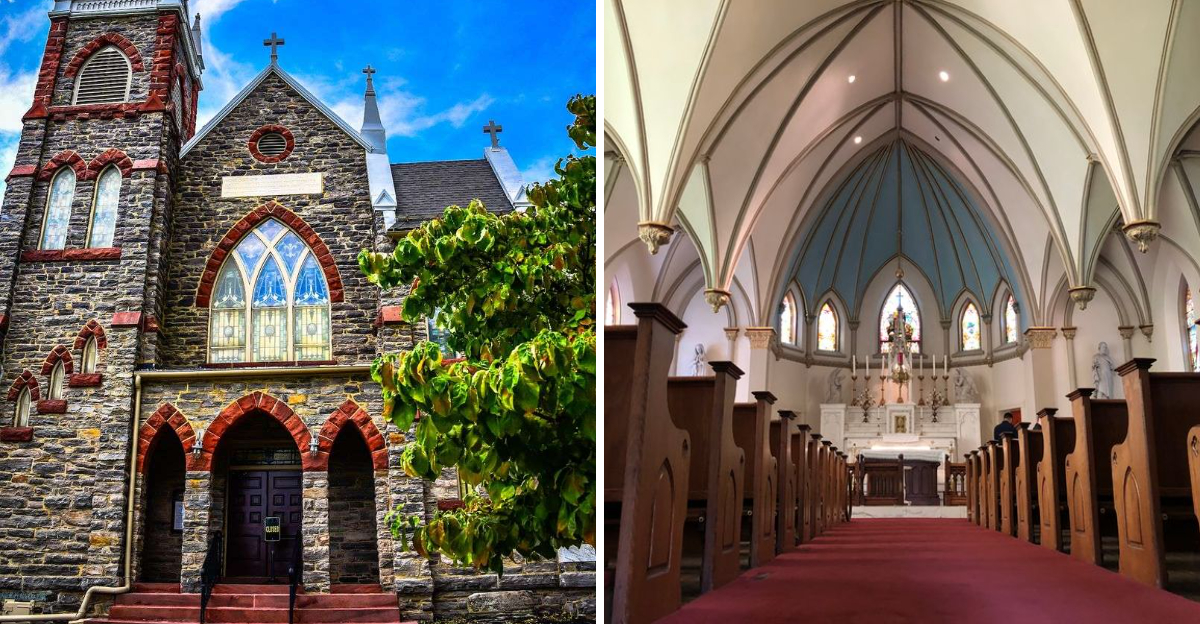
I hate to be the one to break it to you, but this church might just be the most dramatic thing you see all year.
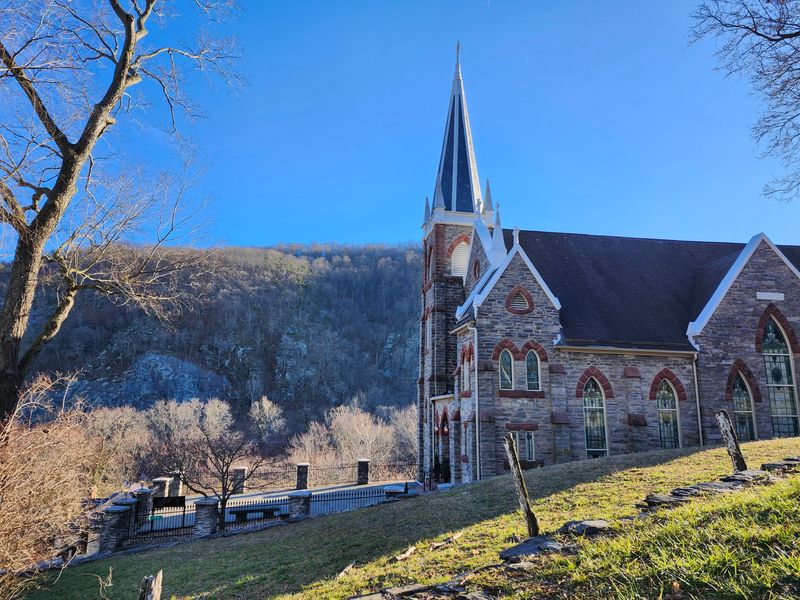
You round a bend in the trail and there it is, a stone spire reaching up like it is trying to touch the sky.
It looks like it was lifted from a European postcard and dropped right into West Virginia.
Perched above the river valley, it makes you stop mid-step and just stare.
The stones are worn. The windows are tall and narrow.
It has stood here for nearly two centuries, built by Irish immigrants who poured everything into it.
It survived the war. It survived the weather. It survived everything this valley threw at it.
You do not have to be religious to feel something here. Quiet. Grounded. A little haunting.
Go see it. You will not forget it.
The Stone Stairway That Sets The Mood
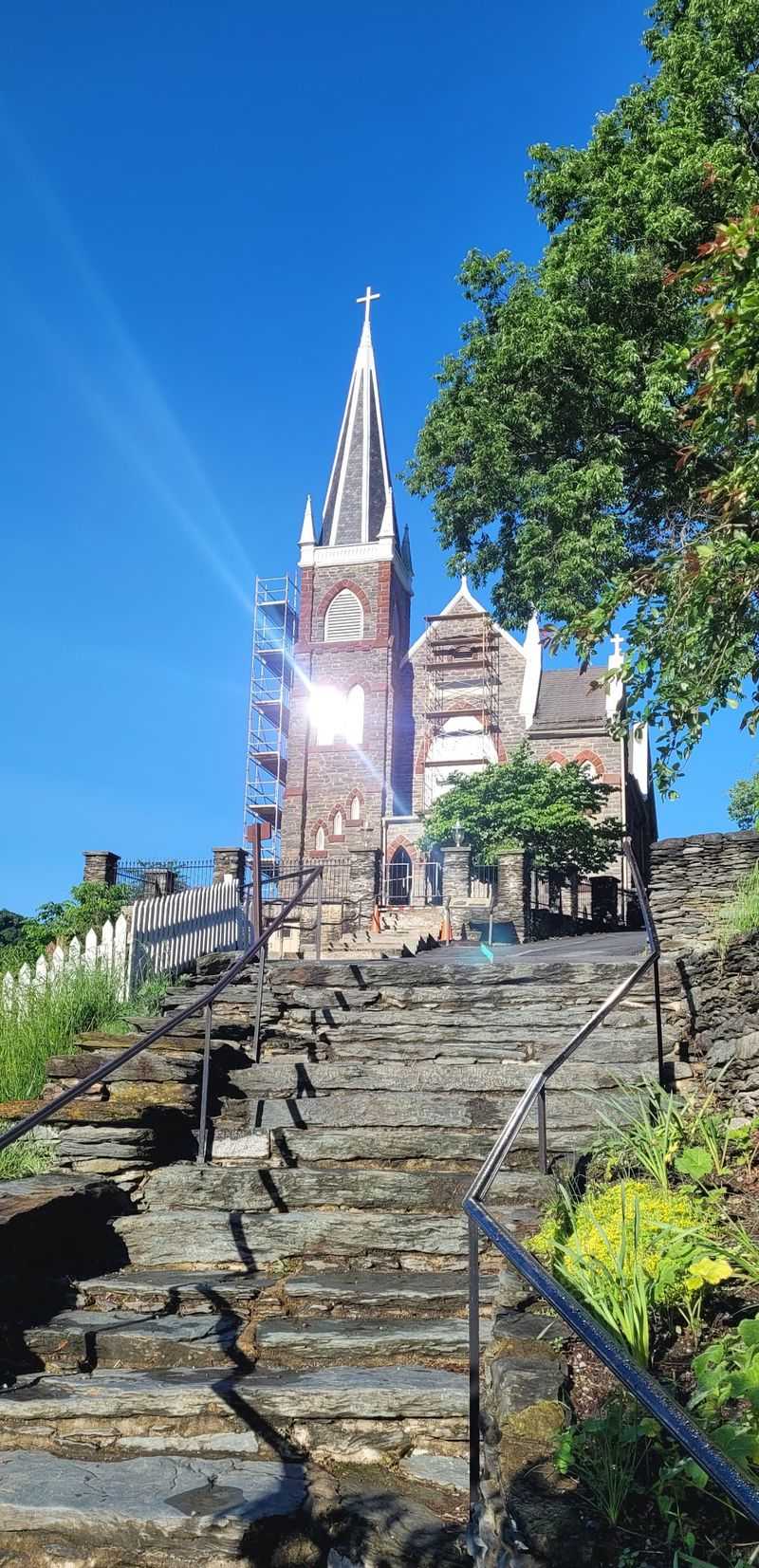
Forty-four steps sounds manageable until you are actually on them. Cut directly into the shale hillside back in 1810, these worn stone treads came before the church itself, and generations of feet have polished them smooth.
The handrail becomes your best friend about halfway up, especially if the stone is damp. Visitors often mention how helpful it is to hold on, and I would agree.
What makes the climb worth it is the way the town slowly disappears behind you. Rooftops drop out of sight, the noise fades, and the trees close in around the path.
Each landing offers a slightly wider view than the last, which gives you an excuse to catch your breath without admitting you need one.
Practical tip, wear shoes with real grip. Sandals and slick soles do not mix well with old stone.
If mobility is a concern, know that the stairway is steep and uneven in places, so plan accordingly and take your time going up.
Two Rivers Meeting Below The Hill
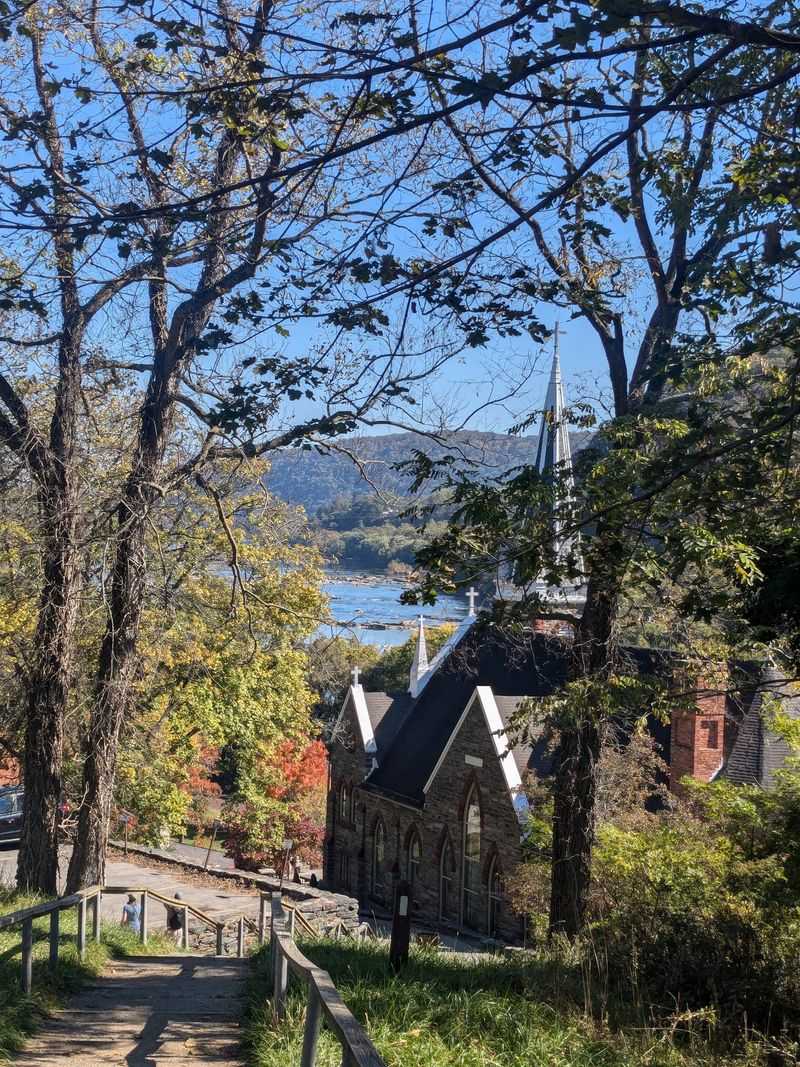
From the crest of the hill, the landscape does something dramatic. The Shenandoah and Potomac rivers come together right below, wrapping around the town where three states nearly touch.
Thomas Jefferson wrote about this exact scene in his Notes on the State of Virginia, calling it worthy of a voyage across the Atlantic. Bold words, but the geography earns them.
A short walk further along the path brings you to Jefferson Rock, one of the better known viewpoints in the area. The stone outcrop gives a wide, uninterrupted look at the water carving through the mountain gap.
Morning light tends to be softest here, with mist still sitting low over the water. Late afternoon works too, though the sun can sit awkwardly for photos.
The combination of rushing rivers and steep ridges explains a lot about why so much history happened in this particular spot. Rivers meant transport, industry, and eventually conflict, all squeezed into one narrow valley.
A Spire You Can Spot From Almost Anywhere
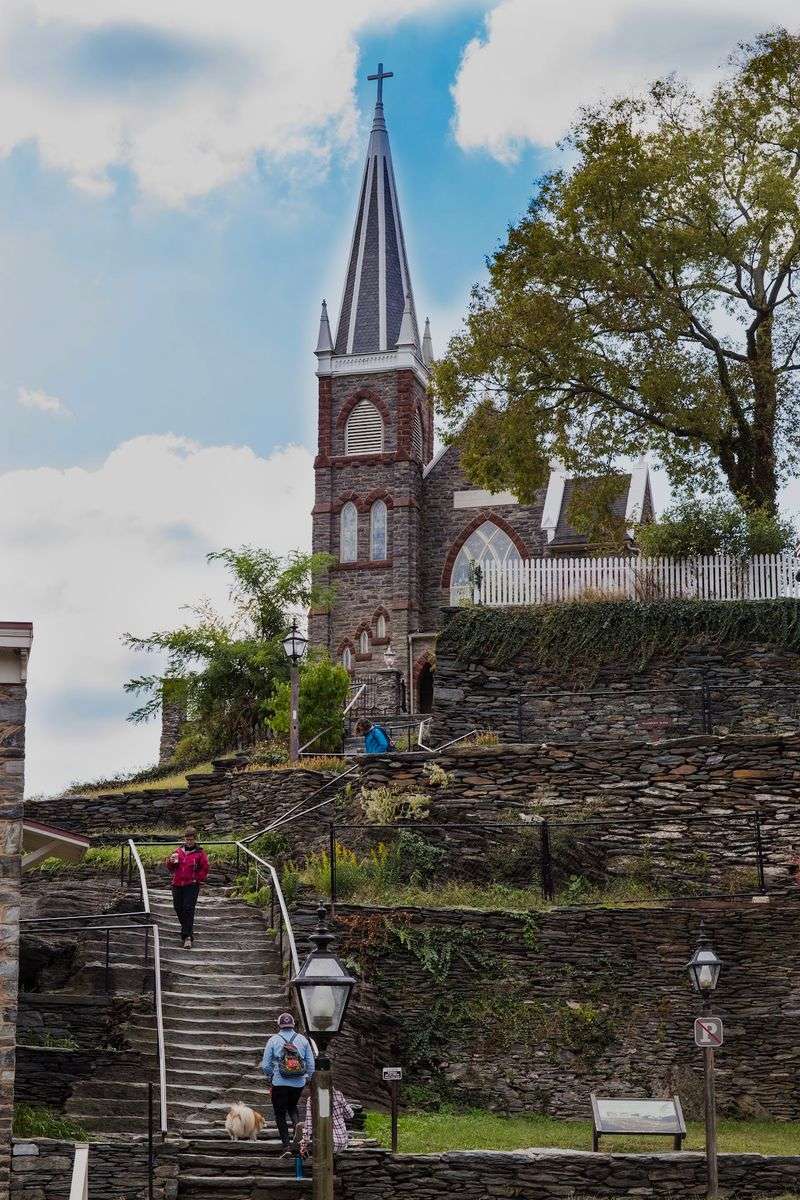
Down in Lower Town, you keep catching glimpses of it. The spire pokes above the treeline from half a dozen streets, almost like the building is nudging you to come find it.
Gray stone paired with red sandstone trim gives the exterior an unmistakable look. Pointed arches, steep gables, and vertical lines all pull the eye upward in classic Victorian Gothic fashion.
That color contrast is what tricks your brain into thinking Europe. Plenty of visitors say the same thing, that it feels transplanted from a hillside chapel somewhere across the ocean rather than a small West Virginia town.
Photographers will find no shortage of angles. From below, the church rises above stone retaining walls and rooftops.
From the hilltop, it sits framed by trees with the rivers glinting behind.
Winter visits have their own reward, since bare branches open up sightlines that summer leaves hide completely. Snow on the stone makes the whole thing look even more storybook.
Built By Irish Laborers Who Needed A Home
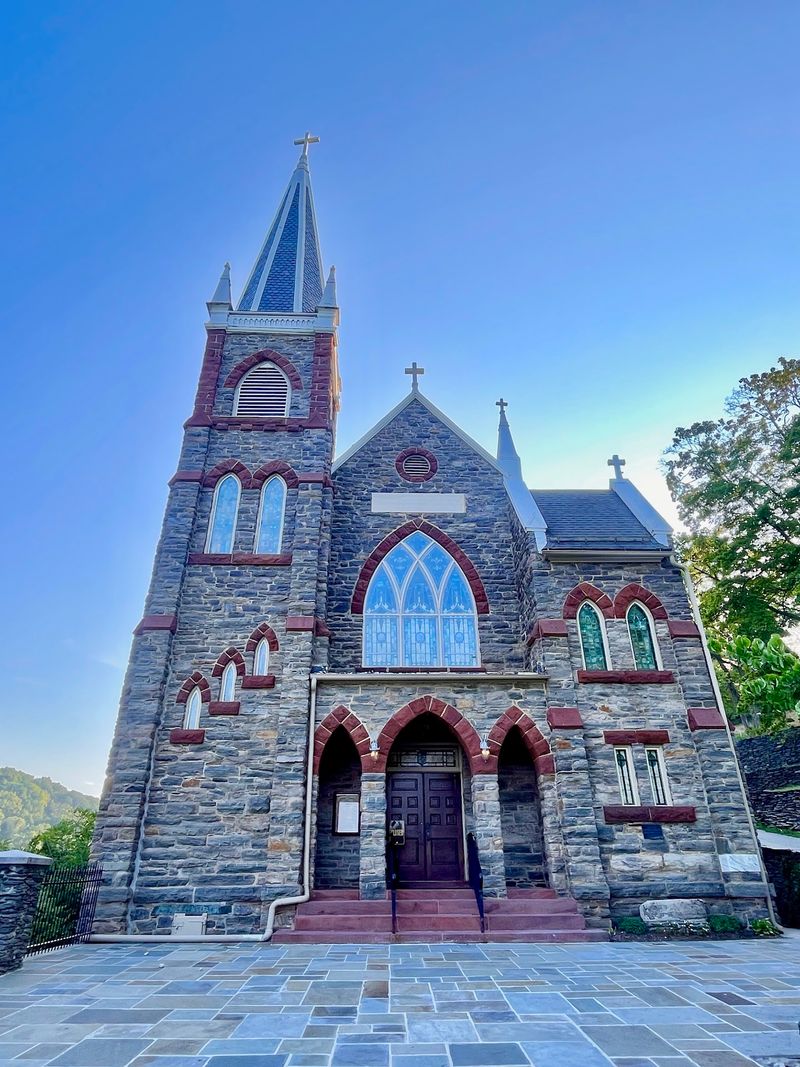
Behind the pretty stonework sits a genuinely moving origin story. Construction on the original church began in 1830 and wrapped up in 1833, driven largely by Irish Catholic laborers who had come to the area for work.
Those workers arrived in the early 1830s for jobs on the Chesapeake and Ohio Canal and the Baltimore and Ohio Railroad. Hard labor, long hours, and no spiritual home of their own.
So they built one. In a frontier town that was overwhelmingly Protestant at the time, the church became a cultural anchor as much as a religious one, a place where familiar customs and language could survive.
Knowing that changes how the building feels once you step inside. The walls represent pooled wages and volunteer hands rather than grand patronage.
It is a small reminder that a lot of American landmarks were raised by immigrants doing physically brutal work. Reading about the canal and railroad history before your visit adds real weight to what you are looking at.
How A Flag Saved It During The Civil War
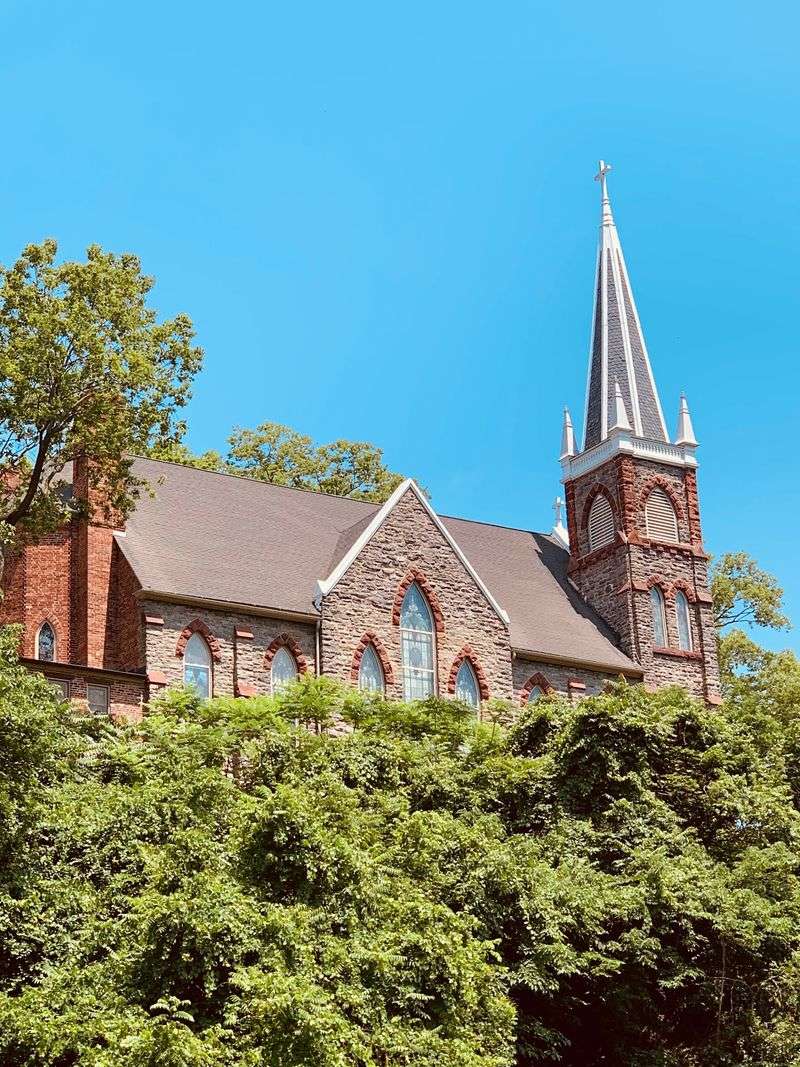
Here is the detail that makes people stop mid sentence. Harpers Ferry changed hands between Union and Confederate forces fourteen times during the Civil War, and much of the town was wrecked in the process.
This church came through it almost untouched. It was the only church in town to escape serious damage, which was no accident.
During bombardments, the pastor at the time flew the British Union Jack from the steeple as a signal of neutrality. Neither army wanted the diplomatic headache of shelling a building under a British flag, so the shells fell elsewhere.
Clever does not quite cover it. That single decision preserved a structure that otherwise would likely have been rubble like so much of Lower Town.
Standing on the hilltop, you can see how exposed the position was. Artillery sat on the surrounding heights, and the church had no natural cover at all.
Survival stories like this are why the whole hillside feels charged with something more than scenery.
The 1896 Remodel That Changed Everything
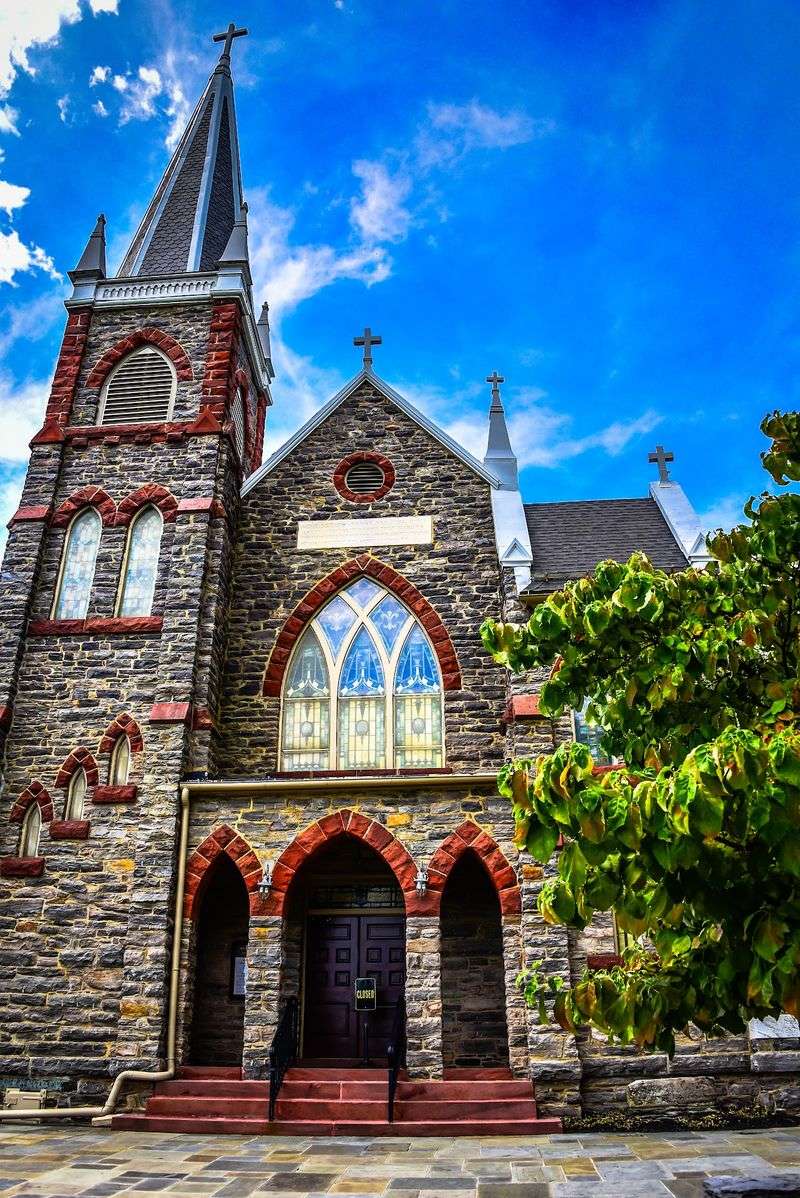
The building you photograph today is not the one those laborers finished in 1833. That earlier structure had a simpler pseudo Gothic look, plainer and less ornate.
In 1896, the church was extensively remodeled and enlarged into the Neo Gothic style now visible from every corner of town. Architects Thomas J.
Collins and Son handled the redesign.
Their work brought the elaborate Victorian Gothic detailing, the tall spire, and the gray stone with red sandstone accents that give the exterior its European flavor. It was a full transformation rather than a touch up.
I find that layering fascinating. One church, two very different faces, separated by roughly sixty years of changing taste and growing means.
Look closely at the stonework and you can appreciate how deliberate the contrast was, with darker trim outlining windows, doors, and corners.
Architecture fans should slow down here instead of rushing inside. The exterior details reward a lap around the building, and the light shifts the stone colors throughout the day.
Gilded Pendants And Colored Glass Inside
Cool, quiet, and brighter than expected. That was my first impression once the heavy doors closed behind me.
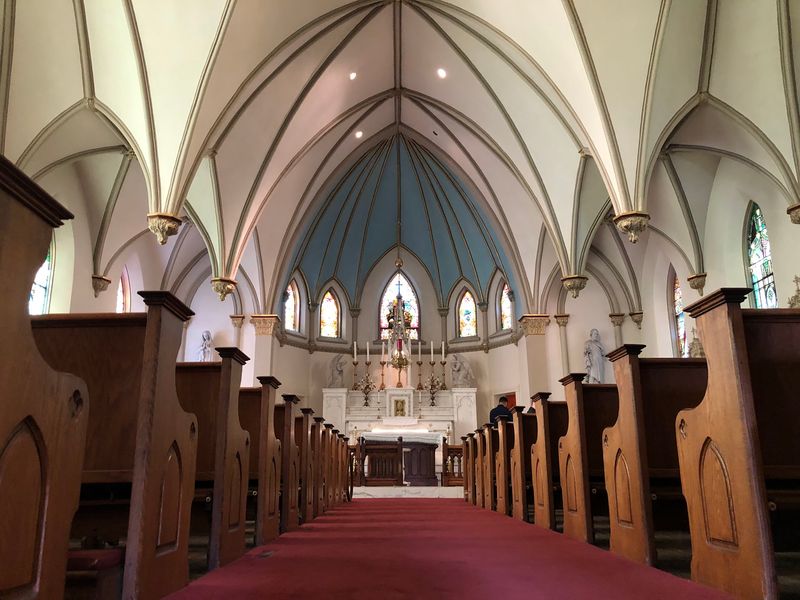
The interior is essentially one tall, luminous room, with the ceiling drawing your eyes straight up. Suspended vaulting overhead carries delicate gilded pendants that catch whatever light is coming through the windows.
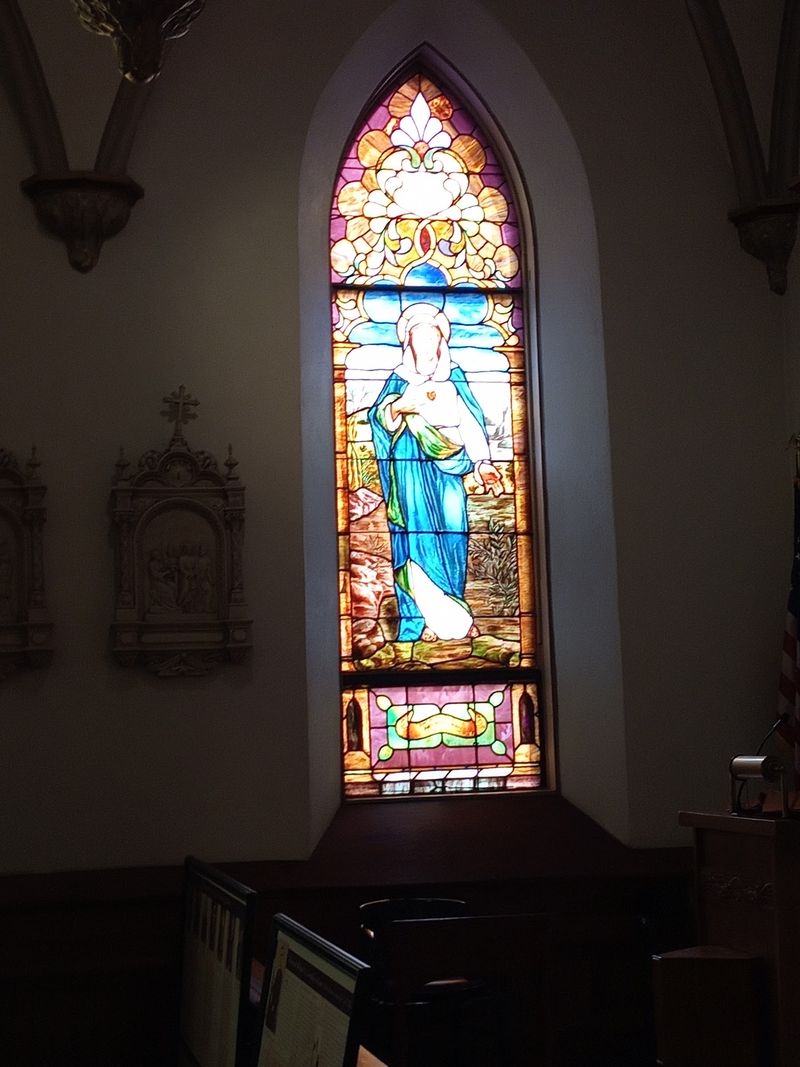
Those windows are worth studying. The lancet openings hold colored glass in greens and blues rather than detailed figure scenes, which fills the space with a soft, watery glow instead of bold storytelling panels.
A polygonal apse frames the sanctuary at the front, giving the room depth and a sense of enclosure without feeling heavy.
Sound behaves oddly in here too. Footsteps carry, whispers travel, and the whole space encourages you to move slowly.
Visitors often note how well maintained everything is, which speaks to steady care over many decades. Even people with no religious connection tend to linger, treating the room as a piece of craftsmanship worth appreciating on its own terms.
Marble From Michelangelo’s Quarry
Every so often a small detail steals the whole visit. In this case, it is the altar.
Carved from Carrara marble, it carries that pale, almost glowing quality the stone is famous for. What makes it remarkable is the source, since the marble came from the same Italian quarry Michelangelo used for his sculptures.
Think about that connection for a moment. A hillside chapel in a small West Virginia town holds stone pulled from the same mountains that produced some of the most celebrated sculpture in history.
Standing near it, the marble feels cooler and smoother than the surrounding stonework, and it draws light differently than anything else in the room.
Details like this are easy to walk past without knowing the backstory, which is a shame. Once you do know, the altar stops being furniture and becomes the centerpiece.
It also says something about ambition. A modest congregation reached across an ocean for material worthy of their sanctuary, and the result still holds up.
Still Active, Now A Historic Chapel
A lot of people assume it is purely a museum piece. Not so.
In 1995 the building was designated a historic chapel, now overseen by St. James Parish in Charles Town. Mass is still celebrated on Sunday mornings at 9:30, open to locals and travelers alike.
Visitor hours are limited, so timing matters. The chapel typically welcomes sightseers on Saturday from 11 AM to 3 PM, and it is closed most weekdays, which catches plenty of people off guard.
Docents sometimes greet guests, occasionally in Civil War era clothing, and they share background on the chapel’s role in the region’s story. Their explanations add layers you would never get from a plaque.
Parking is the other planning detail. There is essentially none at the top, so leave the car in a lot down below and make the walk part of the experience.
Attending a service, if that appeals to you, is the most complete way to see the space actually being used rather than just viewed.
Ruins, Trails And What Lies Beyond
Do not turn around at the church door. The path keeps going, and the next stretch is one of the best parts.
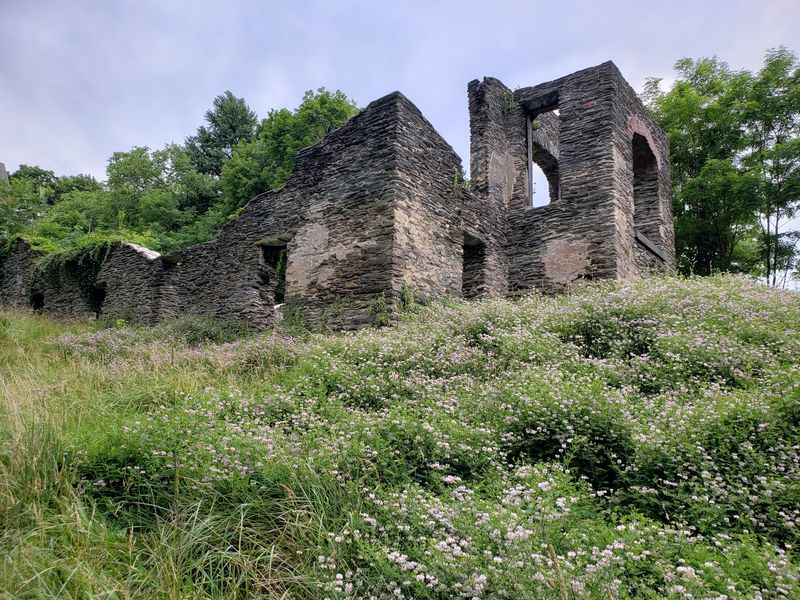
Continue climbing and you reach the ruins of an older church, a skeleton of stone walls and empty window arches sitting quietly among the trees. It photographs beautifully, especially with low sun coming through the openings.
Jefferson Rock waits a little further along, and the whole hillside sits inside Harpers Ferry National Historical Park. That means the chapel is one stop in a much larger walking story rather than an isolated attraction.
Give yourself a couple of hours if you want to wander properly. The trails connect toward the town, the rivers, and the old industrial sites below.
Wear comfortable shoes and bring water, since there are no services along the upper paths.
Faith, immigration, war, and river geography all overlap on one steep hill here, and that combination is what makes the place stick with you afterward.
Address: St. Peter’s Roman Catholic Church, 110 Church St, Harpers Ferry, WV 25425
