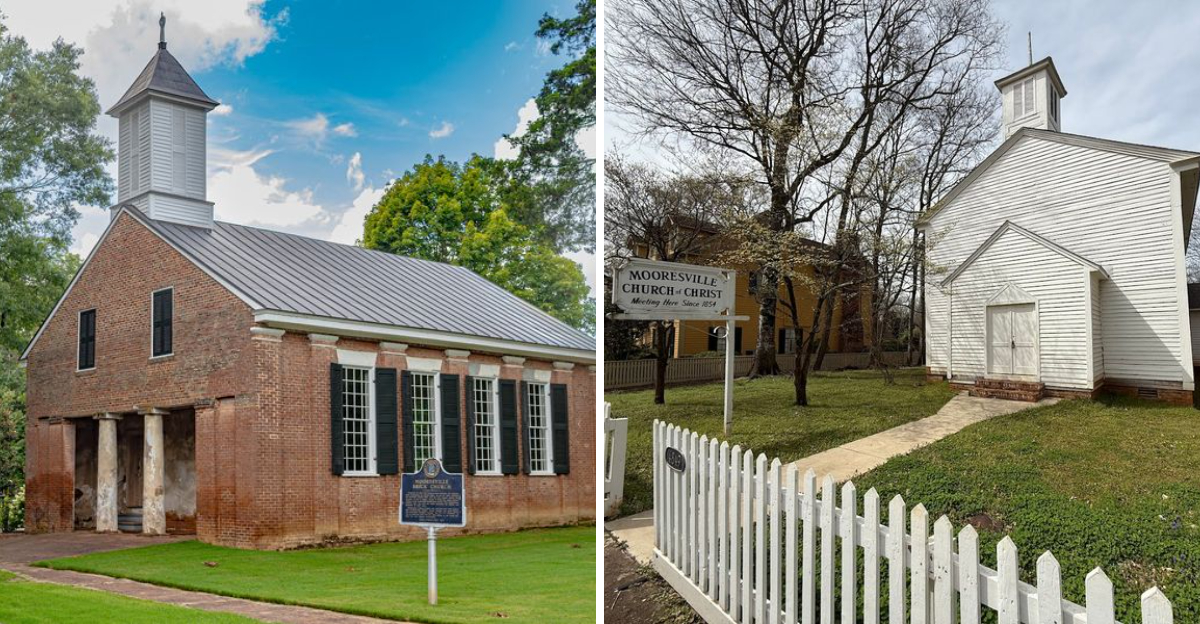
Mooresville is one of those rare places that feels like time forgot to move on. Incorporated before Alabama officially became a state, this tiny village has preserved its historic character for more than two centuries.
With fewer than 100 residents, uncurbed streets, and beautifully maintained 19th-century buildings, it offers an experience that feels remarkably untouched by modern life.
Walking through the community is like stepping into another era, where historic homes, quiet lanes, and carefully preserved landmarks tell the story of the early American frontier.
Instead of recreated history, visitors find a real town that has protected its heritage while remaining a living community. If you have ever wanted to wander through a place where the past still feels present, this peaceful village deserves a spot on your travel list.
Come Walk the Original 1818 Unpaved Streets
Not many towns can say their original street plan from 1818 is still intact. Mooresville can.
The roads here are uncurbed, gravelly, and shaded by old trees that have been growing for well over a century. Walking along them feels genuinely different from any modern sidewalk experience.
There are no painted lane lines, no traffic lights, and no noise from a busy commercial strip. The village layout was designed in the early 1800s, and that layout has never been significantly altered.
You are literally following the same paths that residents, mail carriers, and stagecoach travelers used two centuries ago.
Self-guided walking tours are available year-round, and the village is compact enough to explore on foot in a single afternoon. Some visitors also bring bikes.
Either way, the experience is unhurried and surprisingly peaceful.
Limestone County, Alabama does not have many places quite like this. Most historic towns have been updated, repaved, or modernized in some way.
Mooresville chose preservation over convenience, and that decision is exactly what makes it so special to visit. The whole village is listed on the National Register of Historic Places, which tells you everything you need to know about how seriously this community takes its roots.
Bring comfortable shoes and give yourself time to simply wander without a strict agenda.
Plan a Stop at the Oldest Frame Public Building
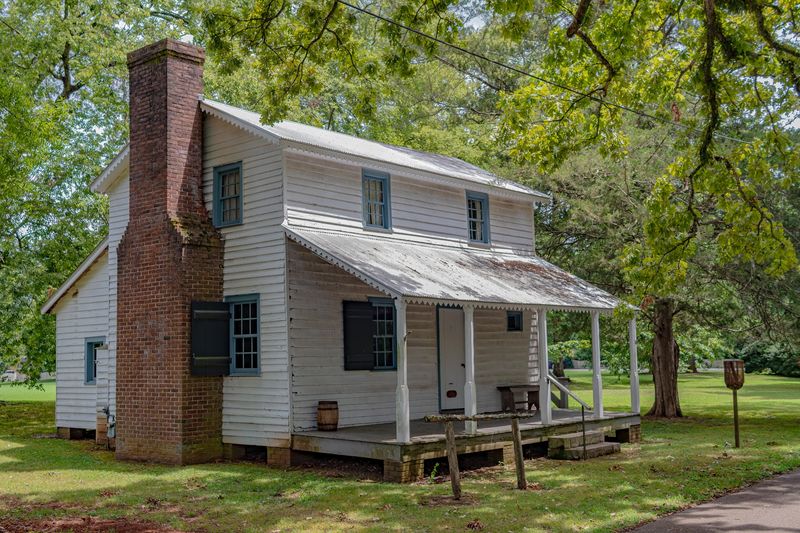
The Stagecoach Inn and Tavern was built around 1820 to 1821, and it holds a remarkable title. It is believed to be the oldest frame public building in the entire state of Alabama.
That alone makes it worth the trip.
Originally, the building served as the town’s first post office and a resting station for mail carriers traveling through the region. Riders on horseback and stagecoach passengers would stop here to sleep, exchange mail, and rest before continuing their journey.
The building has been carefully restored and now functions as both a museum and the official town hall for Mooresville.
Visiting this building gives you a very real sense of what frontier life looked like in the early 1800s. The structure itself is modest, which somehow makes it feel more authentic.
There is no grand ornamentation or theatrical staging. What you see is exactly what early Alabama settlers would have seen.
The restoration work done on this building is thoughtful and respectful of the original materials. Details like the aged wood framing and the simple interior layout have been preserved with care.
Whether you are a history enthusiast or just someone who appreciates old buildings, this stop will genuinely impress you. It is the kind of place that makes history feel personal rather than distant.
Do not rush through it. Give yourself time to absorb what you are standing inside.
You Can Mail a Letter from Alabama’s Oldest Post Office
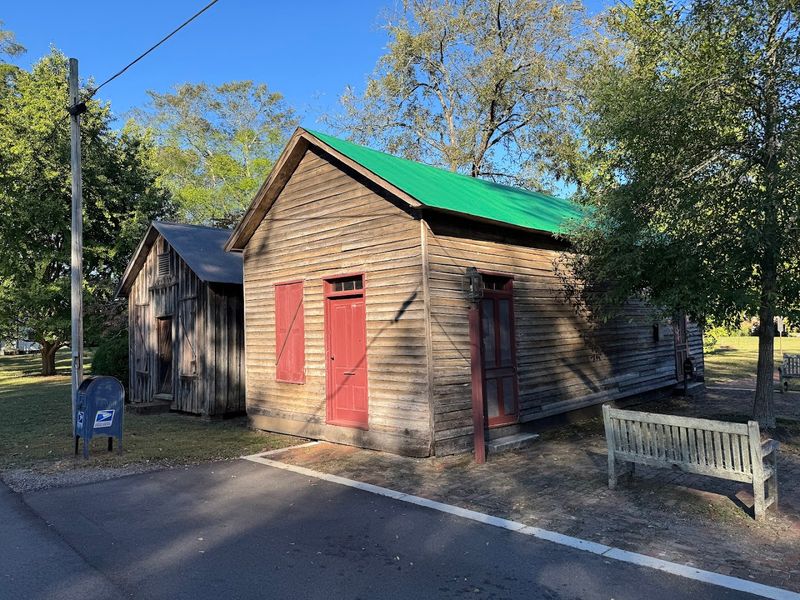
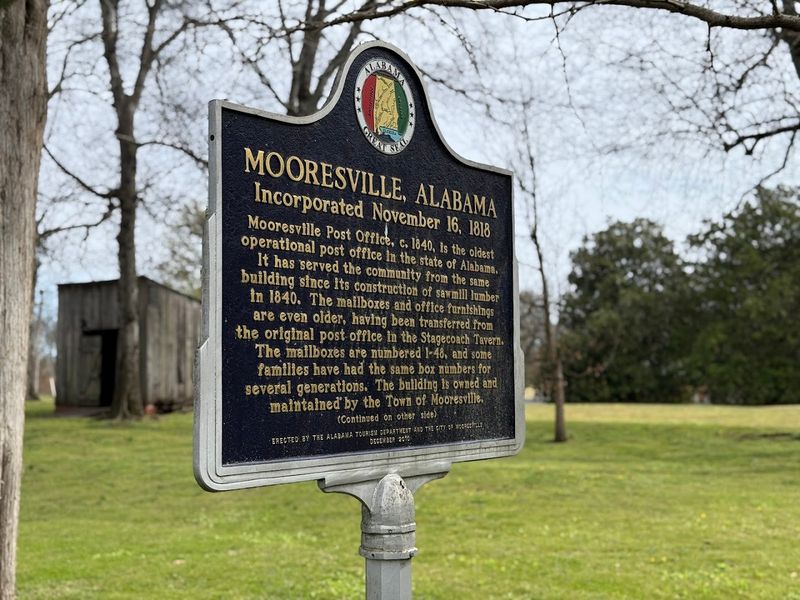
Here is something you probably did not expect to do on a history trip: mail an actual letter from the oldest continuously operating post office in Alabama. The Mooresville Post Office was built around 1840, and it has been in continuous operation ever since.
That is not a replica or a restored display. It is a functioning post office.
Inside, you will find original call boxes that date back to the 1800s. These small wooden mail compartments were used by residents to collect their letters long before home mail delivery was a standard practice.
Seeing them still in place inside an active building is genuinely surprising.
Mailing something from here feels like a small but meaningful act. Some visitors send postcards to friends or family just to have the Mooresville postmark on the envelope.
It is a quirky, low-cost souvenir that carries a real story behind it.
The building itself is compact and unassuming from the outside. But once you understand what you are looking at, the significance hits differently.
This post office has served the same community through wars, economic shifts, and generational change for nearly two centuries. It has outlasted countless larger institutions.
For anyone who loves finding unexpected living history in small places, this post office is one of the most quietly powerful stops in all of Mooresville. Plan a few extra minutes here and soak it in.
Try Finding a Church Where a President Once Preached
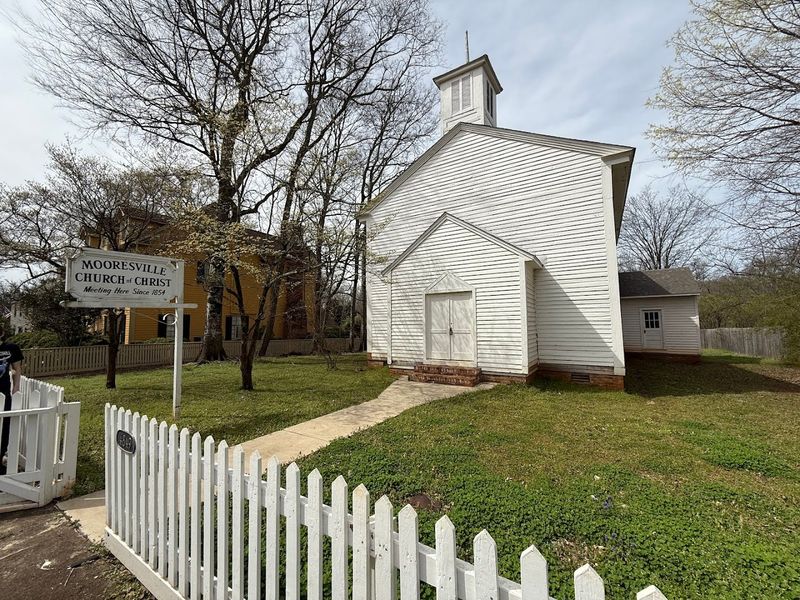
Most people visit historic churches to admire the architecture. In Mooresville, the Church of Christ gives you something extra.
This building, constructed in 1854, is where James A. Garfield once stood at the pulpit and preached.
Garfield later became the 20th President of the United States.
Before his political career took off, Garfield was known as a passionate and effective public speaker. His time in Mooresville left a mark on the community, and the church has honored that connection ever since.
Standing inside the same space where a future president once addressed a congregation is a surprisingly moving experience.
The building itself has aged beautifully. Its brick exterior and simple interior reflect the straightforward religious values of mid-19th century Alabama.
There are no elaborate stained glass windows or ornate carvings. What you get instead is an honest, well-preserved structure that has witnessed more than 170 years of community life.
Visitors who enjoy presidential history will find this stop especially rewarding. Garfield is not one of the most widely discussed presidents in popular culture, which makes discovering his connection to a tiny Alabama village feel like uncovering a hidden chapter of American history.
The church is part of the self-guided village tour, so you can visit at your own pace. Take a moment to stand quietly inside and think about who else once stood in the same spot.
It is a genuinely cool experience.
Skip the Textbook and See Where Andrew Johnson Lived
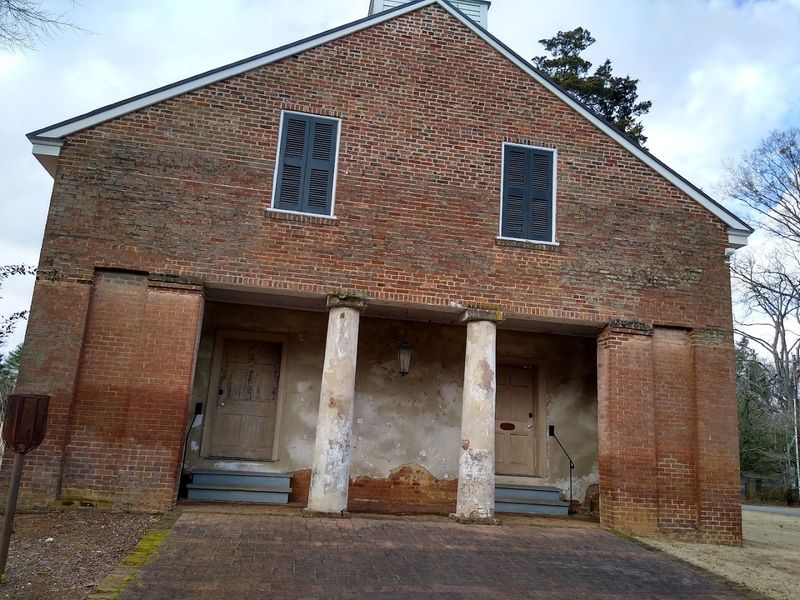
Andrew Johnson, the 17th President of the United States, did not grow up in a mansion. He spent time in Mooresville as a tailor’s apprentice before his political journey began.
That backstory alone reframes how you think about presidential history in America.
Most people associate presidential history with grand estates and famous battlefields. Mooresville offers something more grounded.
This was a working village, and Johnson was a working young man learning a trade here. The connection feels personal in a way that a museum exhibit rarely achieves.
Walking through the same streets where Johnson once lived and worked as a young apprentice adds a layer of meaning to the visit. You are not just reading about history on a placard.
You are physically present in the environment that shaped someone who would eventually lead the country during one of its most turbulent periods.
Mooresville has a quiet way of making history feel human rather than heroic. The village does not oversell its connections to famous figures.
The stories are simply there, woven into the fabric of the place, waiting for curious visitors to discover them. If you enjoy learning about the everyday lives of historical figures rather than just their famous moments, Mooresville will genuinely surprise you.
This is the kind of destination that rewards people who slow down, pay attention, and let the surroundings do the talking. Come ready to be curious.
Do Not Miss the 1839 Brick Church With Handmade Walls
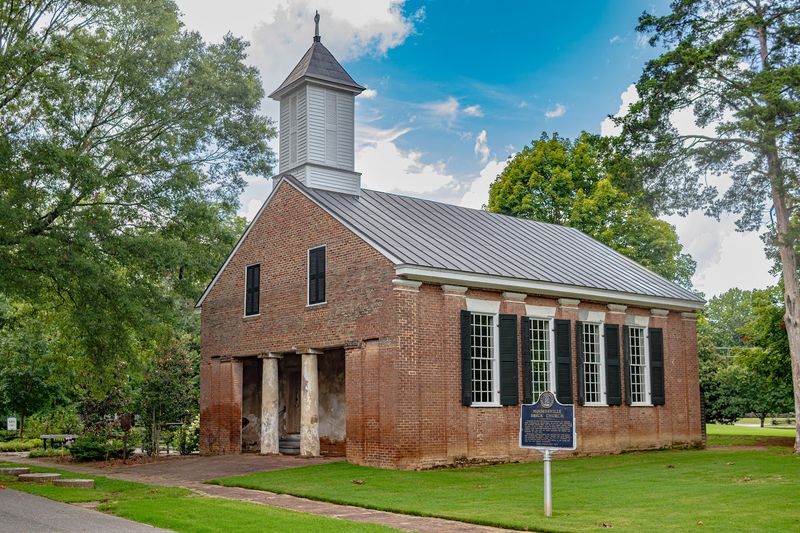
The Brick Church in Mooresville was constructed in 1839 in the Greek Revival style, and it carries one especially fascinating detail. The bricks used to build it are unusually symmetrical for handmade bricks.
That level of craftsmanship from nearly 200 years ago is genuinely impressive when you see it up close.
Greek Revival architecture was popular in the American South during the early to mid-1800s. The style emphasized clean lines, symmetry, and a sense of dignity.
The Brick Church reflects all of those values without being flashy or overdone. It sits quietly in the village like it has always belonged there, which of course it has.
What makes this building especially interesting is the human story behind the bricks themselves. Each one was shaped by hand before machine manufacturing existed.
The fact that they came out so even and consistent speaks to the skill and patience of the craftspeople who made them. That kind of detail is easy to overlook unless someone points it out.
The church is part of the walking tour route through the village, so you will pass it naturally as you explore. But make sure you actually stop and look closely at the brickwork rather than just snapping a quick photo and moving on.
Run your eyes along the mortar lines. Notice the consistency.
It is one of those small architectural details that turns an ordinary stop into a genuine moment of appreciation. History is in the details here.
Make Time for Local Sweets at Lyla’s Little House
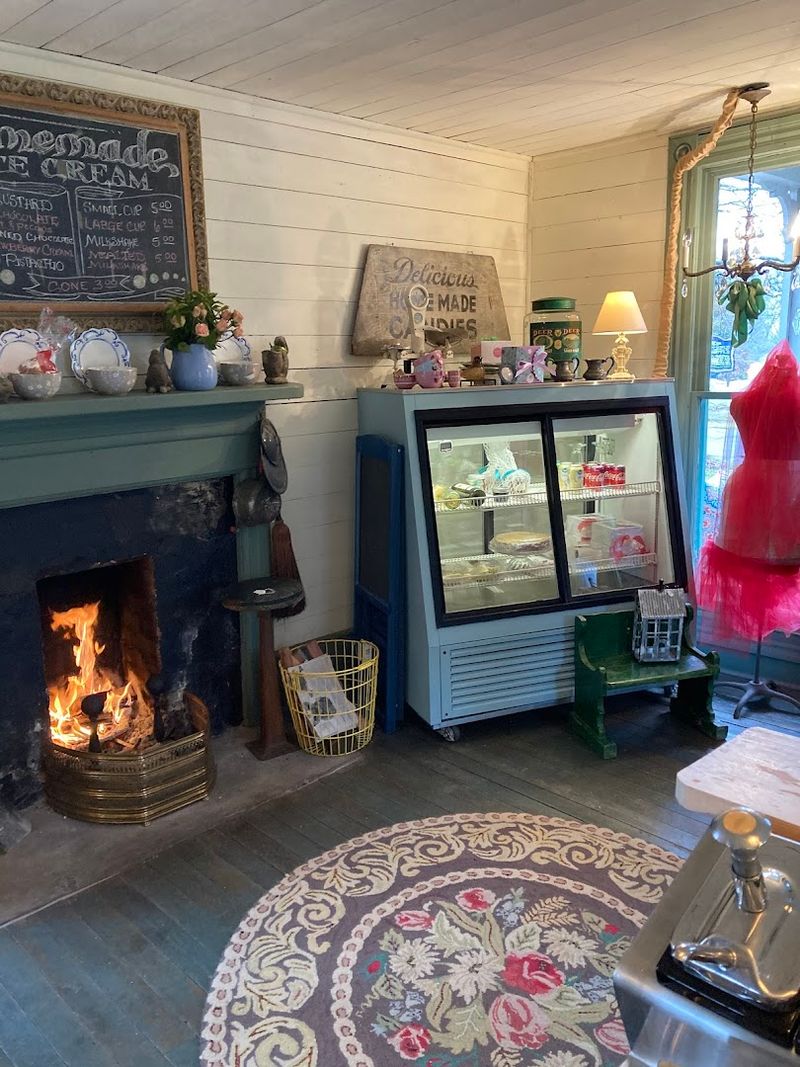
History tours can work up an appetite, and Mooresville has a sweet answer for that. Lyla’s Little House, located at 4739 High St, Mooresville, AL 35649, United States, is a small artisanal candy and ice cream shop right in the village.
It is the kind of place that feels completely at home in a 19th-century setting, even though the treats are very much made for modern enjoyment.
The shop carries handmade candies and ice cream that reflect the kind of care you would expect from a small-batch producer. Nothing here feels mass-produced or generic.
Each visit feels a little different depending on what is available that day, which gives the shop a refreshing quality that bigger commercial spots rarely manage to deliver.
Stopping here is also a way to support the local community directly. Mooresville has only around 47 to 64 residents, and small businesses like this one play a meaningful role in keeping the village alive and welcoming to visitors.
Spending a few dollars here is a simple way to give back to a place that has worked hard to preserve something truly rare.
The shop pairs perfectly with the slow, unhurried pace of a Mooresville visit. Grab something sweet, find a shady spot along one of the village’s tree-lined gravelly roads, and just sit for a while.
There is something genuinely restorative about enjoying a handmade treat in a place this quiet and this old. It rounds out the experience in the best possible way.
Do not skip it.
