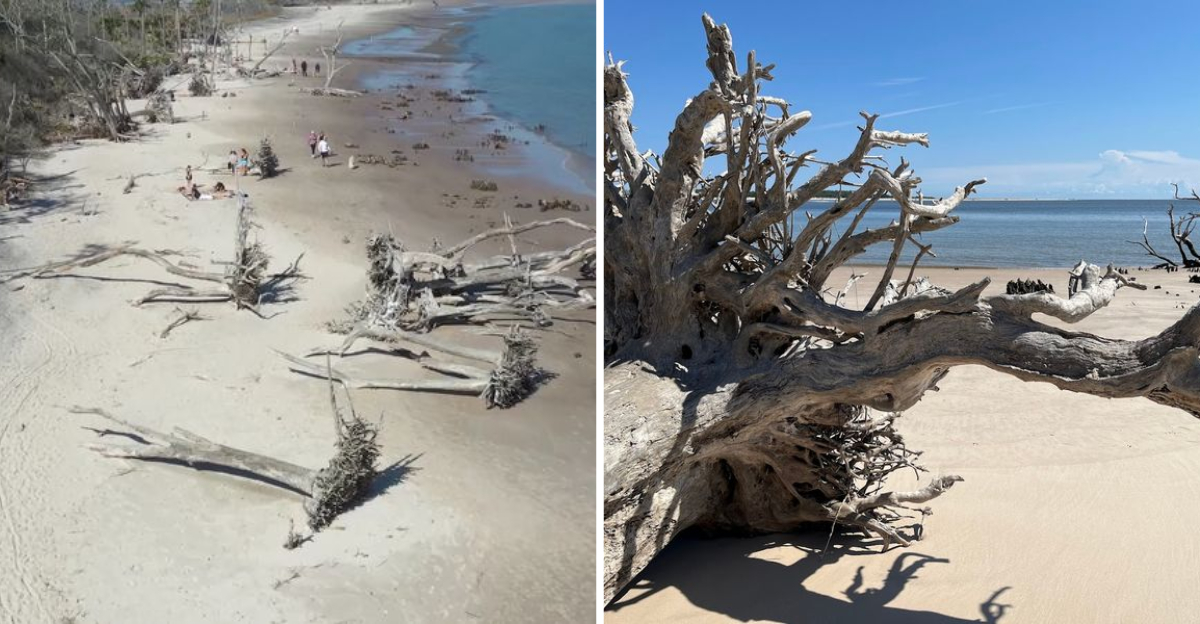
Florida’s coastline often brings expectations of bright water and soft sand, yet certain stretches break that image completely. Near the northeastern edge of the state, the shoreline shifts into something far more unusual, where wind, salt, and time have transformed the beach into an open landscape of natural remnants.
Pale, weathered tree trunks rest across firm sand like scattered sculpture, creating a scene that feels more like an outdoor installation than a typical coastal stop. The contrast between decay and beauty shapes every view.
It is a setting where a driftwood-covered Florida beach near Jacksonville delivers one of the most surreal coastal experiences in the state.
The Bleached Trees That Make This Beach Unlike Any Other in Florida
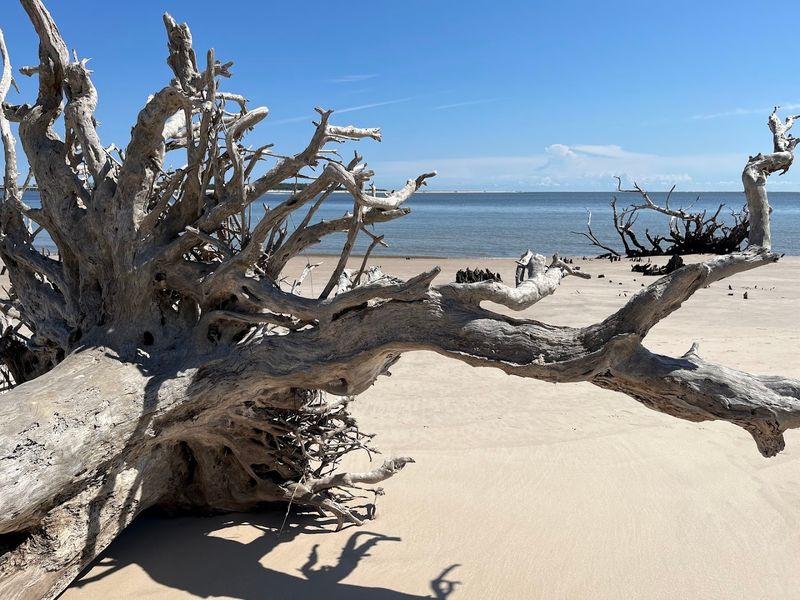
There is something almost cinematic about the moment you first lay eyes on the fallen trees at Boneyard Beach. They are not small pieces of driftwood you might casually step over.
These are enormous live oak and cedar trees, some with root systems still reaching outward like frozen hands, their bark long gone and their wood polished to a pale, ghostly white by years of sun, salt air, and ocean wind.
The trees originally grew along a bluff that sits between 20 and 30 feet above the shoreline. As the coastline erodes over time, the bluff crumbles and the trees topple onto the beach below, where they remain and slowly transform into the dramatic sculptures you see today.
It is a slow, natural process that has been happening for centuries.
What makes these formations so visually striking is how varied they are. Some trunks lie flat and smooth.
Others twist upward at odd angles, creating natural frames perfect for photography. The whole scene feels like a forest caught mid-fall, frozen in time.
No two visits look exactly the same, because tides and shifting sand constantly rearrange the details in subtle but noticeable ways.
Why Photographers Are Absolutely Obsessed With This Spot
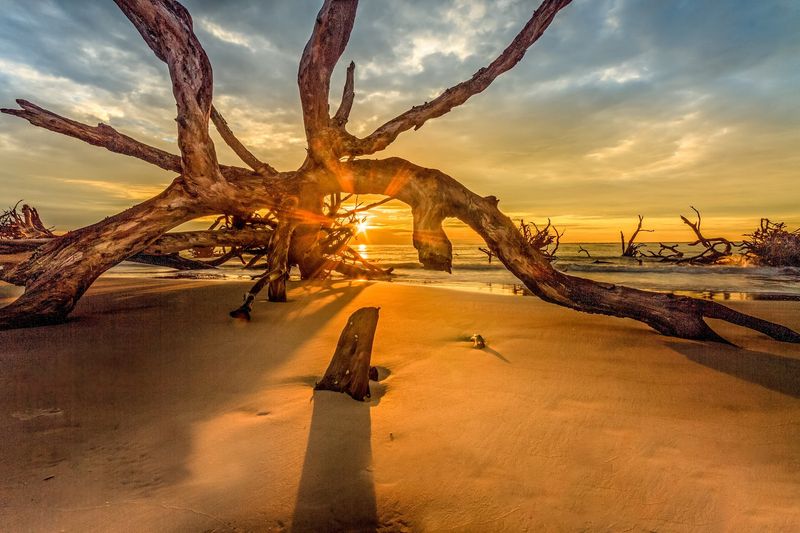
Boneyard Beach has quietly earned a reputation as one of the most photogenic locations in the entire state of Florida. That reputation is completely deserved.
The combination of pale, sculptural wood against the open sky creates a contrast that is almost impossible to capture badly, regardless of your camera skill level or equipment.
Sunrise and sunset are the golden windows here, literally. The warm orange and pink light that rolls across the bleached wood during those hours produces a glow that feels almost iridescent.
Long shadows stretch across the hard sand, and the textures of the twisted roots and smooth trunks become even more pronounced. Photographers who plan their visits around low tide get an added bonus, since more of the driftwood formations are exposed and accessible when the water pulls back.
Even on overcast days, the beach delivers. The muted light softens shadows and gives the scene a moody, almost cinematic quality that works beautifully in black and white photography.
Families, solo travelers, and professional photographers alike come here specifically for the images they know they will leave with. It is one of those rare places where the landscape does most of the creative work for you.
The Trail In Is Part of the Experience, Not Just a Walk
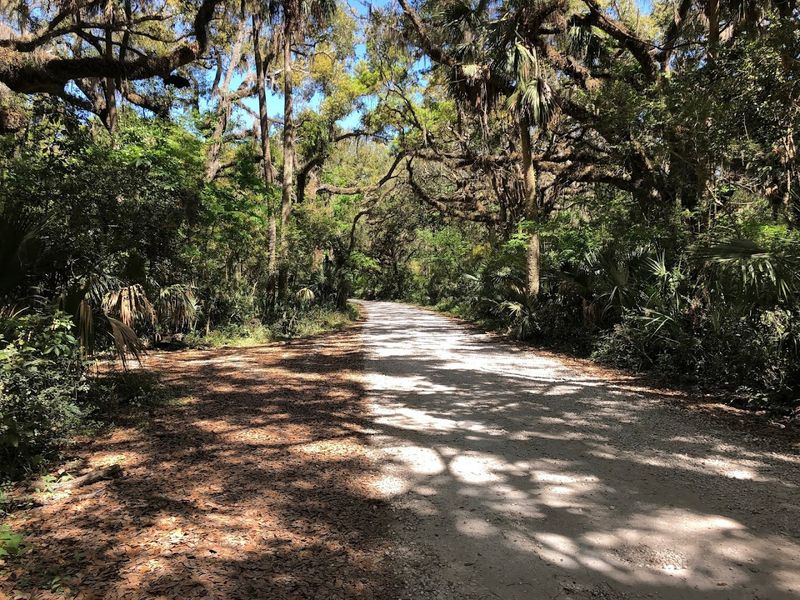
Getting to Boneyard Beach is not as simple as pulling into a parking lot and stepping onto sand. There is a trail, roughly a third to half a mile long, that winds through a shaded wooded area before opening up to the beach.
That walk is genuinely part of what makes the arrival feel so dramatic and rewarding.
The trail itself is relatively flat and easy to navigate, making it accessible for most fitness levels. Kids do well on it, and the natural canopy overhead keeps things cool even on warmer days.
Some sections of the path have a graffiti-covered walkway that adds a quirky, unexpected layer of character to the journey. It is not what you expect, and somehow that makes it even more memorable.
One practical note worth mentioning: the wooded trail can have gnats and mosquitoes, especially in warmer months or after rain. Bringing bug spray is genuinely one of the best decisions you can make before setting out.
Good walking shoes are also a smart call, since parts of the path are sandy and uneven. Once you clear the tree line and the beach opens up in front of you, every step of the walk instantly feels worth it.
The Sand Here Tells a Different Story Than Most Florida Beaches
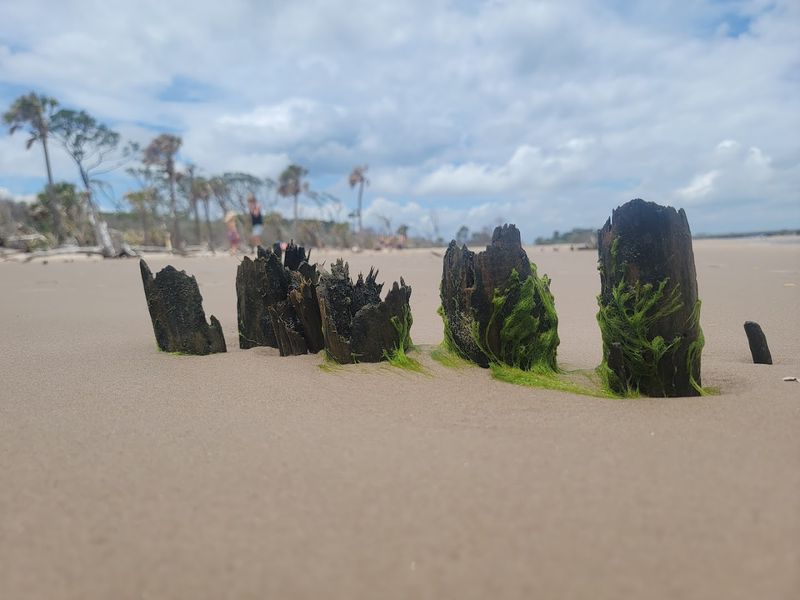
Most people who visit Florida beaches for the first time arrive expecting that powdery, almost sugary white sand that the Gulf Coast is famous for. Boneyard Beach is not that, and it does not pretend to be.
The sand here is hard-packed and beige, more practical than plush, and it actually works in the beach’s favor in several unexpected ways.
Because the sand is firm, walking along the shoreline feels easy and steady. You are not sinking with every step or struggling to stay balanced.
That makes exploring the full length of the beach, which stretches roughly a mile from one end to the other, genuinely enjoyable rather than exhausting. Families with wagons or young children who tire easily will appreciate how manageable the terrain is.
The hard-packed surface also means the massive fallen trees sit partially embedded in the sand rather than just resting on top of it, which gives the whole scene a sense of permanence and weight. There is something grounding about that, almost like the beach itself is holding onto these trees.
The texture, the color, and the density of the sand all contribute to an atmosphere that feels raw, honest, and completely unlike the polished beach experience you find almost everywhere else in Florida.
Sea Turtles, Birds, and the Quiet Ecological Role of This Beach
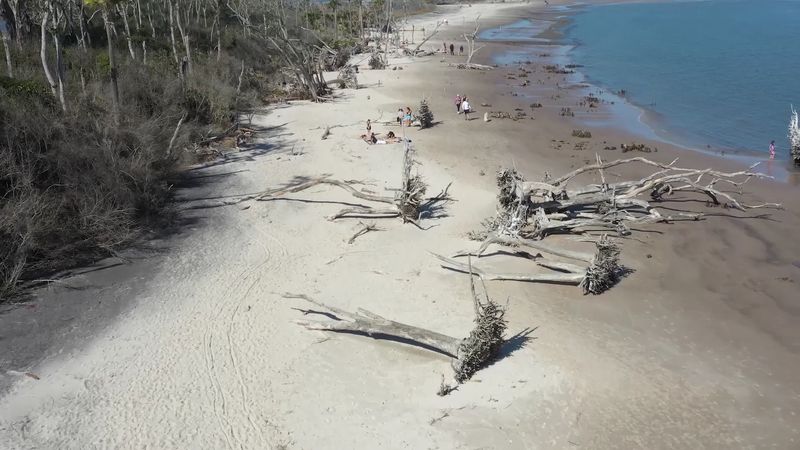
Beyond the photographs and the dramatic scenery, Boneyard Beach plays a genuinely important role in the local ecosystem. The fallen trees are not just visually striking.
They actively help protect the coastline by absorbing wind and wave energy, slowing down erosion in the surrounding area and creating natural barriers that benefit both the land and the wildlife that depends on it.
The beach is also a designated nesting environment for sea turtles. During nesting season, the shoreline becomes a critical habitat where these animals come ashore to lay their eggs.
That is a big reason why the park has rules in place about what visitors can and cannot do here. You cannot take driftwood home, which is a rule that protects the natural balance of the beach and preserves the formations that make this place so special.
Birdlife is abundant too. The mix of ocean, estuary, and wooded habitat nearby creates ideal conditions for a wide variety of coastal and migratory birds.
The sounds of wildlife on the trail and along the beach are genuinely beautiful, layered and alive in a way that feels very different from the noisy, crowded energy of more commercial Florida beaches. It is a place where nature is clearly in charge.
Blackrock Beach Next Door and the Rare Soil That Looks Like Stone
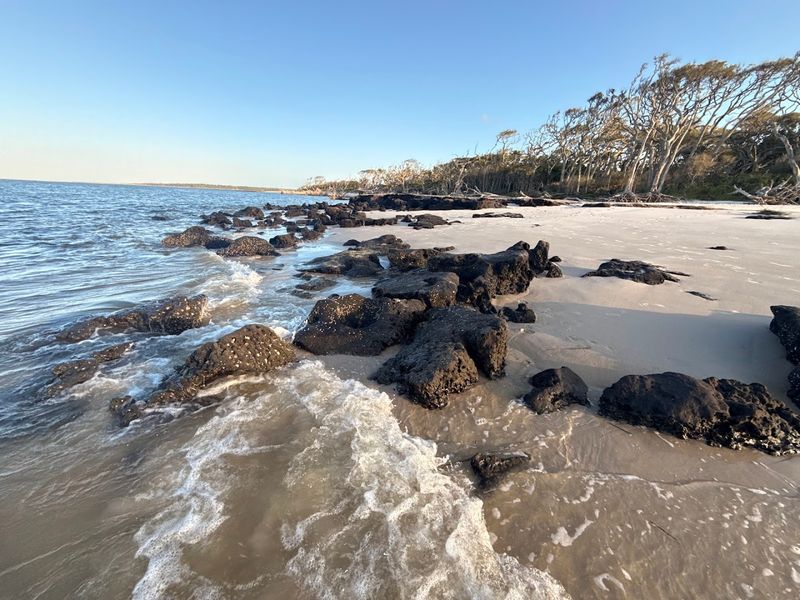
Right next to Boneyard Beach sits another unusual stretch of shoreline called Blackrock Beach, and if you are already making the trip, it would be a genuine shame to skip it. The two beaches feel like different chapters of the same strange and fascinating story that Big Talbot Island tells about the natural world.
Blackrock Beach gets its name from dark, rock-like formations that line the shore. These formations are not actually rock at all.
They are made of spodosol, a rare type of soil that has hardened and darkened over time through a natural process involving organic matter and minerals. The result looks almost industrial, like chunks of dark concrete scattered across the sand, but it is entirely natural and genuinely rare.
The visual contrast between Blackrock Beach and Boneyard Beach is striking. Where Boneyard is pale and skeletal, Blackrock is dark and dense.
Visiting both in the same trip gives you a fuller picture of just how unusual and geologically interesting this stretch of Florida coastline really is. Some visitors arrive at Blackrock Beach and walk westward along the shore until they reach the driftwood formations of Boneyard Beach, making for a rewarding and scenic coastal walk with two completely different landscapes to experience.
Practical Tips for Planning Your Visit to Boneyard Beach
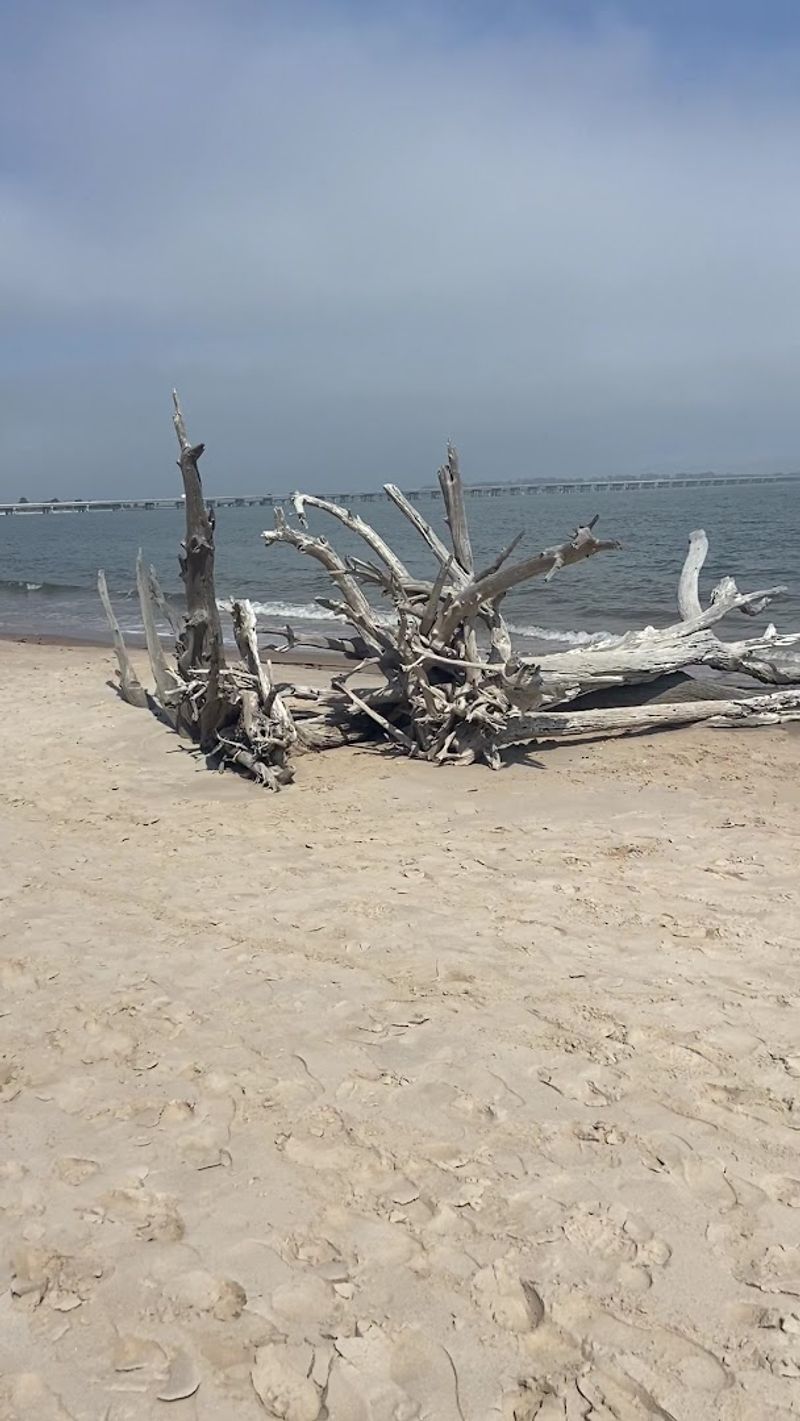
Planning ahead makes a real difference at Boneyard Beach. The park is open daily from 8 AM until sunset, and there is a small vehicle entrance fee to access Big Talbot Island State Park.
Payment is handled through an app at the parking area, so having your phone ready saves time. Arriving early in the morning is highly recommended, both for the quality of light and to beat any crowds that tend to build later in the day.
Checking a tide chart before you go is one of the smartest moves you can make. At high tide, parts of the beach become inaccessible because the water reaches the base of the bluff, leaving very little room to walk or explore.
Low tide opens up the beach significantly and reveals more of the driftwood formations that make this place so visually compelling. Swimming is not recommended here due to strong currents, so the focus is entirely on exploring, photographing, and simply taking in the landscape.
Pets are not permitted on the beach, which helps protect the nesting habitat and the natural formations. Bug spray and solid walking shoes are genuine essentials, not optional extras.
There are portable restrooms and picnic tables near the parking area. The trail to the beach is easy enough for most visitors, including children and older adults who are comfortable with a short flat walk.
Address: Jacksonville, FL 32226
