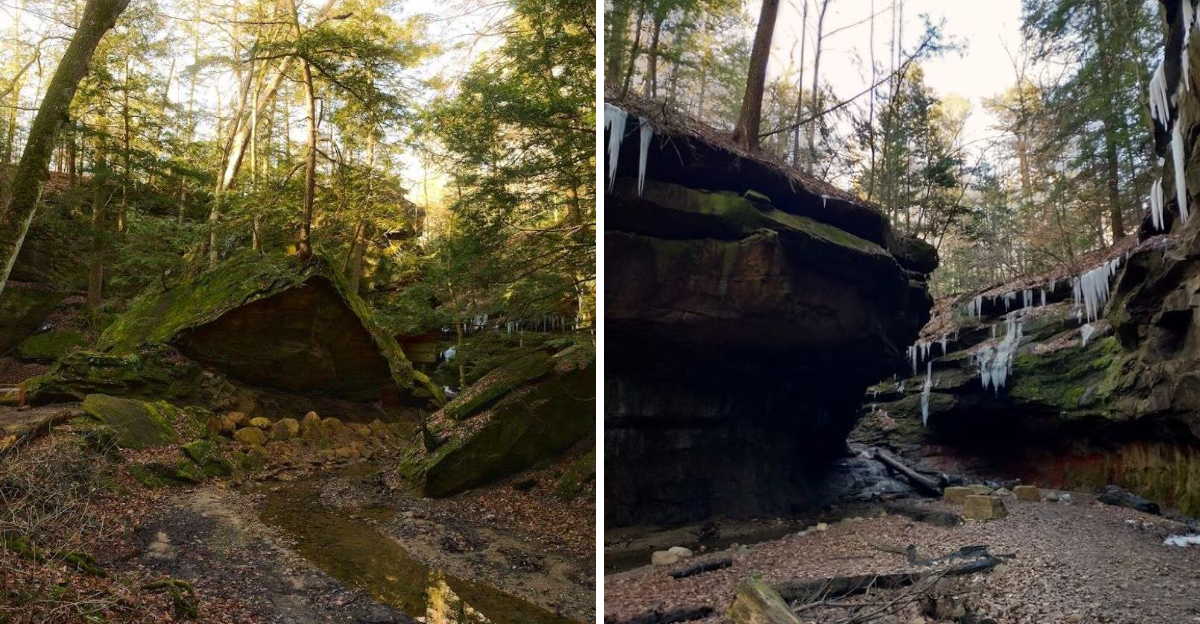
Somewhere in the heart of Indiana, a landscape exists that feels like it belongs in a science fiction film. Hidden within one of the state’s most beloved parks, this canyon system is carved into ancient sandstone, with towering rock walls rising high above narrow passageways.
Winding gorges, moss-covered cliffs, ferns, and towering hemlock trees create a cool, shaded environment that feels worlds away from the surrounding countryside.
Hiking through the area means squeezing between rock formations, crossing shallow streams, and following trails that reveal a new surprise around nearly every bend.
The dramatic scenery changes with the seasons, making each visit feel a little different from the last. If you have ever wanted to experience an otherworldly landscape without leaving the Midwest, this remarkable natural area is well worth the journey.
Unique Geological Formations Millions Of Years In The Making
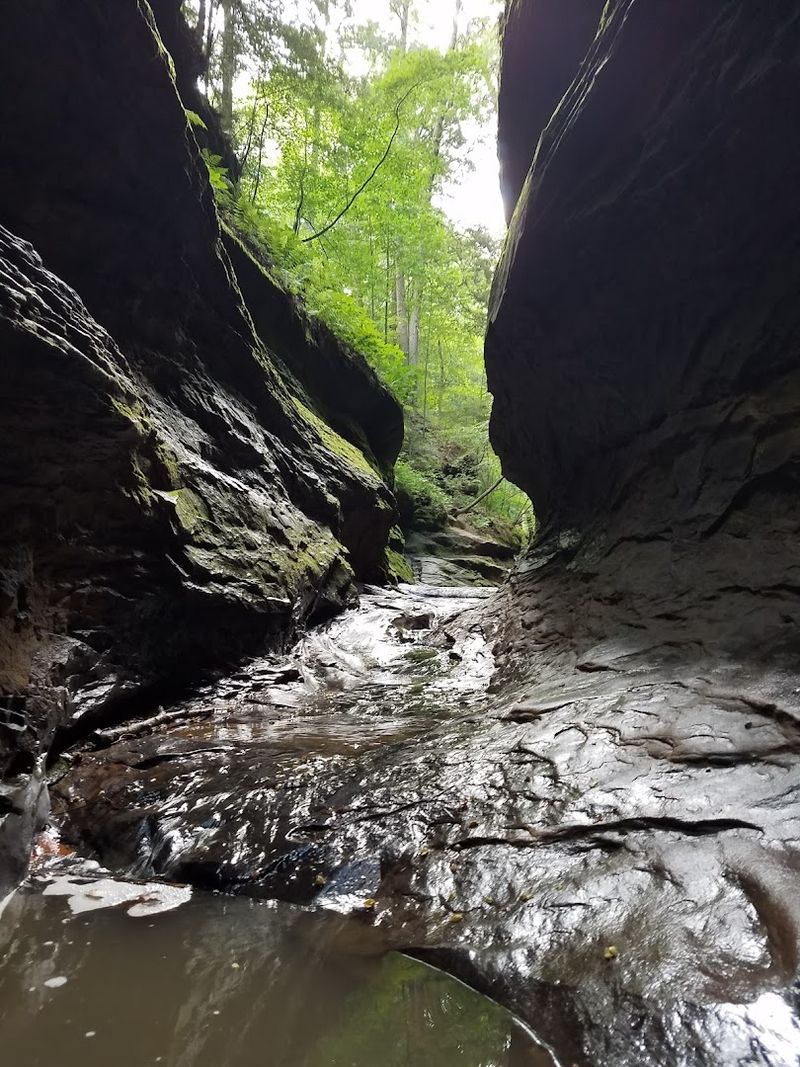
Three hundred million years of Earth history are written right into the canyon walls at Rocky Hollow. The preserve features narrow gorges carved from Mansfield sandstone, shaped by erosion and glacial meltwaters over an almost unimaginable stretch of time.
You can actually see layers of coal seams and ancient marine fossil fragments embedded in the rock faces as you walk through.
Specific formations here have their own names, which tells you a lot about how striking they are. “The Punchbowl” is a pothole scoured out by glacial erratics spinning in rushing water.
“Boulder Canyon” is filled with massive glacial boulders that feel completely out of place, like something dropped from the sky. “Devil’s Ice Box” and “Wedge Rock” add even more character to the landscape.
Standing inside one of these narrow gorges, the walls rise so steeply on both sides that the sky becomes just a thin ribbon of light above you. The sandstone surfaces glow in amber and ochre tones where mineral-rich water seeps through the rock.
Geologists consider this area one of the most significant geological sites in the entire state of Indiana. You do not need a science background to appreciate it.
Just walking through these formations feels like traveling back in time to a world that existed long before humans ever arrived.
Plan Your Hike On Trail 3 For Real Adventure
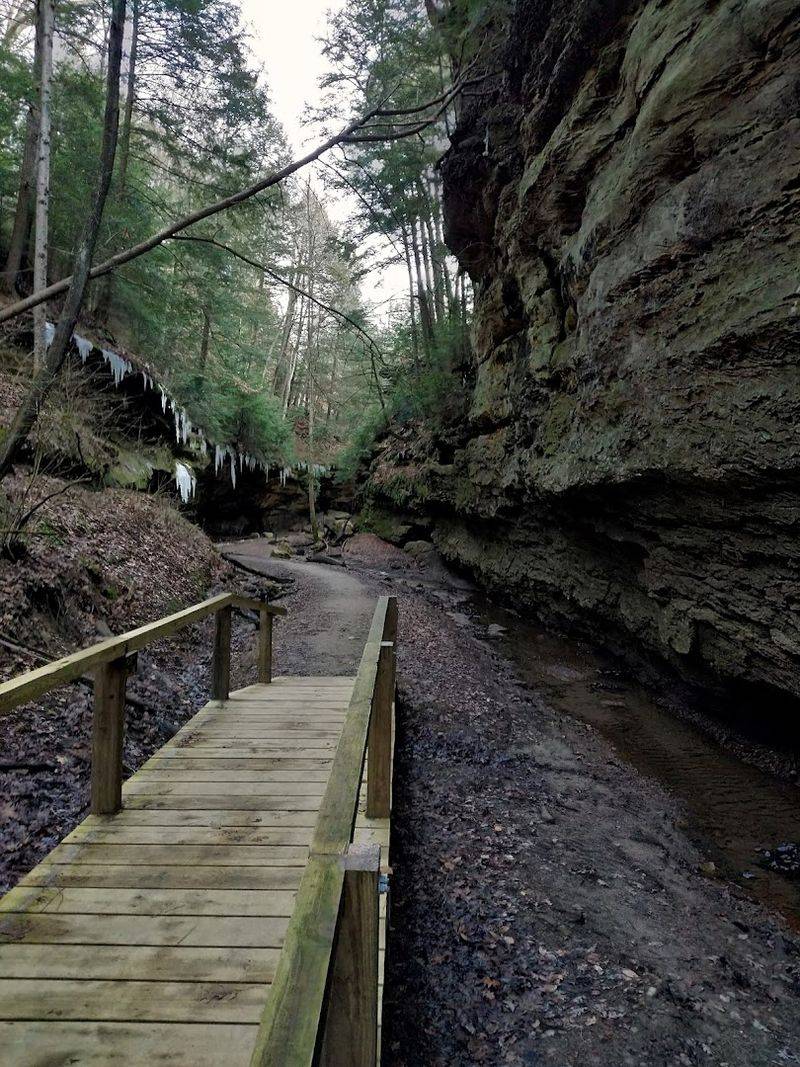
Trail 3 at Rocky Hollow is not a casual stroll. It is one of the most rugged and exciting hiking experiences available anywhere in the Midwest.
The trail winds through deep, narrow gorges where the walls press close on both sides, and in several places, sturdy wooden ladders are the only way to continue forward. Sections of the trail require hikers to walk directly through shallow streams, so waterproof boots are a smart choice.
The terrain stays unpredictable throughout the hike. Mud is common, especially after rain, and the sandstone surfaces can be slippery when wet.
That unpredictability is actually part of the appeal. Every turn in the gorge reveals something new, whether it is a hidden rock shelter, a narrow slot between two canyon walls, or a sudden waterfall dropping into your path.
For those who want to extend the experience, combining Trails 3, 5, and 9 into a double figure-eight loop is considered one of the most thrilling hikes in the entire Midwest. This longer route brings in boardwalks, additional rock shelters, and views that most visitors never see.
The nearly century-old suspension bridge over Sugar Creek serves as one of the entry points into the preserve, and crossing it sets the tone perfectly for what lies ahead. Rocky Hollow rewards hikers who come prepared and ready to work for their views.
The effort is absolutely worth it every single time.
Come Watch Seasonal Waterfalls Pour Over Mossy Ledges
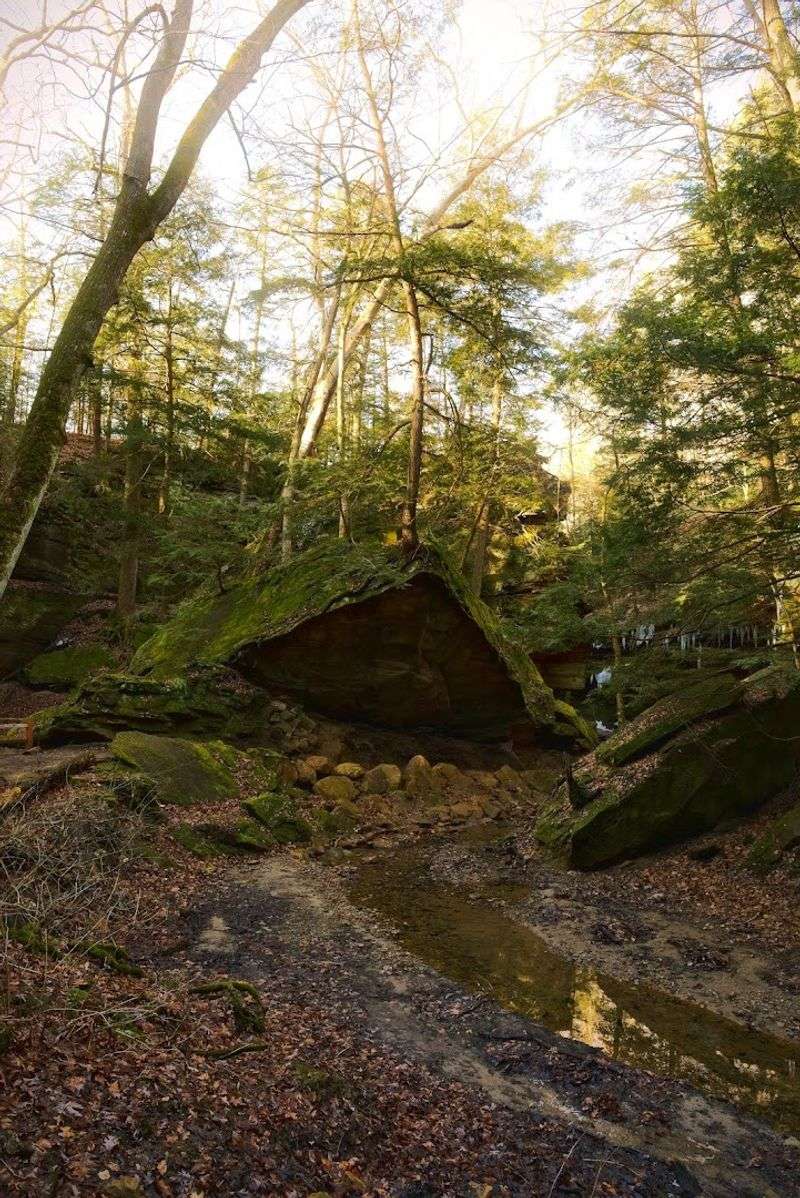
Water is everywhere inside Rocky Hollow, and it shapes the entire mood of the place. Miniature waterfalls spill over sandstone ledges at the heads of the gorges, especially after rainfall or during spring snowmelt.
The sound of moving water echoes off the canyon walls in a way that makes the whole space feel alive and constantly shifting.
Some of the seasonal waterfalls require a bit of adventure to reach. Wooden ladders have been installed at certain points along the trails to help hikers climb up or down past steep drops where water flows.
Climbing a ladder inside a mossy canyon while water trickles past you is one of those genuinely memorable moments that sticks with you long after the trip ends.
The water itself interacts with the sandstone in beautiful ways. Mineral deposits left by seeping and flowing water create color patterns on the rock that shift depending on the light and the season.
In spring, the falls run full and dramatic. By late summer, some reduce to quiet trickles that still catch the light beautifully.
Even in winter, frozen water creates ice formations along the canyon walls that give the place a completely different, almost surreal appearance. No matter when you visit, water plays a starring role in the Rocky Hollow experience.
Plan your trip after a rain if you want to see the falls at their most impressive.
You Should See The Hidden Jungle Ecosystem Here
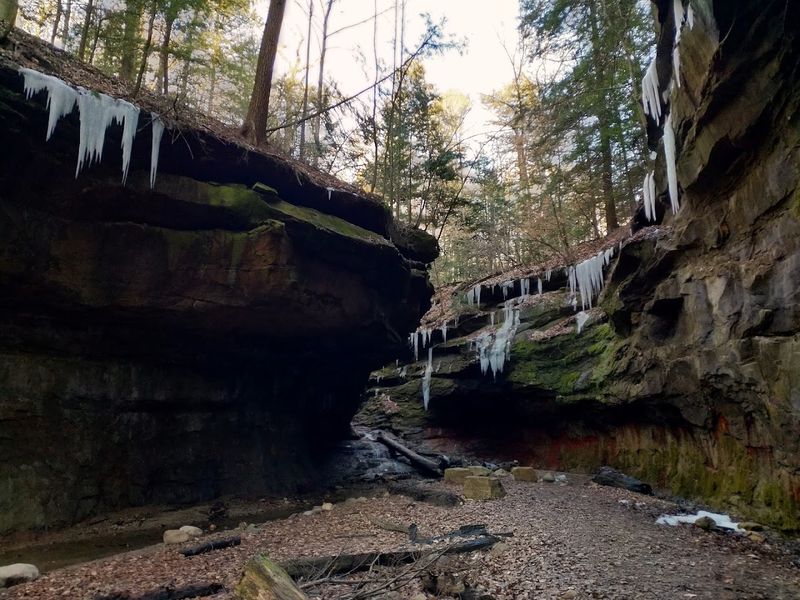
Rocky Hollow is what scientists call a “refugium,” which means it has protected a living ecosystem frozen in time for roughly 12,000 years. Conditions inside these shaded canyons have stayed cool and moist enough to support plants that normally belong much farther north.
Eastern hemlock trees and Canada yew grow here in what are called boreal relict populations, meaning these plants have survived since the last ice age when mastodons still roamed Indiana.
The canyon walls are draped in ferns and wild hydrangeas that cling to the rock with stubborn determination. Mosses and liverworts coat every wet surface, turning the stone into something that looks alive and breathing.
Seeping water creates streaks of amber, ochre, and even amethyst across the cliff faces, adding color that seems almost artificial.
Old-growth mesophytic forests and floodplain forests fill the wider sections of the preserve. Some of the largest black walnut trees in the entire Midwest grow within these boundaries.
The combination of ancient trees, prehistoric plants, and mineral-stained rock walls creates a visual experience that genuinely looks like a jungle on another planet. Photographers and nature lovers consistently describe this place as unlike anything else they have seen in the Midwest.
The sheer density and variety of plant life packed into these narrow canyons is something that has to be experienced in person to fully understand.
Make Time For The National Natural Landmark Recognition
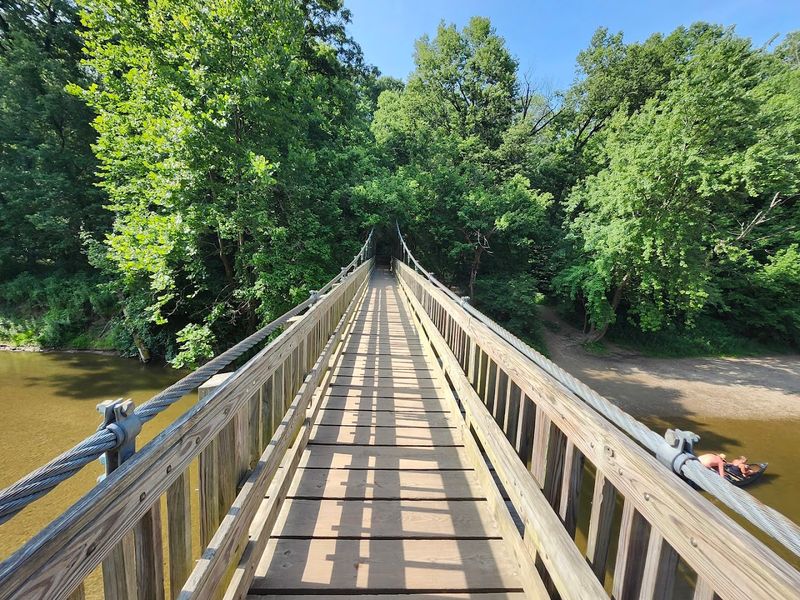
Rocky Hollow did not earn its reputation by accident. In 1974, a portion of the Rocky Hollow-Falls Canyon Nature Preserve was officially designated as a National Natural Landmark by the federal government.
That designation places it in the same category as some of the most scientifically and naturally significant sites in the entire country.
The recognition specifically highlights the preserve’s virgin beech-maple forest stands, its steep sandstone gorges, and its relict boreal plant populations. These are features considered rare and irreplaceable on a national scale.
The total preserve covers 1,608 acres, making it one of the largest nature preserves in Indiana. That kind of size means the ecosystem inside has room to function in a way that smaller protected areas simply cannot match.
Understanding this designation changes how you experience the place. You are not just walking through a pretty canyon.
You are moving through a scientifically documented, federally recognized natural treasure that has been protected specifically because nothing else quite like it exists in this region. The boreal relict plants growing here have survived for 12,000 years in these canyons, outlasting entire civilizations.
That kind of permanence is humbling. Visiting a National Natural Landmark also carries a certain sense of responsibility, knowing that the careful behavior of every visitor helps protect something that cannot be replaced.
Rocky Hollow earns every bit of that recognition.
Skip Nothing At The Lusk Home And Mill Site
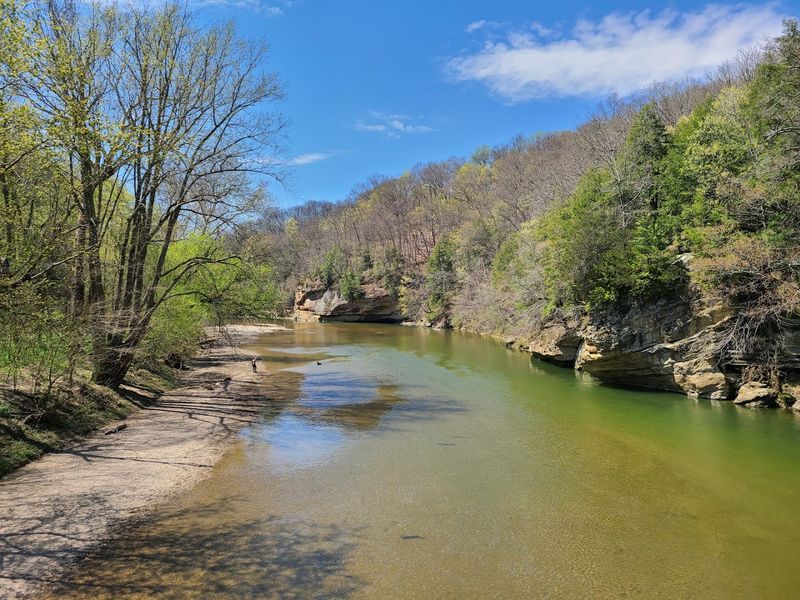
History runs as deep as the canyons at Turkey Run State Park. The Lusk Home and Mill Site, dating back to 1841, sits within the park and offers a real glimpse into what life looked like for early settlers in this part of Indiana.
The Lusk family built their homestead and mill along Sugar Creek, taking advantage of the same water that carved the canyons nearby.
Seeing the remnants of that early settlement puts the landscape into a different kind of perspective. People lived and worked in this rugged terrain long before it became a protected state park.
The mill site represents the practical ingenuity of frontier life, using natural resources to build something functional in a landscape that was anything but easy to navigate.
Turkey Run State Park itself is one of Indiana’s oldest state parks, which adds another layer of historical weight to the visit. The park has been welcoming visitors for over a century, and the preservation of sites like the Lusk Home ensures that human history here is honored alongside natural history.
Walking from the ancient sandstone canyons of Rocky Hollow to a 19th-century homestead within the same visit creates a surprisingly rich experience. You get geology, ecology, and human history all in one place.
That combination is rare and makes Turkey Run and Rocky Hollow worth far more than just a single afternoon trip.
Try Canoeing Sugar Creek After Your Canyon Hike

Rocky Hollow sits within Turkey Run State Park, and the park offers far more than just canyon hiking. Sugar Creek, the same waterway that has shaped this landscape for thousands of years, is one of the best canoeing and kayaking rivers in Indiana.
After spending time inside the dark, narrow gorges, getting out onto the open water of Sugar Creek feels like stepping into a completely different world.
The creek winds past sandstone bluffs and forested banks, giving paddlers a view of the landscape from a completely different angle. You can see the same rock formations that tower over the hiking trails from water level, which changes how you understand the scale of everything.
The current is generally manageable for beginners while still offering enough movement to keep things interesting.
Beyond paddling, the park also offers camping, fishing, horseback riding, and access to an Olympic-sized swimming pool. A nature center on the grounds provides educational context for everything you have seen on the trails.
Rocky Hollow at Sugar Creek Township, IN 47832 is the anchor of the experience, but the surrounding park activities mean you can easily fill an entire weekend without running out of things to do. Families, solo travelers, and outdoor enthusiasts all find something worthwhile here.
The variety of experiences available makes Turkey Run and Rocky Hollow one of the most complete outdoor destinations in the entire state.
