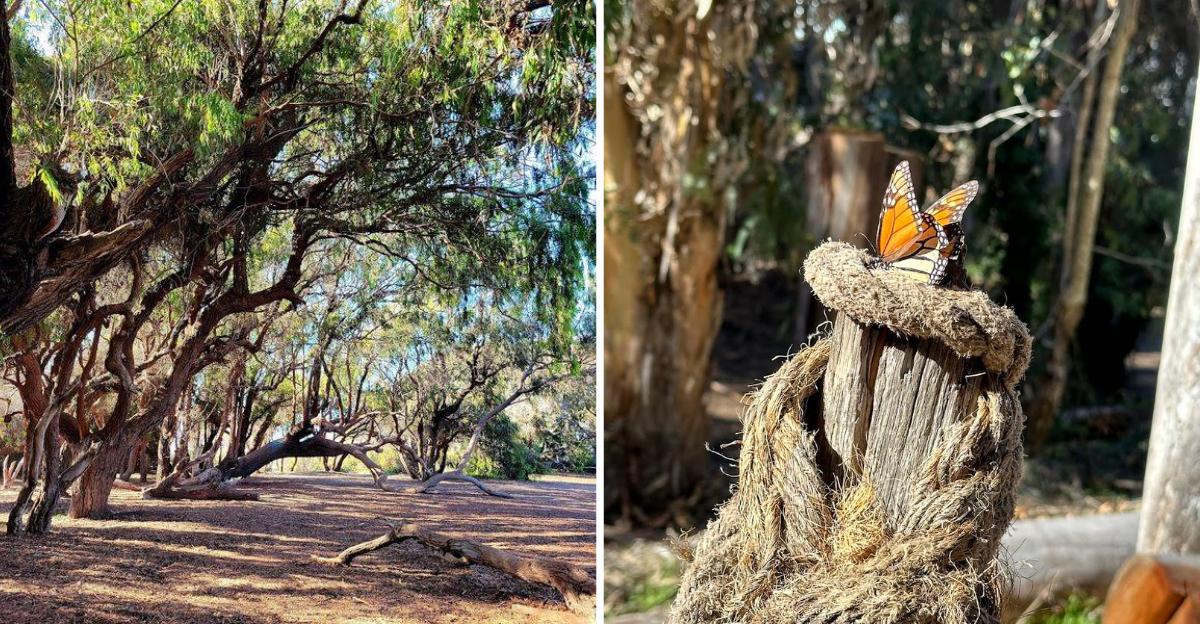
Certain stretches of coastline have a way of surprising you when you least expect it, especially when nature decides to put on a quiet show. In California, there are moments where the landscape feels almost paused, like everything has agreed to slow down for a while. I came across a grove where movement in the air is just as important as anything happening on the ground.
Light filters through tall trees, and the space feels softer than the world outside it. Nothing about it feels staged or dramatic, yet it still manages to hold your attention in a calm, steady way.
It is the kind of stop that makes you naturally lower your voice without realizing it.
What the Goleta Monarch Butterfly Grove Actually Is
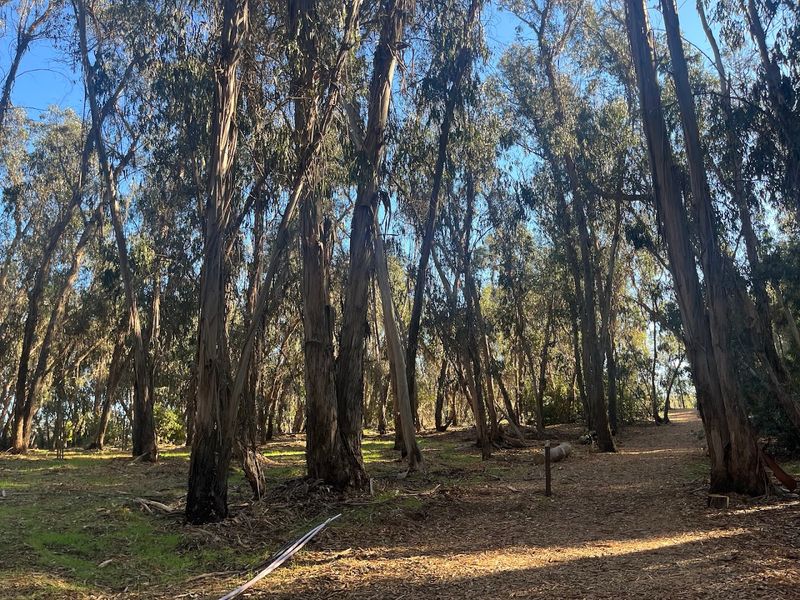
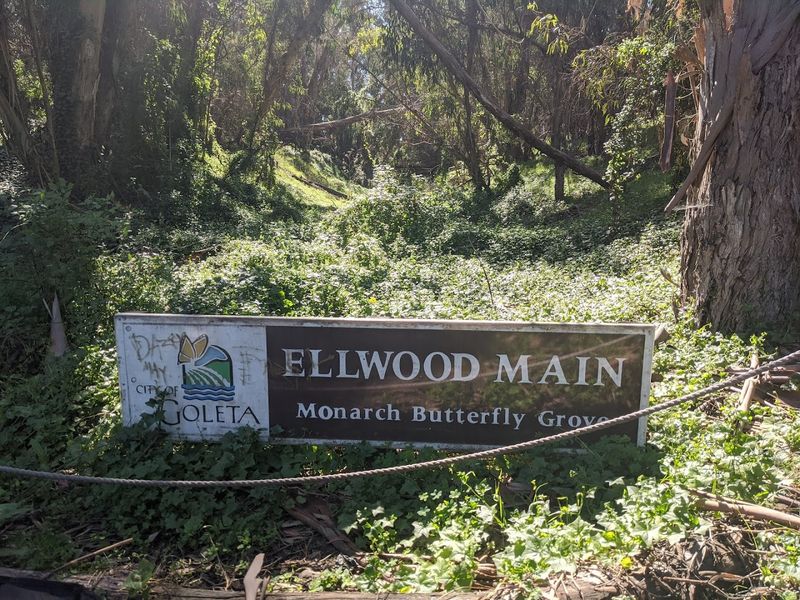
Most people picture Pismo Beach when they think of California monarch butterfly sites, but Ellwood Mesa in Goleta has been quietly hosting its own spectacular winter gathering for decades. The Goleta Monarch Butterfly Grove sits within the Ellwood Mesa Open Space, a 137-acre stretch of coastal terrain that includes trails, blufftop views, and beach access.
The grove itself is a stand of mature eucalyptus trees that create the perfect microclimate for overwintering monarchs. The trees block coastal wind, hold in just enough humidity, and offer the right amount of shade to keep the butterflies comfortable through the cooler months.
It is essentially a five-star winter resort for insects, and the monarchs return to it year after year.
The City of Goleta manages the space as an open preserve, which means there are no entry fees, no ticket booths, and no crowds fighting over limited spots. A volunteer docent program runs on weekends during peak season, offering free educational guidance to visitors.
The whole setup feels refreshingly low-key for something so genuinely extraordinary.
When to Go for the Best Butterfly Experience
Timing your visit makes a huge difference here. Monarchs typically begin arriving in Goleta in late October or November, drawn by the coastal microclimate after escaping colder temperatures inland.
They usually stay through early February or even into March, making the grove an active winter destination for several months.
The population tends to peak around mid-December, with the highest butterfly counts often happening between late December and through January. That window is genuinely the sweet spot.
The trees can look almost bronze from a distance because so many wings are pressed together, and it takes your brain a moment to register that what looks like dead leaves is actually thousands of resting butterflies.
Time of day matters too. Monarchs become most active and visible when temperatures climb above 55 to 60 degrees Fahrenheit, usually during the midday hours.
On cool, overcast, or rainy days, they cluster tightly and stay almost completely still. A sunny afternoon in December or January, arriving around midday, gives you the best chance of watching them flutter, open their wings, and occasionally take short flights between branches.
Binoculars genuinely help.
Getting There and Finding Your Way Around
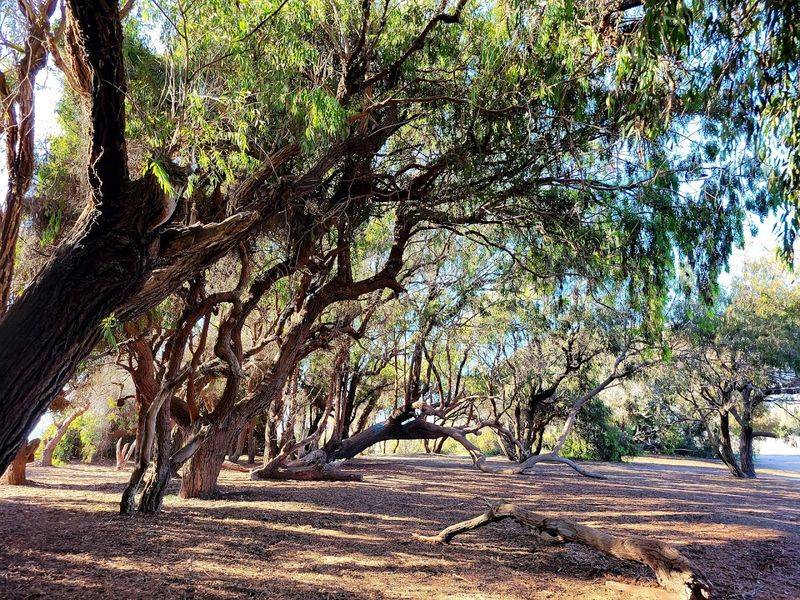
Getting to the grove is straightforward, which is part of what makes it so accessible for families, solo hikers, and anyone in between. There are two main parking options: the Sperling Preserve parking lot at the end of Coronado Drive, or the Ellwood Mesa Open Space parking lot at 7729 Hollister Avenue.
Both are free, which feels almost too good to be true in Southern California.
From the parking area, the walk to the main butterfly viewing zone takes roughly 15 to 20 minutes on a flat, well-worn trail. The path winds through open grassland before entering the shaded eucalyptus grove, and that transition feels genuinely dramatic.
One moment you are in bright coastal sun, and the next you are standing in cool, filtered light surrounded by the faint rustling of wings.
Sturdy shoes are a smart call, especially after rain when the trails can get muddy and slippery in patches. A portable restroom is available at the main parking lot.
Dogs are welcome on leash throughout the preserve, and there are even poop bag dispensers at the trailhead, which is a thoughtful touch. The whole setup is relaxed and practical without feeling neglected.
The Eucalyptus Grove and Why It Matters So Much
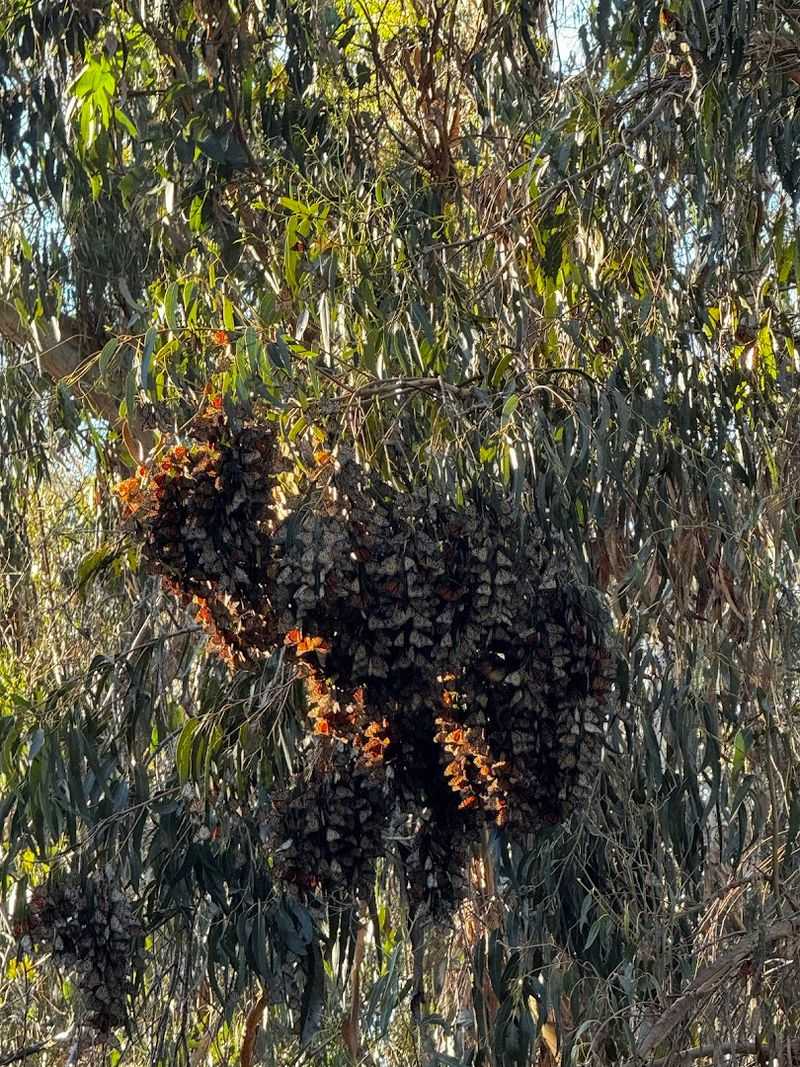
The eucalyptus trees at Ellwood Mesa are not just a backdrop. They are the entire reason the monarchs show up here at all.
These tall, aromatic trees create a sheltered microclimate that is warmer and more humid than the surrounding open land, which is exactly what the butterflies need to survive a California winter without burning through their energy reserves.
What is fascinating is that monarchs are remarkably loyal to specific groves. Generation after generation returns to the same trees, guided by some combination of environmental cues that scientists are still working to fully understand.
The grove at Ellwood Mesa has been an active overwintering site for a very long time, and the eucalyptus canopy is central to that continuity.
Conservation efforts are ongoing here because monarch populations have declined significantly in recent decades. The City of Goleta and local volunteers work to manage and restore the habitat, including efforts to maintain healthy tree cover and reduce disturbances within the grove.
Staying on designated trails and keeping noise low during your visit is genuinely meaningful, not just a posted rule. These trees are doing important work, and the butterflies are depending on them to keep doing it.
Beyond the Butterflies: The Rest of Ellwood Mesa
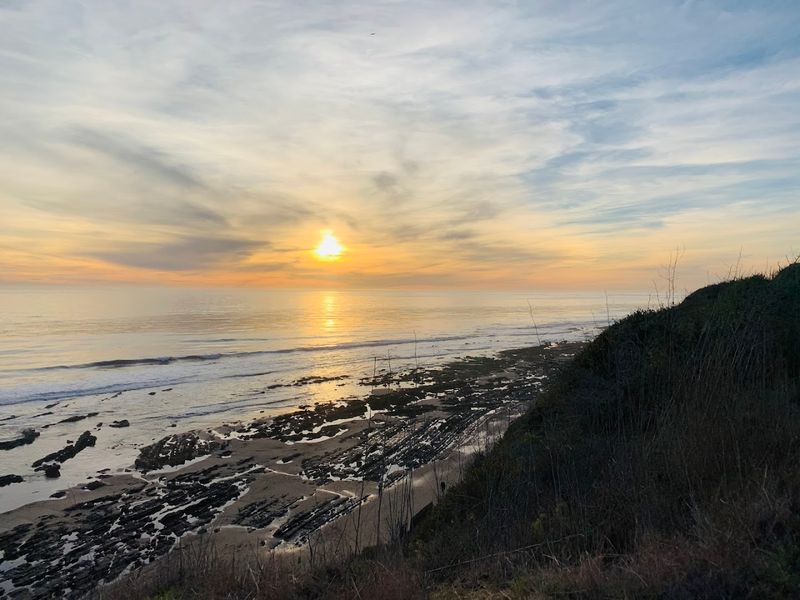
Even on a day when the butterfly count is low, Ellwood Mesa has plenty to offer. The blufftop views from the mesa are genuinely stunning.
You can follow the trail past the grove and out toward the ocean, where the land drops away into dramatic coastal cliffs and the Pacific stretches out as far as you can see.
There is a narrow trail that leads down from the bluffs to a small beach area with tide pools, and exploring those pools feels like its own little adventure. The variety of wildlife in the preserve is surprising year-round.
Flowers, birds, and other insects fill the open grassland sections, and the shaded grove areas stay green and lush even in drier months.
The trails throughout the mesa are mostly flat and easy, making the area genuinely family-friendly. Kids who might not care much about butterflies tend to get completely absorbed by the tide pools, the open space to run around, and the views from the bluffs.
It is also a popular spot for dog walkers, cyclists on the outer trails, and anyone who just needs a couple of hours outside without a long drive or an entry fee. The mesa rewards slow, curious exploration more than speed.
Tips for Visiting Responsibly and Getting the Most Out of It
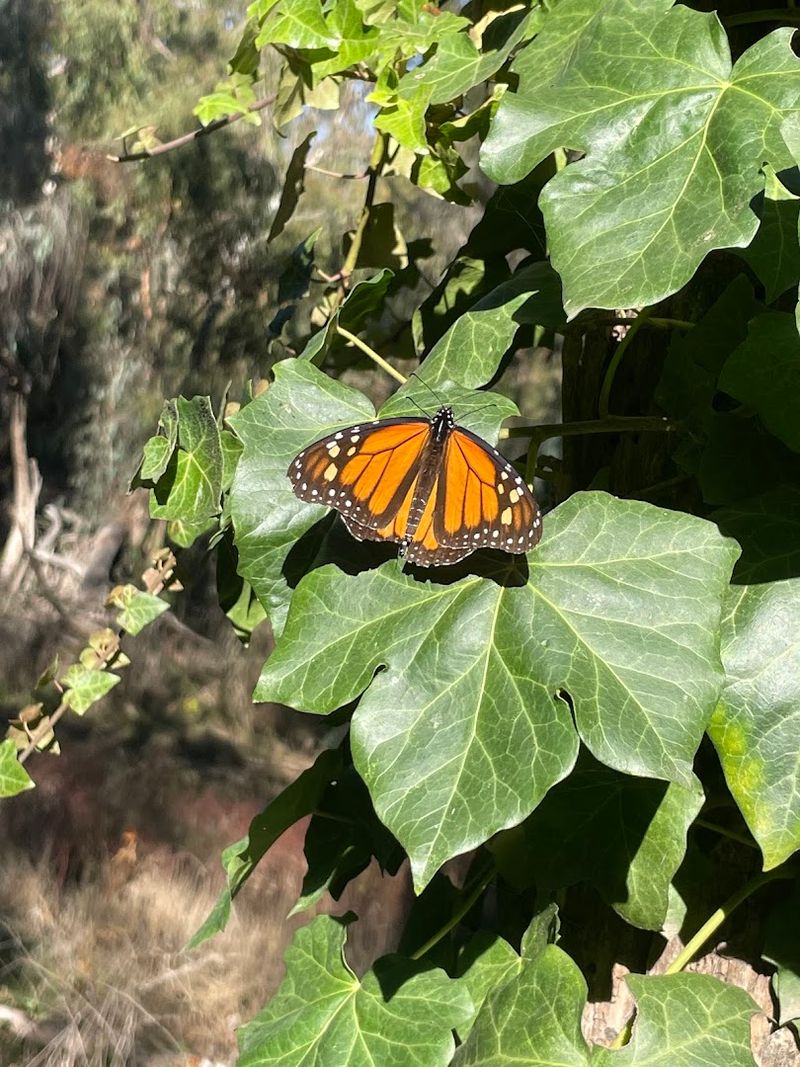
A few small habits can make your visit much better, both for you and for the butterflies. Binoculars are probably the single most useful thing you can bring.
The butterflies often cluster high in the canopy, and without magnification it can be hard to appreciate just how many are actually up there. Once you get a good look through binoculars, the scale of the gathering becomes genuinely jaw-dropping.
Quiet matters a lot in the grove. Loud voices and sudden movements can disturb the clusters, which wastes the butterflies’ precious energy reserves during a season when conservation is critical.
Moving slowly and speaking softly is a small effort that makes a real difference. Volunteer docents are usually present on weekends during peak season, roughly mid-November through mid-February, and they are worth talking to.
They know the grove well and can point you toward the most active clusters.
Never touch the butterflies or attempt to handle them, even gently. Keeping dogs leashed is essential throughout the preserve, and being mindful of the snowy plover nesting restrictions on the beach section is important during the appropriate season.
The grove operates on trust and community care, and most visitors genuinely rise to that. Bringing a water bottle and a light snack makes the outing even more enjoyable.
Why This Free Hidden Gem Deserves Far More Attention
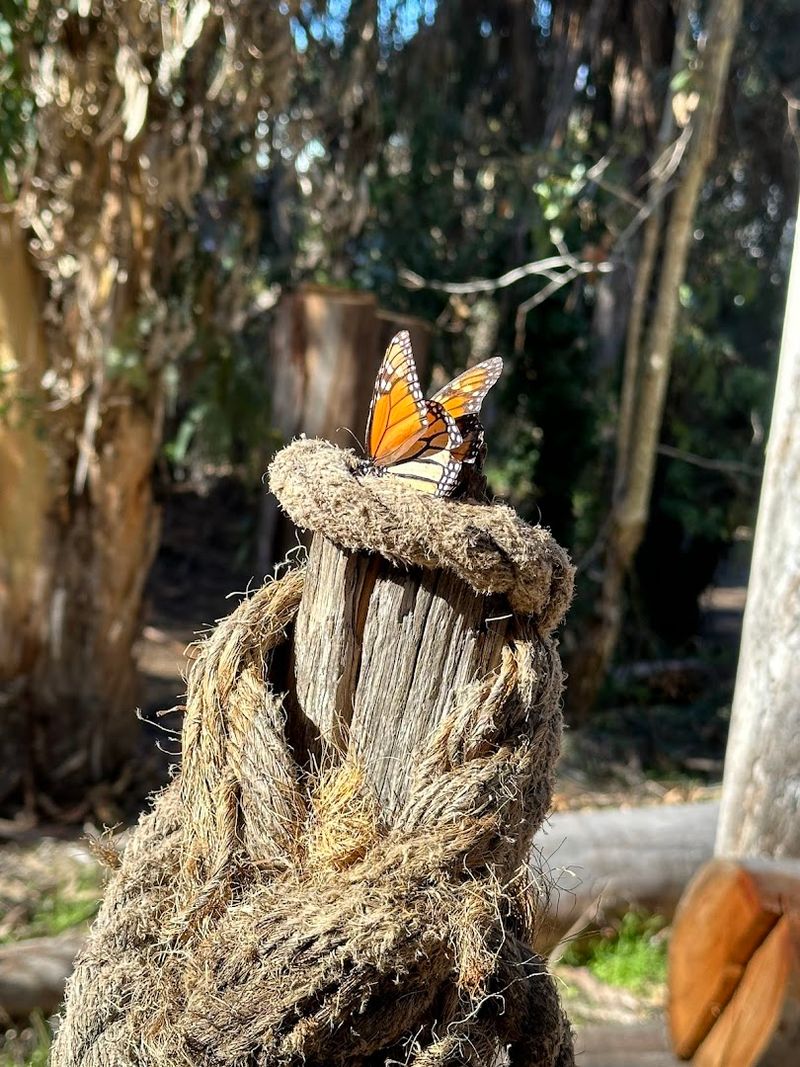
California is full of famous natural attractions that come with long lines, parking fees, and the constant feeling that you are sharing the moment with too many strangers. Ellwood Mesa is a genuinely different kind of experience.
The fact that it costs nothing to visit, sits within a short drive of Santa Barbara, and delivers one of the most visually striking wildlife spectacles in the western United States feels almost unfair to the places charging admission.
The grove rated 4.5 stars across hundreds of visitor reviews, and the praise is consistent: peaceful, beautiful, accessible, and worth every minute. People return year after year, some for the butterflies, some for the trails, some just because the mesa has a calming quality that is hard to explain until you have been there yourself.
Monarch butterfly populations have declined sharply over the past few decades, which gives visiting a grove like this a quiet sense of urgency. Seeing them in person, really seeing them clustered by the hundreds in the branches above your head, is the kind of thing that changes how you think about conservation.
It turns an abstract concern into something vivid and personal. Ellwood Mesa earns its hidden gem status honestly, and it is absolutely worth the detour.
Address: 7727 Hollister Ave, Goleta, CA 93117
