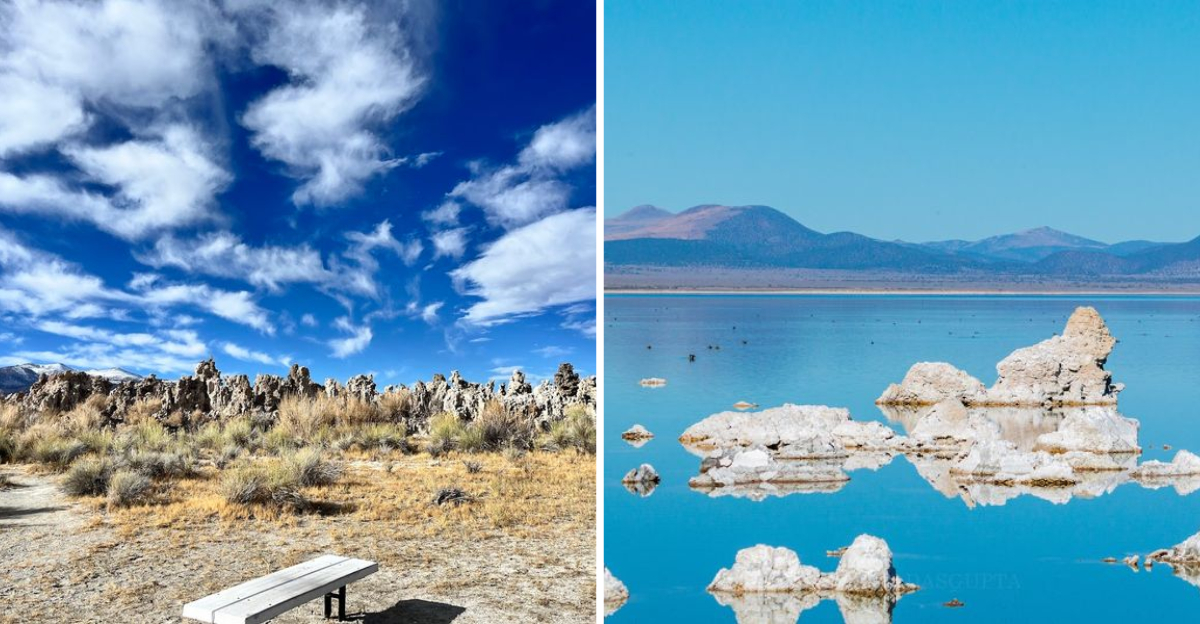
California has some old lakes. But this one is ancient, over a million years old, and it shows.
The water is deep and clear, but that is not what stops you. It is the towers.
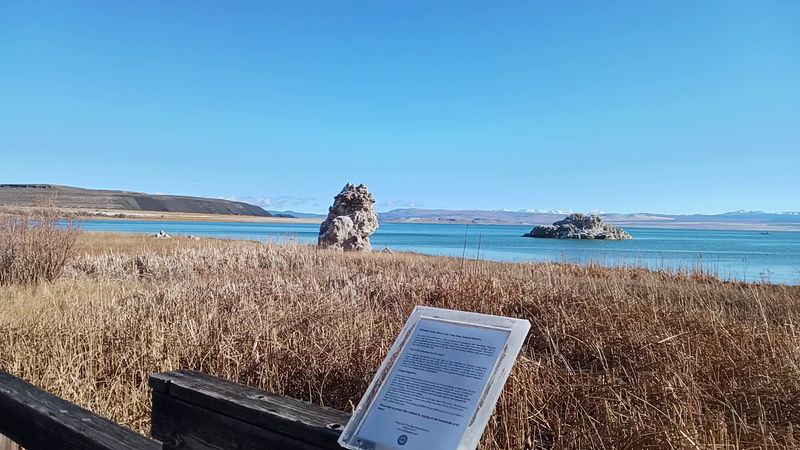
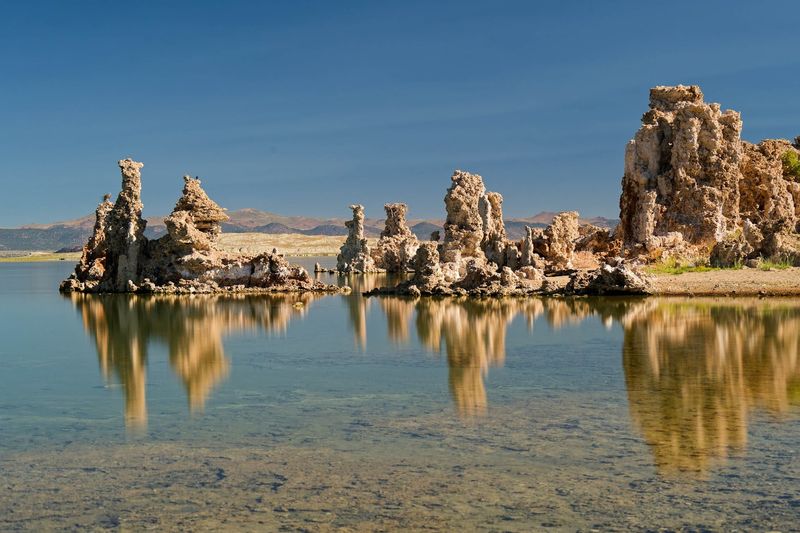
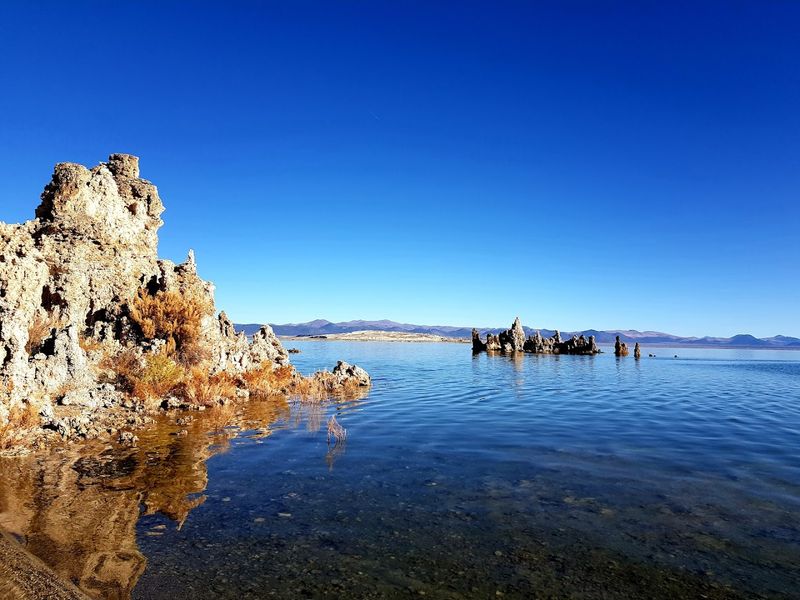
Strange limestone formations rising from the lake like frozen spikes. Some are short and stubby. Others reach higher than your head.
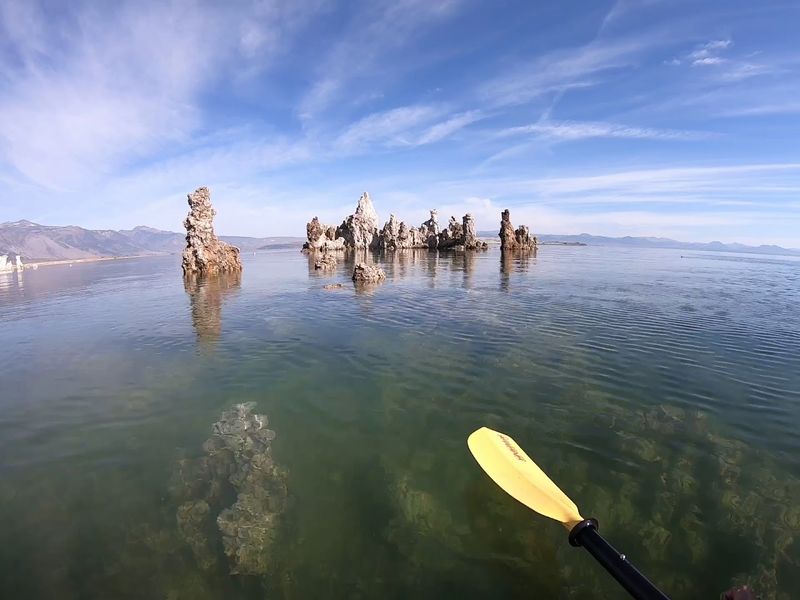
They formed over thousands of years as underwater springs mixed with the lake’s minerals. Now they sit there, eerie and beautiful, looking like they belong on another planet. I paddled a kayak through them, weaving between the towers, feeling very small.
The water was cold. The sky was big.
And the whole place felt older than anything I had ever touched. California has famous landmarks.
This lake is a quiet masterpiece.
A Lake Older Than You Can Imagine
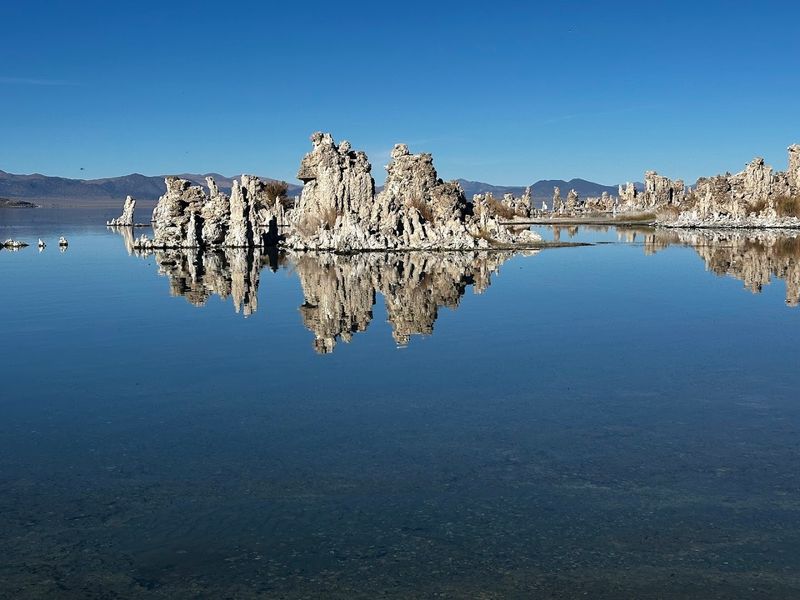
Most lakes you visit have a story measured in thousands of years. Mono Lake measures its history in millions.
Geologists estimate it formed at least one million years ago, making it one of the oldest lakes in North America, and the Mono Basin itself began taking shape over five million years of volcanic and tectonic activity.
The basin started filling with water roughly 750,000 years ago. What you see today is the result of an almost incomprehensible amount of time, pressure, and geological change.
There are no outlets draining this lake, so minerals have been accumulating in the water for ages, making it two to three times saltier than the ocean.
That high salinity creates a strikingly clear, almost glassy look to the water on calm mornings. The lake sits at about 6,380 feet above sea level, surrounded by volcanic craters, pumice fields, and the dramatic backdrop of the eastern Sierra.
It genuinely feels ancient in a way that is hard to put into words. You are not just looking at water.
You are looking at deep time made visible, a geological record stretching back further than human civilization by an almost absurd margin.
The Tufa Towers and How They Actually Form
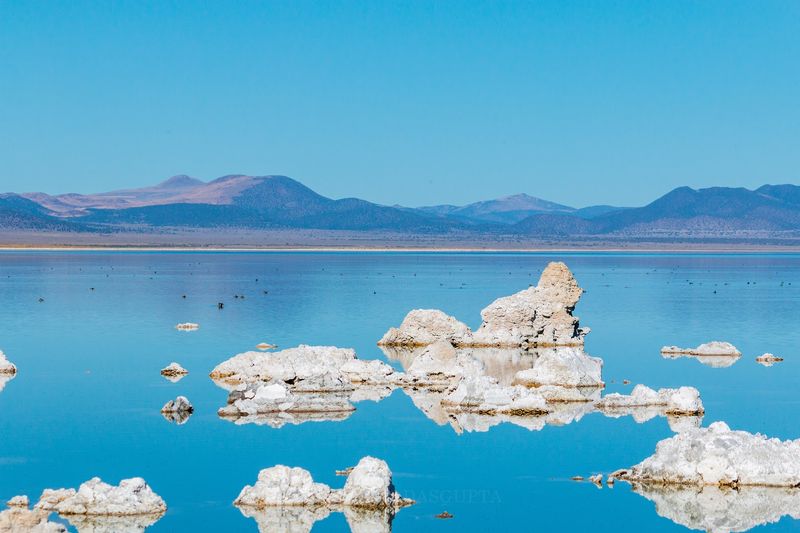
The stone towers scattered across Mono Lake are called tufa, and they have one of the most unusual origin stories in nature. Each tower formed underwater when freshwater springs bubbled up from the lakebed, carrying dissolved calcium.
That calcium met the lake’s carbonate-rich, highly alkaline water, and a chemical reaction caused calcium carbonate to solidify and slowly stack up over decades.
Some towers grew for centuries before anyone ever saw them. They can reach heights of over 30 feet and have textures that look almost coral-like, rough and porous and full of tiny ridges.
The process is patient and quiet, completely invisible from the surface until the water level drops and reveals what was building below.
Here is something worth knowing: once a tufa tower is exposed to air, it stops growing entirely. Exposure actually makes it vulnerable to erosion, so every tower you see today is essentially a finished sculpture.
The dramatic drop in water level, largely caused by water diversions to Los Angeles that began in 1941, uncovered most of the towers visitors see now. Conservation efforts since the 1990s have helped stabilize water levels, but the towers that stand today are irreplaceable.
Touching them is discouraged, and the trails around the South Tufa area exist specifically to keep foot traffic from damaging these remarkable structures.
South Tufa Area: The Best Spot to See It All
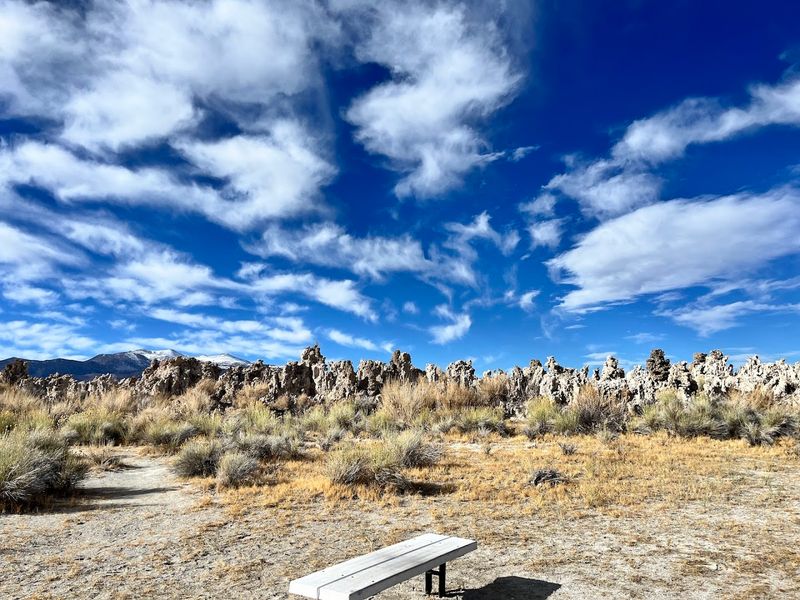
If you only have time for one stop at Mono Lake, the South Tufa area is the one to choose. A well-maintained boardwalk leads you from the parking lot out toward the lakeshore, weaving between clusters of tufa towers that seem to grow taller and more dramatic the closer you get.
The walk itself is about one mile and mostly flat, making it manageable for most visitors.
Sunset here is something else entirely. The sky turns shades of orange and pink that reflect off the pale water, and the tufa towers cast long shadows across the shore.
Early mornings are equally rewarding, especially when the lake surface is completely still and mirrors everything above it in near-perfect detail. Photographers tend to arrive before dawn for exactly this reason.
There is a small fee per person to enter the South Tufa area, and restrooms are available near the parking lot. The road to the entrance is gravel but accessible to regular vehicles.
Bringing water is a smart move since the high desert sun can be deceptively strong even on cooler days. One fun detail that surprises a lot of visitors: the shoreline near the water is often alive with tiny alkali flies moving in waves, which is completely natural and actually an important part of the lake’s food chain.
Strange, yes, but oddly fascinating once you know what you are looking at.
Wildlife That Thrives in an Unlikely Place
At first glance, Mono Lake looks like it should be lifeless. The water is salty and alkaline, there are no fish, and the surrounding landscape is mostly high desert scrub.
But the ecosystem here is genuinely thriving in its own strange way, built around a few incredibly resilient species that have adapted to conditions most creatures could not survive.
Brine shrimp are the foundation of everything. Billions of them live in the lake, feeding on algae and providing a critical food source for birds.
Alkali flies are the other major player, and their larvae grow in the shallows before emerging as adults that swarm the shoreline in rippling waves. Native tribes historically harvested these flies as a food source, which speaks to just how abundant they are.
The birds are what draw many wildlife enthusiasts here. Mono Lake serves as a critical stopover on the Pacific Flyway, with over 300 species recorded in the area.
California gulls nest on the lake’s islands in massive colonies, and migrating phalaropes arrive by the tens of thousands during late summer. Ospreys have been spotted nesting directly on top of tufa towers, which is a sight that tends to stop people mid-sentence.
Coyotes roam the surrounding landscape, and wild horses have been seen in the area as well. The biodiversity here quietly defies the stark, almost lunar appearance of the terrain.
The Conservation Battle That Saved the Lake
Mono Lake came dangerously close to disappearing. Starting in 1941, the Los Angeles Department of Water and Power began diverting water from the streams feeding the lake, sending it hundreds of miles south to supply the growing city.
Over the following decades, the lake’s water level dropped by about 45 feet, its surface area shrank dramatically, and salinity doubled.
The ecological consequences were severe. A land bridge emerged connecting the shore to Negit Island, a major gull nesting site, which allowed predators to reach the nests and devastated the colony.
Public awareness grew slowly, but a pivotal legal battle in the 1980s and 1990s ultimately changed everything. The California Supreme Court ruled that the state had a public trust responsibility to protect Mono Lake, and the State Water Resources Control Board set a minimum lake level that the city was required to maintain.
Recovery has been gradual but real. Water levels have risen since diversions were reduced, and the gull colony has rebounded significantly.
The Mono Lake Committee, based in Lee Vining, continues to monitor the lake and advocate for its protection. Their Information Center and Bookstore on Main Street in Lee Vining is genuinely worth a visit, packed with history, maps, and context that makes the lake itself feel even more meaningful once you understand what it took to save it.
Address: Mono Lake Committee Information Center, 51919 CA-395, Lee Vining, CA 93541.
What It Feels Like to Visit in Different Seasons
Mono Lake wears every season differently, and honestly, each one makes a strong case for being the best time to visit. Summer brings long golden days, warm light in the late afternoon, and the highest concentration of migratory birds along the shore.
The air smells faintly of the lake’s mineral richness, and the heat of the high desert plateau settles in by midday.
Fall shifts the palette entirely. The surrounding landscape picks up amber and rust tones, the crowds thin out considerably, and the quality of light becomes softer and more dramatic for photography.
Temperatures drop quickly after sunset, so layering is essential even in September and October.
Winter is the surprise. Several visitors have described the lake in late November and December as absolutely stunning, with snow-capped peaks reflecting in the still water and a kind of sacred quiet that feels unlike any other season.
The South Tufa area remains accessible in late fall, and the lack of crowds makes the whole experience feel more personal. Spring brings returning bird species and wildflowers in the surrounding basin, along with unpredictable weather that can swing from warm sunshine to sudden afternoon snow.
No matter when you go, arriving early in the morning consistently delivers the calmest water, the best light, and the strongest sense that you have this remarkable place mostly to yourself. Plan accordingly and you will not regret it.
Tips for Making the Most of Your Visit
Getting the most out of a trip to Mono Lake takes a little planning, but nothing complicated. The South Tufa area is the most popular access point, and the gravel road leading in is passable by standard vehicles.
Arriving at sunrise is genuinely worth losing a bit of sleep over since the light and stillness at that hour are unlike anything you will find later in the day.
Bring layers no matter the season. The high desert elevation means mornings and evenings can be surprisingly cold even in summer, and the wind off the lake picks up quickly in the afternoon.
Sunscreen matters more than most people expect here too, since the high altitude and reflective water surface increase UV exposure significantly.
The Mono Basin Scenic Area Visitor Center, run by the U.S. Forest Service just north of Lee Vining, is an excellent first stop.
The staff there offer solid recommendations based on current conditions and can point you toward lesser-known viewpoints around the lake. Kayaking is another option for those who want a different perspective, letting you paddle among the tufa towers from water level.
Binoculars are a worthwhile addition to your bag given the incredible birdlife. If you have the America the Beautiful pass, parking at some access points is free.
The lake is located just east of Lee Vining off US-395, making it a natural stop between Yosemite and Mammoth Lakes. Address: Mono Lake, California 93541.
