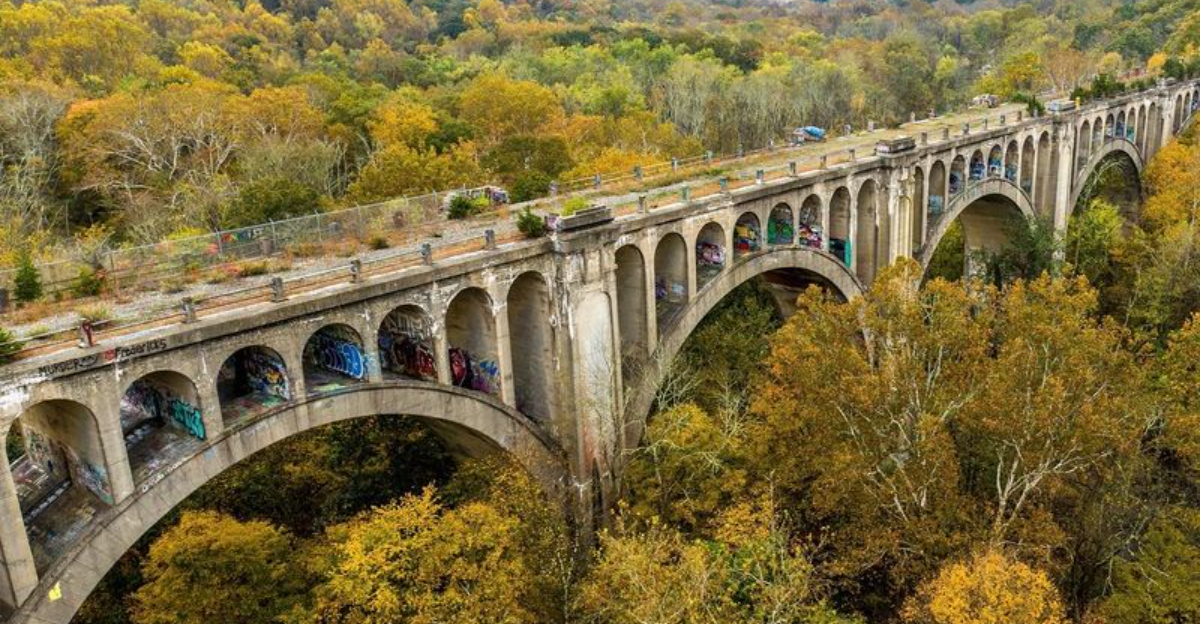
Did you know there’s a crumbling concrete giant hiding in the New Jersey woods?
This 1,100 foot abandoned railroad viaduct used to carry trains, but now just carries serious “forgotten ruin” energy.
Walking out onto it feels like a post apocalyptic movie, minus the zombies and plus a lot of mosquitoes.
You can still spot original construction marks from 1910, like century old graffiti from ghost engineers.
Watch your step and bring a flashlight, because this thing is equal parts breathtaking and “please don’t let me fall through a hole.”
A Giant Born From Railroad Ambition
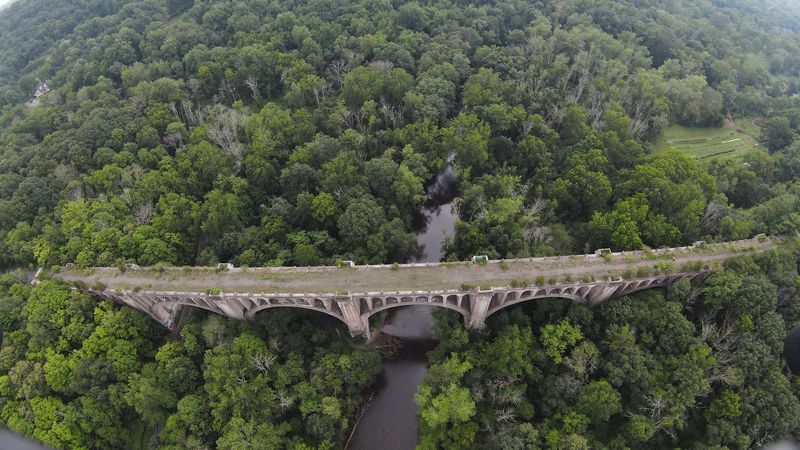
Few structures announce themselves the way this one does. The Paulinskill Viaduct was built by the Delaware, Lackawanna and Western Railroad as part of an ambitious project called the Lackawanna Cut-Off, designed to shave miles and time off the route through northwestern New Jersey.
Completed in 1910, it immediately earned the title of the largest reinforced concrete structure in the world at that time.
That is not a small claim. Engineers and builders were essentially writing the rulebook on large-scale concrete construction as they went.
Chief engineer Lincoln Bush led the design, and the Philadelphia firm Reiter, Curtis & Hill brought it to life with remarkable precision.
Standing beneath those seven arches now, each stretching 120 feet wide, you can almost feel the weight of that ambition pressing down. The structure spans 1,100 feet across the valley and rises 115 feet above the valley floor.
It was built to carry two full railroad tracks, and it did exactly that for decades without complaint.
What It Feels Like Standing Underneath
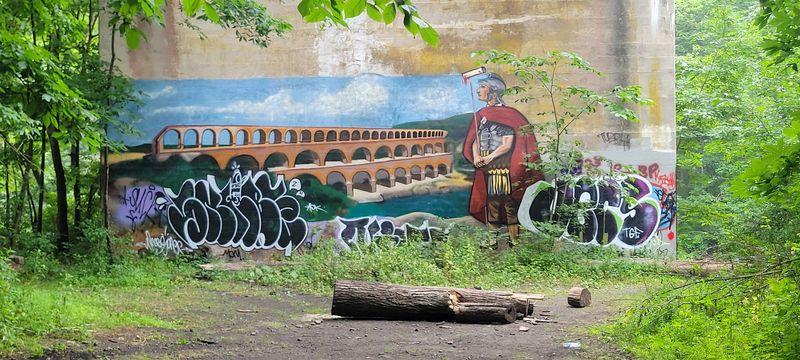
Walking under the Paulinskill Viaduct for the first time is genuinely disorienting in the best possible way. The scale does not register from photographs.
You feel small in a way that is almost comforting, like the structure is quietly reminding you that humans once built things meant to outlast entire generations.
The valley floor beneath the bridge is surprisingly peaceful. A flat trail runs underneath, and the sound of the Paulins Kill stream nearby adds a soft, steady background hum to the whole experience.
Deer are known to wander through the area, completely unbothered by the concrete cathedral towering above them.
Sunlight breaks through in dramatic slants depending on the time of day. Morning visits offer long golden light that catches the rough texture of the concrete in ways that feel almost theatrical.
The whole scene has a quiet, cathedral-like weight to it that makes conversation feel unnecessary. Just standing there and absorbing the scale is more than enough.
The Graffiti Gallery Nobody Officially Planned
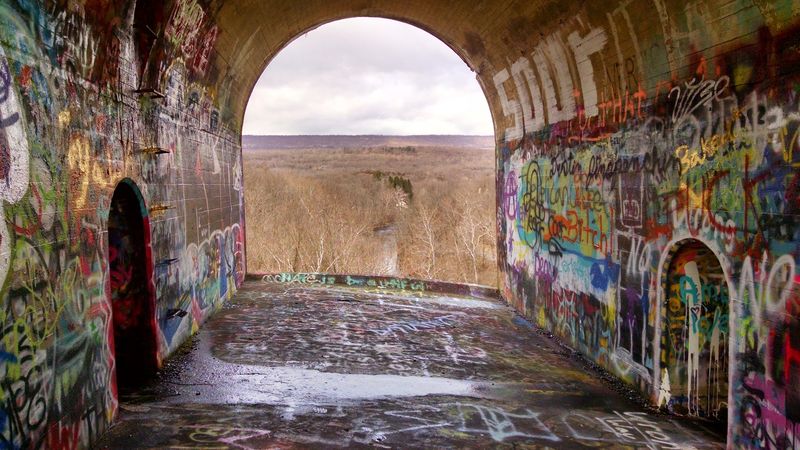
Over decades of abandonment, the lower sections of the viaduct have become an unofficial canvas. The graffiti here is not your average scrawl.
Large-scale murals cover the concrete with surprising artistry, the kind of work that stops you mid-step and makes you pull out your camera without thinking.
There is something genuinely interesting about the tension this creates. On one hand, the viaduct is a registered historic site deserving preservation.
On the other, the artwork layered across its base has become part of the experience for most visitors. Many people come specifically for the murals, and the visual contrast between weathered 1910 concrete and vivid spray paint is striking.
Authorities periodically whitewash over sections of the art, which only opens the surface for new work to appear. It creates an ever-changing gallery that no curator planned and no museum could replicate.
Whether you see it as vandalism or folk art probably says something about you, but either way, the colors are hard to ignore and even harder to forget.
Climbing to the Top: A View Worth Every Step
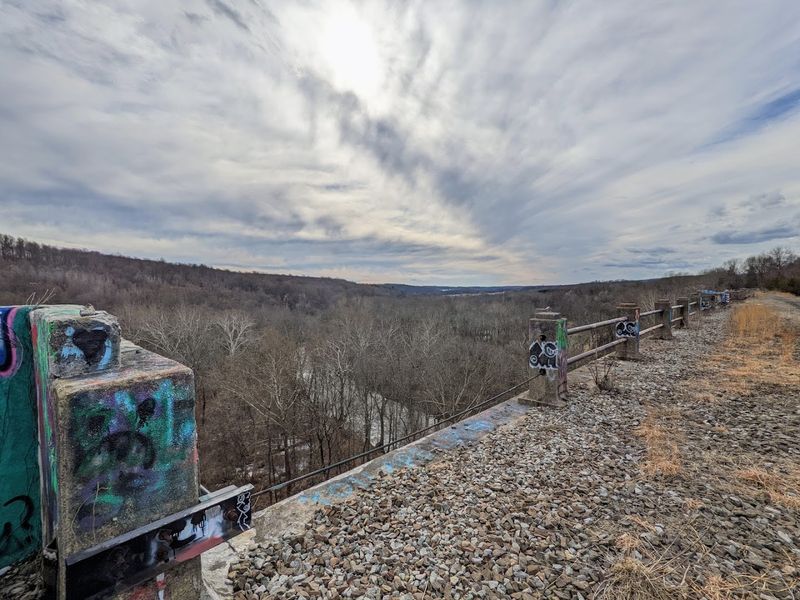
Getting to the top of the Paulinskill Viaduct is not a casual stroll, and that is part of what makes it memorable. There are paths up the embankments on both sides of the valley, with the right side generally considered the more manageable of the two.
Some visitors have even left ropes tied to trees to help with the steeper sections.
Once up there, the reward is immediate. The old railroad deck stretches out flat and wide, and the view across the valley opens up in every direction.
There are no guardrails, so the experience carries a genuine sense of exposure that keeps you present in a way that manicured tourist spots rarely manage.
Winter visits are particularly recommended by regulars, since the bare trees allow a much clearer view of the full structure from both above and below. In summer, the canopy fills in beautifully, but the viaduct itself becomes harder to appreciate from a distance.
Both seasons offer something completely different and equally worth the effort of the climb.
The Engineering Milestone That Changed Bridge Building
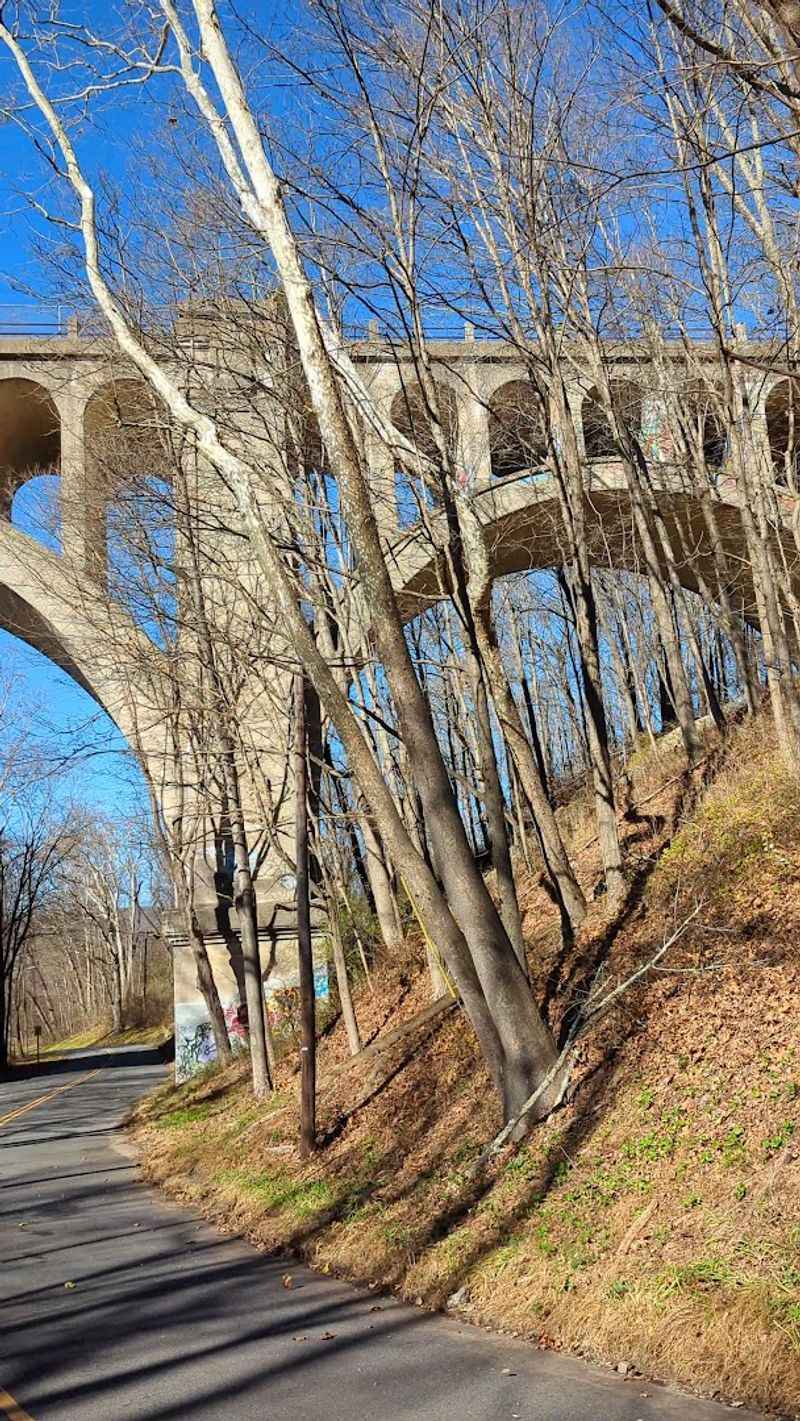
When the Paulinskill Viaduct was completed in 1910, it was not just a bridge. It was a proof of concept.
Reinforced concrete at this scale had never been attempted before, and the engineering world was watching closely. The success of this structure directly influenced the construction of even larger concrete viaducts that followed.
Most notably, the Tunkhannock Viaduct in Pennsylvania, completed in 1915, used lessons learned here to push the scale even further. The Paulinskill Viaduct essentially served as the prototype for a new era of infrastructure design.
That is a legacy most buildings never come close to achieving.
The design incorporated seven arches, each 120 feet in span, carrying two railroad tracks across a valley that would have been a serious obstacle for the older mountain route it replaced. The engineering team had to solve problems that had no established playbook.
Every calculation, every material decision, every structural choice was made with limited precedent. The fact that it still stands in good condition over a century later is the clearest possible proof they got it right.
From Busy Rail Line to Silent Valley
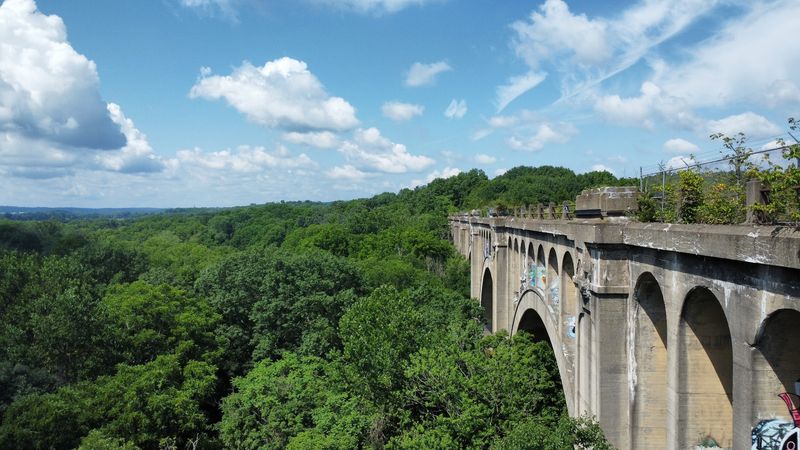
On Christmas Eve of 1911, the first trains rolled across the Paulinskill Viaduct and the Lackawanna Cut-Off officially opened for regular service. For decades, the bridge carried passenger and freight trains across the Paulins Kill Valley without interruption.
It was a working piece of critical infrastructure, not a curiosity.
The railroad mergers of the mid-twentieth century began the slow unraveling. When the Delaware, Lackawanna and Western merged with the Erie Railroad in 1960, the resulting Erie Lackawanna Railroad continued using the Cut-Off.
Then in 1976, Conrail took over operations, running trains until November 1978. The tracks were officially removed in 1984.
What had been a thundering corridor of commerce became a quiet valley almost overnight in railroad terms. The silence that replaced decades of train traffic is still palpable when you stand beneath those arches.
The structure that once vibrated with the weight of locomotives now stands still, holding its shape patiently while the forest slowly reclaims the embankments around it.
The Possibility of a Railroad Revival
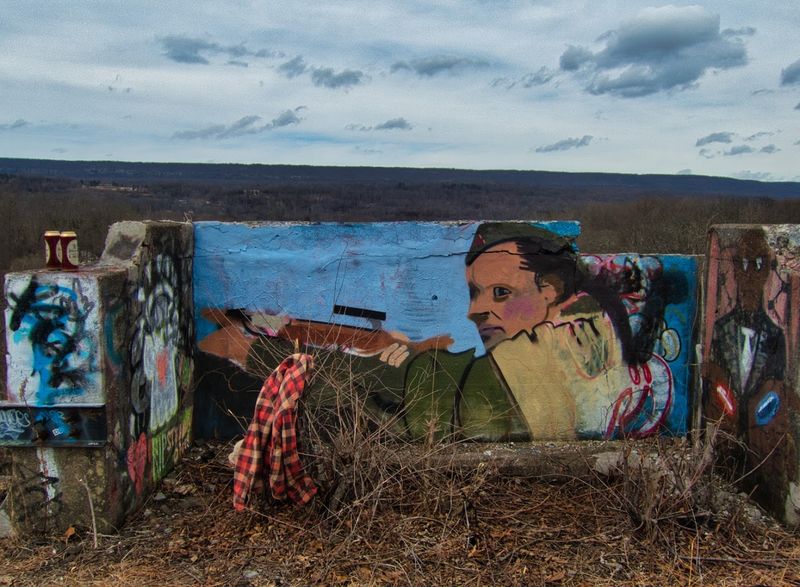
The story of the Paulinskill Viaduct may not be finished yet. Amtrak has floated the idea of restoring passenger service along the Lackawanna Cut-Off, which would connect New York City with Scranton, Pennsylvania.
The viaduct sits directly in that proposed route, meaning it could one day carry trains again after more than four decades of silence.
A preliminary survey completed in early 2026 found the structure to be in good condition despite years without maintenance or active use. That is a remarkable finding for a bridge over a century old, and it speaks to the quality of the original construction.
Concrete built in 1910 has outlasted the railroad that built it.
No firm plans have been announced as of now, but the possibility alone adds an interesting layer to visiting the viaduct today. You might be standing beneath a structure on the verge of a second life.
That kind of open-ended history makes the whole experience feel less like looking at ruins and more like watching something hold its breath.
Hiking and Cycling the Trail Beneath the Arches
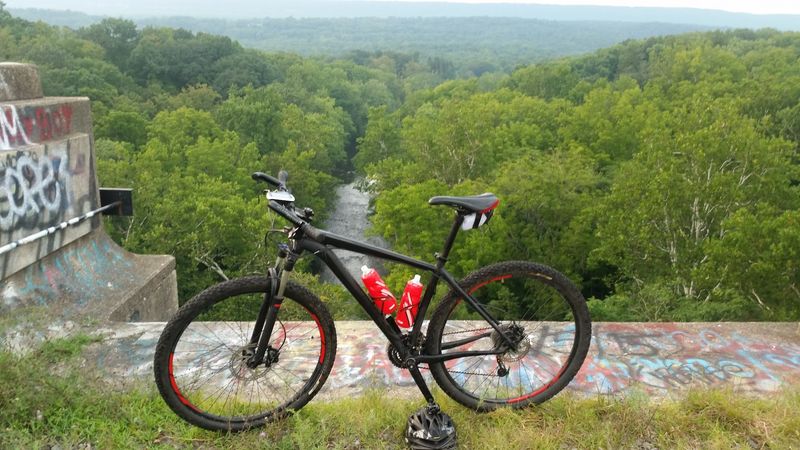
The area around the Paulinskill Viaduct has quietly built a reputation as a solid outdoor destination beyond just the bridge itself.
A flat, well-maintained trail runs directly beneath the arches, making it accessible for cyclists, casual hikers, and anyone who simply wants to walk somewhere genuinely interesting.
The trail connects to the broader Paulinskill Valley Trail system.
Fishing is also popular along the Paulins Kill stream that runs through the valley. The combination of moving water, dense tree cover, and a massive concrete structure overhead creates an atmosphere that is hard to find anywhere else in New Jersey.
It feels remote without actually being difficult to reach.
The terrain underneath the bridge is notably flat, which makes it friendly for a wide range of fitness levels. Getting up to the top of the viaduct is a different story entirely, involving some scrambling and careful footing.
But the valley floor itself offers a genuinely pleasant outing even for those who prefer to keep their feet on level ground and their eyes looking upward.
Photography Opportunities That Go Beyond the Expected Shot
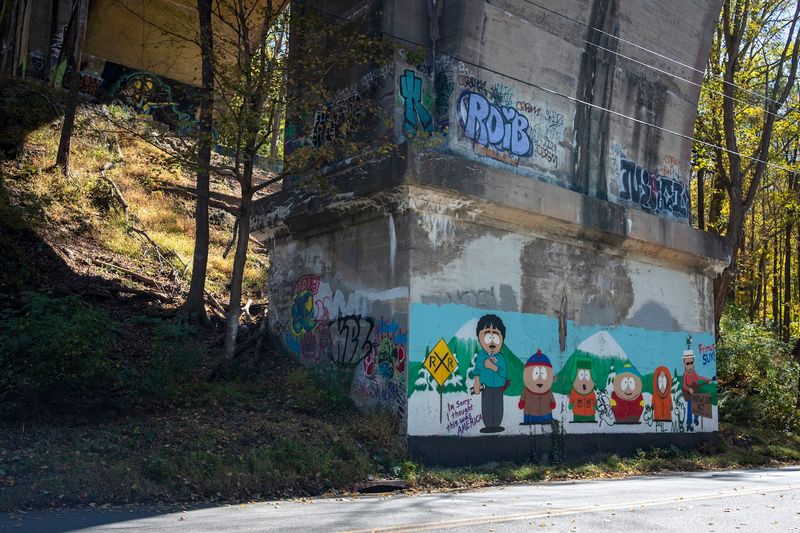
Photographers have been drawn to the Paulinskill Viaduct for years, and it is easy to understand why. The structure offers something different depending on the angle, the season, and the time of day.
Sunrise from the valley floor produces long shadows that stretch dramatically across the trail. Sunset from the top of the bridge turns the whole valley into something that looks genuinely cinematic.
Winter is the season most serious photographers recommend. Leafless trees expose the full span of the viaduct from ground level, allowing wide compositions that summer simply does not permit.
The texture of weathered concrete against bare branches has a stark, graphic quality that photographs beautifully in both color and black and white.
The interior of the structure also offers photographic possibilities for those willing to explore carefully. Colorful murals, dramatic concrete geometry, and shafts of light filtering through openings create a layered visual environment that rewards patience.
Every visit to the Paulinskill Viaduct tends to produce a slightly different set of images, which keeps photographers coming back repeatedly.
Why This Place Stays With You Long After You Leave
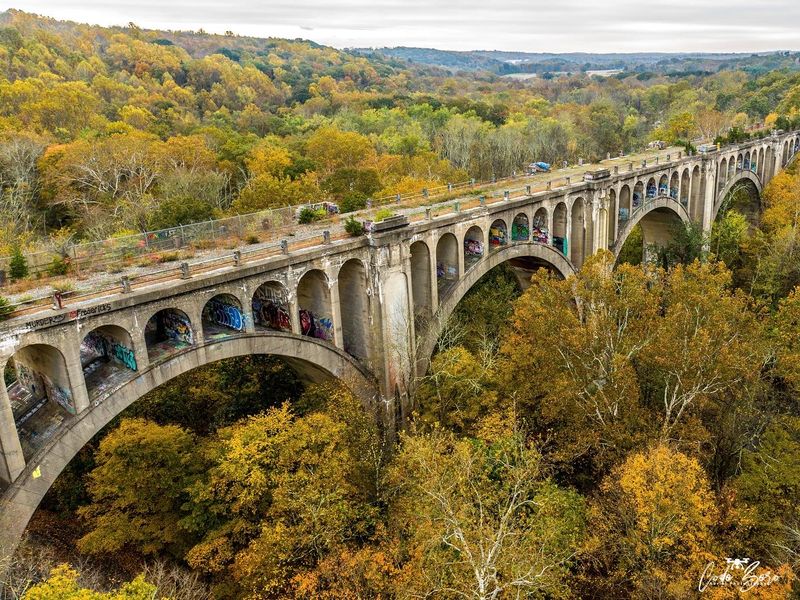
Some places are impressive while you are there and forgettable by the time you hit the highway. The Paulinskill Viaduct is not one of those places.
Something about its combination of scale, history, and quiet abandonment lodges itself in the memory in a way that is hard to explain to someone who has not seen it in person.
Part of it is the contrast. New Jersey is dense, developed, and fast-moving in most directions.
Finding something this enormous and this still tucked into a wooded valley feels like a genuine secret, even though the viaduct is over 1,100 feet long and impossible to miss once you are standing beneath it. The surprise of it never quite leaves you.
Part of it is also the open question the structure poses. It was built to last, and it has.
Whether trains ever cross it again or it simply continues to stand as a monument to what early twentieth-century engineering could accomplish, the Paulinskill Viaduct demands to be taken seriously.
Address: Columbia, NJ 07832, United States.
