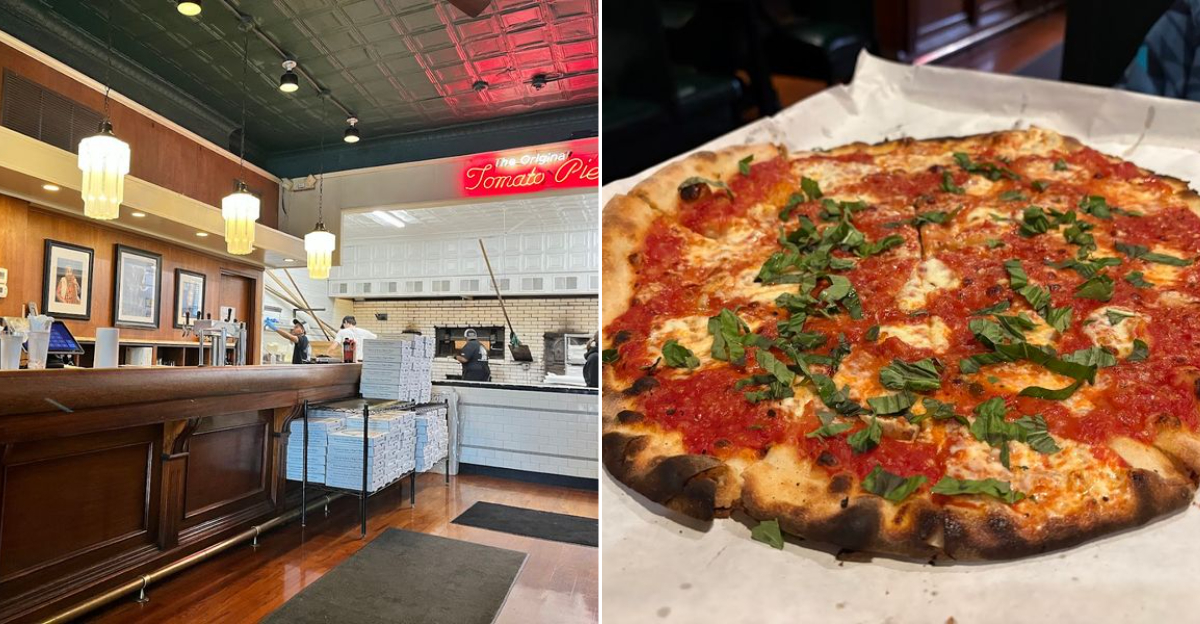
The coal oven has not cooled down in a hundred years. That massive brick hearth still glows at a legendary New Haven pizza parlor, where Italian immigrant Frank Pepe began selling his misshapen, coal-fired pies in 1925.
He would balance whole pizzas on his head while walking through the local market, shouting “Apizza! Apizza!” to draw a crowd.
The original menu offered just two options: a simple tomato pie and one with anchovies. Then, in the 1960s, a true original was born, the white clam pizza, a sauceless, cheeseless masterpiece topped with fresh clams, garlic, pecorino, and olive oil.
That pie has since been called one of the best in America. The crust remains impossibly thin and blistered, the result of decades of practice in that same coal-fired oven.
The family still follows the original recipes, and the lines still snake down Wooster Street.
So which Connecticut pizza parlor serves the crispiest coal-fired thin crust in the region, the very birthplace of New Haven-style apizza?
Pull up a seat and order the clam. You will taste a century of tradition in every bite.
That First Bite Says Everything
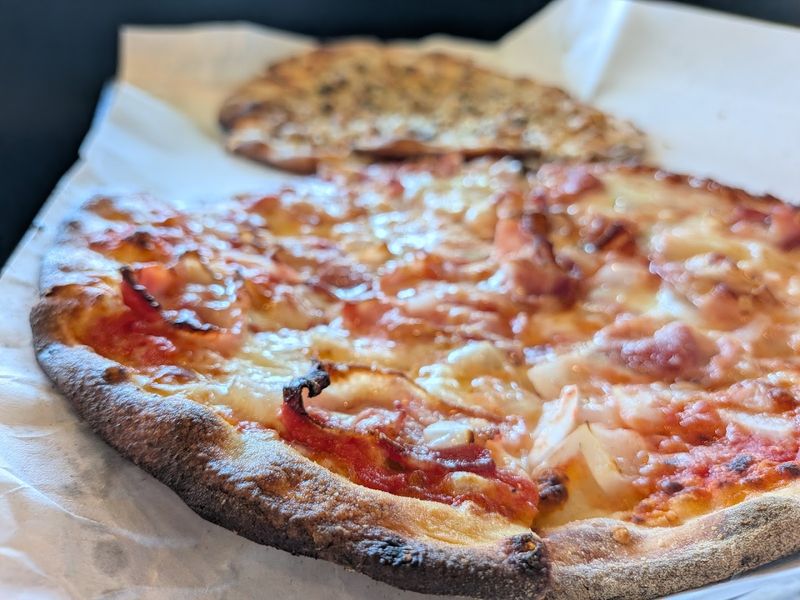
The first thing I would tell you is that the crust settles the whole argument almost immediately. It comes out with that crackly, coal-fired edge that sounds faintly crisp when you lift a slice, and then the center gives you just enough chew to keep it from feeling dry or brittle.
You taste smoke, char, and dough all at once, which is exactly why people get so worked up about New Haven apizza.
What I like most is how the thin crust never feels flimsy, even though it looks almost impossibly light. There is real structure underneath that dark, blistered surface, and it holds everything together without turning the slice into a heavy bite.
That balance is harder to pull off than people think, and Frank Pepe makes it look casual.
By the second slice, you stop analyzing and just lean into it. The coal-fired oven gives the bottom a clean crispness, while the rim keeps a little tenderness that makes every bite feel complete.
In Connecticut, a lot of pizza gets praised, but this crust has that thing you remember later when you are trying to explain why one pie stood above the rest.
It is not hype when the texture really lands.
The Wooster Street Pull Is Real
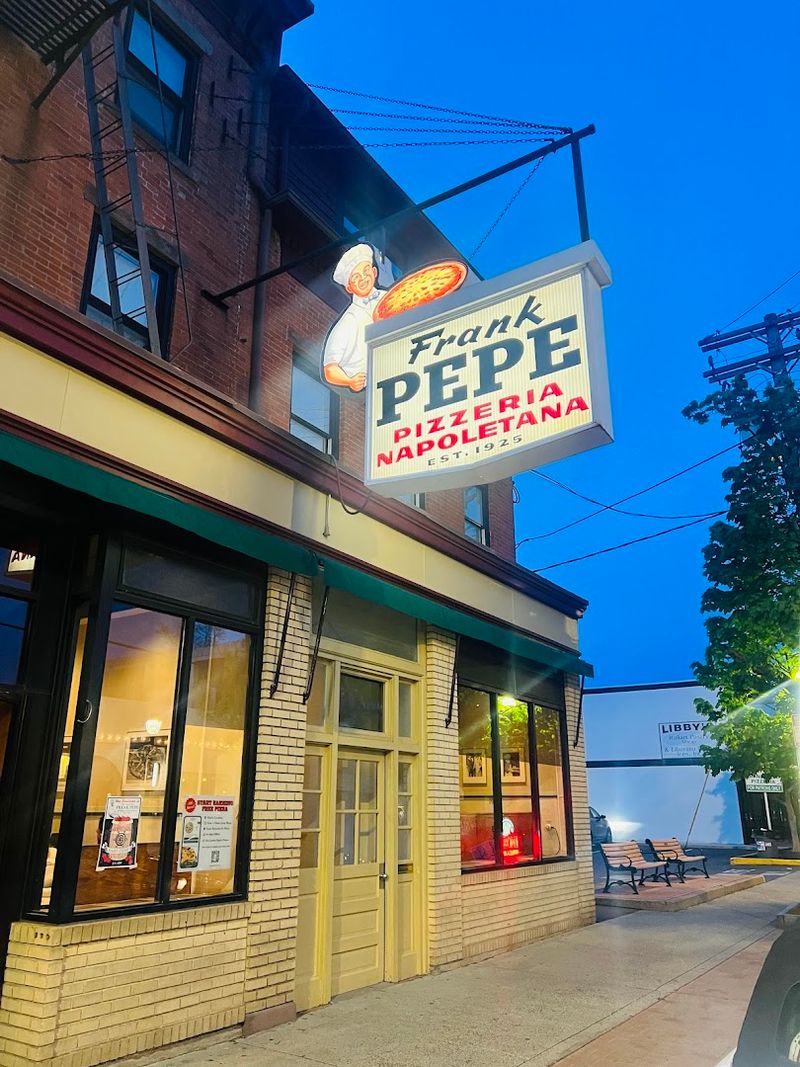
Let me put the location right here so you have it where you need it: Frank Pepe Pizzeria Napoletana, 157 Wooster St, New Haven, CT 06511. Once you are on Wooster Street, the whole thing feels less like a random meal and more like stepping into one of Connecticut’s most talked-about food traditions.
Even before you sit down, there is a sense that this block understands exactly what it means to New Haven.
I always think streets with this much food history can feel a little over-romanticized, but this one earns its reputation. The neighborhood has that lived-in rhythm that makes the restaurant feel rooted instead of staged for visitors.
You are not chasing some polished experience here, you are walking into a place that still feels tied to the city around it.
That matters, because the pizza tastes even more convincing when the setting feels honest. There is something about arriving in New Haven, hearing people talk about apizza like it is ordinary daily language, and then realizing they are not exaggerating at all.
Frank Pepe fits the street, the street fits the city, and the whole experience starts making sense before the pie even hits the table.
That is a strong start for any meal.
The Coal Oven Does The Heavy Lifting
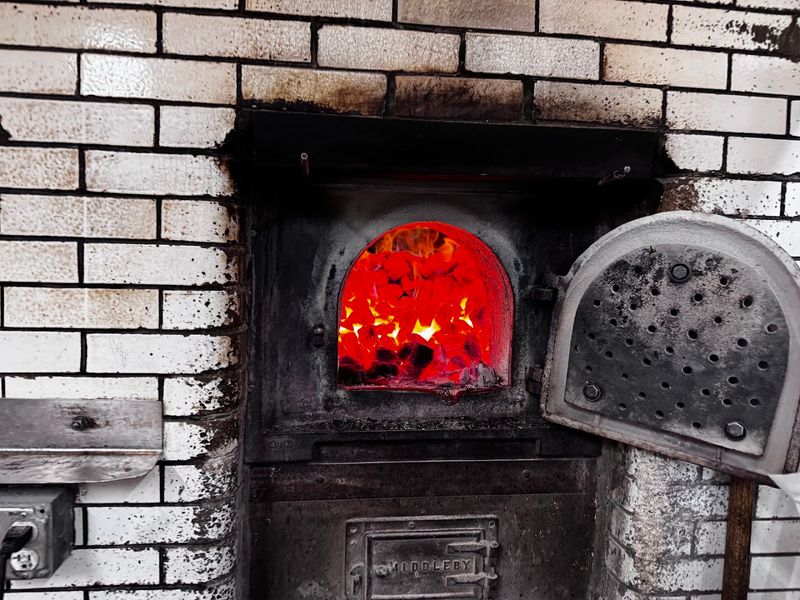
Honestly, the oven is doing more than half the storytelling here, and you can taste that in a second. Coal-fired heat gives the crust a very specific kind of char that feels dry, crisp, and smoky without turning the whole pie into a burnt stunt.
That is the difference between dramatic blackening and real control, and Frank Pepe clearly knows where that line sits.
The bottom of the pizza comes out with a clean firmness that keeps the slice from sagging, while the top stays lively and balanced. High heat moves fast, so the dough gets those dark blisters and a little chew before anything has time to go flat.
When people talk about New Haven pizza as its own category, this is the kind of oven work they mean.
I also like that the coal-fired flavor never feels like a gimmick layered on after the fact. It is baked into the whole experience, from the scent in the room to the way the crust finishes on your tongue.
Plenty of places can make a thin pizza, but not every place can make one where the oven itself feels like an ingredient you can actually identify.
That is why this crust lingers in your head after you leave.
Why The Thin Crust Actually Works
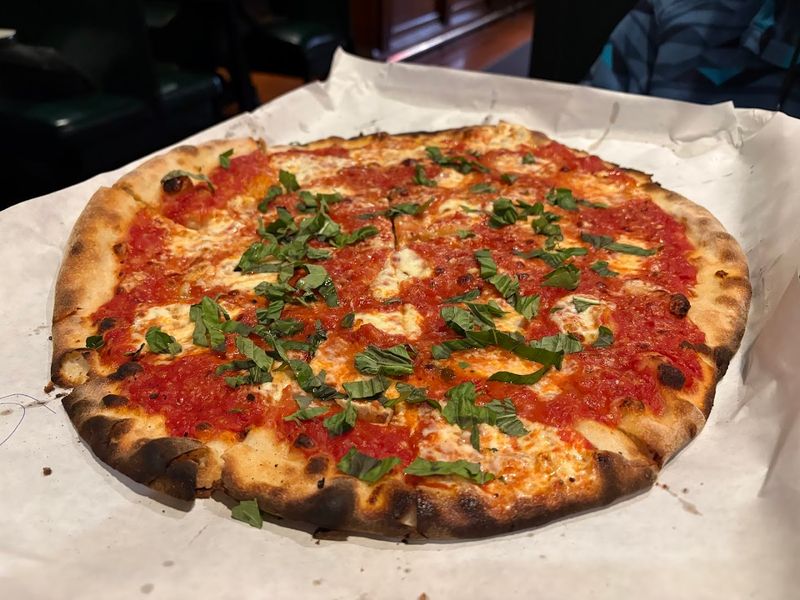
Here is what surprised me most the first time I really paid attention to this pie: the thinness is not there for show. It gives you a crust that snaps lightly at the edge, then softens just enough toward the middle, so every bite has contrast instead of uniform crunch.
That little shift in texture is what keeps the pizza interesting from first slice to last.
Some thin crust pizzas fade after a bite or two because they are all crisp and no body, but that is not what happens here. Frank Pepe gives the dough enough character that you still notice wheat, fermentation, and that faint smoky finish from the coal.
So even though the crust stays restrained, it never feels anonymous or merely functional.
I think that is why people who care about pizza structure get so attached to this place. The pie is thin in a way that sharpens every detail instead of flattening it, and the char works with the chew rather than fighting it.
In Connecticut, where opinions about pizza are never exactly quiet, that kind of technical balance is what earns loyalty instead of just curiosity.
You can taste the confidence in every corner of the slice.
The Room Feels Lived In, Not Staged
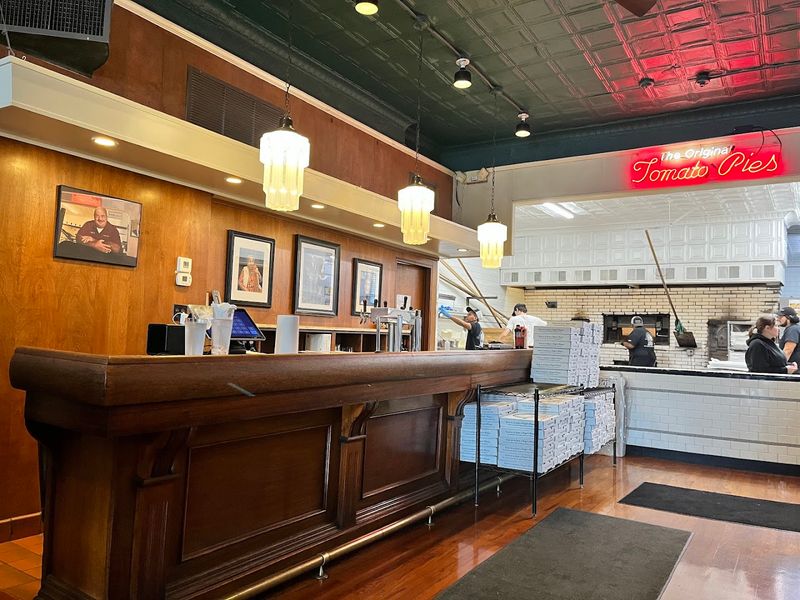
One thing I really appreciate is that the dining room feels like a place built for eating pizza, not for performing pizza. The atmosphere is straightforward, busy in a natural way, and full of the kind of movement that makes you settle in instead of posing for the table.
You get the sense that people are here because they actually want this meal, not because they want to say they came.
That tone changes the whole experience more than people realize. When a restaurant has some history behind it, there is always a risk that the room starts feeling museum-like, but Frank Pepe avoids that.
It still feels active and current, which lets the pizza remain the focus instead of turning the meal into a nostalgia exercise.
I liked that the interior seemed to match the food in the best possible way. Nothing felt fussy, and nothing distracted from the smell of hot crust and the sound of plates landing around the room.
In New Haven, that kind of honest setting works especially well, because the city wears its pizza culture with enough confidence that it does not need extra decoration to convince you.
You just sit down, look around, and feel like you are exactly where you should be.
You Can Feel The New Haven Legacy
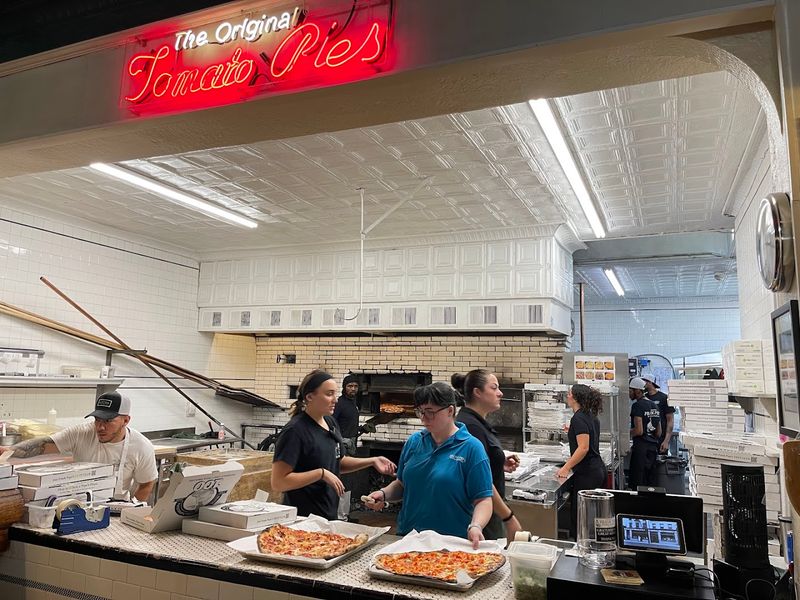
Maybe this sounds dramatic, but you can feel the New Haven pizza legacy almost as soon as you walk in. Not in a loud, self-congratulatory way, but in the quieter way a place carries itself when it knows it helped define something bigger than its own walls.
Frank Pepe is not trying to explain why it matters every second, because the pizza already does that job.
What I love about eating here is how local pride and actual quality line up without strain. New Haven talks about apizza like it belongs to daily life, and after a meal here, that attitude makes complete sense.
The crust, the char, and the way the whole pie comes together all feel tied to a tradition that still has real energy.
Connecticut has no shortage of strong pizza opinions, and usually that means entering some friendly debate the minute you bring up a favorite spot. Frank Pepe earns its place in that conversation because the pie tastes rooted, specific, and unmistakably of its city.
You are not just eating a famous pizza, you are tasting one of the clearest expressions of why New Haven keeps getting called the pizza capital.
That is a big claim, and this place carries it comfortably.
The Texture Keeps Pulling You Back
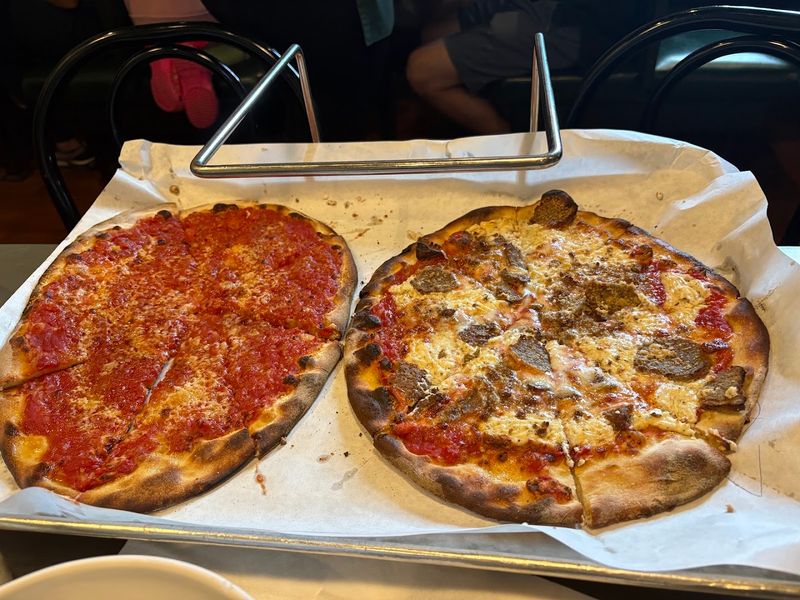
If I had to explain the appeal in one word, I would probably say texture, because that is what keeps sneaking back into my mind. The crust gives you a crisp bite at first, then settles into this pleasantly resilient chew that makes the slice feel alive instead of stiff.
That combination is harder to forget than any single topping choice.
I think a lot of people expect crisp pizza to sacrifice warmth or tenderness, but that tradeoff never really shows up here. Frank Pepe somehow keeps the crust light and snappy while still letting the dough have a little softness in the right places.
It makes each bite feel complete, especially along the edge where the char and structure are most obvious.
By the time you are halfway through, you start noticing how consistent the pie stays from slice to slice. The bottom remains firm, the rim keeps its bite, and nothing collapses into sogginess or stiffness.
In Connecticut, where coal-fired thin crust is part of the broader pizza identity, that kind of steady texture is exactly what separates a memorable pie from one that only sounds good in conversation.
This one absolutely holds up when the plate is in front of you.
Why It Feels So Connecticut
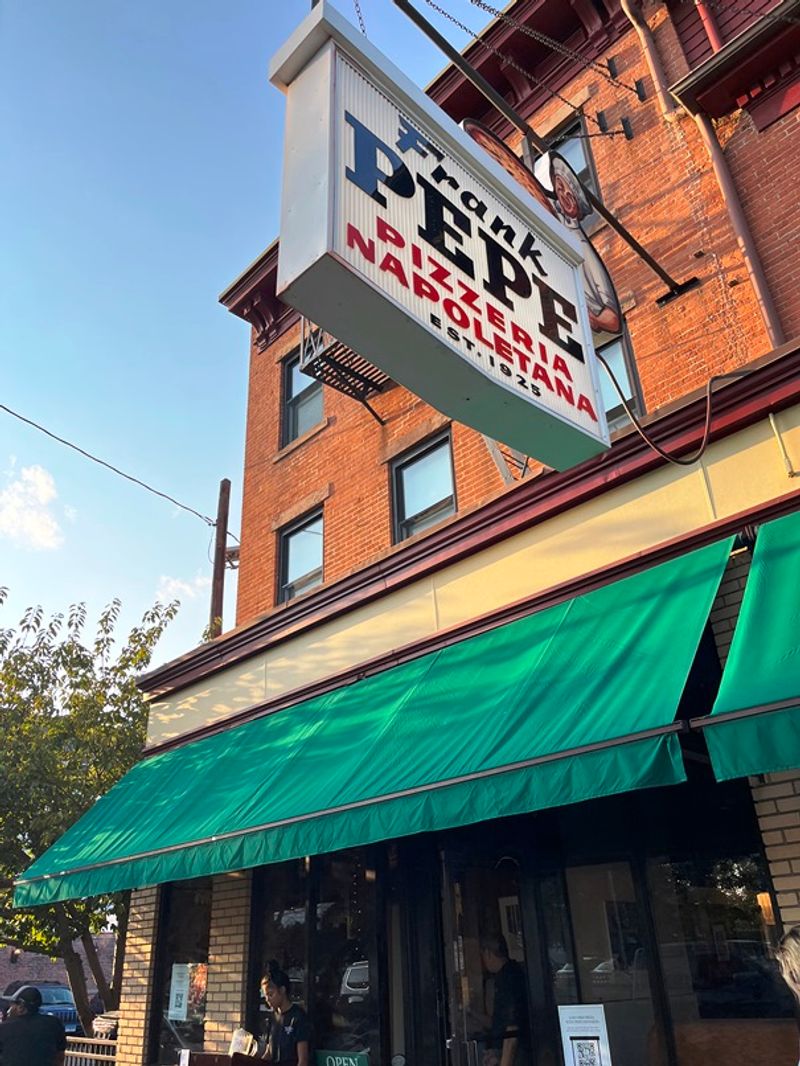
There is something about this place that feels deeply Connecticut in a way that is hard to fake and easy to recognize. Maybe it is the confidence, maybe it is the refusal to over-explain itself, or maybe it is just that the pizza speaks with a local accent all its own.
Whatever it is, the whole experience feels connected to where you are, not interchangeable with some other city.
That sense of place matters more than people sometimes admit. A lot of restaurants can serve a very good pie, but fewer can make you feel the region in the crust, the room, and the rhythm of the meal.
At Frank Pepe, New Haven is not just the backdrop, because the city is part of why the pizza tastes so convincing.
I kept thinking that if someone wanted to understand why Connecticut takes pizza so personally, this would be a pretty strong place to start. The coal-fired thin crust carries history, technique, and local expectation without becoming stiff or ceremonial.
It still feels like food people genuinely crave, which is probably the clearest sign that a tradition has stayed alive instead of turning into a story people repeat out of habit.
That is what gives this meal its lasting pull.
I Would Send You Here First
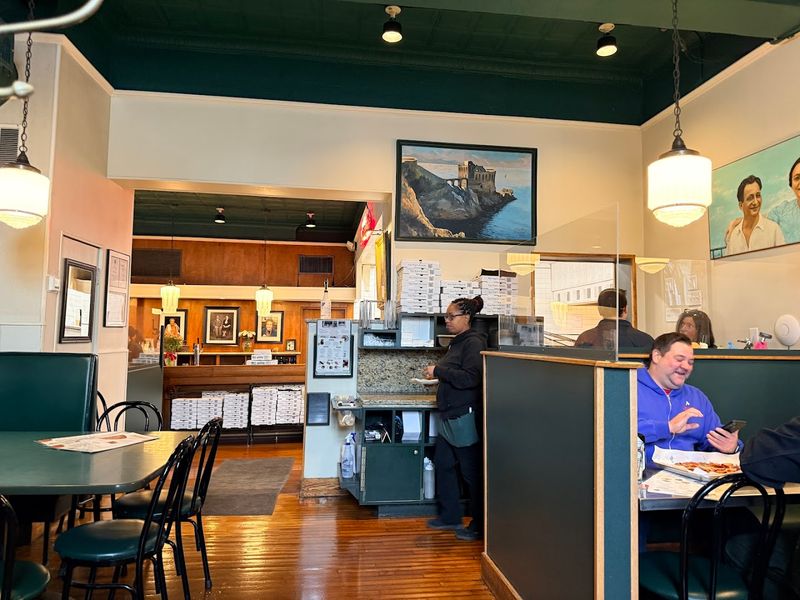
If you asked me where to start with coal-fired thin crust in this part of the region, I would send you here without much hesitation. Not because it is the loudest answer, but because the pizza really delivers the thing people promise when they talk about New Haven with that slightly intense look in their eyes.
The crust is crisp, the char feels measured, and the whole pie has a kind of ease that never slips into blandness.
I also think this is the kind of place that works whether you are deeply obsessed with pizza or just hungry and curious. You do not need a whole lecture on style to appreciate what is happening on the plate, because the texture tells the story quickly.
Then, if you want to keep noticing details, there is plenty there for you too.
That is probably the strongest compliment I can give a well-known restaurant. Frank Pepe feels specific enough for the people who care a lot, and clear enough for the people who simply want an excellent meal in Connecticut.
When a place can carry that much reputation and still taste this grounded, it earns the right to stay in the conversation every time somebody asks where the crispiest coal-fired thin crust really is.
I would still tell you to go hungry, though.
