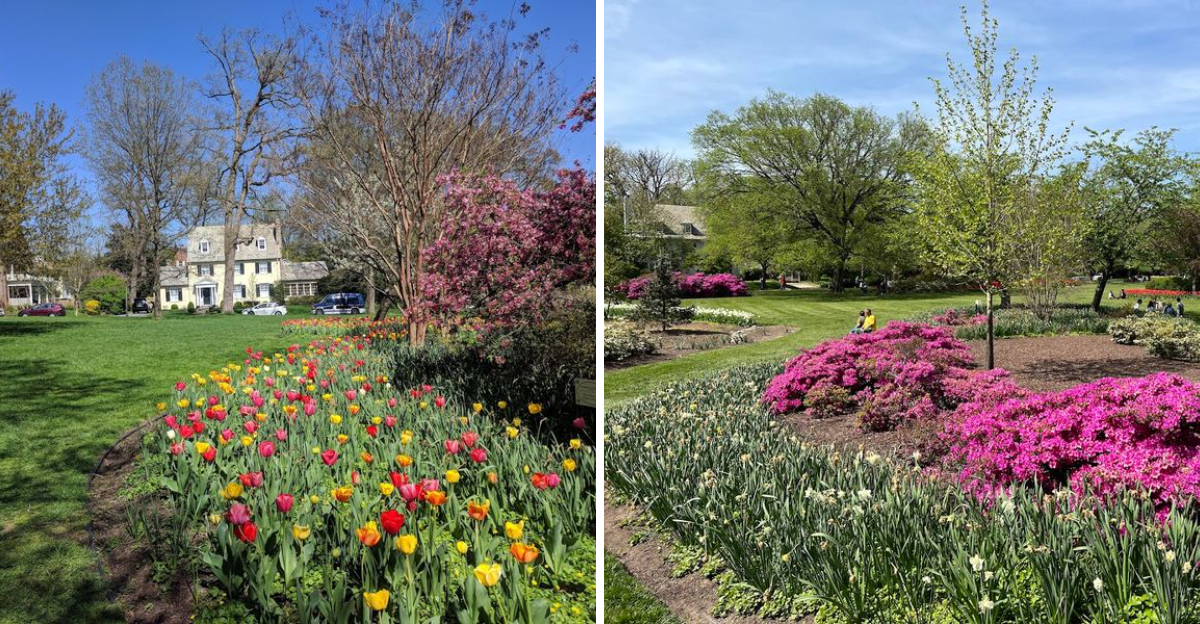
You half expect to see a signature in the corner. That is how pretty this place is.
Maryland hides a wildflower meadow that looks like someone carefully arranged every bloom. Purple, yellow, red, and white spread across the field like a watercolor that came to life.
Bees are busy, butterflies stop by, and the whole scene changes with every season. Spring brings the bright stuff.
Summer goes bold. Fall adds golden touches.
I showed a friend a photo and they asked what museum I visited. That is the power of a Maryland wildflower field.
Bring a blanket, a camera, and maybe a little sketchbook. You will want to remember this one.
The Tulip Spectacle That Starts It All

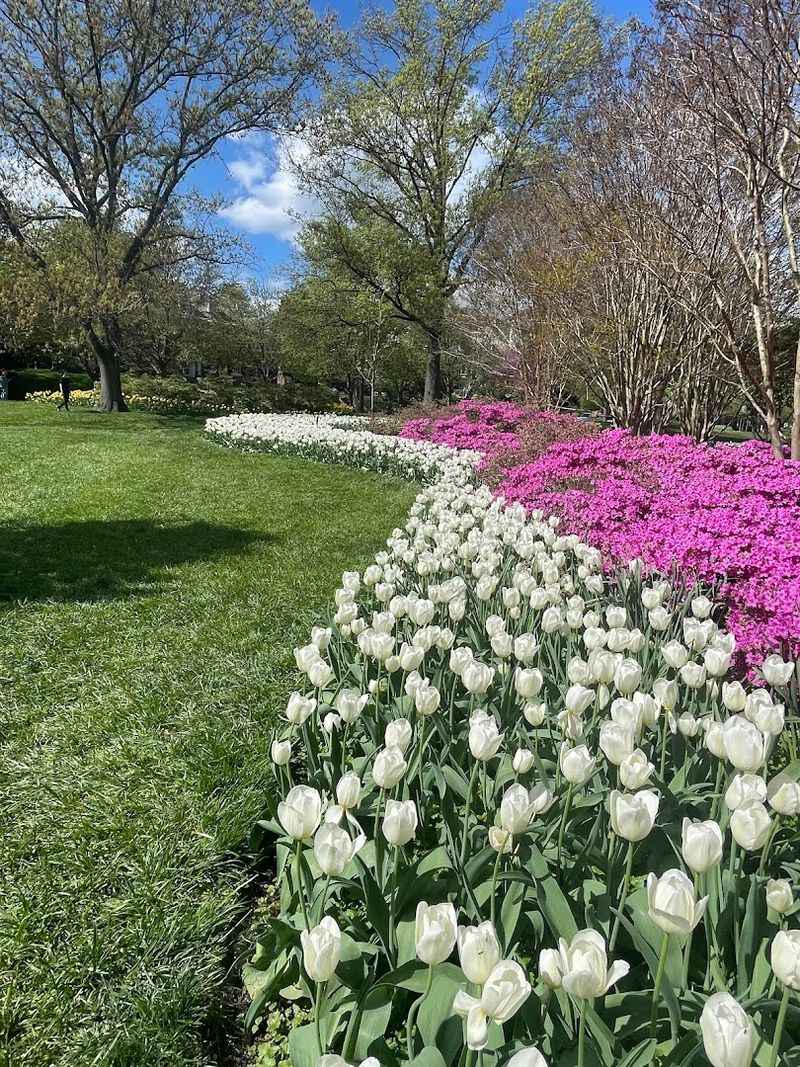
Nothing quite prepares you for the moment those tulip beds come into full view. Up to 80,000 bulbs are planted here each year, and when they all open at once in mid-to-late April, the effect is genuinely jaw-dropping.
The colors do not just sit quietly in their beds. They practically shout at you from across the lawn.
Each section of the garden holds a slightly different palette, so moving from one area to the next feels like flipping through the pages of a very good picture book. Some beds lean into deep, moody purples and burgundies.
Others explode with bright oranges and creamy whites that catch the light in the most satisfying way.
Peak bloom usually falls somewhere between mid-April and early May, though weather plays a big role in timing. Checking local garden updates before you visit is a smart move, especially if you are planning a longer trip.
Arriving on a weekday morning gives you the best chance of experiencing the garden at its quietest and most magical. The tulips do not last forever, which honestly makes the whole thing feel even more special.
A History Rooted in One Man’s Vision
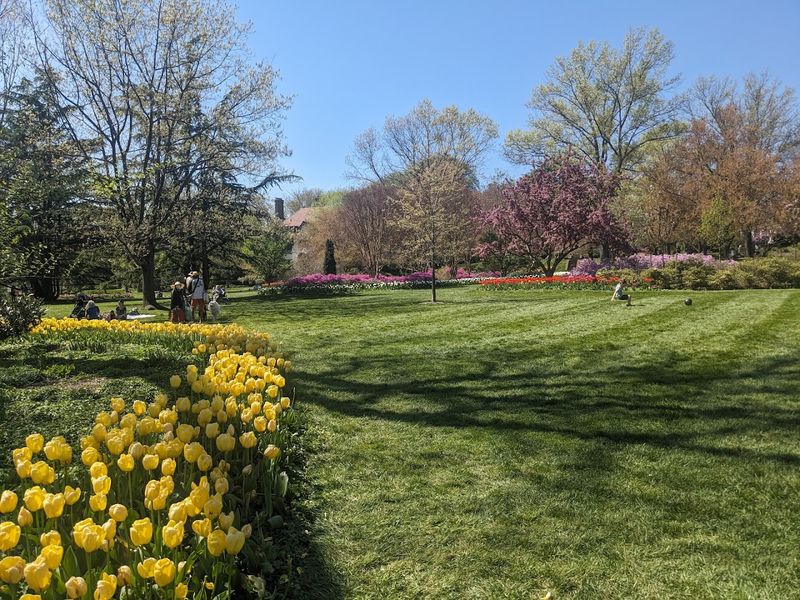
The story behind Sherwood Gardens is one of those quietly fascinating ones that makes a place feel richer once you know it. Back in the 1920s, a local petroleum entrepreneur named John W.
Sherwood began planting tulips, azaleas, and flowering shrubs on his private property adjacent to a community green called Stratford Green. He eventually opened the grounds to the public each May, turning a personal passion into a neighborhood gift.
The park’s roots go even further back. Stratford Green was originally part of an Olmsted-designed plan for the Guilford community, dating all the way to 1913.
That legacy of thoughtful, intentional landscaping still shows in how the whole space feels balanced and unhurried.
After Sherwood passed away in 1965, the Guilford Association stepped in to acquire and expand the gardens. Today, the space is managed by Stratford Green, Inc., and holds Level I accredited arboretum status.
That designation is not handed out lightly. It reflects a real commitment to plant diversity, horticultural standards, and long-term preservation.
Knowing that history while you walk the paths adds a layer of meaning that a simple pretty garden just cannot offer.
Beyond Tulips, the Garden Keeps Giving
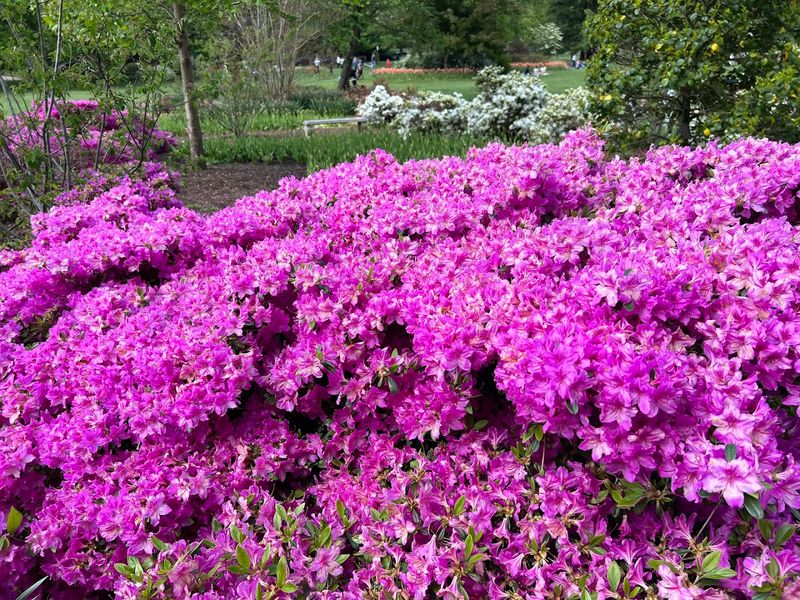
Most people come for the tulips, and that is completely fair. But the garden has a lot more going on once the spring bulbs fade.
Dogwoods, flowering cherries, and magnolias fill in the spaces with their own softer, more delicate displays, often overlapping with the tail end of tulip season in the most beautiful way.
Azaleas put on a serious show too, especially in the shaded corners of the park where they seem to glow against the darker foliage. Japanese maples add structure and a sculptural quality that holds up even when nothing is blooming.
The mix of textures keeps the garden interesting from every angle.
Come mid-summer, the beds are replanted with annuals and perennials that carry color well into the warmer months. Zinnias, salvias, and other sun-loving plants take over where the tulips once stood, keeping the space lively for visitors who show up outside of spring.
The garden genuinely rewards multiple visits across different seasons. Each trip reveals something new, whether it is a shrub you missed before or a corner that looks completely different under summer light.
It is the kind of place that grows on you, literally and figuratively.
Free to Visit, Priceless to Experience
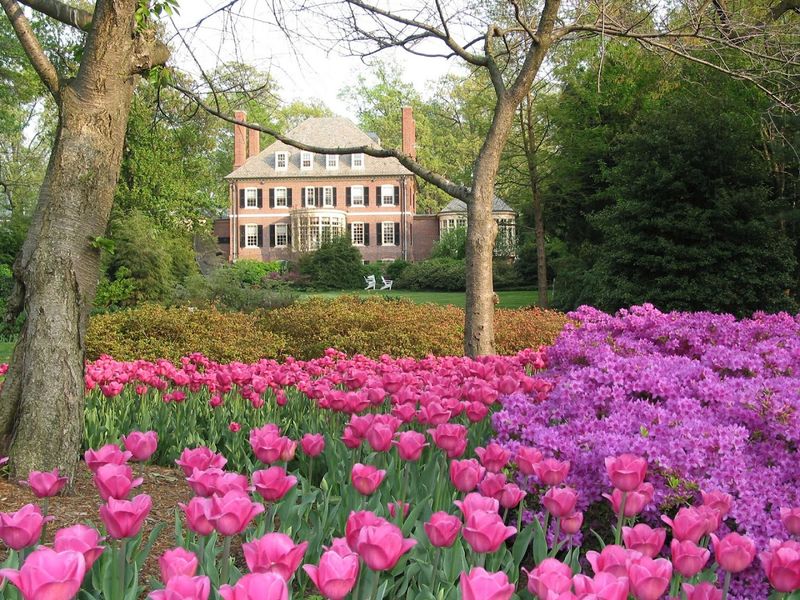
One of the best things about Sherwood Gardens is that it costs absolutely nothing to walk through. The park is open every single day of the year from dawn to dusk, with no ticket booth, no reservation system, and no catch.
That kind of open-door generosity feels increasingly rare, and it makes the place even easier to love.
The gardens receive no public funding, which means they run entirely on donations and community support. Dropping something in the donation box when you visit is a small gesture that genuinely helps keep the whole operation going.
Think of it as paying it forward for everyone who comes after you.
Because admission is free, Sherwood Gardens attracts a wonderfully mixed crowd. You will see early morning joggers cutting through the paths, families spreading out on the grass, and photographers crouched low trying to capture the perfect tulip shot.
Nobody is rushing anyone. The pace is slow, easy, and completely self-directed.
That freedom to wander without a schedule makes the visit feel more personal and less like a tourist checklist item. It is one of those rare urban green spaces where you can genuinely exhale and just be somewhere beautiful without spending a thing.
The Annual Tulip Dig, a Baltimore Tradition
Every year on the Saturday of Memorial Day weekend, Sherwood Gardens holds what has become one of Baltimore’s most beloved seasonal traditions. The Tulip Dig gives visitors the chance to purchase and take home bulbs directly from the beds, right after the blooming season wraps up.
It is practical, fun, and genuinely charming in a way that feels very Baltimore.
The event draws a lively crowd of gardeners, families, and curious newcomers who want a little piece of the magic to plant in their own yards. There is something satisfying about kneeling in the same soil where all that color just happened and walking away with something to grow at home.
It turns a passive visit into something participatory.
If you are thinking about attending, arriving early is a good idea since the most desirable bulbs tend to go quickly. The atmosphere is relaxed and community-driven, with plenty of friendly conversation between strangers who all share the same mild obsession with beautiful flowers.
It is one of those local events that does not get the national press it probably deserves. For anyone who loves gardening or just appreciates a good neighborhood tradition, the Tulip Dig is worth planning your spring calendar around.
Visiting With Dogs and Little Ones
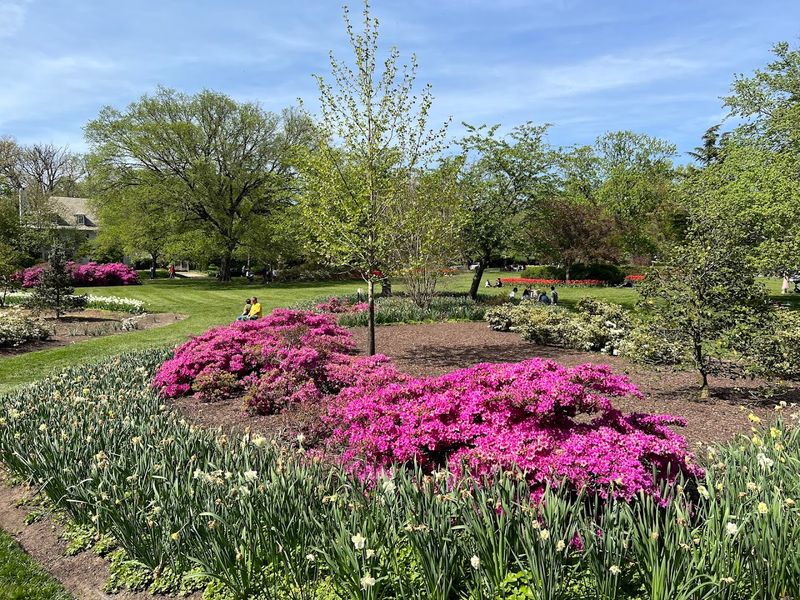
Sherwood Gardens is genuinely one of the more family-friendly spots in Baltimore, and the layout makes it easy to navigate with kids or dogs in tow. The grounds are open and mostly flat, which means strollers roll without much trouble and little legs do not tire out too quickly.
There is plenty of open lawn space for kids to run around between the flower beds.
Dogs are welcome throughout the park, which immediately bumps up the charm factor on any visit. The rules are simple and sensible: keep your dog on a leash and clean up after them.
Most visitors are respectful about it, and the park rarely feels chaotic even when it is busy.
One thing worth knowing before you go is that there are no public restrooms on site. If you are visiting with young children, planning accordingly is a smart move.
The surrounding Guilford neighborhood has some nearby options, so it is worth scoping those out ahead of time. Bicycles are not permitted on the garden pathways, which actually helps keep the space feeling calm and pedestrian-friendly.
Overall, the combination of open space, beautiful scenery, and a welcoming atmosphere makes it a genuinely easy outing for families of all sizes.
Photography Heaven in Every Direction
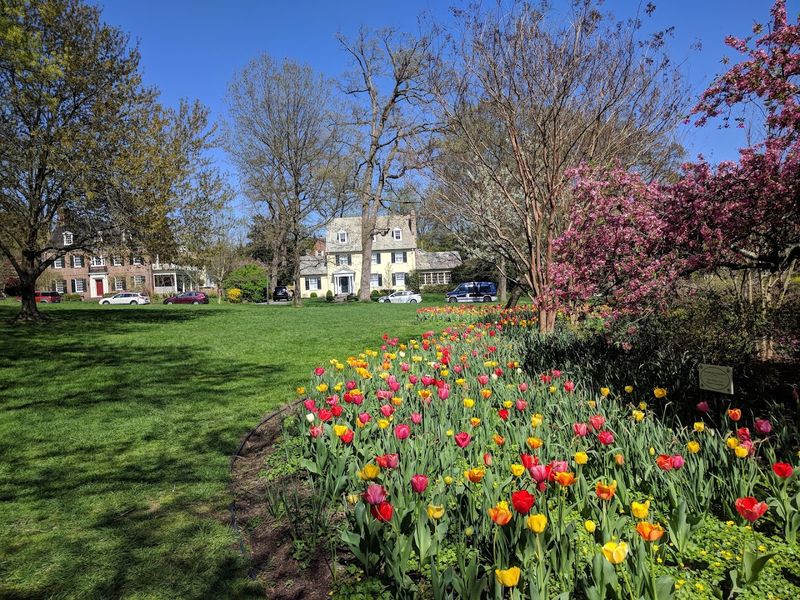
Sherwood Gardens might be the most photogenic six acres in all of Maryland, and that is not a small claim. The combination of massed tulip plantings, mature flowering trees, and well-maintained lawn creates the kind of layered visual depth that makes photos look effortless even when they are not.
Every direction you point a camera, something interesting is happening.
Golden hour in the morning is especially rewarding here. The low light catches the petals at an angle that makes colors look almost saturated beyond belief, and the long shadows add drama without any editing required.
Showing up just after sunrise also means fewer people in frame, which is a bonus on busy spring weekends.
For anyone planning a more formal photo session, it is worth knowing that organized shoots require prior permission from the garden management. Casual photography is completely fine and happens constantly, but coordinated sessions with equipment or groups fall into a different category.
Reaching out ahead of time keeps things smooth for everyone. The garden has been voted Best Urban Garden in Baltimore Magazine’s Reader’s Poll, and honestly, one afternoon with a camera here makes that title feel completely obvious.
The place photographs like a dream no matter what season you show up.
Why Sherwood Gardens Stays With You
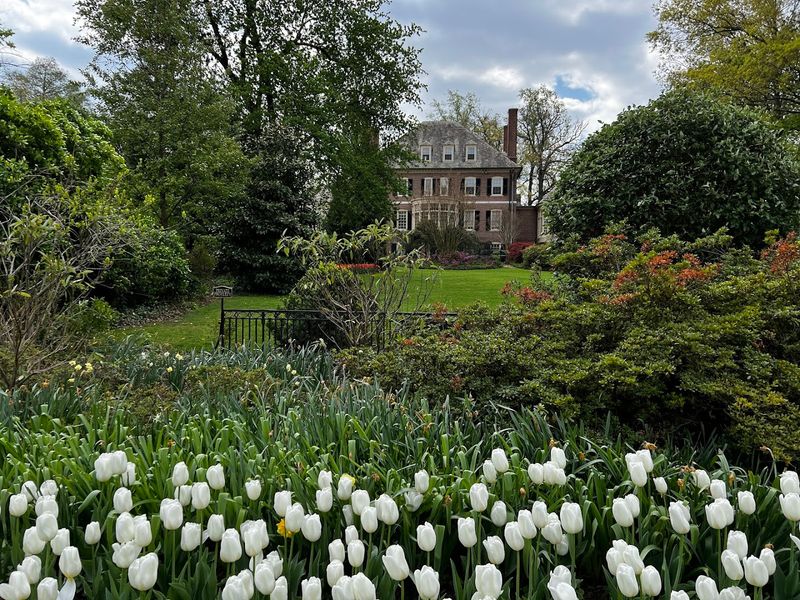
There are a lot of gardens in the world, and plenty of them are beautiful in a perfectly adequate, forgettable kind of way. Sherwood Gardens is not that.
Something about the combination of scale, history, and sheer color density makes it linger in your memory long after you have left. I found myself thinking about it on the drive home, already wondering when I could come back.
Part of what makes it stick is how unpretentious the whole thing is. No admission fee, no gift shop, no audio tour.
Just flowers, open sky, and the sound of birds and the occasional delighted kid who has just spotted their first tulip up close. That simplicity is genuinely refreshing in an era when every experience seems to come with a price tag and a branded hashtag.
The garden also carries a quiet sense of community stewardship that feels meaningful. It exists because people chose to take care of it, generation after generation, without any expectation of public funding or fanfare.
That story is woven into every bloom. Whether you visit once or make it an annual spring ritual, Sherwood Gardens has a way of reminding you that some of the best things in life really are free, and really are worth protecting.
Getting There and Making the Most of Your Visit
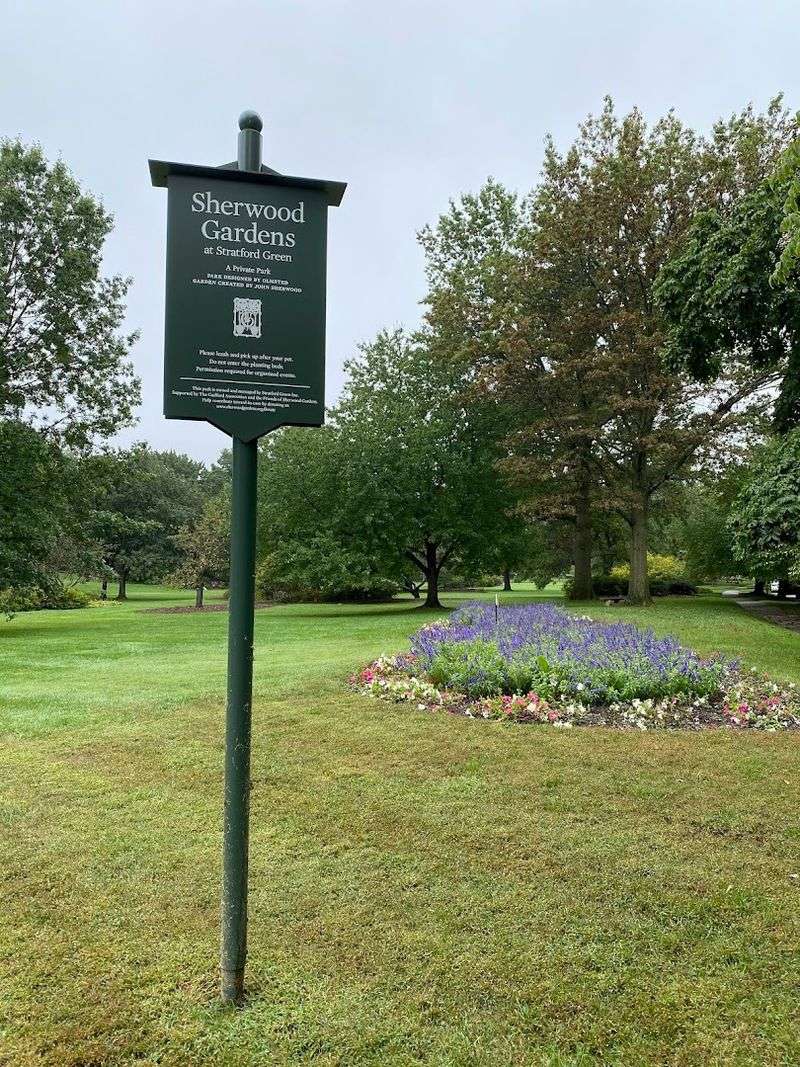
Sherwood Gardens sits at 4310 Underwood Road in the Guilford neighborhood of northern Baltimore City, which puts it in one of the city’s quieter and more architecturally interesting residential areas. Getting there by car is straightforward, but parking is street-only since there is no dedicated lot.
The surrounding neighborhood streets typically have available spots, though they fill up fast on peak spring weekends.
Arriving early on weekdays almost always guarantees a calmer experience. Weekends during peak tulip season can get genuinely crowded by mid-morning, especially on sunny days when everyone in the city seems to have the same idea at once.
A 7 or 8 a.m. arrival feels early but pays off in a big way.
Wearing comfortable shoes is a practical tip that sounds obvious but matters more than you might expect. The paths are not paved in all areas, and the grass can be soft after rain.
Bringing water and a light snack is also smart since there are no food vendors on site. Picnics are popular and totally welcome, adding a relaxed, unhurried quality to the visit.
The whole experience works best when you give yourself enough time to wander slowly rather than rushing through. Budget at least an hour, maybe two during peak bloom.
