Gold. The word made people do strange things in the 19th century.
They abandoned farms, left families, and flooded into the hills of Virginia in search of wealth. This county park was once the heart of that forgotten gold rush, a place where men dug and panned and dreamed.
I walked the grounds and tried to imagine the noise, the dust, the hope and desperation. The museum displays tools, photographs, and artifacts from the era, telling the story of a boom that most people have never heard of.
The park itself is quiet now, with trails and picnic areas, but the history is still there, under the surface. Virginia has plenty of historic sites, but this one is a reminder that fortunes were once made and lost in these hills.
Virginia’s Secret Gold Belt and Why Goldvein Exists
Long before California became synonymous with gold fever, Virginia was quietly producing some serious treasure. A band of gold-bearing rock stretches roughly 200 miles through the Commonwealth, cutting right through the southern part of Fauquier County.
That geological quirk is exactly why a tiny town named Goldvein exists at all.
This gold-pyrite belt isn’t just a fun footnote. It powered a legitimate mining industry that predated the California rush by decades.
Miners swarmed this region in the early 1800s, and the land around Goldvein became one of the busiest gold-producing zones in the entire eastern United States.
What makes this story even more fascinating is that Thomas Jefferson reportedly observed gold-bearing rock near Goldvein back in 1782. So yes, one of America’s founding fathers was essentially an early gold prospector in Virginia.
The Gold Mining Camp Museum at Monroe Park exists to tell that remarkable story, and it does so with genuine passion and impressive detail. Fauquier County basically sits on a geological jackpot that most Americans have completely forgotten about.
The Franklin Gold Mine and Its Jaw-Dropping Riches
Picture this: a single mine in rural Virginia pulling out what would be millions of dollars worth of gold over just a few decades. That was the Franklin Gold Mine, and its story is genuinely staggering.
Opened in the 1820s, it became one of the most productive gold operations in the entire country during its peak years.
The Franklin mine reportedly yielded an extraordinary amount of gold between the 1820s and 1861, making it a serious economic powerhouse for the region. Fauquier County wasn’t just farming tobacco and raising horses during this era.
It was sitting on a fortune, and the Franklin mine proved it spectacularly.
The Gold Mining Camp Museum brings this legacy to life through exhibits that trace the full arc of Virginia’s gold industry. Walking through the reconstructed camp buildings, you get a real sense of how significant this industry once was.
The sheer scale of what miners extracted from this corner of Virginia is humbling. It also raises an obvious question: how did a story this big get so thoroughly forgotten?
The museum makes a convincing case that it deserves far more attention than it currently gets.
Monroe Park and the Gift That Started It All
Every great museum has an origin story, and the Gold Mining Camp Museum’s is wonderfully personal. The land itself was donated by Henry Patton Monroe, a local postmaster who was also a passionate gold enthusiast.
His generosity turned a piece of historically rich Virginia soil into a public treasure that anyone can visit for free.
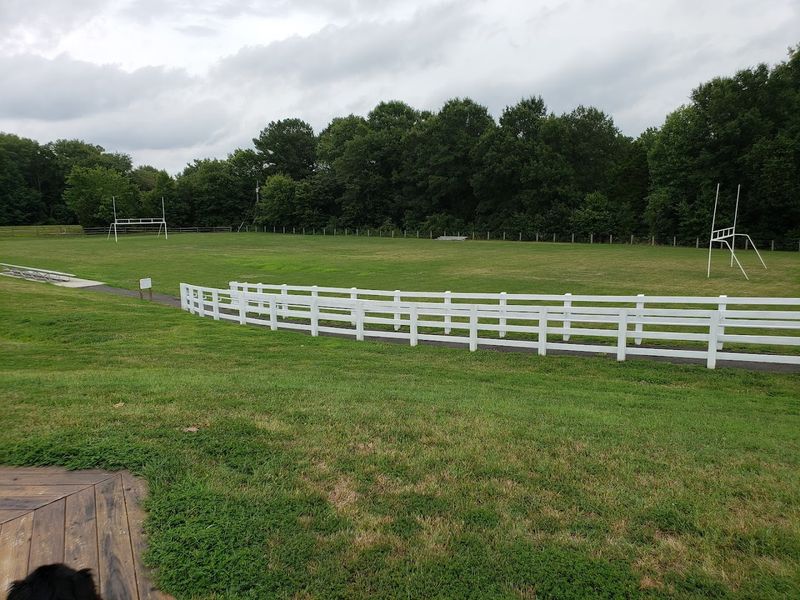
Monroe Park opened its museum component in October 1998, and it has been quietly wowing curious visitors ever since. The park surrounding the museum is genuinely lovely, with open fields, sports courts, picnic pavilions, and walking paths that make it a full day destination rather than just a quick stop.
What strikes me most about Monroe Park is how it balances recreation with education so naturally. Kids can run around on the baseball and football fields, then wander into a 19th-century mining camp without missing a beat.
The park feels like a gift in the truest sense, a place where a community’s history is preserved with real affection. Henry Monroe clearly understood that gold’s greatest value isn’t always measured in ounces.
Sometimes it’s measured in the stories a community chooses to keep alive for future generations.
The Reconstructed 1930s Mining Camp Buildings
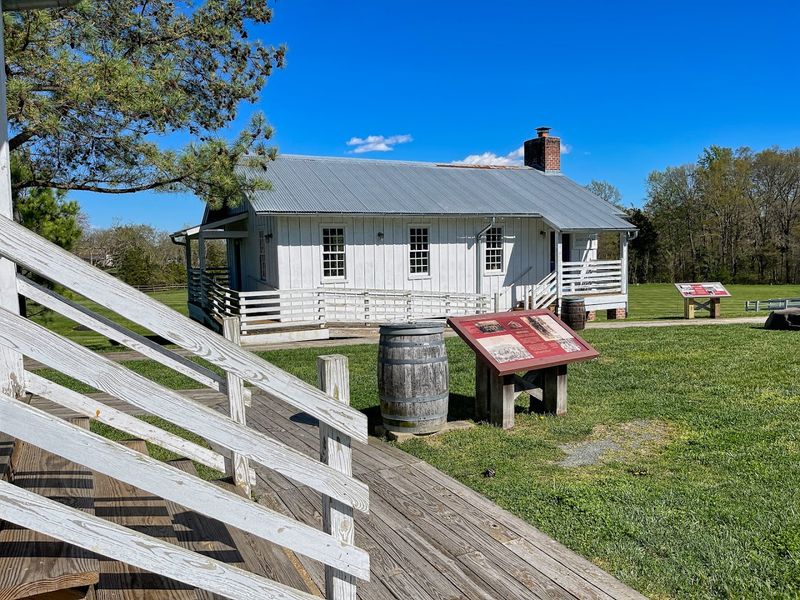
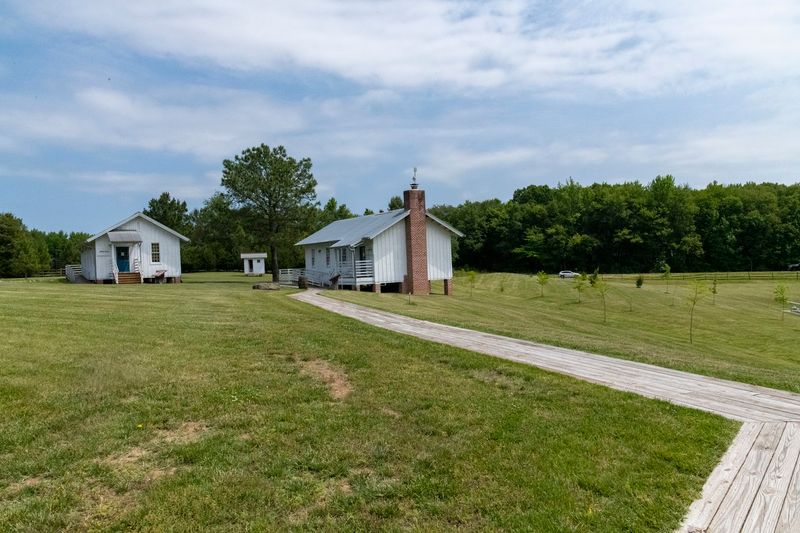
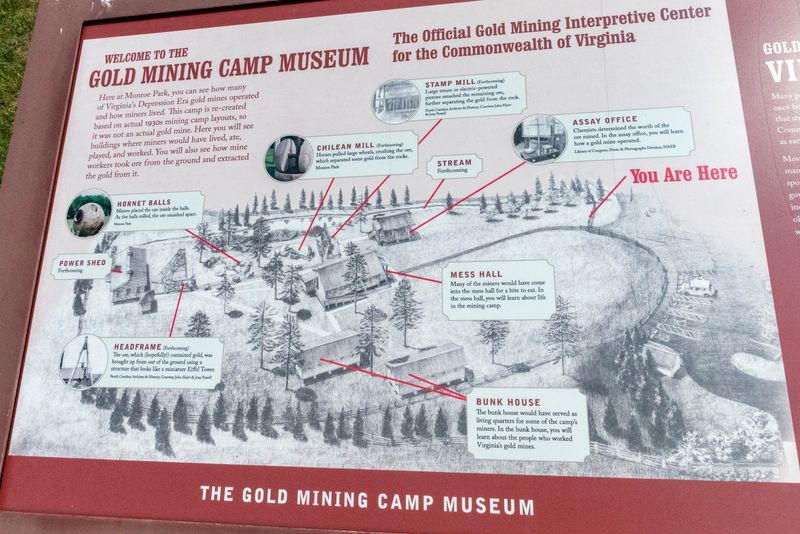
Stepping into the museum grounds feels like walking onto a film set, except everything here is historically grounded and genuinely purposeful. The Gold Mining Camp Museum features three main buildings that together recreate a working 1930s mining camp in impressive detail.
Each structure tells a different part of the miner’s daily story.
The Mess Hall is where miners gathered to eat and socialize after brutal shifts underground. The Bunk House shows how they slept, complete with period-appropriate furnishings that make you appreciate modern mattresses instantly.
Then there’s the Assay Office, where the real business happened, the testing and valuing of ore to determine just how much gold a haul was actually worth.
Inside each building, the exhibits are thoughtfully arranged and surprisingly immersive. Kids can try on aprons in the Mess Hall or slip into lab coats in the Assay Office, which turns history into something tactile and memorable.
The signage throughout is clear and informative without being overwhelming. For a county park museum, the production quality is genuinely impressive.
The care that went into designing these spaces is obvious, and it makes the Gold Mining Camp Museum feel like something much larger than its modest footprint suggests.
Giant Mining Artifacts That Stop You in Your Tracks
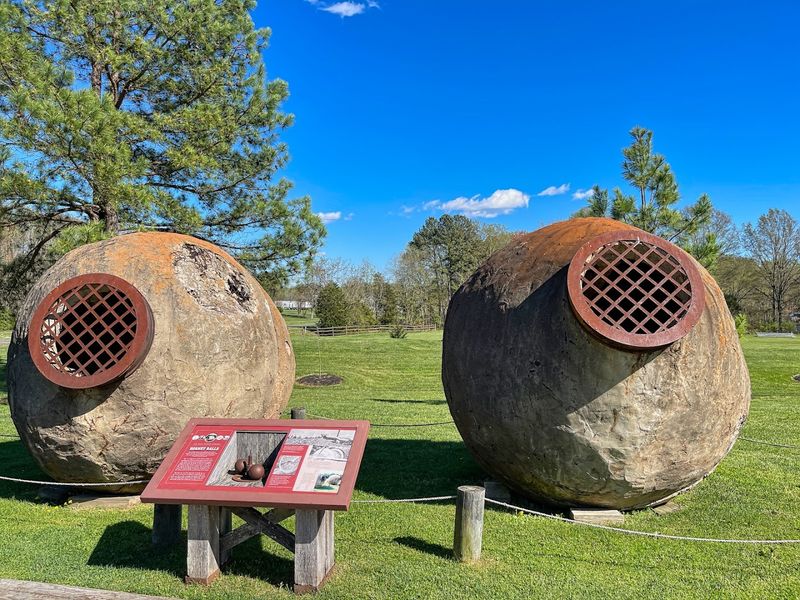
Most museum artifacts sit behind glass cases, politely demanding your attention. The Gold Mining Camp Museum takes a completely different approach, and it works brilliantly.
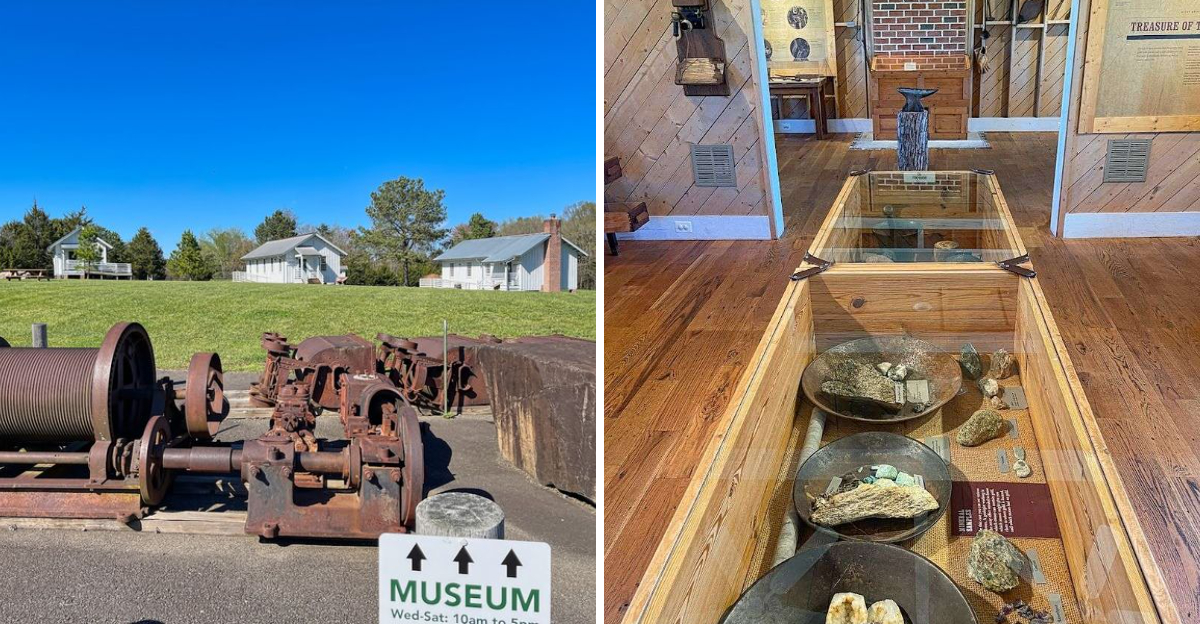
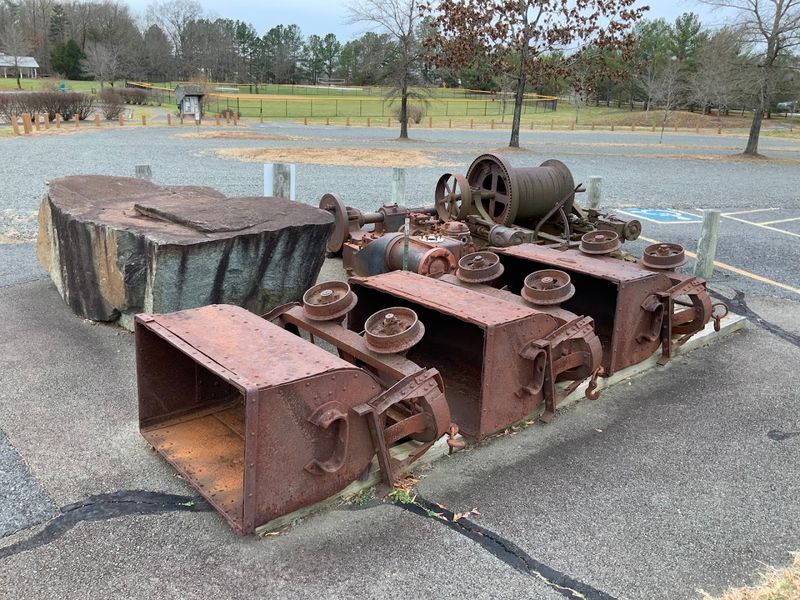
Scattered across the grounds are massive pieces of authentic mining equipment that you can get right up close to, including a full-sized steam engine and heavy ore cars that once rolled through actual Virginia mines.
My personal favorites are the hornet balls. These enormous concrete and stone spheres were used to crush gold ore, essentially acting as giant grinding tools inside rotating mills.
Seeing them in person gives you an instant appreciation for how physically demanding and mechanically ingenious gold mining actually was. These weren’t delicate operations requiring tweezers and magnifying glasses.
The outdoor artifact display transforms the museum grounds into something between a sculpture garden and an industrial history exhibit. You find yourself circling these massive objects, trying to imagine the noise, the heat, and the sheer muscle power required to run a working mine.
Virginia’s gold industry was serious business, and these artifacts communicate that fact more powerfully than any paragraph of text ever could. Bring comfortable shoes, because you’ll want to explore every corner of this remarkable outdoor collection.
Gold Panning Demonstrations That Actually Deliver Real Gold
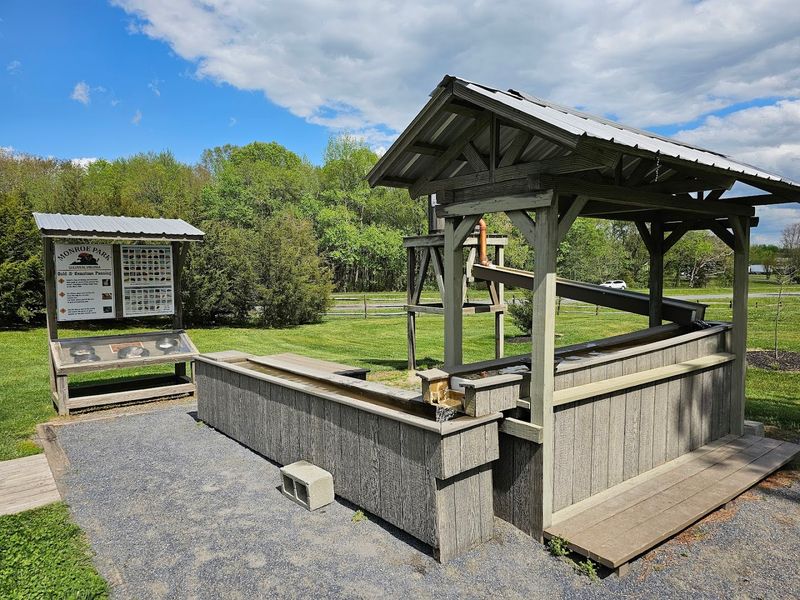
Let’s be honest: the moment most people hear “gold panning demonstration,” they picture a thin trickle of muddy water and zero actual gold. The Gold Mining Camp Museum completely defies that expectation, and it’s genuinely thrilling.
The outdoor sluice box experience here produces real results, and watching those tiny golden flakes appear in your pan is an unforgettable rush.
Staff members offer free demonstrations that teach proper panning technique before you try it yourself. The coaching is patient and practical, covering the swirling motion and water flow management that separates successful prospectors from frustrated ones.
Once you get the hang of it, time disappears completely.
For an extra layer of excitement, the museum sells gem bags and paydirt bags that you can sluice through to find minerals, fossils, and gold. My absolute recommendation is to purchase one of these bags and spend as long as you possibly can at that sluice.
Shark teeth, ammonites, pyrite, and genuine gold flakes have all been found by lucky visitors. Local prospectors have even shown up with actual nuggets they found in Virginia’s waterways.
The Gold Mining Camp Museum makes the gold rush feel immediate, personal, and completely real.
Geological Wonders Inside the Exhibit Halls
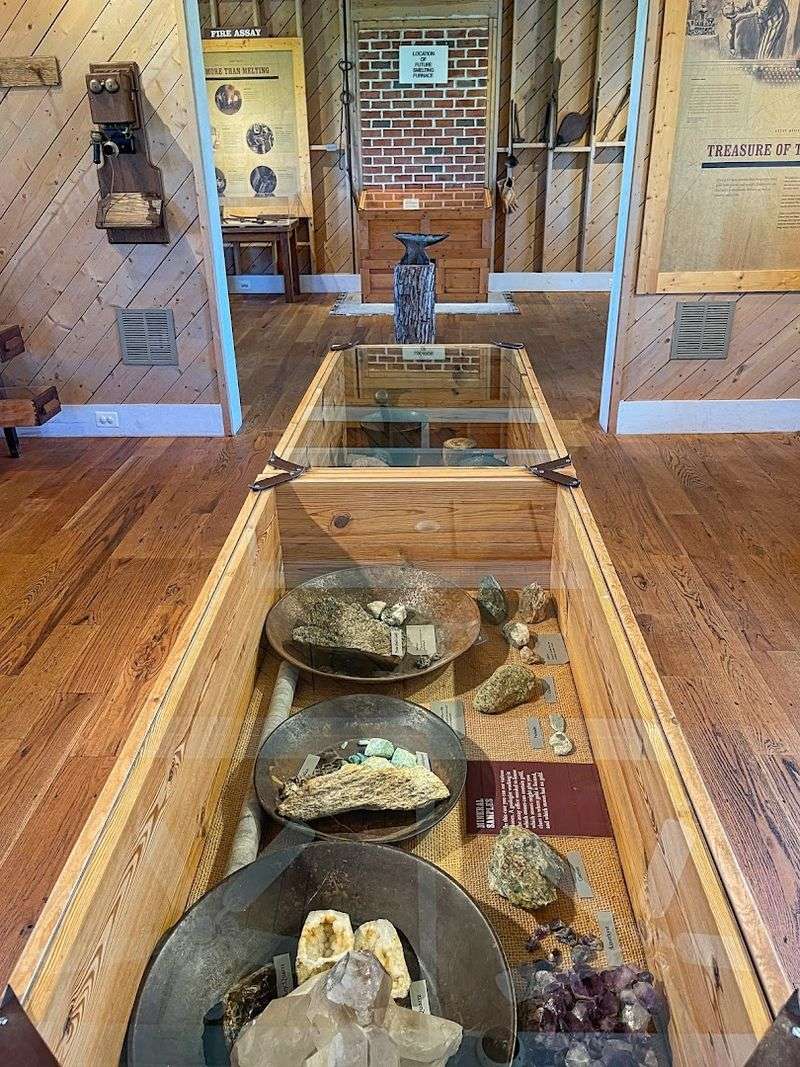
Beyond the drama of gold itself, the museum’s science exhibits reveal a whole underground world most of us walk right over without a second thought.
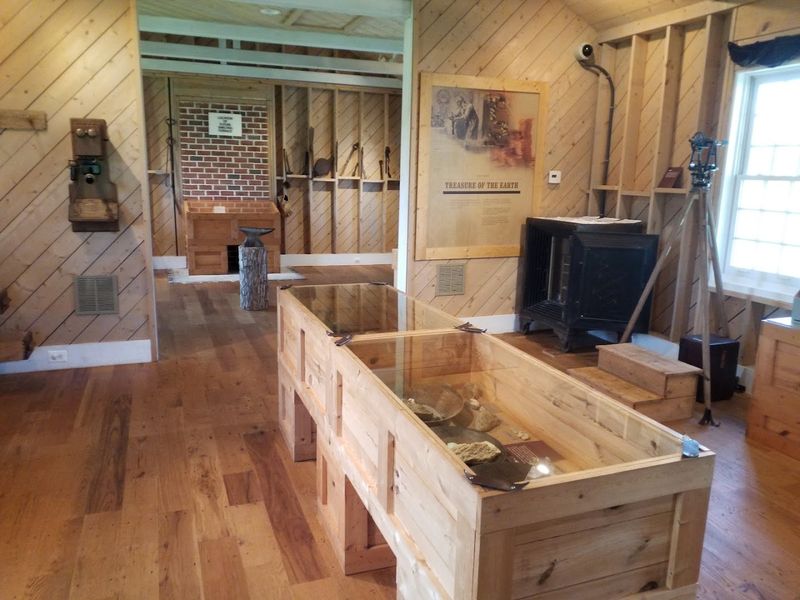
The collection of gems, minerals, and fossils on display inside the museum buildings is genuinely impressive. It’s covering everything from raw pyrite chunks to polished gemstones pulled from Virginia’s gold-bearing rock formations.
The geological lessons woven throughout the exhibits explain how gold forms, why it concentrates in certain rock types, and what miners actually look for when they’re prospecting.
For anyone who has ever wondered why gold is found in some places and not others, these displays provide satisfying, accessible answers without drowning you in technical jargon.
One detail that charmed me completely was a display comparing a 1930s dollar bill to a modern one. The older bill is noticeably larger, a small but vivid reminder of how much has changed since Virginia’s mining heyday.
The Gold Mining Camp Museum excels at these kinds of concrete, tangible comparisons that make history feel touchable rather than distant. Whether you’re a geology enthusiast, a history buff, or just a curious traveler passing through Virginia, the science exhibits here reward every minute of attention you give them.
Virginia’s Gold Rush Before California’s Famous One
Here’s the fact that genuinely surprises most people who visit: Virginia’s gold rush happened decades before California’s famous 1849 event. The first commercial gold mine in the entire Commonwealth, the Whitehall Mine in Spotsylvania County, opened in 1804.
That’s nearly half a century before Sutter’s Mill changed American history forever.
From the late 1820s through 1860, Virginia’s mines collectively sent tens of thousands of ounces of gold to the U.S. mint in Philadelphia. The Union Gold Mine near Goldvein was chartered in 1818 and operated for over fifty years.
Fauquier County was a genuine economic engine during this era, fueled entirely by gold pulled from the earth.
The Gold Mining Camp Museum presents this timeline with impressive clarity, helping visitors understand exactly where Virginia fits into the broader American gold story. The decline came in stages: the California rush drew miners westward, the Civil War disrupted operations, and commercial mining ultimately ceased after World War II.
But the geological wealth never went anywhere. The gold-pyrite belt still runs through Virginia today, and the museum makes sure nobody forgets it.
This is American history that most textbooks completely skip, and that alone makes the museum essential.
A Family Day Out That Goes Way Beyond the Museum
Packing a picnic and spending a full afternoon at Monroe Park is genuinely one of the better free things you can do in Virginia. The park surrounding the Gold Mining Camp Museum offers far more than just history exhibits.
This is making it a legitimately complete family destination that works for all ages and energy levels.
Sports fields for baseball, football, and beach volleyball spread across the open grounds, giving kids plenty of room to burn off energy between museum visits. Covered picnic tables and a grill area make outdoor lunches easy and enjoyable.
A well-maintained playground adds another layer of activity for younger kids who need something hands-on between the educational stops.
A paved walking trail loops through the property, making it accessible for everyone including strollers and wheelchairs. The park has clean restrooms, a water fountain, and plenty of gravel parking.
Community events have included horse rides, K9 demonstrations, and face painting, turning Monroe Park into a genuine gathering place for the surrounding region. What impresses me most is how thoughtfully the whole space has been designed.
Nothing feels like an afterthought. The Gold Mining Camp Museum and its surrounding park work together seamlessly to create an experience that families genuinely want to repeat.
Planning Your Visit to 14421 Gold Dust Pkwy
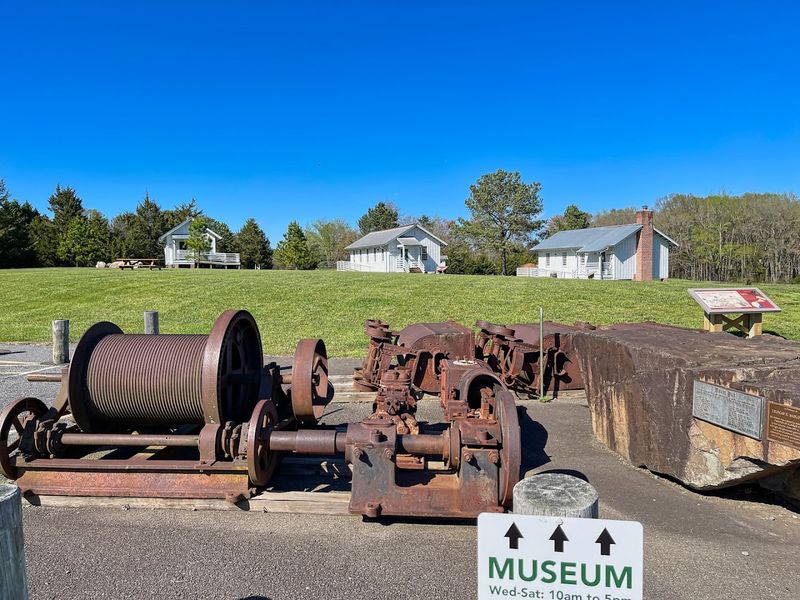
Getting to the Gold Mining Camp Museum is part of the adventure. The address is 14421 Gold Dust Pkwy, Goldvein, VA 22720, and yes, the street name alone is worth the trip.
The museum is open Wednesday through Saturday from 10 AM to 5 PM and Sunday from 12 to 4 PM. Mondays and Tuesdays are closed, so plan accordingly.
The museum is free to enter, which makes it one of the most generous cultural offerings in all of Virginia. Gem bags and paydirt for the sluice are available for a small fee, and they are absolutely worth purchasing.
Arrive with enough time to explore all three buildings, try the sluice, and wander the park grounds without rushing.
The Gold Mining Camp Museum sits within easy driving distance of Northern Virginia and the Washington D.C. area, making it a perfect weekend escape. Cell service can be spotty in this part of rural Virginia, so download directions before you leave.
The gravel parking lot is spacious, and the park never feels chaotic even on busy days. My strongest advice: go on a weekday morning, bring a picnic, and give yourself at least two or three hours.
You will absolutely want more time than you think.
