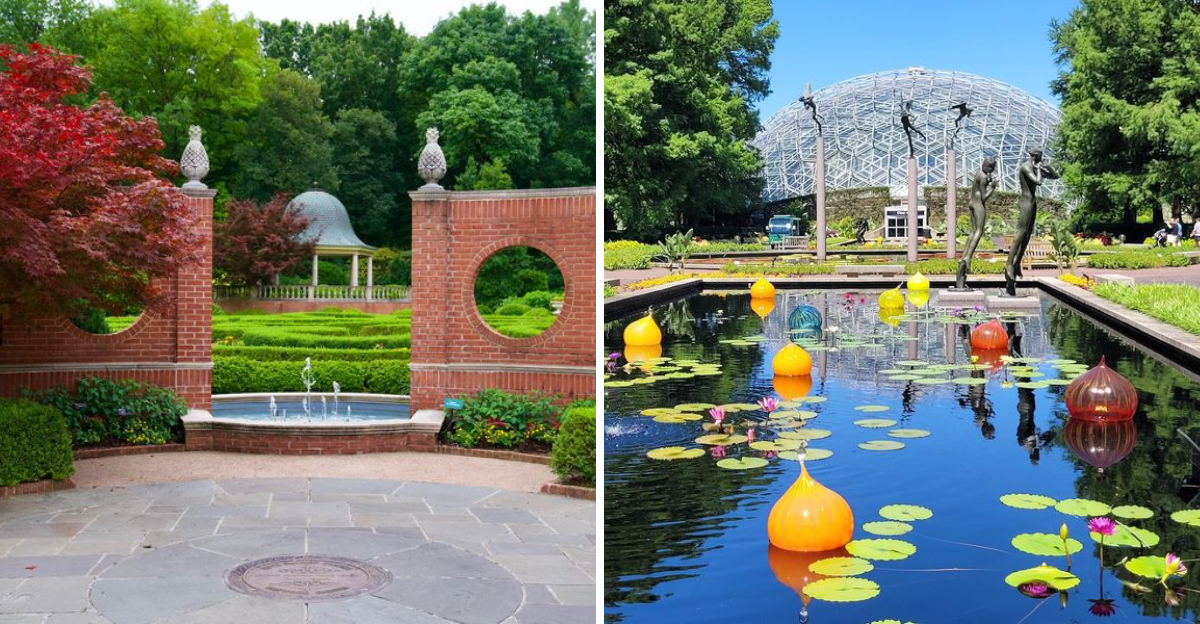
Missouri has plenty of attractions, but one of them feels like it drifted in from a different world entirely. A dreamy botanical sanctuary sits in the heart of the city, looking less like a typical garden and more like the setting for a fairy tale involving talking animals and secret spells.
The grounds sprawl across acres of perfectly manicured beauty, with something new blooming around every corner.
The Japanese garden alone could steal an entire afternoon, with its koi pond, stone lanterns, and arched bridge that begs to be crossed slowly while contemplating something important.
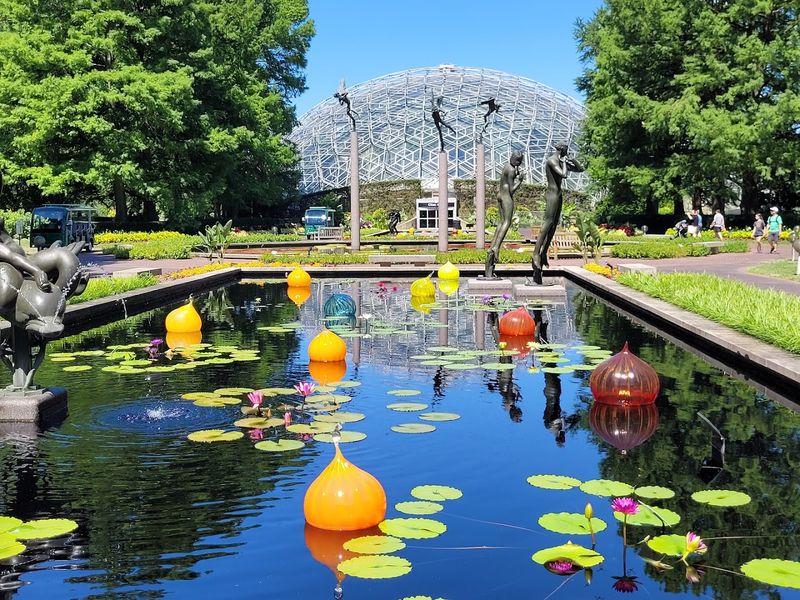
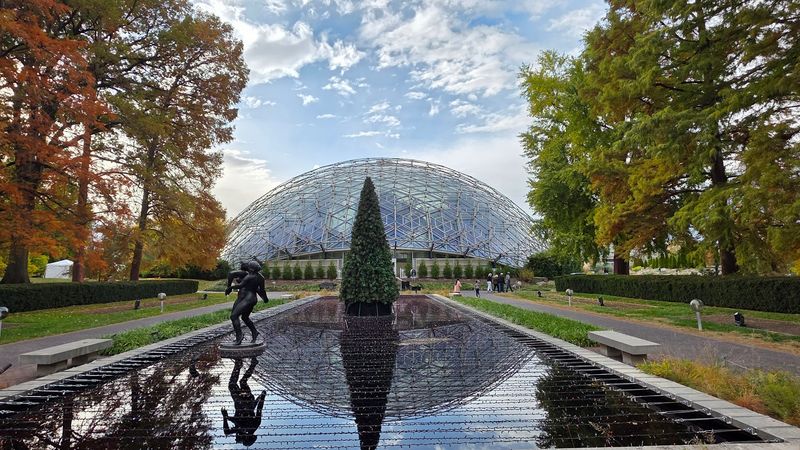
The geodesic dome rises like a giant glass bubble, filled with tropical plants and a climate so warm you will forget you are in Missouri during February.
Children love the children’s garden, which feels like a playhouse designed by Mother Nature herself. Adults love the peaceful benches tucked into shady corners where you can sit and pretend you have no responsibilities.
The garden changes with every season, so a visit in spring looks nothing like a visit in fall. Locals buy memberships and come weekly, finding new favorite spots each time.
A Garden With Deep Roots In History
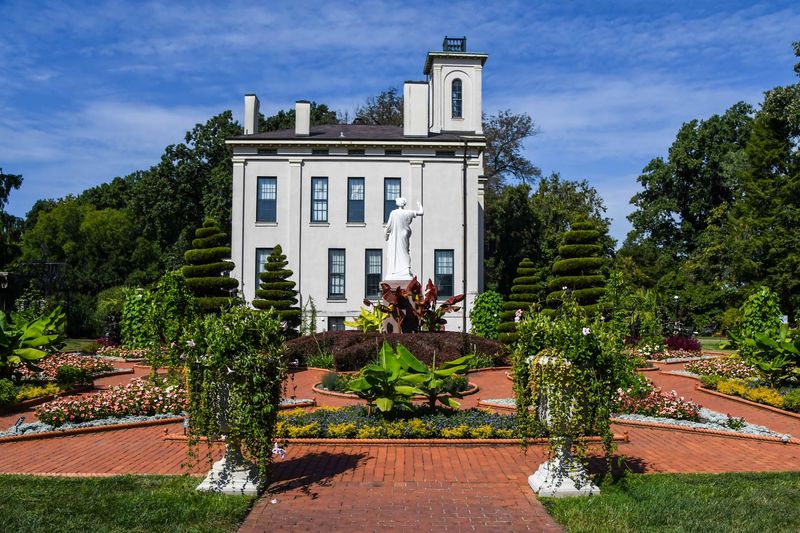
Founded in 1859 by Henry Shaw, the Missouri Botanical Garden is one of the oldest botanical gardens in the entire United States. That kind of history adds a special weight to every step you take on its grounds.
Shaw was a British-born businessman who fell in love with the idea of creating a public garden for science and beauty in St. Louis, Missouri. His vision was clear: build something that would serve both the community and the world of plant science for generations to come.
Walking through the garden, you can feel that original intention everywhere. The careful layout, the diversity of plant collections, and the well-maintained pathways all speak to more than 160 years of dedication.
The garden is located at 4344 Shaw Blvd, St. Louis, MO 63110, right in the heart of the city. It operates as a nonprofit organization and continues to lead important botanical research on a global scale.
For anyone who loves history woven into nature, this place delivers that in a way few destinations can match. The past and present grow side by side here, and that combination is genuinely hard to forget.
The Climatron Dome Is Unlike Anything You Have Seen
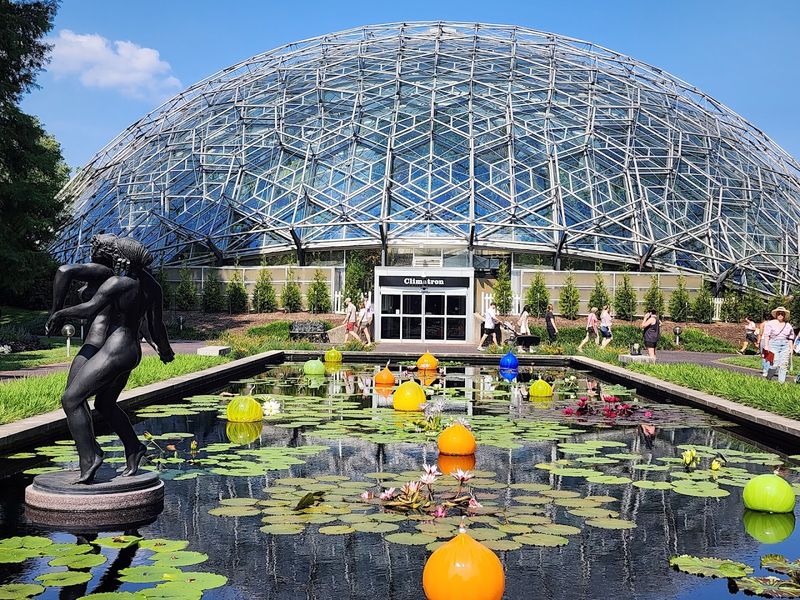
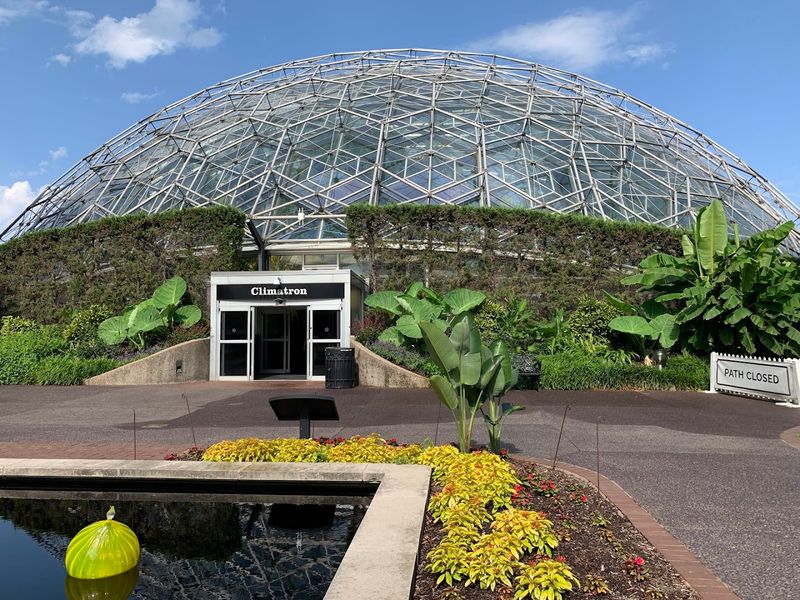
Step inside the Climatron and prepare to feel the air change around you. This iconic geodesic greenhouse dome houses a full tropical rainforest environment right in the middle of Missouri, and the contrast between the outside world and what waits inside is genuinely stunning.
The Climatron was the first fully air-conditioned geodesic greenhouse dome in the world when it opened in 1960. That architectural achievement alone makes it worth a visit, but the living collection inside is what really steals the show.
Towering tropical trees, hanging vines, exotic flowering plants, and the sound of water trickling through the space create an atmosphere that feels completely immersive. The humidity wraps around you the moment you walk through the doors.
Plants that most people only ever see as small houseplants grow here to their full, natural size. It is one of those rare moments where a familiar thing suddenly looks completely different.
In winter especially, stepping from the cold Missouri air into the warm, green world of the Climatron feels like a small miracle. No matter what season brings you to St. Louis, this dome is always worth a slow, wandering visit.
The Japanese Garden Slows Everything Down
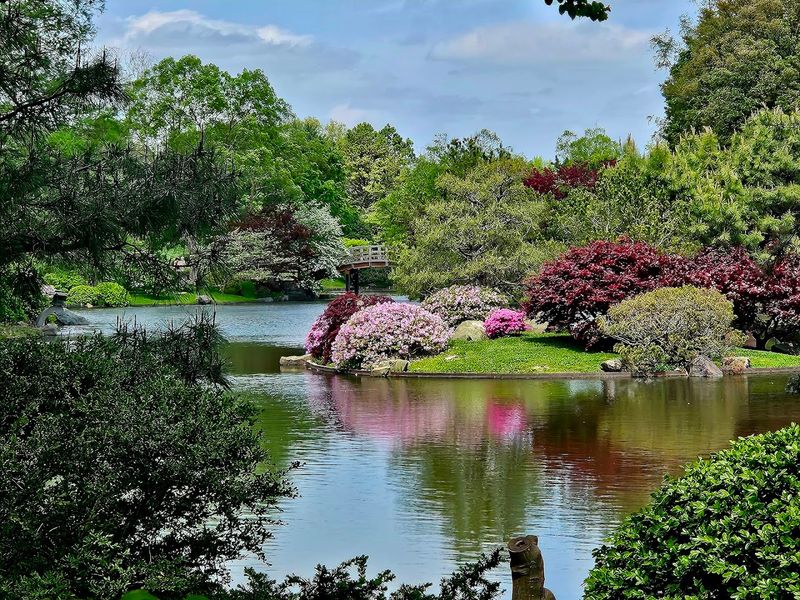
There is something about the Japanese Garden at Missouri Botanical Garden that makes you want to walk slower. Maybe it is the perfectly placed stones, or the way the water reflects the surrounding trees, but the pace of everything just shifts here.
Known as Seiwa-en, this garden covers about 14 acres and is one of the largest Japanese strolling gardens in North America. It was designed with traditional Japanese principles in mind, meaning every element, from the placement of rocks to the curve of the pathways, has intentional meaning.
A large lake anchors the center of the space, and the views across the water change beautifully with every season. In spring, flowering trees add bursts of color.
In autumn, the foliage turns into a warm palette of reds and golds.
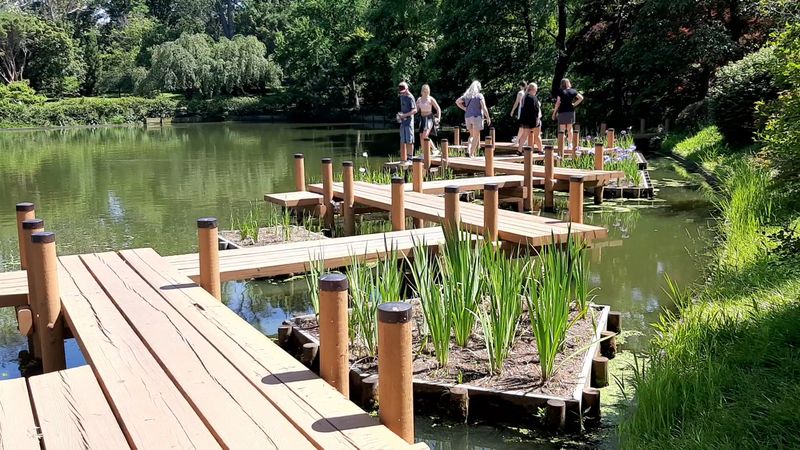
Stone lanterns, wooden bridges, and traditional pavilions dot the landscape, giving the garden a deeply peaceful atmosphere. Wildlife moves freely through this area too, with ducks and turtles often spotted along the water’s edge.
For anyone visiting Missouri who needs a quiet moment away from the noise of daily life, Seiwa-en offers exactly that kind of restorative stillness. It earns its reputation every single season.
Orchid Shows Fill The Garden With Color
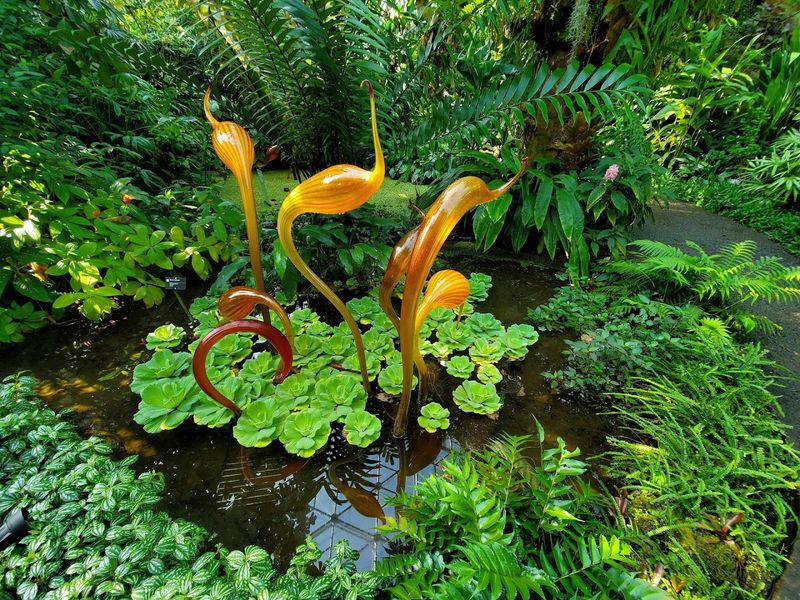
Few things in the plant world command attention quite like a room full of blooming orchids. The Missouri Botanical Garden hosts an annual Orchid Show that transforms its indoor spaces into a sea of color, fragrance, and intricate floral design.
Orchids are among the most diverse plant families on earth, with tens of thousands of species found across nearly every continent. The garden’s collection showcases an impressive range of these blooms, from delicate miniatures to large, dramatic specimens that seem almost too perfect to be real.
The show is typically held in late winter or early spring, making it a perfect reason to visit Missouri during a season when outdoor gardens are still waking up. Inside, the warmth and color feel like a preview of the growing season ahead.
Each year, the display is arranged with artistic care, using the orchids to create immersive environments rather than just rows of potted plants. The result is something closer to a living art installation than a traditional exhibit.
Picking up a live orchid from the garden’s gift shop to bring home after the show is a temptation that is very hard to resist. These blooms have a way of making every space feel more alive.
Garden Glow Turns Winter Into A Light Spectacle

When the sun goes down in winter, the Missouri Botanical Garden transforms into something that feels genuinely magical. Garden Glow is the annual holiday light event that draws people from across Missouri and beyond, and it absolutely lives up to the hype.
More than two million lights are used to decorate the grounds, wrapping trees, tracing pathways, and creating glowing sculptures throughout the garden. The effect is layered and immersive, with each turn of the path revealing something new to take in.
Glowing tunnels of light stretch over walkways, and shimmering arches frame garden spaces that look completely different in the dark. The familiar landscape of the garden becomes a new world entirely after sunset.
Fire pits and cozy gathering spots are scattered throughout the route, giving visitors a chance to warm up and soak in the atmosphere. The whole experience has a festive, celebratory energy that feels perfect for the holiday season.
Purchasing tickets in advance is strongly recommended, as Garden Glow regularly sells out. The event typically runs from late November through early January, giving plenty of opportunities to experience one of the most visually spectacular winter events in all of Missouri.
The Children’s Garden Sparks Young Imaginations
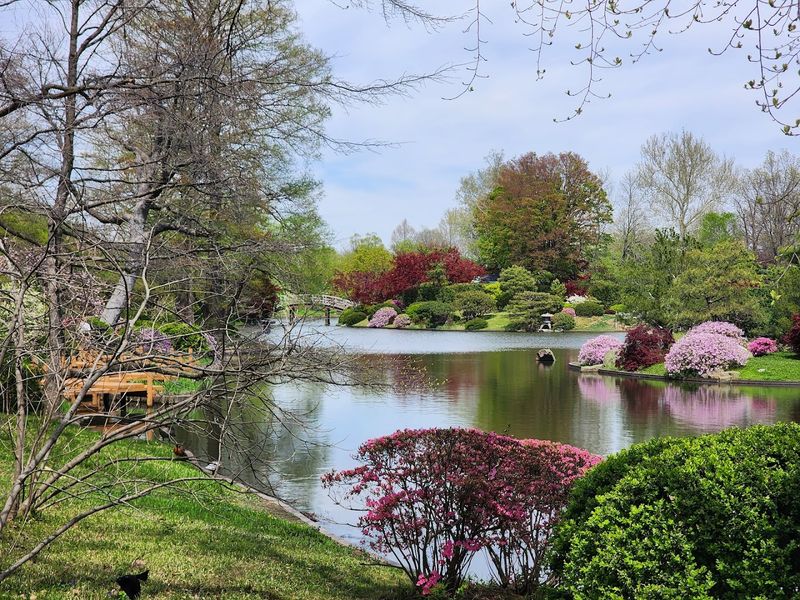
Bringing kids to a botanical garden might sound like a stretch, but the Children’s Garden at Missouri Botanical Garden makes the experience genuinely exciting for young visitors. This space was designed with children in mind, and it shows in every detail.
The indoor children’s area features hands-on activity stations, coloring sheets, nature-themed puzzles, and interactive exhibits that encourage curiosity about plants and the natural world. There is enough variety here to keep kids engaged for a surprisingly long stretch of time.
The outdoor Children’s Garden is an even bigger adventure, with spaces designed for exploration, play, and learning in a natural setting. It is the kind of place where kids can climb, hide, discover, and ask a hundred questions all at once.
For families visiting Missouri on a trip to St. Louis, this section of the garden adds real value to the experience. It bridges the gap between education and pure fun in a way that feels effortless rather than forced.
Parents who love plants and parents who have never thought much about them will both find something to appreciate here. Watching a child get excited about a plant they have never seen before is one of those simple joys that never gets old.
The Victorian Shaw House Offers A Glimpse Into The Past
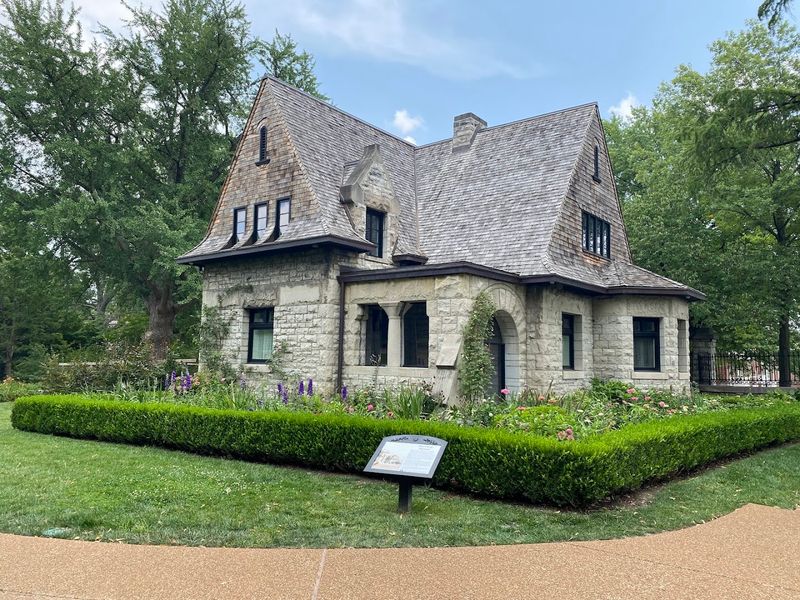
Henry Shaw built more than a garden. He also built a home, and that Victorian-era residence still stands on the grounds of Missouri Botanical Garden today.
Touring the Shaw House gives you a direct look into the life of the man who started it all.
The house is preserved with period-appropriate furnishings and decor, offering a detailed portrait of upper-class life in 19th-century St. Louis, Missouri. The architecture itself is beautiful, with ornate details that reflect the tastes and craftsmanship of the Victorian era.
Self-guided tours allow you to move through the rooms at your own pace, taking in the history without feeling rushed. Each room tells a small story, and together they build a picture of who Shaw was and what he valued.
During special events like Garden Glow, the Shaw House becomes an even more atmospheric destination, with the historic building lit up against the night sky. The combination of history and festive energy gives it a very particular kind of charm.
For history enthusiasts visiting the garden, the Shaw House is not just an add-on to the experience. It is a meaningful anchor that connects everything you see in the garden to the person who first imagined it all into existence.
The Arid House Celebrates Desert Beauty
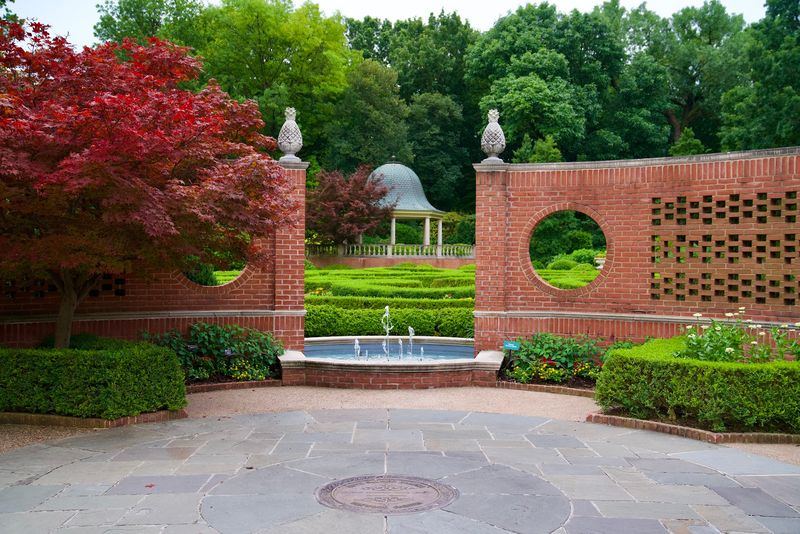
Not every remarkable landscape involves lush greenery and flowing water. The Arid House at Missouri Botanical Garden makes a compelling case for the beauty of dry, sun-baked environments, and it does so with real style.
This climate-controlled space recreates a temperate desert environment, housing an impressive collection of cacti, succulents, and other plants adapted to survive with very little water.
The architectural contrast between the spiky, sculptural plants and the clean lines of the greenhouse structure is genuinely striking.
Many of the plants on display here are species that most people in Missouri would never encounter in the wild. Seeing them grouped together in a thoughtfully designed space highlights how diverse and inventive nature can be when working with limited resources.
The Arid House pairs well with a visit to the Climatron, since the two environments sit at nearly opposite ends of the climate spectrum. Moving between them gives you a quick but vivid lesson in how different plants have solved the same basic problem of survival in completely different ways.
For plant lovers who appreciate bold, unusual forms, the Arid House is an underrated highlight of the garden. Its quiet drama and textural richness reward anyone willing to slow down and look closely at what is growing there.
Seasonal Festivals Keep The Garden Lively All Year
One of the things that makes Missouri Botanical Garden genuinely special is that it never really has an off-season. The garden hosts a rotating calendar of festivals, exhibits, and events throughout the year, meaning there is almost always something new to experience whenever you visit.
Spring brings blooming flower festivals and plant sales that draw gardening enthusiasts from across Missouri. Summer events take advantage of the long days and full bloom of the outdoor gardens, with outdoor programming that spans art, science, and culture.
Autumn at the garden has its own appeal, with the changing foliage adding warm tones to the landscape and harvest-themed activities rounding out the seasonal lineup. Then winter arrives, and Garden Glow takes over with its spectacular light display.
The variety of events means the garden attracts a wide range of visitors throughout the year, from families with young children to serious plant collectors to people who simply want a beautiful place to spend an afternoon.
Checking the garden’s official website before your visit is always a good idea, since the event calendar is updated regularly. There is a real chance that whatever day you choose to visit, something interesting is already planned and waiting for you.
The Sachs Museum Connects Plants To Everyday Life
Hidden inside the grounds of Missouri Botanical Garden is a museum that most first-time visitors walk right past without realizing what they are missing. The Stephen and Peter Sachs Museum is a small but fascinating space that explores the relationship between plants and human culture.
One of the museum’s most engaging exhibits focuses on plant fragrances and how scents derived from botanical sources eventually become the perfumes, spices, and flavors that shape everyday life. It is a perspective on plants that most people have never considered before.
The museum also features botanical art and historical collections that trace how humans have documented and understood the plant world over centuries. The combination of science and art gives the space a layered quality that rewards careful attention.
For visitors who want to go deeper than a casual walk through the gardens, the Sachs Museum offers real intellectual substance. It connects the beautiful living collection outside to broader questions about how plants have shaped civilizations across history.
Missouri is full of interesting cultural institutions, but finding one this specific and thoughtfully curated inside a botanical garden is a pleasant surprise. The museum is proof that the Missouri Botanical Garden has always been about more than just growing pretty plants.
The Center For Home Gardening Offers Real Practical Knowledge
Not everyone who visits Missouri Botanical Garden is a professional botanist, and the garden knows that. The Center for Home Gardening is designed specifically for everyday plant enthusiasts who want to grow things better at home.
The center features demonstration gardens that show practical techniques for growing vegetables, herbs, flowers, and other plants in a home garden setting. The layouts are intentionally approachable, using realistic spaces rather than grand professional installations.
Informational signage throughout the area explains what is growing, why certain techniques work, and how to adapt them to your own yard or container garden. It is the kind of resource that makes you want to go home and start digging immediately.
Missouri gardeners in particular benefit from the locally adapted advice available here, since the recommendations are tailored to the specific climate and growing conditions of the region. That local focus makes the information much more immediately useful.
The center also connects to the garden’s broader mission of sustainability and conservation, showing how thoughtful home gardening practices can contribute to environmental health on a larger scale.
Leaving this section of the garden, you feel both inspired and equipped with knowledge you can actually use the very next weekend.
Practical Tips For Making The Most Of Your Visit
Planning ahead makes a real difference at Missouri Botanical Garden. The garden is open every day from 9 AM to 5 PM, which gives you a solid window to explore, but 79 acres is a lot of ground to cover and the day can move faster than expected.
Arriving early on weekdays tends to mean quieter pathways and easier parking near the main entrance on Shaw Blvd. Weekends and special events draw larger crowds, so building in extra time for arrival is always a smart move.
A tram tour is available for those who want a broader overview of the grounds before exploring on foot. It is a helpful way to orient yourself and decide which areas to prioritize during your visit.
The on-site cafe offers a convenient spot to refuel midway through your visit, and the gift shop near the entrance carries live plants, botanical books, and garden-inspired souvenirs worth browsing before you leave.
Missouri can be unpredictable with its weather, so layering your clothing is a practical choice regardless of the season. The Climatron and Arid House provide climate-controlled retreats on cold or rainy days, meaning there is genuinely no bad time to visit this remarkable garden in the heart of St. Louis.
