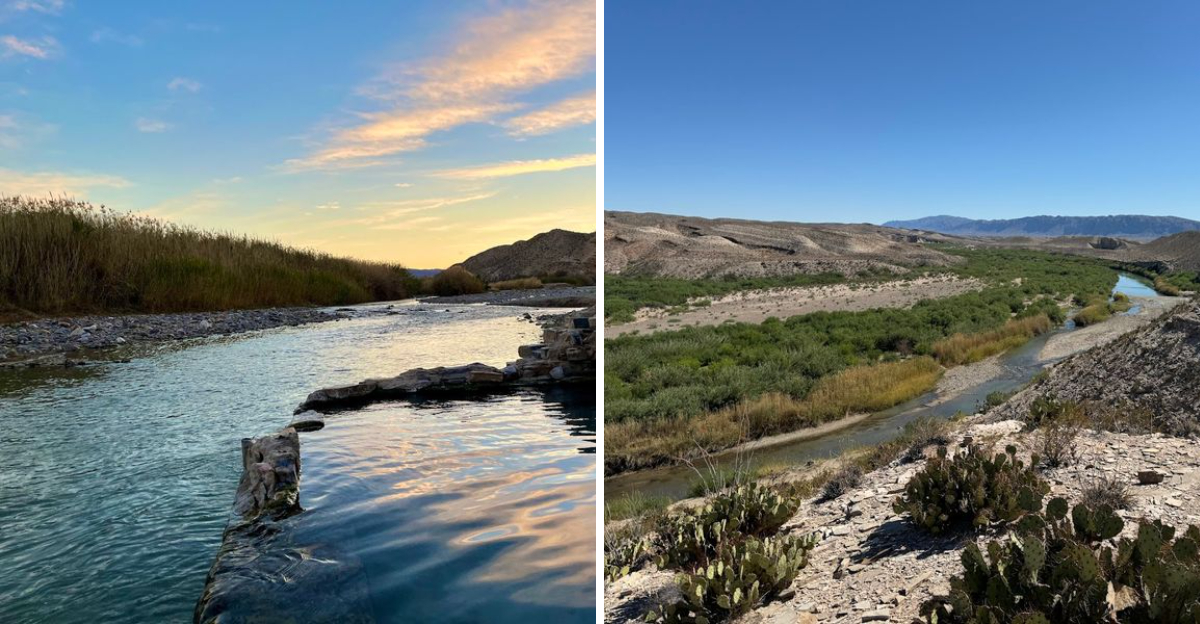
You want a beautiful payoff without hiking all day and sweating through your shirt. This trail is only about a mile, which means you can actually enjoy the walk instead of just surviving it.
The path takes you along some rocky stretches and desert views, but nothing too crazy for a beginner. At the end, you find hot springs right next to a river, which feels like nature showing off.
You can soak tired feet or just sit and listen to the water move. It is peaceful enough to forget your phone exists for a little while.
Pack some water, wear decent shoes, and thank yourself later for choosing the short hike.
The Hot Springs Trailhead: Where Your Adventure Begins
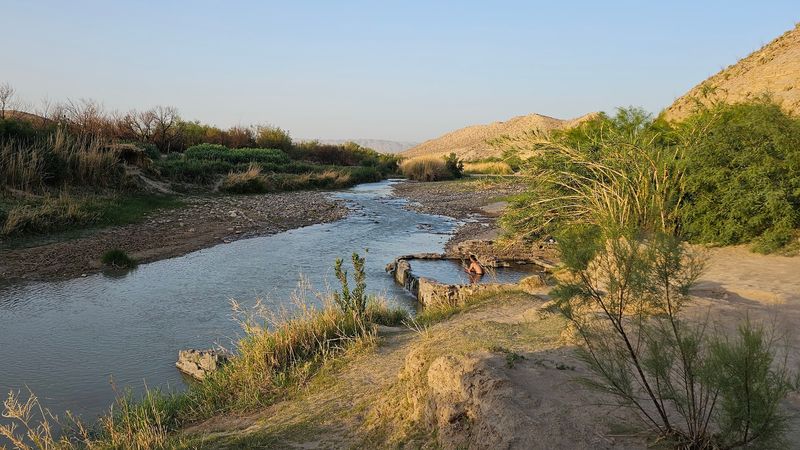
You park the car, stretch your legs, and immediately notice how quiet it is out here. The Hot Springs Trailhead sits at the end of a dirt road, roughly two miles from the main paved route in Big Bend National Park.
High-clearance vehicles can reach the trailhead parking lot directly, but if you are driving a low-clearance car or pulling a trailer, you will park further back and add about a mile round trip to your walk.
That extra walk is honestly not a bad thing. The road itself offers wide open desert views and a sense of growing anticipation.
A simple trailhead sign marks the start, and from there the sandy path begins to thread its way along the edge of the canyon.
Arriving early in the morning is the smartest move, especially in summer when temperatures climb fast. The lot fills up quickly on weekends, so getting there before 9 a.m. gives you the best chance at a peaceful start.
Bring more water than you think you need. The National Park Service recommends at least one liter per person per hour in this hot, dry climate, and that guidance is worth taking seriously.
The 1.2 Mile Loop That Packs a Lot Into a Short Walk
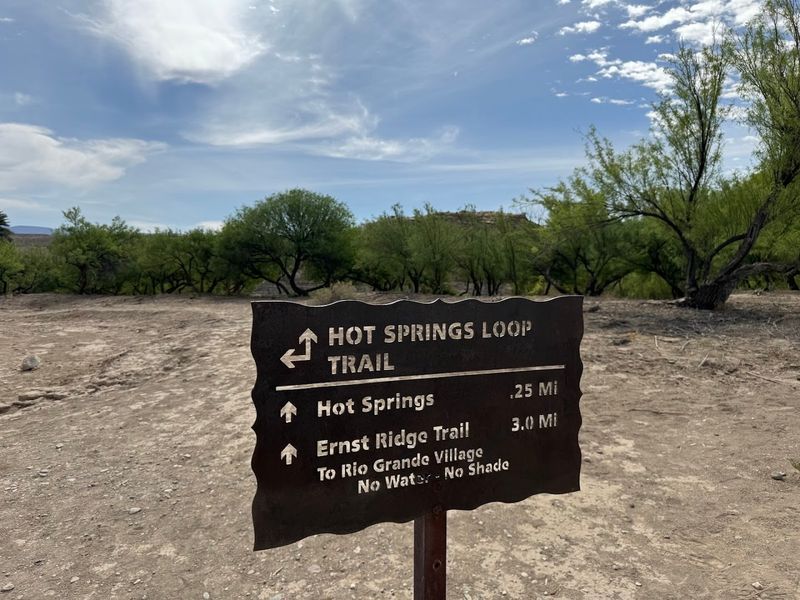
Short trails sometimes feel like they cut corners, but this one genuinely delivers. The 1.2-mile loop at Hot Springs Trail earns its reputation by layering history, geology, and natural beauty into a hike that most people finish in about 30 minutes, though many linger much longer once they reach the spring.
The elevation gain is around 200 feet, which sounds modest and really is. There are some rock and wooden steps built into the hillside section to help with the climb, making the trail accessible for a wide range of fitness levels.
Kids who are comfortable on uneven terrain will do just fine here.
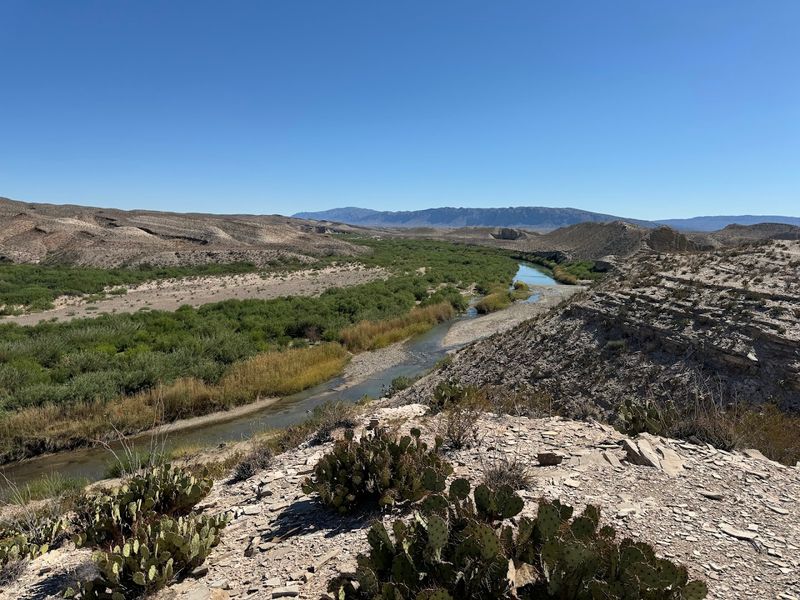
The path moves through sand and flat rock near the riverbank, then climbs slightly as it loops back toward the parking area. Every turn seems to offer something new to look at, from the wide green ribbon of the Rio Grande to the layered canyon walls across the water in Mexico.
It never feels like a slog. The variety of terrain keeps your attention moving, and the reward at the halfway point makes the whole thing feel completely worth the trip out here.
J.O. Langford’s Historic Resort Ruins Along the Path
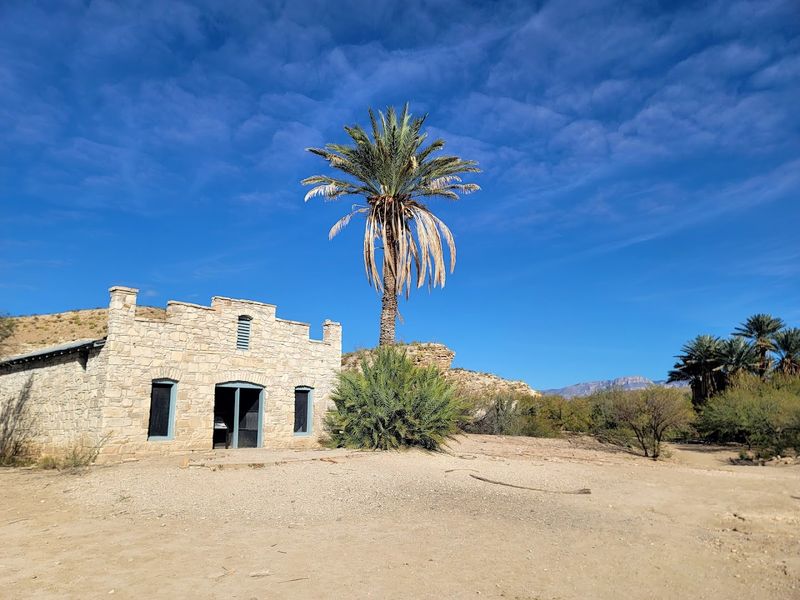
Just a short distance from the trailhead, the path delivers its first real surprise: the preserved ruins of a resort that once welcomed guests seeking healing waters. J.O.
Langford established his Hot Springs resort here in the early 1900s, drawn by the belief that the mineral-rich water could restore his health.
What remains today includes the shell of a building that functioned as both a store and post office, along with the ghostly outlines of a motor court where overnight visitors once stayed.
There is something quietly moving about walking through these remnants. The stones are stacked with obvious care, and you can almost picture what the place looked like when it was bustling with travelers arriving by horse and wagon.
The National Park Service has worked to preserve these structures without over-restoring them, which keeps the atmosphere honest and a little eerie in the best possible way. Reading the interpretive signs placed along this section adds real context to what you are seeing.
History tends to feel more alive when you are standing inside it rather than reading about it in a book, and this stretch of trail does exactly that for visitors willing to slow down and look closely.
Ancient Pictographs Hidden Between the Ruins and the Spring
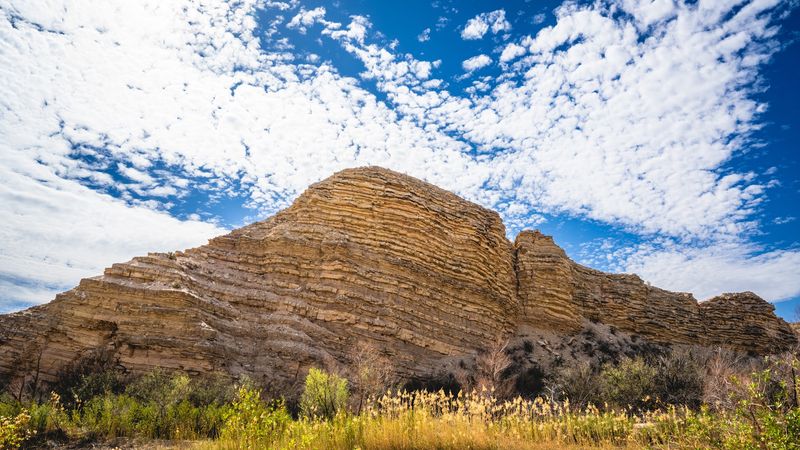
Between the old motor court and the hot spring itself, the trail passes something that stops most hikers in their tracks. Ancient pictographs, created by people who lived in this region thousands of years ago, are painted onto the canyon rock face in faded but still visible strokes.
They are easy to miss if you are moving too fast, so this is a good moment to slow your pace.
The images are abstract and worn by time, but their presence here feels significant. People have been drawn to this spot for centuries, long before any resort or road existed.
The hot spring, the river, and the canyon together made this a meaningful place for Indigenous communities whose connection to the land ran deep.
Please resist any urge to touch the rock art. The oils from human hands accelerate deterioration, and these images have already survived an impressive amount of time.
Photographs are absolutely fine, and the light in the late afternoon tends to bring out more contrast in the markings. Standing in front of them, you get a quiet reminder that your visit here is just one small moment in a very long story that this canyon has been holding onto for a very long time.
The Hot Spring Itself: 105 Degrees of Pure Relief
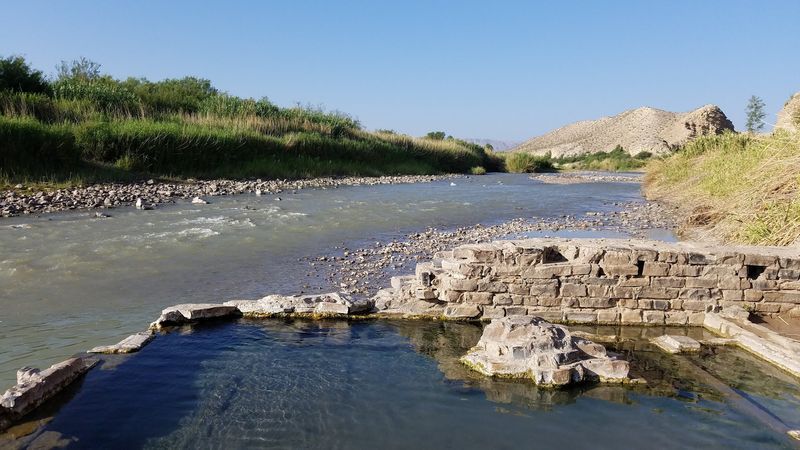
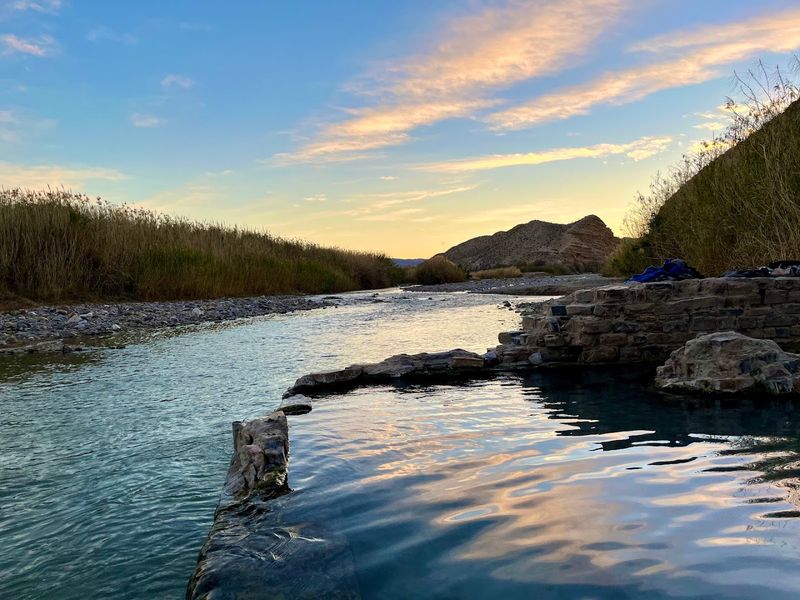
Nothing quite prepares you for the first moment you see the spring. The water sits inside the remains of the original stone bathhouse, right at the edge of the Rio Grande, and it glows a warm, slightly greenish blue in the sunlight.
The temperature holds steady at around 105 degrees Fahrenheit, heated by geothermal processes deep underground rather than by the desert sun above.
This is what park staff refer to as fossil water, meaning it has been slowly moving through the earth for a very long time before surfacing here. It carries dissolved mineral salts that many visitors describe as soothing on tired muscles and dry skin.
Soaking here feels genuinely restorative, not in a spa-brochure kind of way, but in a quieter, more honest sense.
The view from inside the spring is hard to beat. You are at water level with the Rio Grande flowing past, and the canyon walls of Mexico rise dramatically on the opposite bank.
Birds pass overhead. The current moves.
The contrast between the hot spring water and the cooler river air creates a gentle mist. It is the kind of moment that makes you forget whatever was stressing you out before you got here, at least for a little while.
The Rio Grande Views That Make This Trail Unforgettable
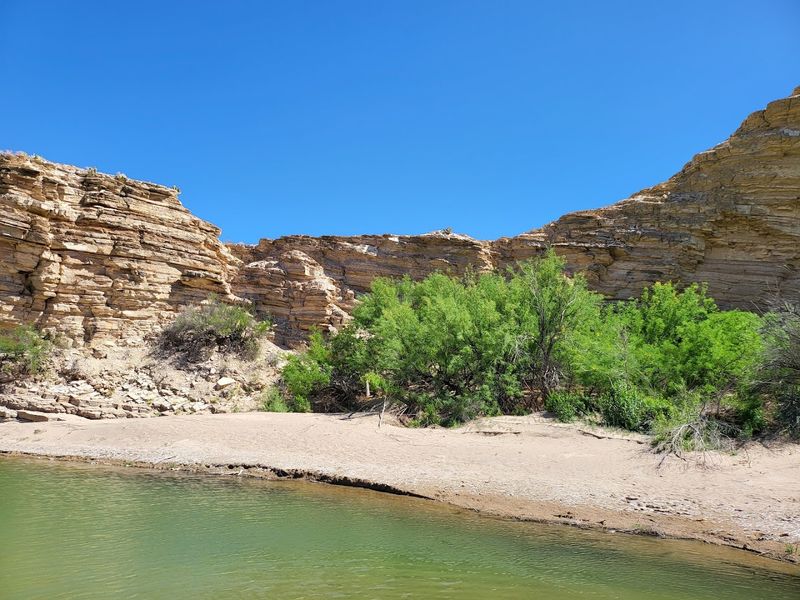
The Rio Grande does not just sit in the background here. It is a constant presence throughout the hike, wide and slow-moving, with a color that shifts between brown and green depending on the light and the time of day.
The Mexican side of the river rises sharply in dramatic canyon walls that feel almost theatrical in their scale.
I kept stopping on the lower section of the trail just to stare across the water. There is a border right there, but the landscape does not care about that.
The canyon belongs to both sides equally, carved out by the river over millions of years without asking permission from anyone.
The best views come right at the spring itself, where the river bends slightly and opens up a long corridor of water framed by rock. Early morning light hits the canyon walls in warm orange tones that photographers love.
Late afternoon offers softer, golden hues that make everything look a little more cinematic. Any time of day, though, the river view from this trail is genuinely one of the most striking natural scenes in all of Texas, and that is not a small claim given how much this state has to offer.
Wildlife You Might Spot Along the Way
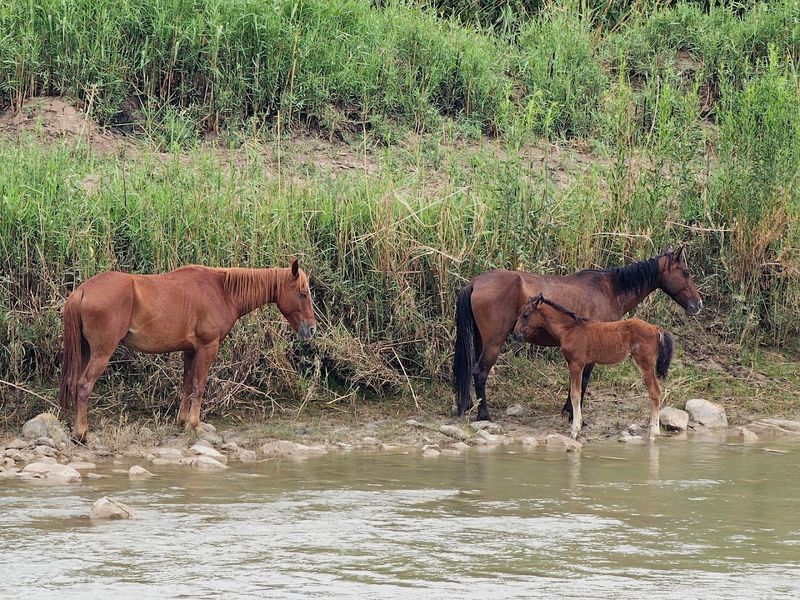
Big Bend is serious wildlife country, and even a short trail like this one offers real encounters if you pay attention. Roadrunners dart across the path with surprising speed.
Javelinas, which look like small wild pigs with bristly gray fur, sometimes wander near the trailhead in the early morning hours. Coyotes are occasionally spotted along the riverbank at dawn and dusk.
The park also has rattlesnakes, and the Hot Springs Trail is no exception. Watching where you step, especially around rocky areas and low brush, is just common sense out here.
Keeping a respectful distance from any wildlife you encounter protects both you and the animals. This is their home, and you are a guest.
Birds are perhaps the easiest wildlife to spot consistently. The river corridor attracts a wide variety of species, including herons, vermilion flycatchers, and various hawks that ride the thermals above the canyon.
Bringing a small pair of binoculars adds a lot to the experience without adding much weight to your pack. Even if you see nothing larger than a lizard sunning itself on a rock, the desert ecosystem here feels remarkably alive in a way that is hard to fully describe until you experience it yourself.
What to Pack for a Short But Serious Desert Hike
The trail is short, but the desert does not care about that. Packing smart makes the difference between a great afternoon and a miserable one.
Water is the top priority, full stop. One liter per person per hour is the park’s recommendation, and in summer that number should probably go higher.
A reusable insulated bottle helps keep your water cooler longer under the intense sun.
Sun protection is non-negotiable. A wide-brimmed hat, polarized sunglasses, and a generous application of sunscreen before you leave the car will save you a lot of discomfort.
Lightweight, breathable clothing in light colors helps regulate body temperature without adding bulk to your pack.
Sturdy closed-toe shoes or hiking sandals with good grip handle the sandy and rocky sections of the trail well. Flip-flops are not a great idea, even though the hike is short.
If you plan to soak in the spring, bring a towel and a change of clothes or a swimsuit. The pool is open for soaking, and most people who make the trip end up getting in.
Snacks with some salt content help replenish what you lose through sweat, and a small first aid kit is always worth tossing in the bag just in case.
Practical Tips Before You Head Out to the Trailhead
A few logistical details can make your visit run much more smoothly. Dogs and other pets are not allowed on any trails in Big Bend National Park, so plan accordingly if you are traveling with animals.
The park entrance fee applies, and an America the Beautiful annual pass covers it if you visit multiple national parks throughout the year.
Cell service is essentially nonexistent in most of Big Bend, including at the Hot Springs area. Download offline maps before you leave the main highway, and let someone know your plans if you are heading out solo.
The park visitor center near Panther Junction is a good stop before driving to the trailhead, both for current trail conditions and for restroom facilities.
The dirt road to the trailhead can become impassable after heavy rain, so checking road conditions with the park service before heading out is a smart habit. No water is available at the trailhead itself, which is another reason to fill up before you leave your campsite or hotel.
The closest town with full services is Terlingua, about an hour’s drive from the hot springs area. With a little preparation, this trail delivers one of the most unique and rewarding short hikes in the American Southwest.
Address: Hot Springs Trailhead, Big Bend National Park, TX 79834
