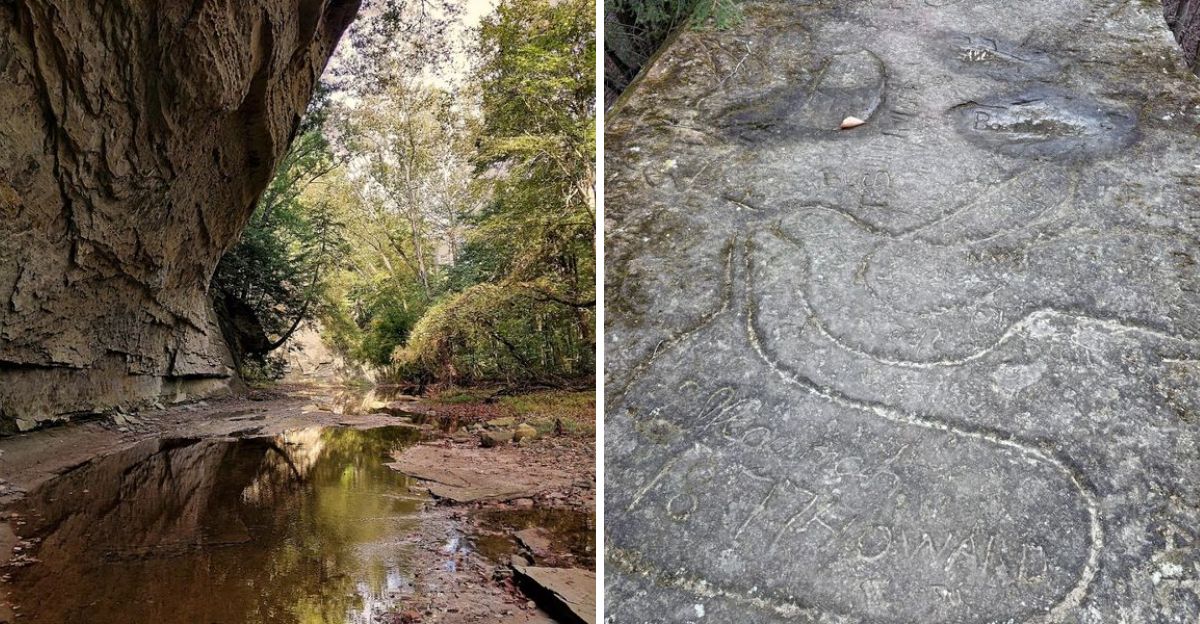
Somewhere in west-central Indiana, a landscape so dramatic and unexpected waits that most people drive right past it without knowing it exists.
A protected nature preserve in this region spans hundreds of acres of deep gorges, towering sandstone cliffs, and narrow ridges that drop steeply on either side, creating a surprisingly rugged terrain for the Midwest.
Along the rock walls, faint carvings and dates from the 1800s still remain, left behind by early travelers who once moved through these same paths long before modern hiking trails existed.
Today, winding footpaths lead visitors through shaded forests, across creek crossings, and along elevated overlooks that reveal just how unique the landscape really is.
The mix of natural beauty and quiet history gives the area a timeless feel. If you have ever wanted a sense of adventure without leaving the state, this destination delivers exactly that experience.
Walk Devil’s Backbone Six Feet Wide
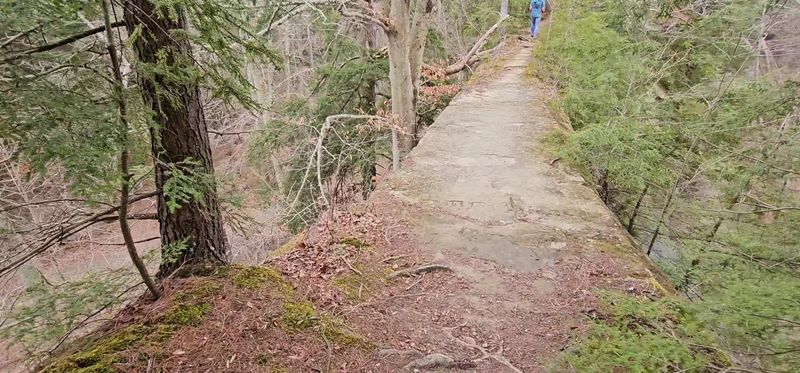
Picture standing on a ridge so narrow you can almost touch both sides with your arms stretched out. That is exactly what Devil’s Backbone feels like.
Located at Pine Hills Nature Preserve, accessed through Shades State Park at 7751 S 890 W, Waveland, IN 47989, this iconic formation is sometimes only six feet wide with drops of nearly 100 feet on either side.
The ridge was carved over thousands of years by the erosion of Clifty Creek and Indian Creek cutting deep into the surrounding rock. The result is one of the most jaw-dropping geological features in the entire eastern United States.
Standing on it feels surreal, like the ground decided to become a knife blade.
Hikers with a fear of heights will want to approach this one carefully. The trail can be slippery after rain, so grippy waterproof boots are a smart call.
But for those who do make the crossing, the views from the top are absolutely unlike anything else Indiana has to offer. Early morning visits give you soft light filtering through the trees and almost complete silence.
Go prepared, take your time, and the reward is a memory that sticks with you long after you drive home. Devil’s Backbone is not just a trail feature.
It is a full experience.
Explore Honeycomb Rock Up Close
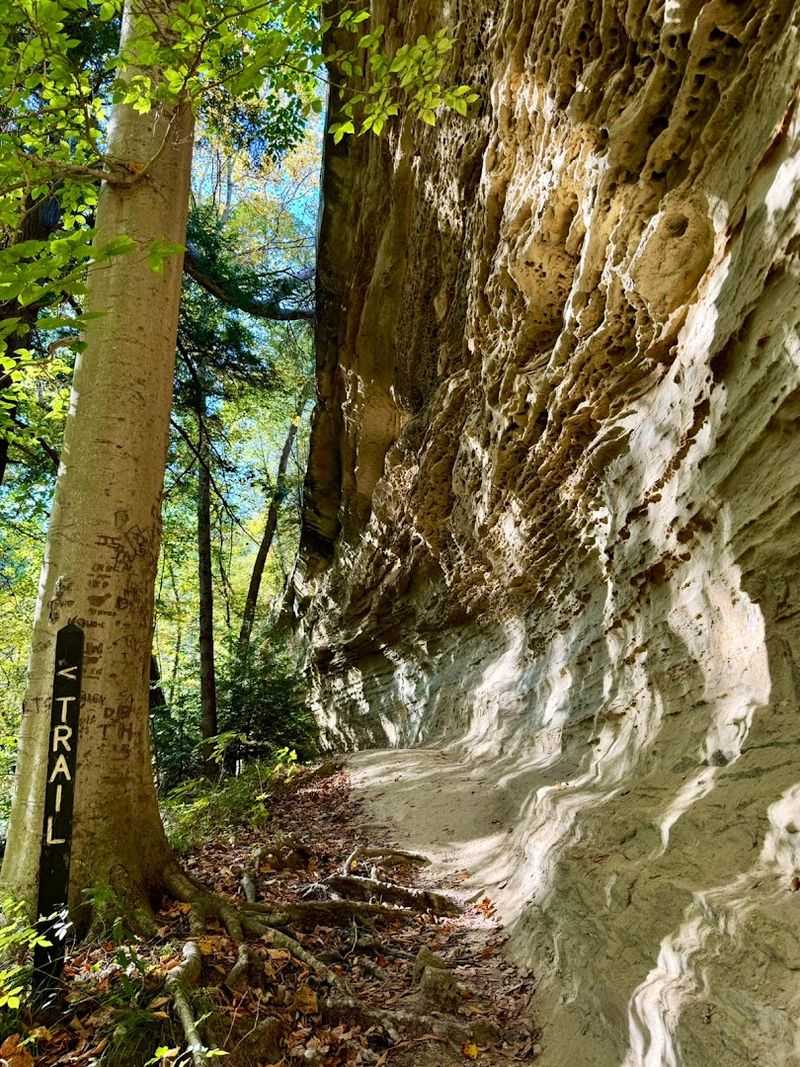
Honeycomb Rock stops most hikers dead in their tracks the first time they see it. The sandstone cliff face is covered in thousands of small pockets and voids, giving it a texture that looks almost sculpted by hand.
Nature did all of that work on its own, and the result is genuinely stunning.
The pockets form through a process called tafoni weathering, where moisture and minerals slowly eat away at the softer parts of the sandstone over very long periods of time. Up close, the surface looks almost like a giant sponge frozen in rock.
Run your fingers along it and you can feel just how intricate the pattern really is.
Honeycomb Rock sits along Trail 10 inside Pine Hills Nature Preserve, which is accessed through Shades State Park. Some hikers actually recommend approaching Devil’s Backbone from the Honeycomb Rock direction, though it is worth noting that going the other way first is generally considered the safer route.
The trail around this area involves some real elevation changes and a few creek crossings, so waterproof boots will save your feet.
Plan to spend extra time at this spot. It photographs beautifully in the morning when the light hits the pockets at an angle and creates small shadows across the surface.
Even if you are not a photographer, just standing here and taking it all in feels like a genuinely special moment in a truly one-of-a-kind place.
See Carvings Left By Real Pioneers
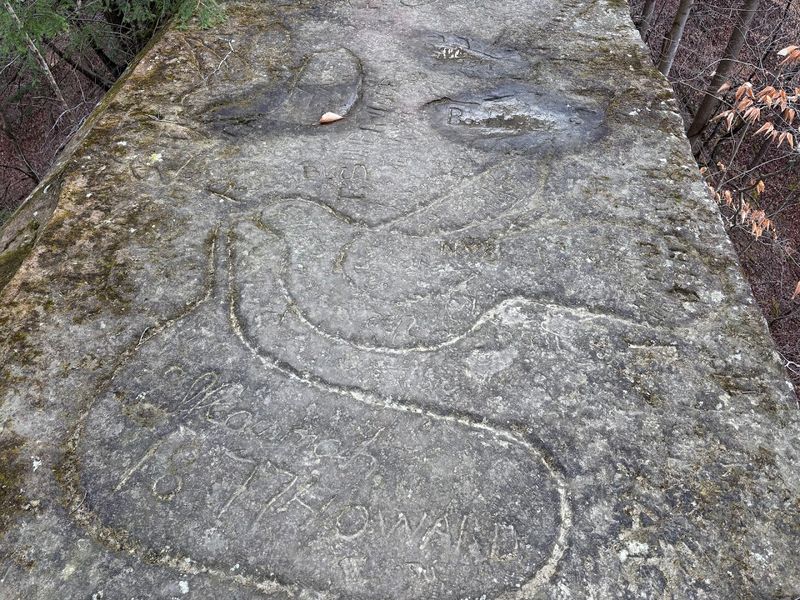
Long before anyone called this place a nature preserve, real people were carving their names and discoveries into the stone.
Dates from the mid-1800s are still visible on the rock walls at Pine Hills Nature Preserve in Indiana, a quiet reminder that explorers and settlers passed through these same gorges generations ago.
On Devil’s Backbone specifically, you can find carvings of passenger pigeons and even a devil’s face, both etched into the sandstone in the early 1900s. The passenger pigeon is now extinct, which makes those carvings feel even more powerful.
You are looking at an image of a bird that no longer exists, made by a hand that also no longer exists, in a canyon that has barely changed.
Finding these carvings takes a little patience. The entrance to Devil’s Backbone is known for being hidden behind brush, especially in fall when leaves cover trail markers.
Printing a map before you arrive is strongly recommended since cell service can be unreliable in the preserve. When you do locate the carvings, take a moment to really look at them.
They are not behind glass or protected by a rope barrier. You are just standing there, face to face with history.
That kind of direct, unfiltered connection to the past is rare, and Pine Hills offers it freely to anyone willing to make the hike.
Discover The Mill Cut Backbone Story
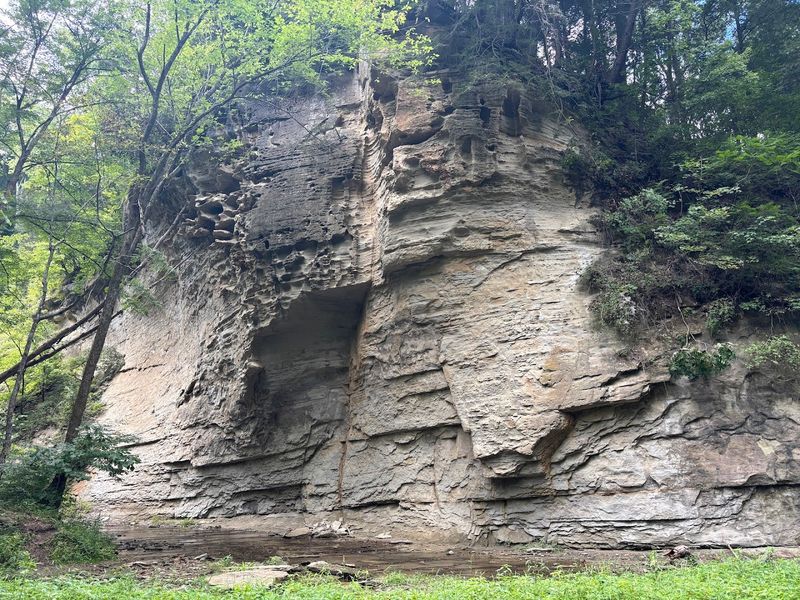
Not every canyon feature at Pine Hills Nature Preserve was shaped purely by nature. Mill Cut Backbone carries a very human story carved right into its geography.
In 1868, workers cut a notch into this ridge for the Pine Hill Woolen Mill Company, which planned to use water power from Clifty Creek to run its operations.
The mill ran for only three years before it was moved in 1873, leaving behind a permanent mark on the landscape. That notch is still there today, quietly sitting in the hillside as proof that 19th century ambition met Indiana geology and did not quite win.
It is one of those details that makes a hike feel like a history lesson without any textbooks involved.
Walking past Mill Cut Backbone, you might not immediately understand what you are looking at without a little background knowledge. That is why reading up on the preserve before your visit pays off.
The story of a failed woolen mill might sound small, but it is a perfect snapshot of pioneer-era entrepreneurship in Indiana, where people were constantly trying to tame a wild and unpredictable landscape.
Turkey Backbone is another nearby ridge worth crossing on the same trail loop. Together, these formations give hikers a full picture of just how geologically dramatic this part of the state really is.
Budget at least half a day to explore the area properly and take everything in at a relaxed pace.
You Should Hike Trail Ten Fully
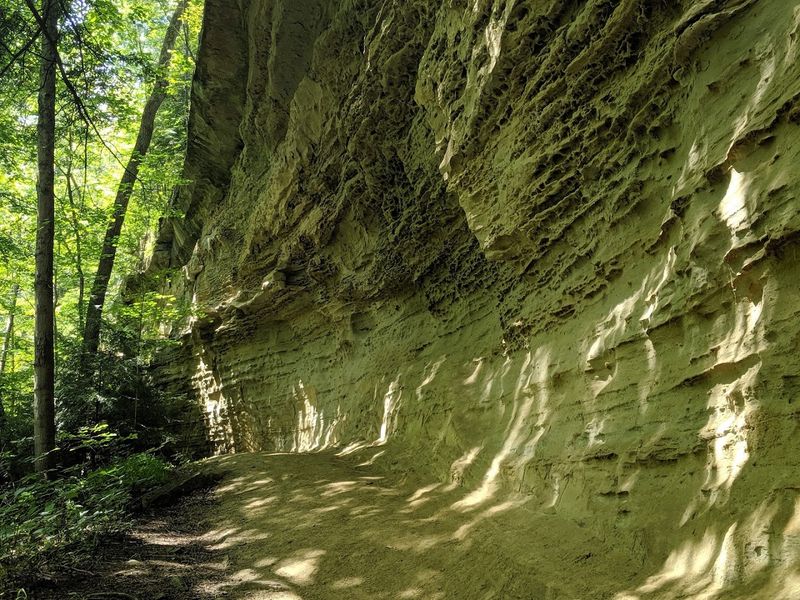
Trail 10 is the heartbeat of Pine Hills Nature Preserve, and hiking it fully is the best way to experience everything this place has to offer.
The trail connects all the major geological features, including Devil’s Backbone, Honeycomb Rock, Mill Cut Backbone, and Turkey Backbone, in one continuous loop through some of the most dramatic terrain in Indiana.
The difficulty level sits at moderate to challenging depending on conditions. There are steep sections with natural stone steps, exposed roots across the path, and several creek crossings that will almost certainly get your feet wet.
Waterproof hiking boots with solid grip are not optional here. They are genuinely necessary, especially after rain when the sandstone surfaces become slick.
The flat opening stretch of the trail through woodland might feel a little underwhelming at first. But that changes fast.
Within less than a mile, the landscape shifts dramatically and the gorges open up around you in a way that feels almost theatrical. Wildlife is active throughout the trail, and forest interior birds are frequently spotted during spring and fall migration seasons.
Printing a trail map before arriving is a smart move because cell service is spotty and some trail markers are easy to miss behind seasonal brush. Allow three to four hours for the full loop at a comfortable pace.
Rushing through Trail 10 means missing the quiet moments between the dramatic ones, and those quieter stretches have their own kind of beauty worth paying attention to.
Come For Rare Forest Plants And Birds
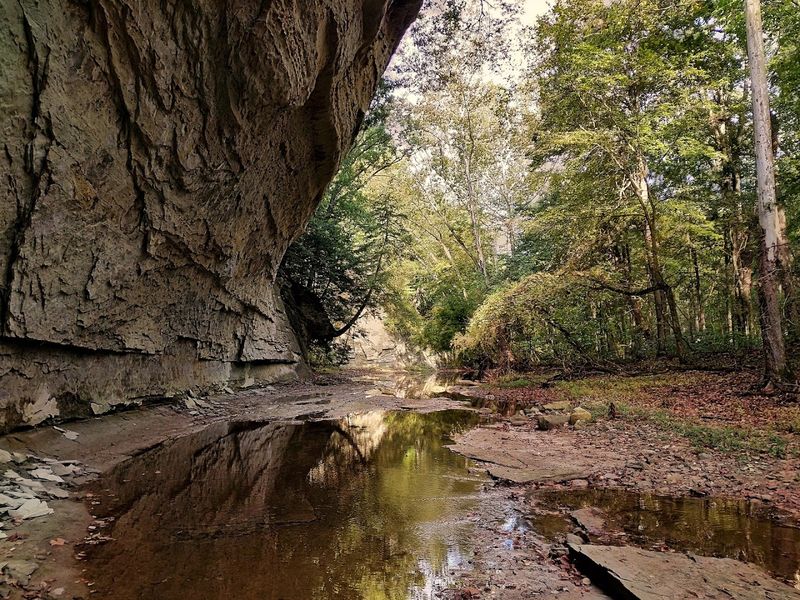
Most people come to Pine Hills Nature Preserve for the geology, but the plant life here is just as extraordinary. The 470-acre preserve supports a rare mix of relict hemlock, white pine, Canada yew, and old-growth hardwoods that create a forest ecosystem unlike anything else in this part of Indiana.
Walking through it feels like stepping into a completely different climate zone.
Wildflowers carpet the gorge floors during spring, and ferns cling to shaded rock faces throughout the warmer months. The moisture trapped in the deep ravines creates microhabitats where plants that typically grow much farther north have managed to survive for centuries.
Scientists and naturalists consider Pine Hills a living record of post-glacial plant migration in the Midwest.
Bird activity here is exceptional during spring and fall migrations. Deep-woods nesting species use the old-growth canopy, and the preserve’s relative isolation from heavy foot traffic means wildlife is less disturbed than at more popular parks nearby.
Bring binoculars and move quietly through the gorge sections for the best chance of spotting something memorable.
Pine Hills was designated a National Natural Landmark precisely because of this ecological significance. It was also Indiana’s very first dedicated nature preserve, established in 1969 through the efforts of The Nature Conservancy.
That conservation history adds another layer of meaning to every step you take here. You are walking through a place people fought to protect because they recognized how genuinely irreplaceable it is.
Plan Your Visit Through Shades State Park
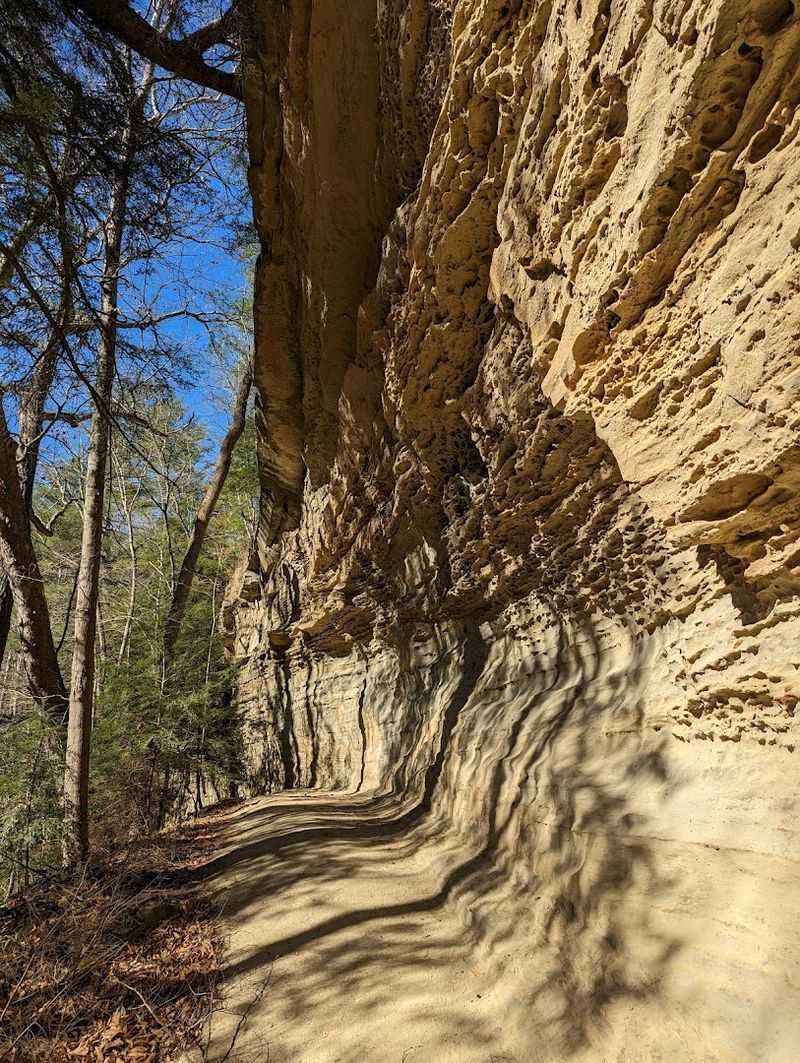
Getting to Pine Hills Nature Preserve requires a pass through Shades State Park, and that setup is actually a bonus rather than an inconvenience.
The state park entrance fee applies, but it unlocks access to both the park’s own trail system and the preserve, making the combination a full day of outdoor adventure in west-central Indiana.
Shades State Park sits right next to Pine Hills and shares the same dramatic sandstone canyon landscape. Many visitors hike the park trails in the morning and then make their way to Pine Hills in the afternoon.
The two areas complement each other well, and if you are already driving out to this part of the state, doing both on the same trip is absolutely worth it.
Turkey Run State Park is also located nearby, giving serious hikers a third option in the same general region. The area around Waveland, Indiana offers a surprisingly concentrated collection of rugged natural landscapes that most out-of-state visitors have never heard of.
That relative obscurity keeps the trails quieter than comparable parks in other states.
Before heading out, download or print the official Pine Hills trail map from the Indiana DNR website. Pack water, snacks, and a first aid kit since there are no facilities inside the preserve itself.
Arrive early on weekends to secure parking and get onto the trails before crowds build up. The whole experience rewards preparation, and a little planning upfront makes everything smoother once you are out on the trail.
