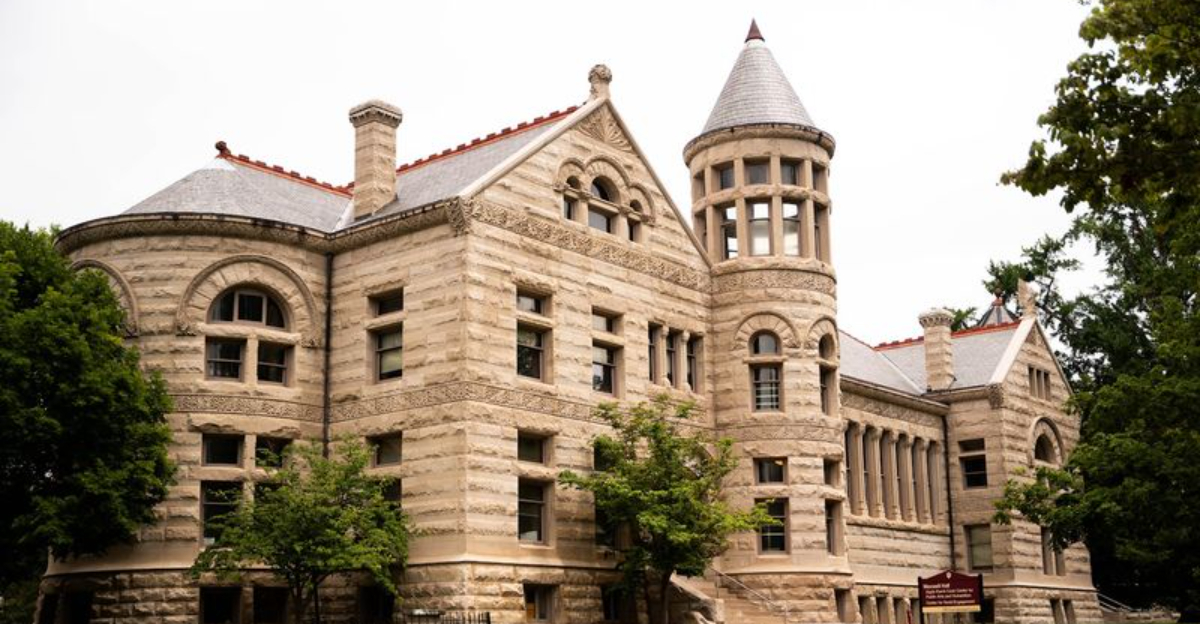
Some buildings just stop you in your tracks. Hidden on an Indiana campus, this striking landmark feels almost too magical to be real.
With its soaring rotunda tower, medieval-inspired stone carvings, and limestone walls, it genuinely looks like it was pulled straight from the pages of a fantasy novel.
The craftsmanship alone is enough to hold your attention, from the intricate details etched into the stone to the dramatic silhouette rising above the surrounding grounds.
Whether you are a history lover, an architecture fan, or someone who simply appreciates a building that carries real stories in its walls, this Indiana gem offers something rare, memorable, and absolutely worth seeing in person.
Romanesque Revival Architecture You Can Actually Touch and Study Up Close
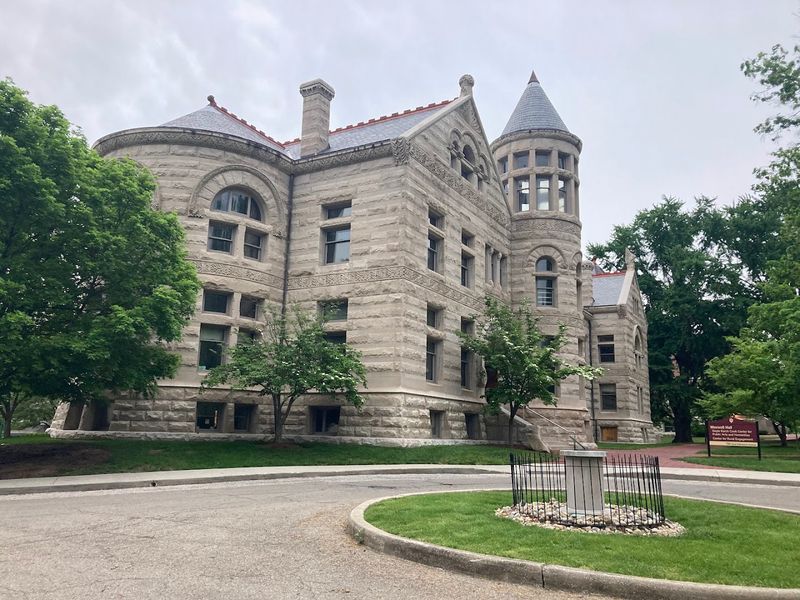
George Bunting designed Maxwell Hall in 1890, and his choice of the Romanesque Revival style was no accident. This architectural movement was known for its heavy stone construction, rounded arches, and bold massing, all elements that give buildings a fortress-like presence.
At Maxwell Hall, every detail of that style is executed with impressive craftsmanship that still holds up more than 130 years later.
Walk along the exterior and you will notice the contrast between different stone textures. Some surfaces are rough and rugged, while others are smooth and precisely cut.
This deliberate variation in texture is a hallmark of Romanesque Revival design, and it gives the building a layered visual depth that rewards close inspection. The rounded arches above windows and doorways echo the style of ancient Roman basilicas, lending a sense of timeless grandeur.
For students of architecture or anyone curious about building history, Maxwell Hall is essentially an outdoor classroom. You do not need a degree in design to appreciate what Bunting achieved here.
The proportions feel balanced despite the asymmetry, and the overall mass of the building communicates stability and importance without feeling intimidating. It is the kind of architecture that makes you want to slow down, look carefully, and actually think about the people who shaped each stone.
Few campus buildings in the entire country offer this kind of hands-on architectural education just by standing outside.
Stone Carvings and Grotesques That Tell Their Own Mysterious Stories
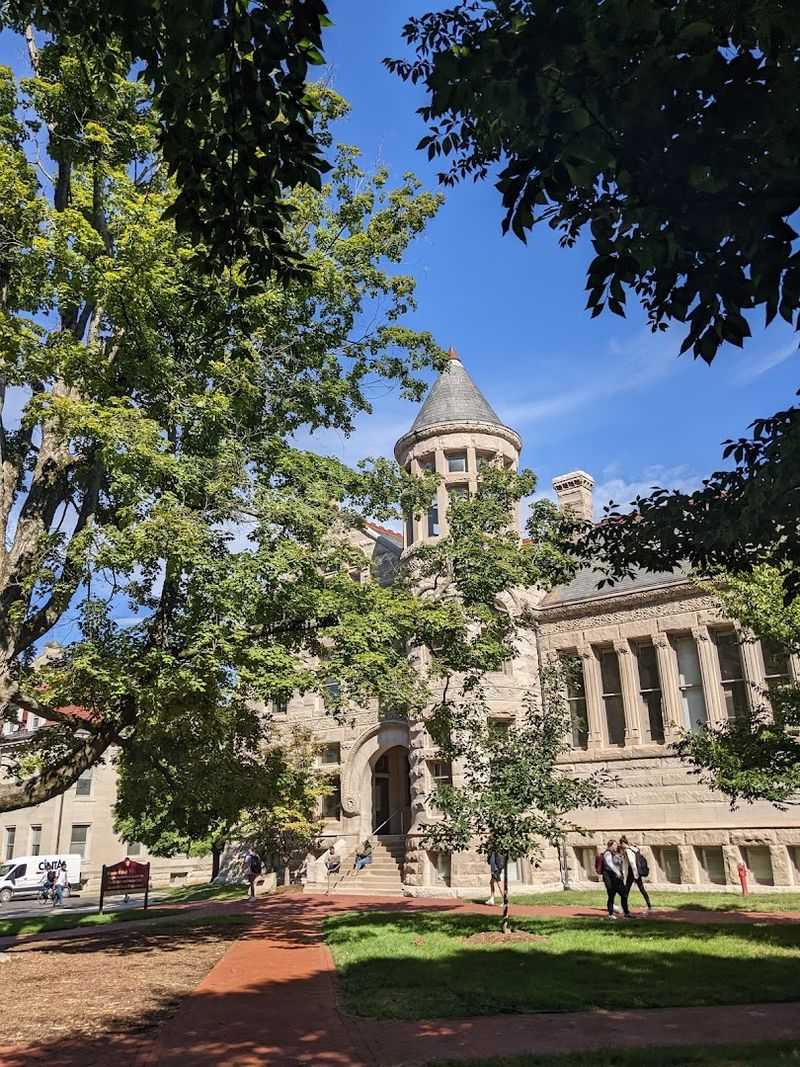
Here is something most visitors do not expect: Maxwell Hall is covered in intricate stone carvings that reward anyone willing to look up. The roofline features whimsical, bat-like grotesques standing guard over the building like silent sentinels.
One of them even bears an IU shield, a small but meaningful nod to the university’s identity hidden in plain sight above the campus bustle.
At the entrance, a coiled serpent carved into the stone keeps a watchful eye on everyone who passes through. It is the kind of detail that makes you stop mid-stride and wonder about the craftsmen who carved it and the decision-makers who approved it.
These are not accidental decorations. They were intentional choices that gave the building personality and a sense of mystery from the very beginning.
Grotesques like these have a long history in Gothic and Romanesque architecture, often serving as symbols of protection or simply as expressions of the sculptor’s imagination. At Maxwell Hall, they contribute to the building’s unmistakable Hogwarts energy without trying too hard.
Every gargoyle-adjacent figure feels earned rather than theatrical. If you visit with kids, pointing out these carvings turns a campus walk into a genuine discovery mission.
Adults tend to find them equally fascinating once they realize how much storytelling is embedded in the stonework of a building that most people walk past without a second glance.
A Castle-esque Exterior That Rivals Any Fantasy Film Set
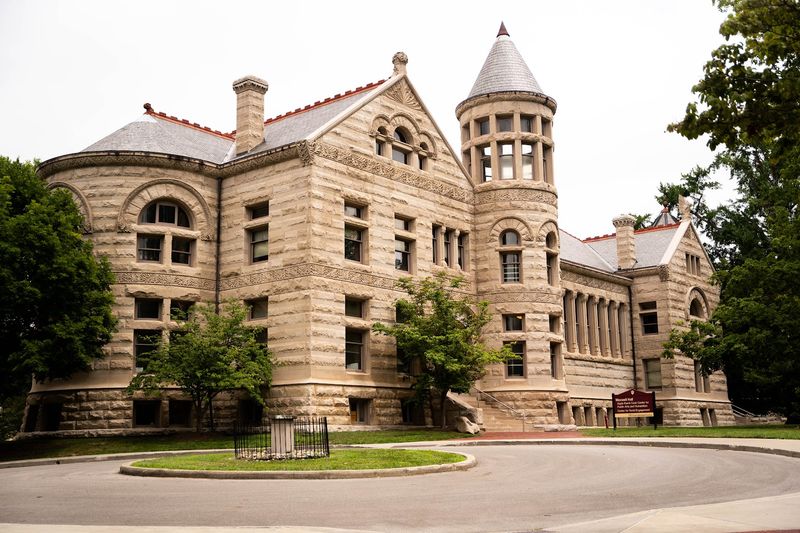
Before you even reach the front door, Maxwell Hall earns every bit of the Hogwarts comparison. The building rises with confidence along the Indiana University campus, its limestone walls catching the light in ways that make the structure feel ancient and alive at the same time.
That rotunda tower, bold and cylindrical, anchors the entire composition and gives the building a silhouette that feels more European medieval than Midwestern college campus.
Visitors often pause at the path leading up to the entrance just to take it all in. The asymmetrical layout adds to the drama, with different sections of the building jutting out at unexpected angles.
There is nothing cookie-cutter about this design, and that unpredictability is exactly what makes it so visually compelling.
Even on an overcast day, the building projects a kind of quiet authority. The heavy stone mass and rounded forms create a sense of permanence that newer campus buildings simply cannot replicate.
If you have ever watched a Harry Potter film and wished you could visit a place with that same atmospheric weight, Maxwell Hall delivers that feeling in real life.
It sits at 750 E Kirkwood Ave, Bloomington, IN 47405, and is absolutely worth a visit just for the exterior alone before you even step inside.
The Historic Legacy of IU’s First Dedicated Library Building
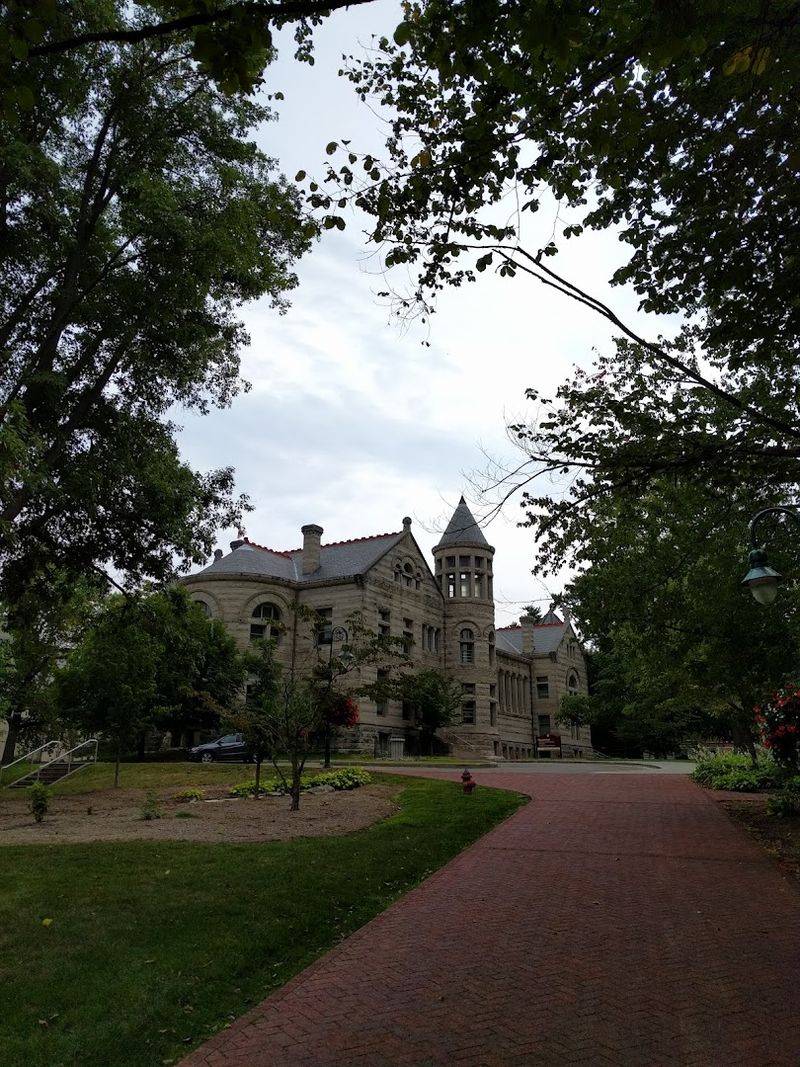
When Maxwell Hall opened its doors in 1891, it carried a name that told you everything: Library Hall. It was the first building on the Bloomington campus built specifically to house Indiana University’s growing book collection and serve as a scholarly hub for students and faculty.
That original purpose gave the building an identity rooted in knowledge, community, and intellectual ambition.
At the turn of the century, this was where students gathered to study, where faculty debated ideas, and where the university’s academic culture took shape. The building was not just a place to store books.
It was a symbol of IU’s commitment to becoming a serious institution of learning. That kind of historical weight is something you can almost feel when you walk through the entrance today.
Understanding that history adds a whole new layer to the visit. You are not just looking at an old building with pretty stonework.
You are standing inside the intellectual birthplace of a university that now serves tens of thousands of students. The fact that it has survived, been renovated, and found new purpose is a testament to how much the campus community values its past.
History enthusiasts and casual visitors alike tend to leave with a deeper appreciation for what Maxwell Hall represents beyond its striking appearance. It is a living document of Indiana University’s growth from a small frontier college into a major research institution.
Hoosier Limestone Craftsmanship That Made Building History
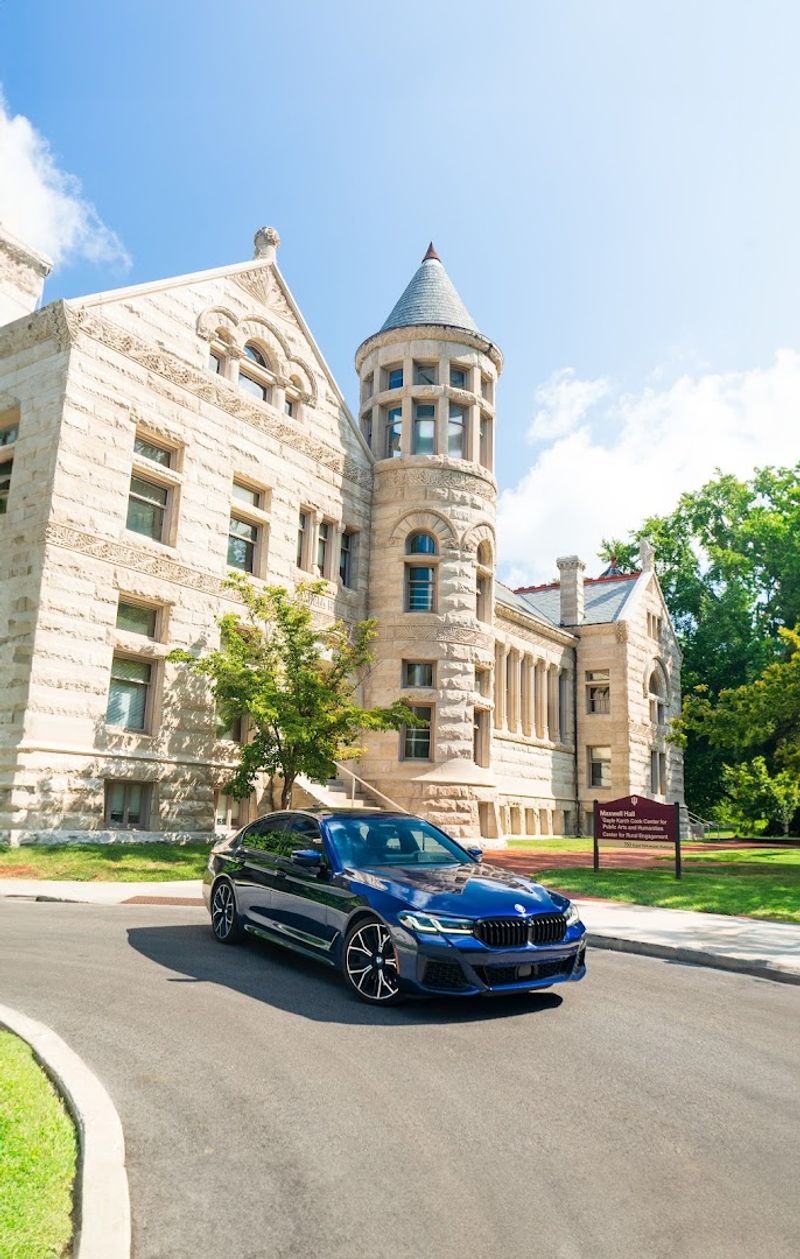
Indiana limestone has a reputation that stretches far beyond state lines. It has been used in some of the most iconic buildings in the United States, from the Empire State Building to the Pentagon.
Maxwell Hall holds a special place in that story because it was the very first building on the IU Bloomington campus to be constructed entirely of limestone. That distinction matters more than it might first appear.
Choosing limestone for the entire structure was a bold statement in 1890. It required skilled Hoosier stonecutters who understood how to work with the material’s natural grain and texture.
The result is a building that has aged with extraordinary grace. The limestone has developed a warm, golden-gray patina over more than a century, giving the exterior a depth of color that no painted surface could ever replicate.
There is something deeply local about this material choice. Indiana limestone comes from the Bedford-Bloomington area, which sits just a short distance from campus.
Using it for Maxwell Hall was not just practical. It was a way of anchoring the building to the land it stood on.
When you run your hand along the exterior wall, you are touching a piece of Indiana’s geological and cultural identity.
For anyone interested in regional craftsmanship or the history of American building materials, Maxwell Hall offers a tangible connection to a proud local tradition that shaped the look of a nation.
The Cook Center for Public Arts and Humanities Brings New Life to Old Walls
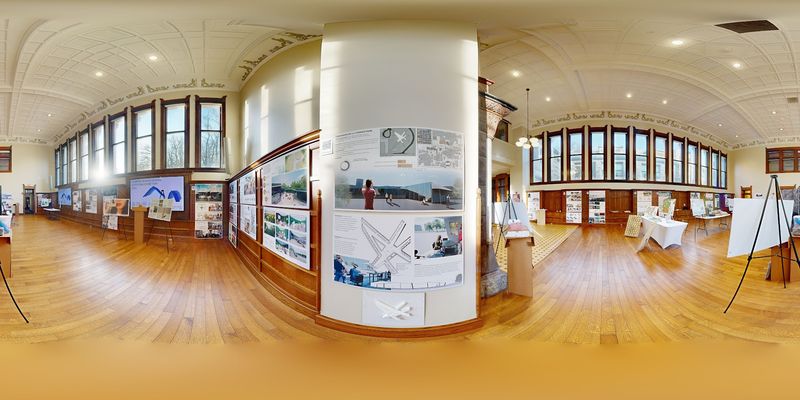
A building this remarkable deserved a purpose worthy of its character. After a thoughtful renovation completed in 2020 and 2021, Maxwell Hall became home to the Gayle Karch Cook Center for Public Arts and Humanities.
The transformation was careful and respectful, preserving the historic fabric of the building while creating flexible spaces for exhibitions, lectures, performances, and collaborative workshops.
The Cook Center focuses on bringing together different fields of study and making the arts and humanities accessible to a broad public audience. It is not a closed-off academic space meant only for scholars.
Events and exhibitions are designed to invite community members, students, and curious visitors from all backgrounds. That open spirit feels perfectly matched to a building that has always been about gathering and shared knowledge.
At the time of writing, the exhibition “Lonesome No More!” is open at the Cook Center from April 3 to July 3, 2026, Monday through Friday from 12 to 4 PM.
If you are planning a visit, checking in on current programming is always a good idea since the center regularly hosts new events throughout the academic year.
Walking through a renovated historic space that still honors its original character is a genuinely rare experience, and Maxwell Hall pulls it off with remarkable authenticity and warmth.
The Old Crescent Historic District Makes Every Visit Feel Like a Walk Through Time
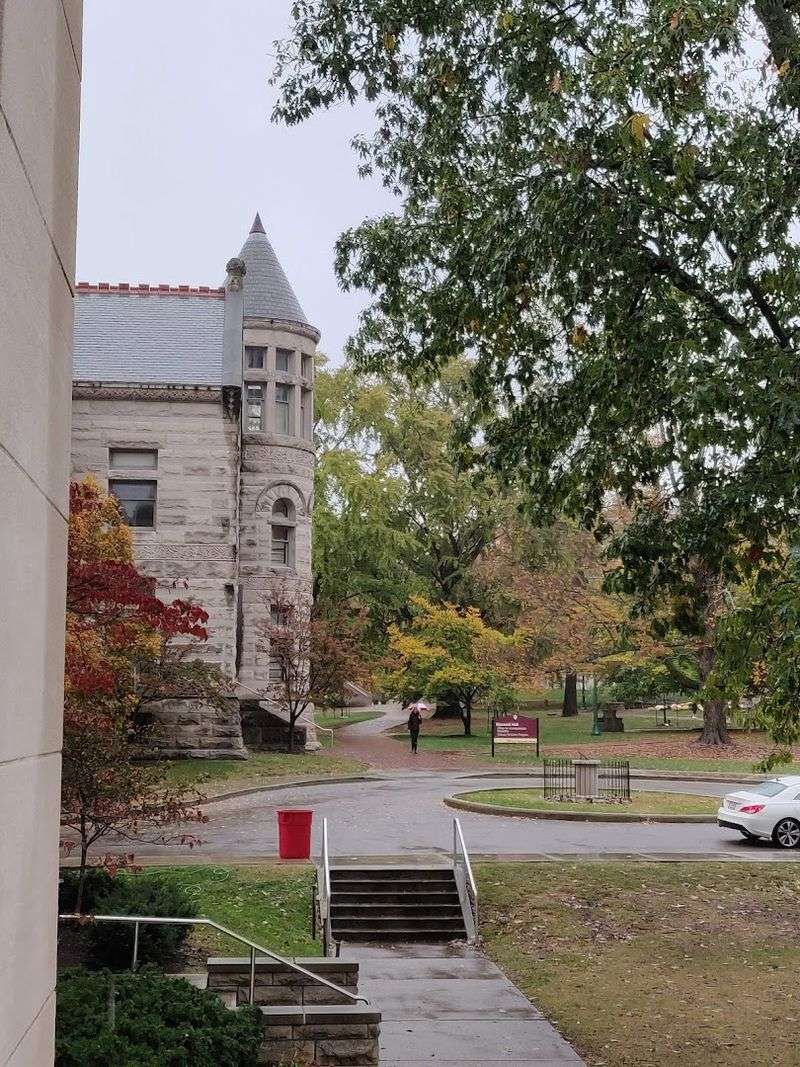
Maxwell Hall does not exist in isolation. It sits within the Old Crescent, the historic district at the heart of Indiana University’s Bloomington campus.
This area is widely recognized as one of the most beautiful college campuses in the entire country, and walking through it feels like moving through a carefully curated outdoor museum of American academic architecture.
The Old Crescent is defined by its mature trees, winding paths, and collection of historic limestone buildings that share a visual language without being identical. Maxwell Hall anchors one part of this landscape with particular authority.
Nearby, you will find other campus landmarks worth exploring, and the whole district invites leisurely walking at a pace that lets you actually absorb your surroundings.
After exploring the campus, the surrounding Bloomington area offers plenty of places to continue your day. Nick’s English Hut at 423 E Kirkwood Ave is a long-standing Bloomington institution known for its casual atmosphere and community feel.
The Monroe County History Center at 202 E 6th St offers deeper context into the region’s past. For a quiet outdoor break, Dunn’s Woods sits right on campus and provides a shaded natural retreat just steps from Maxwell Hall.
The combination of historic architecture, natural beauty, and a vibrant surrounding community makes this corner of Indiana genuinely worth the trip for anyone who appreciates places with real character and depth.
