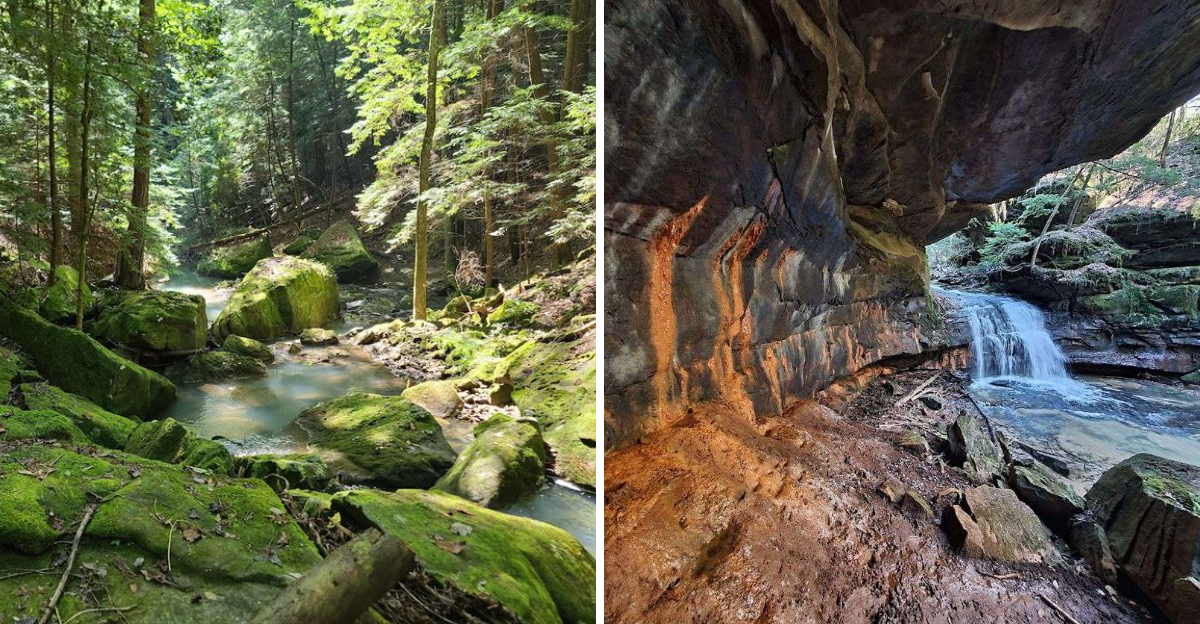
Most people drive right past Lawrence and Winston counties, Alabama without a second thought, never realizing what lies just beyond the tree line. This protected forest area in northwest Alabama is home to one of the most rugged and scenic wilderness regions in the Southeast, filled with deep sandstone canyons, old-growth trees, and hidden waterfalls shaped over thousands of years.
What makes it so striking is the sense of scale and isolation. Trails lead through dense forest into quiet hollows where water cuts through rock, creating scenes that feel far removed from everyday life.
Even on busy weekends, it is possible to find long stretches of trail where you barely see another person. For hikers and anyone looking for a true outdoor escape in Alabama, it offers the kind of raw, untouched landscape that feels both surprising and unforgettable.
A Waterfall Around Every Bend
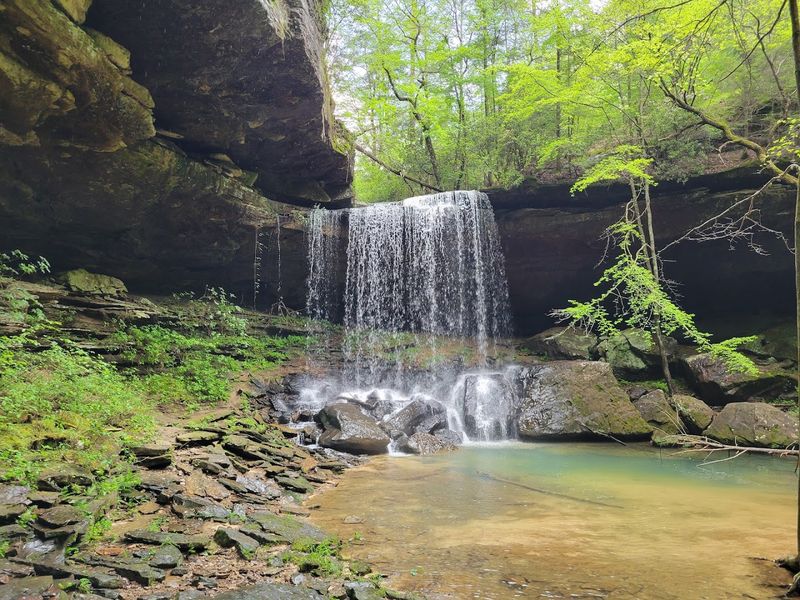
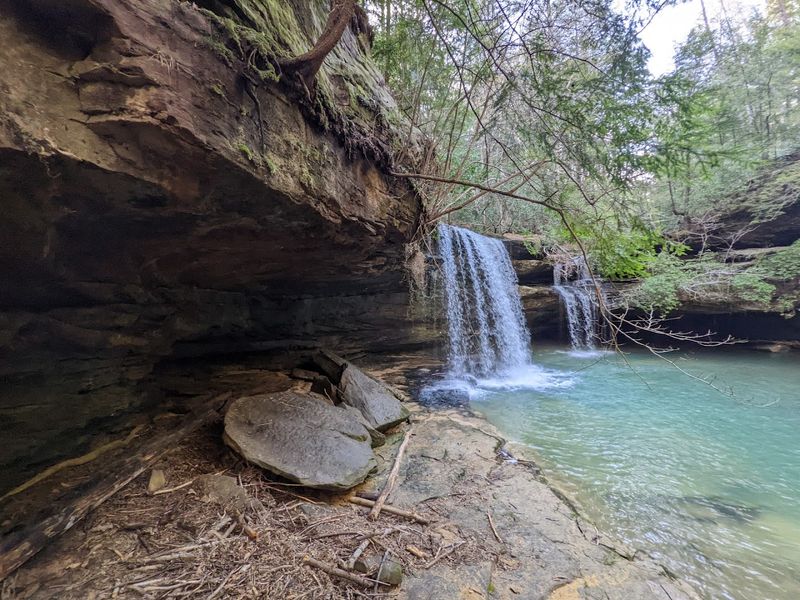
Few places on earth can claim a thousand waterfalls, but Sipsey Wilderness takes that nickname seriously. The forest earns its legendary title through sheer volume, with seasonal cascades appearing after heavy rains and several permanent falls flowing year-round.
After a good winter storm, new waterfalls seem to spring up from nowhere, tumbling off sandstone ledges that were dry just days before.
Named falls like Caney Creek Falls, Kinlock Falls, Sougahoagdee Falls, and Mize Mill Falls each have their own personality. Some drop dramatically from heights reaching 100 feet, while others fan out gently across wide rock faces.
What makes them truly unforgettable is the water color: a soft turquoise tint caused by calcium carbonate that gives the falls an almost tropical look against the dark canyon walls.
Visiting in late winter or early spring gives you the best chance of seeing the most waterfalls active at once. Trails along Bee Branch and Brushy Creek lead hikers past multiple falls on a single route, making the payoff enormous for relatively modest effort.
Wear waterproof boots since creek crossings are common, and always check trail conditions before heading out. Bankhead National Forest is located at 1070 AL-33, Double Springs, AL 35553, and the ranger station there can point you toward the best waterfall routes based on recent rainfall.
Alabama’s Only Wild and Scenic River Runs Right Through It
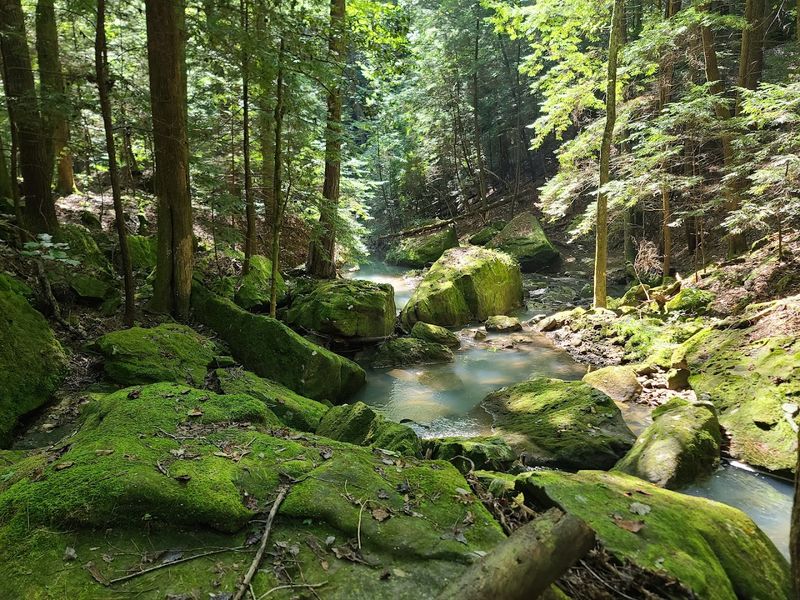
The Sipsey Fork carries a federal designation that no other Alabama river can claim: it is the state’s only National Wild and Scenic River. That status was earned honestly.
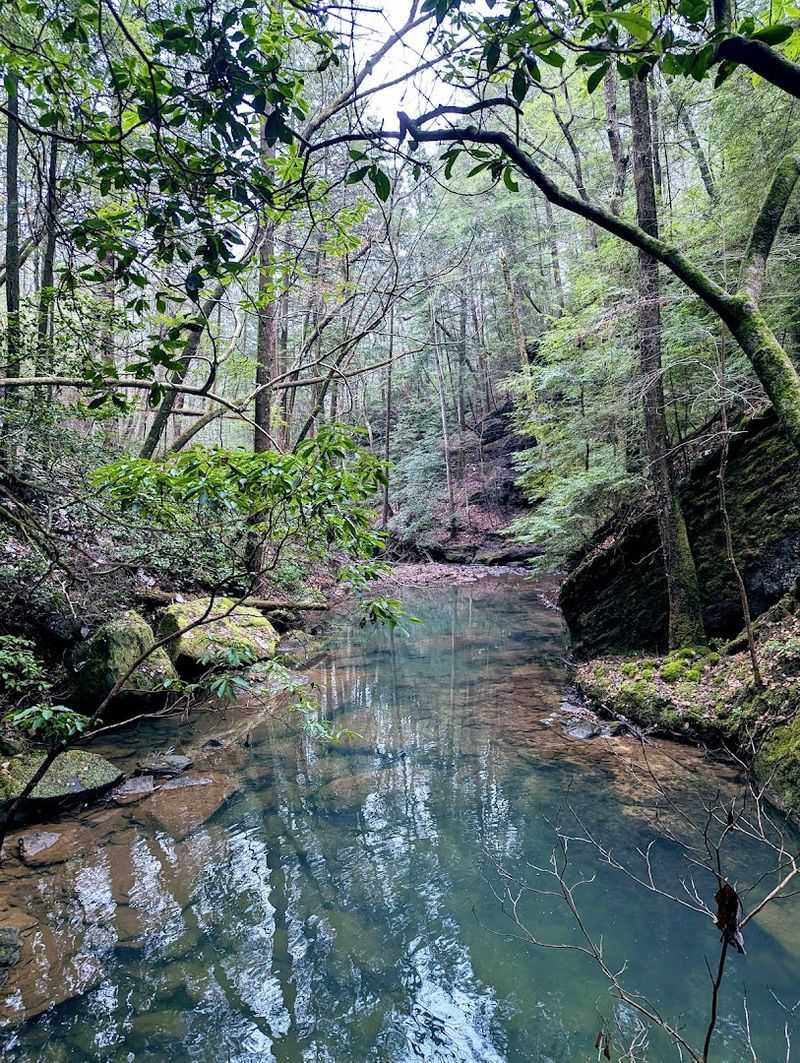
The river moves through the wilderness with a quiet power, flanked by towering rock walls, old-growth canopies, and stretches of water so clear you can count the stones on the bottom.
Canoeing and kayaking the Sipsey Fork is a genuinely different experience from paddling a lake. The current guides you past geological formations that took millions of years to shape, and the forest closes in close enough on both sides that it feels like floating through a living tunnel.
Wildlife sightings along the banks are common, with herons, turtles, and white-tailed deer making regular appearances near the water’s edge.
Below the Smith Lake dam, the Sipsey Fork also supports a year-round rainbow trout fishery. Cold water released from the dam keeps temperatures low enough for trout to thrive even in summer, making this a favorite spot for anglers who know where to look.
Fishing, paddling, and simply sitting on a flat rock watching the current move are all equally valid ways to spend time here. The river does not demand anything from you.
It just rewards the people who show up with patience and a willingness to slow down for a few hours.
Old-Growth Forest With Trees That Predate the Nation
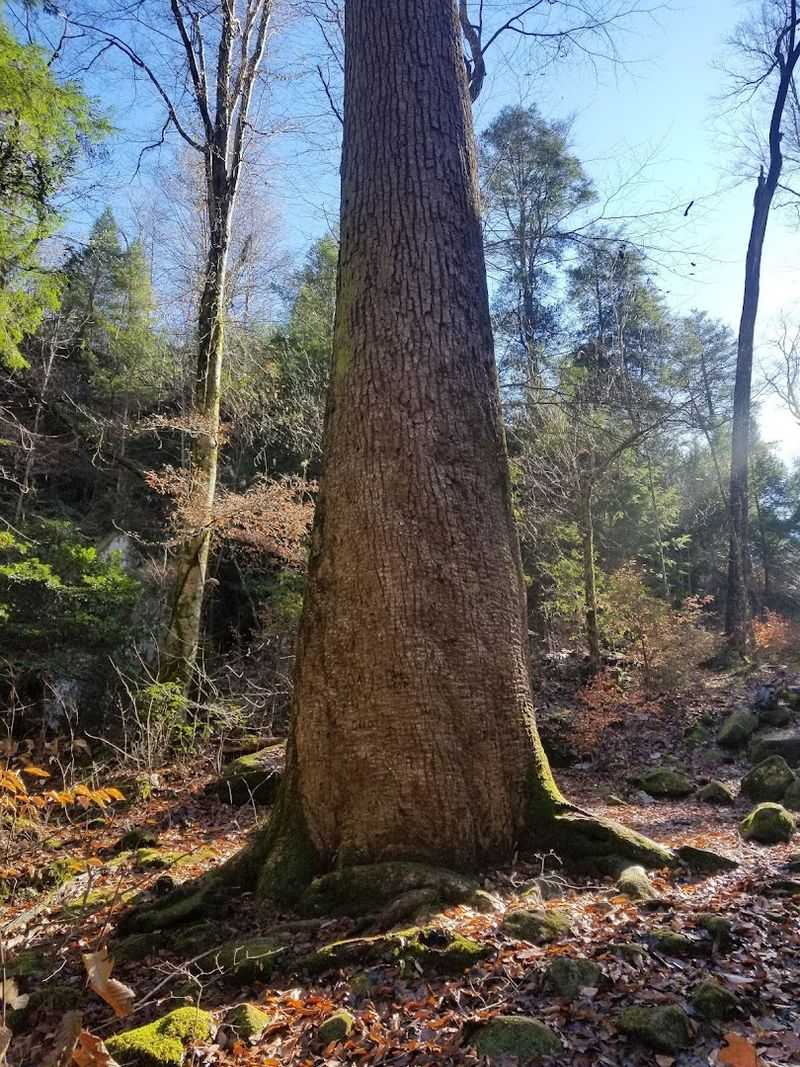
There is something humbling about standing next to a tree that was already old when the first European settlers arrived in North America. The Sipsey Wilderness contains some of the last remaining old-growth hardwood forest in all of Alabama, and the trees here communicate age in a way that photographs can barely capture.
Trunks wider than a car, bark deeply furrowed by centuries of growth, canopies stretching so high they seem to belong to a different scale entirely.
Eastern hemlocks growing in the canyon bottoms are particularly remarkable. These trees are considered Ice Age relics, surviving in the cool, moist canyon microclimates long after the climate shifted around them.
Finding one clinging to a shaded bluff feels like discovering a living fossil, something that should not still exist but somehow does.
The crown jewel of the forest is a single ancient tulip poplar known simply as The Big Tree. Estimated to be between 500 and 600 years old and standing 150 feet tall, it holds the distinction of being recognized as Alabama’s largest tree.
Reaching it requires a moderate hike along forest trail 204A, and the effort is absolutely worth every step. Standing beneath it, looking straight up through its canopy, gives you a perspective on time that no museum exhibit or history book can replicate.
This tree was alive before Alabama was even a concept.
Trails for Every Skill Level and Every Kind of Adventurer
Over 30 miles of trails wind through the Sipsey Wilderness alone, and when you include the broader Bankhead National Forest, that number climbs past 90 miles. That range means a first-time hiker and a seasoned backpacker can both show up on the same weekend and each find exactly what they came for without ever crossing paths.
Easier routes like the Sipsey River Trail follow creekside terrain with minimal elevation change, making them approachable for families with younger kids or anyone building their trail legs for the first time. The Brushy Creek Trail to Sougahoagdee Falls covers roughly two miles of manageable terrain and delivers a waterfall reward that feels completely out of proportion to the effort required.
More experienced hikers gravitate toward the Borden Creek Trail and multi-day backpacking loops that push deeper into the wilderness.
One practical note every visitor should take seriously: trail markers in the Sipsey Wilderness are inconsistent at best, and cell service often disappears within the first few miles. Download your maps before leaving home using an app like AllTrails, and carry a physical backup if you plan on going far.
Primitive campsites along the creeks allow for overnight stays, and a campfire under a canopy of old-growth trees is one of those simple experiences that stays with you long after you drive back out. Always practice Leave No Trace principles to help preserve this rare landscape.
Sandstone Canyons That Feel Like Another World
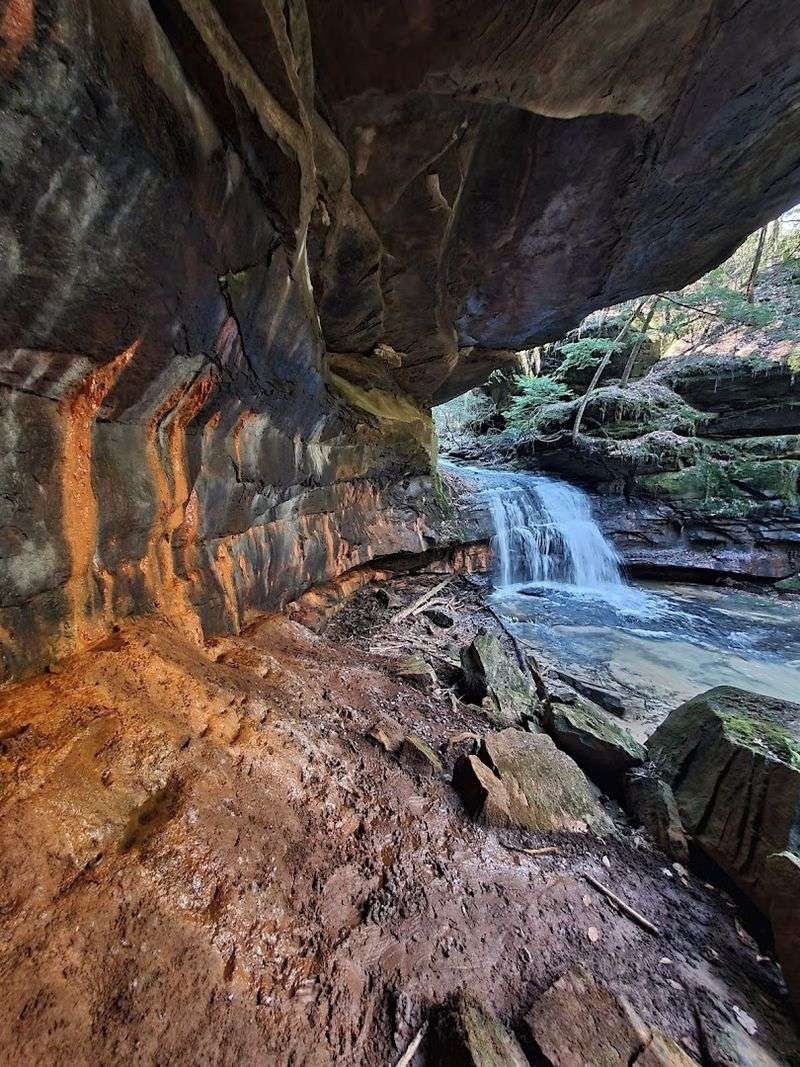
Walking into one of the Sipsey Wilderness canyons for the first time stops most people in their tracks. The walls rise 30 to 100 feet on either side, carved by centuries of slow water erosion working through ancient sandstone.
Light filters down in golden columns, mosses cling to every damp surface, and the temperature drops noticeably once you step inside.
These canyons were not built by any single dramatic event. They formed gradually over millions of years as the Sipsey Fork and its tributaries cut deeper and deeper into the bedrock.
The result is a maze of narrow passages, overhanging rock shelters, and cathedral-like chambers that make even experienced hikers stop to look around in genuine awe.
Rock shelters throughout the canyon system once provided cover for Native American communities thousands of years ago. Evidence of that long human history still exists in the form of ancient petroglyphs and cultural artifacts protected within the wilderness boundaries.
Geologically distinct formations like Ship Rock and the Eye of the Needle add even more visual drama to an already striking landscape. Exploring these canyons requires solid footwear and a downloaded trail map since cell service disappears quickly once you are deep inside.
The payoff for that preparation is a landscape so raw and quiet that it genuinely feels removed from the modern world entirely.
Unique Rock Formations That Reward Curious Explorers
Not every reason to visit Bankhead National Forest involves water. The geological story written into the rock formations here is just as compelling as any waterfall, and discovering these landmarks on foot gives you a real sense of the forces that shaped this landscape over millions of years.
Erosion did not just carve the canyons. It left behind individual formations with enough personality to earn their own names.
Ship Rock rises from the forest floor with a silhouette that genuinely resembles the prow of a vessel cutting through a stone sea. The Eye of the Needle is an eroded sandstone arch that frames a perfect circle of sky when you look through it at the right angle.
Both formations serve as trail landmarks and popular photography subjects, but they also represent something more: tangible proof of geological time playing out in slow motion across the Alabama landscape.
Rock shelters throughout the wilderness add a human dimension to the geological story. Native American communities used these natural overhangs for shelter and ceremony, leaving behind petroglyphs and cultural traces that archaeologists continue to study.
Visiting these sites requires respect and restraint since they are protected under federal law, but knowing the history behind a particular rock shelter changes the way you look at it. What reads as just another overhang suddenly becomes a layered record of human presence stretching back thousands of years into the past.
True Solitude and Primitive Recreation Far From the Crowds
The wilderness designation protecting the Sipsey Wilderness is not just a label. It carries real legal weight, prohibiting motorized vehicles, commercial development, and most of the infrastructure that tends to follow popular outdoor destinations.
That means no ATVs, no paved interpretive paths, and no gift shops waiting at the trailhead. What you get instead is a level of quiet that has become genuinely rare in the modern American South.
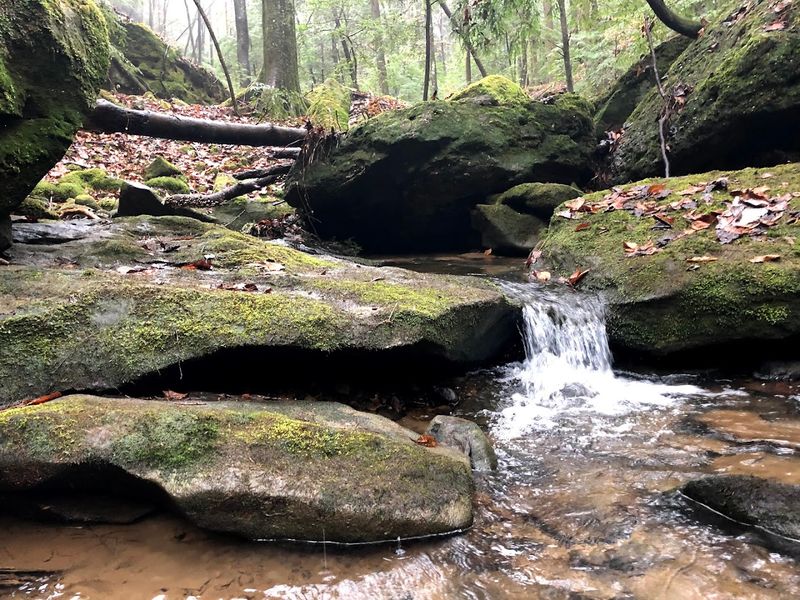
Primitive camping along the creek corridors lets you fall asleep to the sound of moving water and wake up to birdsong without a single human-made noise interrupting either. Fishing, hunting in designated seasons, and horseback riding on approved trails round out the recreational options for people who want to engage with the land rather than just pass through it.
The lack of cell service in much of the wilderness is not a bug. For many visitors, it is the whole point.
Nearby amenities exist for those who prefer a bit more comfort alongside their wilderness time. The Clear Creek Recreation Area within Bankhead National Forest offers developed campgrounds, clean restrooms with showers, swimming, boating, and picnic pavilions.
For a meal after a long day on the trail, the Double Springs area has local dining options worth exploring. The town of Double Springs sits just minutes from the forest entrance, making it easy to stock up on supplies before heading in for the weekend.
