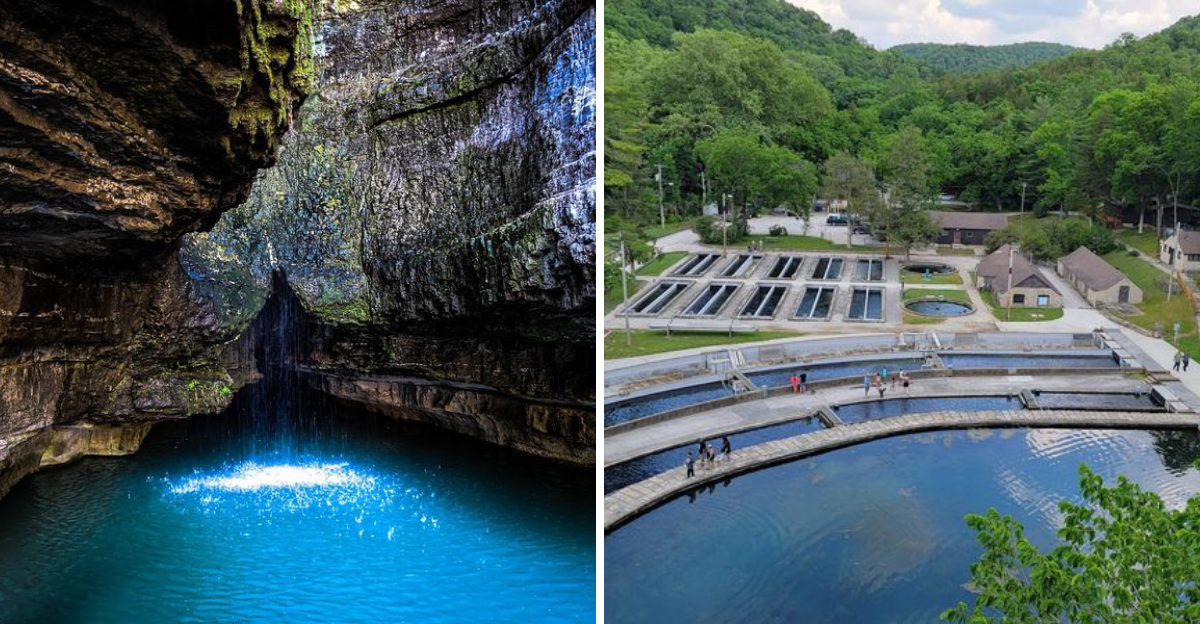
I have seen blue water in the Caribbean. I have seen it in mountain lakes out west. I did not expect to find it in Missouri, tucked away in a state park, bubbling up from underground like a secret the ground had been keeping.
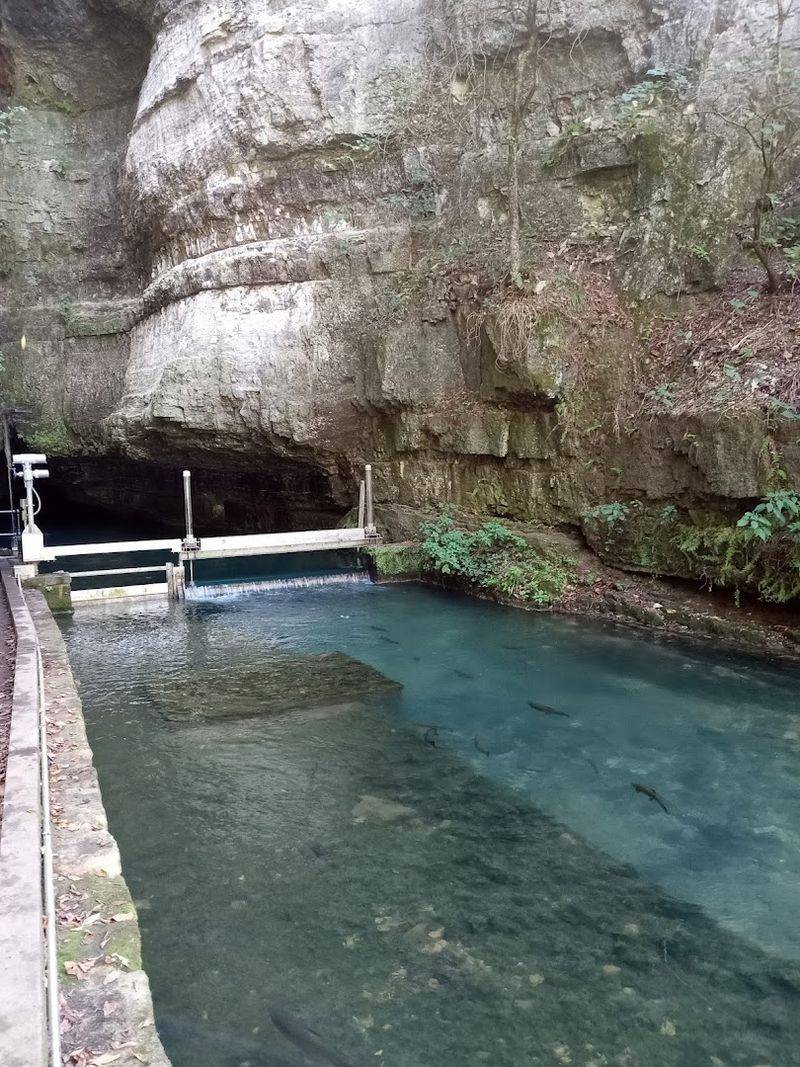
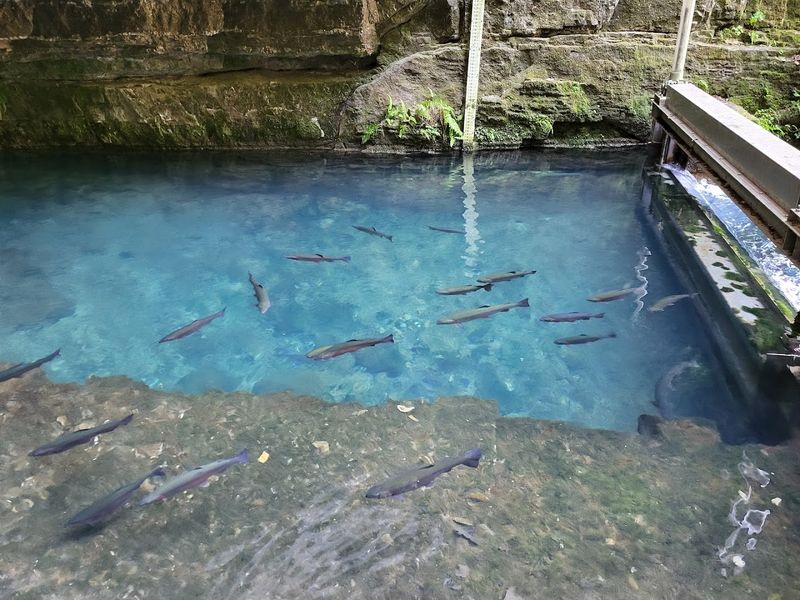
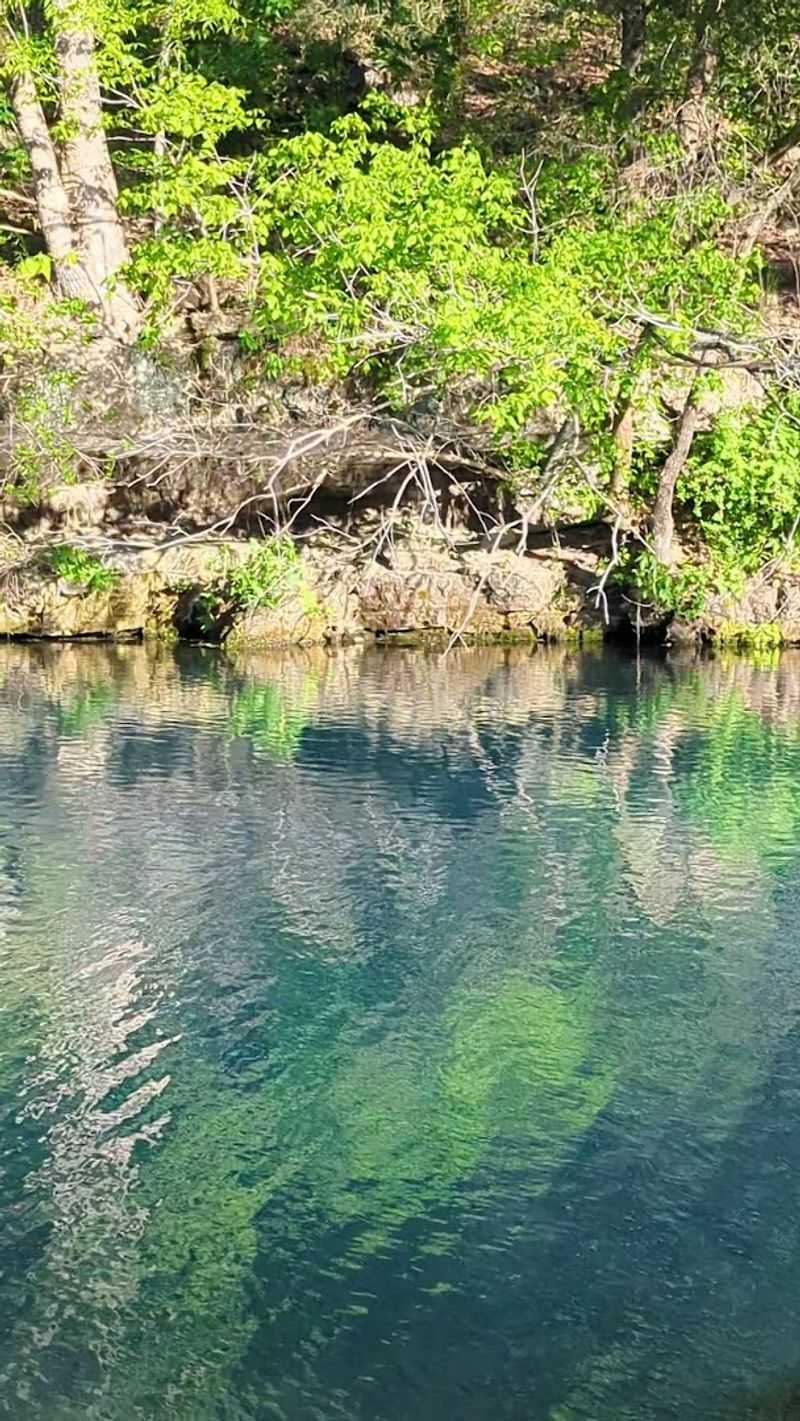
The color is unreal. A bright, electric blue that makes you squint and ask “is that real?” It pools at the base of a bluff, clear enough to see every rock and fish below the surface. I sat on the edge and just stared for a while.
This hidden spring is one of those places that makes you feel lucky to have found it. Missouri, you have been holding out on me.
The Spring That Started It All
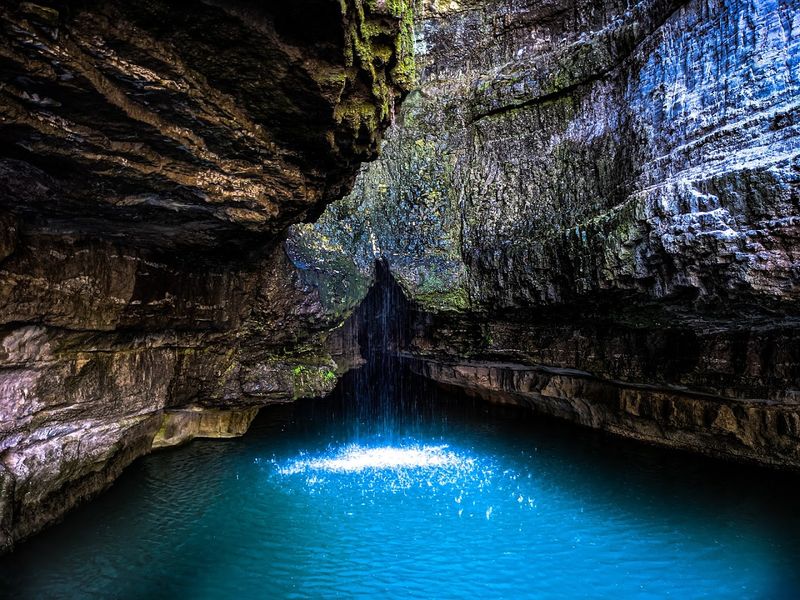
Standing at the mouth of Roaring River Spring feels like finding a secret the Ozarks have been keeping for centuries.
The spring boils up from a cave in the hillside, releasing millions of gallons of cold, strikingly blue water every single day. The color is not a trick of light or a filter on a camera.
It is the real, raw result of water filtering through porous limestone deep underground before surfacing here in Barry County, Missouri.
The cave itself is accessible and worth a close look. You can walk right up to the spring source and peer into the darkness where the water originates.
The temperature of the water stays consistently cool year-round, which is exactly why rainbow trout thrive here so well. It is also why the air near the spring always feels refreshing, even on warm summer afternoons.
Missouri has no shortage of beautiful natural features, but few carry the visual punch of this particular spring. The contrast between the vivid blue water and the mossy limestone rocks creates a scene that feels almost painted.
Every visit to the park really should begin right here, at the source of everything that makes this place so remarkable.
World-Class Trout Fishing in the Ozarks
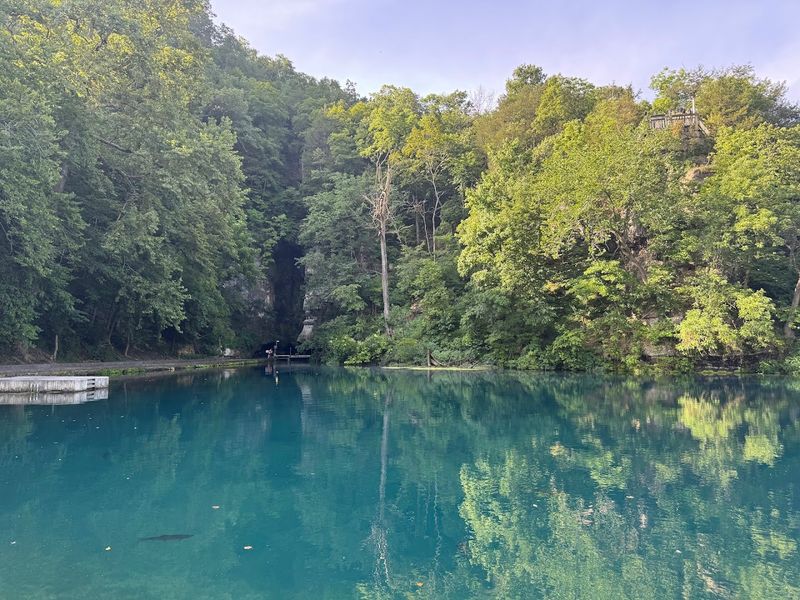
Few things in outdoor recreation compare to standing knee-deep in cold, clear water and feeling a trout strike your line.
Roaring River State Park in Missouri is one of the most celebrated trout fishing destinations in the entire Midwest. The river is divided into three distinct fishing zones, each offering a slightly different experience depending on your skill level and preferred style.
Zone 1 is open to all anglers using artificial lures and is stocked daily during the season. Zone 2 is fly-fishing only, which gives the whole stretch a quieter, more focused atmosphere.
Zone 3 offers a more relaxed approach, perfect for beginners or families casting for the first time.
The park operates its own hatchery right on-site, which means the river receives fresh stocking on a regular schedule. Rainbow trout are the main attraction, and they are plentiful enough to keep even experienced anglers busy for hours.
A valid Missouri fishing permit is required, along with a trout park daily tag. Both are available at the park store, which is well-stocked with gear, bait, and helpful advice.
Fishing here is less about luck and more about simply showing up ready to enjoy it.
The On-Site Hatchery Is Genuinely Fascinating
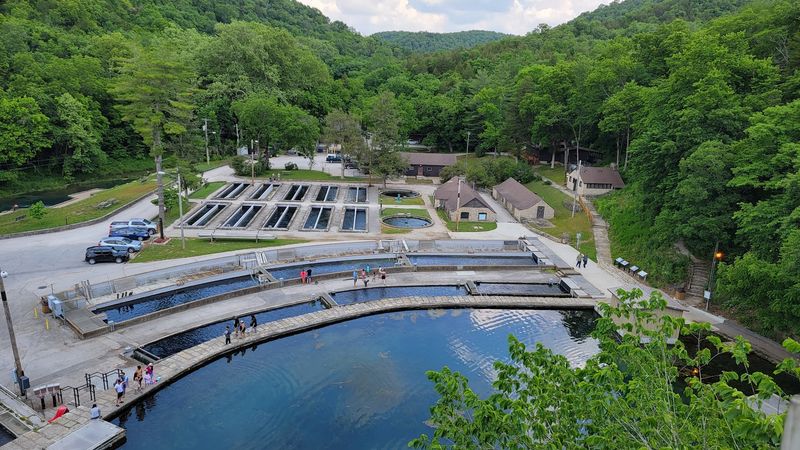
Most people arrive at Roaring River thinking only about fishing, and then they stumble onto the hatchery and lose a full hour without even noticing.
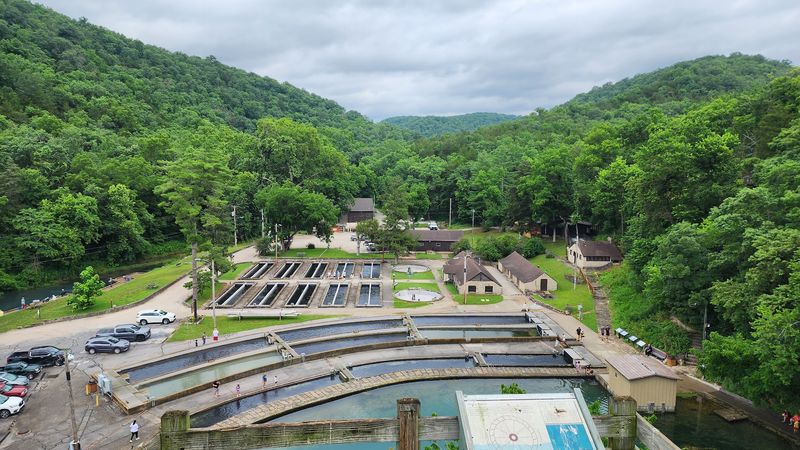
The Roaring River Fish Hatchery sits right inside the park and is open to the public. Walking through it gives you a front-row look at how thousands of rainbow trout are raised from fingerlings to stocking size before being released directly into the river below.
The raceways are long concrete channels fed by the same cold spring water that runs through the park. Thousands of fish move through the current in these channels, and watching them is oddly mesmerizing.
You can lean over the edge and see trout packed so densely that the water seems to shimmer and shift on its own.
Missouri takes its trout hatchery program seriously, and this facility is a direct reflection of that commitment. The hatchery produces fish specifically calibrated to the conditions of Roaring River, which helps explain why the fishing quality here remains so consistently strong.
There are informational signs throughout the hatchery that explain each stage of the process in plain language. It is educational without feeling like homework, and genuinely worth the short walk from the main fishing area.
Hiking Trails With Serious Payoff
Roaring River is not just a fishing park, and the trail system here makes that point convincingly.
Several hiking trails wind through the steep, forested hills surrounding the river valley. The terrain is classic Ozark, meaning there are limestone bluffs, cedar glades, and dense hardwood forest all sharing the same hillside.
The trails range from short nature walks to more demanding climbs that reward you with sweeping views of the valley below.
The Devil’s Kitchen Trail is one of the most interesting routes in the park. It passes through a section of rugged rock formations and dense forest that feels genuinely wild, even though the trailhead is just minutes from the campground.
One thing to keep in mind is that some trails here gain elevation quickly. Wearing proper footwear is not optional if you plan to go beyond the flat riverside paths.
The payoff for the climbs, though, is views that stretch across the folded hills of Missouri in a way that reminds you just how vast and beautiful this part of the state really is.
Autumn is a particularly good time to hike here, when the hardwoods turn and the entire valley becomes a slow-motion display of color that builds over several weeks.
Camping Right Next to the River
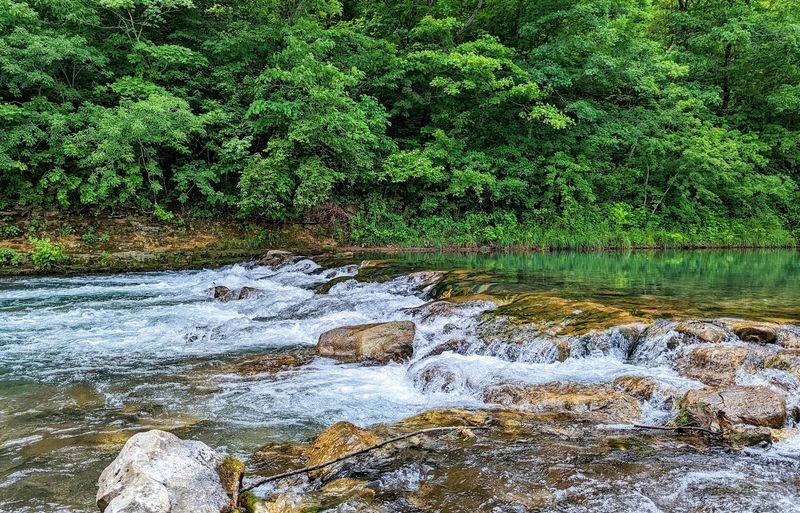
Camping at Roaring River means falling asleep to the sound of moving water, and waking up close enough to the river to start fishing before breakfast.
The park has three separate campgrounds, each with its own character. Campground 1 is the most central and puts you closest to the fishing zones, the hatchery, and the park store.
It is the kind of location that makes spontaneous evening walks feel very natural.
Full hookup sites with concrete pads are available for RV campers, and the facilities are kept in solid condition. Shower houses are conveniently located, which matters more than people admit after a long day of hiking in Missouri summer heat.
Campground 3 is newer and tends to feel a bit more spacious. If you are arriving with an RV and want a fresh concrete pad with full hookups, it is worth requesting that area specifically when you book.
Reservations are strongly recommended, especially around opening day of trout season in March, when the park draws serious anglers from across the region. The campground fills up fast, and walk-in availability during peak season is essentially nonexistent.
Evenings at the campground have a particular rhythm that is hard to replicate anywhere else in Missouri.
The Park Store Covers More Ground Than You Expect
Forgetting a piece of gear is almost a rite of passage for camping trips, and Roaring River’s park store has quietly rescued more than a few unprepared visitors.
The store inside the park is genuinely well-stocked. Fishing licenses, trout park tags, artificial lures, flies, line, and basic tackle are all available without needing to drive into Cassville.
That convenience is not a small thing when you are already settled into your campsite and realize you left your polarized sunglasses at home.
During summer months, the store also serves soft-serve ice cream, which sounds like a minor detail until you are standing there on a warm afternoon having just finished a long hike. It becomes a very major detail very quickly.
The staff at the store tend to know the fishing conditions well. Asking which zones are producing and what patterns are working is always a reasonable move before heading out to the water.
Cassville is only a short drive away for anything the park store does not carry. The town has basic grocery and supply options that cover most camping needs without requiring a long detour.
Missouri state parks generally do a strong job with their visitor facilities, and Roaring River is a clear example of that standard being upheld with consistency.
Wildlife That Shares the Valley With You
Most people come to Roaring River for the fish, but the wildlife watching here adds a whole separate layer to the experience.
Bald eagles migrate through the park during winter months and are regularly spotted perching along the river corridor. Seeing one of those birds drop toward the water from a limestone bluff is the kind of moment that makes you stop mid-cast and just stare.
White-tailed deer move through the campground edges at dusk with a casual confidence that suggests they know exactly who owns this valley. Wild turkey are common in the wooded hillsides, and a patient hiker will often spot one picking through the leaf litter along the trail margins.
The river itself supports a healthy ecosystem beyond just trout. Great blue herons work the shallows with methodical patience, and kingfishers dart between the riverside branches with almost reckless speed.
Missouri’s Ozark region is rich in biodiversity, and Roaring River sits right in the middle of that biological abundance. The mix of open river corridor, dense forest, and rocky bluffs creates multiple habitat types within a compact area.
Bringing binoculars is a genuinely useful idea here, not just for the eagles but for everything else that moves through this valley on its own schedule.
Fall Colors Turn the Park Into Something Else Entirely
Roaring River in autumn is the kind of scene that makes you want to slow down every single drive through the park just to hold onto it a little longer.
The hardwood forest that blankets the surrounding hills transforms starting in mid-October and builds toward peak color through early November.
Oak, hickory, maple, and sweetgum all contribute different shades, and the layered effect across the hillsides is genuinely striking from almost any vantage point in the valley.
What makes fall particularly special here is the combination of vivid foliage with the park’s signature blue-green water. The color contrast between the warm tones overhead and the cool tones below is something that photographs cannot fully capture, but they certainly try.
Fishing during this period is also excellent. Cooler water temperatures keep trout active, and the reduced summer crowds mean more room to spread out along the river.
Missouri trout season runs through fall, so the fishing and the foliage arrive at the same time as a genuine bonus.
Camping in early November carries some chill, but the payoff in atmosphere more than compensates for an extra blanket or two.
Few Missouri state parks deliver autumn the way Roaring River does, and repeat visitors tend to plan their fall trips around it specifically.
Practical Tips for Planning Your Visit
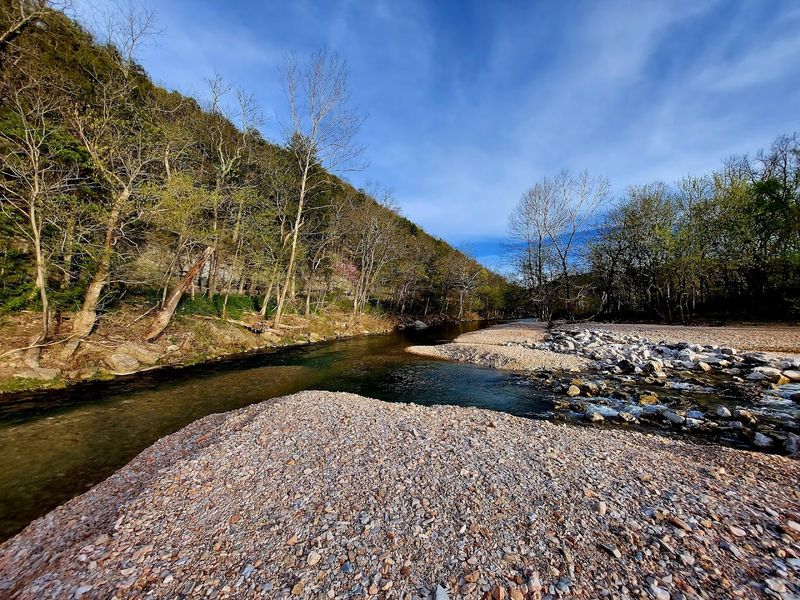
Getting the most out of Roaring River requires a little planning, and a few small details make a noticeable difference in the overall experience.
The park is located at 12716 Farm Rd 2239, Cassville, MO 65625, in the southwestern corner of Missouri near the Arkansas border. The drive in involves a steep hill on the approach road, so take it slow on the way down and especially on the way out if you are towing anything.
Trout season opens in March, and that opening weekend draws large crowds. Booking a campsite months in advance for that period is not an exaggeration of how popular it gets.
The Missouri State Parks reservation system handles bookings online and is straightforward to navigate.
A Missouri fishing license and a trout park daily tag are both required to fish here. They can be purchased at the park store or online before you arrive.
Fishing is allowed daily starting at sunrise, and the daily creel limit is four trout per person.
Snakes are present in the park, particularly around rocky areas and the hillside campgrounds. Staying on marked trails and watching where you step is a reasonable precaution that keeps things stress-free.
Roaring River rewards those who come prepared, and Missouri has made it genuinely easy to do exactly that.
