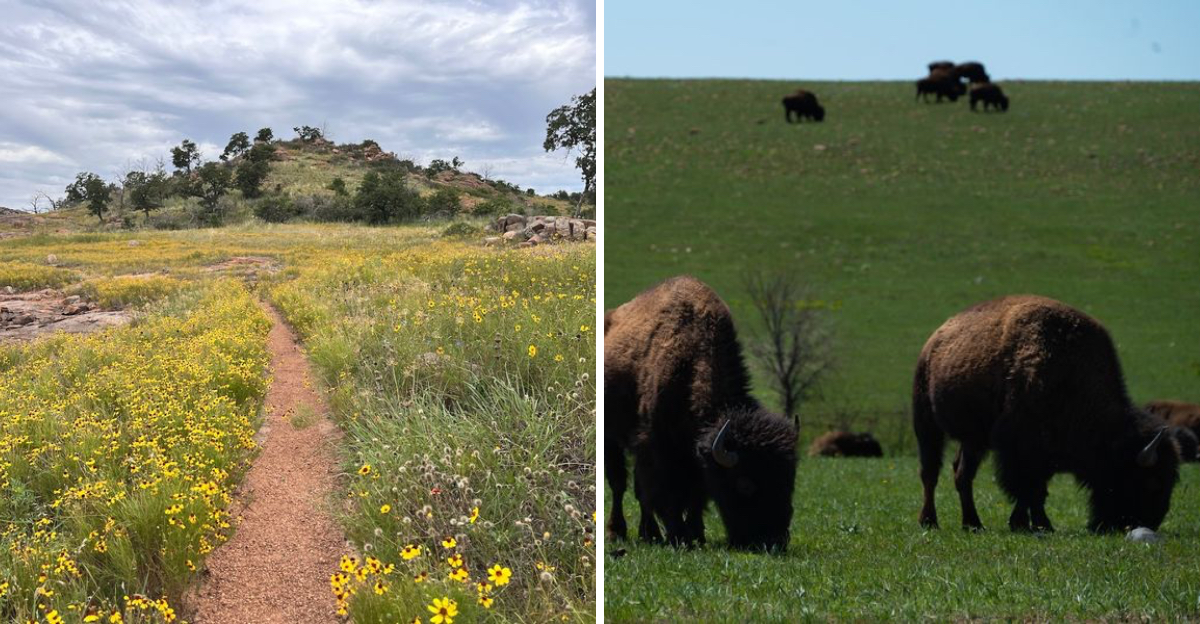
I have seen bison in zoos. Behind fences. Looking bored and sleepy. That is not what this Oklahoma trail offers. Here, they are out in the open. Big, shaggy, and very much in charge.
The trail cuts through wide prairie with nothing but grass and sky for miles. I walked slowly, scanning the horizon. Then I saw them. A small herd, grazing like they owned the place. Which, honestly, they do.
Keep your distance. That is the rule. These are wild animals, not pets. But watching them from afar, in their natural home, is something I will never forget.
Oklahoma feels huge out here.
The Wichita Mountains Setting
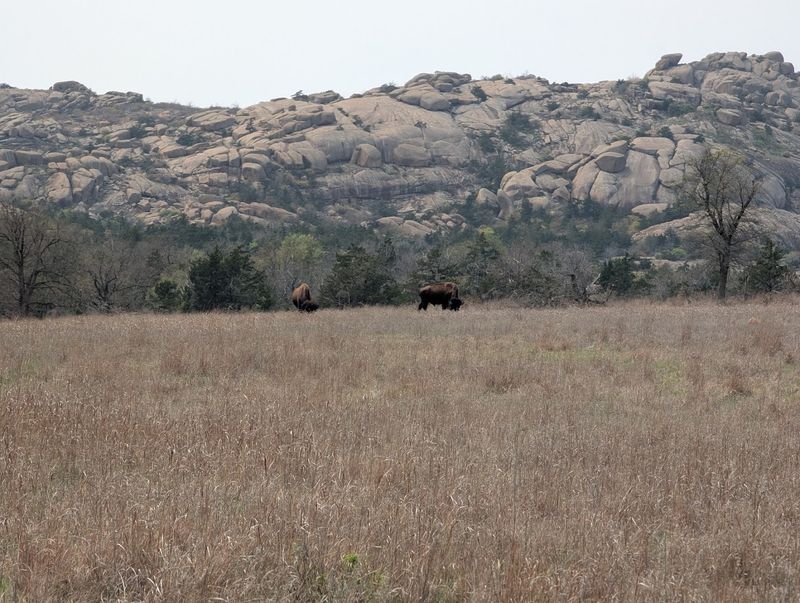
Few places in Oklahoma stop you in your tracks quite like the Wichita Mountains Wildlife Refuge. Located near Indiahoma in southwestern Oklahoma, this federally protected landscape covers more than 59,000 acres of ancient granite peaks, clear lakes, and sweeping grasslands.
The refuge has been protecting wildlife since 1901, making it one of the oldest managed wildlife areas in the entire United States. Standing at the edge of the prairie here, it is easy to forget that most of the country looks nothing like this anymore.
The Bison Trail winds through the heart of this refuge, giving hikers direct access to terrain that feels almost prehistoric. Rounded granite boulders rise out of the earth like they were placed there by hand.
The open sky above stretches so wide that weather systems roll in visibly from miles away.
Oklahoma does not always get credit for scenery like this, but the Wichita Mountains make a strong case on their own. The refuge address is 32 Refuge Headquarters Road, Indiahoma, OK 73552.
The Six-Mile Loop Breakdown
Six miles sounds manageable until the sun climbs overhead and the shade disappears completely. The Bison Trail is a full loop of roughly six miles, with some hikers cutting it to about 5.5 miles depending on the route they take around French Lake.
The first half of the hike eases you in with relatively flat, grassy terrain. Around the 3.5-mile mark, the trail reaches a canyon section that adds some genuine elevation change and rocky scrambling to the mix.
Total elevation gain sits at around 500 feet, which is not dramatic by mountain standards, but the combination of sun exposure, distance, and uneven footing keeps the effort honest. This is comfortably a moderate hike, not a casual stroll.
Signage along most of the route is solid, with clear markers keeping hikers on track. The one section that can feel a little ambiguous is the final stretch near French Lake, so paying close attention there pays off.
Downloading the AllTrails app before heading out is a smart move, especially since cell signal inside the refuge can be unreliable or completely absent.
Bison on the Prairie
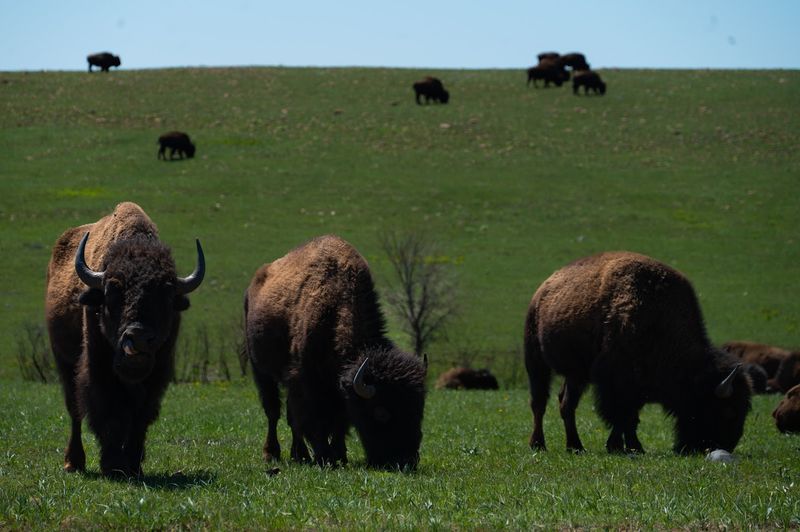
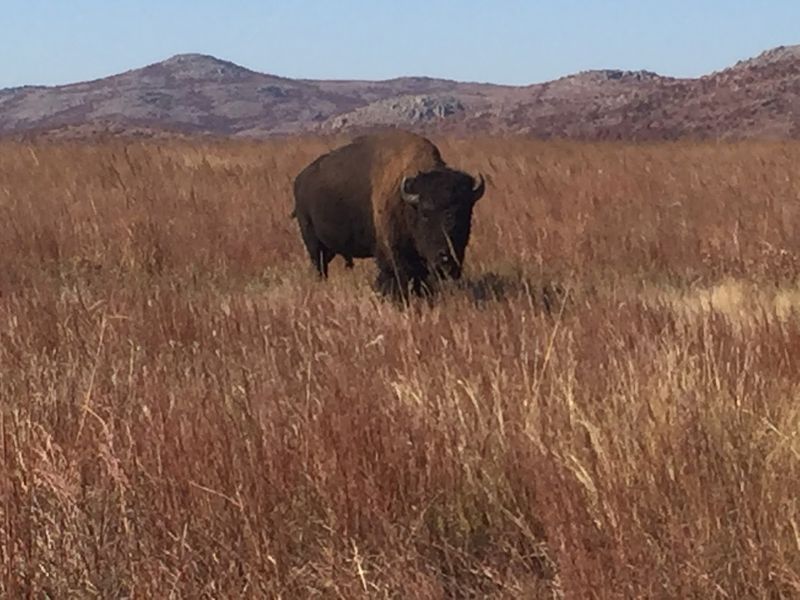
Here is the headline attraction: actual wild bison, wandering freely across the same ground you are hiking.
The Wichita Mountains Wildlife Refuge maintains one of the oldest conservation herds of American bison in the country, with the herd tracing its roots back to animals brought here in 1907 from the New York Zoological Society.
Spotting them on the Bison Trail is genuinely thrilling. These animals are enormous, moving slowly through the grass with a calm authority that makes it very clear who the landscape belongs to.
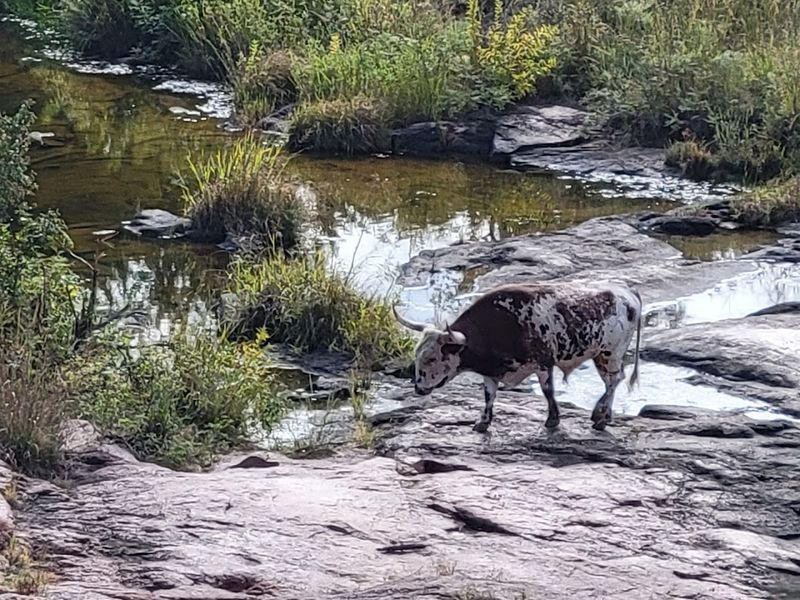
Longhorn cattle also roam the refuge freely, and crossing paths with one of those adds its own memorable moment to the hike.
The key thing to remember is that bison are wild animals. Keeping a safe distance is not just a suggestion but a real necessity.
The refuge recommends staying at least 50 yards away at all times.
Not every hike guarantees a sighting, but signs of bison presence, from tracks to grazing patterns in the grass, are almost always visible. Early morning hikes in Oklahoma tend to offer the best chances of spotting the herd before the heat of the day pushes them into shadier areas.
The Terrain and What to Expect Underfoot
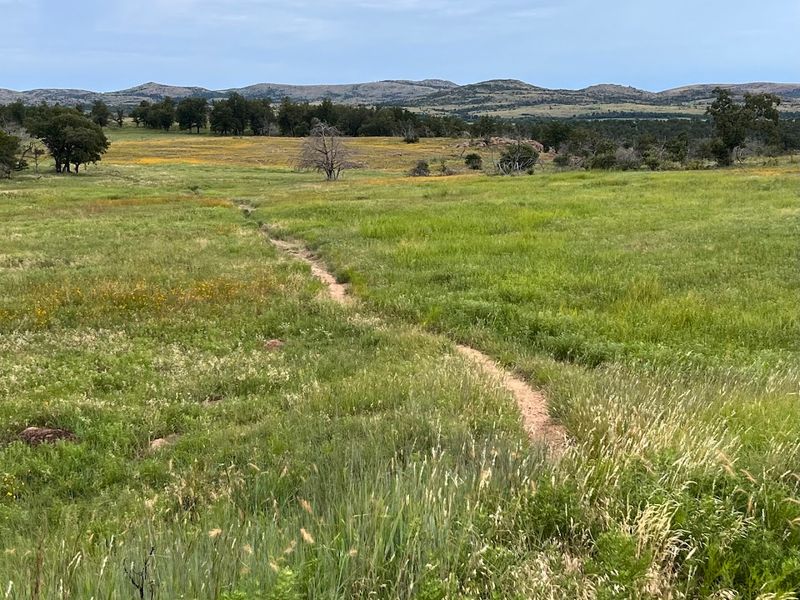
The ground on the Bison Trail is not forgiving, and it does not pretend to be. The trail moves through several distinct terrain types over the course of the loop, keeping things interesting but also demanding steady attention to where your feet land.
Wide grassy sections make up a large portion of the route, with tall grass pressing in close on either side in some areas. These open stretches feel almost dreamlike on a clear day, but they also mean zero shade and full sun exposure for long stretches.
Rocky sections appear regularly, especially as the trail approaches the canyon area. Some spots require stepping carefully around or over boulders, and ankle stability matters here.
Solid hiking boots or trail shoes are a much better choice than casual sneakers.
Wildlife shares this terrain too, and not just the big animals. Colorful lizards dart across rocks constantly, and snakes do make appearances, particularly in warm months.
Keeping eyes on the trail rather than only on the horizon is genuinely useful advice here.
The variety in the ground itself is part of what makes this hike feel so rewarding. Each change in terrain brings a new view and a new reason to keep moving forward through the Oklahoma landscape.
Sun, Heat, and Hydration Strategy
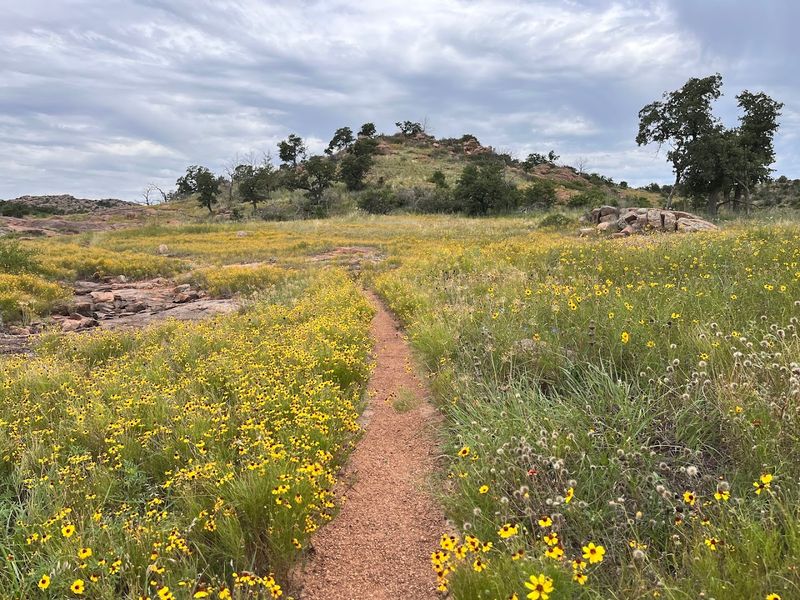
The Bison Trail will test your hydration habits in a way that few other hikes can. With almost no natural shade along the route, the sun hits continuously from the moment you step away from the trailhead.
Oklahoma summers are serious, and this trail does not soften that reality at all.
Carrying at least 1.5 liters of water per person is the minimum recommendation for cooler conditions. In summer heat, that number climbs significantly, with experienced hikers suggesting three to four liters or more for the full loop.
There is no water source or refill point anywhere along the trail.
Sunscreen is non-negotiable. Even on overcast days, UV exposure on open prairie can surprise you, and a light long-sleeve layer or sun hoody adds real protection without overheating you too badly.
Starting early in the morning is one of the smartest strategies for a summer visit. The temperature difference between a 7 AM start and a 10 AM start can be dramatic in southwestern Oklahoma.
Afternoons in July can push conditions into genuinely uncomfortable territory on an exposed six-mile loop with no escape from the sun.
Lakes, Canyons, and Scenic Highlights
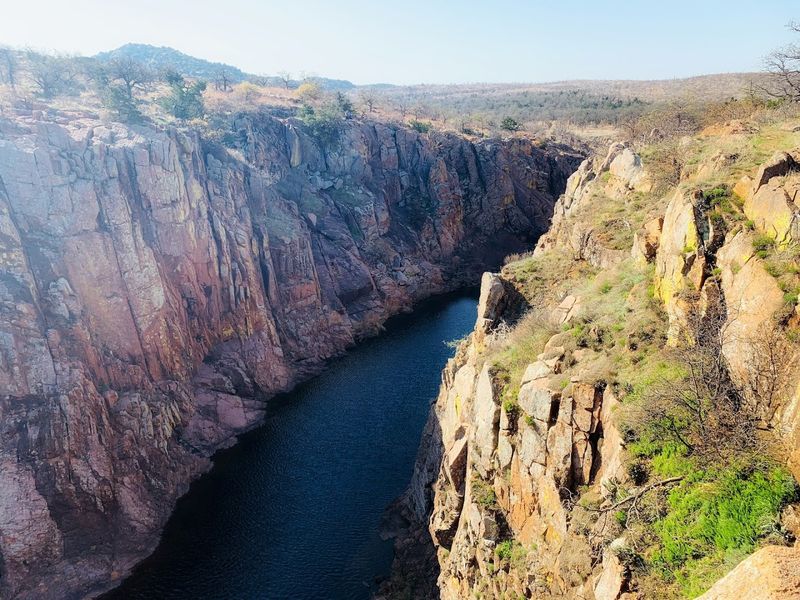
Beyond the bison, the Bison Trail delivers a genuinely varied visual experience that earns its reputation for spectacular scenery. French Lake is one of the standout features, sitting quietly in the landscape and reflecting the granite hills around it with a stillness that feels almost meditative.
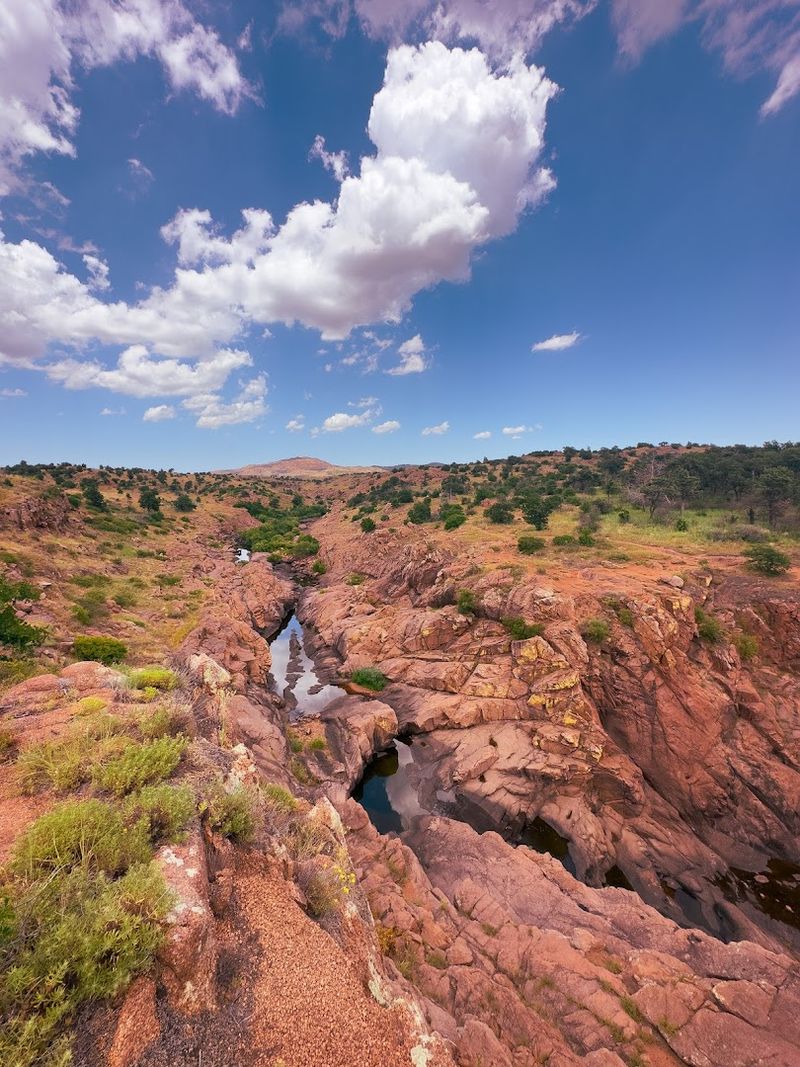
The canyon section of the trail is another highlight that catches most hikers off guard. After miles of open grassland, dropping into a rocky gorge adds a completely different mood to the hike.
The walls narrow, the light changes, and the sounds of the open prairie fade behind you.
Birds are constant companions throughout the route. The refuge supports a wide range of species, from raptors circling overhead to smaller birds darting through the grass.
Deer also appear regularly, often freezing at the edge of the trail before bounding away into the brush.
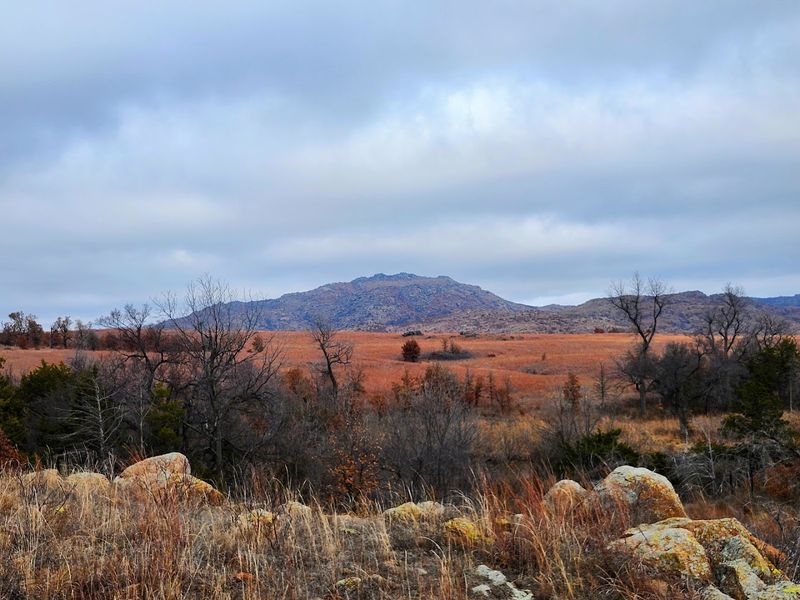
The views from the higher rocky sections of the trail stretch out impressively over the surrounding landscape. Oklahoma from this vantage point looks like a painting of itself, all golden grass and ancient stone under a sky that seems wider than anywhere else.
Every bend in the trail brings something worth stopping for, and that variety is what keeps the six miles feeling fresh from start to finish.
Best Time of Year to Visit
Timing a visit to the Bison Trail makes a real difference in the overall experience. Spring and fall are widely considered the sweet spots for this hike in Oklahoma, and the reasons are straightforward.
Spring brings wildflowers to the prairie and cooler temperatures that make the six-mile loop feel entirely manageable. The grass is greener, the bison herds are often more active, and the light in the early morning hours is genuinely beautiful across the open landscape.
Fall cools things down again after the intense Oklahoma summer, and the shifting colors of the grass and surrounding brush add a warmth to the scenery that summer does not offer. Wildlife activity also tends to pick up as temperatures moderate.
Summer visits are absolutely possible, but they demand preparation and an early start. The heat on an exposed trail with no shade can escalate quickly, and the experience shifts from pleasant to grueling without proper planning.
Winter is surprisingly enjoyable for those who do not mind cooler temperatures. The crowds thin out significantly, the air is crisp, and the landscape takes on a spare, dramatic quality that feels very different from the lush spring version.
Oklahoma winters in this region are mild enough for comfortable hiking on most days.
Wildlife Beyond the Bison
The bison get top billing on this trail, but the supporting cast is just as fascinating once you start paying attention. The Wichita Mountains Wildlife Refuge functions as a working ecosystem, and the variety of animals sharing the landscape is genuinely impressive for a place in the middle of Oklahoma.
Longhorn cattle roam the refuge alongside the bison, and crossing paths with one of these animals on the trail is an experience that feels almost cinematic. Their horns are as wide as the trail itself in some cases, and they carry themselves with the same unhurried confidence as the bison.
White-tailed deer appear throughout the hike, often in small groups grazing at the edges of the grassland. Prairie dogs maintain their own busy communities in certain areas of the refuge, and watching them is endlessly entertaining even for a few minutes.
Reptile life is active and visible, especially in warmer months. Colorful lizards are almost constant companions on the rocky sections of the trail.
Snake awareness is important here, particularly around boulders and tall grass where visibility is limited.
The refuge also supports a healthy raptor population, with hawks and eagles riding thermals overhead throughout the day. Looking up regularly is just as rewarding as watching the ground on this trail.
Trail Difficulty and Who It Suits Best
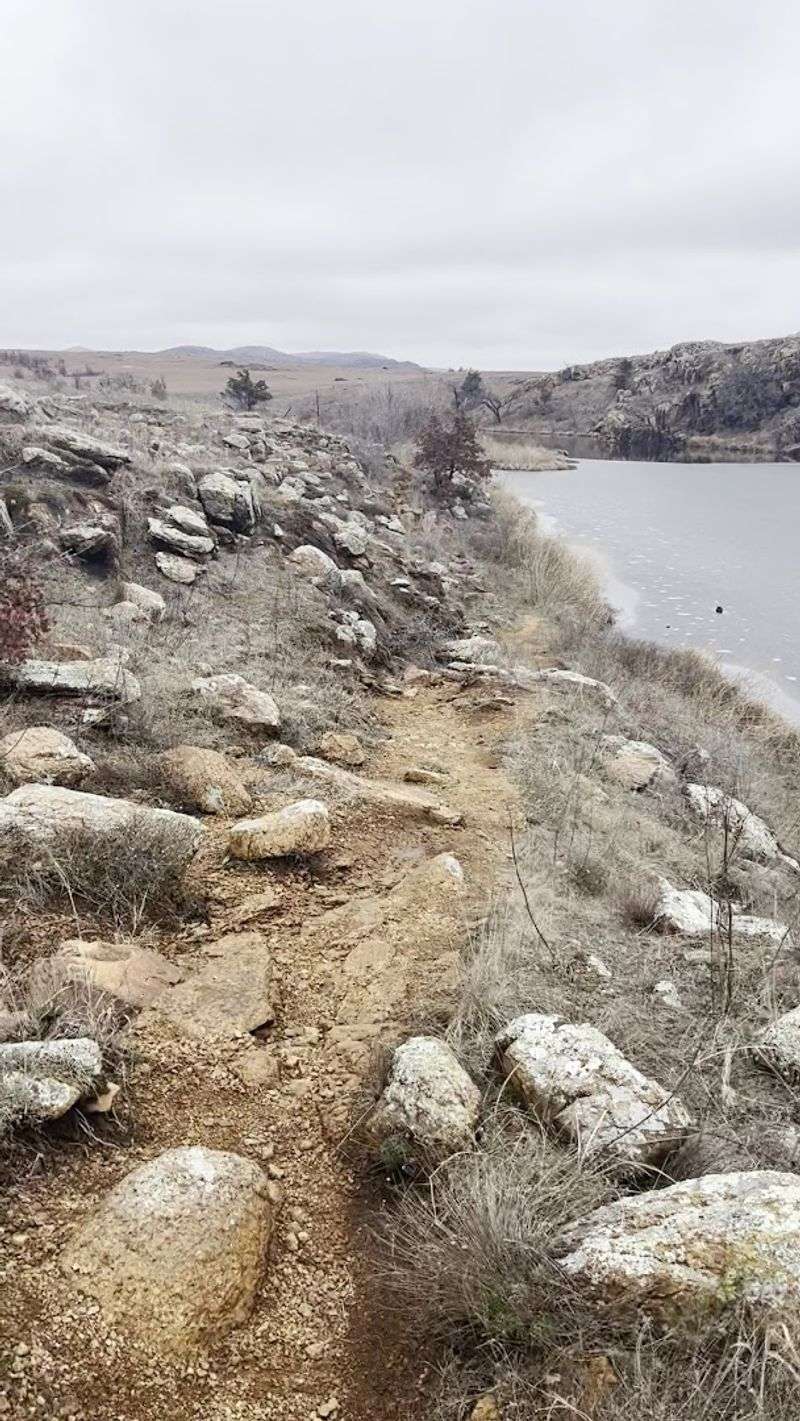
Placing the Bison Trail on the difficulty scale requires a little nuance. On pure elevation numbers, the roughly 500 feet of total gain makes it sound easy.
The reality on the ground is more layered than that simple figure suggests.
The combination of distance, sun exposure, rocky terrain, and tall grass sections pushes this comfortably into the moderate category for most hikers. Experienced hikers will find it a satisfying workout without feeling overwhelmed.
Beginners who come prepared with proper footwear and enough water can absolutely complete it.
Families with younger children should think carefully before committing to the full six-mile loop. Some sections require stepping over boulders or pushing through tall grass, and the lack of shade makes the heat a real factor for smaller hikers.
Hikers over 50 have completed this trail successfully with good planning, but the combination of heat and rocky terrain means pacing yourself from the start matters more here than on a shadier, shorter route.
Arriving before 8 AM in summer puts you on the trail during the most comfortable window Oklahoma can offer on a hot day.
Practical Tips
A little preparation goes a long way on the Bison Trail, and a few practical details can make the difference between a great day and a miserable one.
The trail address is 32 Refuge Headquarters Road, Indiahoma, OK 73552, and the refuge phone number is +1 580-581-3500 if you need to check conditions before heading out.
Cell service inside the refuge is unreliable at best. Downloading an offline map through the AllTrails app before leaving home is genuinely useful and takes about two minutes of effort.
Offline navigation removes the stress of losing signal mid-hike in Oklahoma’s open terrain.
Clothing choices matter on this trail. Long pants are a better option than shorts given the tall grass, insects, and rocky sections.
A wide-brimmed hat and sunglasses are practical essentials rather than optional accessories on an exposed prairie trail.
There are no restroom facilities from the trailhead through the entire loop, so planning accordingly before you start is simply part of the deal here.
The trail is open every day of the week, around the clock, which gives enormous flexibility for timing your visit. Arriving on a weekday morning keeps things quieter and gives wildlife more space to appear without disturbance.
Oklahoma rewards the early riser on the Bison Trail every single time.
