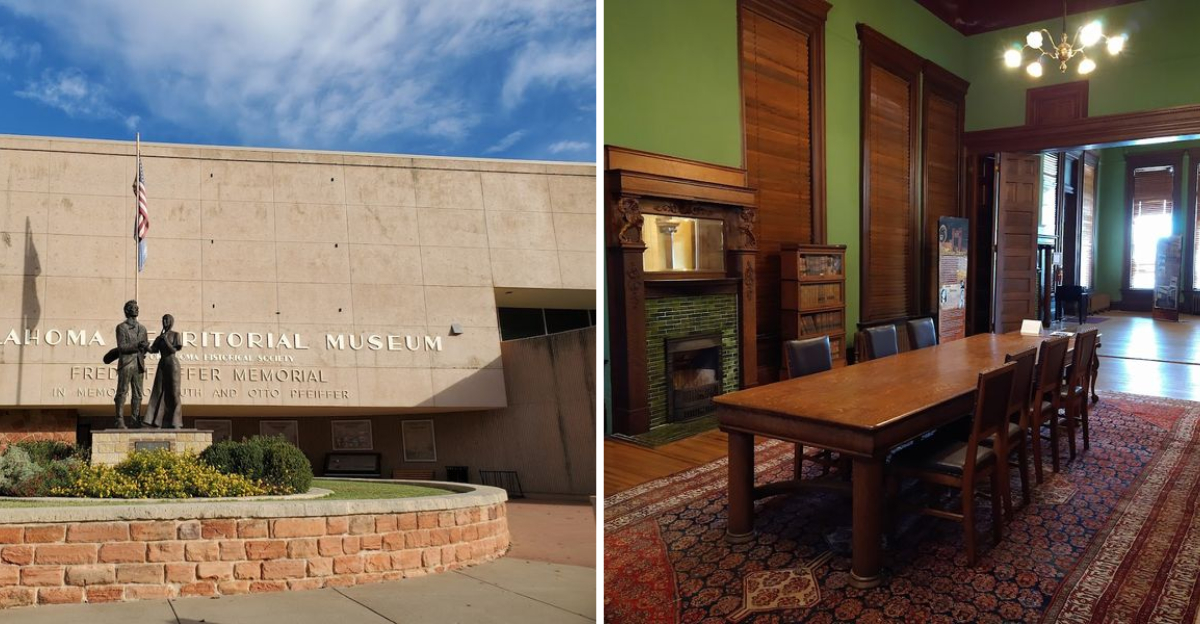
A museum in the charming town of Guthrie, Oklahoma, caught me off guard in the best way. I had no idea what to expect when I first pulled up to the beautiful old library building that houses it, but the moment I stepped inside, something clicked. The exhibits are thoughtful, the stories are layered, and the whole experience feels personal rather than performative.
History comes alive here in a way that textbooks never quite manage. This town was once the territorial capital of Oklahoma, and that fact alone makes this place feel like hallowed ground. If you love history and have not made this trip yet, you are genuinely missing out.
The Carnegie Library Building That Started It All
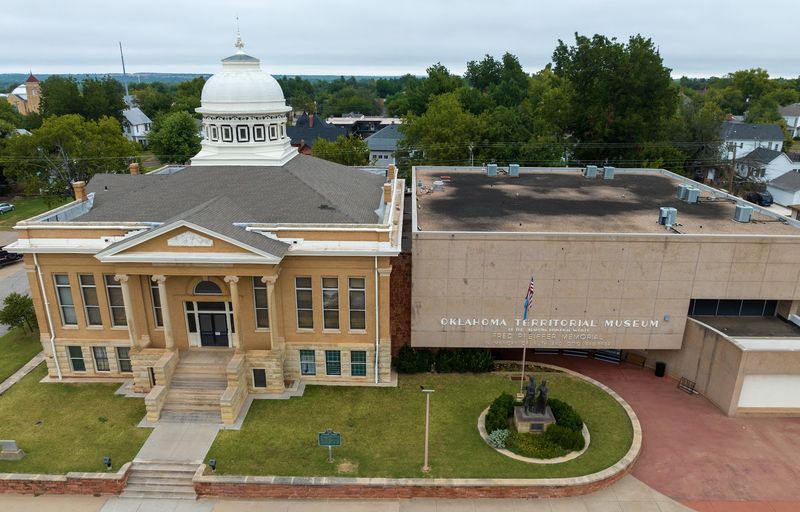
There is something quietly dramatic about a building that has survived demolition threats and still stands proud more than a century later. The 1902 Carnegie Library that anchors the Oklahoma Territorial Museum is not just a backdrop for exhibits.
It is the exhibit itself.
This Renaissance Revival structure holds a rare distinction: it is the only domed Carnegie Library ever funded by Andrew Carnegie. That alone makes it worth the drive to Guthrie.
It was added to the National Register of Historic Places back in 1971, and a year later, local philanthropist Fred Pfeiffer stepped in to save it from demolition.
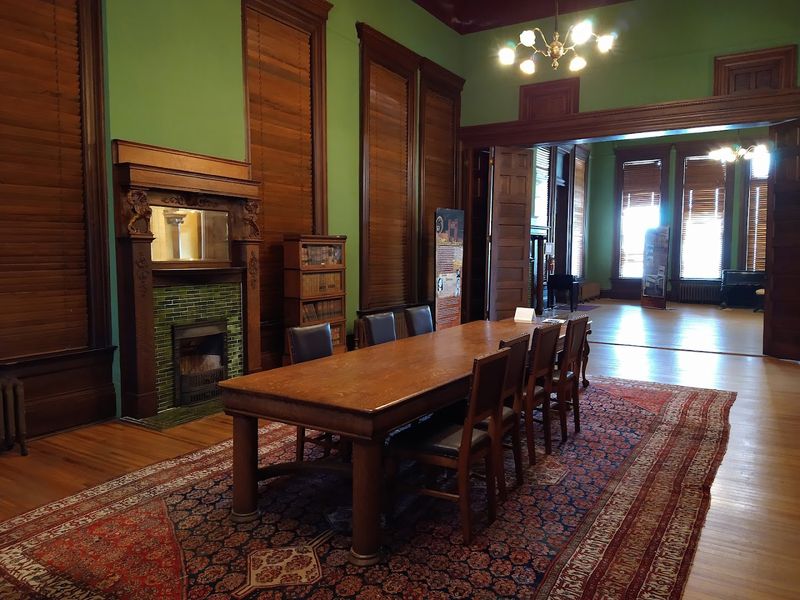
When you walk through the library floor, the creaking wooden boards and soaring ceilings make the past feel almost tangible. The architecture whispers of a time when public buildings were designed with ambition and civic pride.
Light filters through in a way that feels almost cinematic.
On November 16, 1907, this very building hosted Oklahoma’s statehood ceremonies. That is not a small detail.
The library is stunning to look at, though visitors should note it is not air-conditioned, so cooler months make for the most comfortable experience.
Oklahoma’s Territorial Period Laid Out in Vivid Detail
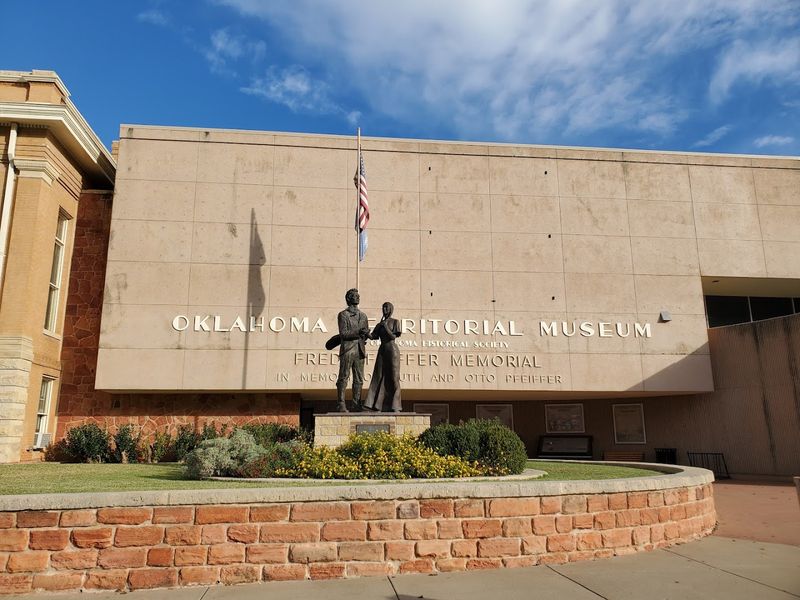
Most people know Oklahoma as a state, but fewer know the fascinating, complicated story of what it was before statehood arrived. The territorial period is the heart of this museum, and the exhibits cover it with real depth and care.
From the creation of the Unassigned Lands to the slow, messy process of building a territorial government, every panel and artifact adds a new layer. The exhibits are organized in a way that flows naturally, almost like reading a well-paced book.
You move through time without feeling rushed or lost.
Pioneer life gets genuine attention here. You see how ordinary people built homes, raised families, and shaped communities from almost nothing.
The museum does not romanticize the hardships. It presents them honestly, which makes the stories far more compelling.
Guthrie served as the territorial capital, so there is a local pride woven into every corner of this place that feels earned rather than boastful. Plan to spend at least two hours if you want to read everything properly.
History enthusiasts will likely find themselves wanting even more time than that.
The Land Run of 1889 and the Stories Behind the Stampede
Few events in American history are as dramatic and chaotic as the Land Run of 1889. Thousands of people lined up on the borders of the Unassigned Lands and, at the sound of a signal, raced to claim homestead plots.
The Oklahoma Territorial Museum brings this wild moment to life with real clarity.
The exhibits explore not just the spectacle of the run itself but the human stories behind it. Who were the people racing across that open land?
What did they hope to find? What did they leave behind to get there?
One of the most eye-opening parts is learning about the “Sooners,” the settlers who sneaked in before the official starting signal to claim the best land early. The nickname stuck, and Oklahoma’s college football team still carries it today.
That kind of historical thread connecting past to present is exactly what makes this museum so engaging.
The exhibits also acknowledge the complexity of the land runs for Indigenous communities, whose lands were being opened to settlement. The museum does not shy away from these harder truths, and that honesty gives the experience real weight and integrity.
The 46-Star Flag with a Story Worth Knowing
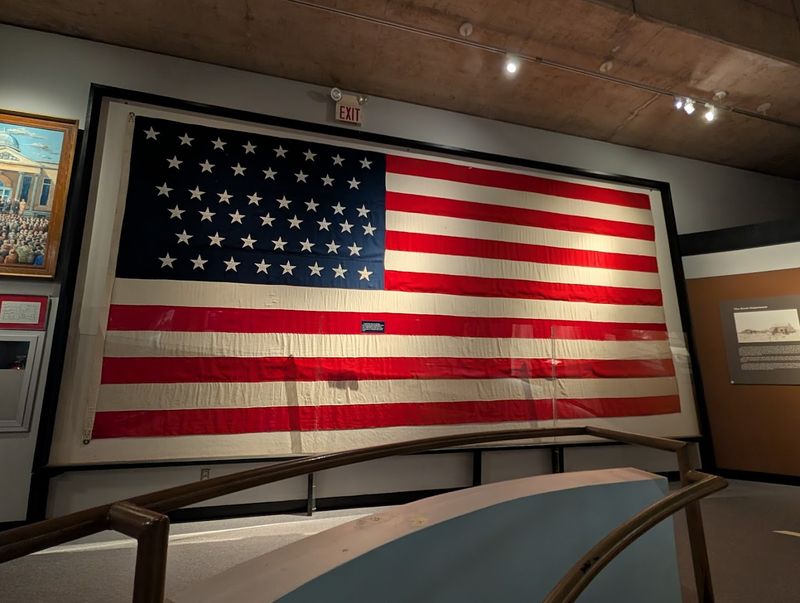
Among the many artifacts inside the Oklahoma Territorial Museum, one item stops visitors cold in the best way. A 46-star American flag, presented to Oklahoma by the city of Philadelphia on July 4, 1908, sits on display with a story that is genuinely remarkable.
This flag once flew over Independence Hall, one of the most iconic buildings in American history. It carries an embroidered star marking “Oklahoma July 4 Fourth 1908,” a small but deeply meaningful detail.
Holding that context in your mind while looking at it adds a layer of significance that photographs simply cannot replicate.
Oklahoma became the 46th state when it joined the Union on November 16, 1907. The gift of this flag from Philadelphia was a symbolic gesture of welcome into the full family of states.
It connected a brand-new state to the very birthplace of American democracy.
Artifacts like this are why physical museums still matter in the age of the internet. You can read about this flag online, sure.
But seeing it in person, understanding where it hung and what it meant, is a completely different experience. It is the kind of object that makes history feel genuinely alive.
Outlaw Tales and the Peculiar Case of Elmer McCurdy
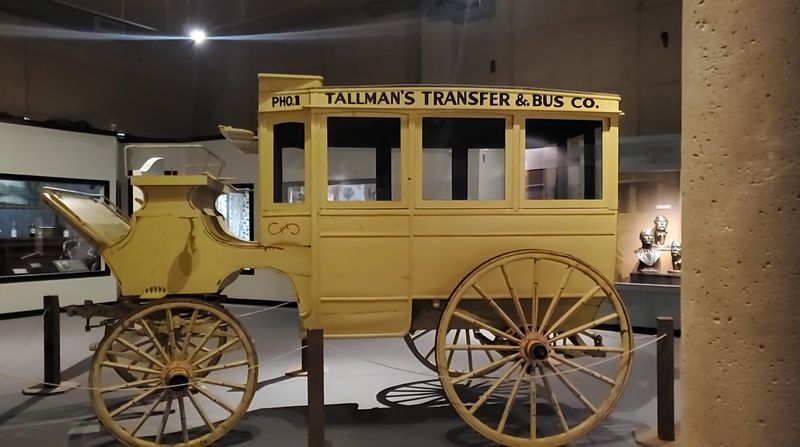
Not every museum has an outlaw story this strange, and the Oklahoma Territorial Museum leans into it with just the right amount of flair. The tale of Elmer McCurdy is one of the most bizarre footnotes in Oklahoma history, and the museum tells it well.
McCurdy was a small-time outlaw who was shot and killed in 1911. What happened after his death is the truly wild part.
His embalmed body became a traveling attraction, passing through carnivals and sideshows for decades before anyone figured out it was a real human being. The museum displays the gun that ended his life, which gives the story a chilling, tangible anchor.
There is also a hatchet on display that once belonged to Carrie Nation, the famous prohibitionist known for smashing up establishments she found morally objectionable. That piece connects Oklahoma’s territorial era to the broader national conversations happening at the time.
These quirky, offbeat artifacts sit alongside more serious historical displays, and that mix works surprisingly well. The museum never feels like it is trying too hard to entertain.
The stories are genuinely interesting on their own, and the staff are happy to share more context if you ask.
African American Homesteaders and the History Often Left Out
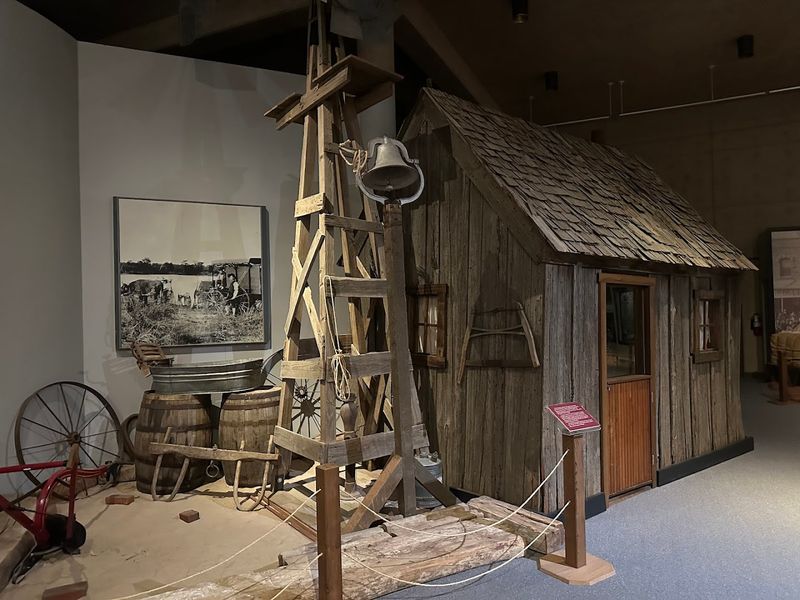
One of the most meaningful sections of the Oklahoma Territorial Museum is the one that does not always make it into mainstream history books. The museum gives real attention to the experiences of African American homesteaders who came to Oklahoma Territory seeking land, opportunity, and freedom.
After the Civil War, many formerly enslaved people and their descendants saw Oklahoma as a genuine chance to build new lives. All-Black towns were established throughout the territory, and some of those communities thrived in remarkable ways.
The museum acknowledges this history with care and specificity.
Seeing this part of Oklahoma’s story told here, in the same space as the land run exhibits and the pioneer displays, feels right. It is a reminder that the territorial period was not experienced the same way by everyone.
Different communities brought different hopes and faced different obstacles on the same piece of land.
Museums that include these layered perspectives tend to leave visitors with a fuller, more honest picture of history. This one earns real credit for making the effort.
It is the kind of exhibit that sparks conversations long after you have driven home, which is exactly what good history education should do.
Planning Your Visit to Guthrie and the Museum
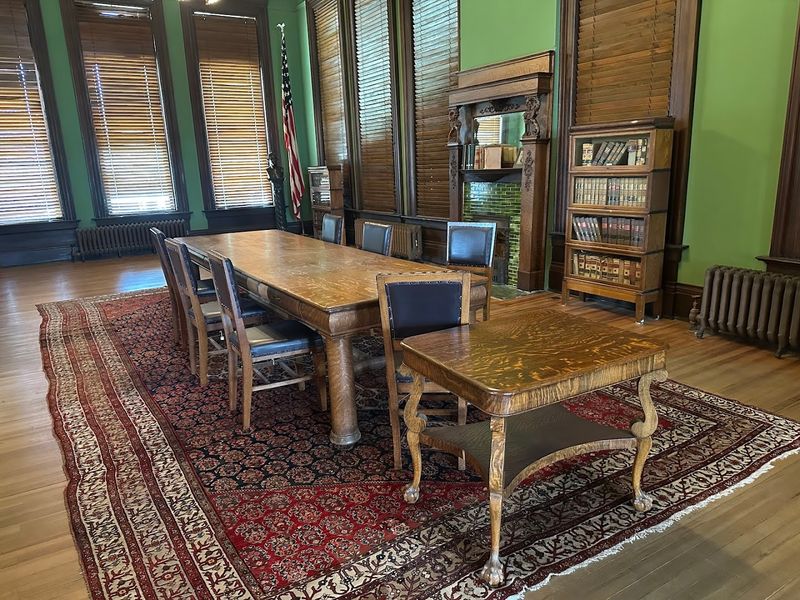
Guthrie is about 30 miles north of Oklahoma City, making it an easy and rewarding day trip. The town itself is packed with Victorian-era architecture and a laid-back charm that pairs perfectly with a museum visit.
Arriving early gives you the most time to explore without feeling rushed.
The museum is open Tuesday through Saturday from 9 AM to 5 PM and is closed on Sundays and Mondays. Veterans get in free, which is a genuinely appreciated gesture.
The staff at the front desk are consistently described by visitors as warm, knowledgeable, and happy to answer questions.
The second floor is widely considered the highlight by many who visit, featuring a strong collection of genuine artifacts with clear, informative explanations. The first floor sets the historical context well, so moving through the space in order makes the experience feel cohesive and satisfying.
The gift shop is small but thoughtful, with items that make for meaningful souvenirs rather than generic trinkets. Do not forget to sign the guest book before you leave.
It is a small touch, but it adds to the sense that this museum genuinely values every person who walks through its doors.
Address: 406 E Oklahoma Ave, Guthrie, OK 73044
