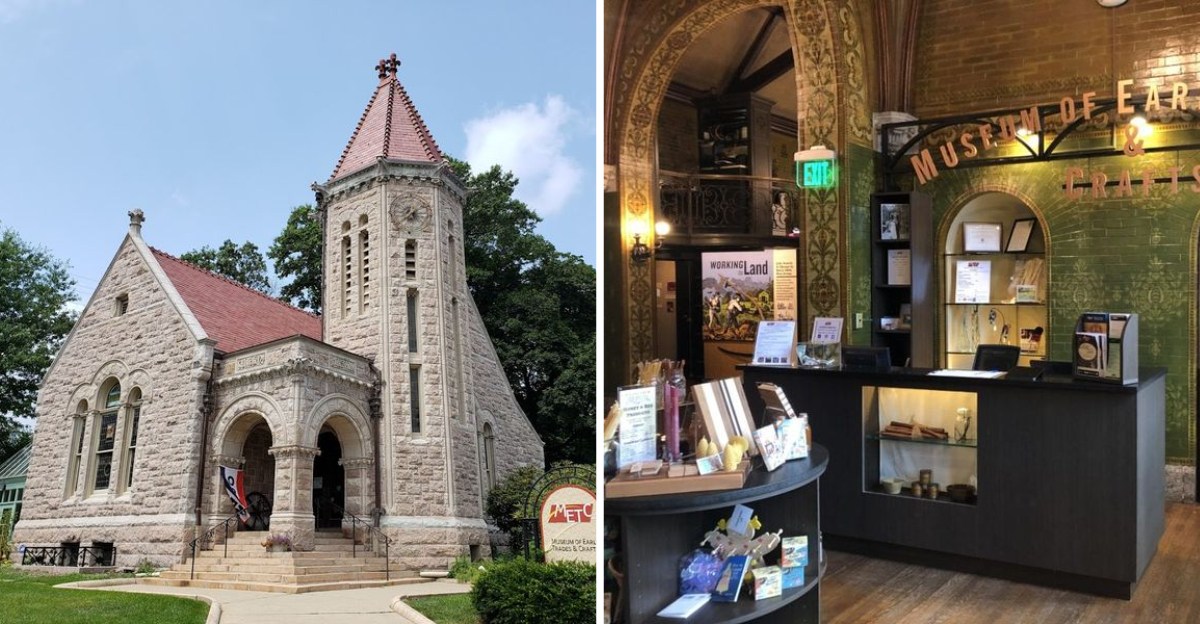
Now this is a building with serious plot twists. It started as a grand library, a gift from a wealthy philanthropist who clearly had a soft spot for architecture.
Built around the turn of the twentieth century, the structure looks more like a castle than a quiet reading room with its heavy stone walls and towering arches.
It served as the town’s library for nearly seven decades before the books moved on.
Then, a local couple with a massive collection of antique tools stepped in and transformed the space.
Today, the museum celebrates the trades and crafts that built New Jersey, displaying thousands of artifacts inside a beautifully restored interior.
It is a place where you can wander the halls and get hands-on with history.
New Jersey, you have turned a former library into something truly special.
The 1899 Building That Refuses to Be Forgotten
Some buildings whisper history. This one practically shouts it from its stone rooftops.
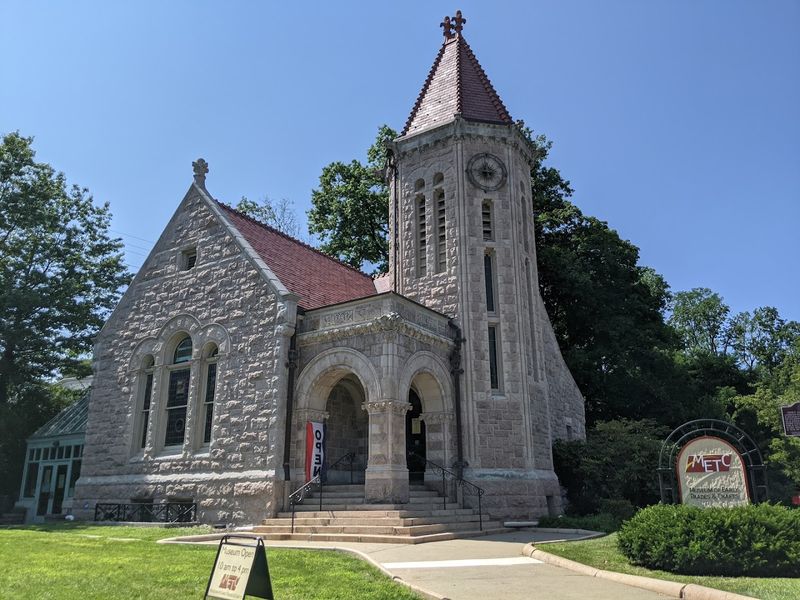
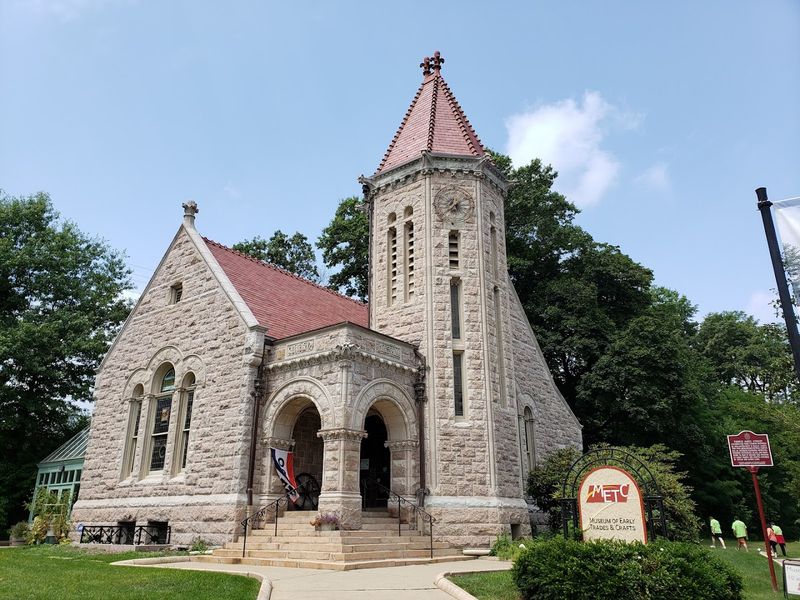
The Museum of Early Trades and Crafts sits inside a stunning Richardsonian Romanesque Revival structure built in 1899, originally gifted to Madison as its first free public library by philanthropist D. Willis James.
The exterior alone is worth the trip. Thick sandstone walls, a rounded corner tower, and deeply arched windows give the building a fortress-like presence that feels completely out of place on a quiet New Jersey main street, in the best possible way.
Completed in 1900, it served the community as a library until 1968. Then, rather than fading into irrelevance, it reinvented itself.
The building is now listed on both the National and State Registers of Historic Places. Standing in front of it for the first time, you get the distinct feeling that whatever is inside must be worth discovering.
From Bookshelves to Blacksmith Tools
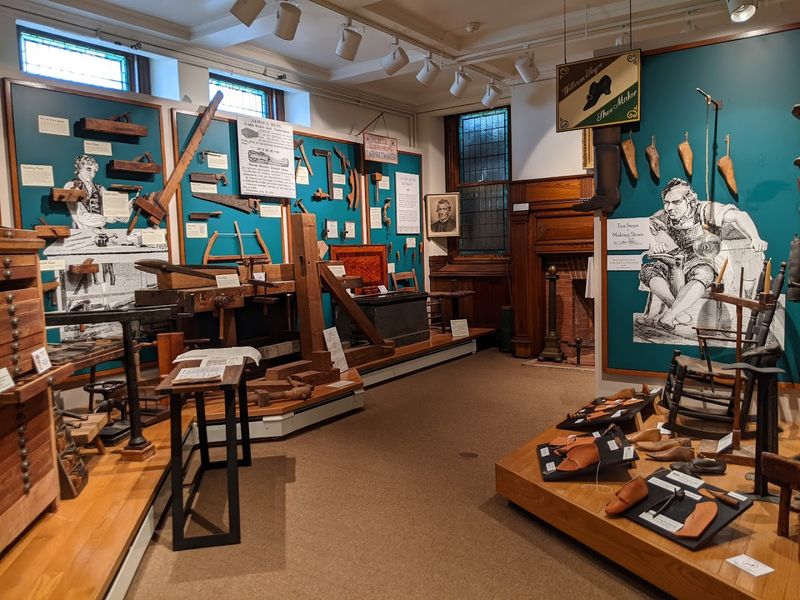
Every great museum has an origin story, and this one starts with two very determined collectors. Agnes and Edgar Land spent years gathering over 8,000 tools and artifacts used in New Jersey before 1860.
Their passion for preserving the everyday working lives of ordinary people was the spark that created something extraordinary.
In 1969, the Museum of Early Trades and Crafts was officially founded. By 1970, the Lands had signed a lease with the Borough of Madison, transforming the former James Library Building into a permanent home for their remarkable collection.
What makes this origin feel so human is the sheer specificity of what they saved. Not grand political relics or royal portraits, but coopers’ tools, shoemakers’ lasts, and cabinetmakers’ planes.
These were the objects of real working hands. The museum honors a side of history that often gets skipped over in favor of famous names and battlefields, and that choice makes it genuinely refreshing.
Groined Vaults and Stained Glass
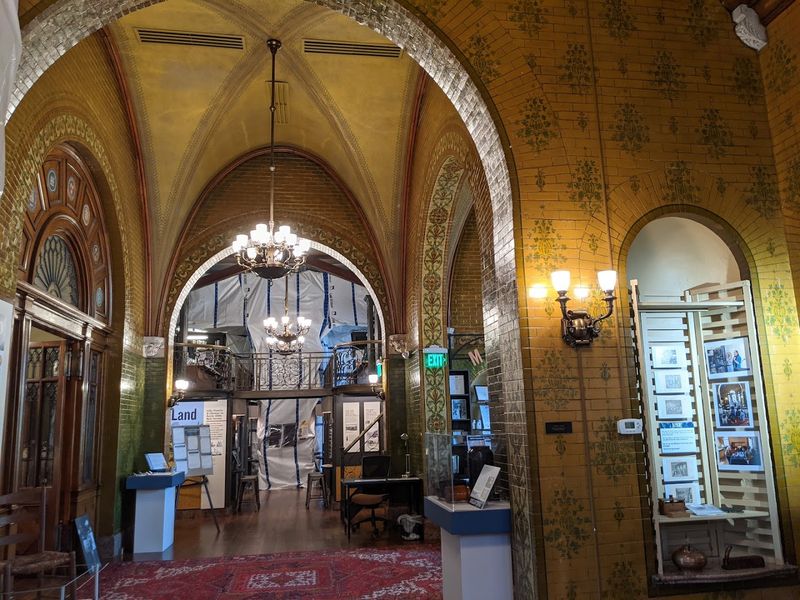
Walking through the front door, the first instinct is to stop and look straight up. The groined vaulting overhead is the kind of architectural detail that belongs in a European cathedral, not a small-town New Jersey museum.
It sets the tone immediately.
The building features 56 stained glass windows that scatter color across the stone floors on sunny afternoons. Eight chandeliers hang from the ceilings, and three fireplaces anchor different corners of the space with a warmth that feels almost residential.
Decorative stenciling runs along the walls, and intricate woodwork frames every doorway.
A major renovation in the 1990s, funded by a million-dollar community effort, brought all of these features back to their original elegance. The restoration was careful and respectful, letting the architecture speak rather than compete with the exhibits inside.
Spending time inside this building feels less like visiting a museum and more like being a guest in a grand historic home that happens to be packed with fascinating things.
The Permanent Exhibit That Brings Farming to Life
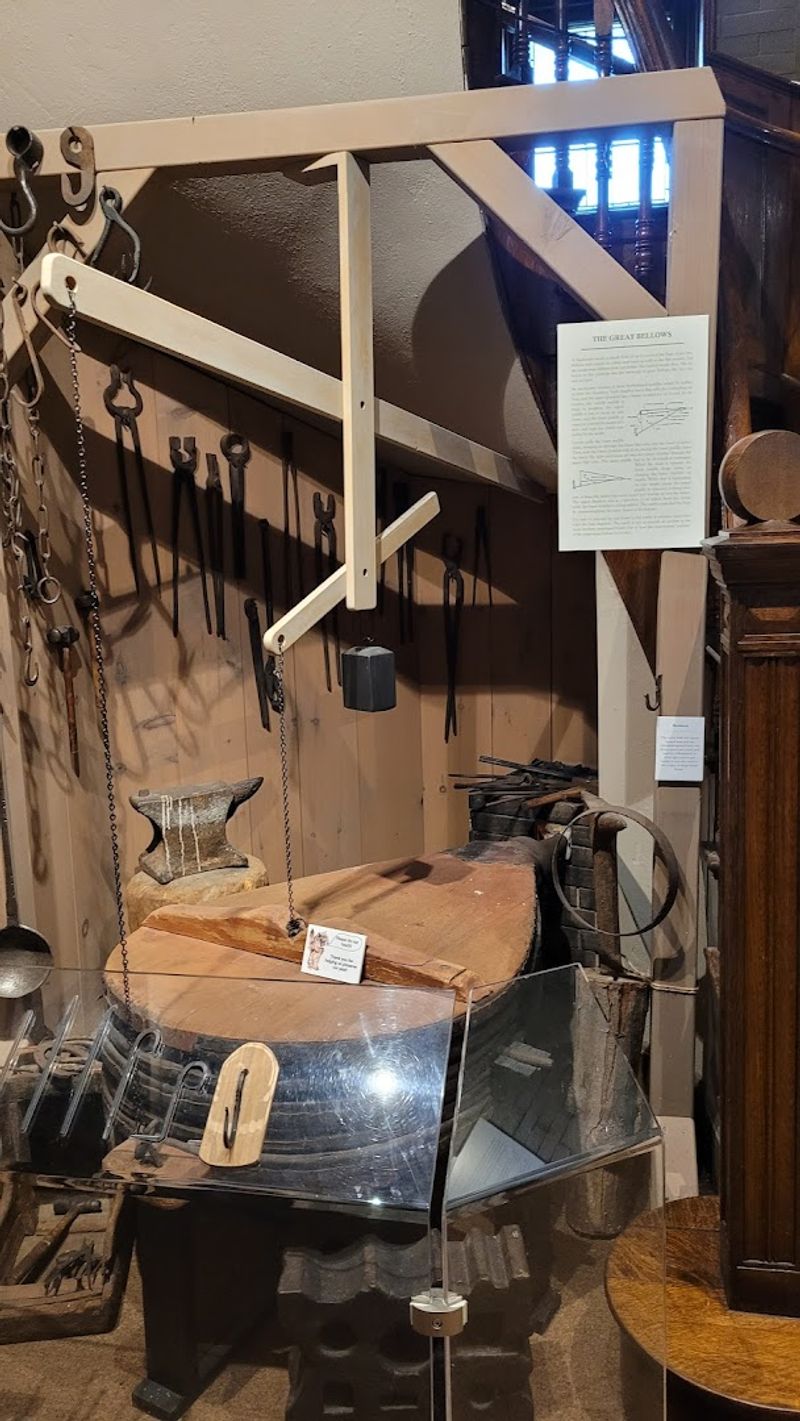
Farming in the early 1800s was nothing like scrolling through a seed catalog on your phone. The permanent exhibit “Working the Land: Life, Family and Change in Early 1800s New Jersey” makes that crystal clear in the best possible way.
It pulls you into the rhythm of a life built entirely around seasons, soil, and survival.
The exhibit covers how families grew food, preserved harvests through brutal winters, and organized their days around the demands of the land. Actual tools used for these tasks are displayed alongside detailed descriptions that give each object a real story.
What makes this section particularly effective is how it connects the physical objects to the human experience behind them. A wooden barrel is not just a barrel when you understand who made it, why it mattered, and how long it took to build.
The exhibit asks visitors to think about their own relationship to labor and community, which is a surprisingly thought-provoking question to encounter in a museum about old tools.
Coopers, Cobblers, and Cabinetmakers
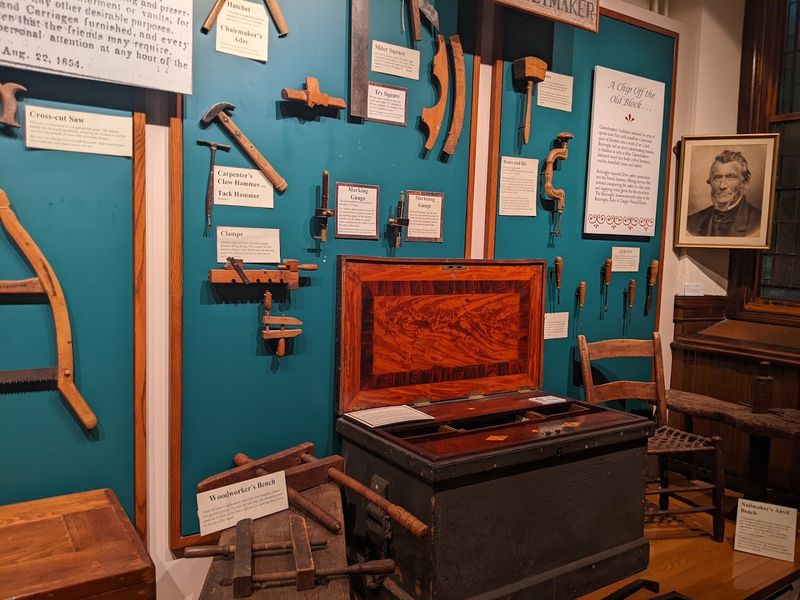
Before factories and assembly lines, everything was made by hand. The museum’s collection celebrates the skilled tradespeople who shaped New Jersey one object at a time.
Coopers who bent wood into barrels, shoemakers who formed leather over wooden lasts, cabinetmakers who built furniture with nothing but hand tools and patience.
Entire walls are dedicated to specific trades, with tools mounted and labeled in ways that make even unfamiliar implements feel understandable.
Seeing a full set of cobbler’s tools arranged together creates a sudden appreciation for how complicated a simple boot actually was to produce.
Printers, blacksmiths, and cabinetmakers all have their own dedicated sections. Each one tells a story about specialization, community, and the kind of deep knowledge that took years of apprenticeship to develop.
These were not hobbies. They were entire lives.
The museum presents each trade with enough context that even younger visitors can connect the old tools to the goods they produced, making the whole thing feel surprisingly modern in its approach.
Hands-On Activities That Make History Feel Real
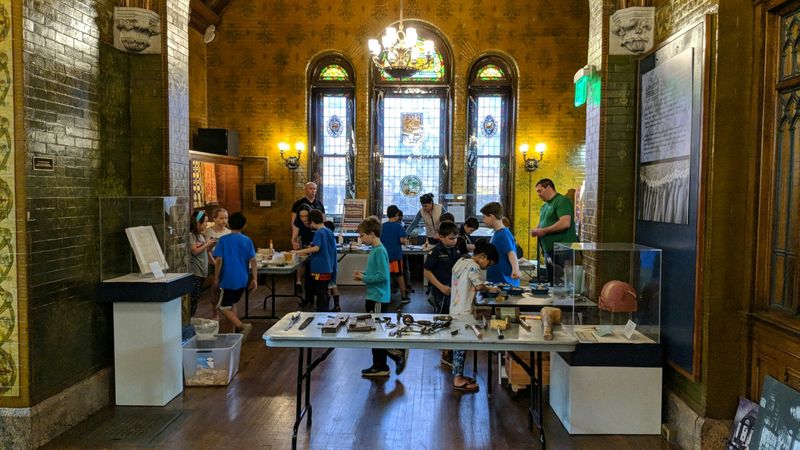
History gets a lot more interesting when you can actually touch it.
The Museum of Early Trades and Crafts goes out of its way to make the experience interactive, offering hands-on activities that let visitors engage with the past rather than just observe it from behind a rope.
There is a dedicated children’s room filled with activities designed to make early trades accessible and genuinely fun for younger visitors.
Blocks, puzzles, and craft-inspired play connect kids to the themes of the museum without any pressure to memorize dates or names.
Adults get in on the action too. Craftspeople are regularly brought in to demonstrate historical techniques using the actual tools on display, turning the museum into a living classroom.
Watching someone work a traditional method in real time is a completely different experience from reading a placard.
The museum clearly understands that engagement matters as much as information, and the result is a visit that sticks with you long after you have stepped back out onto Main Street.
Iron, Fire, and Forgotten Skill
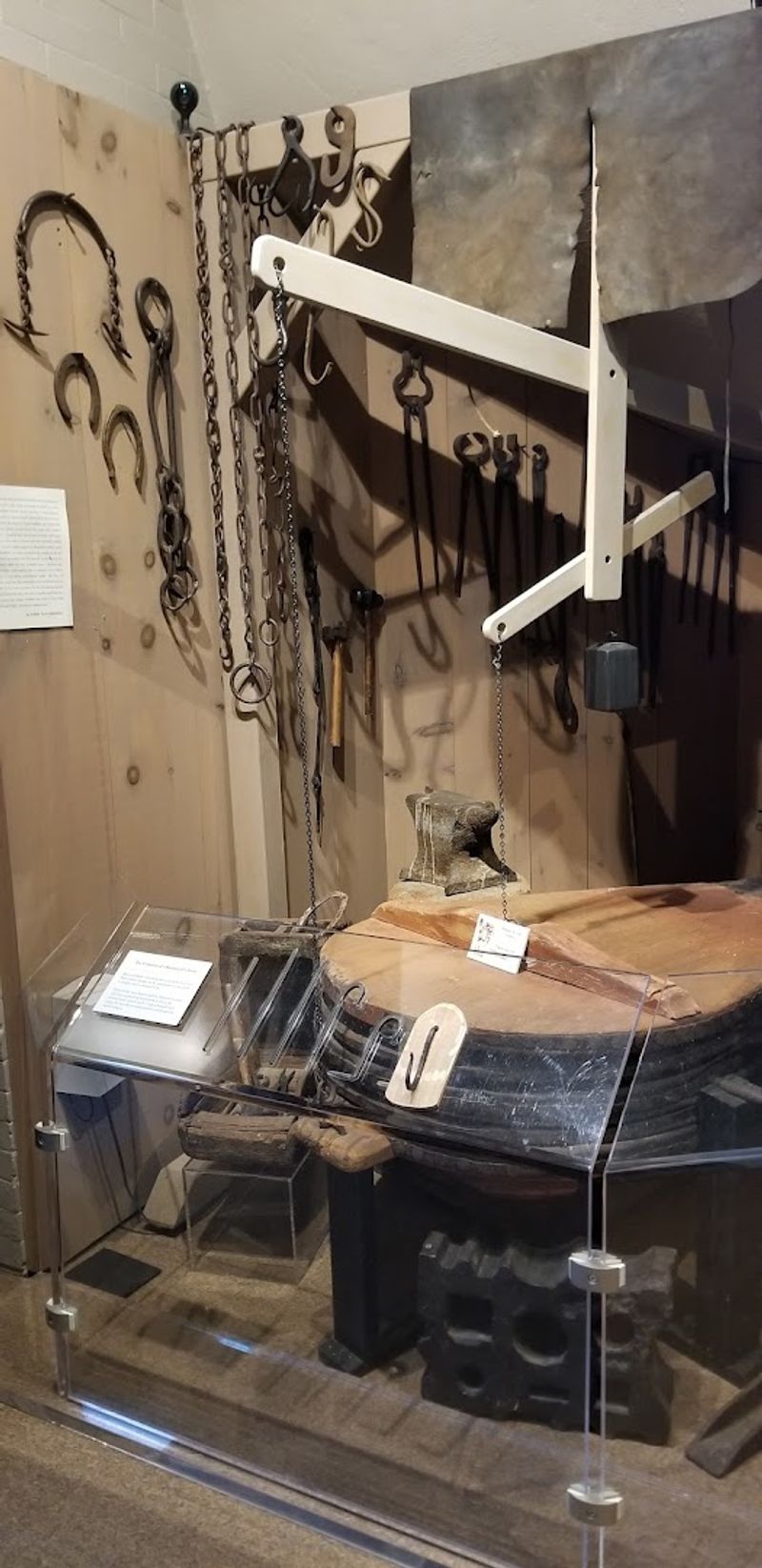
There is something almost mythological about blacksmithing. The combination of fire, iron, and raw physical skill produces objects that last for centuries, and the museum’s blacksmith section captures that power beautifully.
Old bellows hang alongside hammers and tongs, each piece worn smooth by years of use.
The display goes beyond simply showing the tools. It explains the process, the heat required, the timing, and the judgment calls that separated a competent smith from a truly skilled one.
Reading through the descriptions, it becomes obvious that blacksmithing was as much an art form as it was a trade.
For many visitors, this section becomes an unexpected favorite. There is something viscerally satisfying about seeing tools built to last, made from materials that were shaped entirely by human effort and heat.
The museum presents the blacksmith not as a background character in history but as a central figure in any functioning community. Without the smith, the farmer had no plow.
Without the plow, there was no harvest. That chain of dependence is quietly profound.
A Viewable Storage Facility That Changes How Museums Work
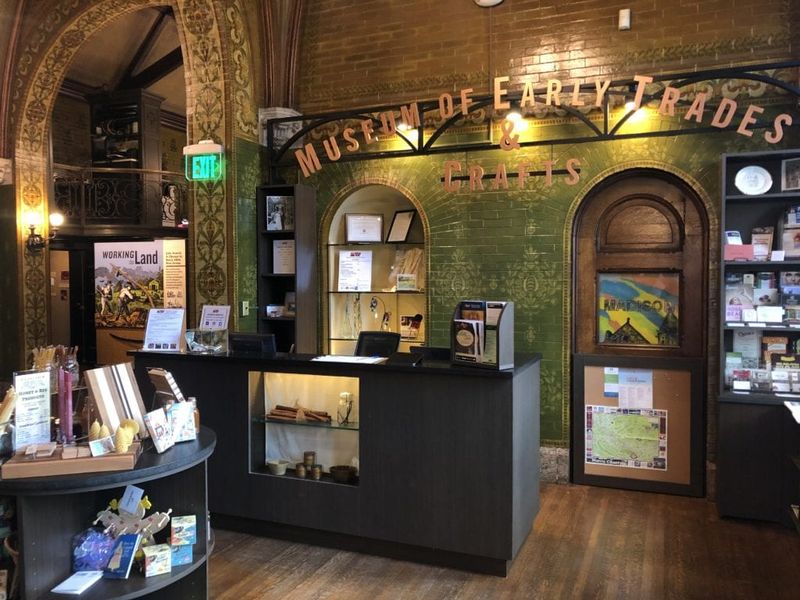
Most museum collections spend the majority of their existence in storage, invisible to the public. The Museum of Early Trades and Crafts decided to change that.
In December 2024, the museum completed a capital project creating a state-of-the-art on-site Viewable Storage Facility designed to house and preserve its full collection while keeping it accessible to curious eyes.
This is genuinely exciting for anyone who has ever wondered what museums keep behind closed doors. The facility allows visitors to see artifacts that would otherwise never make it onto the main floor, adding significant depth to the overall experience.
The decision to make storage viewable reflects the museum’s broader philosophy: history belongs to everyone, and accessibility matters. Preservation and public engagement do not have to be competing priorities.
With over 8,000 artifacts in the collection, having a visible, well-organized storage space means that every visit has the potential to surface something new. It is a smart, forward-thinking move that keeps the museum feeling fresh even for returning visitors.
Learning Gets More Room to Breathe
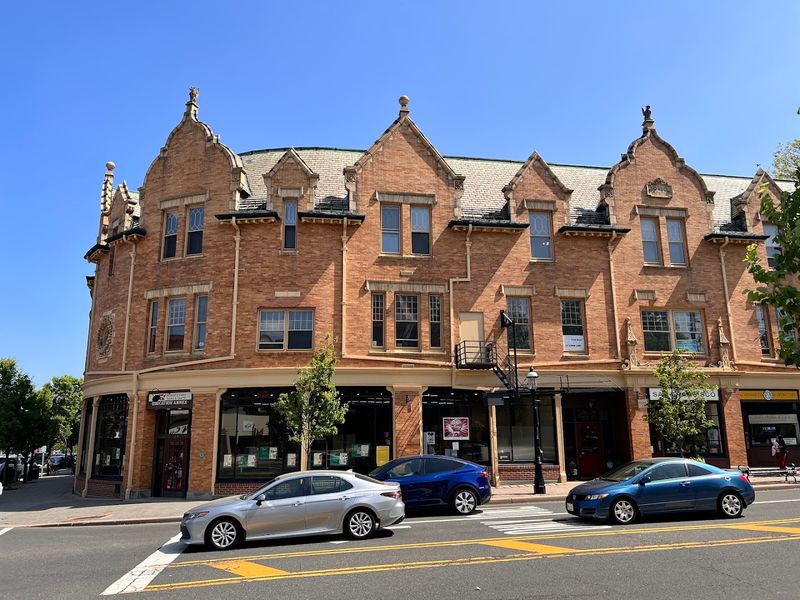
By 2020, the museum’s educational ambitions had simply outgrown the original building. The solution was elegant: expand across the street.
The James Building, now serving as the Education Annex, gave the museum dedicated space for programming without disrupting the carefully curated exhibits in the main building.
The annex hosts workshops, school group visits, and community programs that connect New Jersey residents of all ages to the history of trades and crafts.
Having a separate space means these activities can run simultaneously with regular museum hours, making the whole operation more dynamic and accessible.
The museum also added bilingual staff to extend its reach to Spanish-speaking communities, ensuring that more families can engage with the programs on offer.
That kind of intentional inclusivity is worth noting.
Education is clearly not an afterthought here. It sits at the center of what the museum does and why it does it, which gives the whole institution a sense of purpose that goes well beyond simply displaying old tools in a beautiful building.
The Perfect Neighborhood for a Craft Museum
The location of the Museum of Early Trades and Crafts is almost too perfect. Sitting right on Main Street in Madison, it is surrounded by the kind of walkable small-town energy that makes an afternoon out feel genuinely complete.
After exploring the exhibits, stepping outside means stepping into a neighborhood full of independent shops and welcoming restaurants.
Madison itself has a personality that suits the museum well. It is a town that takes its history seriously without feeling stiff about it.
The streets are easy to navigate, parking is available nearby, and the whole area rewards a slow, unhurried pace.
Spending a morning at the museum and then wandering Main Street for lunch is a natural combination that many visitors fall into without even planning it.
The museum is open Tuesday through Saturday from 10 AM to 4 PM, giving plenty of time to explore before the afternoon winds down.
It is the kind of place that fits into a day trip beautifully and almost always inspires a return visit.
Address: 9 Main St, Madison, NJ
