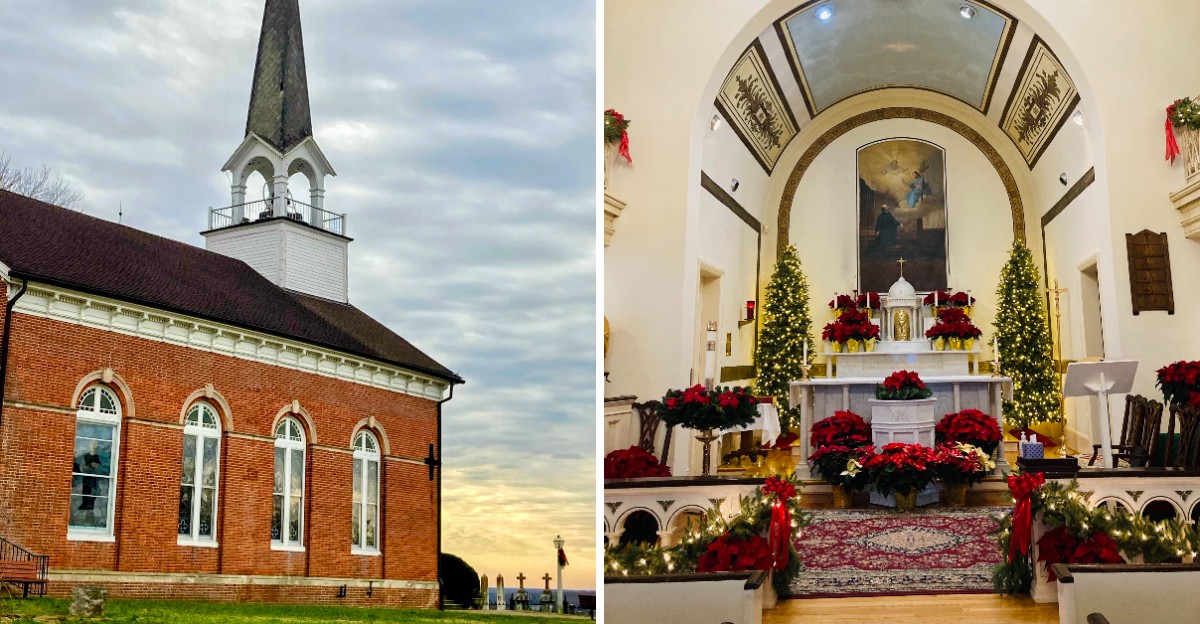
Some buildings carry more than architecture. They carry centuries of history, quiet moments, and the kind of endurance that is hard to wrap your head around.
This Maryland church is one of those places. It holds the title of the oldest continuously active Catholic parish in the United States, and that distinction is not just a plaque on the wall.
It is a living record of faith, community, and time. The building itself has been preserved and cared for, with details that reflect its age.
Visitors come for the history, the architecture, and the stillness. Locals know it as part of the fabric of the area.
A reminder that some places are not just old, they are still working, still gathering, still part of daily life. The kind of landmark that makes you stop and think about how much has changed and how much has stayed the same.
A Mission Born from the Ark and the Dove
Some church stories begin with a building. This one begins with two wooden ships bobbing across the Atlantic in 1634, carrying English settlers who wanted one simple thing, the freedom to worship without fear.
The ships were called the Ark and the Dove, and they landed on St. Clement’s Island in Maryland. On board was a Jesuit priest named Father Andrew White.
Back in Great Britain, Catholics faced harsh rules and punishment for their beliefs, so Maryland felt like a fresh start.
By 1641, Father White had set up a settlement near a spot called Fourth Point on the banks of the Port Tobacco River. His goal was to share his faith with the Piscataway people who already lived there.
Instead of just talking at them, he learned their language. He even translated prayers so they would make sense in their own words.
That effort paid off in a big way. The Piscataway Chief was eventually baptized, a moment that tied the mission and the tribe together.
Here is the part that gives chills. Some members of the Piscataway tribe are still parishioners at Saint Ignatius today.
Not everything went smoothly, of course. In 1645, hostility from English Protestants forced the Jesuits to leave their first settlement.
It was a hard setback, but it was not the end.
Anyone visiting should keep this backstory in mind. The quiet hilltop makes a lot more sense once the long, brave journey behind it comes into focus.
It turns a pretty church into a living piece of American history.
The Comeback on a Hilltop
Nobody likes getting pushed out, but the Jesuits clearly were not the type to give up. In 1662, they came back to the area with something powerful in hand, a land grant of 4,000 acres from Lord Baltimore, the Catholic leader of the Maryland colony.
Father Henry Warren built a simple log chapel right at the river’s edge at Chapel Point. It was not fancy.
Still, that little wooden chapel marked the moment the parish became permanently active, and it has stayed that way ever since.
Around the same period, the Jesuits developed St. Thomas Manor, which included the church and a working farm. The farm was more than a place to grow food.
Money from it helped support Jesuit work across the colonies, which meant Catholics could keep attending services without being disturbed.
Then came a smart move. Around 1690, worries about flooding and possible raids pushed the community to relocate the church from the waterfront up to the hill.
Think of it as the colonial version of buying higher ground.
One old visitor comment jokes that the Jesuits were great at real estate decisions. Honestly, it is hard to argue.
The hilltop offers safety, a breeze, and a view that stretches for miles.
When visiting, take a moment near the edge of the grounds and look down toward the water. Imagining a tiny log chapel down there, far from the current church, helps show just how much this community adapted to survive and keep its doors open.
Old Bricks with a Lot to Say
Brick buildings rarely get enough credit, but the ones at Chapel Point deserve a round of applause. Each wall here carries a different chapter of history.
In 1697, the community built a small brick chapel and residence on the bluff, replacing the old log structure. That original chapel did not get torn down.
It now serves as the sacristy of the current church, which is the room where priests prepare for Mass. Talk about a building that keeps working well past retirement age.
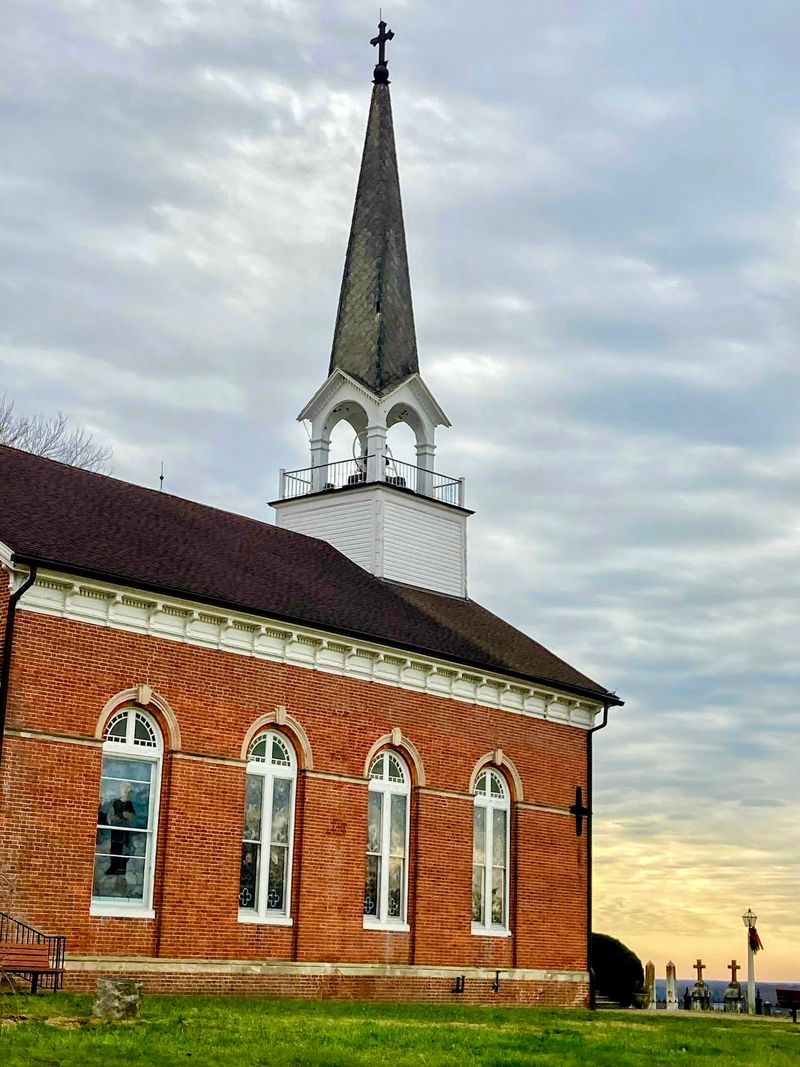
The cornerstone for the church standing today was laid in 1798. It is modest in size, and several visitors describe it as a lovely country church.
Inside, look closely at the kneelers, because the needlepoint on them is beautiful and full of careful handwork.
Right next door sits St. Thomas Manor, a two-story Georgian-style house built in 1741. This was once the headquarters for the entire Jesuit mission in the American colonies.
Priests who served Catholics in the area lived here.
The manor holds two impressive titles. It is recognized as the oldest continuously occupied Jesuit residence in the world.
It is also Maryland’s oldest surviving example of Georgian architecture, known for its balanced shape and neat rows of windows.
A good tip is to walk slowly around both buildings and notice how they sit together. The pairing of church and manor tells the story of a community that planned to stay for the long haul, and it did.
Rising Again After the Fire of 1866
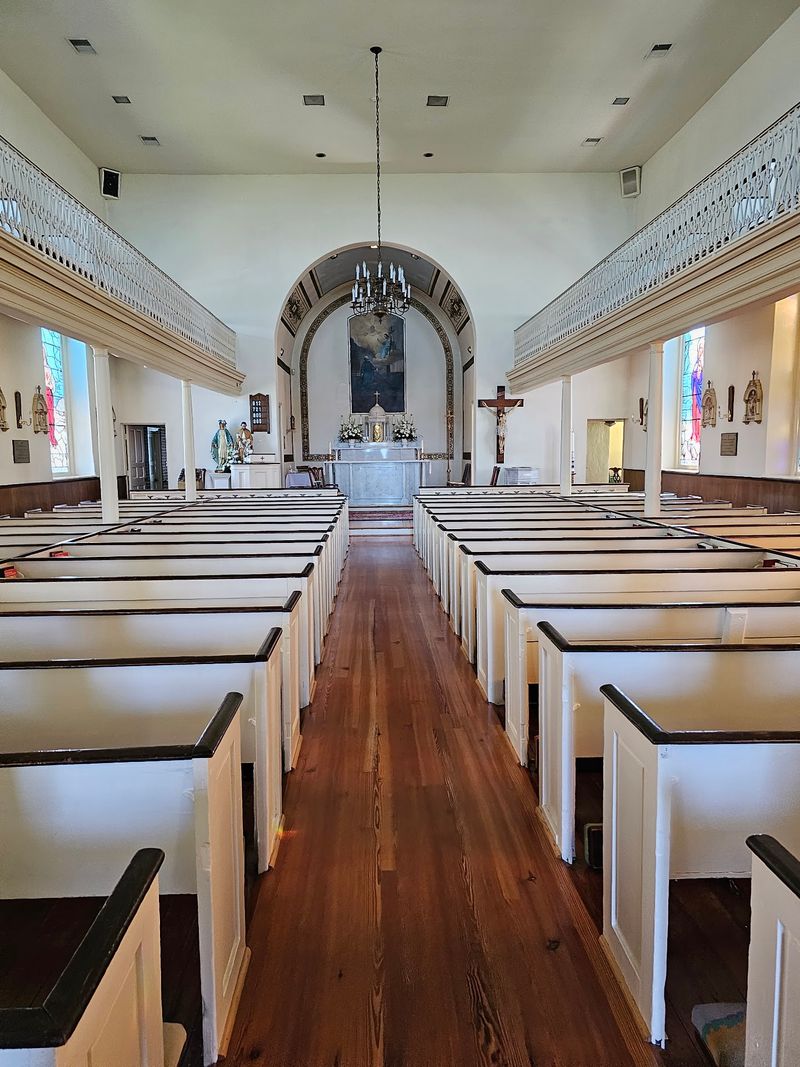
December 1866 brought a disaster that could have ended everything. A fire tore through the insides of both the church and St. Thomas Manor, and most of the original records and historical papers were lost in the flames.
Losing centuries of written history in one night is heartbreaking. Yet something stubborn survived.
The thick exterior brick walls of both buildings stayed standing, like the bones of the place refused to fall.
The community did not sit around feeling sorry for itself. People got to work on rebuilding right away.
By June 1868, both the church and the manor had been restored and rededicated, which is a fast turnaround for that era.
A few changes came with the repairs. One of them was a one-story wood-framed vestibule added to the west end of the church.
It is a small detail that visitors can still spot today, a quiet reminder of the rebuilding years.
This part of the story says a lot about the people of Chapel Point. The parish stayed continuously active even through ashes and repairs.
Faith, it seems, was the real foundation all along.
When looking at the church walls, try to picture them blackened by smoke and standing alone in winter. Then look at the building as it stands now, calm and cared for.
That contrast makes the place feel even more meaningful, and it gives visitors a fresh appreciation for how much work went into saving it.
Bishops, Vows, and Big Moments in Church History
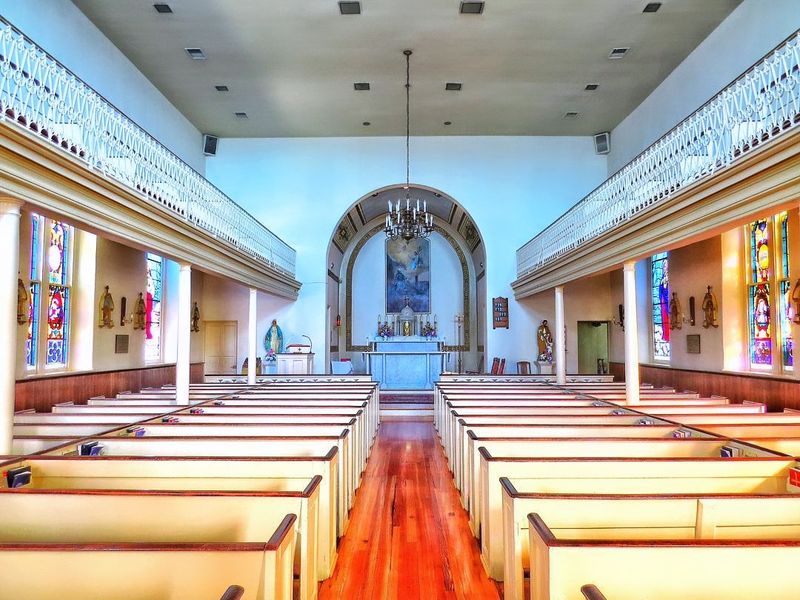
For such a small church, Saint Ignatius has hosted some surprisingly big events. Several of them helped shape Catholic life across the entire country.
In 1794, Bishop John Carroll was invested in his robes here as the first Catholic bishop of the United States. That moment made St. Thomas the nation’s first Catholic see, which is the official seat of a bishop.
Not bad for a country church on a hill.
The story keeps going. The Jesuit order was suppressed by the Catholic Church in 1773, which basically put it on pause.
In 1805, the St. Thomas complex played a key role in bringing the order back to life in the United States, and three American priests took their vows inside the walls of this very church.
There is also a link to the Carmelite Nuns, who arrived in America in 1790. Their arrival is credited to Francis Neal, a former pastor at Saint Ignatius.
One parish, several firsts.
Visitors can find the church at 8855 Chapel Point Rd, Port Tobacco, MD 20677, United States. Once inside, sit in a pew for a few minutes.
Many people say the weight of time feels almost real in that quiet space.
The information boards posted around the property are worth reading too. They explain these milestones in plain language and add details that make the history click.
Plan a little extra time for them, since skimming would miss the best parts.
A Cemetery That Tells Charles County Stories
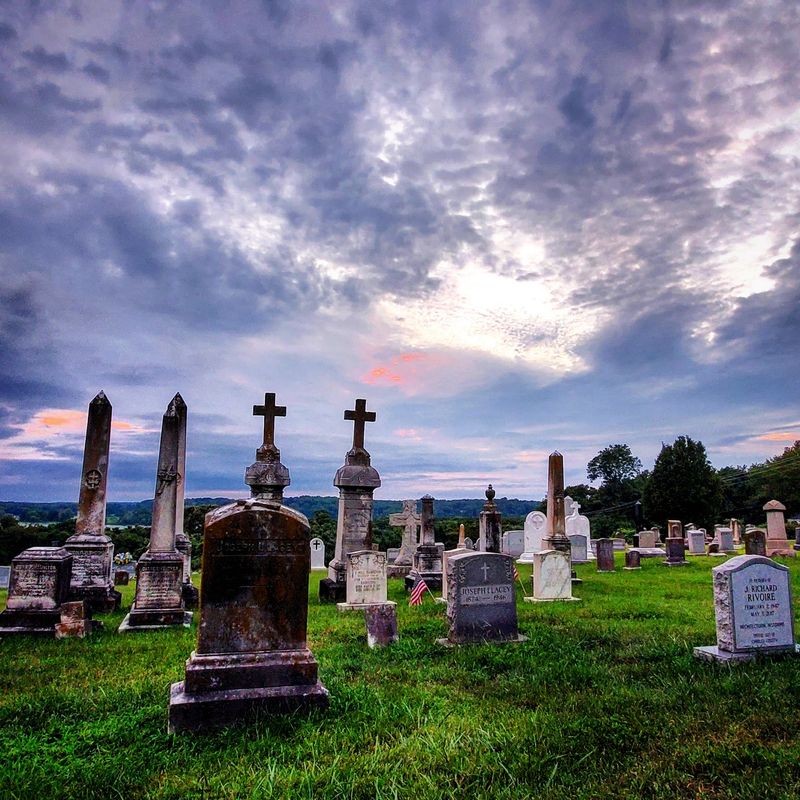
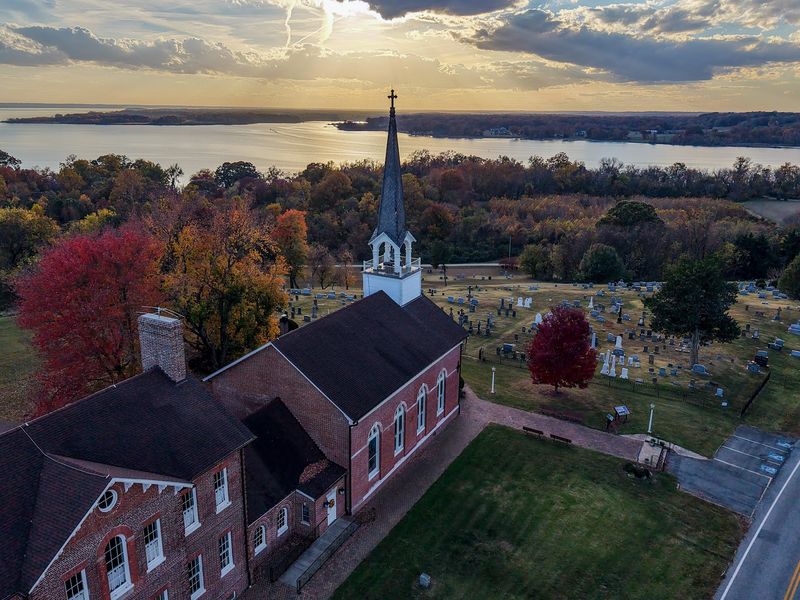
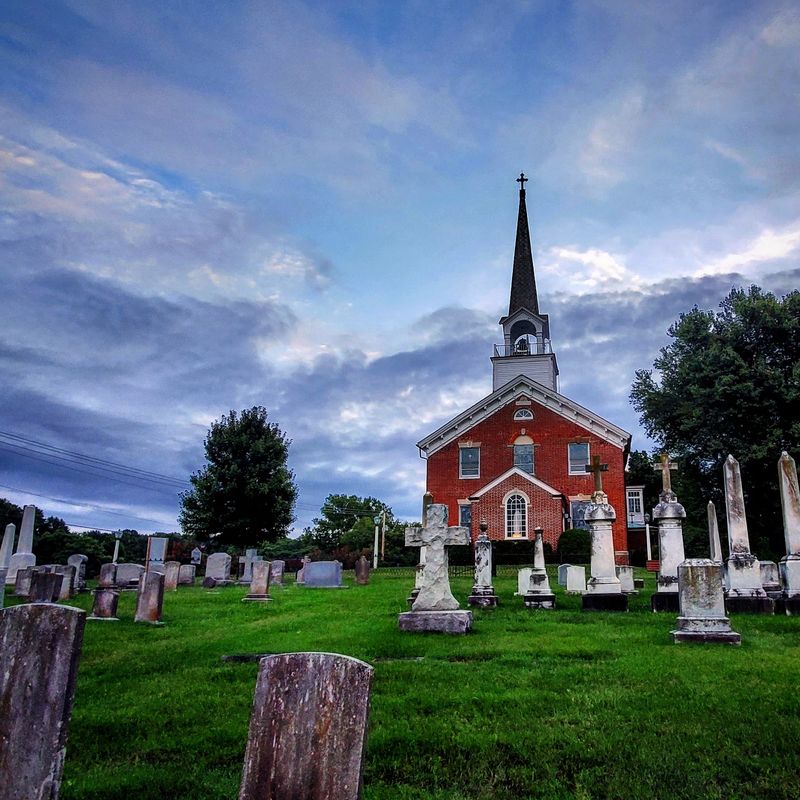
Cemeteries can feel spooky, but this one feels more like a history book laid out on the grass. Old stones lean gently on the hillside, and the river shines below them.
Many Charles County residents rest here, some going back a very long way. Visitors often describe a stroll through the cemetery as a walk through the ages.
Names, dates, and worn carvings hint at families who lived and worshipped here for generations.
Some graves connect to one of the most famous moments in American history, the Lincoln assassination. Among those buried here is Father Bernardin Wiget, the priest who accompanied Mary Surratt to the gallows.
It is a heavy story. Still, it shows how this quiet corner of Maryland was tied to national events.
The setting softens everything. From the cemetery, the views over the water are wide and calm, making it a natural place to slow down and think.
A few practical tips help here. Stay on the paths and treat the graves with respect, since this is still an active parish burial ground.
Morning or late afternoon light makes the old carvings easier to read.
Bring a little patience too. Some stones are faded, and reading them feels like solving a small puzzle.
Kids who like mysteries might enjoy hunting for the oldest date they can find. It turns a quiet visit into a gentle history lesson that sticks.
Sunsets Where Two Rivers Meet
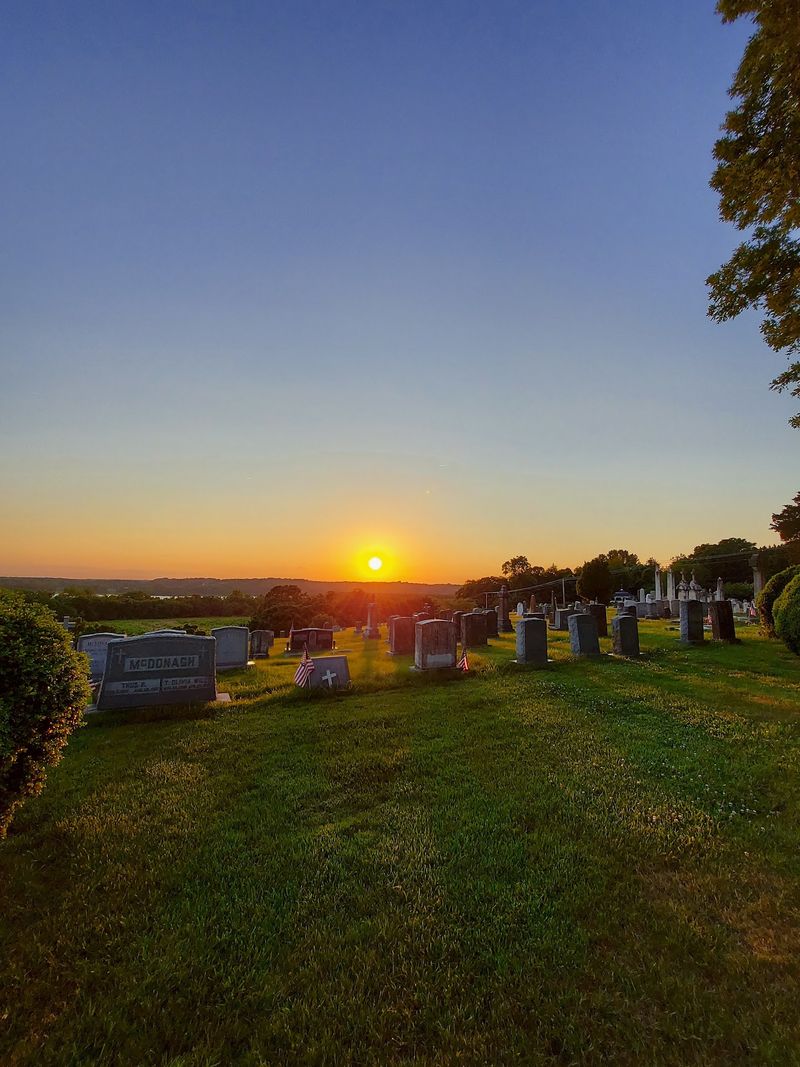
Okay, time to talk about the view, because it might steal the show. The church sits on a bluff about 120 feet high, looking out over the spot where the Port Tobacco River meets the Potomac River.
On a clear evening, the sky turns orange and pink while the water catches every color. Plenty of visitors call this their favorite sunset spot in the area.
One even mentioned stopping by every night on the way home from work, which sounds like a pretty great habit.
There are benches where people can sit and watch river boats drift by. Bring binoculars if possible.
Birds, boats, and tiny details along the shoreline become much more fun up close.
The grounds also include a pretty gazebo and a statue walk showing the crucifixion and resurrection of Jesus. A hidden statue waits near the parking area too, so keep an eye out.
Finding it feels a bit like a small treasure hunt.
The area is part of the Religious Freedom National Scenic Byway, a route that honors places tied to religious liberty in America. That makes Chapel Point a great stop on a longer drive through southern Maryland.
Spring is especially lovely, with fresh green grass and mild air. Parking is easy thanks to a big lot.
For the best experience, arrive a little before sunset, find a bench, and simply let the sky do its thing without rushing off.
Joining a Living Parish Today
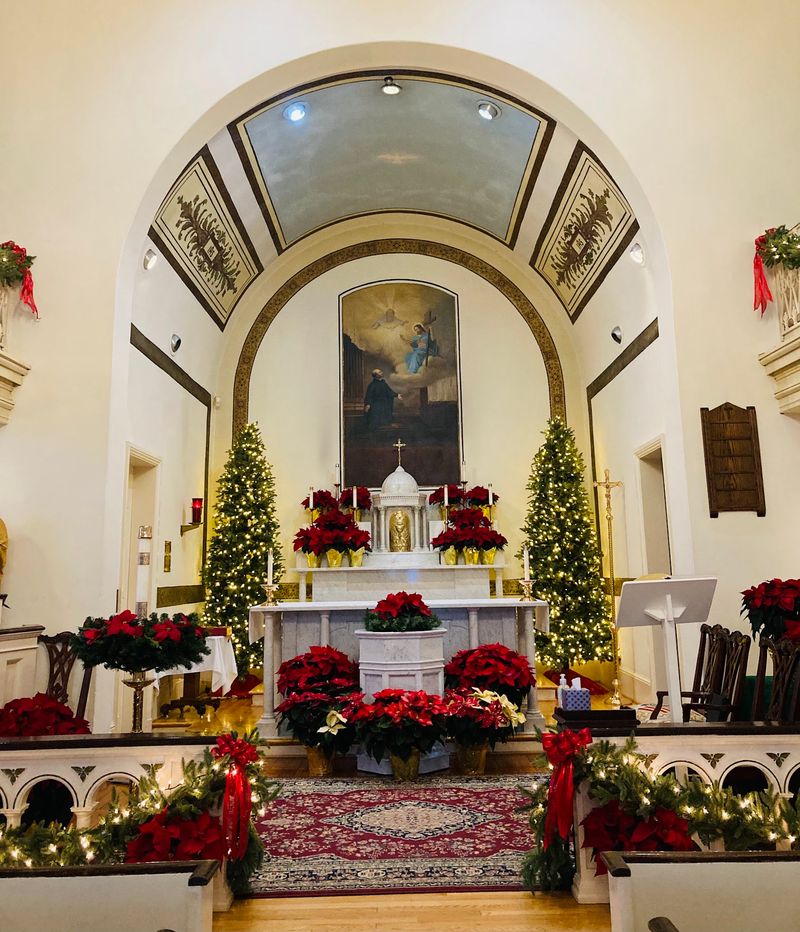
History is wonderful, but Saint Ignatius is not a museum frozen in time. It is a working parish with real people, weekly Masses, and a warm community that welcomes visitors.
Jesuit spirituality shapes life here. This way of praying comes from St. Ignatius and his companions, and it encourages people to see God at work in every part of creation.
Honestly, with that river view, the idea is easy to understand.
Ignatian prayer invites people to use their whole selves, including imagination, senses, and feelings. Instead of just reciting words, someone might picture a scene from scripture and notice what they see and hear.
It is a personal, hands-on approach to faith.
Visitors often mention peaceful services and meaningful sermons. Parishioners are described as friendly and helpful.
Some guests have even had the chance to chat with the pastor or get a tour of the interior, which is a lucky bonus.
For anyone planning to attend Mass, check the parish website at chapelpoint.org for the current schedule. Dress comfortably but respectfully, and arrive a few minutes early to settle in.
Silence phones before stepping inside.
Non-Catholic visitors are welcome to sit quietly and simply observe. There is no pressure to do anything but enjoy the calm.
Being part of a service in the same parish that has prayed here since colonial days is a rare experience. Few places in America can offer that kind of unbroken connection between past and present.
