A historic Minnesota national park sits quietly on the map. But once you’re inside, it feels like you’ve stepped into something most people completely overlook.
Wide landscapes, deep forests, and winding waterways stretch out in a way that never feels crowded or rushed.
There’s a calm kind of mystery to it. Not because it’s empty, but because it still feels untouched compared to more famous parks.
Trails lead you deeper into scenery that shifts from open views to quiet, shaded pockets of wilderness. Every turn feels like another reminder that this place never really tries to show off.
That’s probably why it stays one of the country’s best-kept secrets. It doesn’t need attention – it just keeps being itself.
The Sacred Pipestone Quarries
Long before national parks existed, this ground was already considered sacred. The red stone found here, called catlinite, is soft enough to carve but strong enough to last centuries.
Native American tribes have quarried it for generations, shaping it into ceremonial pipes used in prayer and ritual.
The quarries are still active today. Only federally enrolled tribal members are permitted to quarry the stone.
That fact alone makes this place unlike any other national monument in the country.
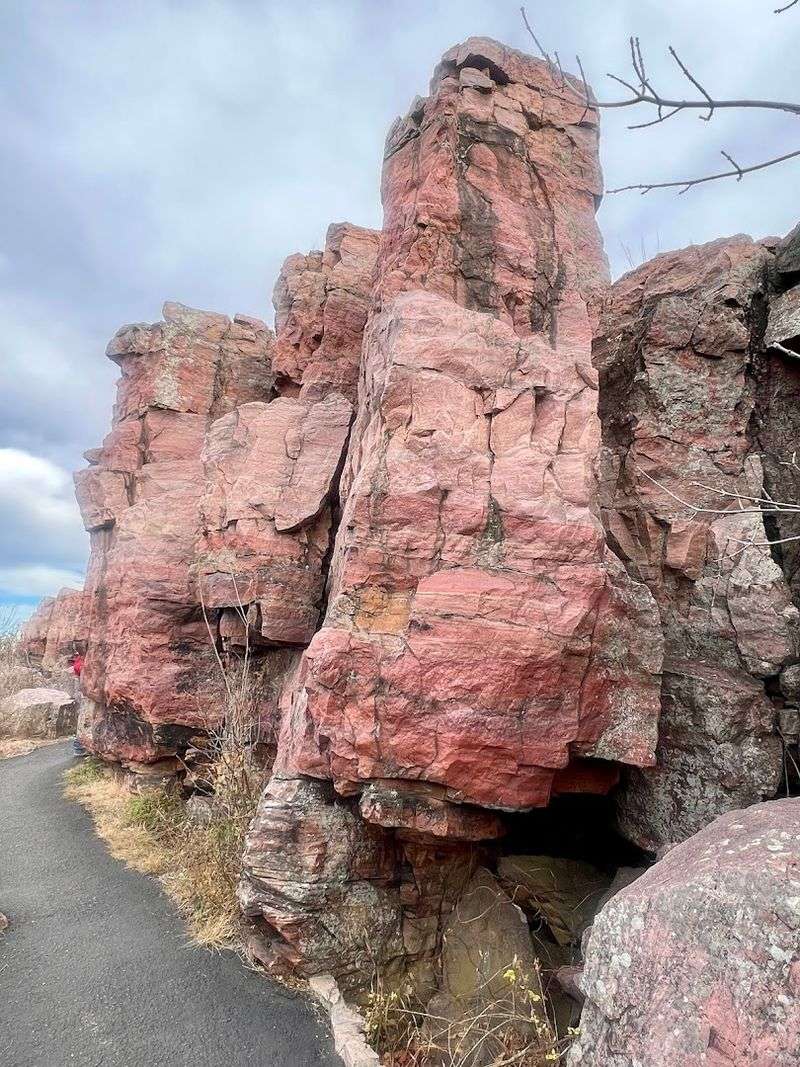
Standing near the quarry edge, you can see the deep red layers exposed in the earth. It looks almost like a wound in the landscape.
The color is striking, almost unreal, especially against the green prairie grass surrounding it.
Visiting here feels less like sightseeing and more like bearing witness. The weight of that history settles on your shoulders in a quiet, respectful way.
This is not just geology. It is living culture, still practiced, still protected, still deeply meaningful to the people it belongs to.
The Visitor Center Experience
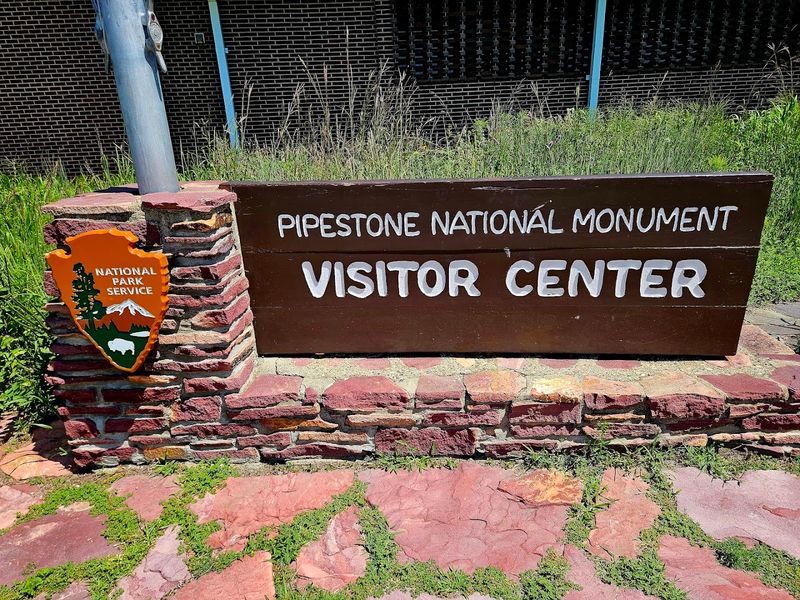
Walking into the visitor center feels like stepping into a well-curated story. The exhibits are thoughtfully arranged and genuinely informative.
There is a short film that gives real context to the site, and I found myself watching the whole thing without checking my phone once.
Staff members are friendly and knowledgeable. They take time to answer questions without making you feel rushed.
That kind of unhurried attention is rare and worth appreciating.
The center is open daily from 8:30 AM to 4:30 PM. Admission to the monument is free, which honestly makes it even more remarkable.
You get a full, meaningful experience without spending a dollar at the gate.
One of the highlights is watching Native American artists carve pipestone right inside the building. Seeing the red dust rise from the stone as skilled hands shape it into something ceremonial is genuinely moving.
It connects the past to the present in a way that no exhibit panel could fully capture on its own.
The Circle Trail Loop
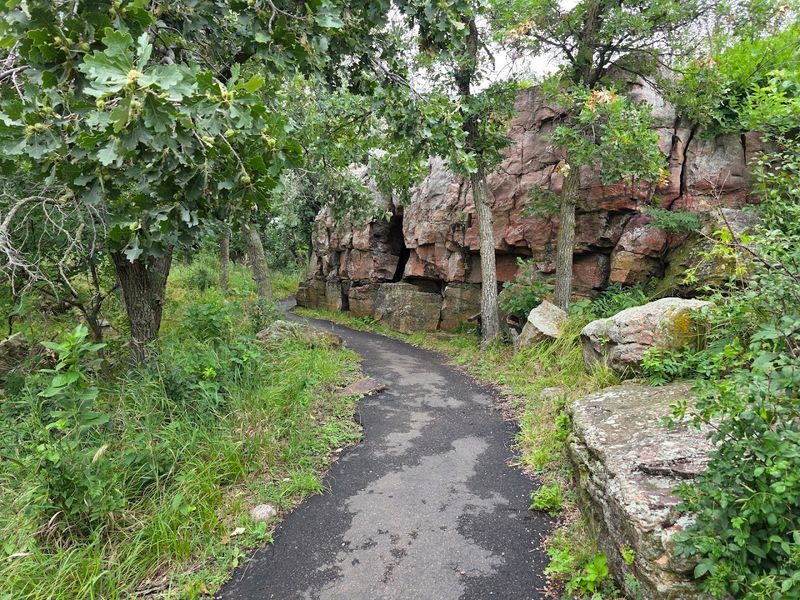
The Circle Trail is about a quarter mile of paved path that loops through the heart of the monument. It sounds short, but do not rush it.
Every bend reveals something new, a rock formation, a cluster of wildflowers, or a glimpse of the stream below.
The trail is mostly flat and accessible for most visitors. Families with strollers, older adults, and kids all move along it comfortably.
Leashed dogs are welcome too, which is a nice bonus for pet owners traveling through southwestern Minnesota.
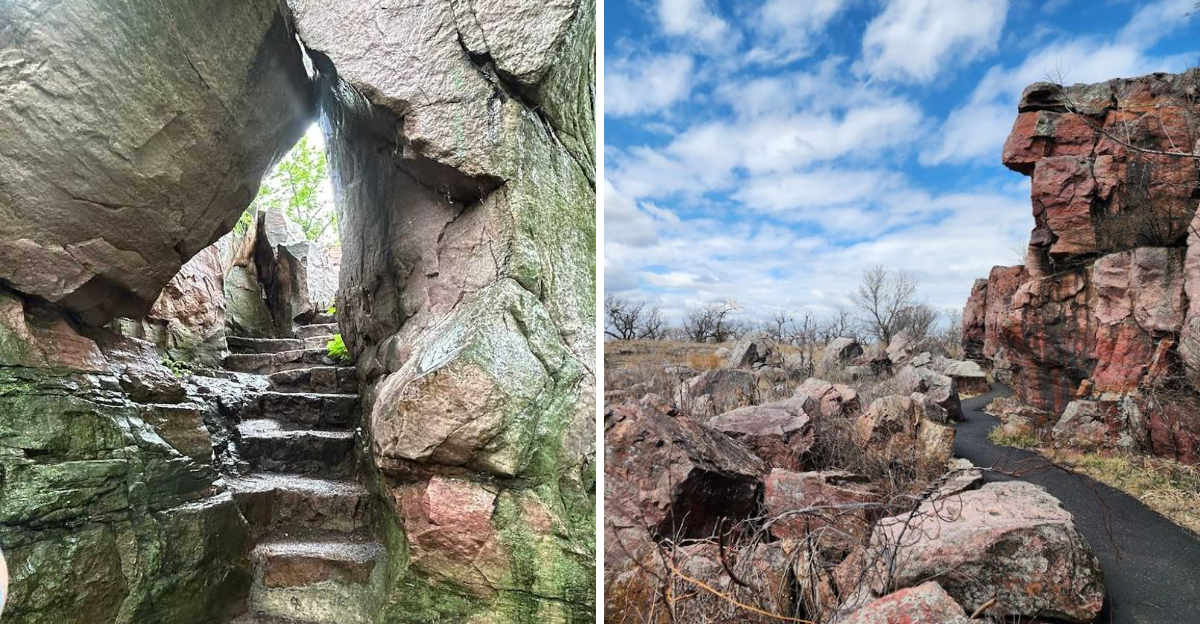
Some sections have stone steps that lead up to higher viewpoints. Climbing them rewards you with a sweeping look at the prairie and the red rock landscape below.
The views are genuinely worth the extra effort.
Bulletin boards along the path share historical details and photographs. They break up the walk in a helpful way.
By the time you complete the loop, you have learned something, breathed fresh air, and seen a landscape that feels unlike anywhere else in the Midwest. That is a rare combination.
Winnewissa Falls
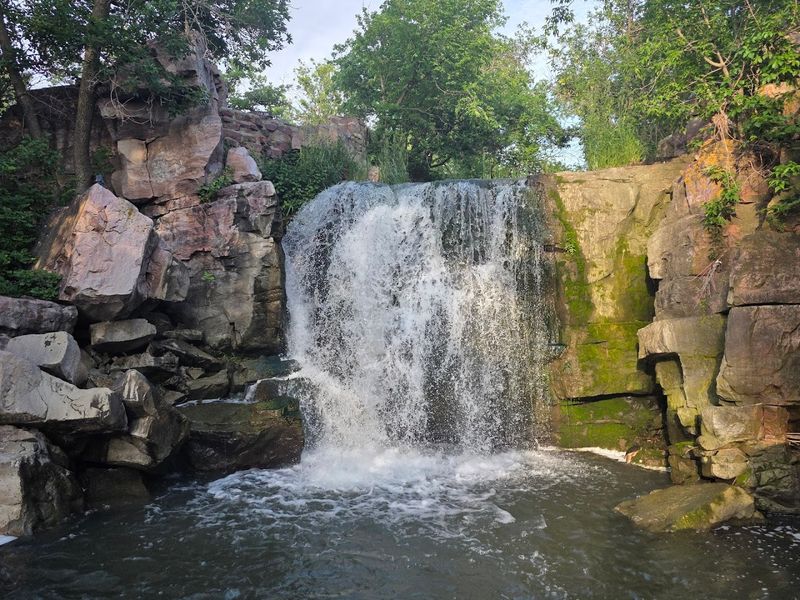
Nobody expects a waterfall in southwestern Minnesota. That surprise is exactly what makes Winnewissa Falls so delightful.
Tucked along the trail, it tumbles over ancient red quartzite and lands in a shallow pool below. The sound of it is soothing in a way that sneaks up on you.
The falls are not massive or dramatic. They are quiet and intimate, the kind of waterfall you want to sit beside for a while.
I stood there longer than I planned, just listening to the water move over the stone.
The surrounding rock formations frame the falls beautifully. The deep red of the quartzite contrasts with the green moss and prairie grasses nearby.
Every angle offers a different composition if you have a camera in hand.
Locals apparently visit regularly just to sit near the boulders and enjoy the scenery. That says something meaningful about a place.
When the people who live nearby keep returning for peace and perspective, you know the spot has something genuinely special going for it beyond tourist appeal.
The Stunning Quartzite Rock Formations
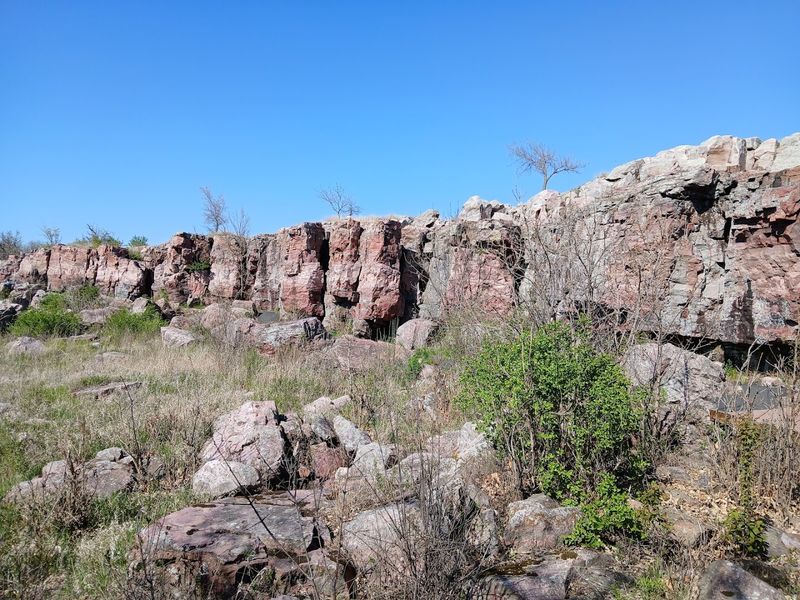
The Sioux quartzite at Pipestone is some of the most visually striking geology in the entire Midwest. The stone is ancient, estimated at around 1.6 billion years old.
It rises in dramatic walls and ledges that look almost architectural in their precision.
Walking beside these formations, you notice textures and colors that shift in different light. In the morning, the stone glows pink and amber.
By midday, it deepens into a rich rust red. Photographers tend to linger here for good reason.
There is even a natural arch along the loop trail that visitors can walk through. It is a small but memorable moment, passing under a billion-year-old stone frame with prairie sky visible on the other side.
Hidden faces appear in the rock walls if you look carefully. It takes patience and a bit of imagination, but once you spot them, you cannot unsee them.
Park bulletin boards actually help point them out. That kind of interactive detail turns a short trail into a genuinely engaging experience for all ages.
Native American Cultural Demonstrations
Watching someone carve pipestone by hand is one of those experiences that stays with you. The artists work with quiet focus, shaping the soft red stone into pipes and other objects that carry deep ceremonial meaning.
It is not a performance. It is a continuation of something ancient.
These live demonstrations happen inside the visitor center. Artists are often willing to talk about their work and the cultural traditions connected to it.
Those conversations add a layer of understanding that no exhibit can replicate.
The gift shop sells handcrafted items made by Indigenous artists, including carved pipes, jewelry, and small sculptures. Purchasing from the shop directly supports the artists and the monument itself.
It is one of the most meaningful souvenirs you can bring home from any national park.
Seeing art made from stone quarried just steps away from where you are standing is a powerful thing. The connection between land, material, and maker is unbroken here.
That continuity is rare in a modern world that tends to separate people from the sources of what they create.
The Prairie Landscape and Wildlife
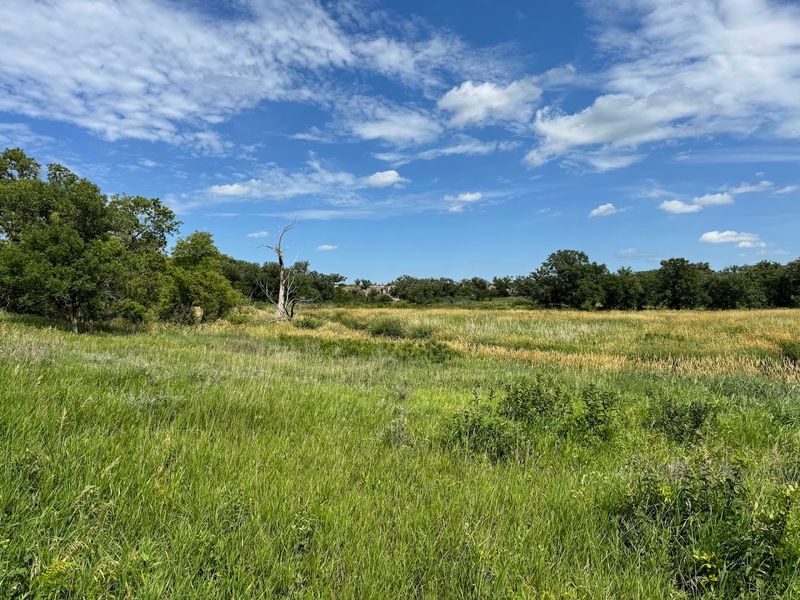
The tallgrass prairie surrounding the monument is easy to overlook at first glance. It does not announce itself the way mountains or coastlines do.
But spend a few minutes walking through it, and the subtlety becomes the point. The grasses ripple in the wind.
Insects hum. Birds call from somewhere nearby.
Wildlife sightings are common along the trails. Turtles sun themselves near the lake.
Small critters dart through the brush. Songbirds are everywhere, especially in spring and early summer when nesting activity peaks.
The flowering trees along the path add fragrance to the walk. In late spring, the scent is surprisingly strong and pleasant.
It layers the experience in a way that makes the trail feel more immersive than its short length might suggest.
Prairie ecosystems are among the most endangered in North America. Seeing one preserved within a national monument gives it extra meaning.
This is not just scenery. It is a functioning piece of ecological history, maintained with care and open to anyone willing to slow down and pay attention to it.
The Petroglyphs and Ancient Markings
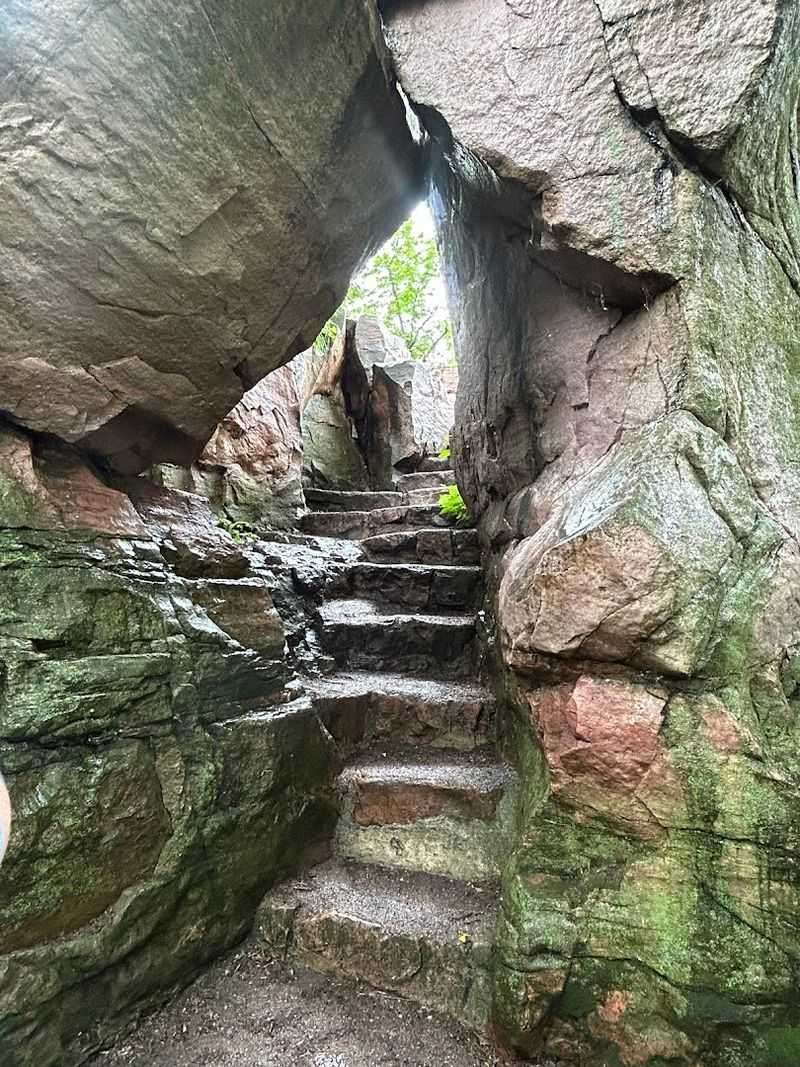
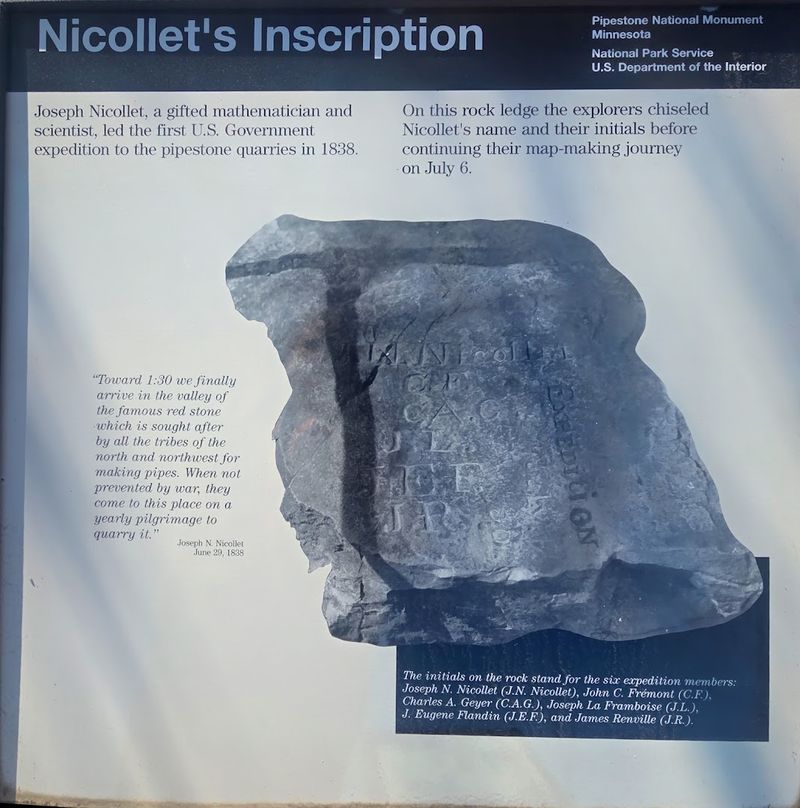
The petroglyphs at Pipestone are easy to miss if you rush through the visitor center without stopping. Rangers and staff consistently recommend checking them out first before hitting the trail.
That advice is worth following. The carvings are subtle but deeply compelling.
These markings were made by Indigenous people over many centuries. They record presence, belief, and connection to this land in a visual language that predates written history.
Standing in front of them, even briefly, shifts your sense of time.
The visitor center provides context for what you are seeing. Without that background, the petroglyphs might seem like simple patterns.
With it, each line and shape takes on weight and intention. The difference between seeing and understanding is significant here.
Learning about them from knowledgeable staff adds another dimension entirely. The monument does a good job of presenting this history with respect and accuracy.
It avoids the kind of oversimplification that can flatten Indigenous culture into something decorative. The petroglyphs are treated here as what they are, living records of a people still present today.
The Picnic Area and Lake Views
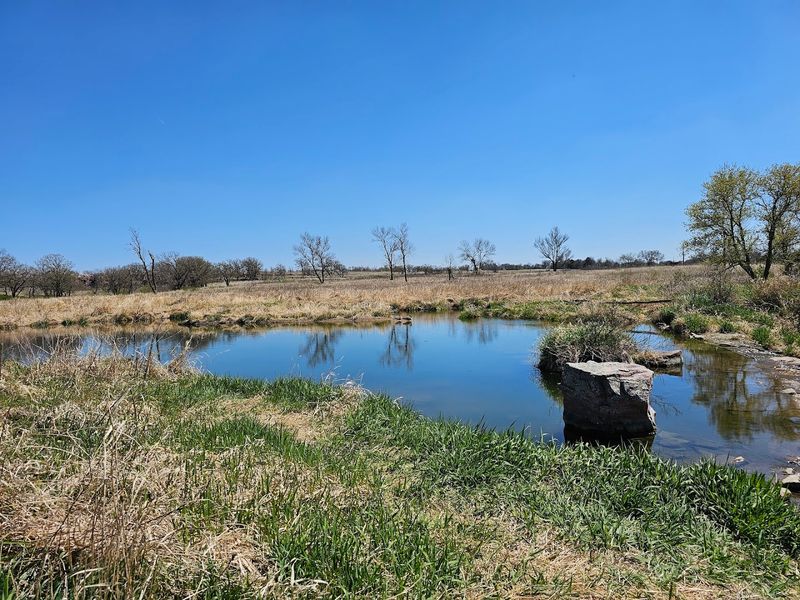
There is a picnic area near the lake that most visitors walk right past on their way to the trail. That is a mistake worth correcting.
The setting is genuinely peaceful, with open water reflecting the sky and red stone visible along the shoreline.
Turtles are a regular presence near the lake. Watching them climb onto rocks and bask in the sun is unexpectedly entertaining.
Kids especially enjoy spotting them, and there always seem to be plenty around on warm days.
The views from the picnic area include the surrounding prairie and the rock formations that define the monument’s landscape. It is a good spot to pause and absorb the setting before or after the trail.
Bring food and stay longer than you planned.
Sitting beside that lake, you get a sense of why this place has drawn people for so long. The quiet is genuine, not manufactured.
The beauty is understated and patient. It rewards visitors who slow down rather than those who rush through looking for the next highlight on a checklist.
Planning Your Visit to Pipestone National Monument
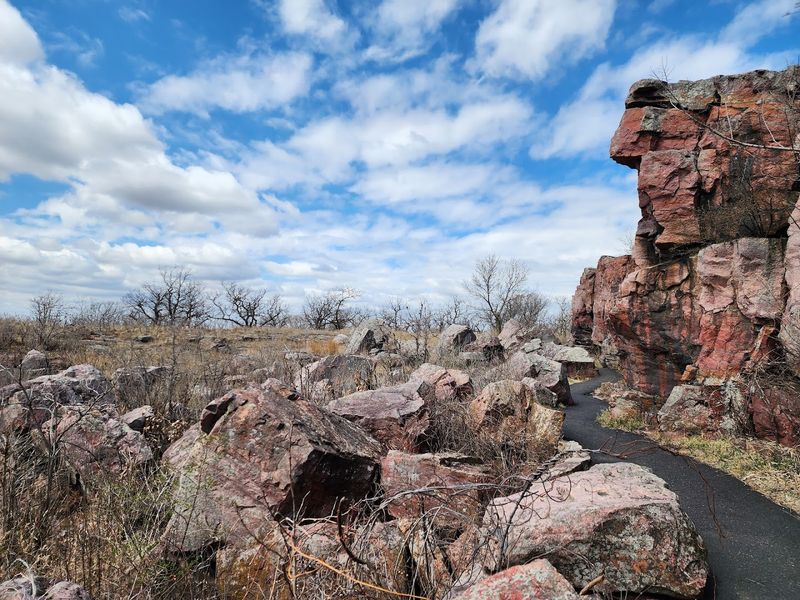
Getting to Pipestone National Monument is straightforward. The address is 36 Reservation Ave, Pipestone, MN 56164.
It sits in the southwestern corner of Minnesota, making it a natural stop on road trips through the region. Parking is plentiful and easy to navigate.
The monument is open every day of the week. Hours run from 8:30 AM to 4:30 PM.
Arriving early gives you the best chance of catching artist demonstrations and having the trail mostly to yourself. Weekday mornings tend to be quieter than weekend afternoons.
Admission is free, which makes it accessible for families and budget-conscious travelers. The gift shop is a worthwhile stop.
Every purchase supports Indigenous artists and the preservation of this remarkable site. That matters more than most people realize when they first walk in.
If you find yourself anywhere near southwestern Minnesota, skipping Pipestone would genuinely be a missed opportunity you might regret for a long time.
