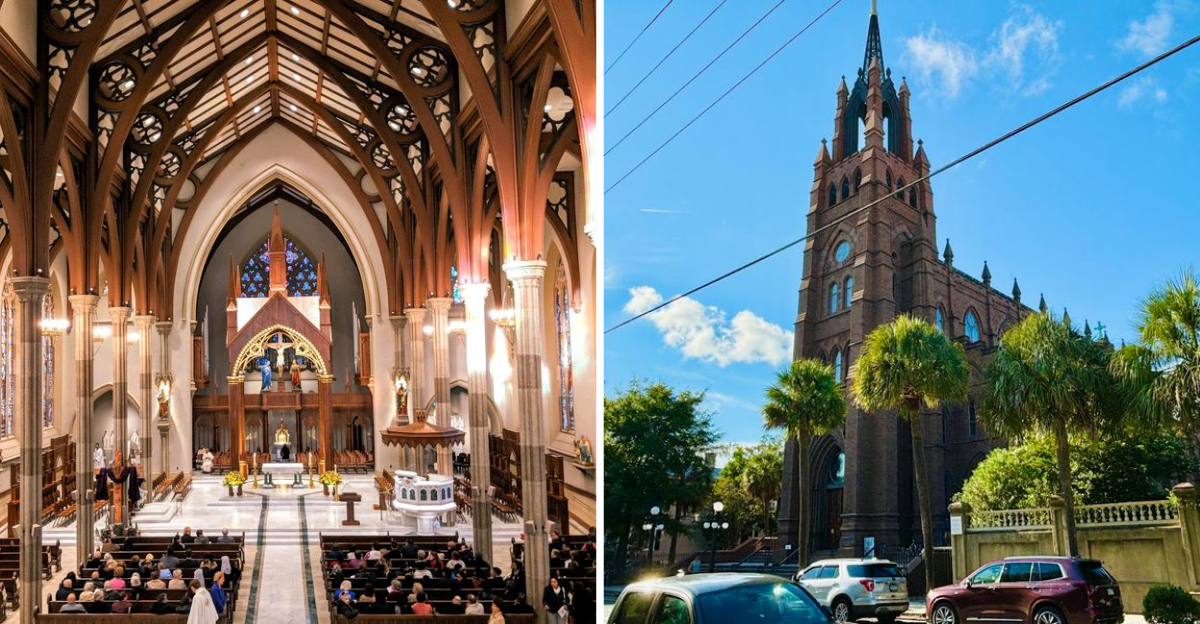
After the Civil War, an Irish-born priest prowled the saloons of Paterson’s “Little Dublin” and put the men to work building something greater than themselves.
The result?
A soaring Neo-Gothic cathedral of brownstone, quarried in Little Falls and raised largely by volunteer labor.
Designed by the architect of the Cathedrals of Boston and Chicago, this New Jersey landmark still stands over 150 years later.
Walk inside, look up at the 225-foot spire, and try not to feel like you have stepped back in time.
The Neo-Gothic Architecture That Stops You Cold
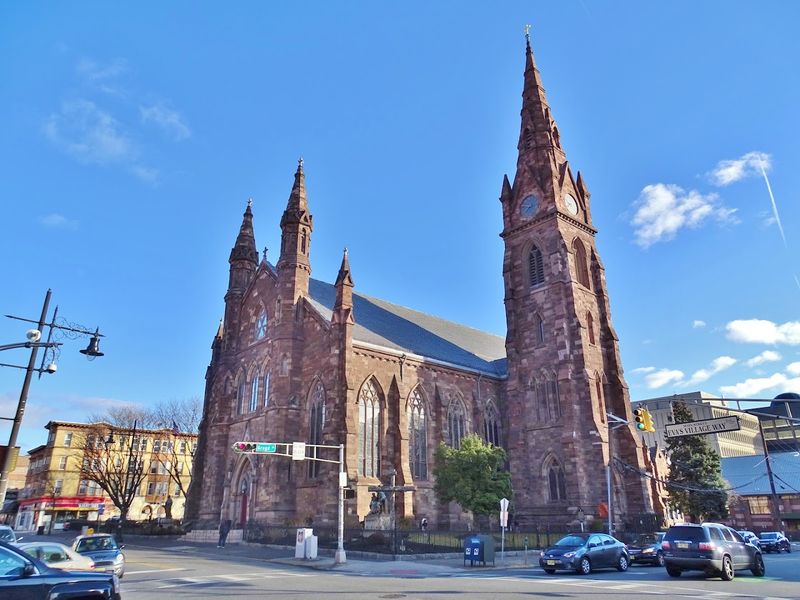
Standing outside this cathedral for the first time, the sheer vertical drama of it catches you completely off guard. The pointed arches, ribbed vaults, and flying buttresses all work together in a way that feels almost theatrical.
You get the sense that every stone was placed with intention.
Neo-Gothic architecture was a revival style that swept through the 19th century, drawing inspiration from medieval European cathedrals.
Architect Patrick Charles Keely, who also designed the cathedrals of Boston and Chicago, brought that same grand sensibility to Paterson, New Jersey.
That is serious architectural company to keep.
The 225-foot tower spire is the kind of detail that makes you tilt your head back and squint. Inside, the capacity reaches between 1,700 and 1,800 people, filling the air with an almost musical sense of scale.
Every angle rewards a second look, and the stonework alone could hold your attention for a long afternoon.
Volunteer Labor That Built A Legacy In Stone
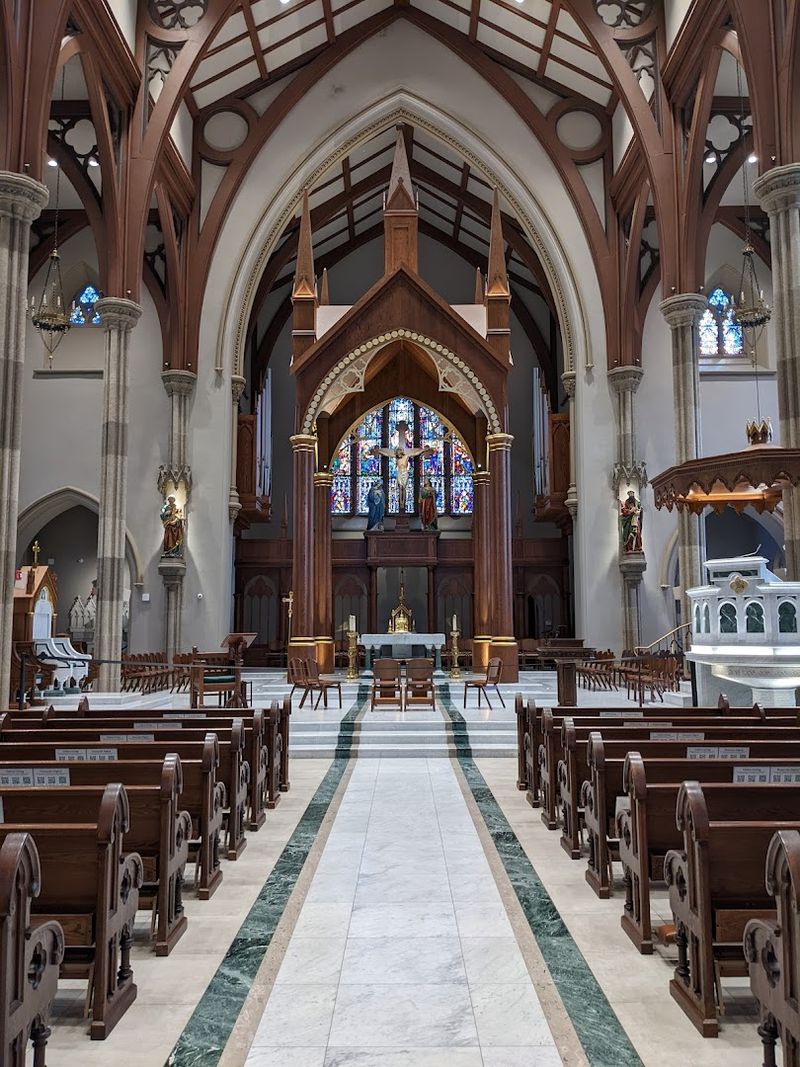
Something quietly astonishing lives inside the history of this building. The cathedral was constructed primarily through the volunteer labor of its parishioners during the 1860s, which means ordinary people with calloused hands built something extraordinary without being paid a single cent.
That kind of commitment is hard to wrap your head around today.
The brownstone used in construction was quarried from nearby Little Falls, New Jersey, and transported to Paterson via the Morris Canal. Every block carried its own small story of effort and community.
The cornerstone was laid on September 10, 1865, and the church was dedicated on July 31, 1870.
What makes this even more remarkable is the quality of craftsmanship that survived the decades. The stonework still draws admiring comments from visitors who compare it to European castles.
When a building is made with that level of personal investment, it tends to last, not just physically but spiritually, too. This one absolutely has.
Patrick Charles Keely, The Architect Behind The Vision
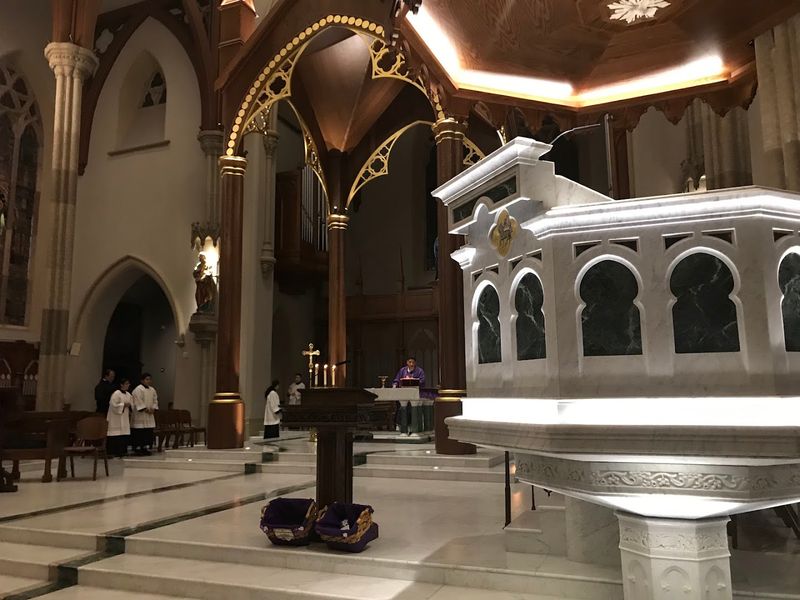
Patrick Charles Keely is not exactly a household name, but his fingerprints are on some of the most impressive Catholic cathedrals in North America. He designed the cathedrals of both Boston and Chicago, which puts his Paterson commission in very distinguished company.
Knowing that context changes the way you look at the building entirely.
Keely had a gift for translating the grandeur of medieval European Gothic into American brownstone and brick. His designs leaned into verticality, using pointed arches and soaring interiors to create a sense of spiritual aspiration built right into the walls.
Walking through his work feels less like touring a building and more like experiencing an argument for something bigger than yourself.
At the Cathedral of St. John the Baptist, his vision came to life through the hands of everyday parishioners rather than professional crews. That collaboration between elite architectural design and grassroots labor produced something genuinely rare.
The result is a cathedral that feels both monumental and deeply personal at the same time.
The Brownstone Quarried From Little Falls
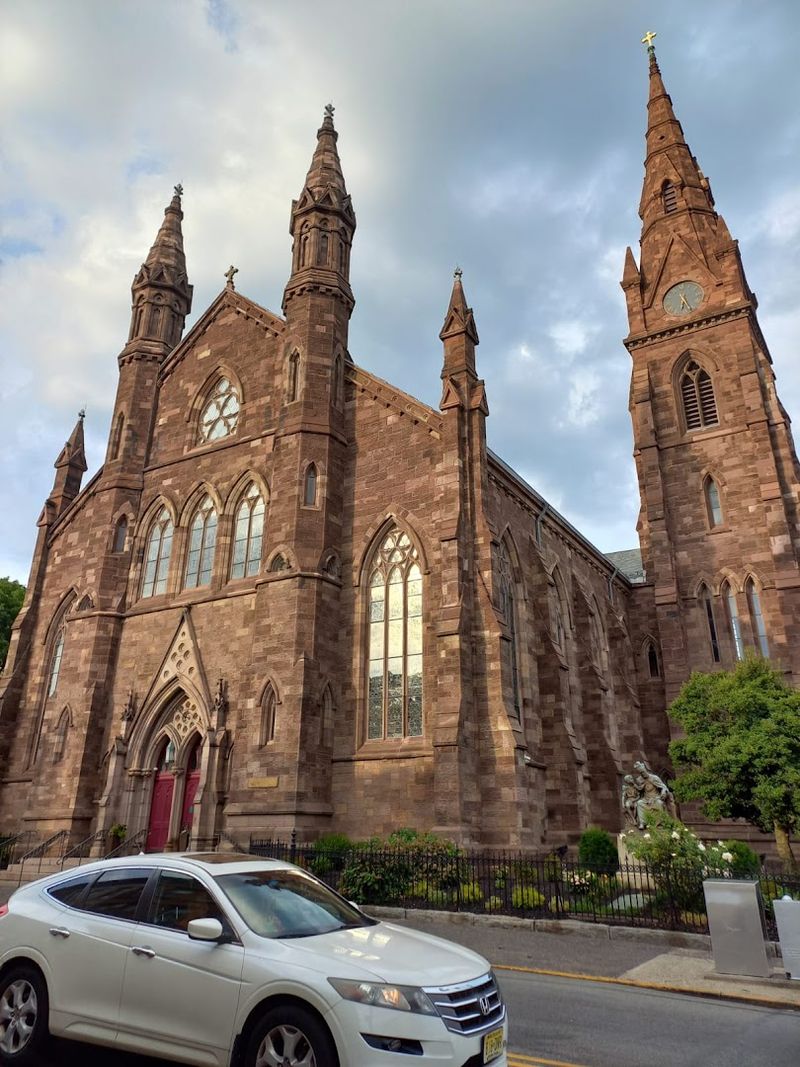
There is something grounding about knowing exactly where a building came from. The brownstone that makes up the Cathedral of St. John the Baptist was quarried from Little Falls, New Jersey, just a short distance away.
That local connection gives the structure a sense of place that imported materials could never replicate.
Brownstone was a popular building material in the northeastern United States during the 19th century, prized for its warm reddish-brown tone and workability. Transporting those heavy blocks via the Morris Canal was no small logistical feat.
The canal served as a vital artery for heavy industrial transport across New Jersey at the time.
Today, the stone exterior has a weathered richness that only deepens with age. Visitors often linger outside just to study the texture of the walls, running their eyes along the seams and carvings.
One reviewer described it as reminding them of old European castles, and honestly, standing close to those walls on a gray afternoon, that comparison feels absolutely earned.
The Morris Canal Connection To Paterson
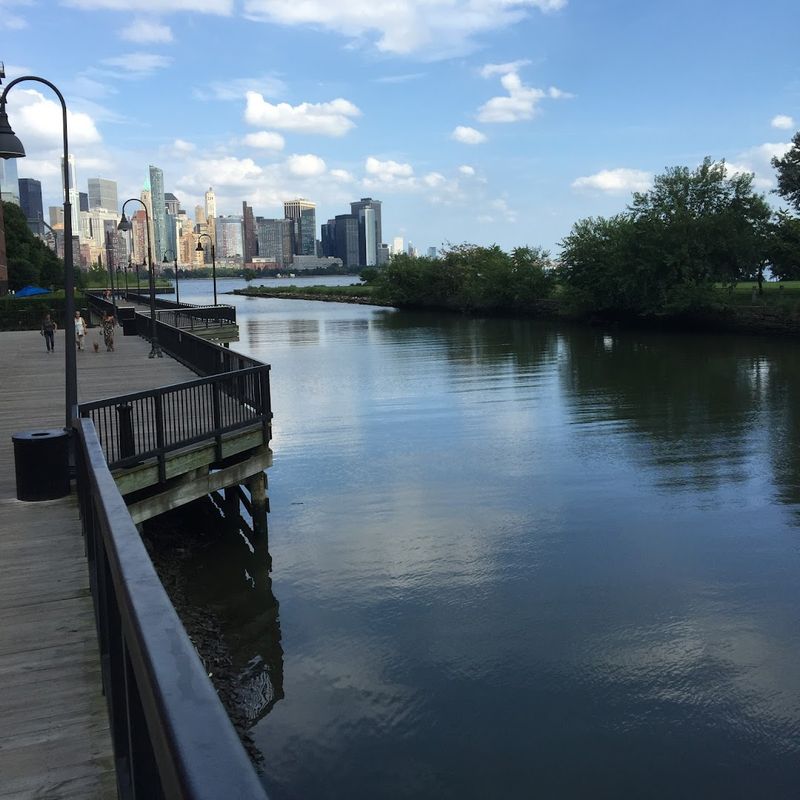
The Morris Canal does not get nearly enough credit in the story of this cathedral. Without it, hauling tons of brownstone from Little Falls to Paterson would have been a logistical nightmare.
The canal made the whole project possible, threading through the New Jersey landscape like a slow, essential lifeline.
Opened in 1831, the Morris Canal stretched across New Jersey and was engineered to handle dramatic elevation changes using inclined planes rather than traditional locks. By the time cathedral construction began in the mid-1860s, it was a well-established route for heavy cargo.
Blocks of stone moved along its waters toward what would become one of the state’s most enduring structures.
That industrial backbone supporting a spiritual endeavor makes for a fascinating historical overlap. The canal itself was eventually abandoned and filled in during the early 20th century, but its contribution to Paterson’s built environment lives on.
Every time someone looks up at those brownstone walls, the Morris Canal is quietly part of what they are seeing, whether they know it or not.
The Cathedral’s Designation By Pope Pius XI In 1937
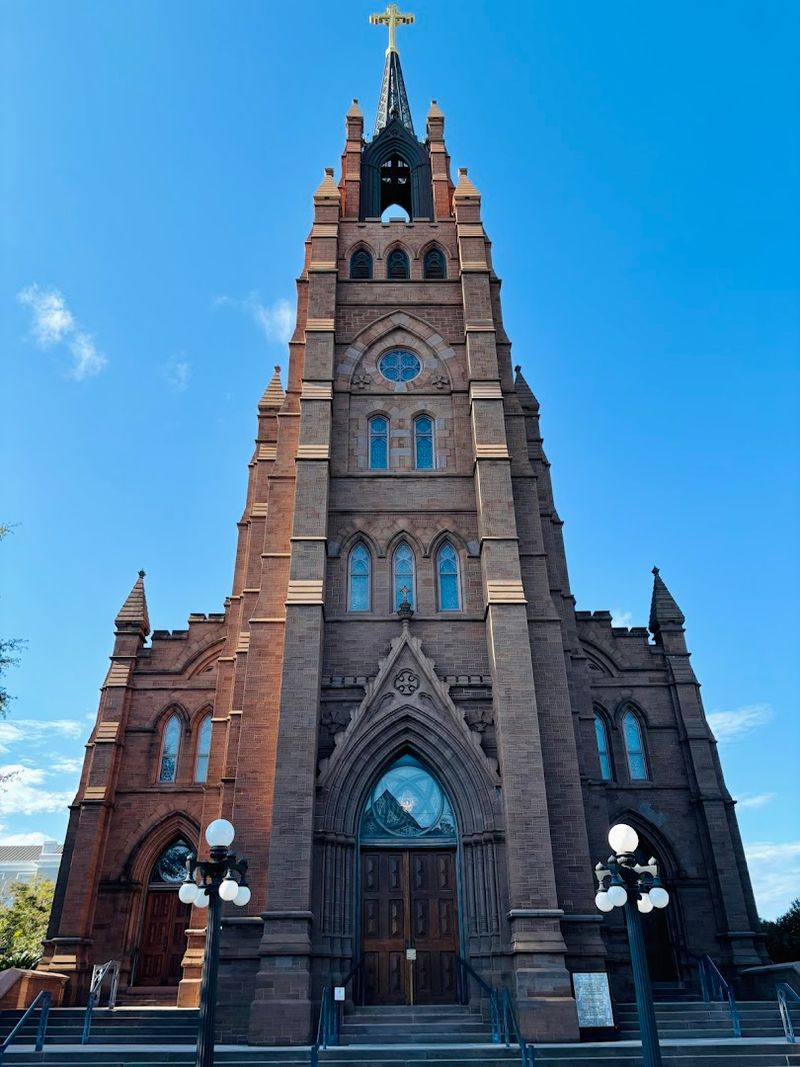
In 1937, something happened that permanently elevated this already remarkable building. Pope Pius XI designated the Church of St. John the Baptist as the cathedral for the newly established Diocese of Paterson.
That official recognition transformed it from an impressive parish church into a seat of episcopal authority for all of northern New Jersey.
A cathedral designation is not just ceremonial. It means the building becomes the home church of the bishop, the spiritual center of an entire diocese.
For a structure built by volunteer hands in the 1860s, that kind of recognition feels like the ultimate validation of everything those parishioners worked for. Their labor, quite literally, shaped a diocese.
Visitors today walk through a space that carries that layered history in every corner. The atmosphere is one of accumulated reverence, quiet and weighty in the best possible way.
Whether you are Catholic or simply curious about architecture and history, standing inside a cathedral with that kind of institutional depth is an experience that genuinely stays with you long after you leave.
The Stunning Stained Glass Windows Inside
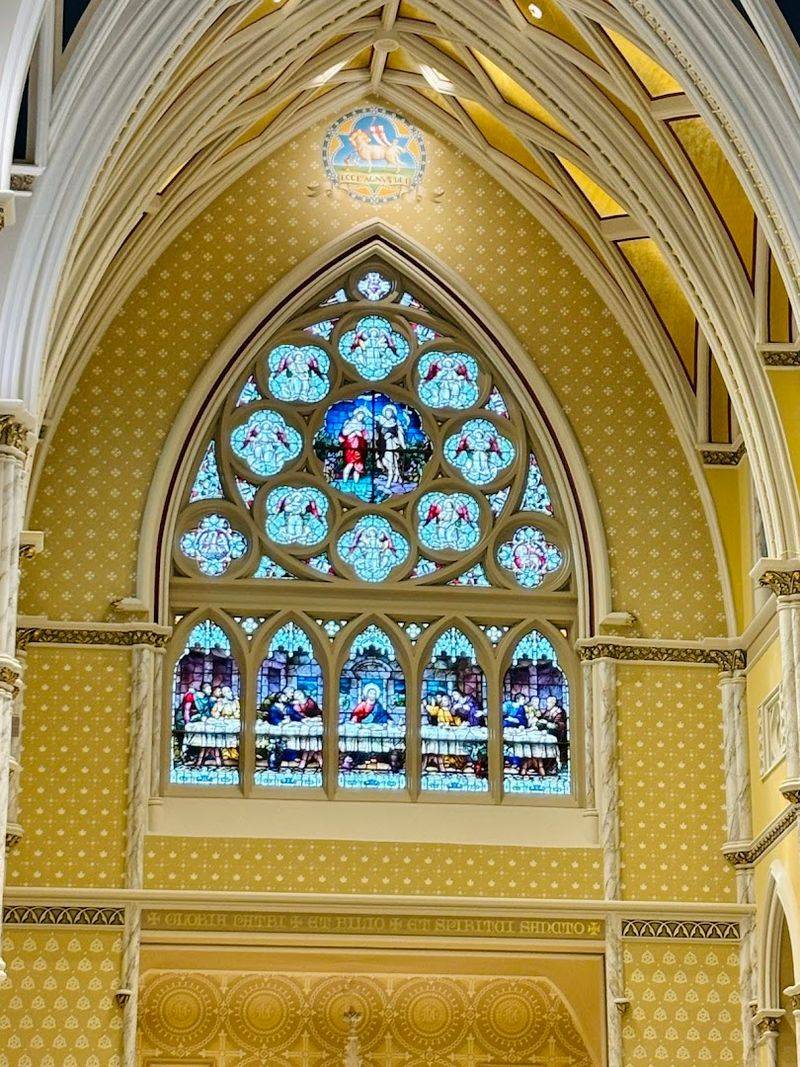
Few things in architecture hit quite like a great stained glass window catching the afternoon light. Step inside the Cathedral of St. John the Baptist and that experience arrives almost immediately.
The windows fill the interior with color that shifts as the sun moves, turning the whole space into something that breathes.
The stained glass here tells stories in the traditional manner, with biblical scenes rendered in deep blues, rich reds, and warm golds. Photographers visiting the cathedral have specifically noted the excellent natural lighting, which makes the windows glow without needing artificial help.
A zoom lens is recommended since the altar area is off-limits to visitors with cameras.
What makes these windows feel different from a museum display is the context surrounding them. They are framed by those soaring Gothic arches, set against stone walls that have absorbed over 150 years of prayer and community life.
The combination of light, color, and architectural scale creates a sensory experience that no photograph fully captures. You really do have to be there in person to feel it properly.
The Capacity For 1,700 Parishioners And The Scale It Creates
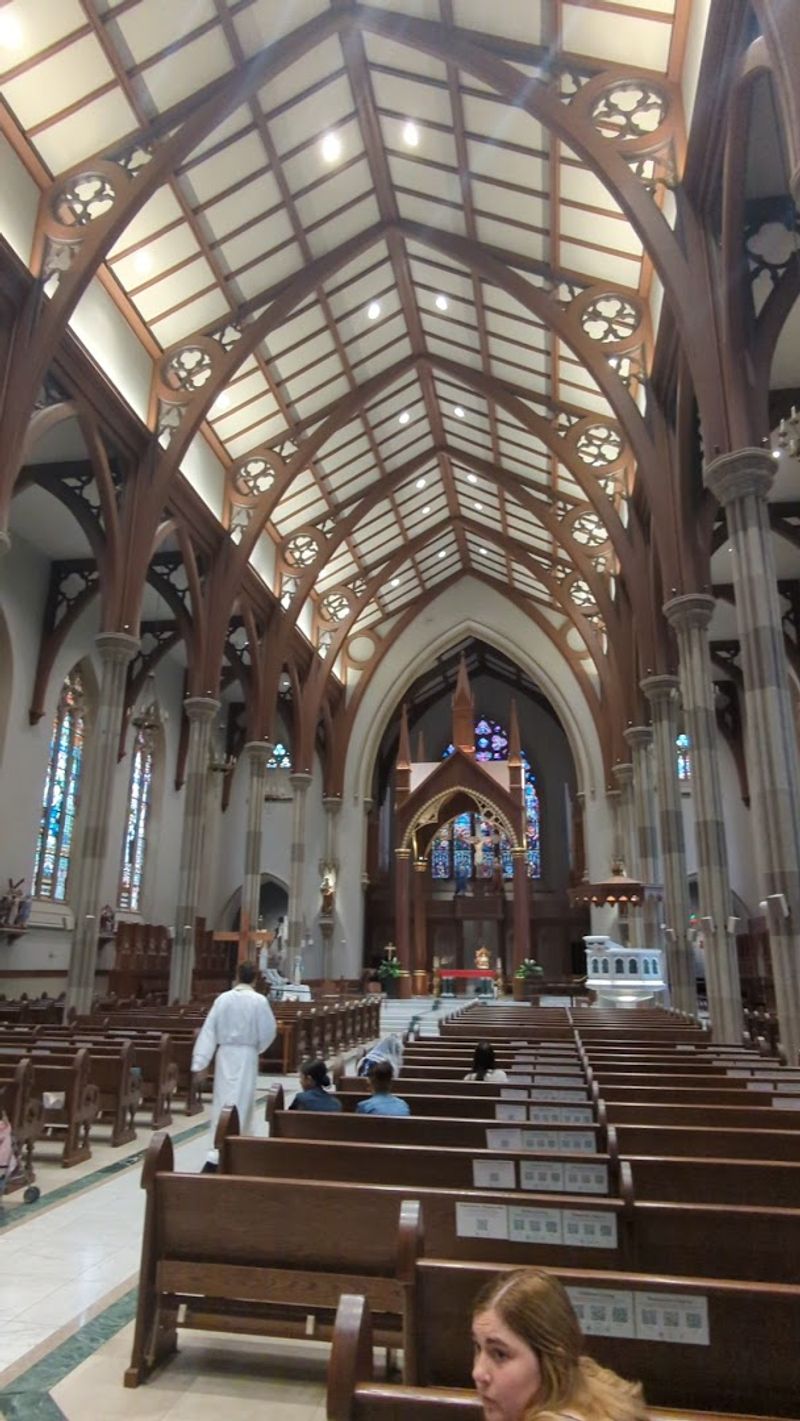
Walking into a space designed to hold 1,700 to 1,800 people when it is relatively quiet is a particular kind of experience. The emptiness amplifies everything, from the echo of footsteps on stone floors to the way light travels across those impossibly high ceilings.
Scale like this does something to your sense of proportion in the most humbling way.
The nave stretches out in front of you with tall columns lining each side, their pointed arches drawing the eye upward in a rhythm that feels almost musical. Photographers visiting the space have commented on just how extreme the ceiling height is, calling it one of the defining features of the interior.
It is the kind of architectural decision that makes you realize how much thought went into creating awe.
During services or special events, that same space fills with voices and community in a way that completely transforms its character. The cathedral has hosted weddings, baptisms, and significant civic ceremonies over its long history.
Each event adds another layer to a building that already carries more than a century and a half of Paterson life within its walls.
The Million-Dollar Renovation That Breathed New Life In
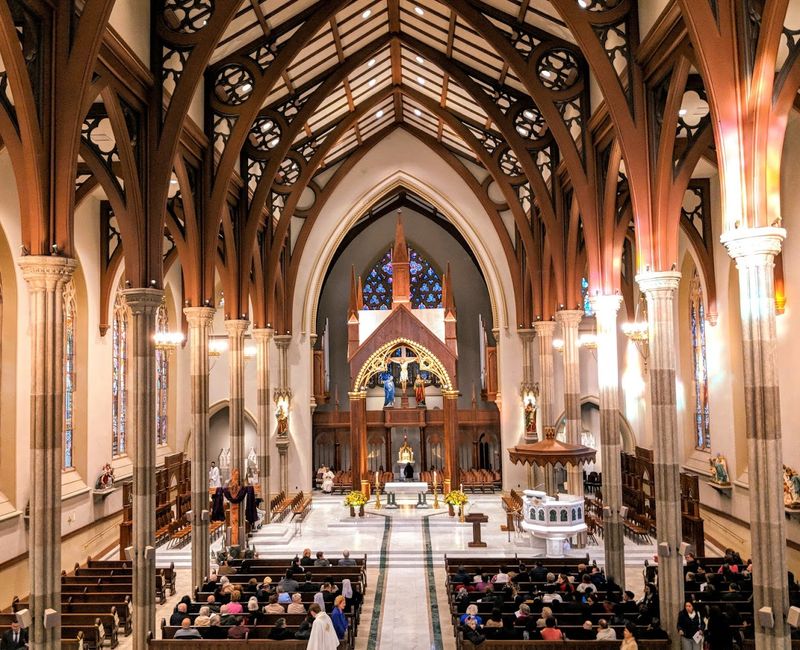
At some point in a historic building’s life, it needs serious attention to survive the next century. The Cathedral of St. John the Baptist underwent a significant renovation that reportedly involved over a million dollars in restoration work.
The result drew widespread admiration from visitors who had known the space before the project began.
Renovations of this scale are tricky. The goal is always to restore rather than reinvent, preserving the original character while addressing the wear of time.
By all accounts, the team that worked on this cathedral got that balance right. The stonework in particular came back looking remarkable, prompting comparisons to medieval castle masonry from visitors who had seen both.
One longtime visitor described returning after the renovation and feeling like the building had been invited back into life. That phrase stuck with me because it captures something true about well-done restoration work.
A building that has been properly cared for does not just look better. It feels present again, like something dormant waking up and remembering what it was always meant to be.
Visiting The Cathedral Today And What To Expect
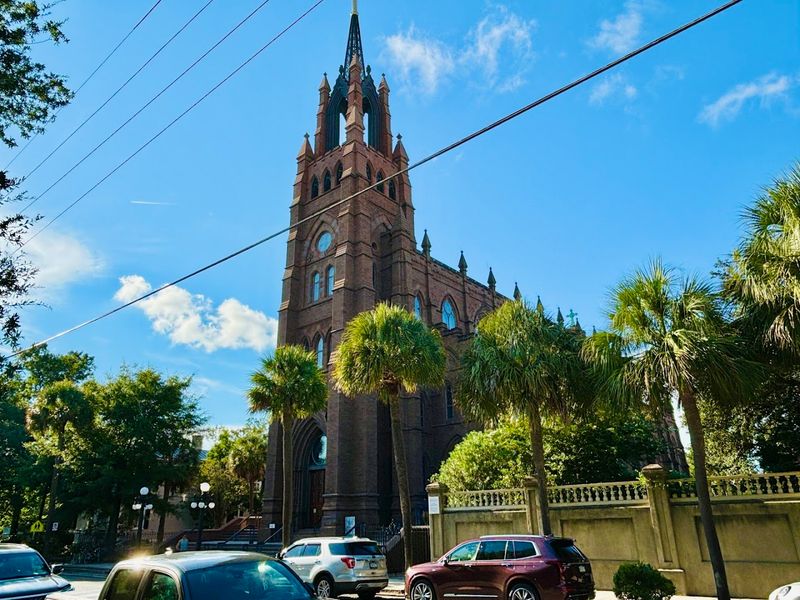
Planning a visit to the Cathedral of St. John the Baptist is straightforward, and the experience rewards the effort. The cathedral is open most days of the week, with hours generally running from 9 AM into the early evening on weekdays.
Sunday hours are shorter, so checking ahead before you go is always a smart move.
There is a free parking garage available, which is genuinely welcome news given that the cathedral sits in the heart of downtown Paterson, a busy urban area where street parking can be competitive. That small practical detail removes one potential headache from what should be a relaxed and enjoyable visit.
Getting there is easy enough from most parts of northern New Jersey.
The surrounding neighborhood offers its own slice of Paterson’s cultural character, and the cathedral itself sits as a kind of anchor point in the urban landscape. First-time visitors consistently describe feeling surprised by how grand it is compared to their expectations.
Whether you come for the architecture, the history, or simply the quiet, the Cathedral of St. John the Baptist delivers something worth the trip every single time.
Address: 381 Grand St, Paterson, NJ
