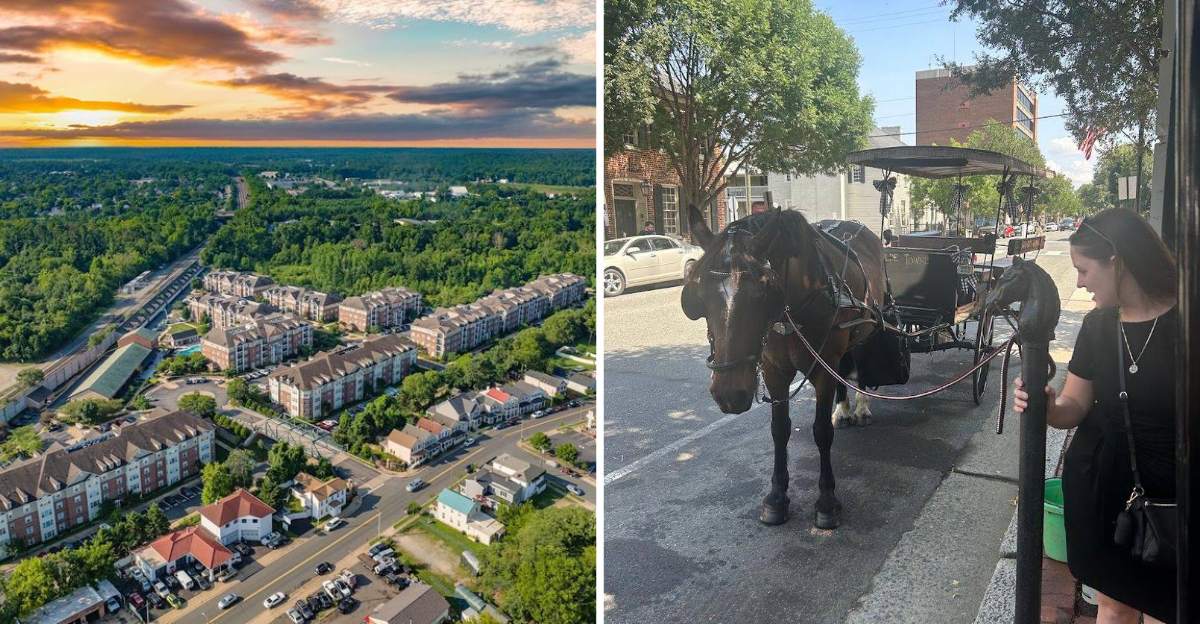
Worn smooth by centuries of horses, boots, wagon wheels, and time, that old stone paving on a Virginia street still holds its original energy.
Fredericksburg was founded in 1728, and somehow that street still carries a quiet pride that feels completely unforced.
I visited on a quiet weekday morning, and even then, the place hummed with something you cannot manufacture. The surrounding historic district is one of the best-preserved colonial streetscapes on the East Coast.
Every building, every crooked brick sidewalk, and every worn stone feels like a page from a history book you actually want to read. I walked slowly, my eyes on the ground, imagining all the footsteps that had passed before mine.
That street stops you mid-step and makes you look down, and that is exactly what makes it worth walking.
Caroline Street, The Cobblestone Heart of Old Town Fredericksburg
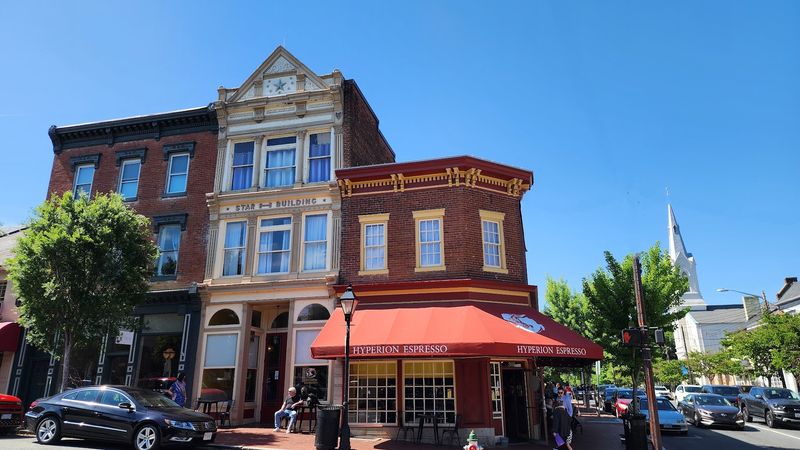
The moment your foot hits the uneven stone surface of Virginia’s Caroline Street, something shifts. It is not dramatic, but it is real.
You feel the texture of history through the soles of your shoes, and that sensation is hard to replicate anywhere else.
Caroline Street has served as the commercial backbone of Fredericksburg since the early 1700s. It was once simply called Main Street, which tells you everything about its role in daily life.
Residents arrived by horse and cart, then by automobile, and now on foot, but the street itself has remained stubbornly, beautifully the same.
The architectural mix along Caroline Street is genuinely impressive. Colonial, Federal, Georgian, and Victorian buildings stand side by side without any sense of conflict.
Each facade seems to belong exactly where it is, like characters in a story that has been running for three hundred years.
What makes this street feel different from other historic districts is how lived-in it still is. There are shops, small businesses, and local spots tucked into buildings that predate the American Revolution.
That combination of active community life and preserved history is rare.
The cobblestone sidewalks, made from naturally rounded field stones, are among the earliest forms of permanent street surfacing used in American cities. They were practical, durable, and locally sourced.
Today, they serve a different purpose entirely. They remind every visitor that this ground has been walked before, by people whose stories shaped an entire nation.
Rising Sun Tavern, Where Colonial Fredericksburg Came Alive
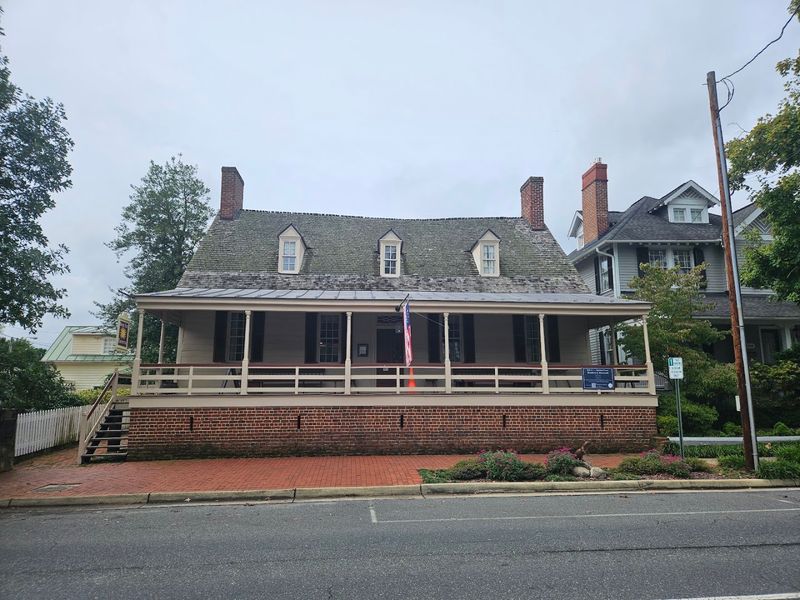
Charles Washington, younger brother of George Washington, built this tavern in 1760, and it quickly became one of the most active gathering spots in the region.
That detail alone is enough to make you pause outside and take a longer look at the building.
The Rising Sun Tavern at 1304 Caroline Street now operates as a living history museum run by the Washington Heritage Museums. Costumed interpreters bring the space to life in a way that feels surprisingly engaging rather than stiff or overly formal.
You genuinely get a sense of what a colonial tavern felt and sounded like.
Taverns in the 18th century were not just places to eat and rest. They were the social media of their time, the place where news traveled, deals were struck, and community formed.
The Rising Sun served travelers heading along the main road between north and south, making it a crossroads of colonial life.
The interior has been carefully preserved and restored to reflect the period accurately. Original woodwork, period furnishings, and authentic details fill each room.
Nothing about the space feels like a movie set, and that authenticity is what makes the visit stick with you long after you leave.
Even if you only have a short time on Caroline Street, this stop is worth every minute.
It connects the physical street outside with the human stories that once unfolded here, giving the cobblestones beneath your feet a whole new layer of meaning.
Goolrick’s Pharmacy, A Soda Fountain That Has Outlasted Empires
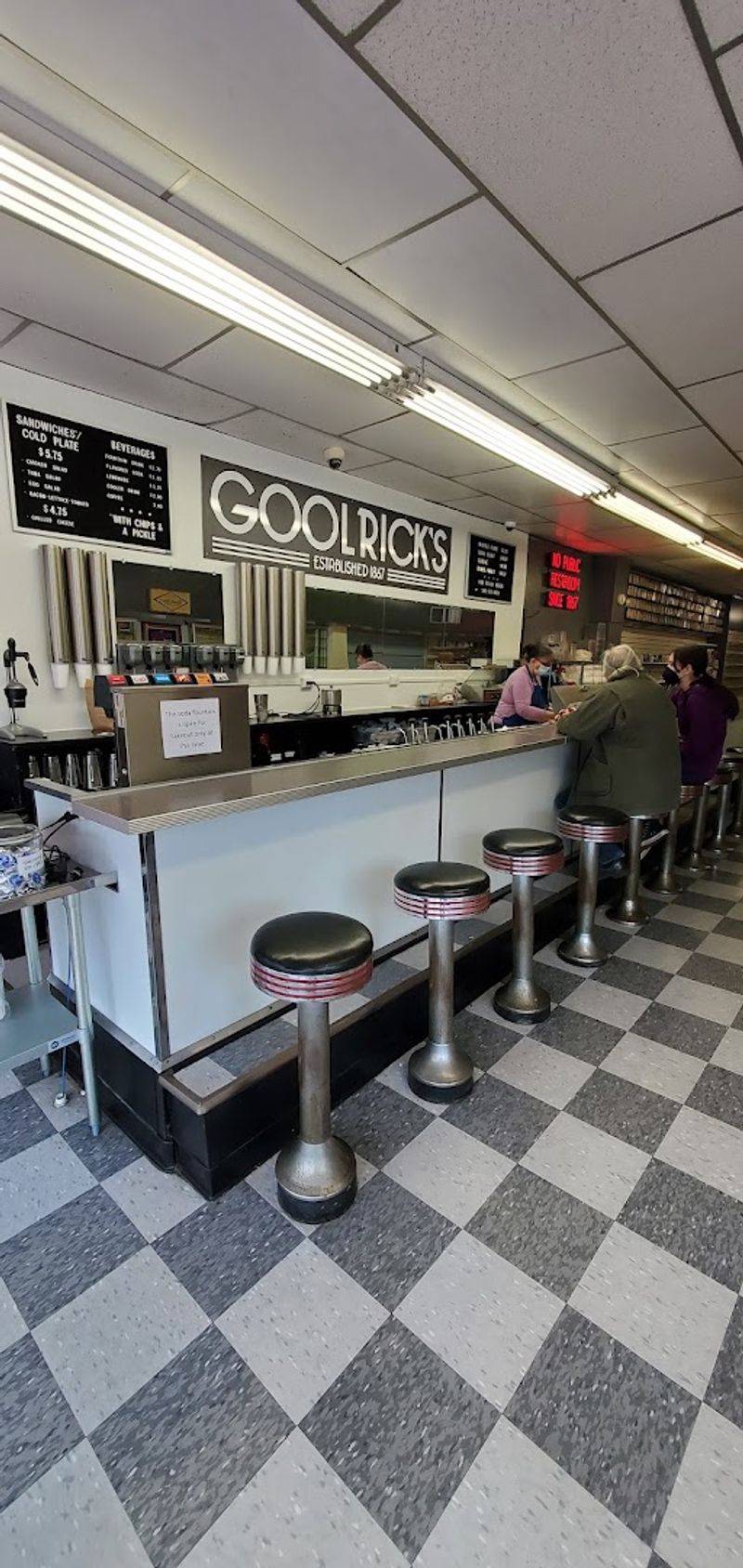
Established in 1897, Goolrick’s Modern Pharmacy on Caroline Street is one of those places that makes you wonder why the rest of the world moved on so fast.
The soda fountain here is said to be one of the oldest continuously operating ones in the entire United States.
That is not a small claim.
The counter stools, the old signage, the narrow layout, and the general feeling that time paused here sometime around 1955 all contribute to an atmosphere that feels genuinely precious.
You can order a classic fountain drink and sit at the counter just like generations of Fredericksburg locals have done before you.
Goolrick’s sits at 901 Caroline Street, right in the middle of the historic district’s busiest stretch. It is the kind of place that locals treat as an everyday stop and visitors treat as a discovery.
Both reactions are completely understandable.
What I find most interesting about Goolrick’s is that it has never tried to become a tourist attraction. It just kept going, kept serving the neighborhood, and somehow became a landmark by default.
That quiet persistence is its own kind of history.
The pharmacy itself still operates alongside the soda fountain, which adds a charming layer of practicality to the nostalgia. This is not a museum piece.
It is a working business that has simply refused to lose its identity over more than a century of change on Caroline Street. That kind of staying power deserves genuine respect.
The 40-Block Historic District, A Living Archive of American History
Fredericksburg’s 40-block historic district is one of the largest and most intact in the entire country. The city’s original grid layout, established in 1728, still guides how you move through the streets today.
That kind of continuity is extraordinary.
The district stretches beyond Caroline Street to include dozens of residential blocks where homes from the 18th and 19th centuries still stand as private residences. It is not a theme park or a curated museum zone.
People actually live here, which gives the whole neighborhood a warmth and energy that purely tourist-facing historic sites often lack.
The Fredericksburg and Spotsylvania National Military Park brings another dimension to the district’s historical weight. The area saw fierce Civil War battles, and the Fredericksburg National Cemetery holds thousands of Union soldiers.
Walking these streets, you carry both the colonial founding story and the devastating chapters that followed.
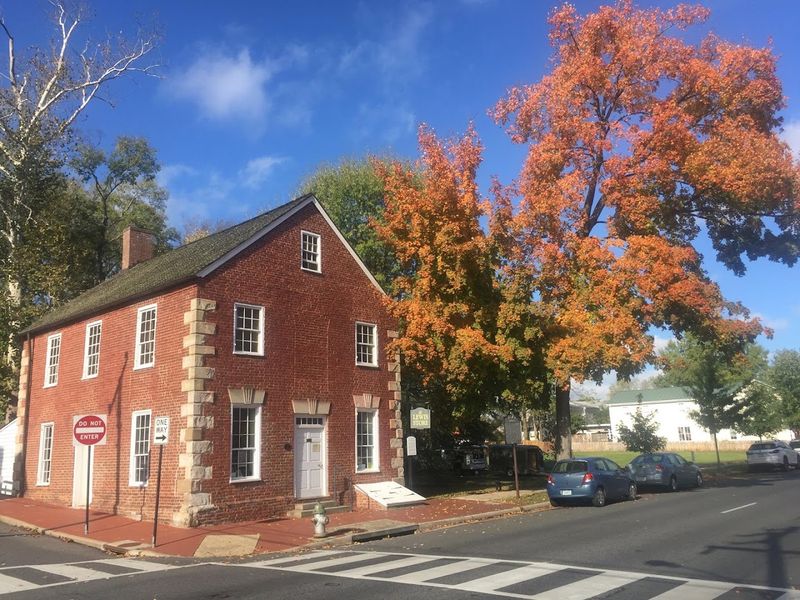
The Fielding Lewis Store on Caroline Street, now home to the Historic Fredericksburg Foundation, is another anchor point in this dense historical landscape.
Originally built as a general store by John Lewis, it represents the everyday commercial life that kept this town running through centuries of change.
What strikes me most about the district is how the history layers on top of itself without becoming overwhelming. Colonial buildings sit near Civil War markers, which sit near Victorian storefronts.
The street absorbs all of it and keeps moving forward, which might be the most honest thing any historic place can do.
Cobblestone Paving, The Underfoot Story Nobody Talks About Enough
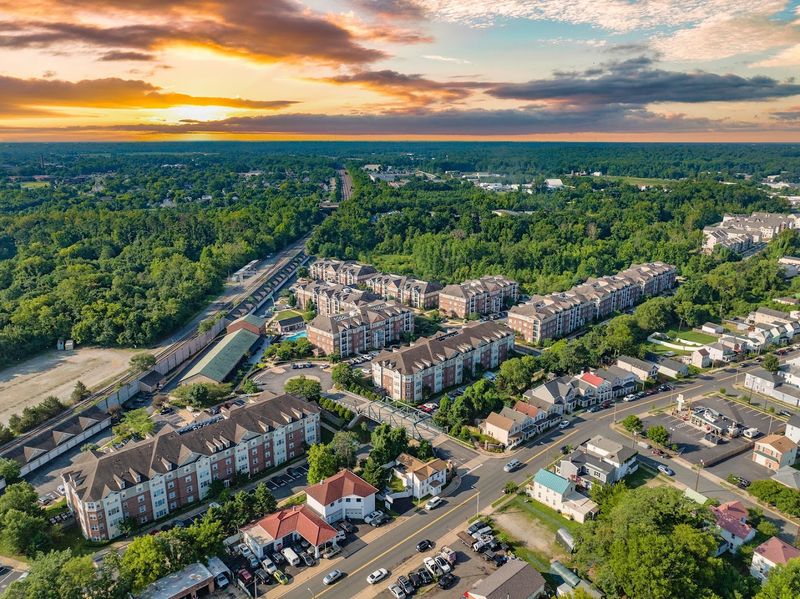
Most people walk right over the cobblestones without giving them a second thought. That is understandable, but it is also a small loss, because the stones themselves have a story worth knowing.
Field stones like these were among the earliest permanent street surfaces used in American colonial cities, particularly along the East Coast.
The rounded shape of the stones comes from natural water erosion, which means they were gathered from riverbeds and fields rather than cut from quarries.
That local sourcing made them practical and affordable for early municipalities.
They provided reliable footing for horses, which was the primary concern for any 18th-century road builder.
Wheeled vehicles, on the other hand, had a rougher experience. Early cobblestone roads were notoriously bumpy for carts and carriages, a trade-off that colonial residents apparently accepted as worth it for the durability.
The stones on Caroline Street have survived far longer than any asphalt road would have.
There is something quietly poetic about standing on a surface that George Washington-era residents also stood on. The stones do not know the difference between then and now, but you do.
That awareness is part of what makes Caroline Street feel like more than just a pretty old road.
Preservation efforts in Fredericksburg have kept these sidewalks intact through generations of urban development. Other cities paved over their colonial surfaces long ago.
Fredericksburg chose differently, and that choice is part of why this street still echoes with something real and irreplaceable.
Planning Your Visit to Caroline Street, What to Know Before You Go
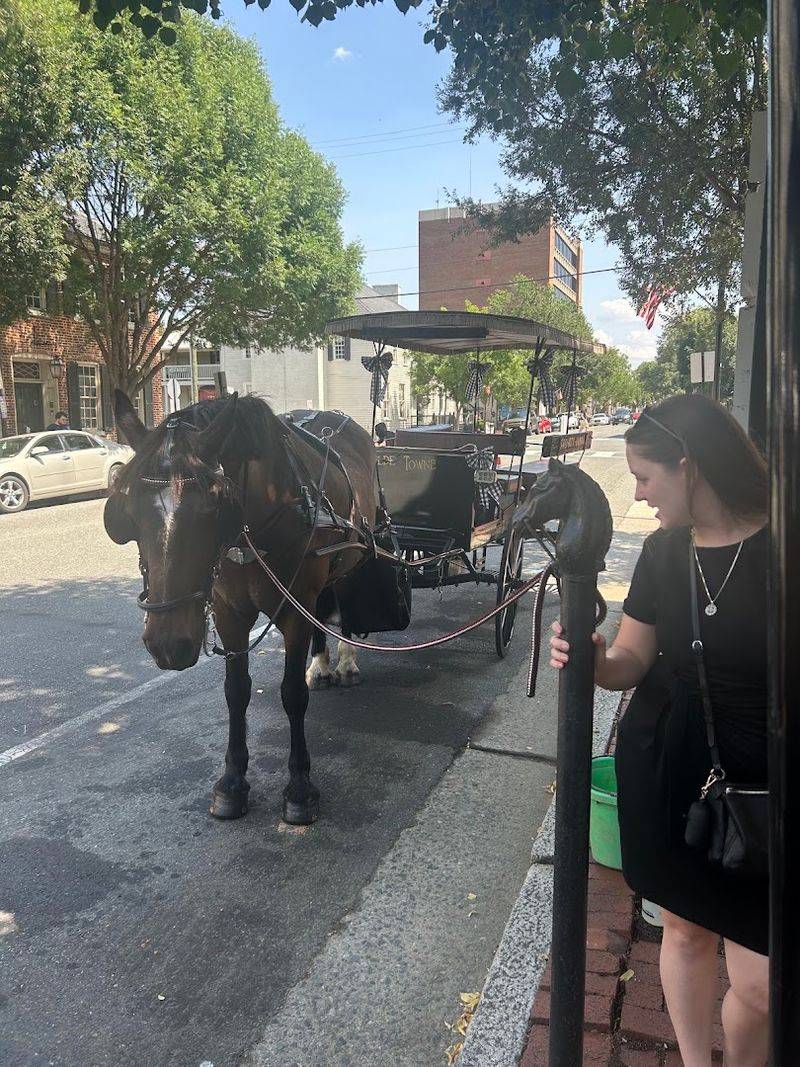
Caroline Street is easy to reach and completely free to explore on foot. Fredericksburg sits about halfway between Washington D.C. and Richmond along Interstate 95, making it a natural stop for road trips or a dedicated day trip from either city.
The drive is straightforward and parking near the historic district is generally manageable.
The best way to experience the street is slowly. Give yourself at least half a day, more if you want to visit multiple historic sites and spend time at Goolrick’s.
The district rewards people who are willing to look up at building facades, read historical markers, and take small detours down side streets.
Spring and fall offer the most comfortable walking temperatures, and the foliage along the tree-lined blocks adds a lot to the visual experience. Summer visits are perfectly doable but come prepared for Virginia humidity.
Winter has its own charm, especially when the streets are quiet and the old buildings feel even more anchored in time.
The Washington Heritage Museums operates several sites in the area, including the Rising Sun Tavern, and their hours shift seasonally. Checking ahead before your visit saves disappointment.
Most of the outdoor streetscape, including the cobblestone sidewalks, is accessible anytime.
Fredericksburg is one of those places that rewards curiosity more than planning. The street itself is the attraction.
Everything else, the museums, the shops, the soda fountain, the history markers, adds texture to what the cobblestones already say the moment you arrive.
