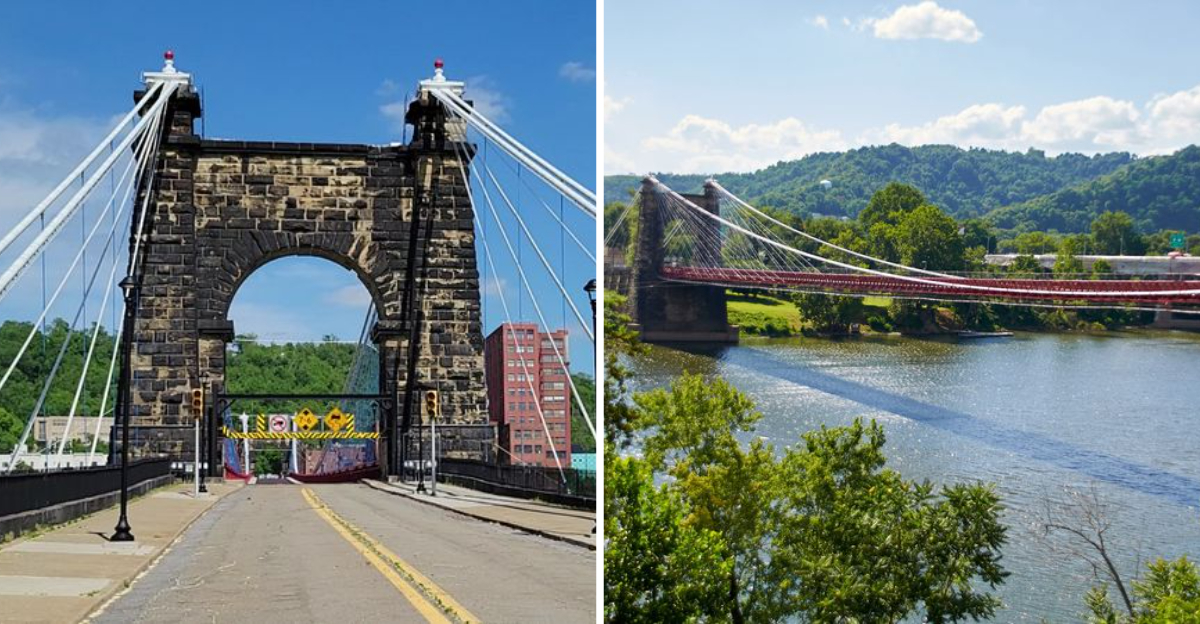
Standing at the edge of something genuinely old is a strange feeling, like the ground beneath you has a memory.
My expectations were modest when I pulled up to this stretch of the Ohio River, figuring it would be another quick photo stop before grabbing a sandwich.
What happened instead was a full stop, jaw-drop, why-did-nobody-tell-me-about-this moment.
The bridge in front of me was not just old, it was record-breaking, world-famous, and somehow still standing after more than 175 years.
Turns out, some things built in 1849 were built to absolutely last.
A World Record That Shocked The Engineering World In 1849
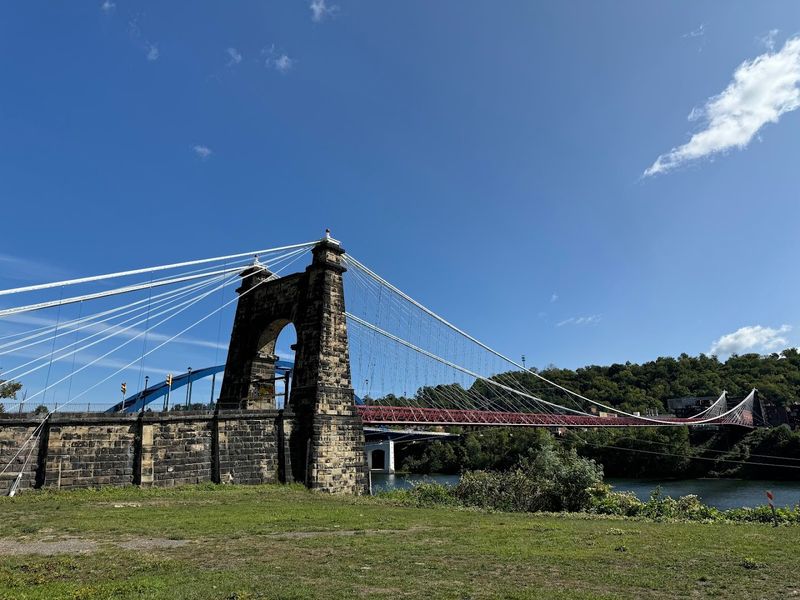
When the Wheeling Suspension Bridge opened in 1849, it did not just cross a river, it rewrote what engineers thought was possible. At 1,010 feet across its main span, it became the longest suspension bridge in the entire world.
That was not a small title to hold.
Charles Ellet Jr. designed the structure, and his vision was bold for the era. No bridge had ever stretched that far over open water in the United States.
People came from across the country just to see it standing.
The record held for years, with some sources crediting the bridge as the world leader until the Brooklyn Bridge opened in 1883. That is over three decades of holding the top spot.
For a bridge built with 1840s technology, that kind of staying power says everything about how remarkable the original design truly was. The Wheeling Suspension Bridge did not just make history, it set the bar for generations of engineers who followed.
Charles Ellet Jr. And The Genius Behind The Design
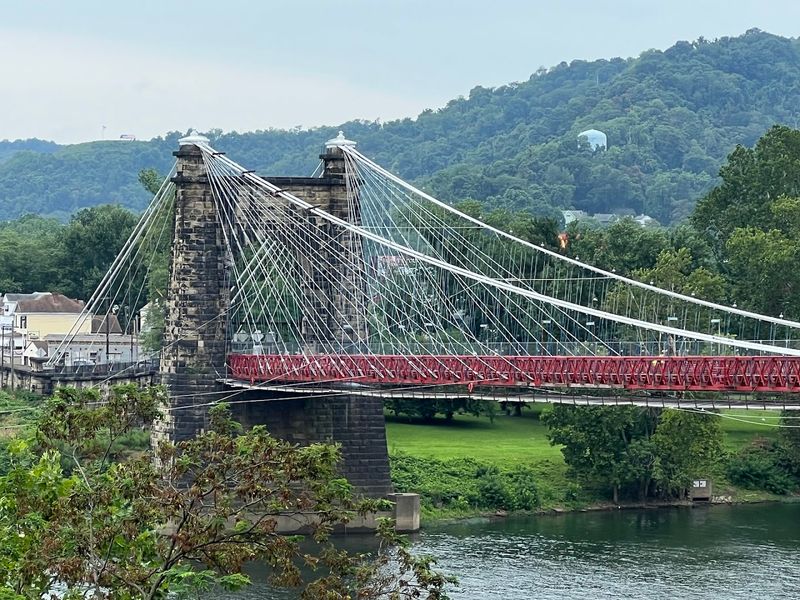
Not every brilliant idea comes from a famous name, but Charles Ellet Jr. deserves far more recognition than most people give him. He was a self-taught engineer with a fierce belief that long-span suspension bridges were the future of American infrastructure.
He was absolutely right.
Ellet had studied in Europe and came back with ideas that most American engineers considered too ambitious. When he landed the Wheeling project, he had something to prove.
The result was a bridge that stood taller, stretched farther, and lasted longer than almost anyone expected.
His approach was unconventional and creative, mixing practical problem-solving with genuine engineering courage. He used wire cables instead of chains, which was a significant technical choice at the time.
That decision helped make the span possible. Ellet later went on to other ambitious projects, but the Wheeling Suspension Bridge remains his most enduring achievement.
Walking across it today, you can almost feel the determination baked into every rivet and cable still holding it together.
The First Bridge West Of The Appalachians To Cross A Major River
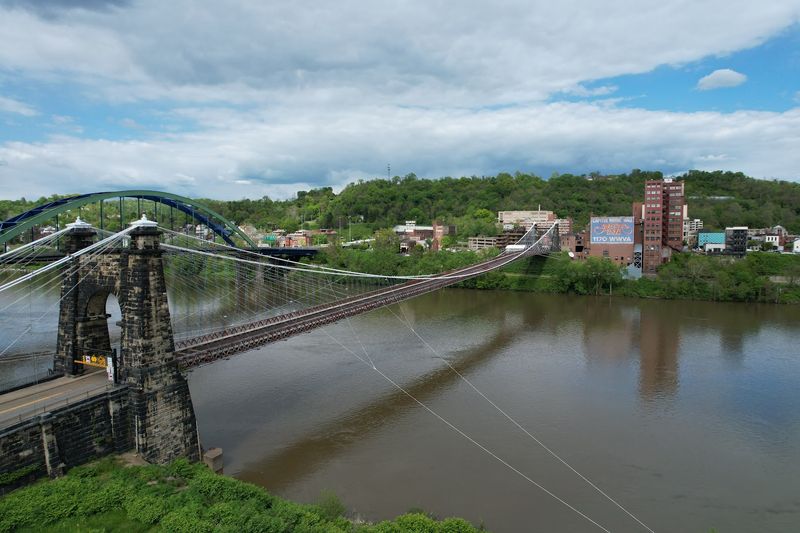
Geography matters a lot when you are talking about 19th-century travel. The Appalachian Mountains created a natural wall that separated the eastern United States from the expanding western frontier.
Crossing major rivers on that western side was a serious challenge for travelers, traders, and settlers moving west.
The Wheeling Suspension Bridge changed that completely. It became the first bridge to span a major river west of the Appalachians, making it a genuine gateway to the western territories.
Goods, families, and commerce could now cross the Ohio River without depending on ferries or seasonal conditions.
That made Wheeling an incredibly important stop along the National Road, which was the country’s first federally funded highway. The bridge was not just a structure, it was a turning point in American westward expansion.
Standing on it today with the Ohio River rolling underneath, it is easy to understand why this crossing mattered so deeply to so many people trying to build a new life on the other side.
The Windstorm That Destroyed The Deck And The Rebuild That Saved It
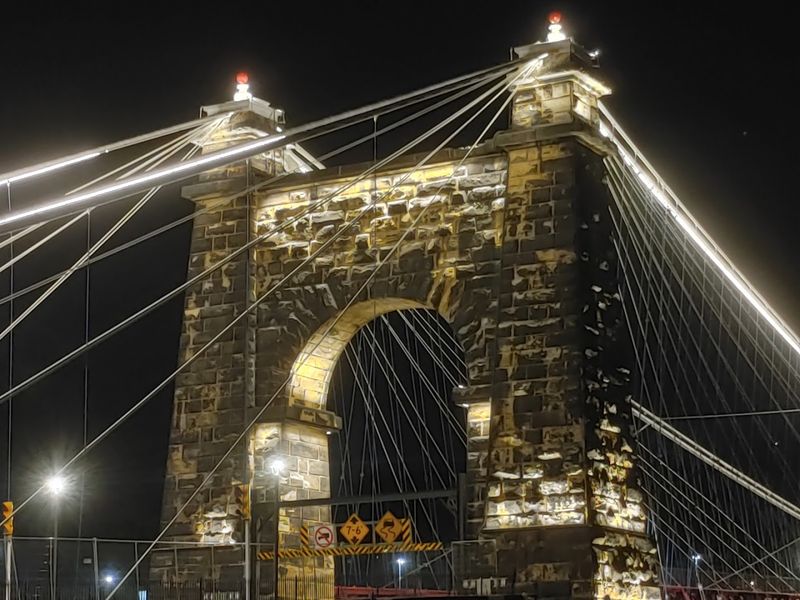
May 17, 1854, was not a good day for the Wheeling Suspension Bridge. A powerful windstorm rolled through and ripped the wooden deck completely apart, leaving the cables and towers standing but the roadway in ruins.
It was a devastating sight for a bridge that had only been open for a few years.
What happened next says a lot about how much the community valued this crossing. Rather than abandoning the structure, engineers rebuilt the deck using most of the original elements.
The towers and cables were preserved, and the bridge was restored to something very close to its original form.
That decision to rebuild rather than replace is part of why the Wheeling Suspension Bridge still looks the way it does today. The bones of the original design survived, and the rebuilt version carried traffic for well over a century after that storm.
It is a story of resilience that feels fitting for a bridge that has been defying expectations since the moment construction began back in 1847.
A National Historic Landmark With Deep Roots In American History
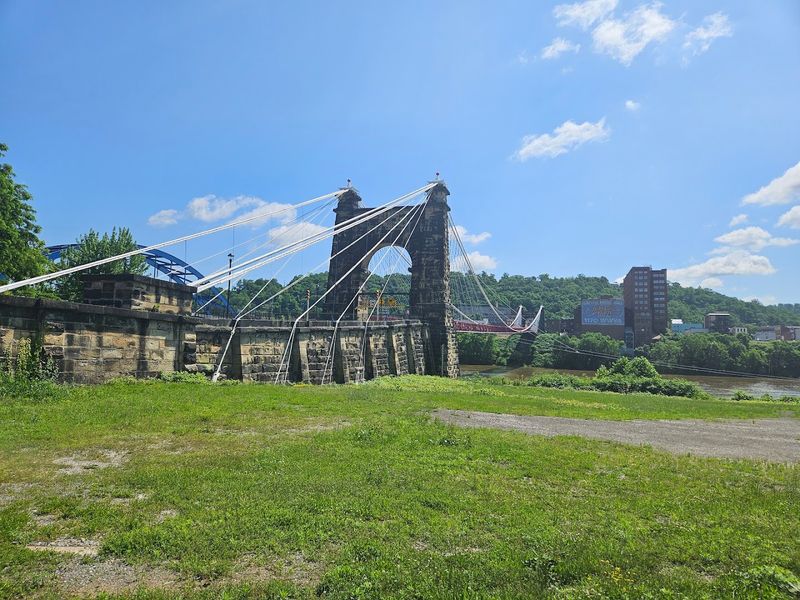
Some places earn their status as landmarks through sheer age alone. The Wheeling Suspension Bridge earned it through age, innovation, and genuine influence on the country’s development.
It was listed on the National Register of Historic Places in 1970 and received the even higher designation of National Historic Landmark in 1975.
That second title is not handed out casually. National Historic Landmarks are places that carry exceptional value to American history and culture.
The bridge qualified because of its engineering significance, its role in westward expansion, and its status as the oldest vehicular suspension bridge in the United States still in use.
Near the entrance, a small informational sign lays out the history in clear, accessible language. It is the kind of stop that makes a road trip feel genuinely worthwhile.
History is not always tucked inside a museum with admission fees. Sometimes it is standing right in front of you over a wide river, completely free to explore and walk across on any day of the week.
The 2019 Closure That Turned A Car Bridge Into A Walker’s Paradise
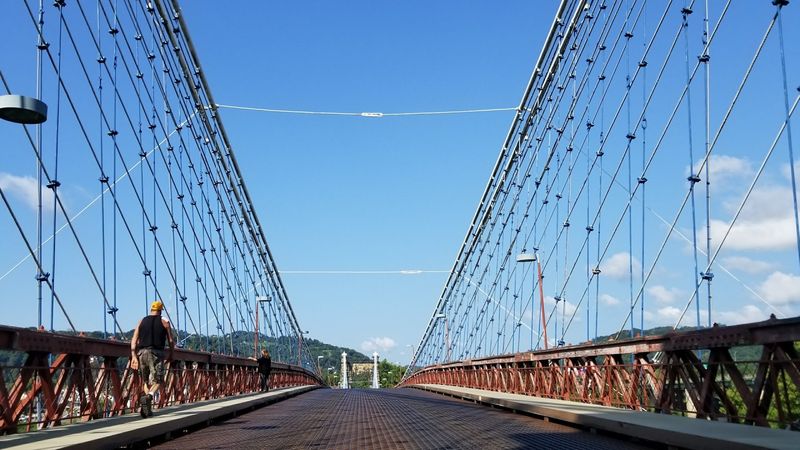
An overweight tour bus crossing in September 2019 caused significant structural damage, and that was effectively the end of the Wheeling Suspension Bridge as a vehicle route. The West Virginia Division of Highways stepped in, assessed the situation, and made a clear call: no more cars.
The bridge’s future would belong to pedestrians.
For many people, that decision turned out to be a gift. Without traffic rushing past, the bridge became a genuinely peaceful place to walk.
You can take your time, look over the railing, and actually absorb the experience of standing over the Ohio River on a 175-year-old structure.
The grating on the roadway lets you look straight down at the water below, which is either thrilling or mildly terrifying depending on your relationship with heights. Either way, it is unforgettable.
Cyclists also use the bridge regularly, making it a popular spot for a slow, scenic ride. The closure that seemed like a loss ended up revealing a quieter, more personal way to experience one of West Virginia’s most remarkable structures.
Walking Across: What The Experience Actually Feels Like
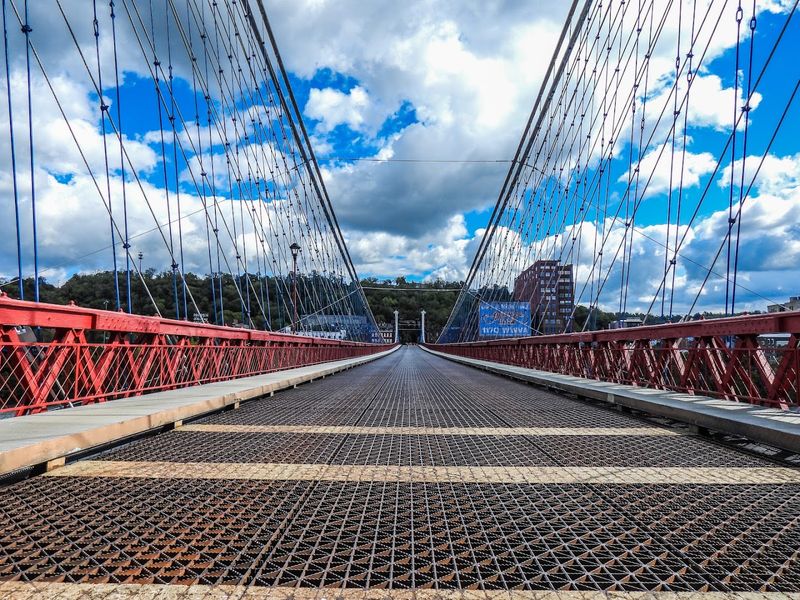
Stepping onto the bridge for the first time comes with a small jolt of awe. The cables rise dramatically overhead, the towers frame the sky, and the whole structure has a gentle sway that reminds you this is a suspension bridge, not a sidewalk.
Your body knows it before your brain catches up.
Looking down through the metal grating is a choice you have to make deliberately. The Ohio River is right there beneath your feet, moving slowly and shining in the light.
Some people love that view immediately. Others need a moment to collect themselves before fully enjoying it.
The walk across and back is easy, free, and open every single day with no tickets required. Parking is available on the street nearby, usually just half a block away.
From the center of the bridge, the views stretch in both directions along the river, with Wheeling Island on one side and the historic downtown on the other. It is the kind of simple, unhurried experience that stays with you long after you have driven away.
The Stunning Views Of The Ohio River And Wheeling Island
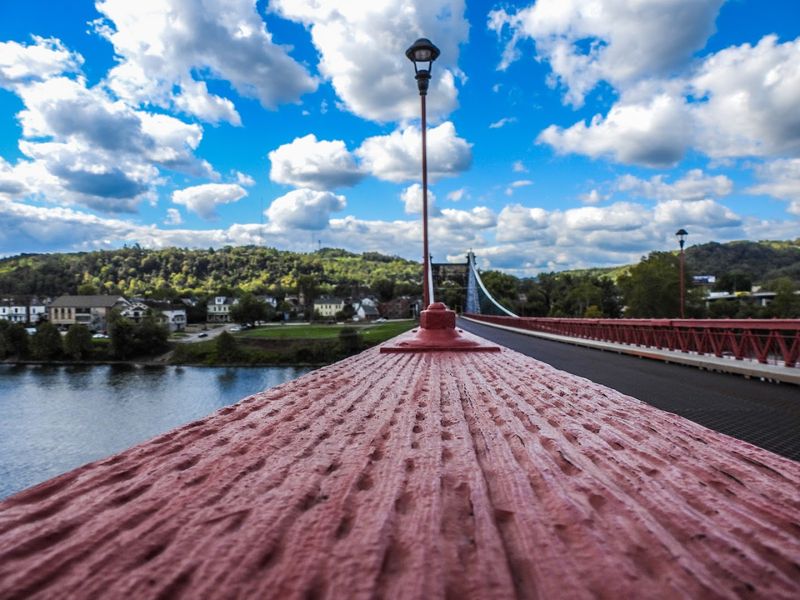
From the middle of the bridge, the Ohio River opens up in both directions and the view is genuinely impressive. The water has a calm, steady quality that makes the whole scene feel timeless.
On one side sits Wheeling Island, a green and residential stretch of land that feels almost hidden from the mainland.
On the other side, the city of Wheeling lines the bank with its mix of historic architecture and river-town character. The skyline is modest but charming, the kind of downtown that feels lived-in and real rather than polished for tourists.
Early morning and late afternoon light hit the bridge cables in a way that photographers absolutely love.
Golden hour here is something special. The sun sets over the river at an angle that turns everything warm and glowing, making the bridge cables look almost copper-colored.
It is the kind of light that makes even a phone camera produce something worth keeping. The views alone make the short walk completely worth it, even before you factor in the 175 years of history under your feet.
The Ongoing Rehabilitation And What Is Being Improved
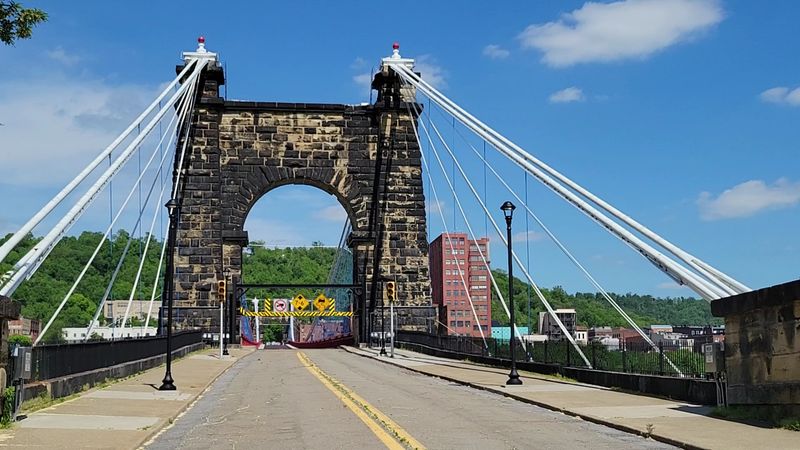
The bridge is not just being preserved, it is being thoughtfully upgraded for its new life as a pedestrian destination. A rehabilitation project is currently underway that focuses on improving lighting, signage, and overall infrastructure for people on foot.
The goal is to make the crossing safer, more welcoming, and easier to enjoy at any hour.
Lighting improvements are especially exciting because the bridge already looks striking at night. The reflection of the lit cables on the Ohio River below is something that visitors consistently describe as beautiful.
Better lighting will make that nighttime experience even more accessible and safe.
New signage will help visitors understand what they are looking at, giving more context to the engineering history and the stories behind specific parts of the structure. Even during active renovation periods, the bridge has remained open to pedestrians, so the work has not stopped people from visiting.
The rehabilitation reflects a genuine commitment to honoring the bridge’s past while making sure it remains a vibrant, usable part of Wheeling’s public life for many decades ahead.
Exploring Wheeling Beyond The Bridge: Shops, Eateries, And History Nearby
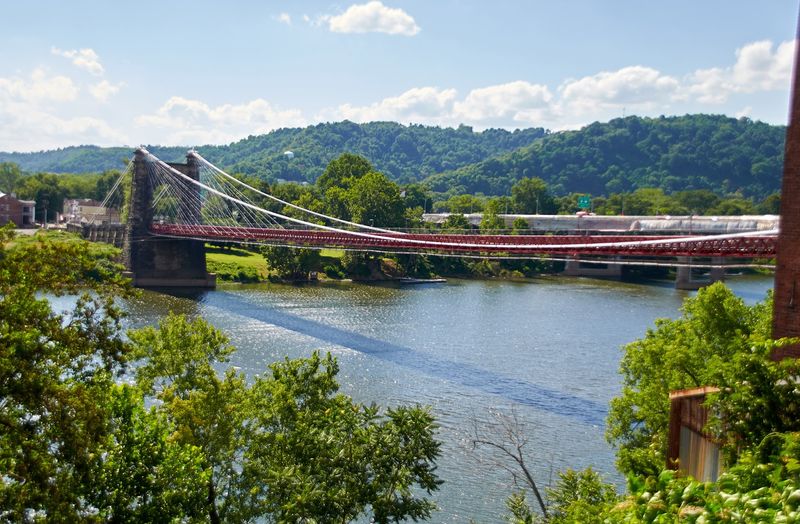
The bridge does not exist in isolation. Wheeling itself is a town full of character, history, and good food worth exploring before or after the crossing.
A handful of well-regarded restaurants and casual eateries sit close to the Wheeling side of the bridge, making it easy to grab a meal and turn the visit into a proper afternoon out.
The surrounding streets offer small shops, interesting architecture, and the kind of walkable downtown that rewards slow exploration. The area around the bridge sits along the National Road Heritage Trail, which adds even more historical context to an already history-rich neighborhood.
A small informational sign near the bridge entrance covers the trail’s significance.
Heritage Port is nearby on the Wheeling side, offering riverfront space that pairs well with the bridge visit. The whole area has a relaxed, unhurried energy that makes it easy to spend more time than planned.
Whether you come for the bridge, the river views, the food, or just the fresh air, Wheeling has a way of making the stop feel like more than just a detour.
Address: Wheeling, WV 26003
