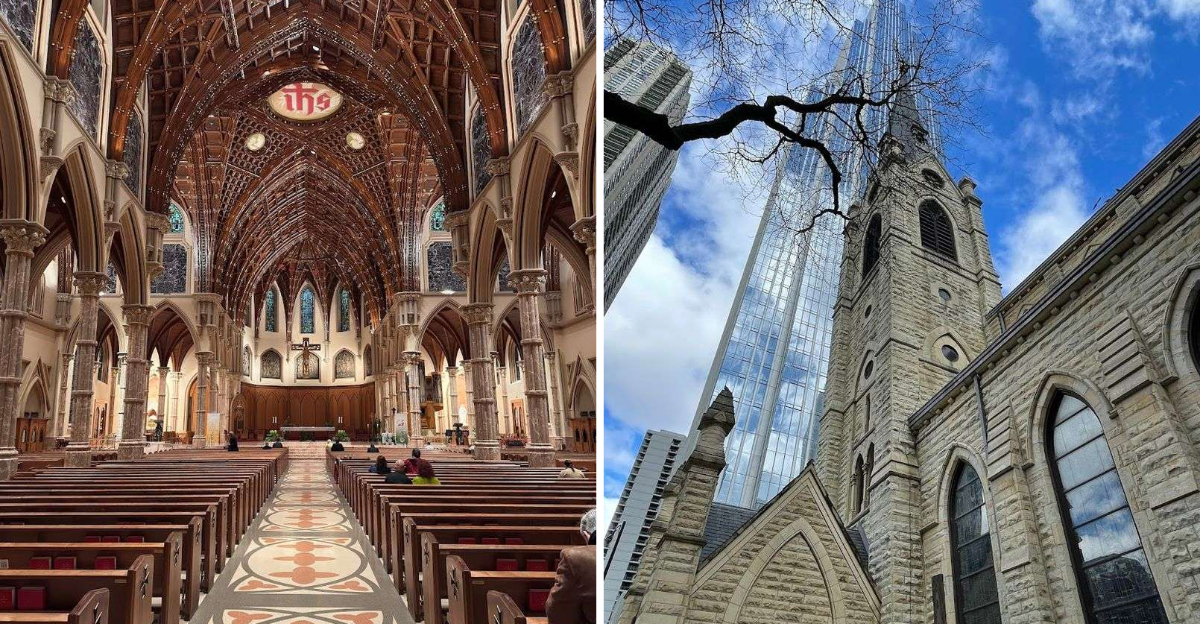
A cathedral in Chicago stops you cold the moment you step onto the sidewalk outside it. The building rises with grand Gothic bones and stained glass windows that catch the afternoon light in beautiful, almost holy ways.
But there is a weight to this place that goes beyond stone and architecture, something heavy pressing against your chest before you even reach the front doors. I first heard about this church through a ghost tour guide who spoke about it like it was a living thing, not just a landmark.
His voice dropped when he mentioned the address. The history here layers thick with gangsters, gunfire, and grief from the Prohibition era, when Chicago belonged to men who wore suits and carried tommy guns like briefcases.
What happened on the street outside these doors in 1926 left marks that no renovation has ever fully erased. Some say you can still hear phantom shots echo through the nave on quiet evenings.
Others feel a cold presence watching from the back pews. This is a place where the sacred and the sinister have always shared the same address, and somehow, that tension never quite fades.
Walk softly. Something might be listening.
The Cathedral That Al Capone Called His Own Pew
Most people think of Al Capone and picture a courtroom or a jail cell, but there was another place he showed up to regularly, dressed sharp and sitting quietly like any other churchgoer. Holy Name Cathedral, built in 1875, was that place.
Capone had a regular pew, and by all historical accounts, he treated it like reserved seating.
The cathedral at 730 North Wabash Avenue sits right in the heart of what was once gangland Chicago. During Prohibition, this stretch of the city buzzed with illegal operations, backroom deals, and brutal power struggles.
Yet on Sundays, some of the most dangerous men in the country sat beneath the cathedral’s vaulted ceilings in apparent peace.
There is something genuinely strange about imagining that contrast. The incense, the hymns, the stained glass light filtering down onto men who ordered violence without blinking.
Capone reportedly believed in the rituals of the church, attending mass with a kind of devotion that felt completely at odds with his public reputation. The cathedral never turned him away.
That detail alone says a lot about how deeply crime and community were tangled together in 1920s Chicago.
Hymie Weiss and the Hit That Shook the Cornerstone
On October 11, 1926, one of the most brazen mob assassinations in American history played out just steps from the cathedral’s front entrance. Hymie Weiss, the leader of the North Side Gang and one of Capone’s fiercest rivals, was cut down by submachine gun fire as he crossed the street near his headquarters above a florist shop.
Weiss and his bodyguard never made it inside. Gunmen positioned in a rooming house window opened fire, and the attack was so intense that several bullets struck the cathedral’s cornerstone itself.
Those bullet holes stayed visible in the stone for decades, a physical scar that tourists and parishioners alike could touch with their own hands.
Renovations eventually smoothed over the damage, but people who study this history argue that the energy of that moment never left. The sheer volume of violence, the screaming, the chaos right outside the doors of a sacred building, it leaves something behind.
Ghost researchers and paranormal investigators have repeatedly pointed to the Weiss assassination as the emotional anchor for much of the strange activity reported at the cathedral ever since. Some wounds, it seems, outlast the stone they were carved into.
Phantom Gunshots in the Silence of Night
One of the most consistently reported paranormal experiences near Holy Name Cathedral is the sound of gunshots. Not distant, not muffled, but sharp and sudden, like they are happening right outside the window.
Visitors on late-night ghost tours have described the sound clearly, and some have reported it even when no tour was happening and they were simply passing by.
What makes this detail particularly compelling is the specificity of the reports. People do not just say they heard a loud noise.
They describe the rapid, mechanical rhythm of submachine gun fire, which matches exactly the weapon used to end Hymie Weiss. That level of detail is hard to dismiss as imagination running wild on a dark street.
Paranormal researchers who have spent nights near the cathedral describe the experience as deeply unsettling, not because it feels threatening, but because it feels like a loop. The same sounds, the same sequence, repeating in the same location.
Some believe residual hauntings work exactly this way, that traumatic events can imprint on a place and replay themselves like a recording. Whether you believe in that or not, the sheer number of independent witnesses reporting the same sounds near the same spot is genuinely difficult to explain away.
Mob Weddings, Mob Funerals, and Sacred Ground
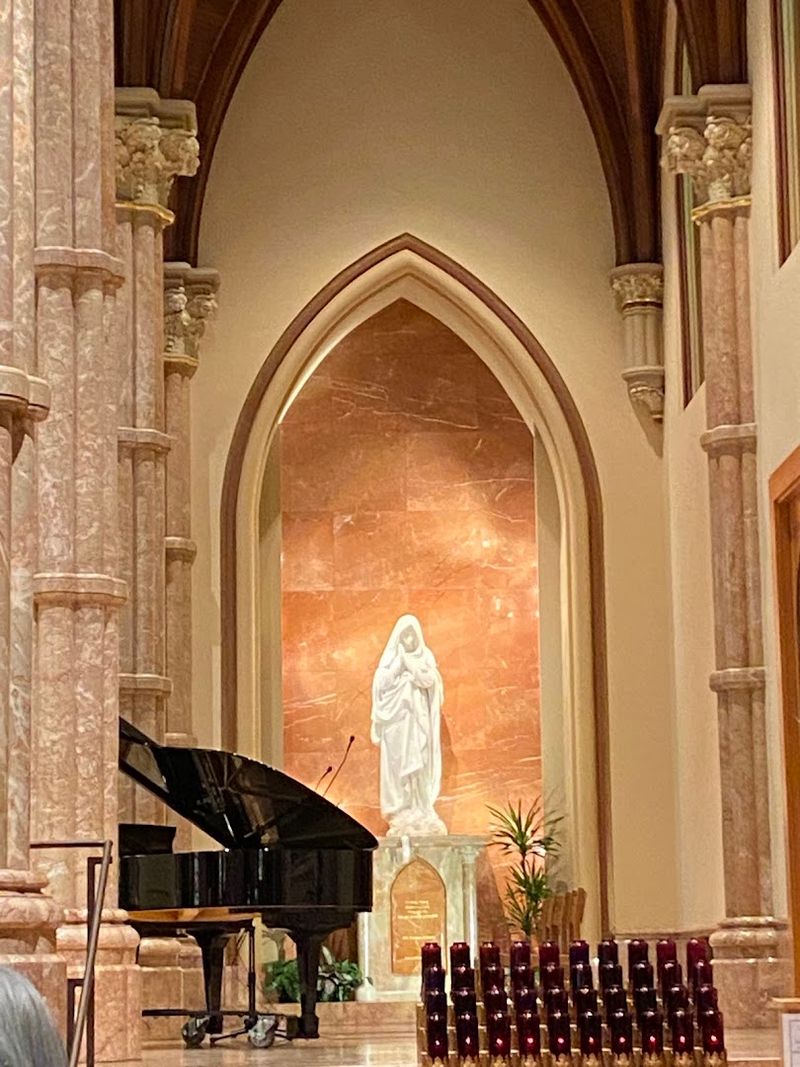
Holy Name Cathedral did not just witness one dramatic moment in mob history. For decades, it served as the backdrop for some of the most significant life events in the Chicago Outfit’s inner circle.
Weddings, baptisms, and funerals for mob figures were held here with full religious ceremony and considerable fanfare.
There is a strange kind of irony in that. Men who built their fortunes on extortion, bootlegging, and murder stood at the altar of one of Chicago’s most respected churches to mark the milestones of their lives.
The cathedral accommodated them, and in doing so, became permanently woven into the story of organized crime in America.
Historians note that this was not unusual for the era. The Catholic Church in Chicago had deep roots in immigrant communities, and many of the men who ran the mob came from those same communities.
Religion and criminality were not seen as contradictory, at least not in day-to-day life. The cathedral holds the memory of all of it, the prayers said in genuine faith and the secrets whispered between men who knew exactly what they were capable of.
That mixture of devotion and darkness is part of what makes this building feel so layered when you stand inside it.
The Ghostly Figures Spotted Inside the Cathedral
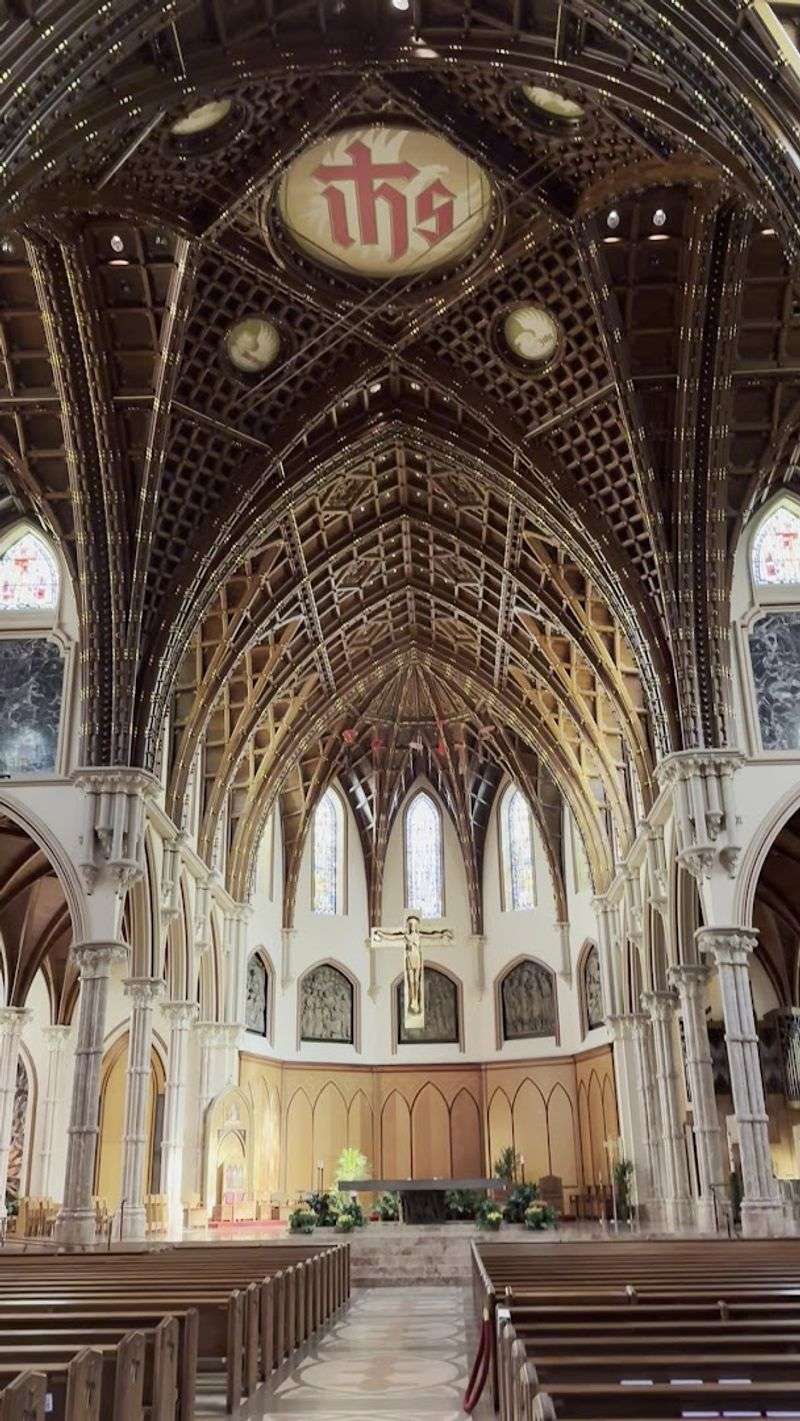
Beyond the phantom sounds outside, there are reports of something stranger happening inside the cathedral walls. Staff members, late-night cleaning crews, and visitors attending early morning masses have described seeing figures inside the building that simply should not be there.
The descriptions are consistent in one interesting way: the figures wear clothing that does not match the present day. Dark suits, wide-brimmed hats, the kind of silhouette you associate with old photographs rather than a modern Chicago morning.
They appear briefly, usually near the pews toward the back of the nave, and then they are gone before anyone can get a closer look.
I find these reports more believable than most, not because I am easily convinced, but because they come from people who were not looking for a ghost experience. A cleaning crew member clocking in before dawn is not in the mindset of a ghost hunter.
When someone in that situation sees something unexpected and describes it in specific, calm terms, it carries a different kind of weight. The cathedral is still an active place of worship, which means these experiences happen in the middle of ordinary life, not staged events.
That ordinariness makes the strangeness harder to ignore.
The Architecture That Holds a Hundred Years of Secrets
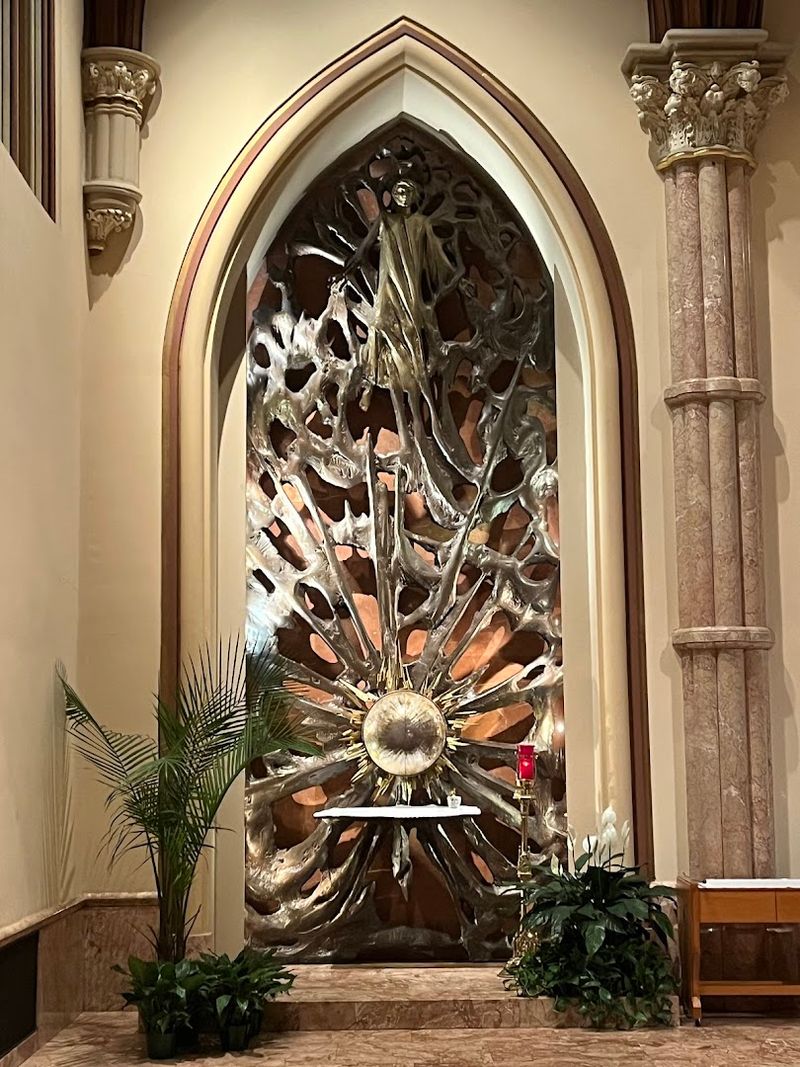
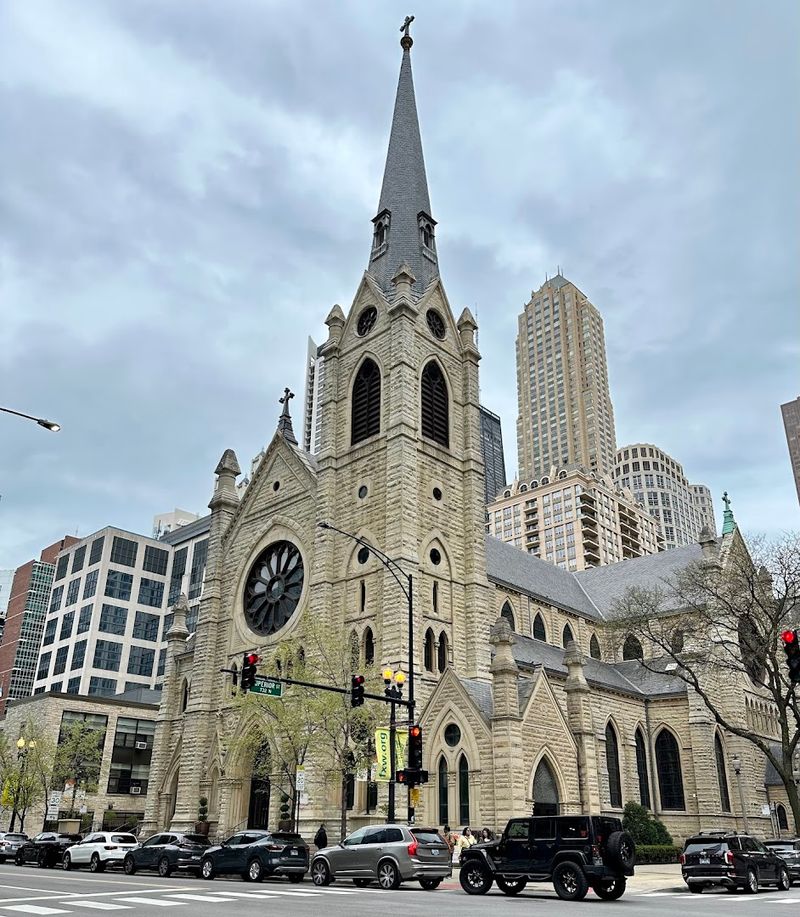
Even if you set aside every ghost story and every mob connection, Holy Name Cathedral is worth visiting for what it looks like. The Gothic Revival architecture is commanding without being cold.
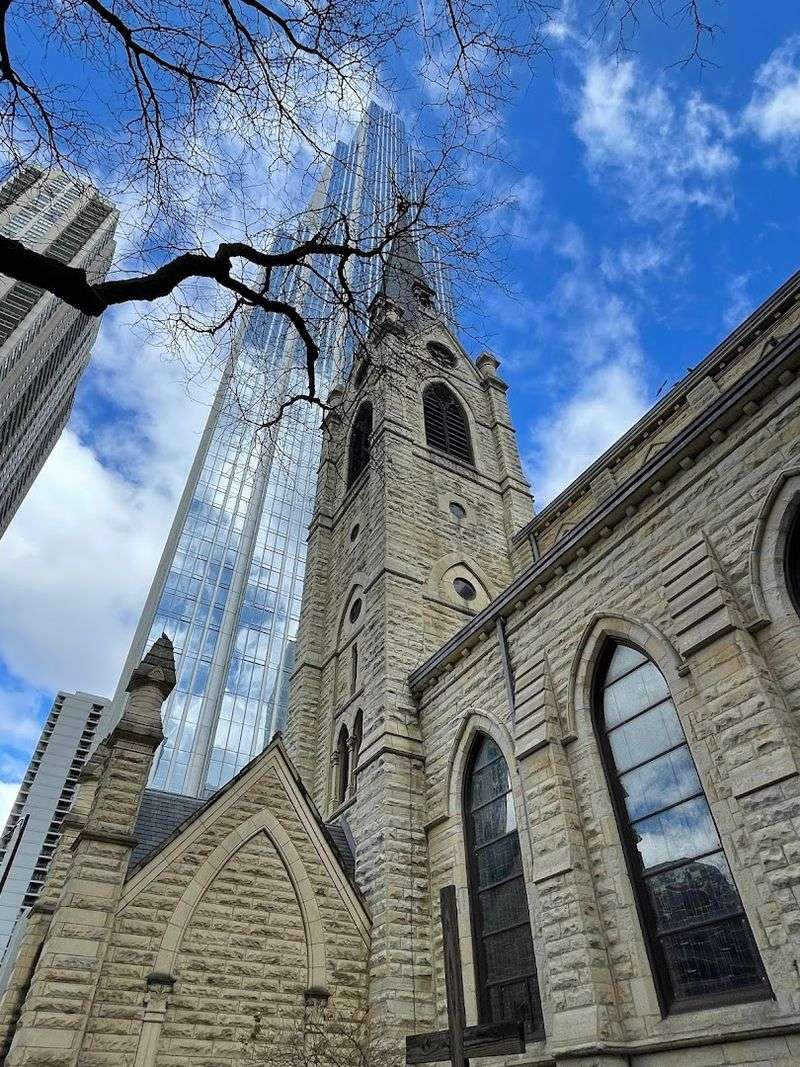
The stone facade, the pointed arches, the sheer vertical reach of the building all work together to create something that feels genuinely timeless on a street full of modern glass and steel.
Built in 1875, the cathedral has been through fires, renovations, and more than a century of Chicago winters. Each layer of restoration has added to its complexity rather than erasing it.
The cornerstone that once bore bullet holes is part of a structure that has absorbed history the way old wood absorbs smoke, deeply and permanently.
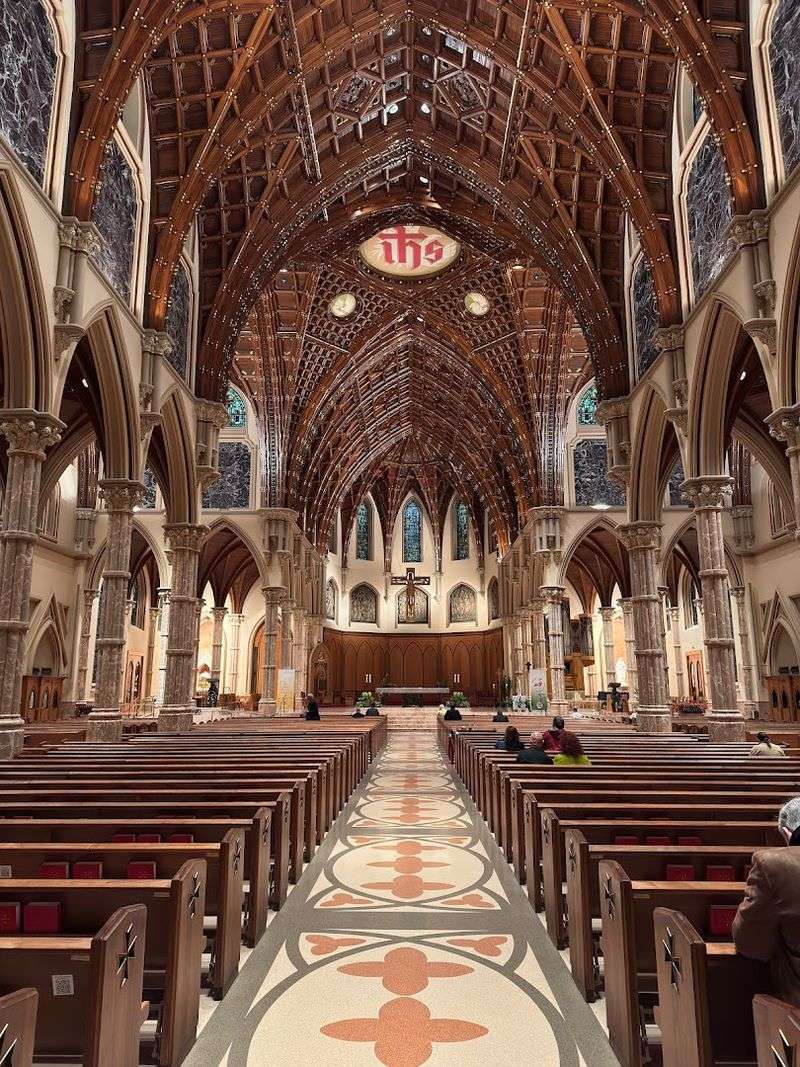
Inside, the scale is even more impressive. The vaulted ceiling draws your eyes upward, and the light through the stained glass shifts through the day in ways that feel almost theatrical.
It is the kind of space that makes you lower your voice automatically, not out of obligation, but out of instinct. Architects and historians both point to it as one of Chicago’s finest examples of the style, and that recognition feels completely earned once you have spent time inside it.
Visiting Holy Name Cathedral Today
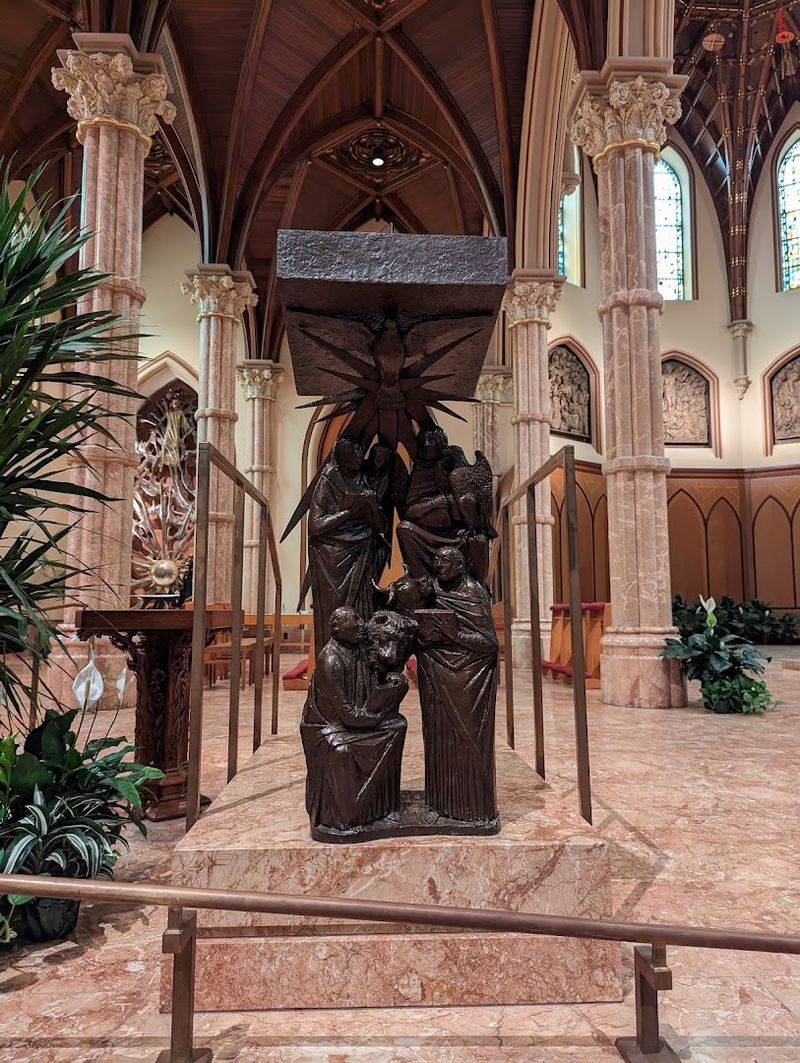
Holy Name Cathedral is still a fully active parish, which means visiting it comes with a layer of respect built in. Mass is held regularly, and the space is used for community events, concerts, and religious ceremonies throughout the year.
You are not walking into a museum. You are walking into a place where people still come to pray.
That said, the cathedral welcomes visitors who come out of historical or architectural curiosity. The neighborhood around it has changed enormously since the 1920s, but the building itself feels anchored in its own era.
The Gold Coast and River North areas nearby offer plenty to explore before or after a visit, and the cathedral sits close enough to the Chicago Riverwalk that you can build a full afternoon around the area.
Ghost tours of Chicago frequently include stops here, particularly after dark when the street outside takes on a different mood entirely. If you are the type who appreciates history with a side of the unexplained, this is genuinely one of the best stops the city has to offer.
The story of what happened here is real, documented, and strange enough on its own that it needs no embellishment. Address: 730 North Wabash Avenue, Chicago, Illinois 60611.
