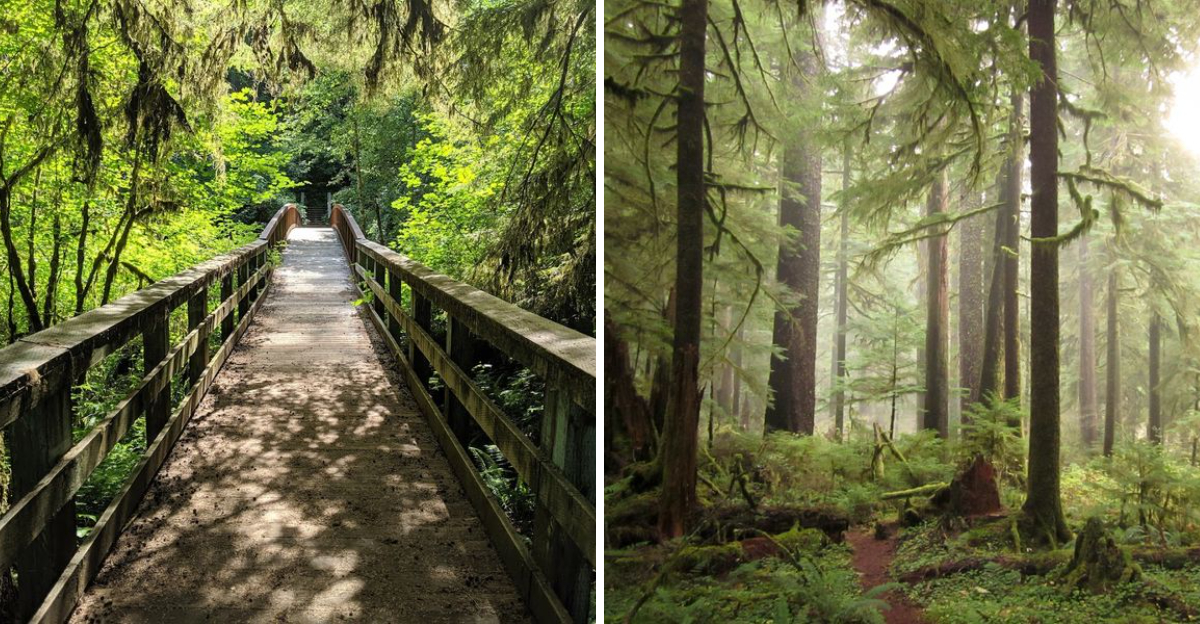
Some secrets stay hidden for a reason, this Oregon boardwalk hike is exactly that kind of secret. You will not find it on most tourist maps or crowded social media feeds.
The trail leads you through an ancient forest where moss drapes over everything like green velvet curtains. Giant trees rise up on all sides with trunks so wide three people could not wrap their arms around them.
The boardwalk keeps your feet dry while protecting the delicate ground below. You walk slowly because rushing feels wrong in a place this quiet.
The light filters down in soft beams, creating tiny spotlights on ferns and fallen logs. Birds call from somewhere above but you rarely see them.
The whole experience feels like stepping into a cathedral built by nature instead of human hands. Oregon has plenty of famous hikes with long lines and full parking lots, but this one remains gloriously uncrowded.
Locals want to keep it that way. The trail is short enough for beginners but beautiful enough to impress seasoned hikers.
Bring a rain jacket even on sunny days because the forest holds moisture like a sponge, bring your quietest voice out of respect for the silence.
The Ancient Douglas Firs That Will Leave You Speechless
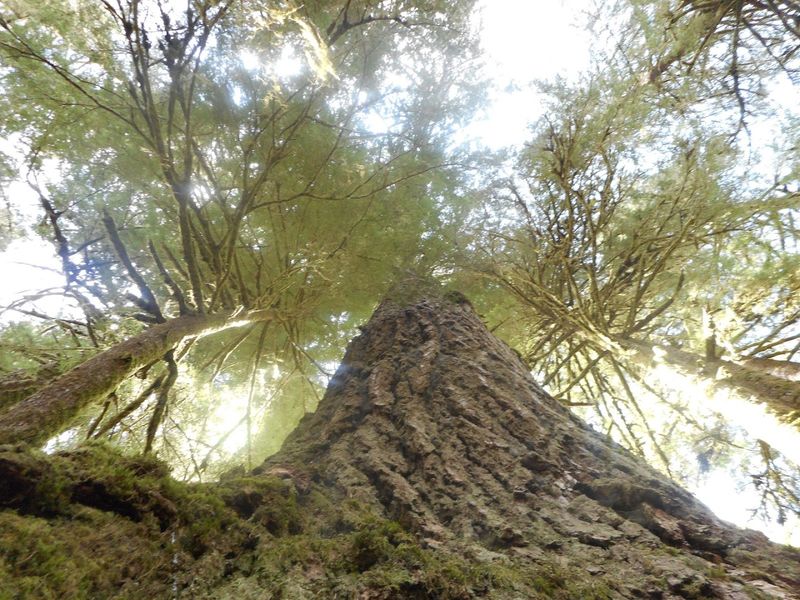
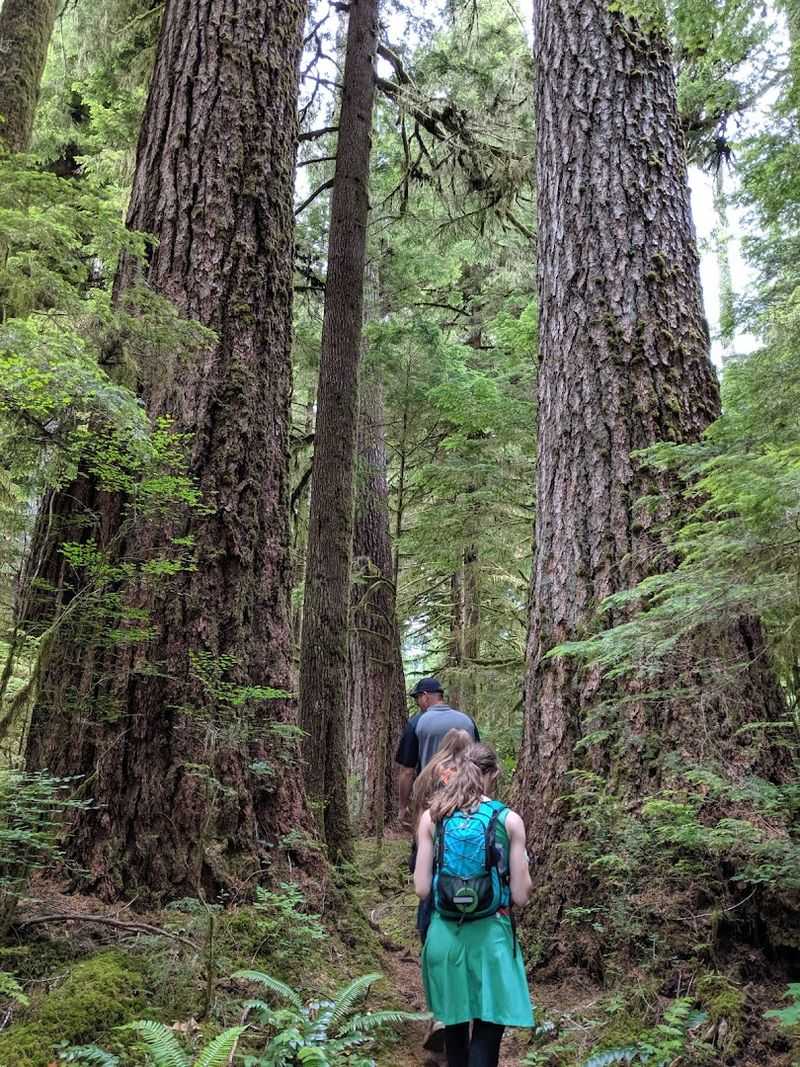
Standing at the base of a 400-year-old Douglas fir is one of those moments you simply do not forget. These trees have been growing since before the United States even existed.
Their trunks are so wide that several adults holding hands could not wrap around them.
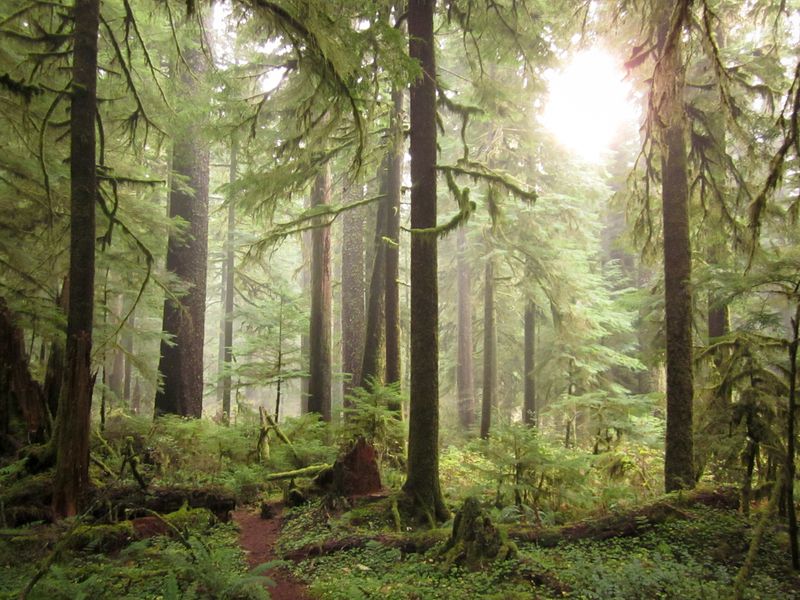
The Valley of the Giants protects some of the largest remaining old-growth Douglas firs in Oregon. Some reach heights that make your neck ache just looking up.
The forest floor beneath them is layered with ferns, fallen logs, and thick green moss.
What makes these trees so special is not just their size. It is the feeling of being surrounded by something ancient and unhurried.
The canopy filters light in a way that turns everything golden and green at once. Timber industry veteran visitors have described the experience as genuinely awe-inspiring, even after decades working among trees.
This grove is a rare survivor in a landscape that has otherwise been heavily logged. Seeing it feels like a true privilege.
Getting There Is Half the Adventure
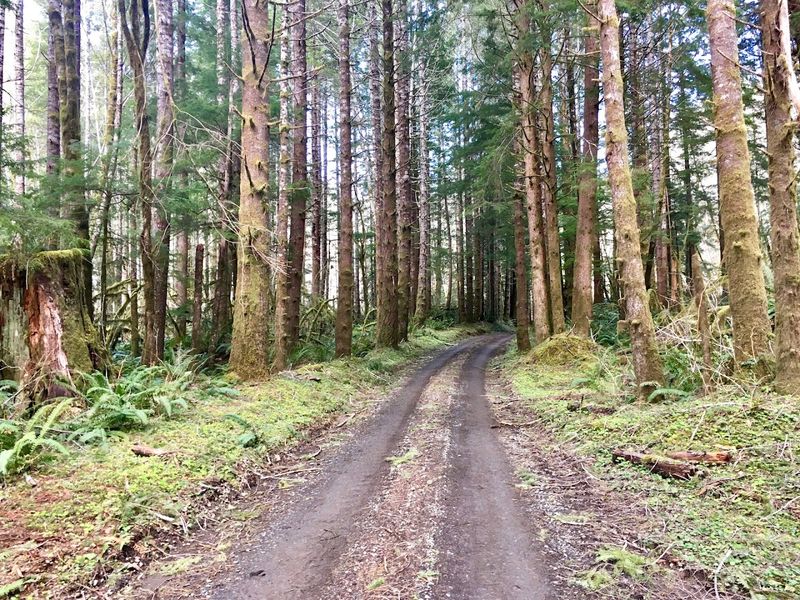
The drive to Valley of the Giants is not your typical trailhead approach. You will leave Falls City, cross the bridge, and follow a gravel road deep into the Oregon Coast Range for roughly 30 miles.
The roads are narrow, sometimes single-lane, and wind through active logging territory.
Google Maps will not help you here. Most visitors strongly recommend picking up a BLM brochure from the Salem office before you go.
Keep an eye out for small orange signs marked “VOG” along the route, they are your best reassurance that you are heading the right direction.
Plan for about 1.5 to 2 hours of driving each way from Falls City. A vehicle with decent ground clearance makes the journey more comfortable, especially on the rougher final stretch.
Download offline maps before leaving town since cell service disappears quickly. The drive itself is scenic and surprisingly beautiful, passing rivers, mountain views, and moss-draped forest.
Pack snacks, charge your phone, and enjoy every mile of it.
The Loop Trail Through Old-Growth Rainforest
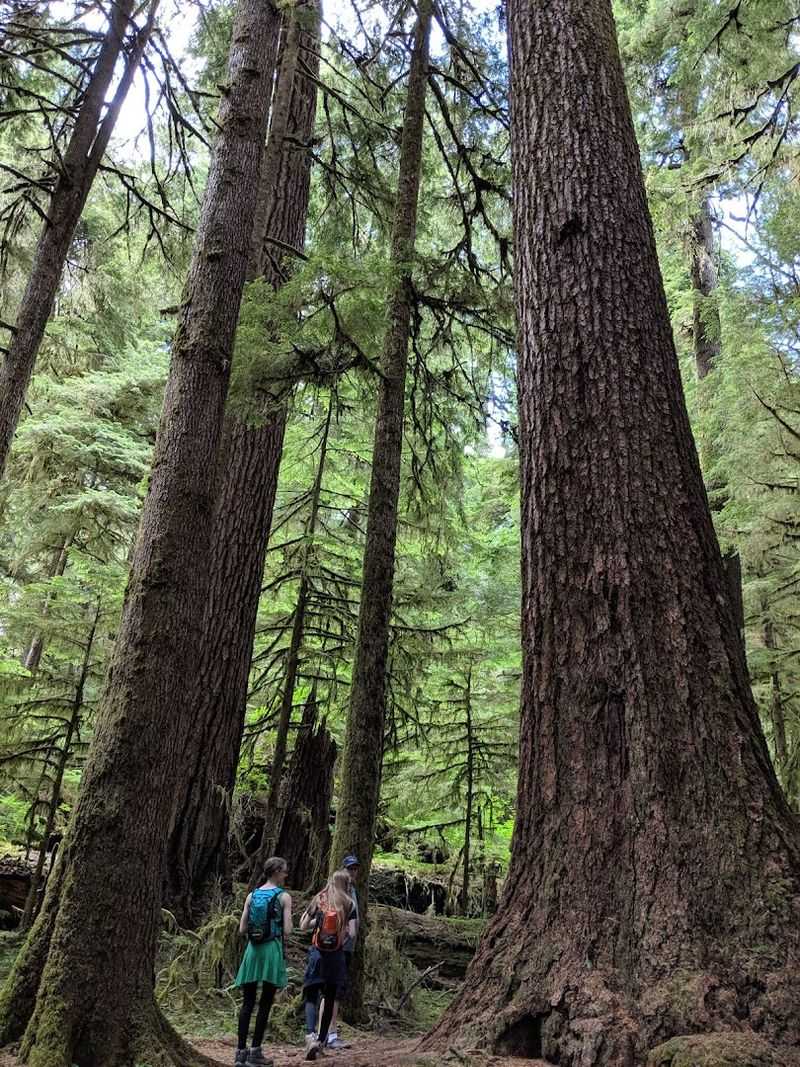
The main loop at Valley of the Giants covers roughly 2.2 miles with about 1,200 feet of elevation change. It starts with a descent into the valley, which means you earn your return trip on the way back out.
Some sections are steep, rooted, and slippery after rain.
The trail winds through some of the most beautiful old-growth forest you will find anywhere in Oregon. You pass enormous fallen logs, cross small bridges, and walk beneath trees that dwarf everything around them.
The path is well-maintained but definitely feels like a real hike, not a stroll.
Sturdy footwear is a smart choice here. The roots can catch your feet off guard, and wet conditions make some sections genuinely challenging.
That said, the trail rewards careful hikers with constant visual surprises around every bend. Elk have been spotted in the area, so keep your eyes open and your voice low.
The whole loop takes about an hour at a comfortable pace, longer if you stop to take pictures, and you absolutely will.
Crossing the Steel Footbridge Over the Siletz River
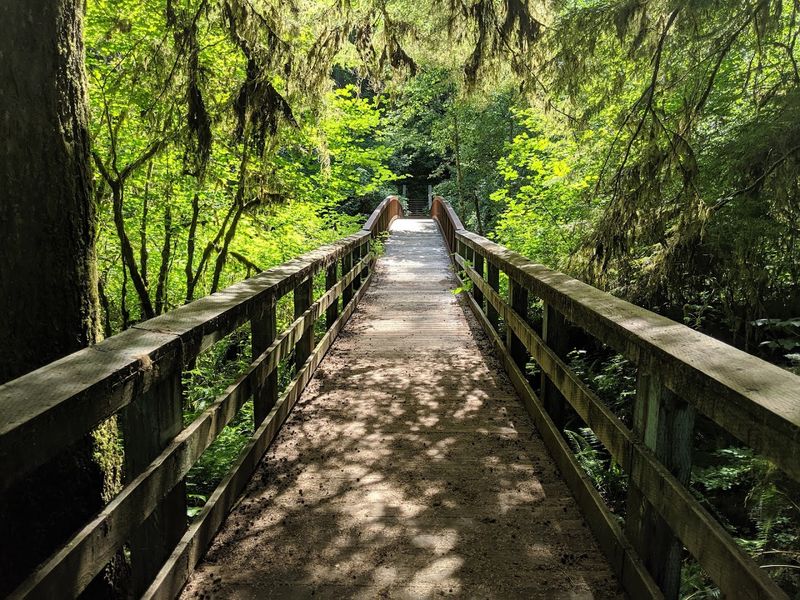
One of the most memorable moments of the hike comes early. You descend into the valley and suddenly arrive at a steel footbridge spanning the Siletz River.
The water below is clear and cold, rushing over smooth stones with a sound that fills the whole canyon.
Decades ago, hikers crossed this same spot on a massive old-growth log that had fallen naturally across the river. That log is long gone now, replaced by a sturdy engineered bridge.
The setting, though, remains completely magical. The river frames the old trees perfectly from the bridge.
Standing there mid-crossing and looking upstream or downstream feels like a scene from a nature documentary. The Siletz is a genuinely beautiful river, and this vantage point shows it off at its best.
Some visitors have even waded in during warmer months. The bridge marks the transition point where the real old-growth grove begins, so crossing it carries a certain sense of arrival.
What to Pack for a Full Day at Valley of the Giants
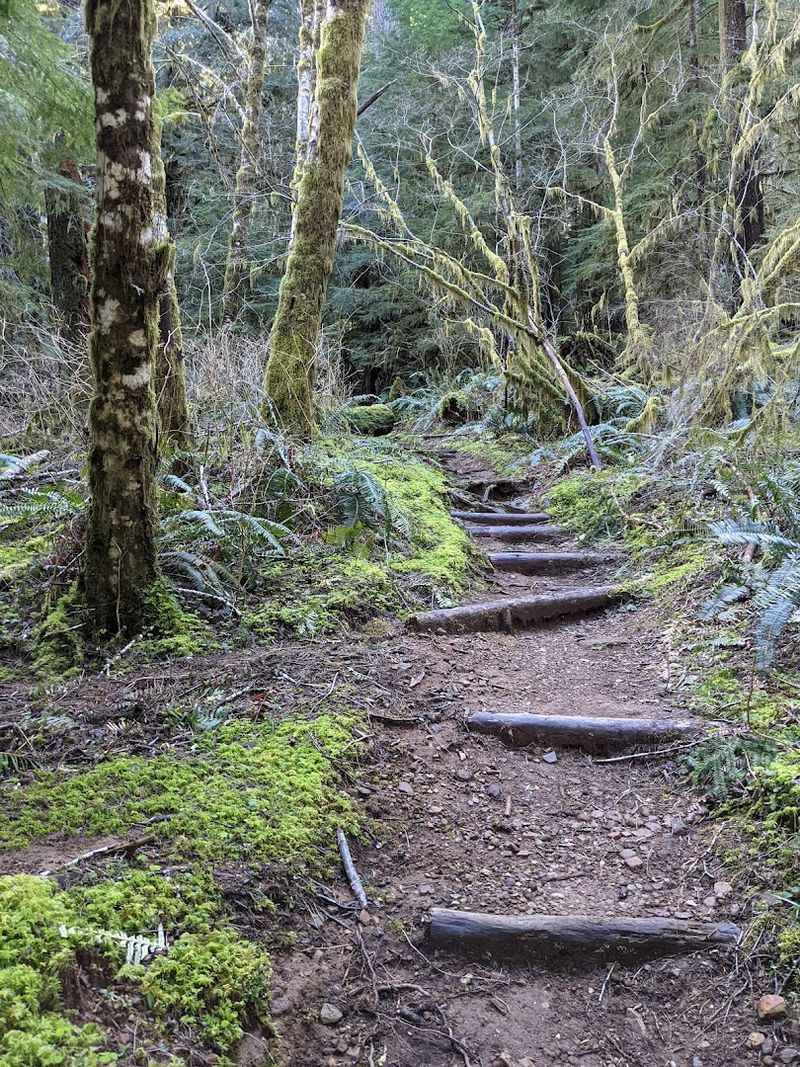
Preparation makes a huge difference on this hike. There are no bathrooms at the trailhead and no services anywhere nearby.
Packing well is not optional, it is essential for a comfortable and safe experience in this remote area.
Bring plenty of water since the drive and hike combined can take most of a day. Pack a real lunch and some extra snacks.
Layers are smart because the valley floor stays cool and shaded even when the weather above feels warm and mild.
Wear waterproof or water-resistant footwear with solid grip. The trail gets muddy and rooted sections become slippery after any rainfall.
Trekking poles are genuinely helpful on the steep return climb out of the valley. Charge your phone fully before leaving, you will take far more photos than you expect.
Download the area in Google Maps offline and carry a printed copy of BLM directions as a backup. A small first aid kit rounds out a sensible pack.
The Moss-Covered Forest Floor and Its Quiet Magic
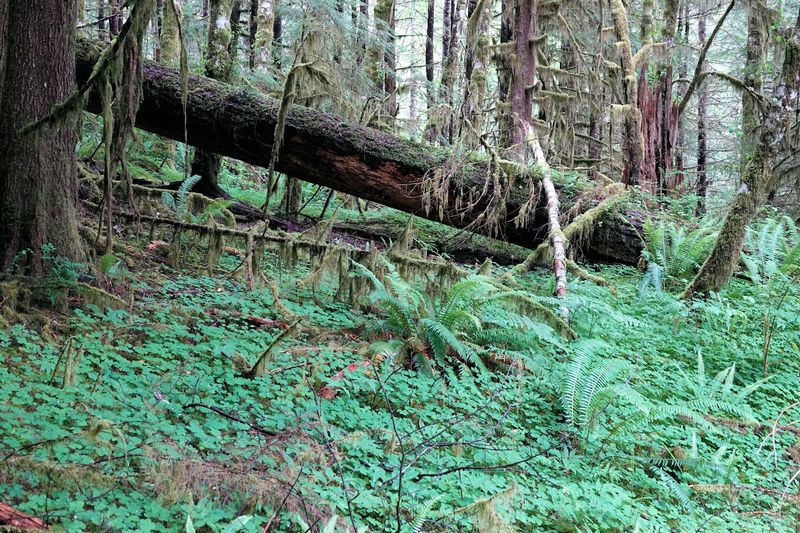
The ground in Valley of the Giants is almost entirely carpeted in moss. Every surface, logs, rocks, exposed roots, and even low branches, wears a thick coat of deep green.
It gives the forest an almost dreamlike quality that photographs struggle to fully capture.
Walking through this environment feels strangely quiet. Sound is absorbed by all that softness, and even your footsteps seem muffled.
The smell is extraordinary, earthy and fresh, like the forest has just exhaled after a long rain. It is the kind of air that makes you breathe more slowly.
This lush groundcover is a sign of a healthy, undisturbed ecosystem. Old-growth forests like this one have had centuries to develop their layered complexity.
Fallen trees become nursery logs for new growth. Ferns push up through the debris.
The whole system feeds itself in a slow, intricate cycle. Spending time here feels genuinely restorative.
Many visitors describe leaving with a sense of calm they did not expect.
Wildlife Encounters Along the Trail
Valley of the Giants sits in a remote corner of the Oregon Coast Range, and the wildlife reflects that undisturbed character. Roosevelt elk are occasionally spotted in and around the grove.
Seeing one of these massive animals standing among ancient trees is a moment that sticks with you.
Birdsong fills the canopy throughout the hike. You might hear the tap of a woodpecker or catch a flash of movement high above in the branches.
The forest feels alive in a way that goes beyond just the trees. Smaller creatures rustle through the undergrowth constantly.
Moving quietly on the trail increases your chances of spotting something worth watching. Speaking softly, stepping carefully, and pausing often all pay off here.
The valley’s remoteness means it sees relatively light foot traffic, which keeps the wildlife present and less skittish than in more popular areas. Bring a small pair of binoculars if you have them.
Even without dramatic sightings, the ambient activity of the forest is endlessly engaging.
Stargazing After Dark in the Oregon Coast Range
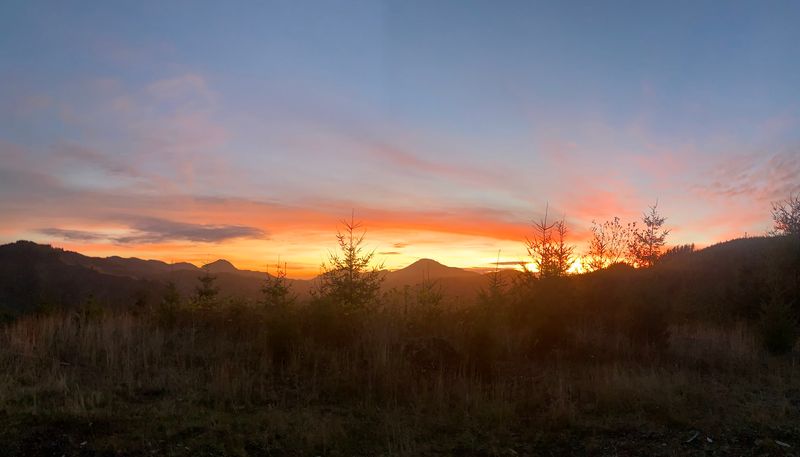
The drive back from Valley of the Giants after sunset reveals something unexpected. Far from any city lights, the sky above the Oregon Coast Range is absolutely packed with stars.
Visitors who have made the return trip after dark describe the stargazing as some of the best they have ever experienced.
The Milky Way becomes clearly visible on clear nights. The absence of light pollution out here is remarkable.
Pulling over on the gravel road and simply looking up for a few minutes is worth doing if conditions allow and you feel safe doing so.
Planning your visit around a new moon phase maximizes the darkness overhead. Bringing a red-light headlamp helps preserve your night vision while still lighting the road.
The combination of an ancient forest hike during the day and a brilliant star-filled sky on the drive home makes for an unusually complete outdoor experience. Not many hikes offer that kind of double reward.
Best Time of Year to Visit Valley of the Giants
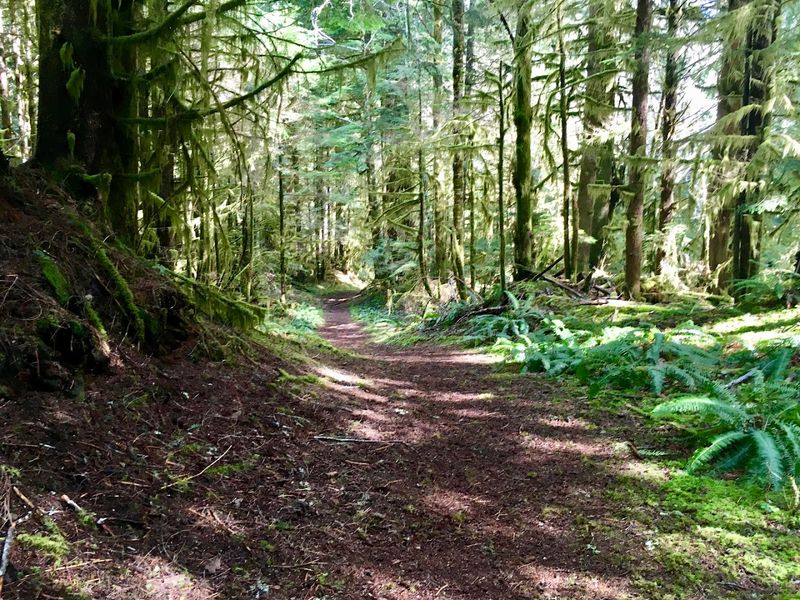
Late spring through early fall is generally the most reliable window for visiting Valley of the Giants. The roads are more stable, the trail is drier, and the long daylight hours give you plenty of time to make the journey without rushing.
Summer weekdays tend to be the quietest.
Winter and early spring visits are possible but come with real risks. The access road can become impassable after heavy rain or landslides.
Road closures have happened before, and driving 30 miles of gravel only to find a blocked gate is genuinely frustrating. Always check road conditions before heading out.
Fall brings its own appeal. The forest takes on warmer tones, and the crowds thin considerably after summer ends.
The air carries that sharp, clean smell of wet leaves and damp earth. Spring visits reward hikers with vibrant green growth and high river flow in the Siletz below the footbridge.
No matter when you go, call the BLM Salem District office ahead of your trip to confirm road access.
Why Valley of the Giants Deserves Its Protected Status
Valley of the Giants carries the designation of Outstanding Natural Area, a title managed by the Bureau of Land Management. That status exists for good reason.
The grove is a genuine ecological rarity, a surviving fragment of the old-growth forest that once blanketed the entire Oregon Coast Range.
The surrounding landscape tells the contrast clearly. Miles of logged-over hillsides frame the approach to the valley.
Stepping into the protected grove after that drive makes the difference feel immediate and profound. The old trees here survived because of deliberate protection, and that decision continues to pay off for every visitor who makes the journey.
The BLM maintains the trail and surrounding area carefully. The loop remains well-groomed despite the remote location.
Educational signage helps visitors understand what they are looking at and why it matters. Supporting agencies like the BLM through awareness and responsible visitation helps ensure places like this remain intact.
