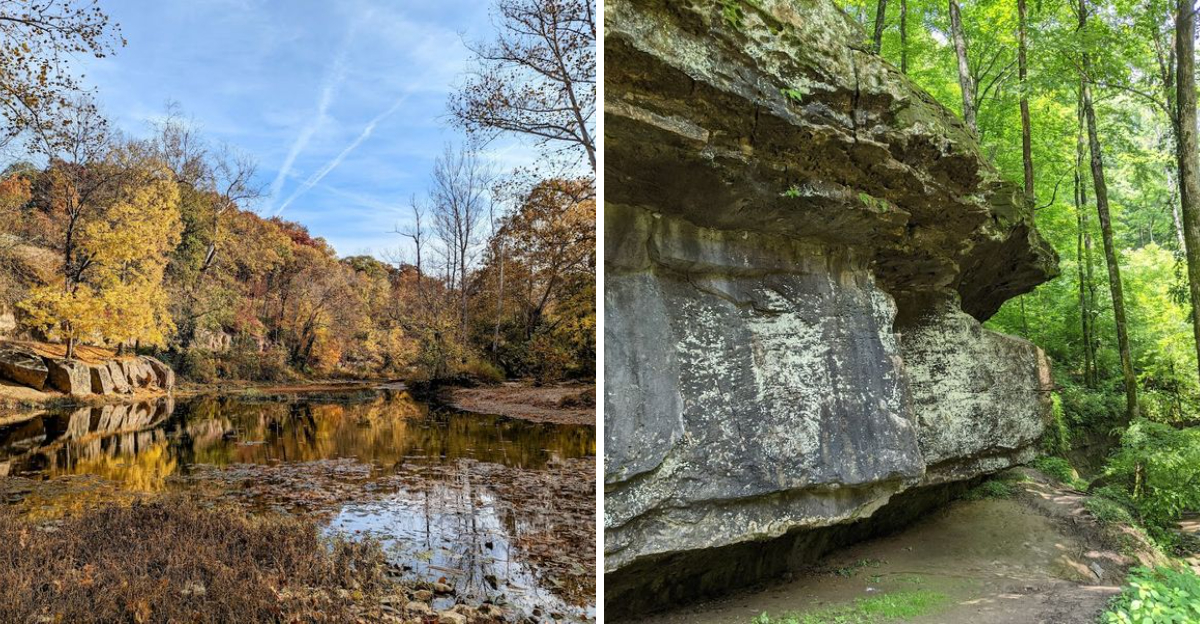
Some parks feel like they were built for postcards. This park in North Vernon, Indiana feels like it was built for people who actually want to explore.
Shaped by ancient glaciers and stretching along the Muscatatuck River, it combines rugged natural scenery with layers of local history that reveal themselves little by little as you move through the grounds. What makes it stand out is the variety packed into one place.
Forest trails wind past historic structures, old mill ruins, and quiet river views, while large rock formations attract climbers and outdoor enthusiasts looking for something more active. It never feels repetitive, which makes wandering through the park especially rewarding.
Whether you are visiting for hiking, history, climbing, or simply a peaceful afternoon outdoors, it offers the kind of experience that keeps surprising you the longer you stay.
The Secret 1830s Vinegar Mill Ruins
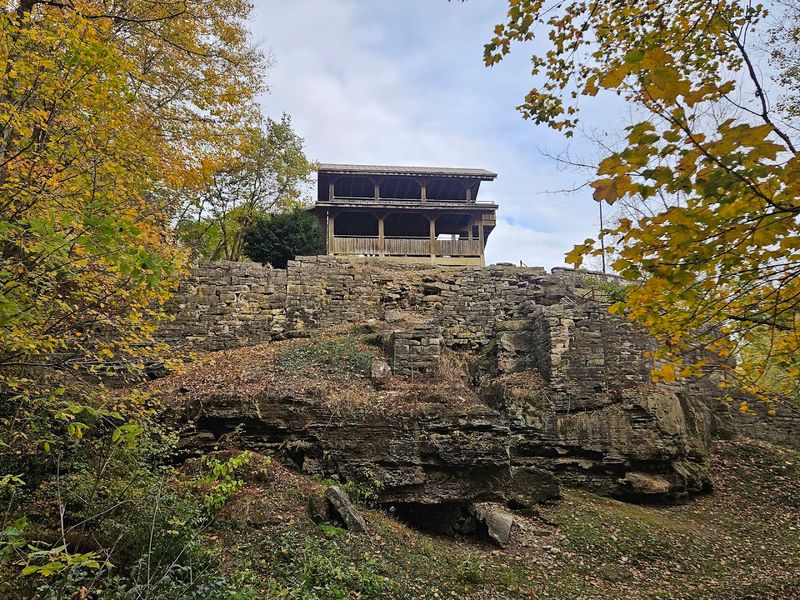
Long before most of Indiana had paved roads, a water-powered mill was already humming away along the banks of the Muscatatuck River. The ruins you can find here today are what remain of the Vinegar Mill, also known as the Stone Mill, built in the 1830s.
It was used to cut building stones for sills, caps, and steps, and some of those very stones are still part of the Jennings County Courthouse in Vernon today.
Walking up to the ruins feels like stepping into a forgotten chapter of local history. The limestone walls still stand in places, worn smooth by time and weather.
There are actually remnants of two mills within the park, an original structure and a second, more extensive mill that replaced it.
What makes this spot so compelling is how quietly it sits within the landscape. No big signs or fences draw attention to it.
You find it by following the trail and keeping your eyes open. That sense of discovery is something you rarely get at more commercialized historic sites.
Standing near the old stonework with the river moving just below, it is easy to picture what daily life looked like for the people who worked here nearly 200 years ago. For history lovers and curious hikers alike, the Vinegar Mill ruins are easily one of the most rewarding spots in the entire park.
Nearly 10 Miles of Trails for Every Skill Level
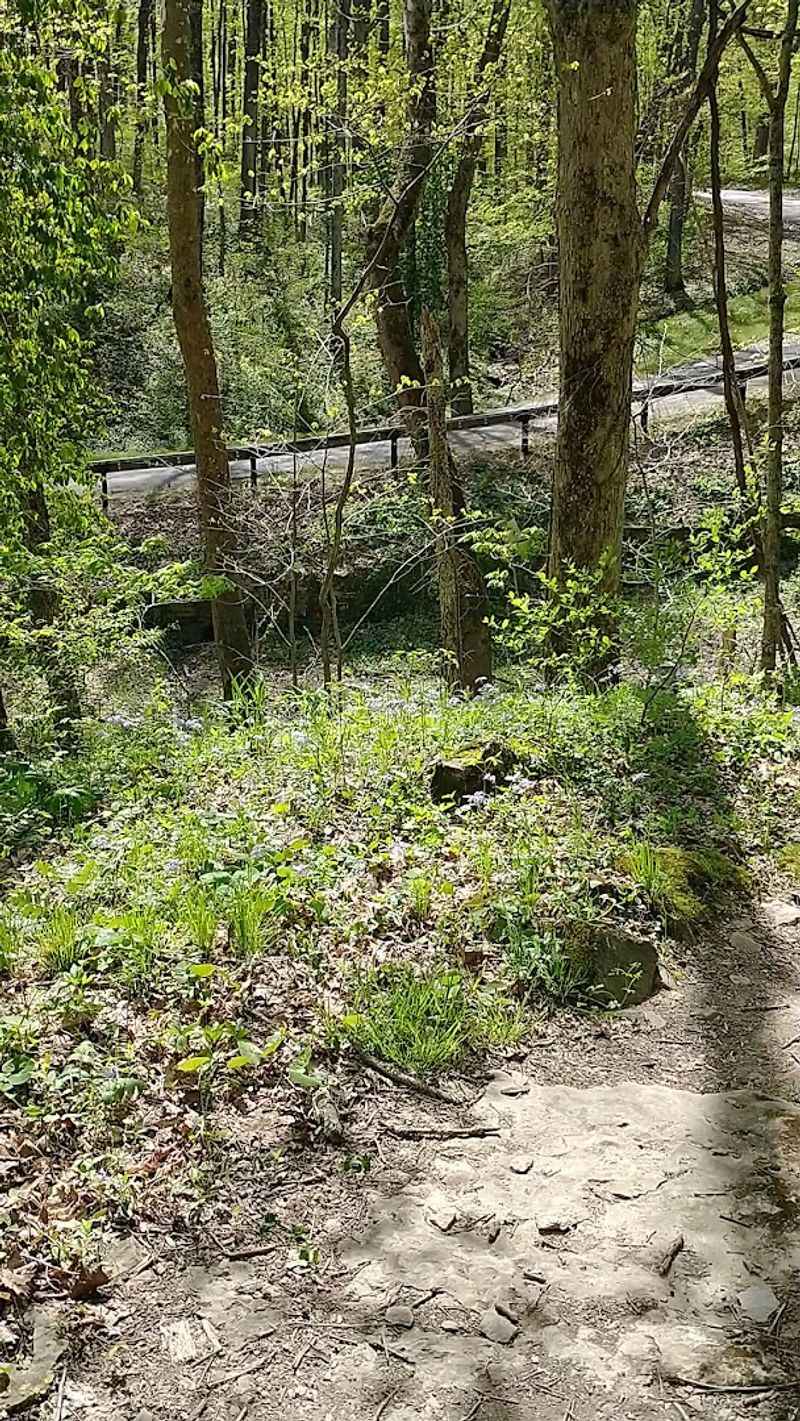
Almost 10 miles of trails spread across five different routes make Muscatatuck Park one of the most trail-rich county parks in Indiana. That is a lot of ground to cover, and the variety keeps things interesting whether you are a first-time hiker or a seasoned mountain biker looking for a challenge.
The trail system is color-coded by difficulty. The Green trail is smooth with good flow and minimal climbing, making it a solid choice for beginners or families with kids.
The Blue trail adds more roots and steeper climbs, while the Black trail throws in technical descents and demanding terrain that serious riders genuinely appreciate. Trails are well-marked, and multiple connector points let you mix and match loops depending on how much time and energy you have.
A 1.3-mile paved Muscatatuck Trail also connects the park directly to downtown North Vernon, which means you can walk or bike into town without ever getting in a car. That kind of connection between a natural space and a local community is something worth appreciating.
Hikers will find that many of the same routes offer quiet stretches along the river, through dense forest, and past some of the park’s most scenic rocky outcroppings. Trail maps are available at the visitor center inside the historic William Read Home.
No matter your pace or preferred activity, the trails here give you plenty of reasons to keep coming back.
Indiana’s Most Developed Rock Climbing Area
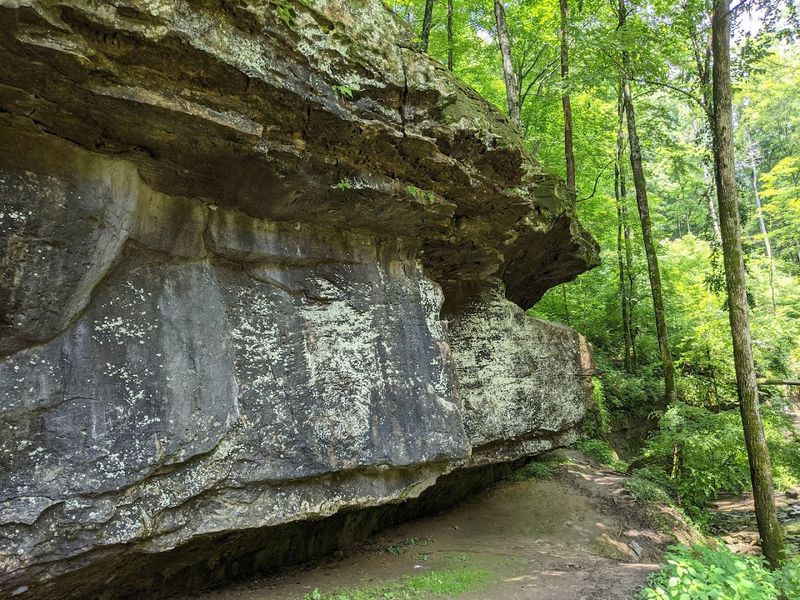
Most people do not associate Indiana with rock climbing. That assumption changes quickly once you visit Muscatatuck Park.
The park is recognized as the most developed rock climbing area in the entire state, with nearly 300 identified bouldering problems spread throughout its rocky terrain.
Bouldering does not require ropes or harnesses. Climbers work on shorter, more technical routes close to the ground, relying on strength, balance, and problem-solving to navigate the rock.
It is accessible enough for beginners trying their first moves and complex enough to keep experienced climbers engaged for hours. The approach from the trailhead is very short, which means less walking and more climbing.
The setting adds something extra to the experience. Climbing surrounded by forest, with the sound of the river nearby and mature trees overhead, feels completely different from an indoor gym.
The natural limestone formations at Muscatatuck have their own character, and regulars who have been coming here for years still find new lines to explore.
For those who have never tried bouldering before, this is a genuinely welcoming place to start. The climbing community that uses this park tends to be friendly and helpful, and the scenery makes the effort feel worthwhile even when a problem defeats you.
If you have been curious about climbing but never had a good reason to try it, Muscatatuck Park might be exactly the push you needed.
Camping Right Inside the Forest
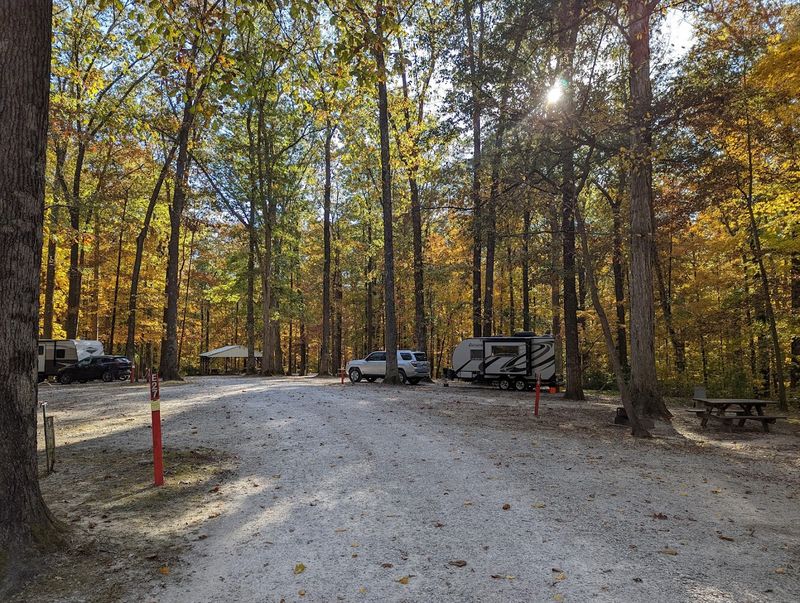
Camping at Muscatatuck Park puts you right in the middle of everything. The campground offers 35 electric sites, nine of which include full sewer connections, along with 15 primitive sites for those who prefer a more stripped-down experience.
Clean bathrooms with indoor plumbing and showers are available during the warmer months, which makes a noticeable difference in comfort.
The wooded sites give the campground a genuinely natural feel. Mature trees surround most of the sites, providing shade and privacy that open-field campgrounds simply cannot match.
Site 19 has been specifically noted by campers as one of the more level spots in the loop, a small but useful detail if you are arriving with an RV or a tent that needs flat ground.
A picnic shelter at the end of the loop works well for group gatherings, and a playground near the front of the campground gives younger kids somewhere to burn energy between trail visits. The park also has a splash pad that families have praised during the summer months.
What stands out most about camping here is the location. Waking up in the middle of Jennings County’s most beautiful natural space, with trails starting just steps from your site, is the kind of setup that makes it easy to stay two nights instead of one.
The campground is well-maintained, and the park staff takes pride in keeping it that way.
Epic River Views Along the Muscatatuck
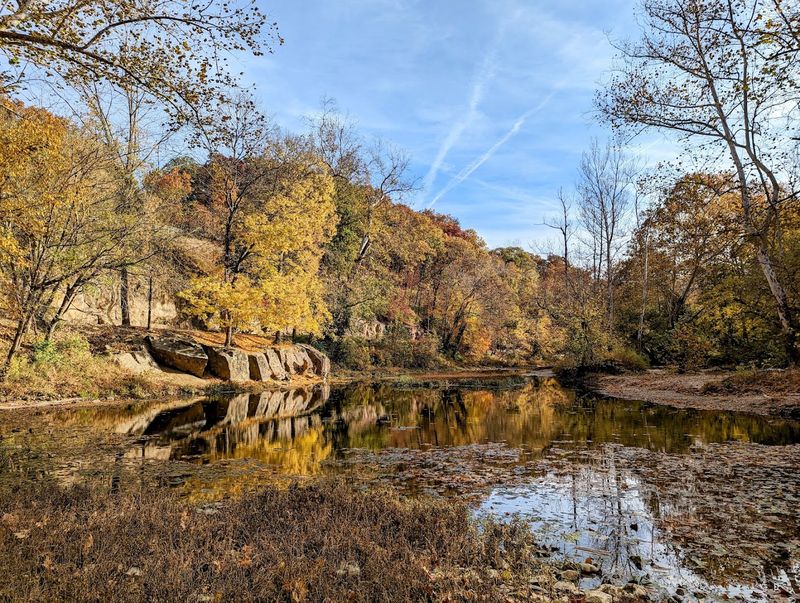
The name Muscatatuck is believed to mean “winding waters,” and one look at the river from the park’s elevated overlooks tells you exactly why. The views here are genuinely impressive, the kind that make you stop walking and just stand there for a moment taking it all in.
The Civilian Conservation Corps and the Works Progress Administration left their mark on this park during the Great Depression, building steps, bridges, and overlooks that frame the river in ways that feel almost intentional. Those old stone steps leading down toward the water are still used by visitors today, worn smooth from nearly a century of foot traffic.
Spring is an especially good time to visit for views. Wildflowers bloom along the ridges and riverbanks, adding bursts of color to the already lush green landscape.
Summer brings deep shade from the mature tree canopy, making even the hottest afternoons feel manageable on the trail.
The river itself is a living part of the view. River otters, deer, and foxes have all been spotted along its banks, and birdwatchers show up regularly to scan the treetops and shoreline.
With over 280 bird species recorded in the area, there is always something worth watching. Whether you bring a camera or just your own two eyes, the views along the Muscatatuck River are hard to forget.
A Living History Lesson in the Park Itself
Muscatatuck Park did not just preserve nature. It preserved history too, and in ways that are genuinely interesting rather than dusty or dry.
The park was originally established in 1921 as Indiana’s fourth state park, going by the name Vinegar Mills State Park before becoming a county park in 1968. That long timeline shows in the layers of history you can find here.
The William Read Home, an 1850 pioneer homestead, still stands within the park and now serves as the Jennings County Parks and Recreation office and interpretive visitor center. Walking inside gives you a real sense of what early settlement in this part of Indiana looked like.
Trail maps are available here, and the staff can point you toward the park’s best spots.
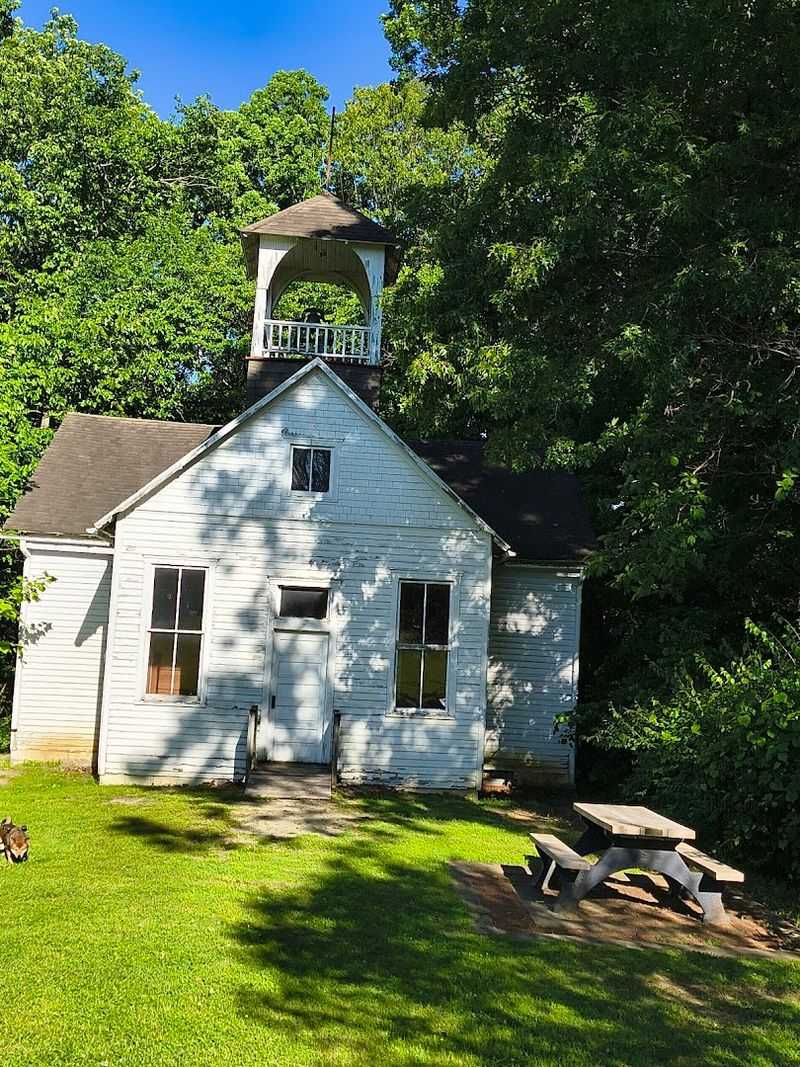
A one-room schoolhouse called Walnut Grove School, originally built in 1913, was relocated to the park in 1991. Seeing it up close is a reminder of how recent one-room schooling actually was in rural Indiana.
It is the kind of structure that sparks questions and conversations, especially for kids who have never seen anything like it.
The Depression-era work of the Civilian Conservation Corps is visible throughout the park in the form of stone steps, bridges, and shelters that have held up remarkably well. Every trail you walk and every overlook you stand on carries a bit of that history with it.
Muscatatuck Park at 375 IN-3 #325, North Vernon, IN 47265 makes that history easy to find.
Wildlife Watching and Birdwatching Opportunities
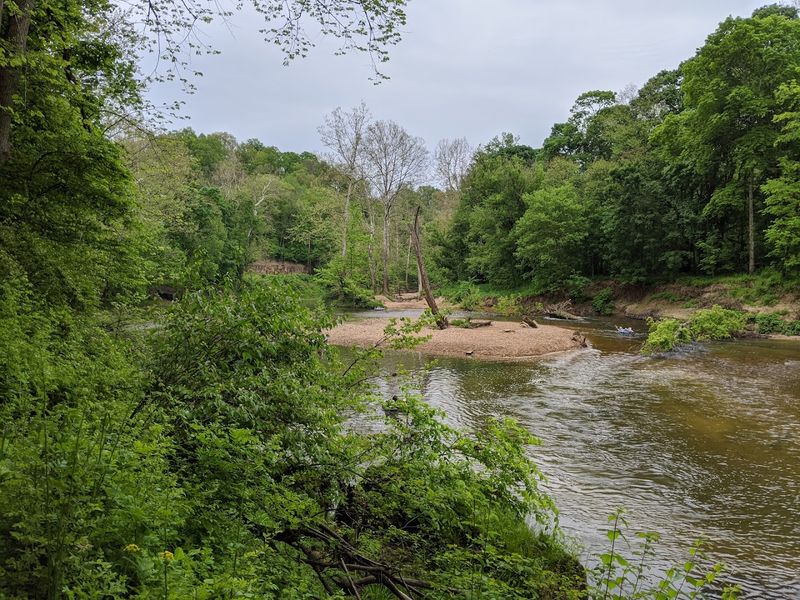
Over 280 bird species have been recorded in and around Muscatatuck Park, which puts it firmly on the radar for serious birdwatchers in Indiana. That number is not a small one.
It reflects the park’s mix of habitats, including riverbank, dense forest, open meadow edges, and rocky outcroppings, each of which attracts a different set of species depending on the season.
Beyond birds, the park is home to a surprising variety of wildlife. White-tailed deer are commonly spotted in the early morning and evening hours.
Foxes move quietly through the underbrush, and river otters have been observed along the Muscatatuck River, which is always a memorable sighting for anyone lucky enough to catch one.
Spring migration brings a surge of activity that makes the park especially lively for wildlife enthusiasts. Wildflowers in bloom attract pollinators, and the river corridor acts as a natural highway for migrating birds moving through southern Indiana.
Binoculars and a field guide are all you really need to get started.
What makes wildlife watching here feel different from a zoo or a nature center is the unpredictability of it. You never know exactly what you will see.
That element of surprise keeps every visit fresh, whether it is your first time at the park or your fiftieth. The park opens at 6 AM daily, which means early risers get the best of what the morning wildlife activity has to offer.
