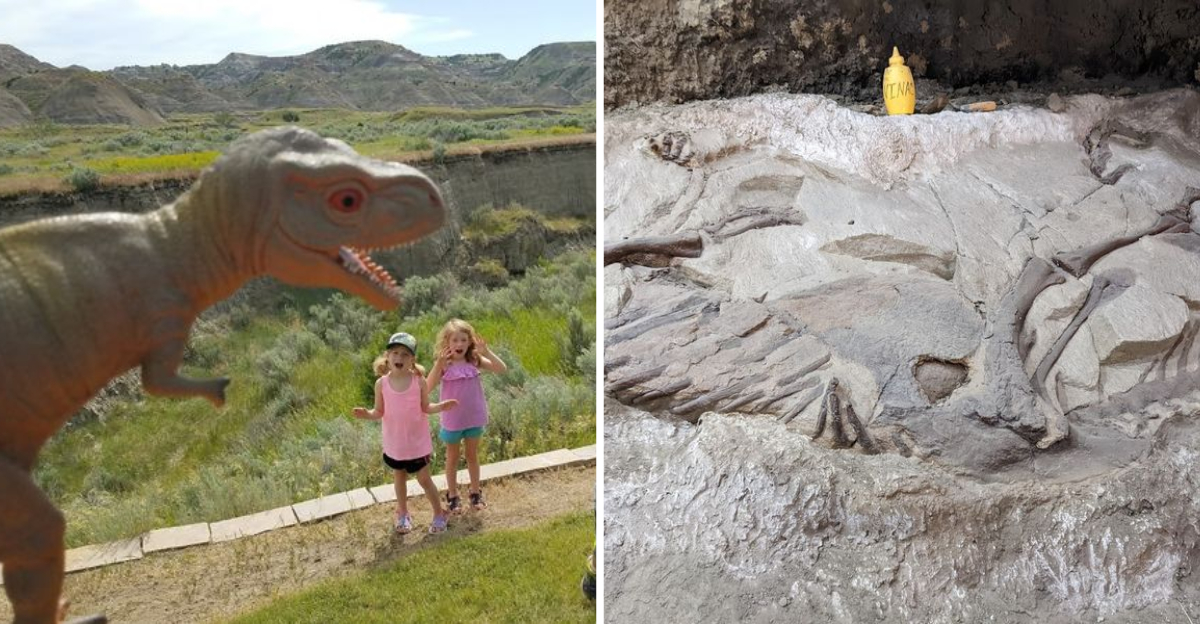
Montana is full of wide open spaces, but this remote park feels like stepping into another era entirely. Badland formations stretch in every direction, carved by wind and rain into shapes that look almost alien.
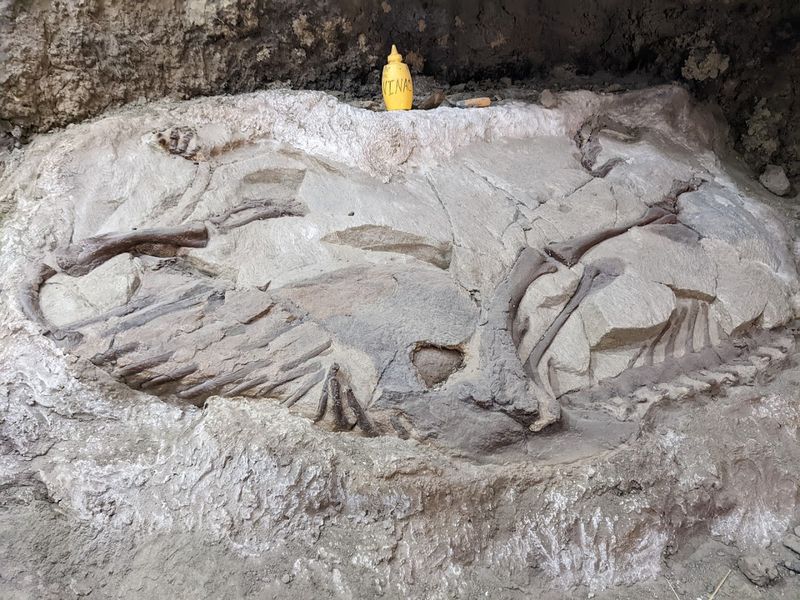
And beneath your feet, hidden in the colorful rock layers, are the fossil remains of creatures that ruled the earth 65 million years ago. I hiked a trail that led to a hadrosaur fossil still partially embedded in sandstone, just sitting there like it was waiting to be found. You can walk the same ground where Tyrannosaurus rex once hunted, no glass cases or museum ropes separating you from the history.
The park is massive, with over 11,000 acres of rugged badlands, and you will likely have most of it to yourself. Montana’s best kept secret for anyone who has ever dreamed of walking with dinosaurs is hiding in the eastern part of the state.
The Hell Creek Formation: Ground Zero for Dinosaur Discoveries
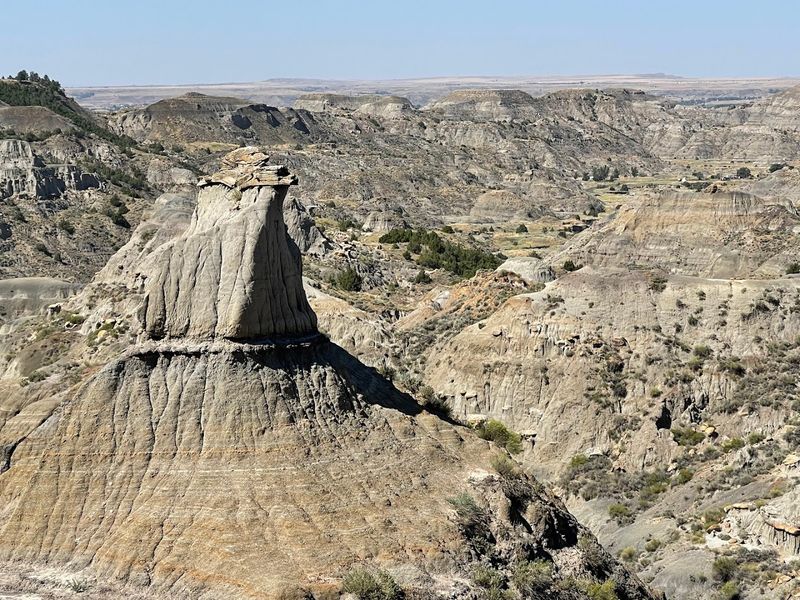
Few places on Earth carry the kind of scientific weight that the ground beneath Makoshika State Park does. The park sits directly on the Hell Creek Formation, a globally recognized rock layer that has produced more dinosaur fossils than almost anywhere else in the world.
Paleontologists have identified remains from at least ten different dinosaur species here, including Tyrannosaurus Rex, Triceratops, and Edmontosaurus.
What makes this so remarkable is that you are not visiting a museum replica or a theme park recreation. You are walking on the actual landscape where these animals once lived, died, and were slowly buried over 66 million years ago.
The rock around you holds their story.
One of the most extraordinary features at Makoshika is the exposure of the Cretaceous-Paleogene boundary, commonly called the K-Pg boundary. This thin layer of rock marks the moment in geological history when the mass extinction event wiped out non-avian dinosaurs.
Only a handful of places on the planet show this boundary so clearly. Seeing it in person, just a subtle line in the hillside, is genuinely humbling.
It makes the scale of deep time feel suddenly, surprisingly real. No amount of reading about it quite prepares you for standing in front of it and understanding what that narrow band of rock actually represents.
Visitor Center Fossils and the Triceratops Skull That Steals the Show
Before heading out on any trail, the visitor center at Makoshika deserves a good chunk of your time. It is not the biggest interpretive center you will ever visit, but what it lacks in size it makes up for in genuine substance.
The centerpiece is a real Triceratops skull, and it is the kind of exhibit that makes both kids and adults go completely quiet for a moment.
Interpretive displays walk you through the geological history of the region, explaining how the badlands formed and why this particular patch of eastern Montana became such a treasure chest for paleontologists. There is also a short film shown in a small alcove near the information desk.
You will need to ask a staff member to start it, but it is worth requesting.
One of the most underrated offerings is the paleontology lab tour. Rangers with actual backgrounds in paleontology lead visitors through active fossil preparation work, explaining what they are doing and why each step matters.
The guides are refreshingly honest, happy to say when something is still uncertain rather than filling gaps with guesswork. It gives the whole experience a credibility that you do not always find at tourist attractions.
If you are visiting with curious kids or just have a genuine interest in how science actually works in the field, this tour is not something to skip.
Hiking Trails That Put You Face to Face With the Badlands
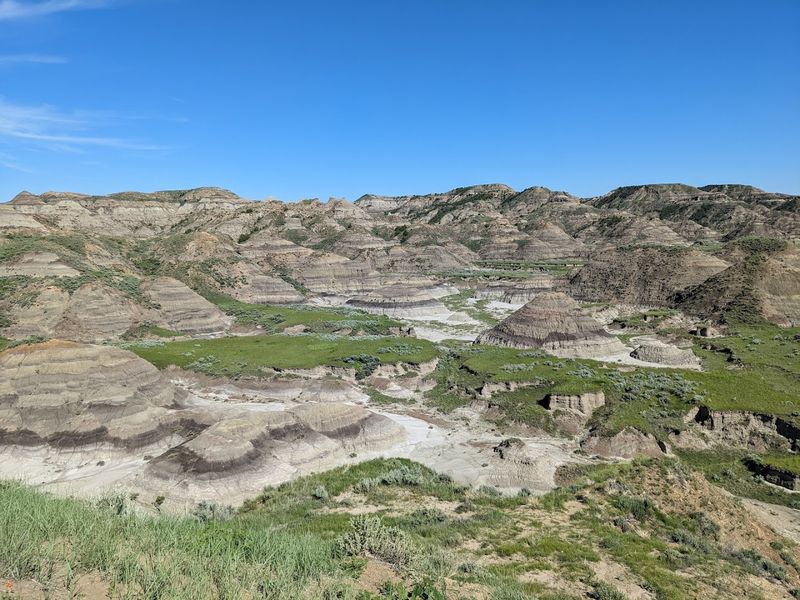
The trail system at Makoshika is one of those things that rewards people who actually lace up their boots and get out of the car. The scenic drive through the park is beautiful on its own, but the trails pull you into the landscape in a way that a windshield simply cannot replicate.
The Diane Gabriel Trail is a personal favorite for good reason: it leads visitors past an actual dinosaur fossil still embedded in the hillside, visible right from the path.
Cap Rock Trail is another strong option, winding through formations of layered stone capped by harder rock that resists erosion while everything beneath slowly crumbles away. The natural bridge along this route is a quiet highlight that sneaks up on you.
Kinney Coulee Trail draws a lot of praise for its unique rock formations and the sense of being genuinely tucked into the landscape rather than just looking at it from a ridge.
For those who want something with a bit more physical challenge, the Gunner Trail delivers steep terrain and serious views. Trail markers use arrow posts throughout the park, so getting turned around is unlikely even on less-traveled paths.
Visiting in spring or fall is the smarter call if you want to avoid full sun exposure on the open terrain. Summer heat on these unshaded slopes can be intense, and there is very little tree cover to offer relief.
The Dramatic Geology: Hoodoos, Caprocks, and Millions of Years of Erosion
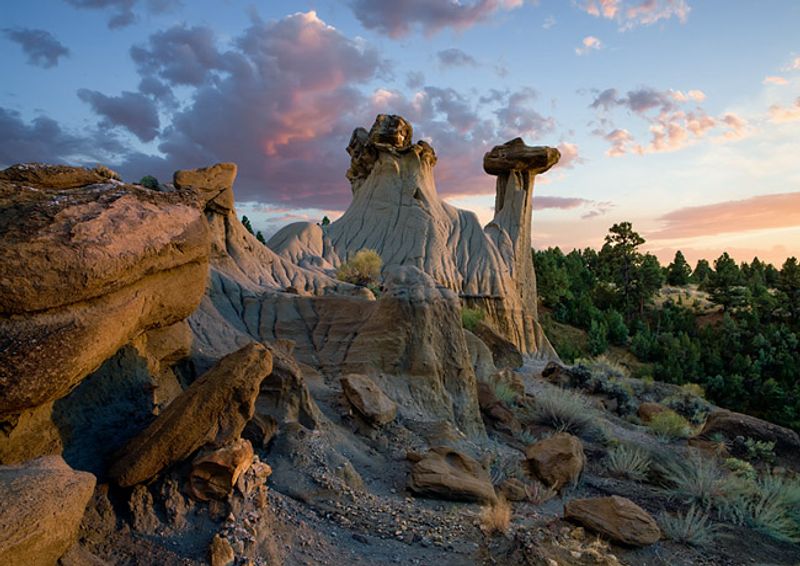
The name Makoshika comes from a Lakota phrase meaning bad land or bad earth, and the landscape lives up to that description in the most visually stunning way possible. Erosion has been working on this terrain for millions of years, and the results are genuinely jaw-dropping.
Caprocks perch on top of crumbling pedestals. Hoodoos rise from the hillsides like columns left behind by some ancient architecture.
Fluted ridges run in parallel lines down the slopes, carved by water that no longer flows.
What makes this geology so compelling is that it is still actively changing. Some areas of the park are marked as eroding terrain, and you can actually see fresh rock faces where material has recently broken away.
The colors shift depending on the light and time of day, moving from pale gray in the morning to deep amber and rust as the afternoon sun hits the layered sediment.
Photographers tend to go a little obsessive here, and honestly, that is completely understandable. Every angle offers something different.
The formations close to the road are impressive, but the ones you reach only by trail feel more personal, like you earned the view. Even a short walk away from the parking areas puts you into pockets of badlands scenery that feel remote and untouched, despite being just a mile or two from the town of Glendive.
Camping Under Some of the Darkest Skies in Eastern Montana
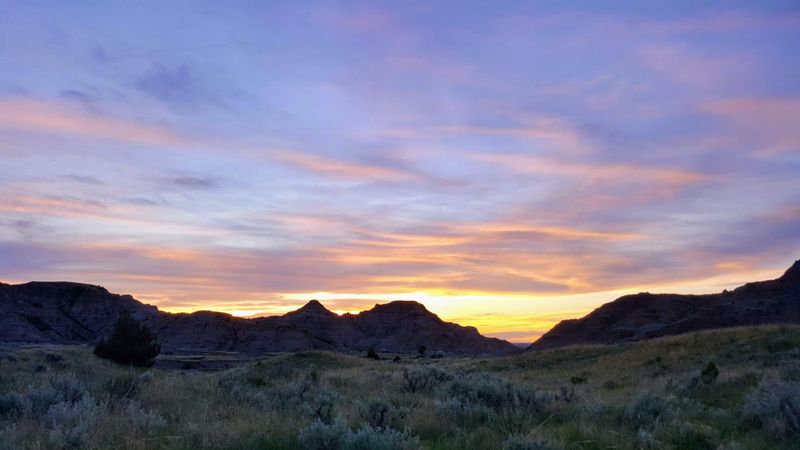
Spending a night at Makoshika changes the experience completely. Once the day visitors head back to Glendive, the park gets very quiet, and that quiet opens up something special overhead.
The remote location and minimal light pollution mean the night sky here is genuinely remarkable. Stars appear in numbers that feel almost excessive, and the Milky Way shows up as a proper band of light rather than a faint suggestion.
The main campground has level pads with potable water nearby and vault toilets, making it accessible for RVs and tent campers alike. Site 9 and Site 12 both come recommended by people who have stayed there, offering good views of the surrounding rock formations right from camp.
For tent campers willing to go a bit more rugged, the Pine on Rocks campground is first come, first served and sits higher up with views that are hard to beat.
Waking up in the badlands is its own reward. The light at sunrise hits the layered rock in a way that the midday sun simply cannot match, and having the trails to yourself in the early morning hours feels like a genuine luxury.
The amphitheater tucked into the hillside is worth finding, a surprisingly beautiful spot that seems almost out of place in the middle of all that raw, eroded terrain. Camping here is not glamorous, but it is deeply satisfying.
The Paleo Experience: Getting Hands-On With Fossil Science
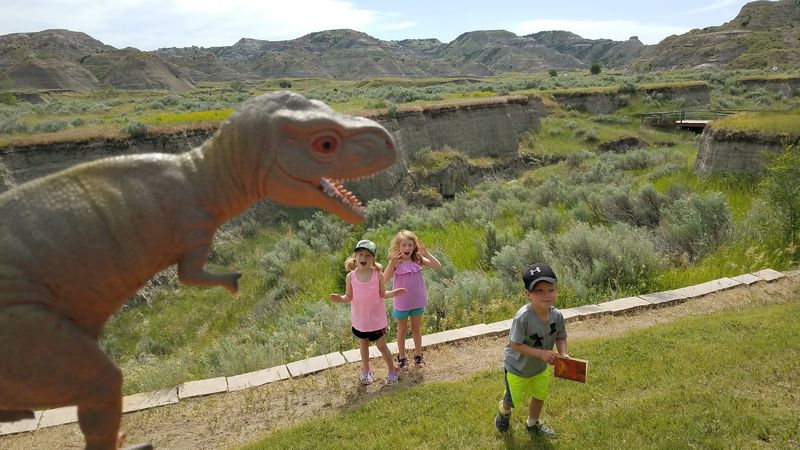
Most parks let you look at fossils from behind a rope. Makoshika goes further.
The Paleo Experience program offers guided interpretive hikes through what the park calls Fossil Country, sections of terrain where the geology is particularly rich and where a trained guide can point out things that most visitors would walk right past. It is the kind of program that turns a pleasant afternoon into something genuinely memorable.
The tours also include visits to the paleontology lab, where active fossil preparation work sometimes takes place. Watching a scientist carefully expose a bone fragment from the surrounding rock, millimeter by millimeter, gives you a real appreciation for the patience this work demands.
The guides do not oversell what they know, which makes everything they do say feel more trustworthy.
There is one firm rule that the park takes seriously: no touching, digging, or removing fossils or artifacts of any kind. The rule exists for obvious reasons, given how irreplaceable these resources are.
However, if you spot something that looks like it might be a fossil, reporting it to park staff is actively encouraged. New discoveries still happen here, and visitors have contributed to the scientific record before.
That possibility, however small, adds a layer of excitement to every hike that is difficult to manufacture anywhere else. You are walking through a real, ongoing scientific site.
Planning Your Visit: What to Know Before You Go
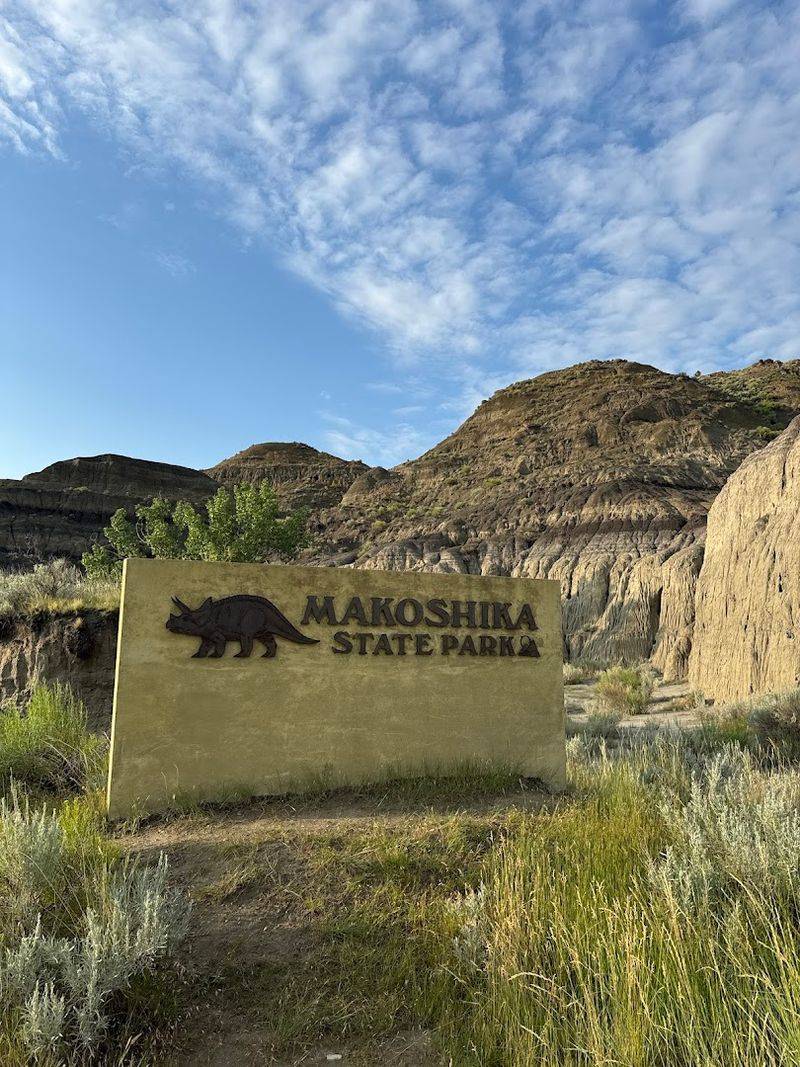
Getting to Makoshika is straightforward from Interstate 94. The park entrance on Snyder Street is just over a mile from the center of Glendive, making it unusually accessible for a place that feels so remote once you are inside.
The visitor center is open daily from 9 AM to 5 PM, and that is the best place to start. Pick up a trail map, ask about current trail conditions, and find out if any guided programs are running during your visit.
The main scenic drive through the park starts on pavement but transitions to dirt road further in. A standard passenger car can handle it in dry conditions, though the road gets rough after rain.
Motorcyclists should be aware that the pavement ends abruptly a couple of miles in, and the gravel section requires confidence on two wheels. Visiting in spring or fall avoids the harshest summer heat and gives you softer light for photography.
Beyond hiking and fossil hunting, the park has picnic areas, an outdoor amphitheater, and a disc golf course that winds through the terrain in a way that is actually quite fun. Dogs are welcome on trails with a leash.
The park has a self-serve payment option at the entrance if you arrive outside visitor center hours. Montana residents with in-state tags enter free.
Address: 1301 Snyder St, Glendive, MT.
