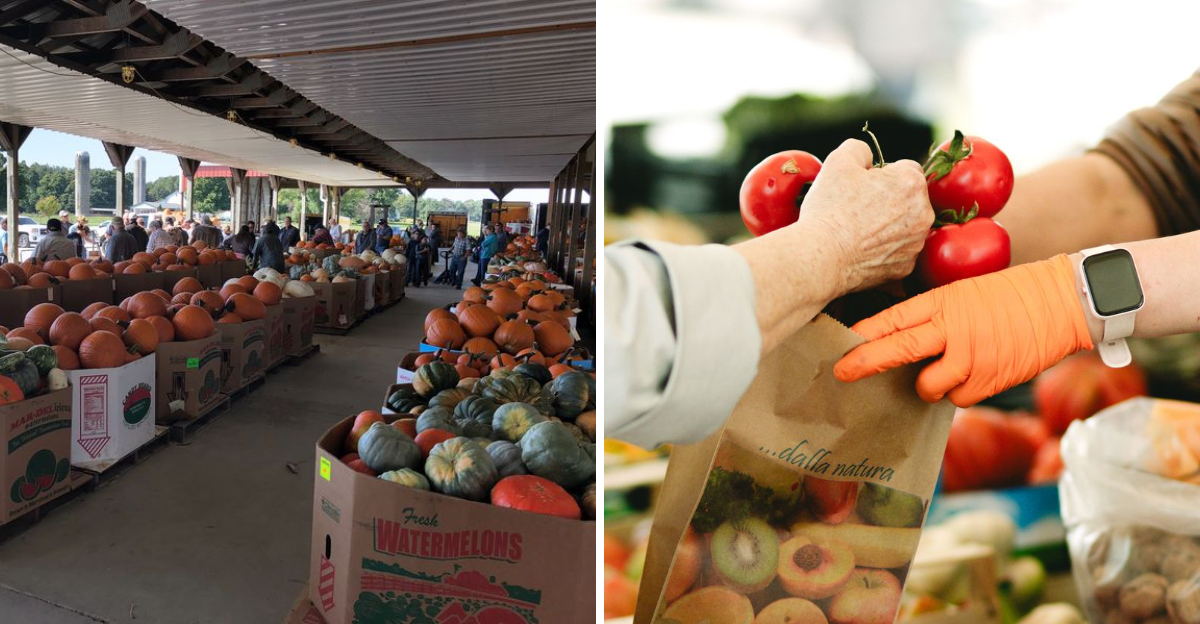
I have never seen anyone get this excited about a pallet of tomatoes. Then again, I had never been to a produce auction.
The lot fills with wagons, crates, pallets, and fresh-picked vegetables before the bidding begins. An auctioneer calls out numbers at a speed that makes normal conversation seem painfully slow.
Hands go up. Produce moves.
The whole thing keeps rolling. This Indiana shopping stop follows the harvest, so there is no fixed menu of what will be available.
Whatever the farms have ready becomes the star of the day. Sweet corn might dominate one sale.
Peppers and melons might take over the next. It is an unusually direct way to buy food, and watching it happen is half the reason to go.
The Auction Ring Runs on Pure Momentum
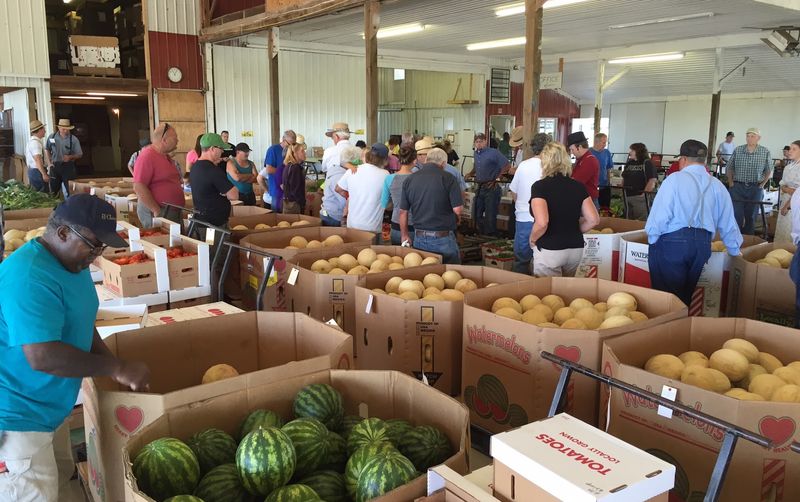
Bidding here moves fast. Really fast.
The auctioneer’s chant rolls out in a rhythm that takes newcomers a few minutes to decode, and by then three lots have already sold.
Sales typically begin on Mondays at 1:00 PM and on Wednesdays and Fridays at 11:00 AM through the growing season. Arriving early makes a difference, since the lots get lined up well before the first call and the best browsing happens in that quiet window.
Produce moves in lots rather than single pieces, meaning a trolley, a pallet, or a bushel at a time. Buyers register for a bidding number at the start, a quick step that turns a spectator into a participant.
Watching the regulars is half the fun. A raised finger, a small nod, a tilt of the head, and suddenly forty pounds of peppers belong to someone new.
Nobody expects first-timers to know the ropes immediately, and standing back to observe a few rounds is completely normal. The pace never really slows, but the pattern becomes clear once the eye adjusts to it.
Sound carries across the open building, mixing auction calls with the occasional whinny from the parking area. Between lots there is chatter, laughter, and the scrape of trolley wheels on concrete.
It feels alive in a way few shopping trips ever do.
Picked This Morning, Sold This Afternoon
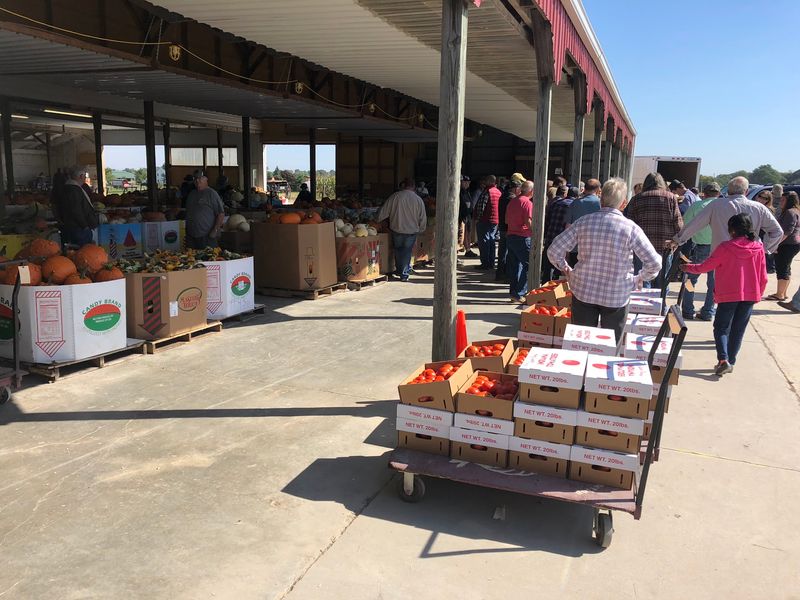
Freshness here is not a marketing word. Much of the produce reaches the auction floor within twenty-four hours of harvest, and plenty of it was cut or picked that same morning.
The difference shows up in small ways. Corn husks stay tight and green, bean pods snap instead of bending, and berries still carry that heavy sweetness that fades after a few days in transit.
Shorter travel time also means less handling, so delicate items arrive without the bruises that come from long hauls. Tomatoes sit in shallow layers.
Greens still look like they belong in a field rather than a cooler.
Growers have every reason to bring their best, because reputation travels quickly among repeat buyers. Quality is visible right there on the trolley, with nothing hidden behind packaging or labels.
Buyers can walk the rows before bidding starts, checking color, firmness, and size at their own pace. Some people carry a small pocket knife to sample an apple or slice into a melon from a lot they are considering.
That kind of hands-on inspection simply does not happen in a supermarket. Knowing the food traveled maybe fifteen miles instead of fifteen hundred changes how a meal tastes later that evening.
Flavor, in this case, is a matter of geography and timing.
See Horse-Drawn Buggies Park Alongside the Cars
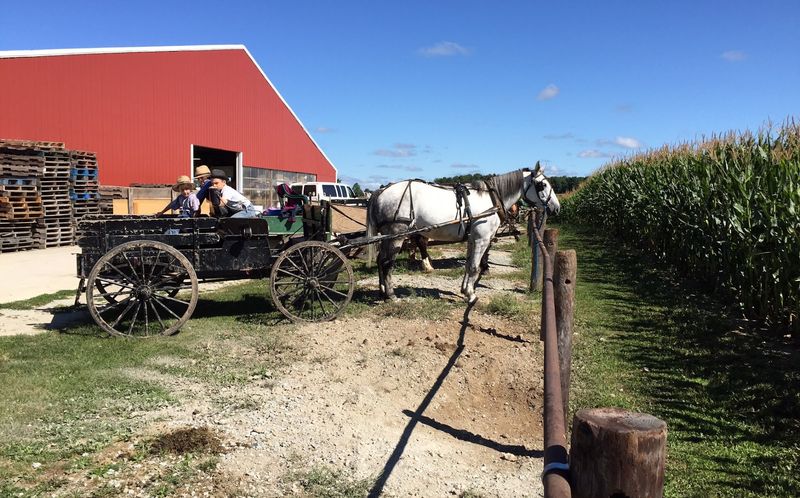
Pull into the lot and the first thing that registers is the sound of hooves on gravel. Amish and Old Order Mennonite growers make up a large share of the farmers who bring produce here, many arriving in open buggies loaded with the morning’s harvest.
Horses wait at hitching areas while wagons get unloaded, and the whole scene runs with an unhurried efficiency that is oddly calming to watch.
The auction functions as a wholesale outlet for these plain communities, letting growers sell in volume and get back to the fields instead of spending days marketing crops. That practical purpose shapes everything about the atmosphere.
Conversation stays low-key. Work gets done without fuss.
Visitors are welcome to shop and observe, though photographing individuals is discouraged out of respect for community beliefs. Keeping cameras pointed at produce, buggies from a distance, and general scenery is the courteous approach.
Elkhart County has one of the larger settlements of plain communities in the country, and this auction sits right in the middle of that agricultural landscape. Driving the surrounding county roads afterward reveals tidy farmsteads, roadside stands, and fields worked with horse teams.
The cultural layer is not a performance staged for tourists. It is simply how business gets done out here, three days a week, all season long.
Load Up on Produce for Canning Season
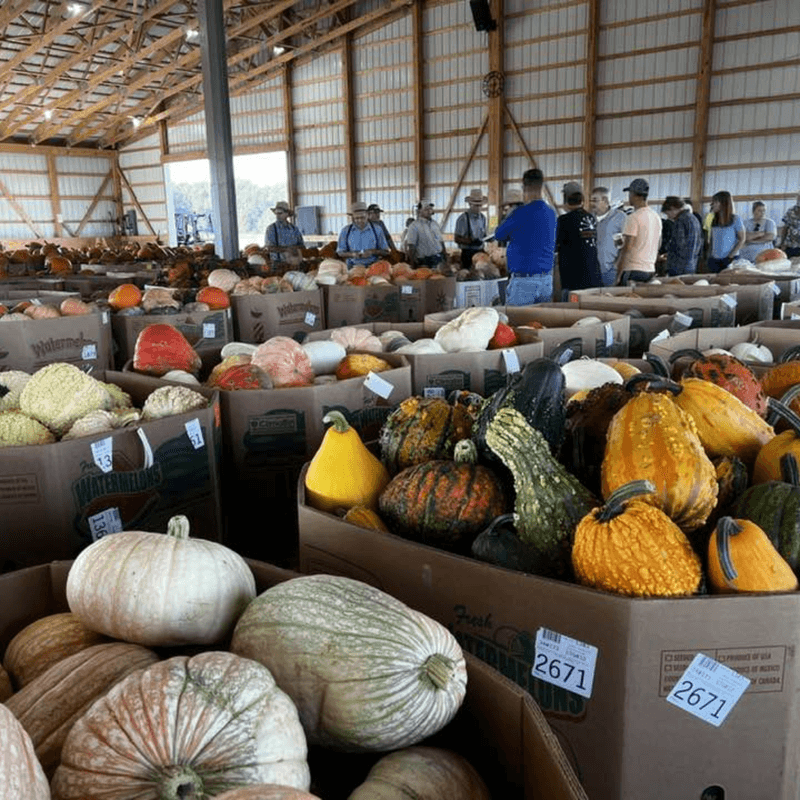
Home canners treat this place like a treasure vault. Because produce sells by the lot, a single winning bid might bring home a full bushel of tomatoes or an entire pallet of squash.
That volume makes very little sense for a single dinner and perfect sense for a pantry full of jars.
Planning ahead pays off. Clearing refrigerator space, bringing sturdy boxes, and checking vehicle capacity before leaving home prevents the awkward moment of realizing a hatchback cannot hold thirty pounds of peaches.
Splitting lots with friends or family is a common strategy, especially for anyone who only wants a portion of what a lot contains. Two or three households can share a purchase and everyone drives away happy.
Peak canning items rotate through the season, so timing matters. Green beans and cucumbers dominate midsummer, tomatoes and peaches follow, and fall brings apples, pumpkins, and storage vegetables in serious quantity.
Freezer-focused shoppers do well with sweet corn and berries, both of which show up in impressive volume during their short windows.
There is something deeply satisfying about hauling a truck bed of vegetables home and spending a weekend filling jars. The shelves that result carry a whole summer’s worth of Indiana sunshine, ready to open in February when the garden is nothing but frozen dirt.
A Selection That Changes With Every Visit
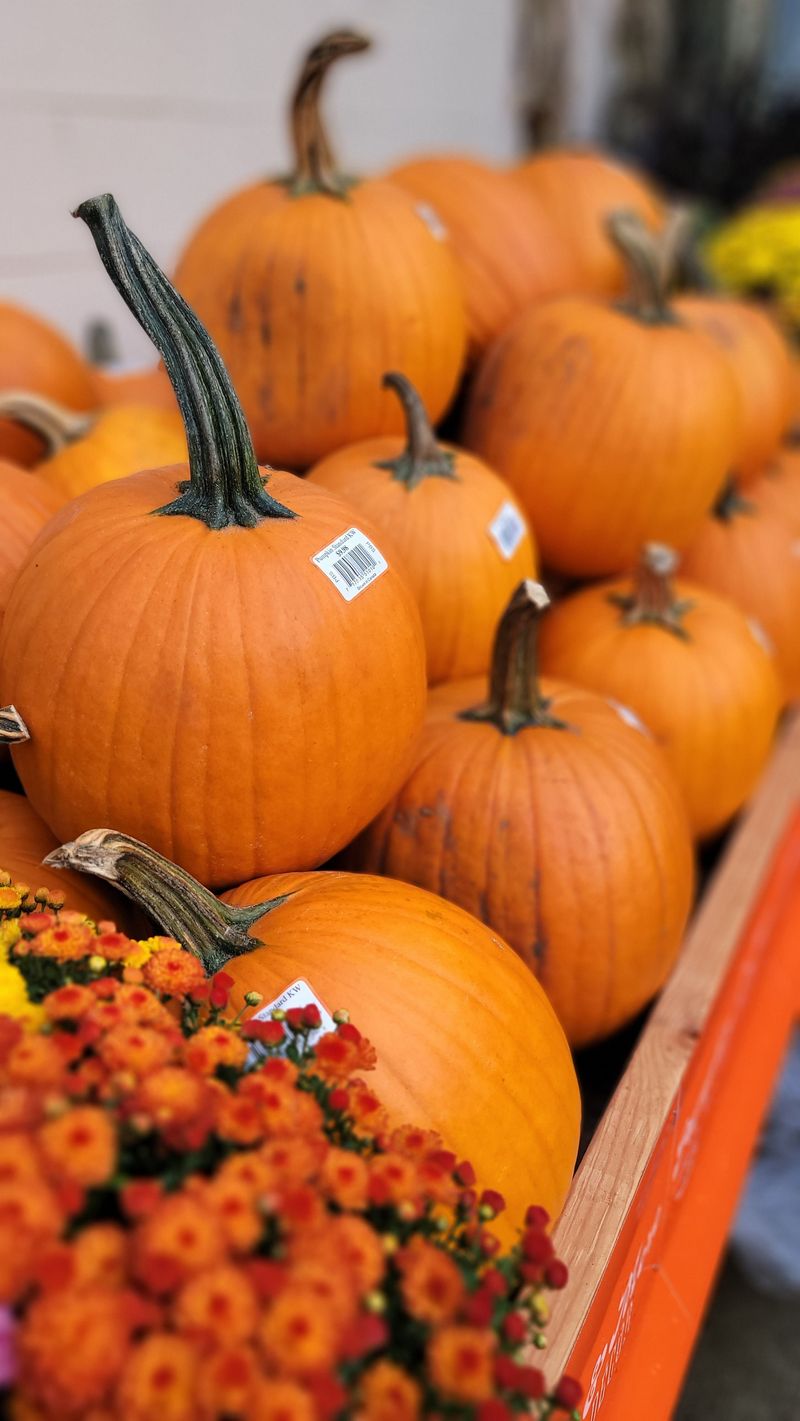
No two sale days look alike, which is exactly what keeps people coming back. Spring opens with bedding plants, hanging flower baskets, asparagus, and crisp early greens filling the aisles with color.
Plants and flowers draw a big crowd in those first weeks, and the variety of starts available can rival a garden center.
Summer shifts everything. Sweet corn arrives by the wagonload, tomatoes pile up in red mountains, and peppers of every heat level share space with cucumbers, beans, melons, blackberries, and peaches.
Cut flowers add unexpected brightness to a building otherwise full of vegetables.
By late season the mood turns rustic. Pumpkins in a dozen shapes, winter squash, gourds, onions, garlic, potatoes, and root vegetables dominate the lots, with mums adding autumn color right up until the season closes near the end of October.
Shopping this way rewires how meals get planned. Instead of deciding on a recipe first, buyers see what looks good and build dinner around it afterward.
Cooks who enjoy improvising find endless material here. Small food businesses, roadside stands, and market vendors source from the same lots, which says plenty about the quality on offer.
Checking the calendar before driving out helps, since what arrives depends entirely on what the fields produced that week. Surprises are guaranteed.
That unpredictability is the whole charm.
Swap Canning Tips With Fellow Shoppers
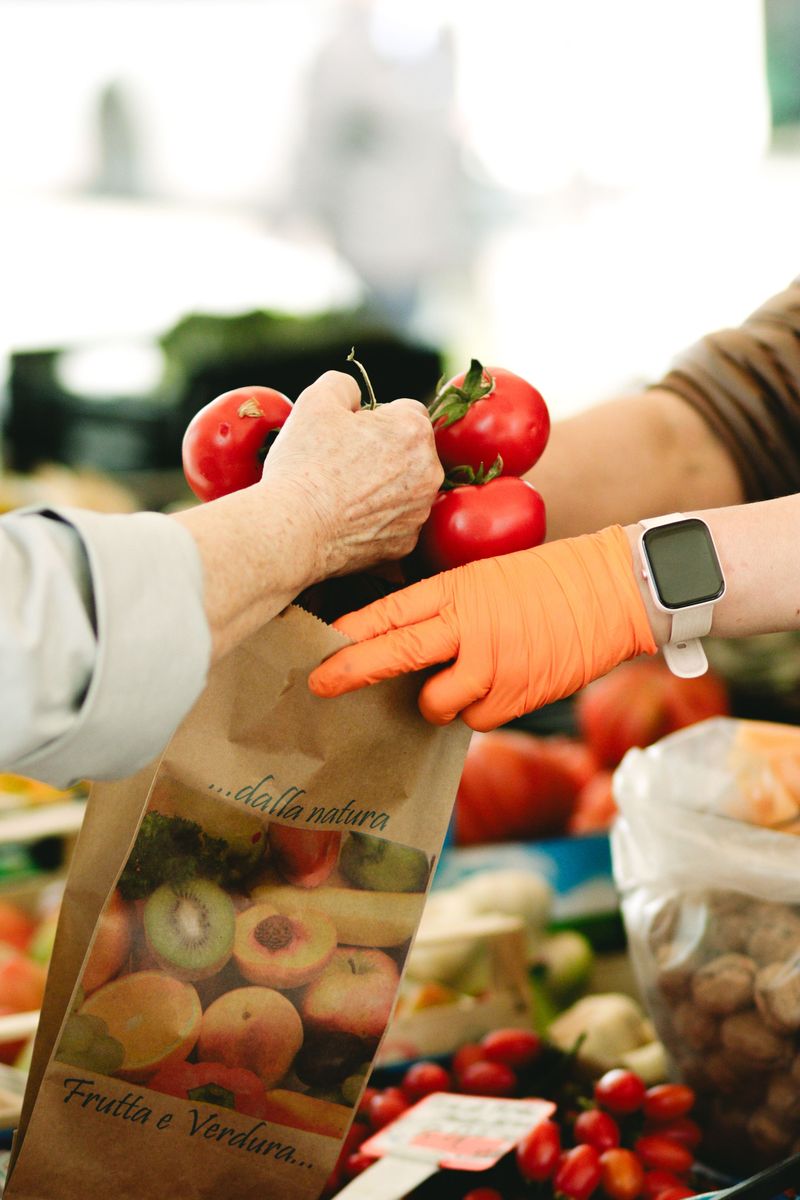
Conversation flows easily around the trolleys. Someone eyeing a lot of pickling cucumbers might get an unsolicited opinion on brine ratios, and it is usually good advice.
Regulars recognize each other. First-timers get pointed toward the registration table without having to ask twice.
The friendliness extends to the people running things, and the auctioneers and helpers have a reputation for being welcoming rather than intimidating. Questions about how lots work, how payment happens, or what a particular crop is called generally get a straight answer.
Nobody rushes a newcomer out of the way.
Part of what makes the social side work is the shared purpose. Everyone standing there cares about food, gardens, and the season, so common ground shows up immediately.
Discussions about freezing sweet corn versus canning it can carry on right through three or four lots.
Bringing a friend along is smart for practical reasons too, since an extra set of hands helps with loading and an extra wallet helps with splitting a big lot. Kids tend to enjoy the spectacle, especially the horses and the rapid-fire calling.
The whole place operates like a rural gathering that happens to involve commerce. Buyers leave with vegetables and, often enough, a new technique to try at home.
That combination is hard to find in any grocery store.
A Slice of Indiana Farm Country Worth the Drive
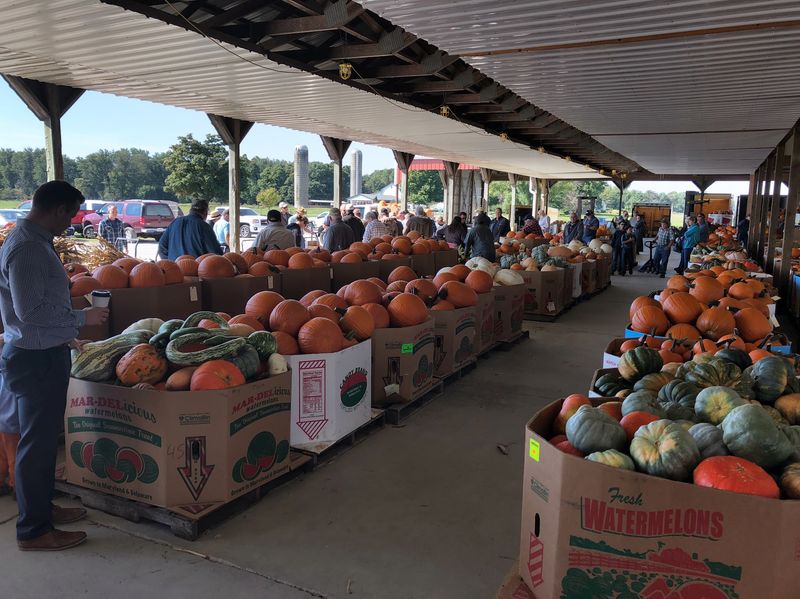
Country roads lead here, and that drive is part of the experience. Fields stretch out on both sides of County Road 9, broken up by farmsteads, silos, and the occasional slow-moving buggy that requires patience and a light foot on the brake.
Goshen sits nearby with its own walkable downtown, making a combined outing easy to plan.
Timing the visit around the auction schedule is essential, since the gates are not open every day. Wednesdays and Fridays start at 11:00 AM, Mondays at 1:00 PM, and the season generally runs from late April through the end of October.
Practical gear matters more than fashion. Closed shoes handle gravel and wet floors better, cash is worth having on hand, and a cooler in the trunk protects a haul on hot afternoons.
Sun and shade shift throughout the building, so a hat rarely goes unused.
What lingers afterward is not just the food. It is the sense of watching an agricultural tradition operate exactly as it has for years, without spectacle or souvenir shops.
Northern Indiana keeps plenty of quiet places like this, though few are quite so lively. Address: 65460 County Rd 9, Goshen, Indiana.
