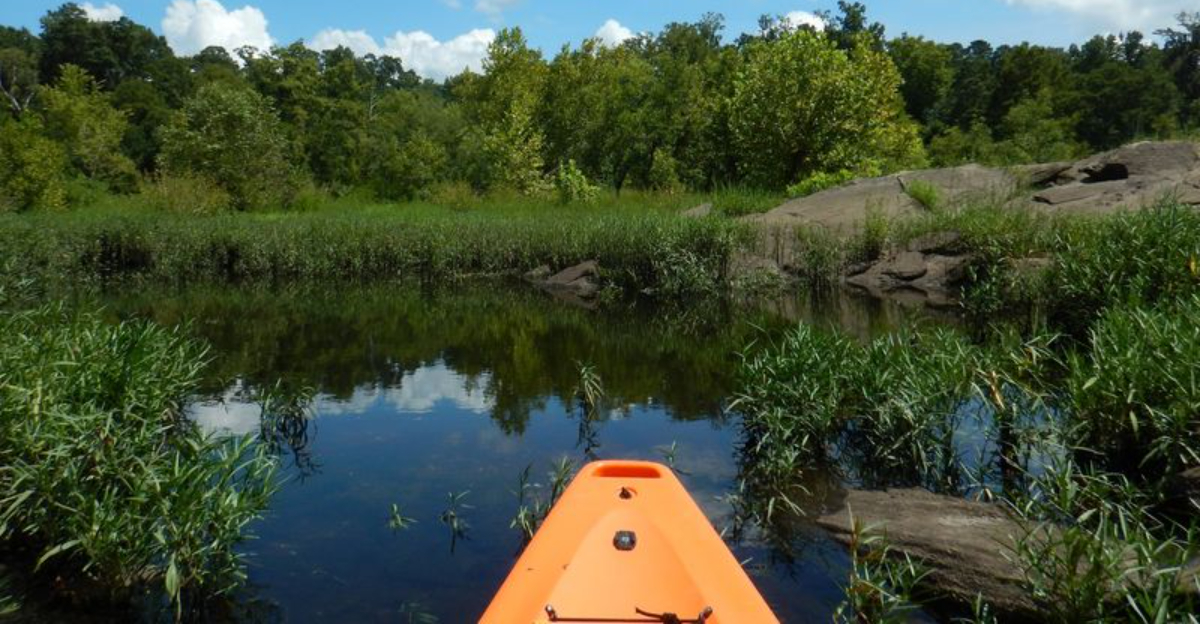
An asteroid hit here 85 million years ago. Now people bring kayaks.
That sounds like the beginning of a very strange story, but it is exactly what makes this river so fascinating.
The water cuts through the western rim of a massive five-mile-wide crater, carrying paddlers across a landscape that was completely rearranged by a cosmic collision long before humans ever showed up.
And the ride is not exactly sleepy. Start below the dam on calmer water, work through Class II shoals, and eventually reach a Class III rapid, the southernmost one in the state.
You might spend the first few minutes thinking you are simply floating down a pretty Alabama river. Then the rapids start bouncing the kayak around, and there is a giant ancient crater underneath it all.
The river’s name means “rumbling waters,” and after a few rough stretches, that name starts making perfect sense.
Paddling Straight Through A Crater That Fell From Space
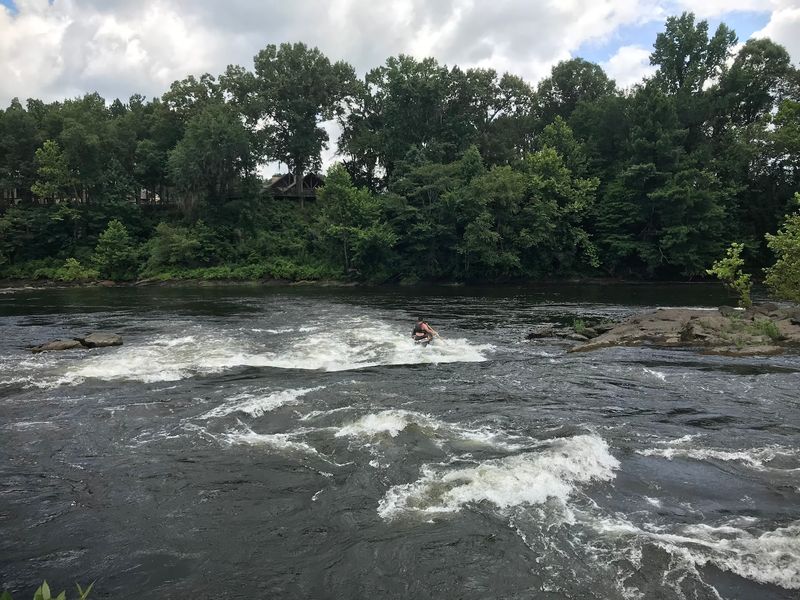
Most rivers have geology. Few have geology that arrived at over 500 miles per hour from outer space.
The Wetumpka Impact Crater formed roughly 85 million years ago, during the Late Cretaceous, when an asteroid estimated at about 1,100 feet across slammed into a shallow sea.
The blast released energy comparable to 2.3 billion tons of TNT, and the resulting structure measures somewhere between 4.7 and 5 miles across.
Here is the part that matters for paddlers. The crater’s western rim dips right into the Coosa in downtown Wetumpka, and those wooded hills rising east of the water are the worn-down remains of the rim itself.
Scientists confirmed the origin using shocked quartz, impact breccia, and a central uplift, which is why the site is called the only verified impact crater in Alabama. Globally, only about 200 such structures are recognized, and just a handful sit above ground.
It even earned the nickname America’s best-preserved marine impact crater.
Trips launched through Coosa River Adventures travel through that landscape without any hiking required. The rock ledges creating the rapids exist partly because the impact shoved layers upward, meaning every splash has a backstory measured in tens of millions of years.
For anyone wanting more context, a self-guided driving tour and the Crater Discovery and Visitors Center fill in the details before or after the paddle.
Seven Miles From Jordan Dam To Downtown
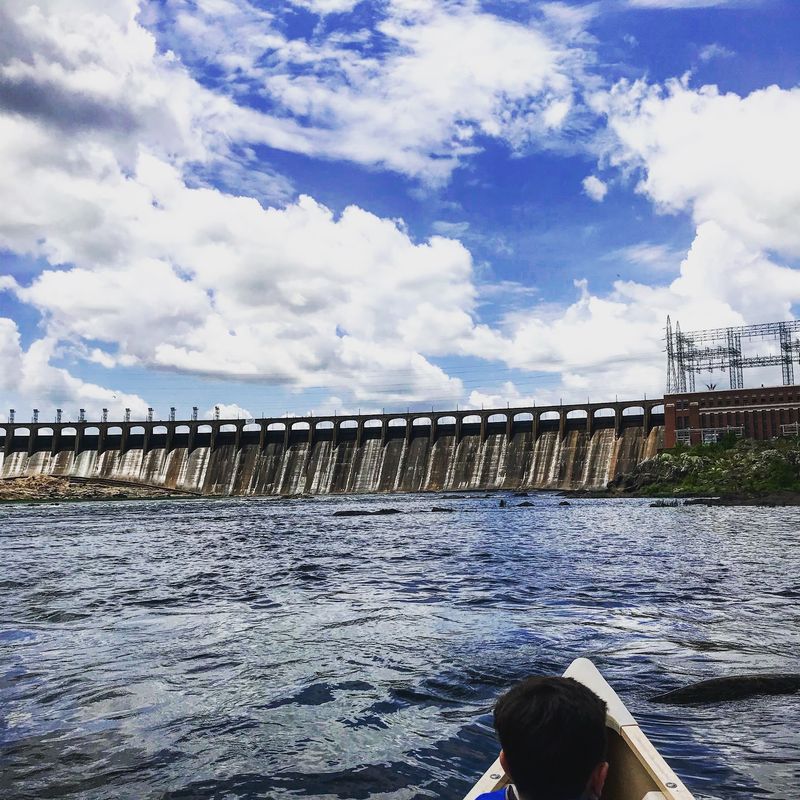
The classic run stretches seven miles, starting below Jordan Dam and ending at the docks in downtown Wetumpka. That distance sounds ambitious until the current does most of the work.
Roughly 75 percent of the route is flatwater. The remaining quarter delivers Class II and Class III rapids broken into four separate sections, so excitement arrives in bursts rather than one long scramble.
Average trip time lands around three to four hours. Paddlers who blast through can finish faster, while groups who stop to swim, snack, and float in the shallows easily stretch it into most of a day.
Coosa River Adventures handles the logistics that usually complicate river trips. Guests park at Company Street, check in, listen to the safety briefing, then ride a bus upriver to the launch point with boats delivered alongside them.
Because the takeout sits in town, there is no long shuttle back at the end. The parking lot is right there, which feels wonderful after four hours of sun.
Rentals cover canoes, sit-on-top kayaks, sit-inside kayaks, and stand-up paddleboards, with paddles and life jackets included. Reservations are strongly recommended, especially during warm months when the river gets busy.
Staff also run patrols along the route, keeping an eye on paddlers rather than sending everyone off and hoping for the best.
Moccasin Gap And The Rapids That Earn Their Reputation
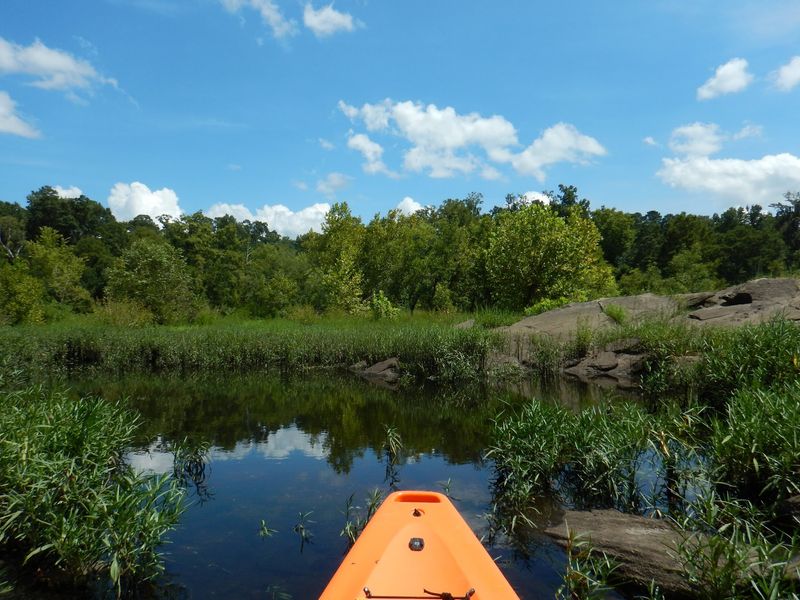
Four named rapids define the character of this stretch. River Falls arrives as Class II shoals, then come Pipeline, Wetumpka Falls, and the headliner, Moccasin Gap.
Moccasin Gap holds the title of southernmost Class III rapid in Alabama. Surfers park themselves in the standing waves there, spinning and playing while other paddlers pick clean lines around them.
Nobody is forced into the big water. Bypass routes exist around both Moccasin Gap and Pipeline, which makes the run workable for cautious first-timers and families with mixed skill levels.
Flow matters enormously here. Alabama Power controls releases from Jordan Dam, and levels usually run between 2,000 and 10,000 cubic feet per second, with higher numbers producing bigger, pushier waves.
After heavy rain, the rapids wake up considerably.
The safety talk given before launch covers what to expect, how to read the splits in the river, and what to do if a boat flips. Flipping happens, and it is usually more funny than frightening in warm weather.
Water shoes make a real difference for gripping rocks while climbing back aboard. Leaving sunglasses, phones, and anything expensive behind is also smart, since the river keeps whatever it takes.
Compared to full-blown rafting rivers, these rapids sit lower on the intensity scale while still delivering genuine adrenaline.
Bluffs, Islands, And Herons Along The Way
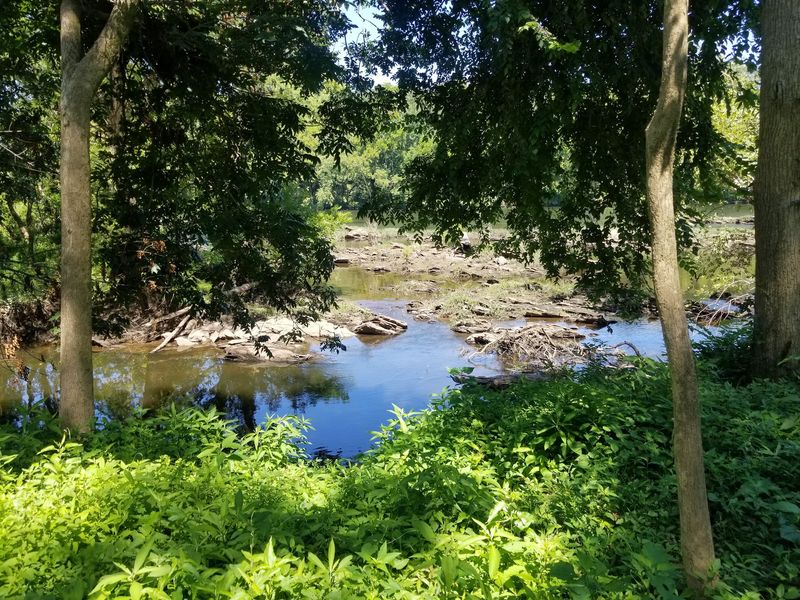
Between the rapids, the Coosa turns into something closer to a nature documentary. Sandstone outcrops lean over the water, wooded banks crowd both sides, and small islands split the current into quiet side channels.
Blue herons stand in the shallows with that patient, slightly grumpy posture they always have. Turtles line up on half-submerged logs and slide off one by one as boats drift past.
Fish life is strong here. Spotted bass draw anglers to this stretch, and the clear water lets paddlers actually see movement below the surface in calmer pools.
Less obvious residents matter just as much. The river supports mussels and snails, including the endangered Tulotoma snail, which makes this section of the Coosa ecologically important beyond its recreational appeal.
The crater plays a role in the scenery too. Its walls created a distinct microclimate, encouraging plant communities that differ from the surrounding countryside.
Bluffs and shaded coves make natural rest stops. Many groups pull over to swim, eat packed lunches, and let kids splash in ankle-deep water before continuing downstream.
Mesh trash bags handed out at check-in help keep those spots clean, and glass containers are not allowed on the trip.
The contrast is what sticks with people. Rowdy whitewater one minute, silent green stillness the next, all within the same afternoon.
Beginners Get Looked After Here
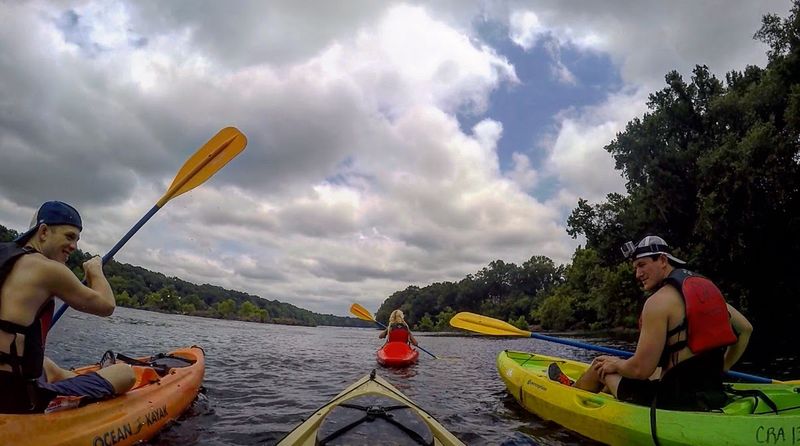
Nervous first-timers tend to leave this river grinning. A big part of that comes down to how the trip is set up before anyone touches the water.
Check-in happens at Company Street, where staff fit paddlers with properly sized life jackets and match people to boats that suit their size and comfort level. Non-swimmers are accommodated, which reassures a lot of families.
Then comes the safety presentation, which has a reputation for being genuinely entertaining rather than a dull list of rules. Information sticks better when people are laughing.
Guidance covers reading the river splits, choosing gentler lines, and handling a flip calmly. Knowing that staff patrol the route removes a surprising amount of anxiety.
Practical packing advice pays off enormously. Sunscreen applied before launch is not enough, so bring extra and reapply, because summer sun on open water burns fast.
Water for drinking, a hat, water shoes, and cheap sunglasses round out the list. Pack lunches in a dry bag if the plan is a slower, all-day float.
The operation is group friendly, handling parties of ten to fifteen without fuss, and the bus ride upriver often turns into its own small party.
Seasoned paddlers get served too, with shuttle arrangements available for those bringing their own boats.
Rumbling Waters, Downtown Views, And A Riverwalk Finish
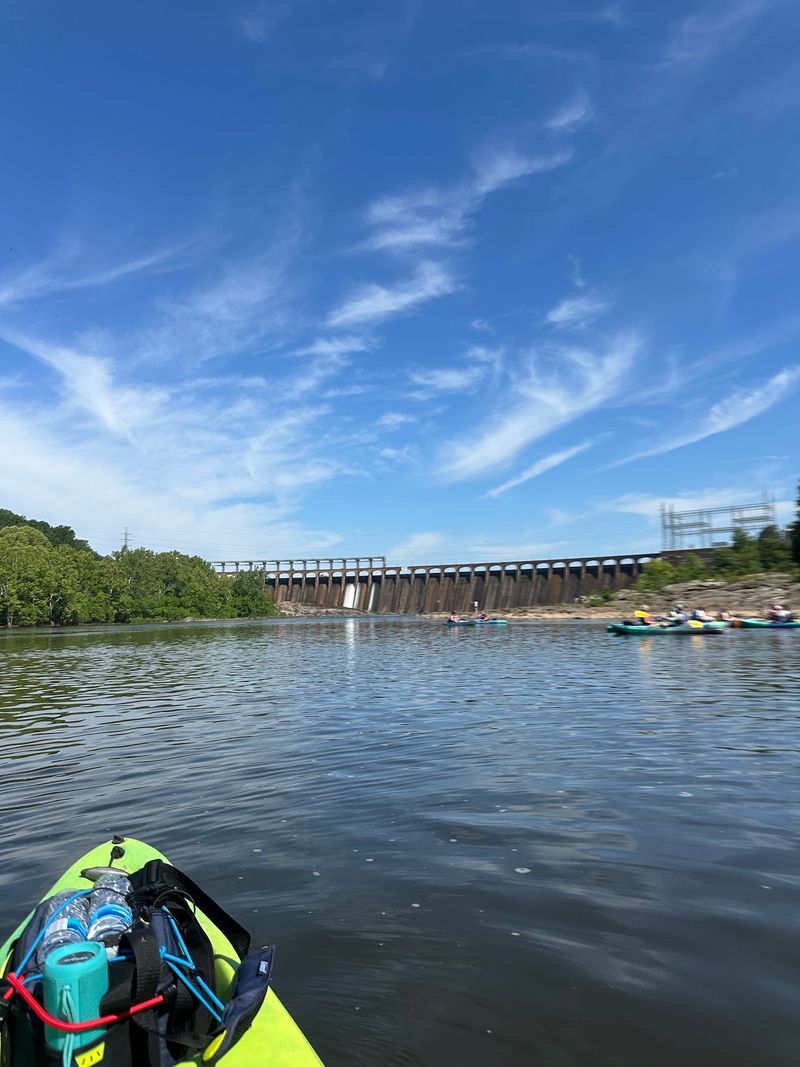
Few paddling trips end with a walk into a historic downtown square, but that is exactly how this one wraps up.
The Coosa runs through the middle of Wetumpka, so the final stretch drifts past bridges, buildings, and the sound of water tumbling over uplifted rock ledges. That rumble is where the town’s name came from.
Once boats are turned in, the Wetumpka Riverwalk Trail offers an easy two-mile paved route along the water. Legs stiff from sitting in a kayak appreciate the stretch.
Gold Star Park sits along the riverfront with a walking trail, playground, and picnic tables. Birdwatchers there often spot white-breasted nuthatches, tufted titmice, Carolina chickadees, and several woodpecker species in the trees and along the bank.
Downtown itself rewards a wander. Boutique shops, art galleries, and local eateries line the square, and murals turn plain walls into photo stops.
The Kelly Fitzpatrick Center for the Arts anchors the local arts scene. A self-guided Tulotoma Snail Trail links spots like The Alleyway, the Elmore County Museum, and Merchants Alley for anyone curious about the town’s history.
Combining a strenuous river run with a relaxed afternoon in town makes for a full, satisfying day. Sunburned, hungry, and slightly amazed by the geology is a good way to end up.
More Trails And History Just Beyond The Water
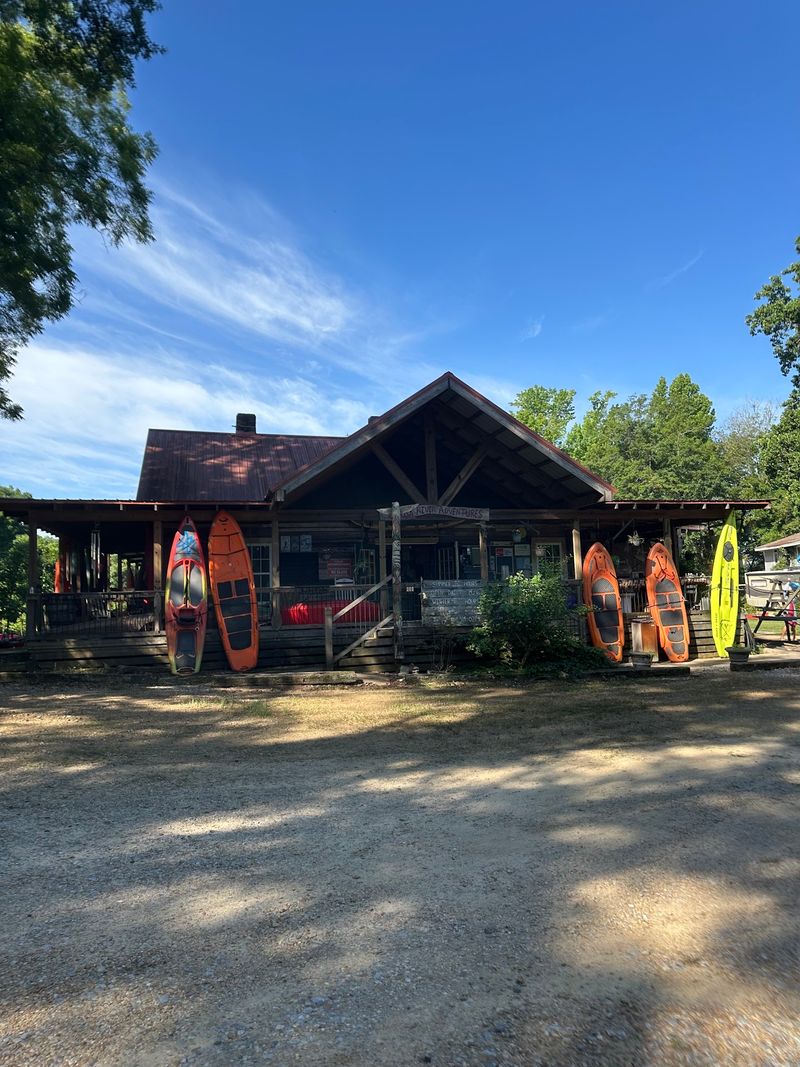
Wetumpka carries the nickname City of Natural Beauty, and the surrounding area backs it up once the paddles are put away.
The Coosa handles more than whitewater. Fishing, tubing, and stand-up paddleboarding all happen here, giving repeat visitors different ways to experience the same water.
On land, trail options range from mellow to demanding. Corn Creek Wilderness Park Trail suits short, quiet walks and casual nature watching, while the Swayback Bridge Trail near Lake Jordan runs a 7.9-mile loop built for hikers and mountain bikers.
History runs deep at Fort Toulouse-Jackson National Historic Park, set where the Coosa and Tallapoosa Rivers meet to form the headwaters of the Alabama River. Its 165 acres of woodlands and fields preserve more than 6,000 years of human activity.
Visitors find a recreated 1751 French fort, an 1814 American fort, and a Mississippian period mound roughly a thousand years old. The Bartram Nature Trail follows ridge lines and river bottoms, good for spotting Eastern meadowlarks, Northern bobwhites, and red-tailed hawks.
Stacking a river trip with a fort visit or a trail hike turns a single outing into a proper weekend.
Reservations for paddling trips are worth booking ahead, since peak season fills quickly and the outfitter operates daily from morning through early evening.
Address: 415 Company St, Wetumpka, AL 36092
