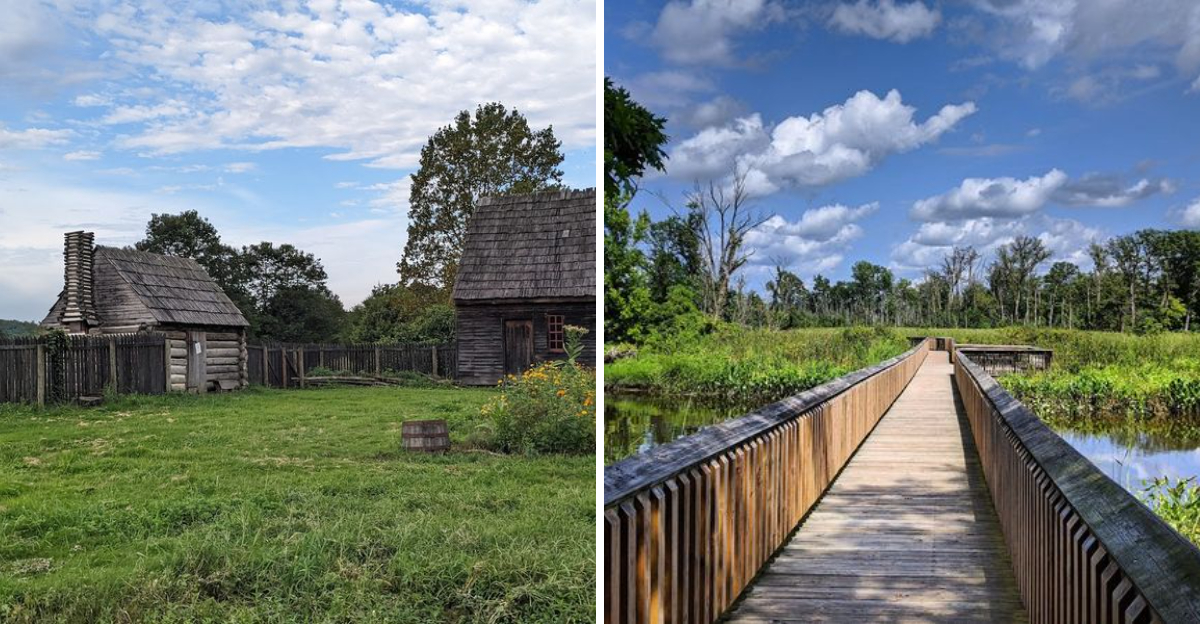
You head out for a simple family walk. Nothing fancy, just some fresh air and exercise.
Then the trail starts looking different. Twisted trees, mossy ground, little wooden bridges, and sunlight filtering through the leaves like a storybook.
This Maryland path has earned its nickname for good reason. Kids run ahead pretending they are in a fantasy world.
Adults slow down and start taking photos. Even the dog seems confused about whether this is real life.
No special effects, no admission fee, just a trail that feels like it belongs in a movie. That is the beauty of a simple walk in Maryland.
Sometimes nature puts on a show and you just have to show up.
The Fairy Trail and Its Eight Magical Houses
My youngest spotted the first one before I even knew what to look for. Nestled right at the base of a mossy oak, a tiny wooden house no bigger than a shoebox sat perfectly still, like it had always been there.
That first discovery set the tone for the entire trail.
The Fairy Trail at Piscataway Park features eight brand-new fairy houses placed at different points along the path. Each one has its own personality, some built from bark and twigs, others decorated with pebbles and dried leaves.
They blend so naturally into the forest floor that finding each one feels like a genuine reward.
What makes this trail stand out from a regular nature walk is that it turns observation into a game. Kids slow down, crouch low, and actually look at the world around them.
That shift in attention is rare and honestly a little magical to watch happen in real time.
The trail is self-guided, so your family sets the pace completely. There is no rushing, no tour group to keep up with, and no pressure.
You wander, you search, and you find.
Families with preschoolers will find the trail totally manageable. The terrain is gentle enough for little legs, and the short distances between fairy houses keep younger kids motivated to keep moving forward.
It never feels like a chore.
Each house sparks a different conversation, about who might live there, what they eat, and whether fairies prefer oak trees or maple. Those conversations alone make the whole trip worth it.
Five Thousand Acres of Wild Maryland to Explore
The Fairy Trail gets most of the attention, but it is only one small piece of a much larger picture. Piscataway Park covers roughly 5,000 acres and stretches six full miles along the Potomac River.
That is a serious amount of land to explore on a free afternoon.
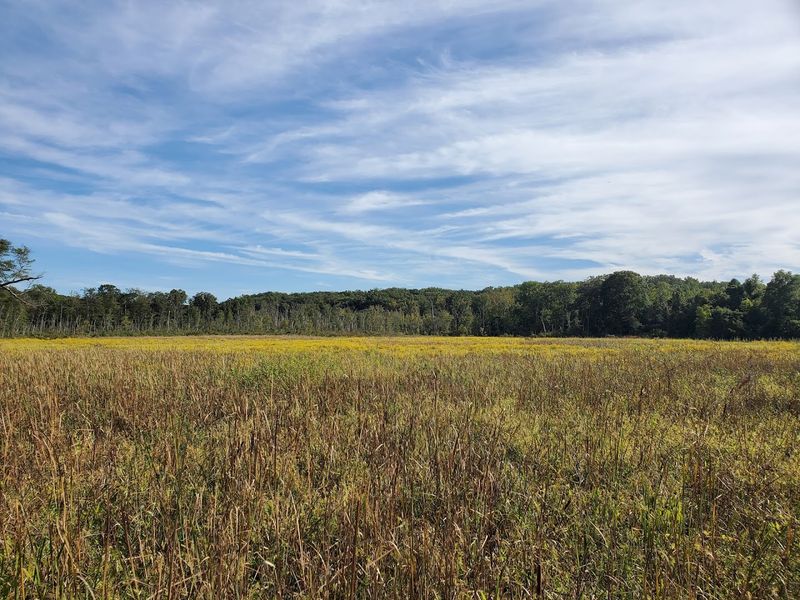
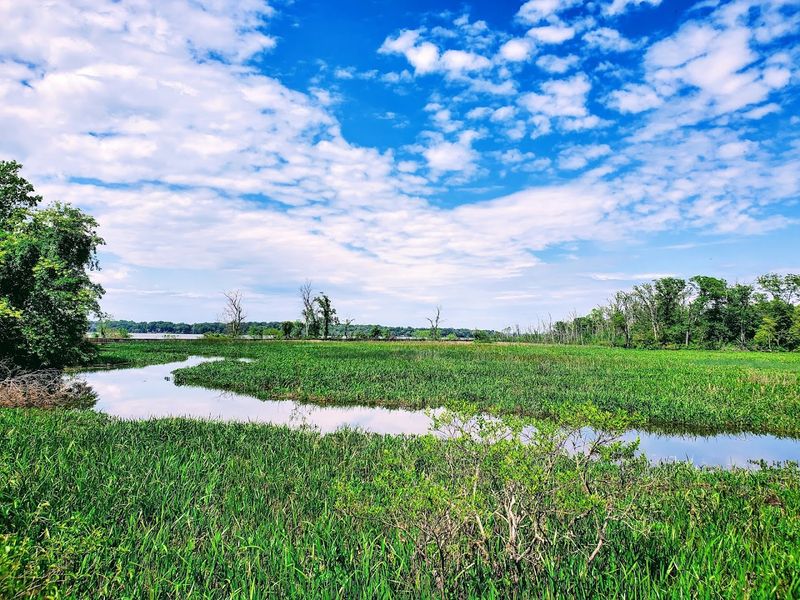
The park holds wetlands, meadows, dense woods, and open riverbanks all in one connected space. Each habitat feels distinct and shifts the energy of the walk in a different direction.
One moment you are in cool forest shadow, and the next you are standing in a sunlit meadow with the river visible in the distance.
Wildlife shows up regularly here. Bald eagles are spotted along the river corridor with surprising frequency.
Beavers, deer, and foxes also make appearances, especially in the quieter morning hours when foot traffic is low and the park feels almost entirely yours.
The Paw Paw Trail runs through some of the hillier sections of the park and can get a bit rugged in places. Trail markings are not always crystal clear, but the farm area keeps things manageable since the grounds are compact enough to orient yourself quickly.
Getting genuinely lost is unlikely.
Bringing a trail map or downloading an offline version before your visit is a smart move. The park is large enough that knowing your general route saves time and keeps the adventure feeling intentional rather than accidental.
For families who love layering activities, the sheer size of Piscataway Park means you could come back a dozen times and still find a new corner worth exploring.
Why Locals Call It the Maryland Narnia Trail
The nickname did not come from a marketing team. It came from real families who walked in expecting trees and left feeling like they had passed through a wardrobe.
That kind of organic reputation is hard to fake.
The comparison to Narnia actually makes a lot of sense once you are standing on the trail. The tree canopy closes overhead in a way that filters sunlight into something softer and stranger than normal.
Shadows move differently here. Even on a bright afternoon, the woods hold onto a certain hush that feels almost deliberate.
Part of what feeds the Narnia feeling is the contrast between the outside world and what waits inside the tree line. You park your car, walk a short distance, and suddenly the noise of everyday life just drops away.
It happens fast and it catches you off guard every time.
The fairy houses add a layer of storytelling that pure nature trails simply cannot offer. When a child spots a tiny door carved into a tree stump, their brain immediately starts building a world around it.
That imaginative leap is exactly what C.S. Lewis was counting on when he wrote about a wardrobe full of possibilities.
Adults feel it too, which is the part nobody really warns you about. There is something genuinely disarming about a place this quiet and this beautiful existing just outside of a regular suburban afternoon.
Piscataway Park earns that Narnia comparison honestly, one fairy house at a time.
The Activity Book That Makes the Trail Even Better
Before hitting the trail, there is one small purchase worth making. The park offers a special activity book for five dollars that pairs perfectly with the Fairy Trail experience.
It is the kind of thing that seems optional until you see a kid using one.
The book includes stories connected to the trail and information about what you are seeing along the way. It gives the walk a narrative thread, something to follow and return to between fairy house sightings.
For kids who love books and stories, this becomes the anchor of the whole adventure.
Even children who are not big readers tend to engage with it differently out here. Maybe it is because the book connects directly to things they can actually touch and see.
Abstract information becomes real when there is a tiny house sitting right in front of you matching the description on the page.
Parents benefit from it too. The book gives you something specific to talk about with your kids, prompts for questions, and little details that make the trail feel richer.
You stop pointing at random trees and start pointing at things that actually mean something in context.
Five dollars is genuinely a small ask for what it adds to the experience. Plenty of family activities cost far more and deliver far less engagement.
This one earns its price in the first ten minutes.
Check at the park before your visit to confirm availability, since stock can vary by season. Grabbing it early means you hit the trail fully prepared for the story waiting inside those woods.
The National Colonial Farm, A Living History Lesson

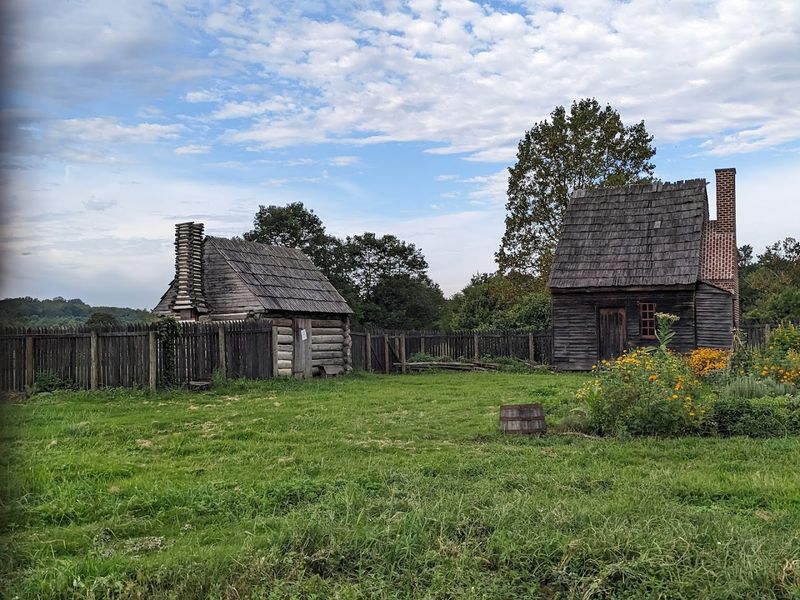
Right inside the park boundaries sits one of the more quietly remarkable places in the entire DC region. The National Colonial Farm is a working historic farm museum that brings 18th-century agriculture to life in a way that textbooks simply cannot manage.
Heritage breed animals roam the property, the kind of breeds that would have been common on Maryland farms in the 1700s. Watching them up close gives you a completely different understanding of what daily farm life actually looked like before industrialization changed everything.
It is hands-on history without the museum gift shop pressure.
The farm is stewarded by the Accokeek Foundation, which manages about 200 acres within the park in partnership with the National Park Service. That partnership keeps the experience educational without feeling overly formal or stiff.
It strikes a balance that works well for families with kids of different ages.
Older children tend to get genuinely curious here, asking questions about crop rotation, animal breeds, and what people ate. Younger ones just want to see the animals, which is a perfectly valid reason to visit.
Both groups leave having absorbed something real.
Combining the Colonial Farm visit with the Fairy Trail makes for a full-day itinerary that covers imagination and history in the same afternoon. The two experiences complement each other in a way that feels almost planned, even though they sit in very different corners of the park’s personality.
The Accokeek Foundation does meaningful work here. Supporting their programming by visiting is one of the better ways to spend a free weekend in Maryland.
The View of Mount Vernon Across the Potomac River

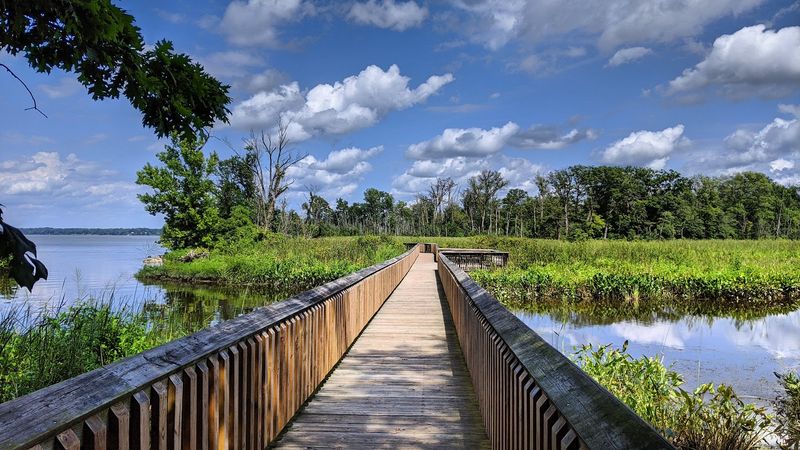
Few park views in this region carry the kind of historical weight that this one does. From certain points along the Piscataway Park shoreline, you can look directly across the Potomac River and see Mount Vernon sitting on the Virginia hillside.
It is the kind of view that quietly stops a conversation.
George Washington would have looked at this exact stretch of Maryland shoreline from his estate. That reciprocal relationship between the two banks of the river is something most visitors do not fully register until someone points it out.
Then it settles in and the whole landscape takes on a different meaning.
The National Park Service has worked to preserve this viewshed deliberately, keeping the Maryland side largely undeveloped so that Mount Vernon’s historic view remains intact from both directions. That is an act of preservation that benefits every single person who stands on this bank.
Photographers find this spot particularly rewarding in the early morning and late afternoon when the light hits the water at a low angle. The reflection of the tree line on the river surface adds depth that makes even a phone camera produce something worth keeping.
Families who arrive expecting only a nature walk often end up spending an unexpected amount of time just sitting by the water here. There is something about the stillness of the Potomac at this particular bend that invites you to stop moving and just take it in.
The view alone justifies the drive to Accokeek. Everything else the park offers is a genuine bonus on top of it.
Free Admission and Dawn to Dusk Access Year Round

One of the most underrated things about Piscataway Park is the fact that it costs absolutely nothing to visit. Admission is free.
Parking is free. There are no reservation systems, no timed entry windows, and no annual passes required to walk through the gate.
The grounds are open every single day from dawn to dusk, which means early risers can catch morning mist over the meadows while late afternoon visitors get the golden hour light on the river. Flexibility like this is genuinely rare for a park this beautiful and this close to a major metro area.
Year-round access changes how you can use the park across seasons. Spring brings wildflowers and bird migration activity.
Summer offers full canopy shade that makes the Fairy Trail feel even more enclosed and magical. Fall turns the whole landscape into something that barely looks real.
Winter visits are underrated. The bare tree branches let you see deep into the woods in a way summer foliage never allows.
Wildlife is often more visible, and the quiet is even more pronounced when the seasonal crowds thin out.
Portable toilets are available near the parking lot, which is a practical detail worth knowing before you pack up the car with young kids. It is not a full visitor center setup, but it covers the basics adequately for a day trip.
Pets are welcome on leash throughout the park. That means the family dog gets an outing too, which adds another layer of motivation for making the trip happen on a slow weekend.
Wildlife Watching Along the Wetlands and Meadows

Most people arrive at Piscataway Park for the Fairy Trail and leave having also stumbled into one of the better wildlife watching spots in the mid-Atlantic region. The park’s mix of wetlands, meadows, and forested corridors creates the kind of habitat variety that draws a genuinely impressive range of animals.
Bald eagles are the headline act along the Potomac corridor. Seeing one glide low over the river is the kind of moment that makes you reach for your phone and then immediately forget to use it because you are too busy watching.
They show up often enough here that spotting one feels likely rather than lucky.
Beavers have established themselves in the park’s wetland areas. Evidence of their work, gnawed stumps and small dams built into stream channels, shows up along several of the lower trails.
Catching an actual beaver in action requires patience and an early morning visit, but the signs of their presence are everywhere.
Deer move through the meadow edges at dusk with impressive regularity. Foxes are spotted occasionally, usually darting across open ground before disappearing back into the tree line.
The park rewards slow, quiet walking in a way that fast-paced hiking simply does not.
Bringing binoculars makes a real difference here, especially near the river and the wetland edges where birds congregate in numbers. A basic field guide or a free birding app adds context to what you are seeing and turns casual observation into something more intentional and satisfying.
Planning Your Visit to Piscataway Park in Accokeek
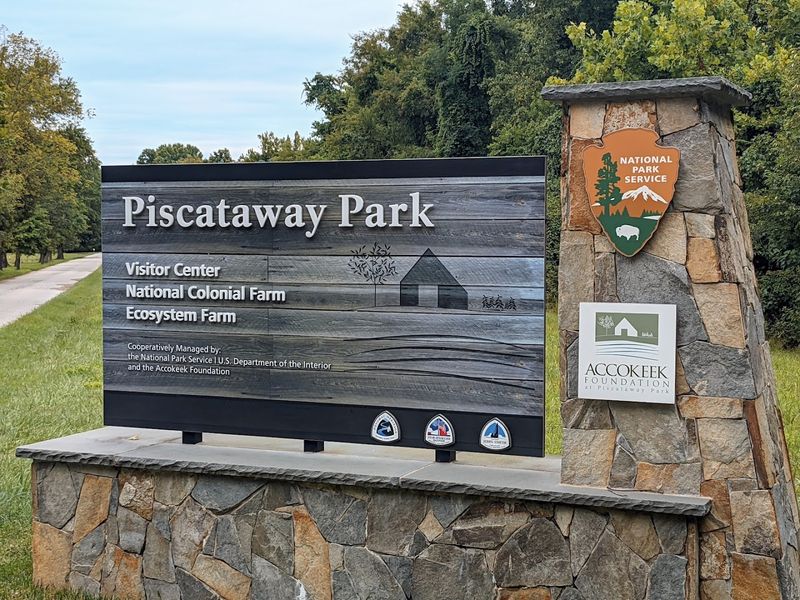
Getting to Piscataway Park is straightforward once you know the address. The park entrance sits at 3400 Bryan Point Rd in Accokeek, Maryland, and GPS navigation handles it reliably.
The drive from central Washington DC takes roughly 45 minutes depending on traffic, making it a realistic half-day or full-day escape from the city.
Arriving earlier in the day pays off in multiple ways. Parking fills up faster on weekends than most first-time visitors expect.
Morning light is also better for photography, and the trail crowds stay thin enough that the forest quiet stays intact through most of the Fairy Trail loop.
Wear comfortable shoes with some grip. Parts of the Paw Paw Trail get uneven, and after rain the ground can stay soft longer than you might anticipate.
Layers are smart in spring and fall when the temperature under the tree canopy drops noticeably compared to the open meadow areas.
Pack snacks and water since there is no food vendor on site. The park is not set up for long stays in terms of facilities, but the portable toilets near the parking area cover the basics.
Knowing this ahead of time means you arrive prepared rather than frustrated.
The activity book for the Fairy Trail is worth picking up if available. Five dollars for a guided story experience is one of the better small investments you can make in a family outing.
It keeps kids focused and adds narrative depth to what might otherwise feel like a simple woodland walk.
