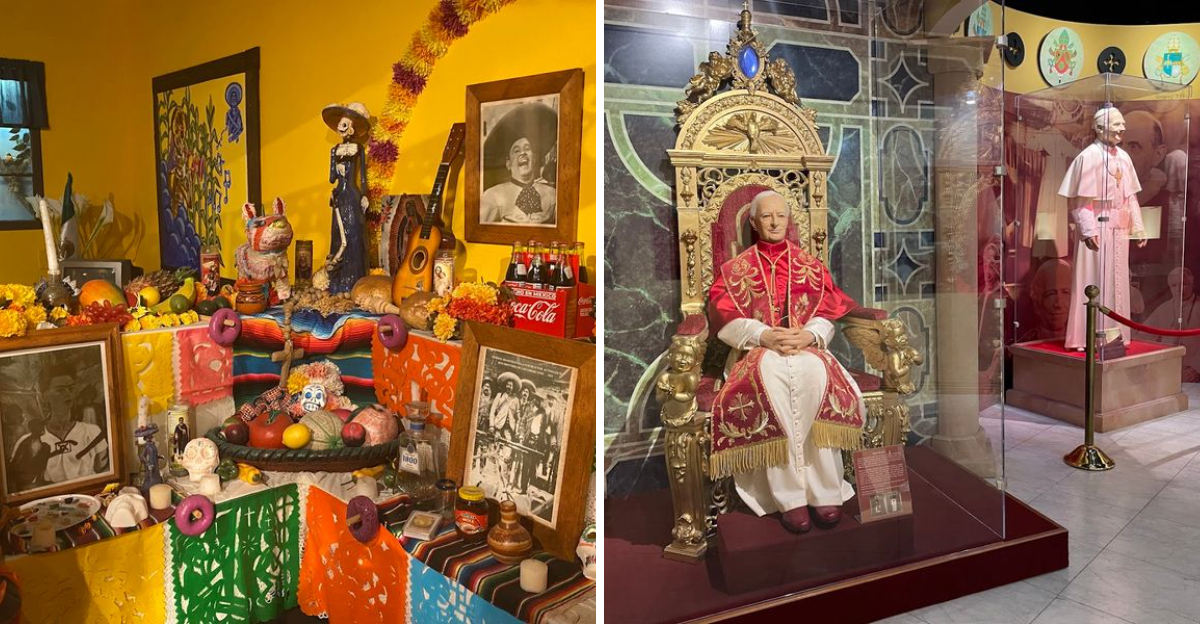
A person does not expect to leave a museum about death feeling entertained. But this Texas spot pulls it off.
The collection is massive, the largest of its kind in the country, packed with hearses from different eras, embalming displays, and even a full papal funeral exhibit. Celebrity memorabilia is scattered throughout, items from presidents, popes, and famous figures that make a person stop and stare.
A section on famous funerals includes artifacts that feel oddly personal. The whole place is weird, respectful, and surprisingly fascinating.
No gore, just history. A person could spend two hours here and still not read every plaque.
It is not dark or depressing, just curious and strangely educational.
Texas, this is the kind of offbeat museum that makes a person call their friends and say, “You will not believe where I went today.”
Fantasy Coffins from Ghana That Make You Rethink Everything
Nobody walks into a museum and expects to find a coffin shaped like a shallot. Yet here it is, right in front of you, bright and elaborate and completely serious in its craftsmanship.
The Fantasy Coffins from Ghana exhibit is the largest collection of its kind outside of West Africa, and that fact alone is worth pausing over.
These coffins are not novelty items or art school experiments. They are deeply rooted in Ghanaian cultural tradition, where a person’s final resting place is meant to reflect who they were in life.
A fisherman might be buried in a fish. A successful business owner might rest in a Mercedes-Benz replica.
The detail in each piece is extraordinary.
What makes this exhibit so powerful is how it reframes the entire concept of death. Rather than treating the end of life as something somber and uniform, these coffins celebrate individuality.
They are joyful in a way that feels completely genuine.
I stood in front of the chicken coffin for a long time. It is painted in warm oranges and reds, and it looks almost cheerful sitting there under the museum lights.
There is something quietly profound about that cheerfulness.
Visitors who come in expecting darkness often leave this section with a smile. That shift in feeling is exactly what the museum seems designed to create.
This exhibit is a strong reminder that different cultures hold very different, and equally valid, relationships with mortality.
Celebrating the Lives and Deaths of the Popes
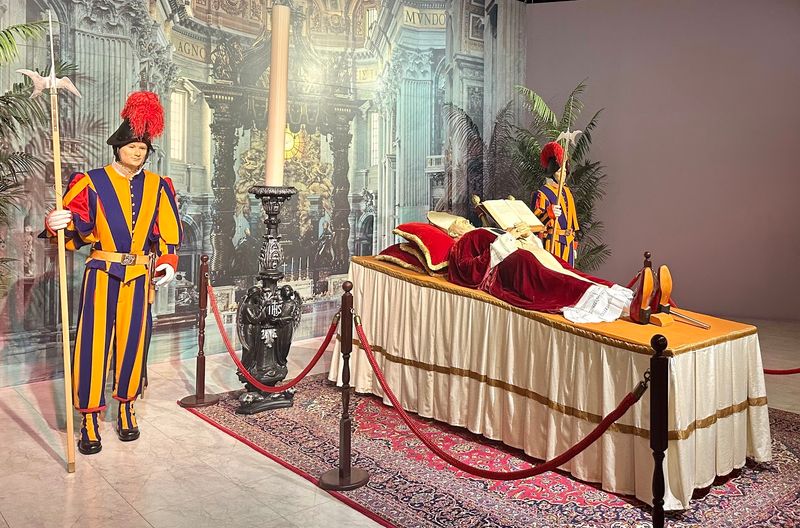
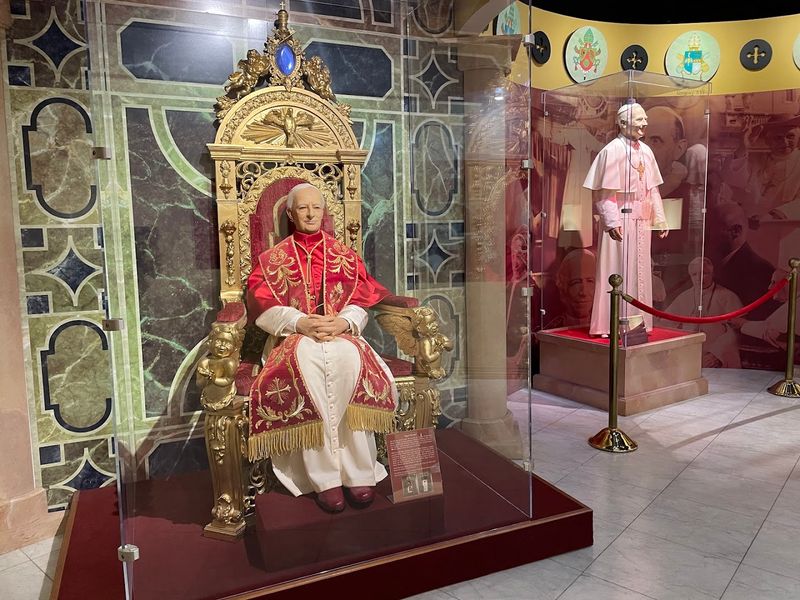
This exhibit was developed in direct collaboration with the Vatican, which tells you something important about the level of care and authenticity behind it.
The ceremonies surrounding papal funerals are among the most elaborate and historically rich rituals in the world, and this gallery does a remarkable job of presenting them with appropriate respect.
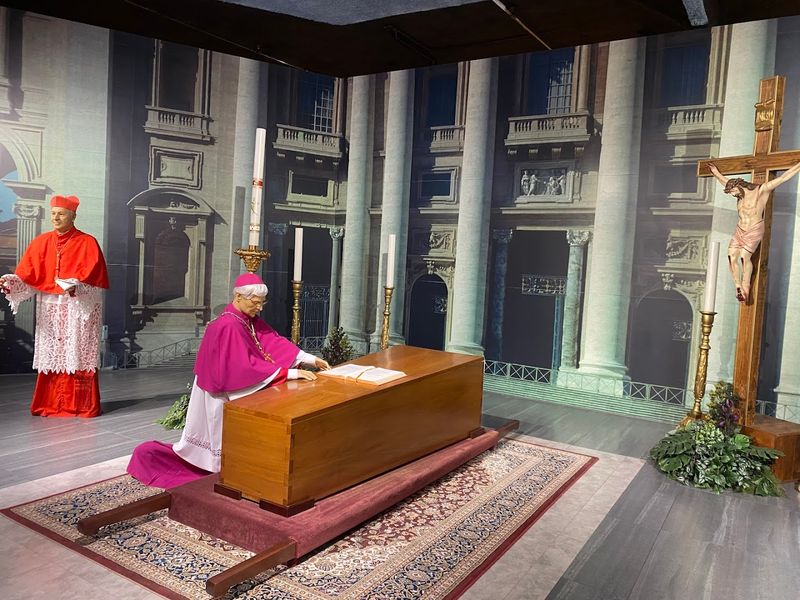
A full-scale replica of Pope John Paul II’s crypt anchors the exhibit. It is detailed and solemn, and it draws visitors in slowly rather than demanding immediate attention.
The overall atmosphere of this section feels genuinely contemplative.
The display explains the customs and traditions involved in papal funerals, many of which stretch back centuries. There is a sense of ritual continuity here that is hard to find anywhere else.
Seeing how the Catholic Church has honored its leaders over generations gives you a deeper appreciation for the role of ceremony in human life.
Even visitors who do not share the Catholic faith tend to find this section fascinating. The sheer scale and intentionality of these traditions is compelling on a purely historical and cultural level.
Ritual, it turns out, is something most humans understand instinctively.
What struck me most was how the exhibit manages to feel both educational and emotional at the same time. It never becomes a dry presentation of facts.
Instead, it feels like a respectful window into one of the world’s oldest and most carefully maintained traditions around death and remembrance. That balance is genuinely difficult to achieve, and the museum pulls it off beautifully here.
Presidential Funerals and the Artifacts That Connect Us to History
The original funeral bill for George Washington totaled $99.25. That single piece of paper, sitting quietly behind glass, somehow makes the founding of this country feel more human than any textbook ever has.
The Presidential Funerals gallery is one of the most emotionally layered sections in the entire museum.
Abraham Lincoln’s death mask is here, cast from his actual face. A lock of his hair rests nearby.
A full-scale replica of Lincoln lying in repose occupies a central space in the gallery, and even knowing it is a replica, the effect is genuinely moving.
JFK’s original eternal flame is also part of this exhibit. I was not prepared for how that felt.
There is a difference between reading about these historical moments and standing a few feet from an object that was physically present during them.
The gallery does not feel exploitative. It feels reverential, like a place built specifically to honor the gravity of these moments in American history.
State funerals are public events, but the artifacts connected to them carry a private kind of weight.
Each display is thoughtfully arranged and well-labeled, making it accessible even if you are not a deep history enthusiast. The combination of personal objects and large-scale replicas gives the gallery a sense of both intimacy and grandeur.
It is the kind of section you linger in without meaning to, moving slowly from case to case, quietly grateful for the chance to be this close to history.
Historical Hearses and the Vehicles That Carried the Famous
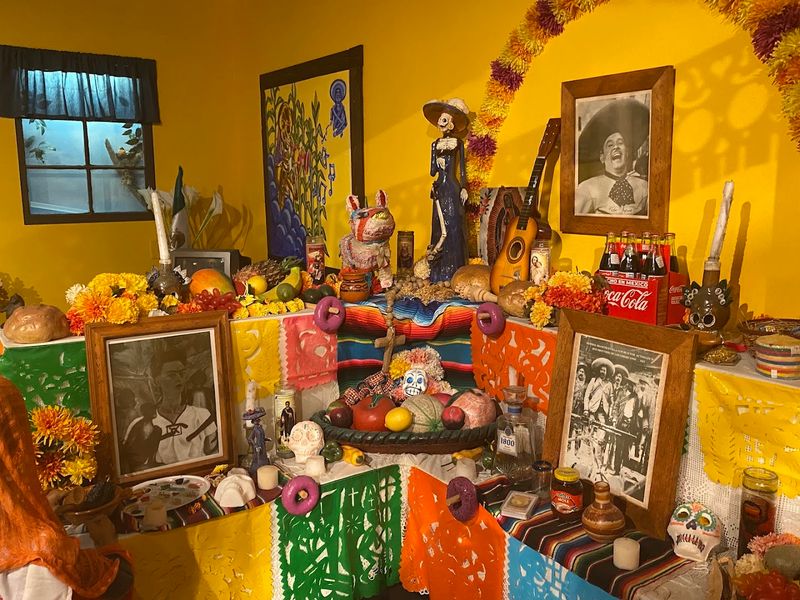
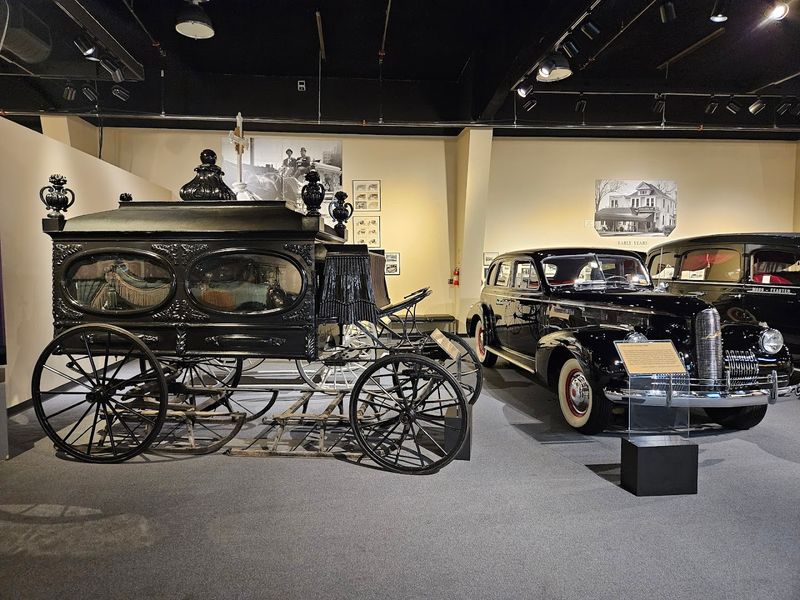
The oldest horse-drawn hearse in the collection dates back to 1832, and it looks exactly as solemn and beautiful as you would imagine something from that era to look.
It sits near motorized hearses that carried some of the most recognized names in modern history, and the contrast between them is quietly breathtaking.
Ronald Reagan and Gerald R. Ford both had their final journeys made in vehicles now housed in this museum.
Grace Kelly’s hearse is here too, sleek and dignified. Seeing these vehicles in person adds a strange kind of weight to moments you only ever read about in history books.
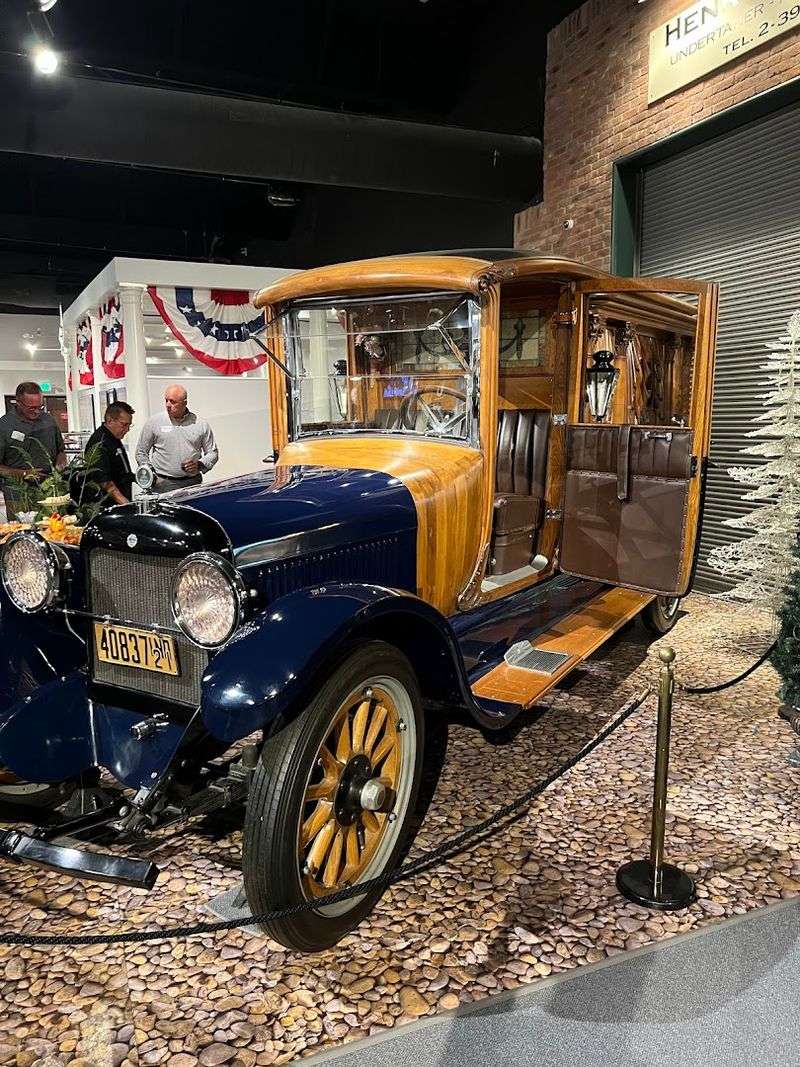
Then there is the 1916 Packard funeral bus, which is perhaps the most unexpectedly entertaining artifact in the entire collection. It was designed to carry both the coffin and the mourners together in one vehicle.
It famously tipped over in San Francisco, which is a story the museum does not shy away from telling.
The hearse collection traces more than a century of funerary transport, from wooden carriages pulled by horses to gleaming black automobiles. Each vehicle has its own personality, its own era stamped into the metalwork and upholstery.
There is something oddly meditative about walking through this section slowly. You realize how much care humans have always put into the final journey.
These were not just vehicles. They were expressions of respect, grief, and ceremony all rolled into one rolling tribute.
Coffins and Caskets of the Past, From Glass to Triple-Wide
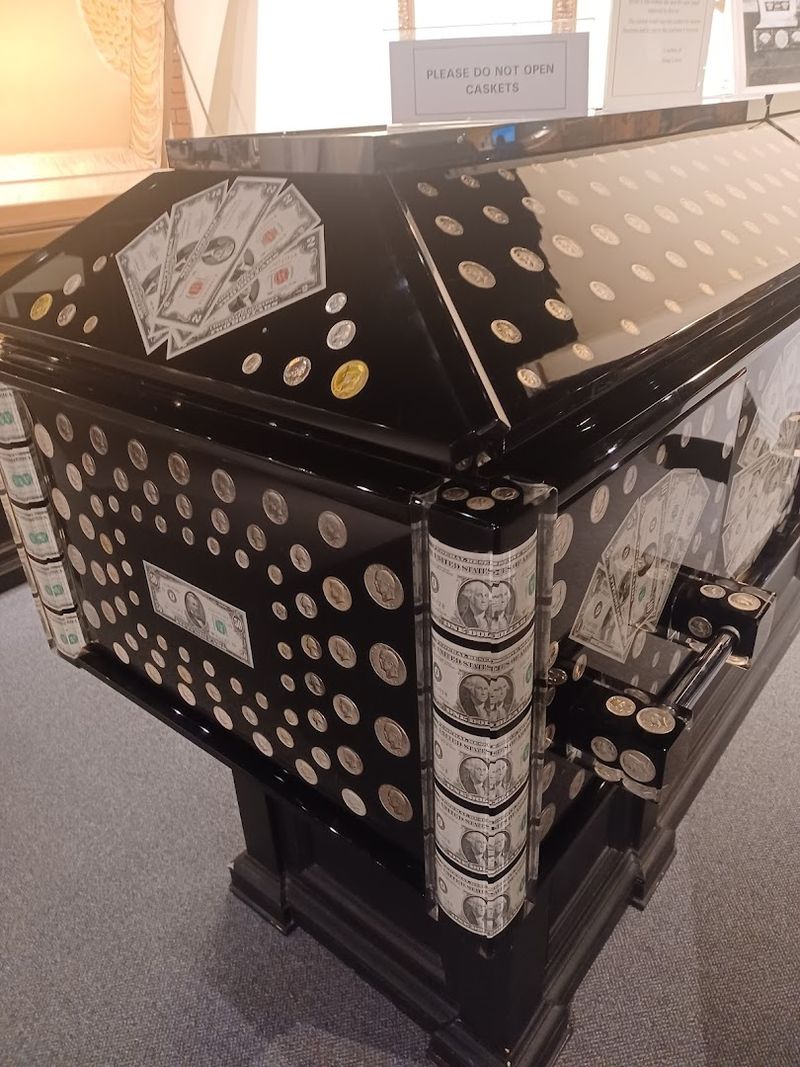
Somewhere in this museum, there is a casket decorated entirely with money. Right next to it, there is one made of glass.
A few feet away sits a casket built large enough to hold three people at once. This section of the museum might be the one that most consistently makes visitors stop mid-stride and stare.
The Coffins and Caskets of the Past exhibit traces the evolution of burial containers across different cultures and time periods. It is not just about the unusual examples, though those are certainly memorable.
The exhibit also shows how materials, craftsmanship, and cultural values have shaped the way humans have chosen to bury their dead throughout history.
The glass casket is particularly striking. It feels almost fairy-tale-like in its appearance, which is an odd sensation when you consider its actual purpose.
Yet that strangeness is part of what makes it so thought-provoking.
The casket decorated with currency raises interesting questions about wealth, legacy, and what people choose to take with them symbolically. These are not questions the exhibit forces on you.
They simply arise naturally as you look at the objects in front of you.
The triple casket, meanwhile, is just impressive on a purely logistical level. It is enormous.
Seeing it in person makes you realize how varied the needs and customs around burial have always been across different communities and time periods. This section rewards slow, curious looking more than almost any other in the museum.
Thanks for the Memories, Celebrity Farewells Done Right
Marilyn Monroe’s original crypt front is here. That is not a reproduction or a replica.
That is the actual stone panel from the wall where she was interred, and seeing it in person carries a weight that is hard to describe. The Thanks for the Memories exhibit is dedicated to the final farewells of some of the most iconic figures of the 20th century.
Jim Henson, Whitney Houston, Elizabeth Taylor, and Michael Jackson are all represented here. Each display is handled with care and dignity, avoiding anything that feels sensational or disrespectful.
The focus is consistently on honoring these individuals and the impact they had on culture and on the people who loved them.
What makes this section genuinely affecting is how it connects celebrity to mortality in a way that feels honest. These were real people, and the objects associated with their deaths remind you of that in a way that tabloid coverage never quite does.
The exhibit strips away the spectacle and leaves something quieter behind.
There is a tendency to think of celebrity memorials as performances. This exhibit suggests something different.
It suggests that grief for a public figure can be just as sincere and personal as any other kind of grief.
I found myself lingering here longer than I expected. The combination of recognizable names and carefully preserved artifacts creates a strange intimacy.
It is a section that manages to feel both public and private at the same time, which is a genuinely difficult balance to strike.
Civil War Embalming and the History That Changed Funerals Forever
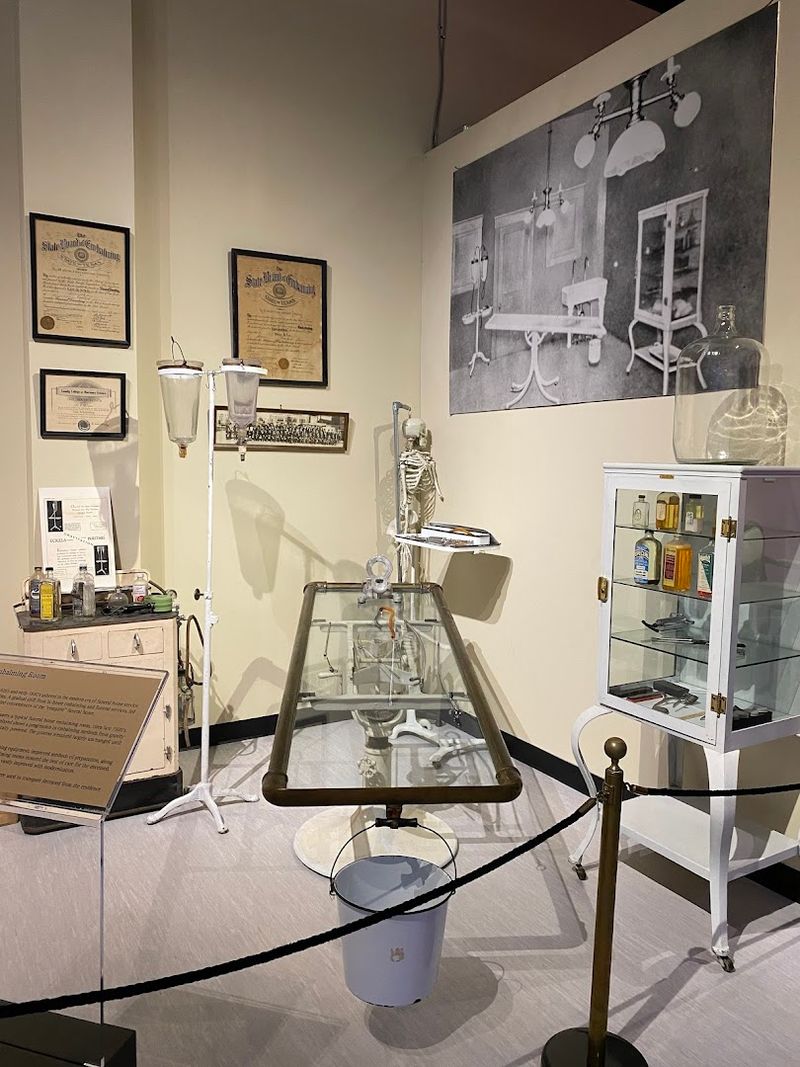
Before the Civil War, embalming was not a common practice in the United States. The war changed that, largely because families needed a way to transport fallen soldiers back home across long distances.
This exhibit covers that history in a way that is direct, educational, and genuinely surprising if you have never thought much about how modern funeral practices developed.
The diorama on Civil War embalming is detailed and historically accurate. It places you visually inside the moment, showing the tools, the setting, and the people involved in what was then a fairly new and controversial procedure.
The scene is not graphic. It is careful and informative.
What the exhibit communicates clearly is that the Civil War was a turning point not just in American political history but in the history of how Americans relate to death.
The need to preserve bodies for transport created an entire industry that still shapes how most people in this country are handled after death today.
There is a quiet kind of significance in that connection between war and funeral practice. It is not something most people think about, and the museum handles it without being heavy-handed.
The section also touches on the figures who pioneered embalming techniques during and after the war, giving credit to people whose work is largely unknown outside of specialized historical circles.
Learning their names and understanding their contributions adds a human dimension to what could easily feel like a purely technical exhibit.
It is history told through the lens of care for the dead.
Jazz Funerals of New Orleans and the Joy Built Into Mourning
There is a tradition in New Orleans where a funeral procession begins in mourning and ends in celebration. The brass band plays slow and solemn at first, and then, after the body is committed, the music shifts and the whole crowd dances through the streets.
This tradition is called a jazz funeral, and the museum dedicates real space to exploring its history and cultural roots.
The exhibit features instruments, photographs, and explanatory panels that trace the jazz funeral from its origins in African American communities in New Orleans to its current status as one of the most recognized funeral traditions in the world.
It is a tradition built on the belief that death deserves both grief and joy, and that honoring a life means celebrating it fully.
Seeing the colorful second line umbrellas and the photographs of processions moving through the French Quarter gives the exhibit a real sense of energy. Even in a museum setting, something of the spirit of the tradition comes through.
What I appreciated most about this section is how it frames joy as a legitimate response to loss. That is not a universal cultural value, and the exhibit presents it without suggesting it should be.
It simply shows one community’s way of saying goodbye, and that way is beautiful.
The jazz funeral section pairs naturally with the Ghanaian coffin exhibit in an unexpected way. Both traditions push back against the idea that death must be met only with silence and darkness.
That quiet conversation between exhibits is one of the museum’s greatest strengths.
Post-Mortem Photography and the Victorian Way of Remembering the Dead
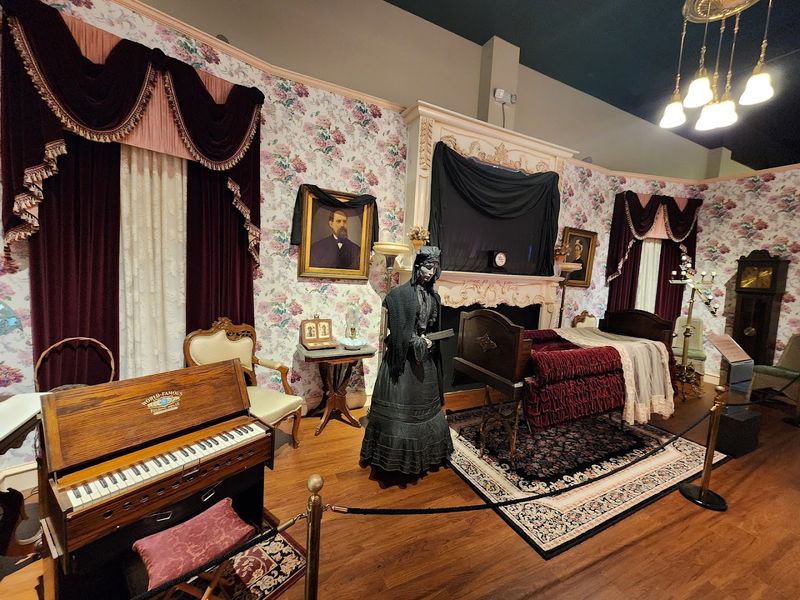
In the Victorian era, having a photograph taken was a major event. Cameras were expensive, sittings were formal, and many families only ever had one photograph taken together, and sometimes that photograph was taken after a family member had died.
Post-mortem photography was a common and accepted practice, and this exhibit invites visitors to look at examples and think about what they are actually seeing.
The museum displays family portraits from the period and encourages visitors to identify which figure in each image is deceased. It sounds unsettling, but in practice it is more thought-provoking than disturbing.
The images are sepia-toned and formal, and the deceased are often posed to appear as though sleeping or simply present.
What makes this exhibit so compelling is how it reframes a practice that feels strange to modern eyes as something deeply human and understandable. These families wanted a record of their loved ones.
Photography gave them a way to hold onto someone they were losing, and they used it.
The exhibit explains the technical and cultural context clearly, which helps visitors approach the images with curiosity rather than discomfort. Context always changes how we see things, and the museum knows that.
There is something about this section that stays with you after you leave. It makes you think about how future generations might look back at the ways we document and remember our own dead, and whether our methods will seem equally foreign a hundred years from now.
That lingering question is exactly the kind of thing a great museum should leave you with.
Address: 415 Barren Springs Dr, Houston, TX 77090
