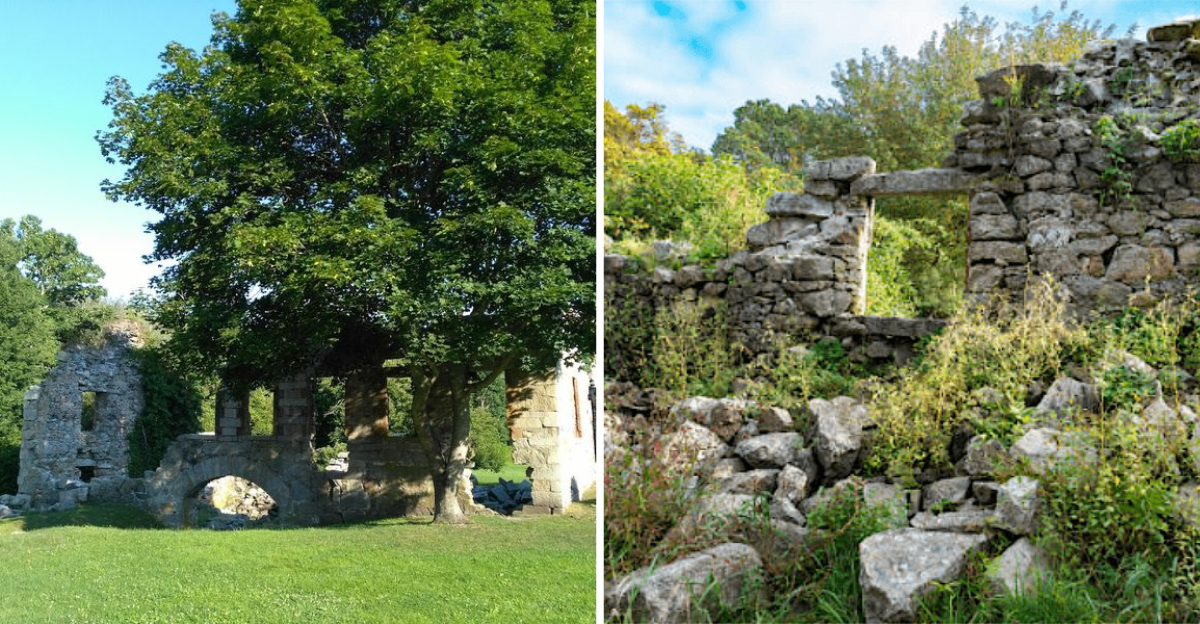
The stone walls stand in a field surrounded by trees that have grown up around them over the last century. During the day, the place is peaceful, almost pretty, with sunlight filtering through the leaves and birds singing from somewhere in the canopy.
People bring picnic baskets. Couples take photos. But as the sun starts to drop, something shifts.
The shadows get longer. The air gets colder.
And the feeling changes. Locals know this Massachusetts ruin has a reputation that does not start until the light fades.
Stories of strange sounds, unexplained figures, and a heaviness that settles on your chest. I walked the grounds at four in the afternoon and felt fine. I would not go back at dusk.
The History Behind the Crumbling Walls
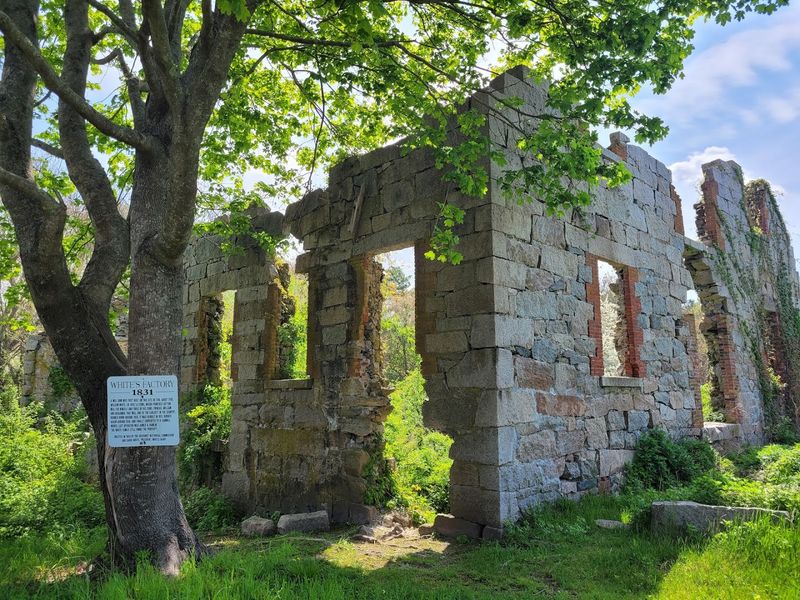
Most ruins you stumble across have a vague story attached to them, but White’s Factory has a specific, well-documented past that makes every cracked stone feel meaningful. William White Sr. built the first water-powered cotton mill on this very site around 1799, placing it among the earliest cotton-spinning operations in the United States.
That is not a small detail.
The mill changed hands, survived fires, got rebuilt, and eventually shifted its purpose to sawmill operations before it was finally abandoned. Each chapter left its mark on the structure.
You can see it in the way different sections of the wall use slightly different stonework, like a timeline written in granite and mortar.
Volunteers came back in 2008 to do restoration work on the ruins, which says a lot about how much the local community values this place. The Fairhaven Acushnet Land Preservation Trust now owns the property, keeping it as part of the broader Acushnet River Reserve.
Knowing that history while you walk around the site changes the experience completely. It stops feeling like a random old pile of rocks and starts feeling like something worth protecting.
What the Stone Walls Actually Look Like Up Close
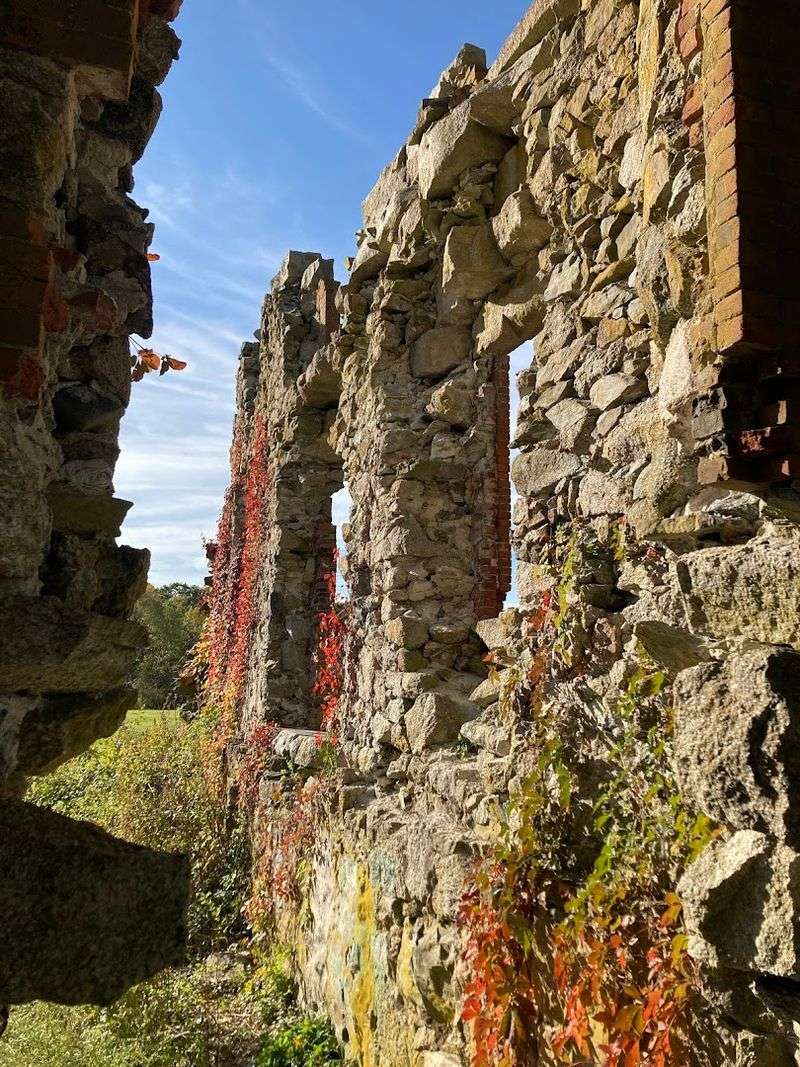
Photos of White’s Factory tend to look almost painterly, and that impression holds up when you actually arrive. The stonework is genuinely impressive for a structure that has been sitting here since the late 1700s.
Someone with real skill in stone construction built these walls, and the craftsmanship is still visible despite everything the years have thrown at them.
The finished, finely fitted stone facades with brick trim details are the kind of thing you do not expect to find just off a quiet Massachusetts road. There is a great arch that once directed water toward the mill wheel, and even though the wheel itself is long gone, the arch remains.
It frames the sky behind it like a natural picture window, which is exactly why photographers keep coming back.
Elements of the old millrace, the channel that carried water to power the wheel, are still traceable if you look carefully along the ground. The texture of the walls shifts from rough rubble fill to smooth-faced stone depending on which section you are examining.
Up close, it reads like a textbook on early American industrial construction, except far more interesting than any textbook.
Why Photographers Are Obsessed With This Spot
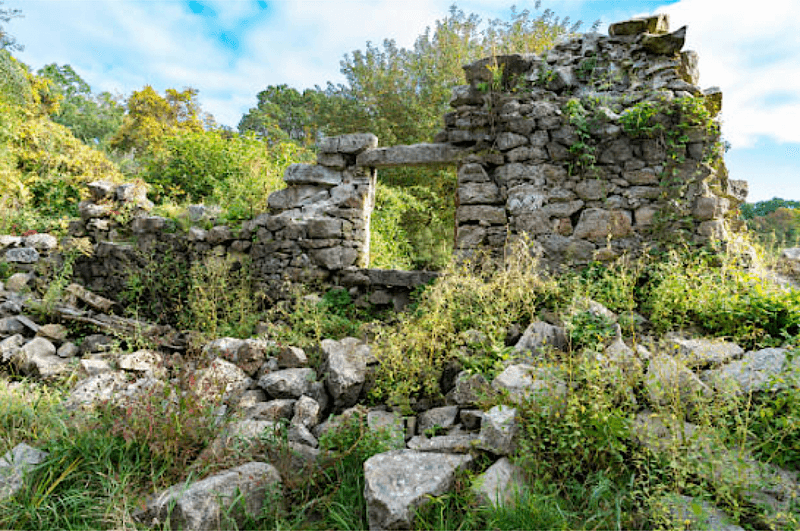
There is a reason photographers keep tagging this location in their portfolios. The combination of rough stone, natural greenery, and river proximity creates a backdrop that is almost impossible to replicate in a studio setting.
Wedding portraits, maternity shoots, family sessions, and even solo creative projects all find something useful here.
The stone arch in particular acts as a natural frame. Position a subject inside it and the resulting image has depth, texture, and a moody historical atmosphere that takes serious effort to manufacture artificially.
The soft, filtered light that comes through the surrounding trees during morning and midday hours adds another layer of warmth to every shot.
Even casual visitors who just pull over with a phone camera end up with images that look deliberate and considered. The ruins do most of the creative heavy lifting.
That said, the site is small, so timing matters. Arriving early on a weekday almost guarantees you have the whole place to yourself, which makes a real difference when you are trying to capture something quiet and personal.
The picnic area nearby offers a secondary backdrop that works well for more relaxed, candid-style photography too.
The Daytime Experience: What to Expect When You Visit
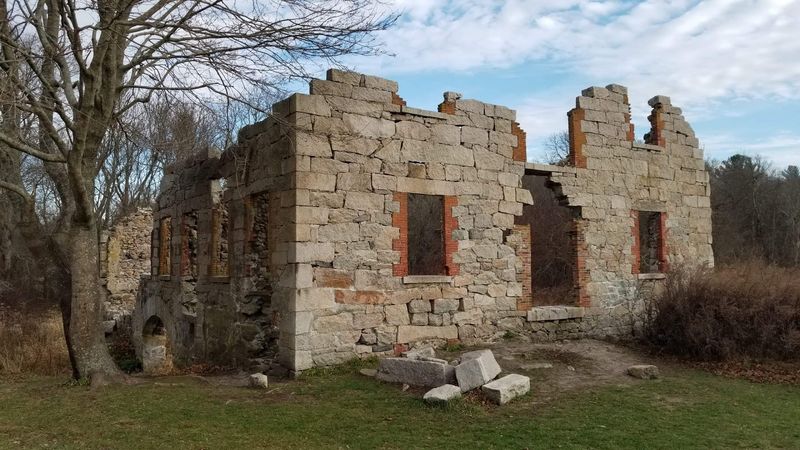
Arriving during daylight hours is genuinely the best version of this visit. The site sits along the Acushnet River, and the combination of moving water, open meadow, and old stone creates an atmosphere that feels calm and unhurried.
It is the kind of place where you naturally slow down without anyone telling you to.
There are picnic tables on the property, which makes this a solid choice for a relaxed outdoor lunch stop. The conserved land includes access to adjacent meadows and woodland paths, so a short walk through the surrounding area is easy to add onto your visit.
Nothing is very long or strenuous, which makes it accessible for most people.
The ruins themselves are compact, so you will not need hours to take everything in. Most visitors spend somewhere between thirty minutes and an hour, depending on how much time they spend photographing or just sitting and absorbing the atmosphere.
Bring water, wear shoes you do not mind getting a bit muddy near the river edge, and keep a loose schedule. The site is technically open around the clock, but the daytime experience is where everything looks its best and feels most comfortable.
The Safety Warnings You Should Actually Take Seriously
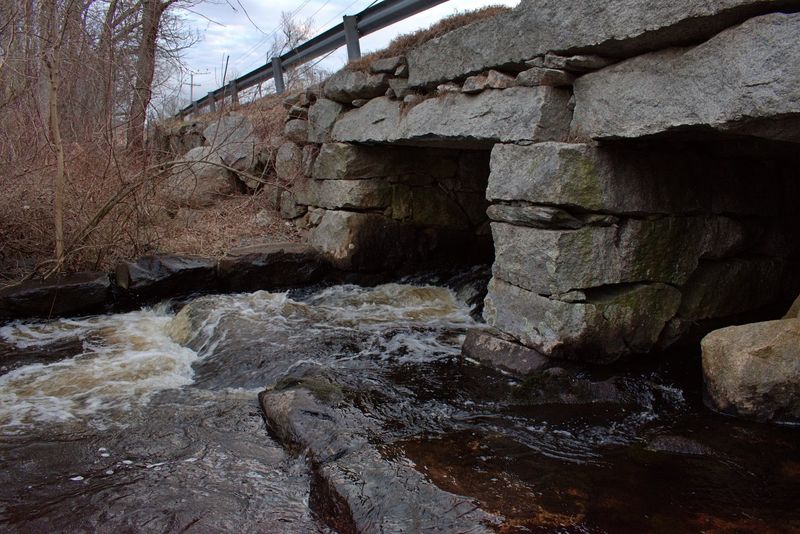
The beauty of this place comes with a real catch. Those ancient stone walls are not supported by anything modern, and the structural integrity of certain sections is genuinely uncertain.
Climbing on them, pushing against them, or treating them like playground equipment is the kind of decision that ends badly. The risk is not theoretical.
The inner sections of the old mill are particularly unstable. There is also an old water channel on the property that is easy to miss until you are right on top of it, which makes careful footing important near the ruins.
The site is maintained as a preserved historic property, not a fully managed tourist attraction with safety railings and clear pathways everywhere.
Keeping a respectful distance from the walls themselves is the sensible approach. You can get close enough to appreciate the craftsmanship and take great photos without putting yourself in a risky position.
Children especially need supervision near the structural elements and near the river edge. The preservation trust works to keep this place accessible, and visitors who treat it with care help ensure it stays that way.
Common sense goes a long way here.
What Happens After Sunset: Why the Timing Warning Is Real
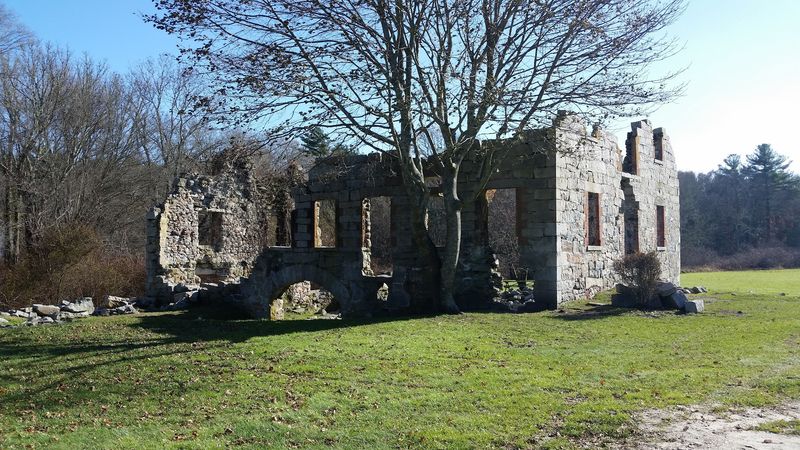
Once the sun drops below the tree line, the character of this place shifts noticeably. The same shadows that made the daytime light so atmospheric become something less welcoming after dark.
The surrounding woodland closes in visually, and the sounds from the river and the trees take on a different quality entirely.
Coyotes are active in the area, and there are firsthand accounts from visitors who arrived at night and heard howling coming from multiple directions simultaneously, growing closer over a matter of minutes. That is not the kind of wildlife encounter most people are prepared for on a casual evening outing.
The smart response is to be back in your car well before that becomes a possibility.
Beyond the wildlife, the structural hazards of the ruins become genuinely dangerous without adequate light. The uneven ground, the hidden water channel, and the unstable wall sections are all hard enough to navigate carefully during the day.
At night, without proper equipment and preparation, the risk multiplies significantly. The site is technically open around the clock, but that does not mean visiting after dark is a good idea.
The daytime version of White’s Factory is the one worth experiencing.
How to Make the Most of Your Visit to White’s Factory
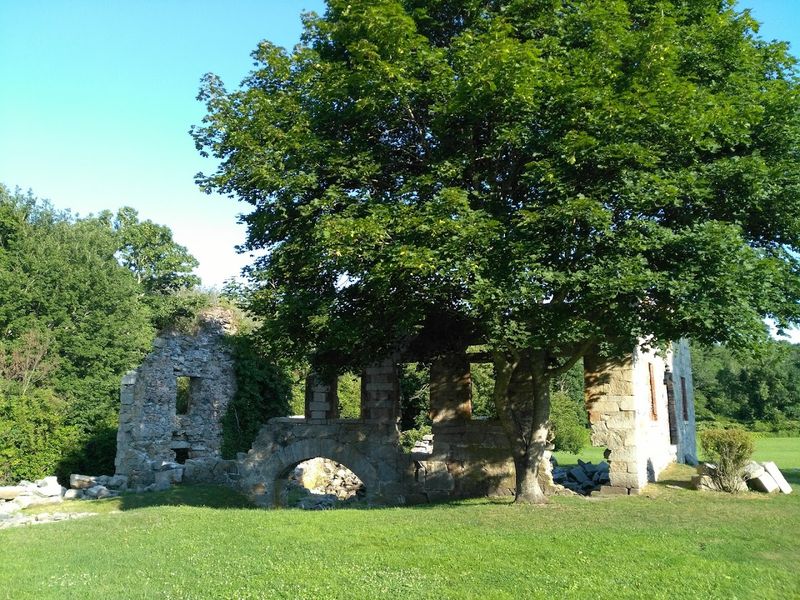
Getting the most out of this spot comes down to a few practical choices made before you even leave home. Morning visits during the week offer the best light and the least foot traffic.
The golden-hour glow that hits the stone walls in the early hours makes everything look richer and more textured, which is especially useful if photography is part of your plan.
Pack a simple lunch and take advantage of the picnic tables on the property. Combining a meal with a short walk through the adjacent meadow turns a quick stop into a proper half-morning outing.
The surrounding Acushnet River Reserve land adds natural context to the mill ruins, giving you a sense of the full landscape that once supported this industrial site.
Check conditions before visiting, since the road access has occasionally been restricted during maintenance or work periods. The site is managed by the Fairhaven Acushnet Land Preservation Trust, and their website at savebuzzardsbay.org carries current information about access.
Staying on marked paths, keeping away from the unstable wall sections, and leaving before late afternoon will give you the full, rewarding version of this visit.
Address: Hamlin St, Acushnet, Massahucetts 02743
