You are walking through the forest and suddenly there it is. A stone fireplace standing alone in the middle of the trees, no walls around it, no roof overhead.
Just a chimney and a hearth, built by the Civilian Conservation Corps in the 1930s and left behind when the rest of the camp disappeared. This Oregon trail follows the route those young men took nearly a century ago, and you can still find their handiwork scattered through the woods. Some fireplaces are easy to spot, right next to the path.
Others require a little wandering, tucked into clearings where the workers once ate their meals and slept under the stars. I stopped at one for lunch, sitting on a mossy rock, imagining what it must have felt like to build something with your own hands during the hardest years the country ever saw.
The CCC and What They Left Behind on Boulder Creek Trail
Few organizations reshaped the American outdoors the way the Civilian Conservation Corps did. Established in 1933 under President Franklin D.
Roosevelt’s New Deal, the CCC put hundreds of thousands of young, unemployed men to work across the country’s forests, parks, and wild places. In the Willamette National Forest around Sweet Home, CCC Company 2097 was especially busy, building over 80 miles of trails along with fire lookouts, campgrounds, and telephone lines.
The stone fireplaces they built were not just practical. They were crafted with real care, stacked by hand using local rock, and designed to last.
Many of them have lasted, quietly sitting in forest clearings for nearly 90 years now. Boulder Creek Trail passes through land where the CCC worked extensively, and the remnants of their labor are still discoverable if you pay attention.
There is something deeply moving about running your hand along one of those old stone structures and knowing the story behind it. These were young men, many of them teenagers, doing hard physical work in exchange for food, shelter, and a small wage.
Their legacy is literally written in stone all through these Oregon woods.
Getting to Boulder Creek Trail from Sweet Home
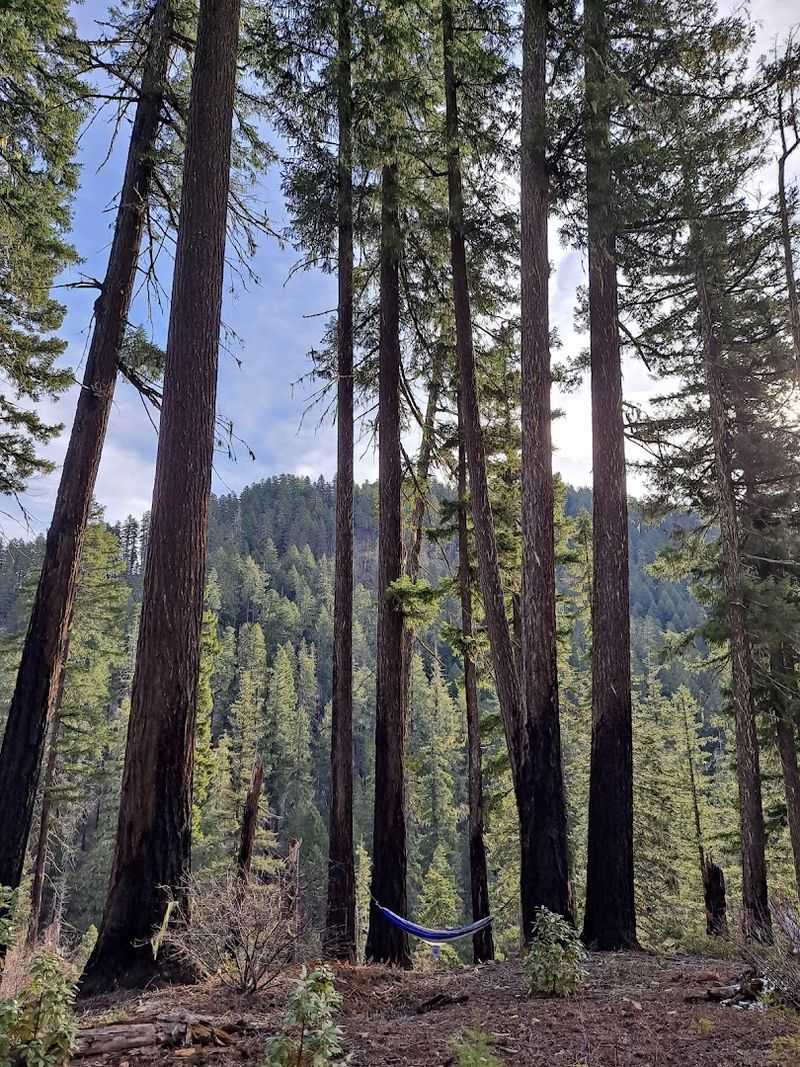
Sweet Home sits in the Willamette Valley at the foot of the Cascade foothills, and it serves as a natural launching point for exploring the national forest to the east. Highway 20 heads out of town and climbs gradually into the trees, opening up into some genuinely spectacular mountain scenery.
The drive itself is worth the trip before you even pull on your hiking boots.
Boulder Creek Trail is accessible via forest roads off Highway 20, and the route takes you deeper into the Willamette National Forest with every mile. Cell service gets spotty fast, so downloading an offline map before you leave town is a smart move.
The trailhead parking area is modest and quiet, the kind of spot that tells you right away you are not heading into a crowded tourist attraction.
Sweet Home has a small-town warmth that is easy to appreciate. Stop for supplies before you head out, because once you are in the forest, you are committed.
The town sits about an hour east of Albany and two hours from Portland, making it a very doable weekend destination for hikers across the Pacific Northwest who want something off the beaten path.
What the Trail Itself Actually Feels Like to Hike
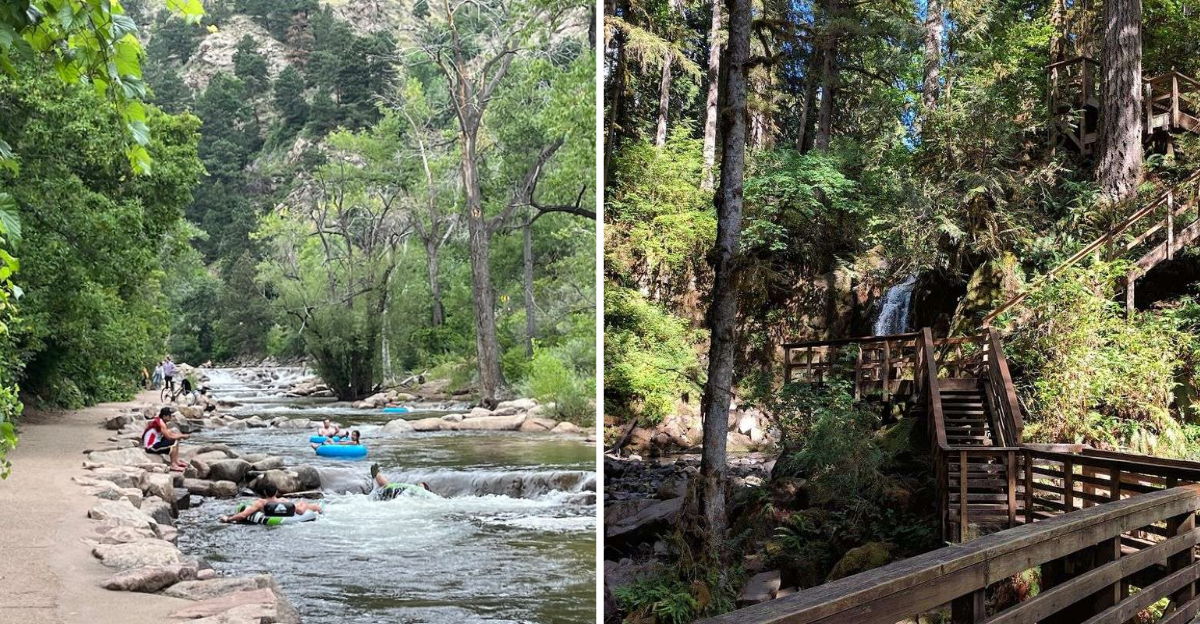
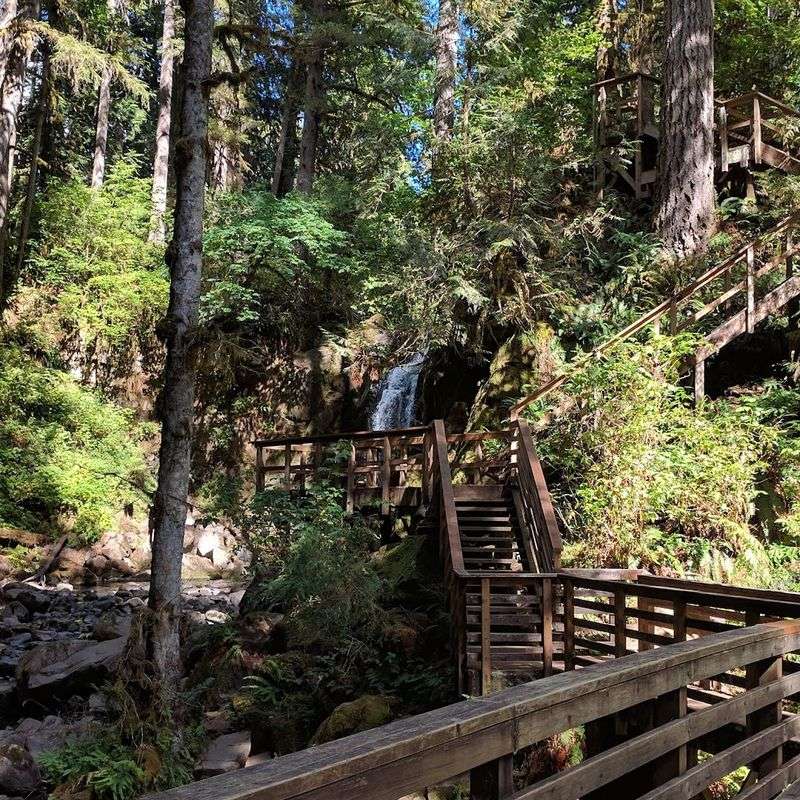
Boulder Creek moves alongside the trail for much of the route, and that sound alone makes the whole experience feel different from a regular forest walk. The water tumbles over rocks and pools in quiet eddies, and on warm days the creek offers a natural soundtrack that keeps the hike feeling alive.
Ferns crowd the banks and the canopy overhead is thick enough to filter sunlight into something soft and green.
The trail is not particularly technical, which makes it accessible to a wide range of hikers. Some sections are rocky underfoot and a few spots require a bit of careful footing, especially after rain.
That said, you do not need to be an experienced backcountry hiker to enjoy this one.
What makes Boulder Creek Trail special is its texture. It rewards slow hikers who stop often, look around, and notice things.
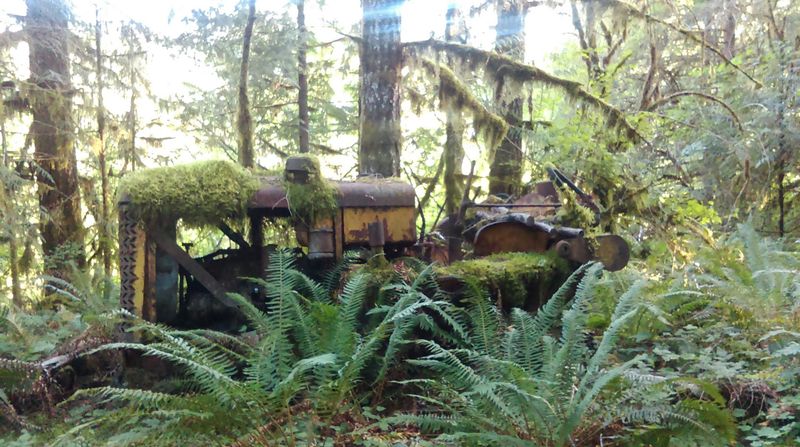
Old stone foundations appear in unexpected places. Moss-covered logs span the creek at odd angles.
The forest feels genuinely old here, the kind of old that takes centuries to build and minutes to love. I found myself stopping every few hundred feet just to take it all in, which is honestly the right pace for a trail like this one.
Finding the Hidden Stone Fireplaces in the Woods
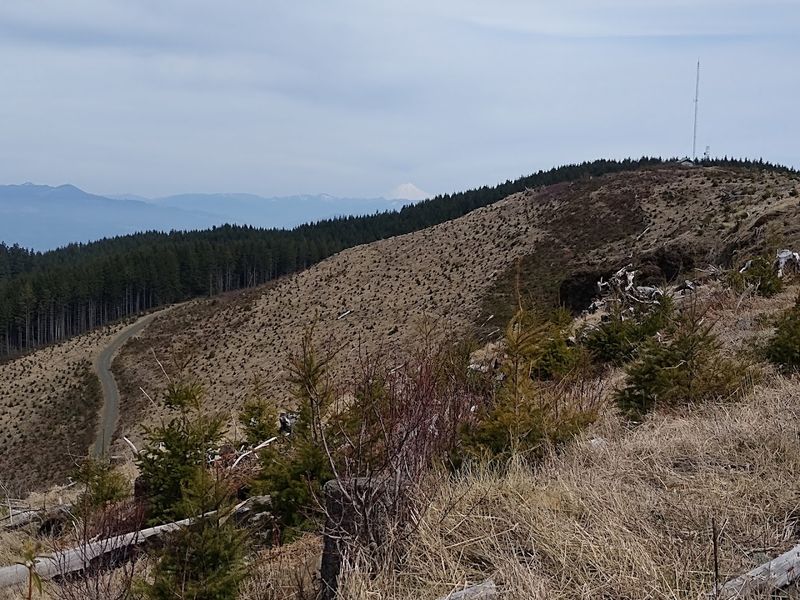
The stone fireplaces are not marked on any map I have found. That is actually part of what makes discovering them feel so rewarding.
They appear as you round a bend or push slightly off the main path into a small clearing, and when you see one, the recognition is immediate. These are not natural rock formations.
They are deliberately stacked, carefully mortared structures built by human hands a very long time ago.
The Longbow Organization Camp, located about 22 miles east of Sweet Home off Highway 20, is one confirmed CCC site in the area that features stone fireplaces in its alpine shelters. The style of construction found there mirrors what you can encounter along the surrounding forest trails.
It gives you a reference point for what to look for when you are out on the trail.
Spotting one of these fireplaces mid-hike shifts something in how you see the whole forest. Suddenly the trees are not just trees.
They are the same trees that were saplings when those young CCC men stopped to eat lunch beside a fire they built themselves. The forest holds memory in a way that is hard to put into words but very easy to feel.
The Longbow Organization Camp and Its CCC Roots
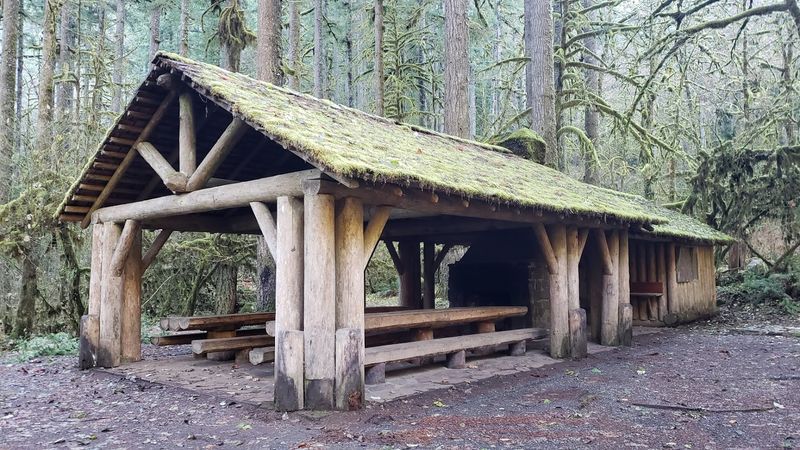
Longbow Organization Camp is one of the most tangible pieces of CCC history in the Sweet Home area, and it deserves a visit either before or after your hike on Boulder Creek Trail. The camp sits roughly 22 miles east of Sweet Home along Highway 20, tucked into the Willamette National Forest in a way that feels deliberately hidden from the modern world.
Six alpine shelters stand on the property, each one equipped with a stone fireplace built by CCC workers in the 1930s.
The covered dining hall at Longbow also features a fireplace, and the whole camp has a rustic, handmade quality that feels genuinely rare today. These are not reconstructions or replicas.
The original stonework is right there, weathered and solid, exactly where those young men placed it decades ago.
Visiting Longbow adds meaningful context to a hike along Boulder Creek Trail. Once you have seen the confirmed CCC construction up close, you start to recognize the same style of craftsmanship in the stone remnants scattered through the surrounding forest.
It connects the dots between history and landscape in a way that makes both feel more vivid and real. The camp is a quiet but powerful piece of Oregon’s outdoor heritage.
Wildlife and Nature Along Boulder Creek
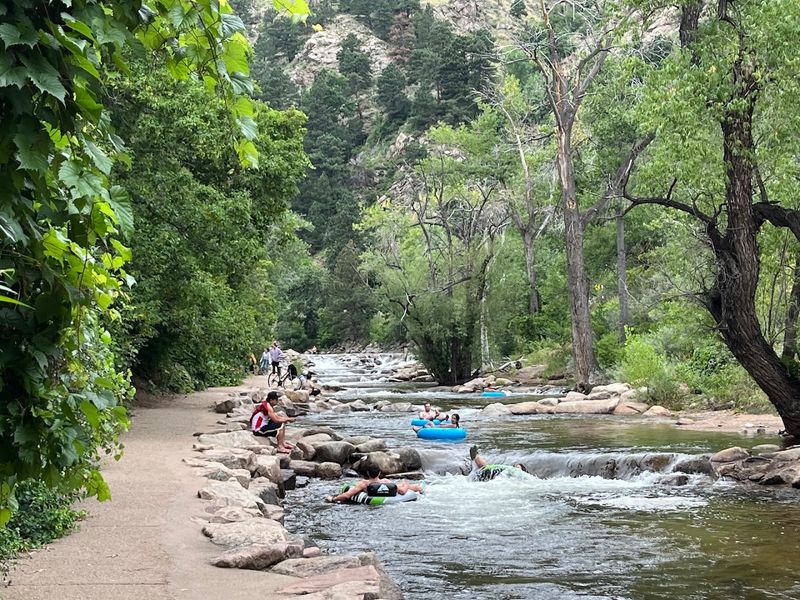
The creek corridor along Boulder Creek Trail supports a surprising range of wildlife, and if you move quietly, you have a real chance of seeing some of it. Osprey and great blue herons patrol the water.
Deer slip through the understory in the early morning hours. The forest here is classic Pacific Northwest old-growth habitat, which means it functions as a layered ecosystem where every log and rock has something living under it.
Wildflowers push through the forest floor in spring, and the whole trail takes on a different mood depending on the season. Fall brings golden light and the smell of wet leaves.
Winter strips the canopy and reveals the bones of the forest in a stark, beautiful way. Each visit genuinely feels like a different place.
There is a particular kind of quiet that settles over the trail in the middle of the day when the birds pause and the creek seems to lower its volume. That silence is not empty.
It is full of small sounds you would miss anywhere else: the drip of water off a fern tip, the distant knock of a woodpecker, the rustle of something small moving through the undergrowth. Boulder Creek Trail gives you all of that, freely and without fanfare.
Tips for Visiting Boulder Creek Trail and the Sweet Home Area
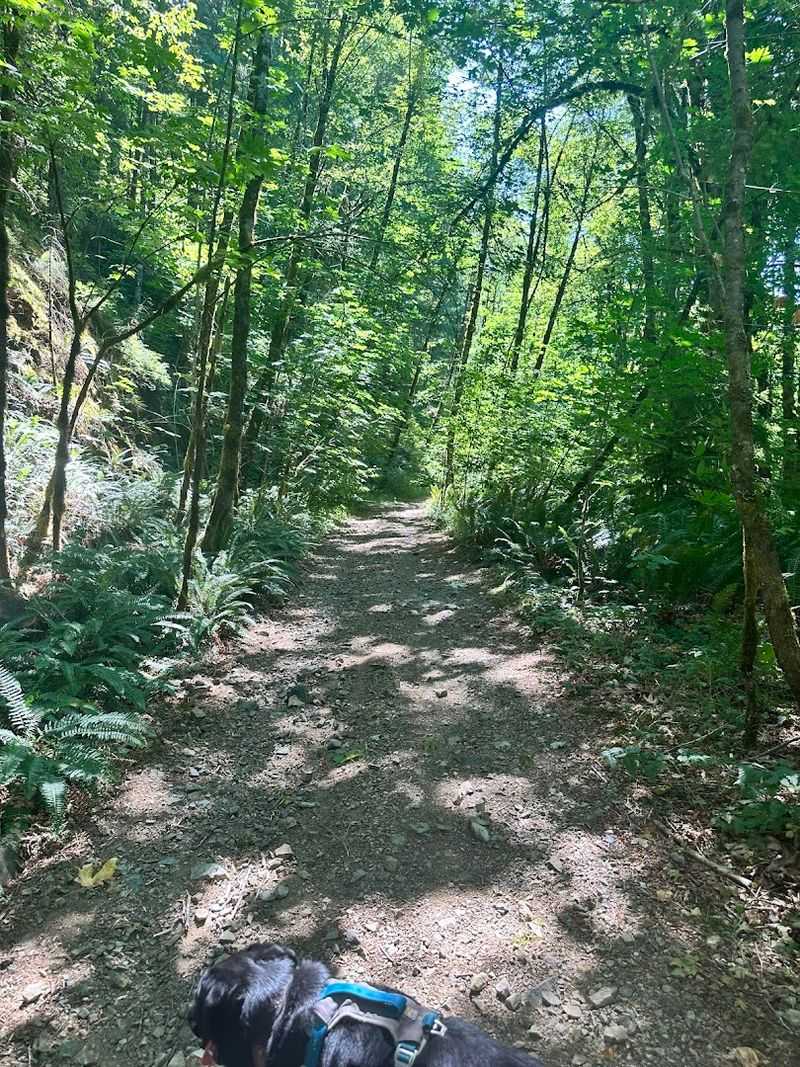
A few practical things will make your trip to Boulder Creek Trail significantly better. Go in spring or early fall if you can.
Spring brings high water in the creek and lush green growth everywhere. Early fall offers cooler temperatures and fewer bugs, which is not a small consideration in a Pacific Northwest forest.
Summer weekends can bring more visitors, though this trail never gets truly crowded.
Wear waterproof boots. The trail crosses wet areas and the forest floor stays damp even on dry days.
Bring more water than you think you need, and pack a light rain layer regardless of the forecast. Weather in the Cascades changes faster than any weather app will tell you.
Download your trail map before you leave cell service range. The forest roads leading to the trailhead are not always clearly signed, and getting turned around on a forest road is a frustrating way to spend an afternoon.
A printed topo map is never a bad idea either. Once you are on the trail, let yourself move slowly.
The CCC workers who built these paths were not in a hurry, and neither should you be. The best discoveries on this trail happen to the people who stop, look around, and give the forest a chance to show them something.
