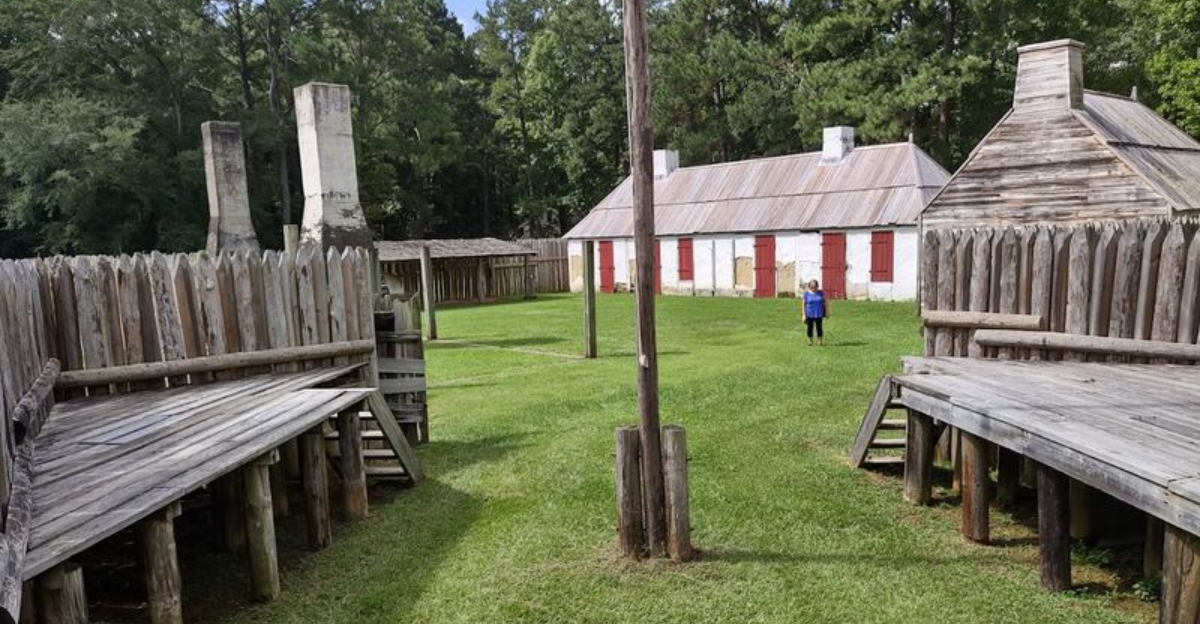
Fort Toulouse-Jackson Park near Wetumpka, Alabama is one of those rare places where history feels alive and real. Located at the meeting point of two major rivers, this National Historic Landmark preserves thousands of years of human history in a single remarkable setting.
Ancient Native American ceremonial mounds, the reconstructed remains of a French colonial fort, and later American military history all come together to tell the story of the region’s past.
Walking the grounds feels like moving through different eras, with scenic trails, open green spaces, and historic structures offering something new around every turn.
The peaceful riverside location only adds to the experience, making it easy to spend hours exploring both the natural beauty and the rich heritage. If you enjoy history, archaeology, or unique outdoor destinations, this is a place that leaves a lasting impression.
Plan a Trip Around Alabama Frontier Days in November
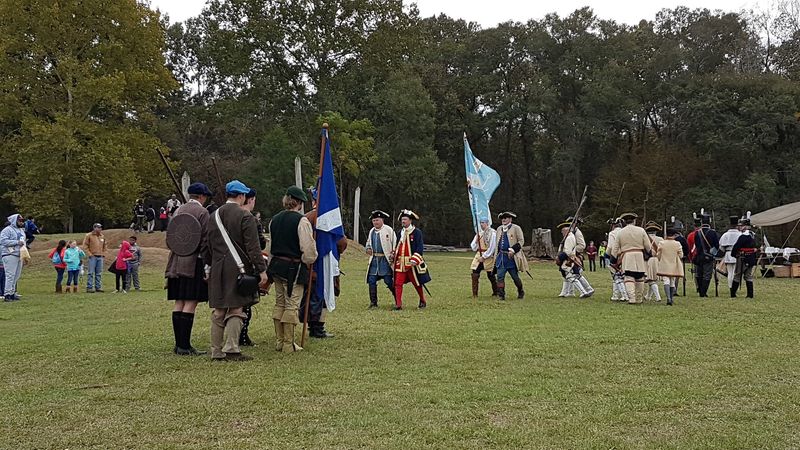
There is one weekend every November when Fort Toulouse-Jackson transforms into something truly unforgettable. Alabama Frontier Days is one of the largest living history festivals in the entire state, drawing reenactors, craftspeople, and history lovers from across the region.
The energy on the grounds during this event is completely different from a regular park visit.
Reenactors portray French colonial soldiers, Creek Indian community members, and early American frontier settlers all in the same space. You can watch musket demonstrations, see a working outdoor bread-baking oven in action, and browse vendors selling period-accurate goods.
The Indian village display during this event is especially detailed and carefully presented.
Families with kids find this event particularly engaging because everything is hands-on and visual. There is no need to read a plaque and imagine the rest.
The sights, sounds, and smells do the storytelling for you. Children who might normally tune out a history lesson tend to stay completely focused here.
The festival also features live music from the era, which adds an unexpected layer of atmosphere to the whole experience. Groups of reenactors spread across the grounds mean you are constantly discovering something new around every corner.
If you can only visit Fort Toulouse-Jackson once, timing your trip around Alabama Frontier Days is absolutely the way to go for a full and memorable experience.
Come See the Ancient Taskigi Mound Up Close
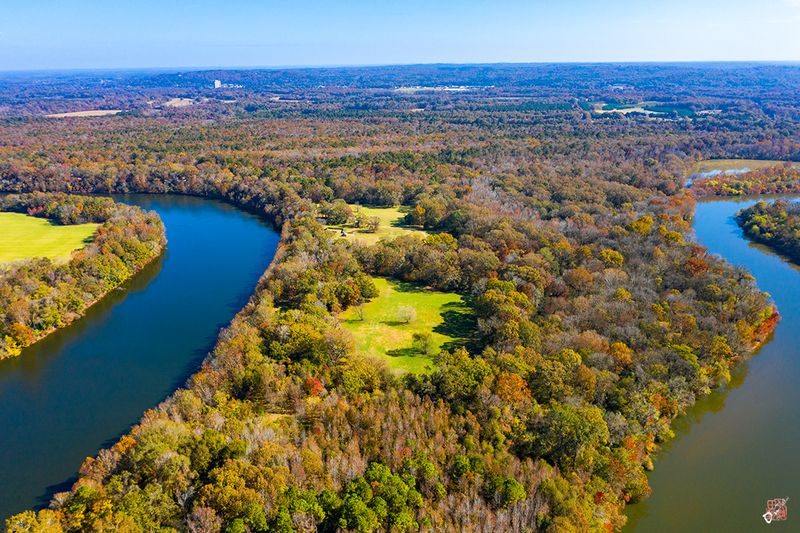
Long before French soldiers arrived, this land was already home to a thriving civilization. The Taskigi Mound is a 1,000-year-old Mississippian-era platform mound sitting right inside the park boundaries.
Standing near it gives you a quiet but powerful reminder that human history here goes far deeper than colonial forts and military treaties.
Mississippian cultures built these mounds as ceremonial and civic centers. Chiefs and community leaders would have stood on top of this mound looking out over the same river confluence you can see today.
The fact that it has survived for a thousand years and remains accessible to the public makes it one of the most significant features of the entire park.
Many visitors walk past the mound without fully absorbing what they are looking at. Taking a moment to stop, look around, and consider the scale of history represented here changes the experience completely.
This is not a replica or a reconstruction. It is the real thing, shaped by real hands over a thousand years ago.
The mound connects directly to the broader story of the park, where the original Fort Toulouse was built specifically because the Alibamu tribe invited French forces to settle nearby. Understanding that relationship makes the mound feel even more significant.
Visiting both the mound and the reconstructed fort together tells a much fuller story of this land than either one does on its own.
You Can Walk Inside a Rebuilt French Fort
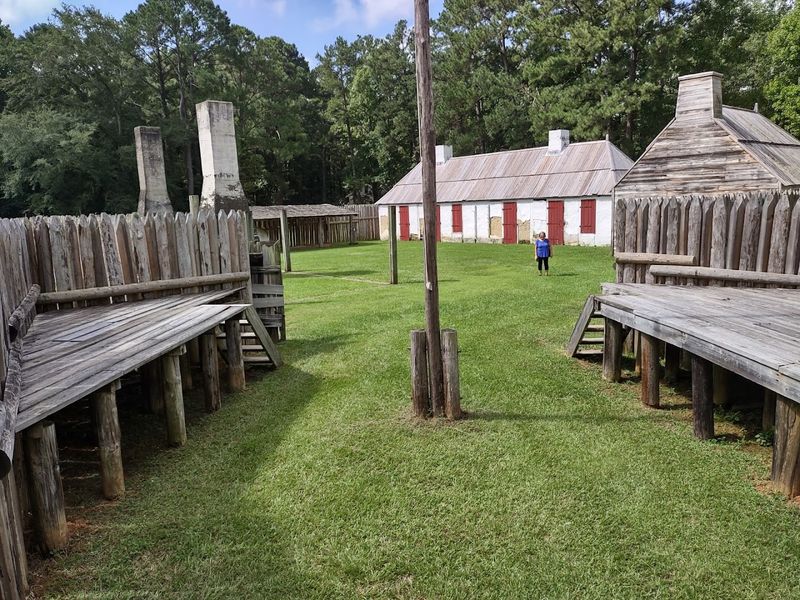
Most history lessons stay on a page, but Fort Toulouse-Jackson puts history right in front of you. The reconstructed 1751 French Fort Toulouse lets you walk through actual colonial military architecture.
Thick wooden palisade walls, period-accurate buildings, and open courtyards fill the space with a sense of what frontier life actually looked like.
French soldiers were stationed here to build alliances with the Creek Confederacy and push back against British expansion in the region. The fort was originally built in 1717 at the invitation of the Alibamu tribe, making it a rare example of cooperation between European settlers and Native Americans.
That backstory gives every corner of the reconstruction a deeper meaning.
Visiting this fort is not just about looking at old wood and stone. You get a real sense of how isolated and challenging life was for soldiers stationed hundreds of miles from home.
The layout shows you how space was used, how soldiers slept, and how they organized their days.
Fort Toulouse-Jackson Park is located at 2521 W Fort Toulouse Rd, Wetumpka, AL 36093. Admission is very affordable, running just $2 per adult and $1 per child.
Picking up a map at the visitor center before you explore makes the whole experience much smoother and more rewarding for everyone in your group.
Skip Nothing at the Partially Restored Fort Jackson
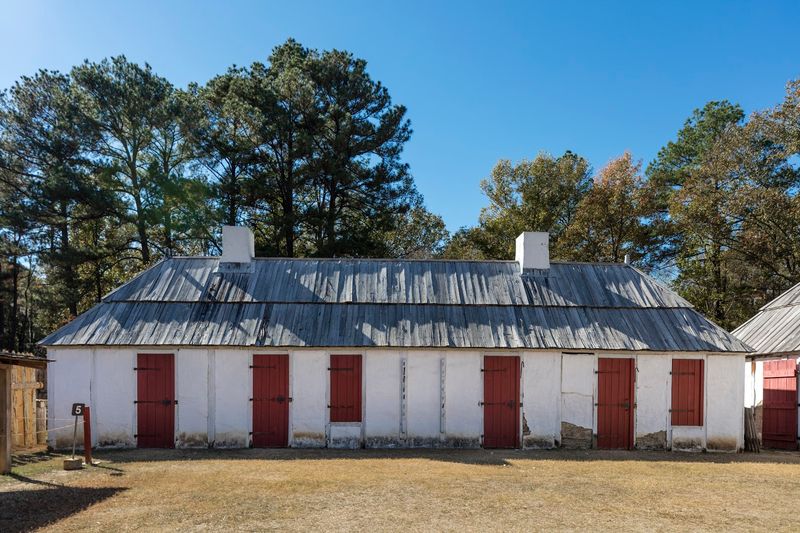
Not every historic site lets you stand inside ruins that changed the direction of a nation. Fort Jackson, the partially restored 1814 American fortification at the back of the park, is one of those places.
Built during the War of 1812, this fort became the site of one of the most consequential land agreements in early American history.
The Treaty of Fort Jackson was signed here in August 1814. That treaty resulted in the forced cession of over 23 million acres of Creek land to the United States government.
That land would eventually become a large portion of present-day Alabama. Walking through these earthen walls while knowing that makes the ground feel heavy with meaning.
The ruins have a different atmosphere than the fully reconstructed French fort. There is something raw and honest about seeing walls that have not been polished for visitors.
The partial restoration keeps just enough structure visible to help you understand the layout while letting the natural surroundings reclaim the rest.
History students, Civil War and War of 1812 enthusiasts, and curious travelers all find something worth their time at Fort Jackson. The location near the river adds a natural beauty to the experience as well.
Tall trees shade the path leading to the fort, and the sound of the nearby water makes the walk feel peaceful even as the history around you carries significant weight.
Try the William Bartram Nature Trail for Scenic Walks
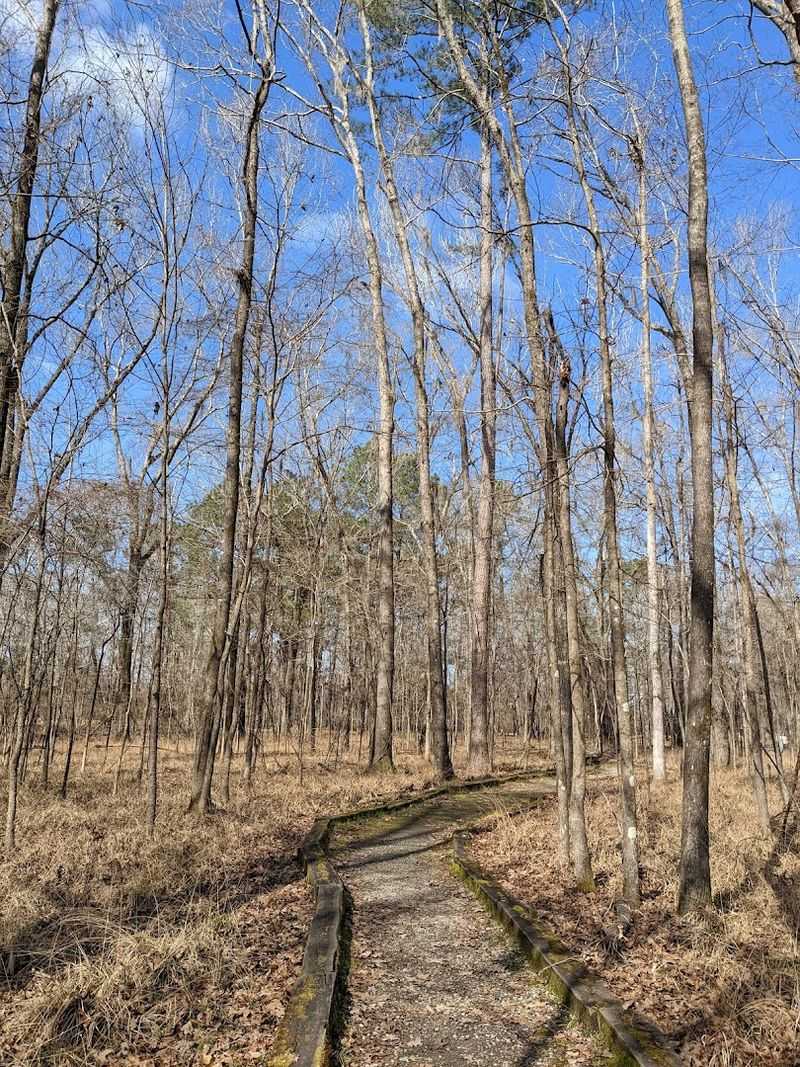
Not every reason to visit Fort Toulouse-Jackson is about forts and battles. The William Bartram Nature Trail offers a completely different kind of reward.
Named after the famous 18th-century naturalist who explored the American Southeast, this trail winds through diverse vegetation and opens up views that feel far removed from everyday life.
Bird watchers especially love this trail. The land around the confluence of the Coosa and Tallapoosa rivers supports a wide variety of bird species throughout the year.
Early morning visits tend to yield the best sightings. Bring binoculars if you have them, because you will likely want them before the walk is over.
The trail also connects you to the broader landscape that shaped the history of this site. Bartram himself traveled through this region in the 1770s and documented the natural world here in detail.
Walking the trail that carries his name gives you a small taste of what he experienced before roads and development changed the land.
A full loop through the park, including a stop at the nature trail, takes roughly 1.5 to 2 hours at a relaxed pace and covers about 2 miles. Picking up a map from the visitor center helps you plan your route and identify each stop along the way.
The trail is well worth including in any visit, especially for families who want a break from the historical exhibits while staying connected to the park’s natural setting.
Do Not Miss the Creek Indian House Replicas
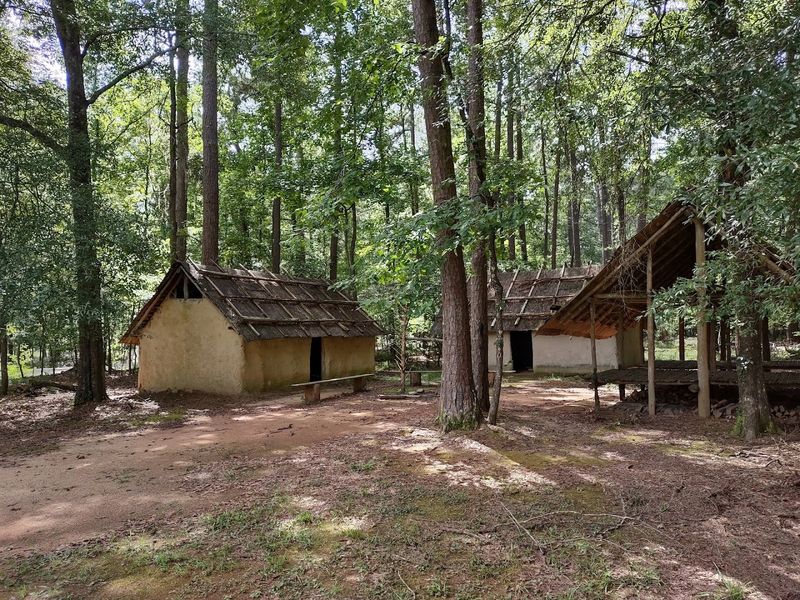
The Creek Nation played a central role in every chapter of this park’s history, and the replica Creek Indian houses make that clear in a way that text panels simply cannot.
These carefully constructed dwellings show visitors what daily life looked like for the Alibamu tribe and their allies who lived alongside this river long before any European fort was built here.
The original Fort Toulouse was established in 1717 specifically because the Alibamu tribe extended an invitation to French forces. That relationship was not one of conquest but of alliance, at least in its early stages.
Understanding that shifts the entire lens through which you view the French fort and the mound and the treaty site nearby.
Walking through the replica village during events like Alabama Frontier Days or the French and Indian War Encampment in April brings an extra layer of life to these structures.
Reenactors demonstrate traditional crafts, food preparation methods, and community practices that help connect modern visitors to a way of life that was deeply rooted in this specific landscape.
Even outside of event weekends, the structures are worth exploring on their own. The construction details reveal a sophisticated understanding of the local environment, including how materials were sourced, how buildings were oriented, and how communities organized shared space.
This part of the park is often underappreciated but consistently surprises visitors who take the time to look closely and ask questions.
Make Time for the French and Indian War Encampment in April
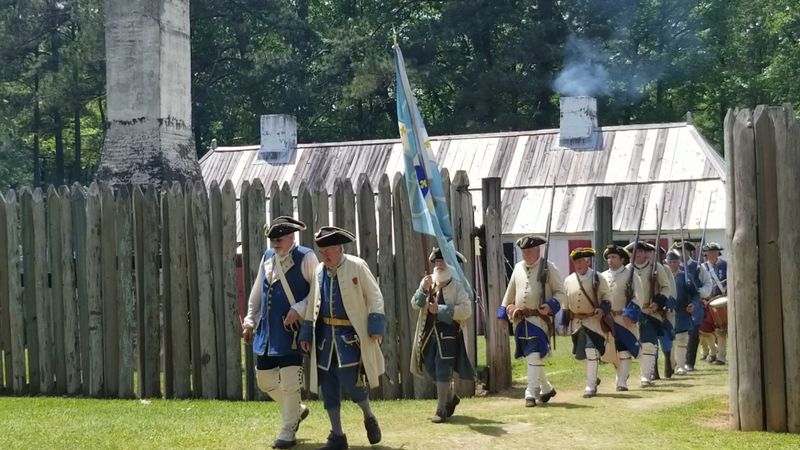
If November feels too far away, the French and Indian War Encampment held every April gives you another chance to experience Fort Toulouse-Jackson at its most immersive.
This annual event focuses specifically on the mid-18th century conflict that shaped the entire continent, and the reenactors here bring a level of detail that is genuinely impressive.
Musket and cannon demonstrations are crowd favorites during this encampment. The sound alone is something you feel in your chest, and it makes the scale of 18th-century warfare suddenly very real.
Reenactors are knowledgeable and happy to explain the history behind what they are demonstrating, so do not hesitate to ask questions while you watch.
The reproduction barracks inside the French fort fill with activity during this event. Soldiers in period uniforms move through the fort with purpose, and the overall effect is closer to a film set than a typical museum visit.
That level of commitment from participants is what makes these events stand out from other historical sites in Alabama.
Monthly living history programs also run throughout the year at the park, featuring reenactors portraying French colonial soldiers and War of 1812 fighters. These smaller programs are less crowded than the big annual festivals and offer a more personal experience with the reenactors.
Whether you visit during a major event or a quieter monthly program, the park consistently delivers something worth your time and the very reasonable admission price.
