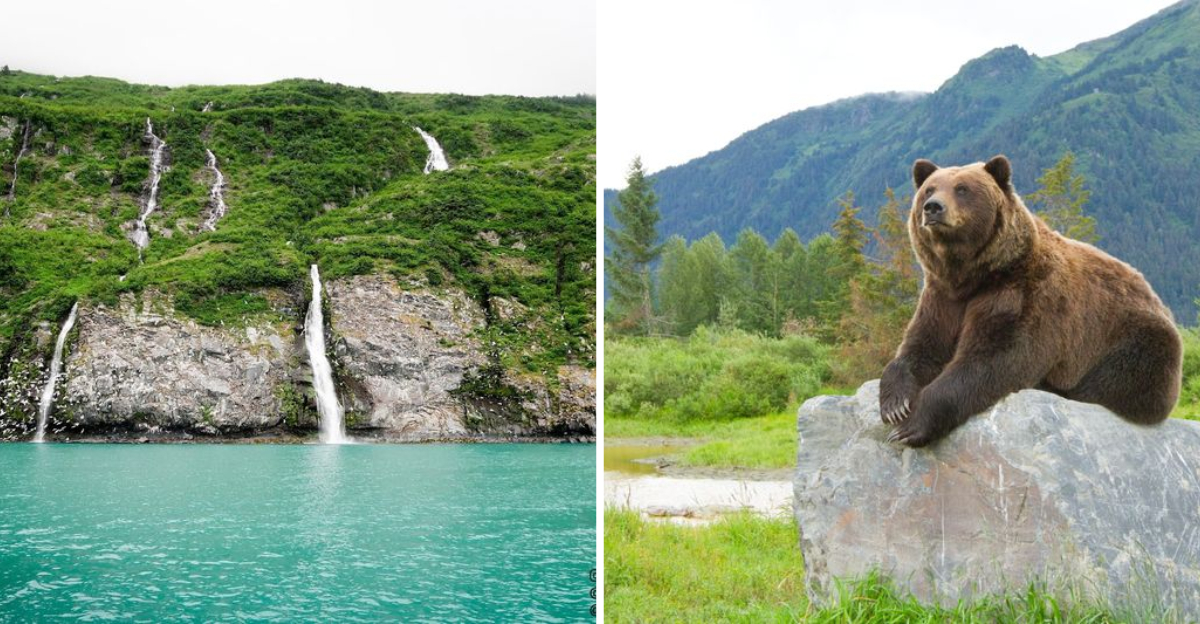
2.5 miles of solid rock, a tunnel carved through a mountain, and on the other side, a town that feels like it belongs to another world. I thought someone was exaggerating when I first heard about it.
Then I drove through the tunnel myself. Emerging on the other side, surrounded by glaciers, waterfalls, and peaks pressing in from every direction, I realized this was one of the strangest, most fascinating places in Alaska. Some towns you visit and forget.
This one stays with you.
The Anton Anderson Memorial Tunnel: A Mountain You Actually Drive Through
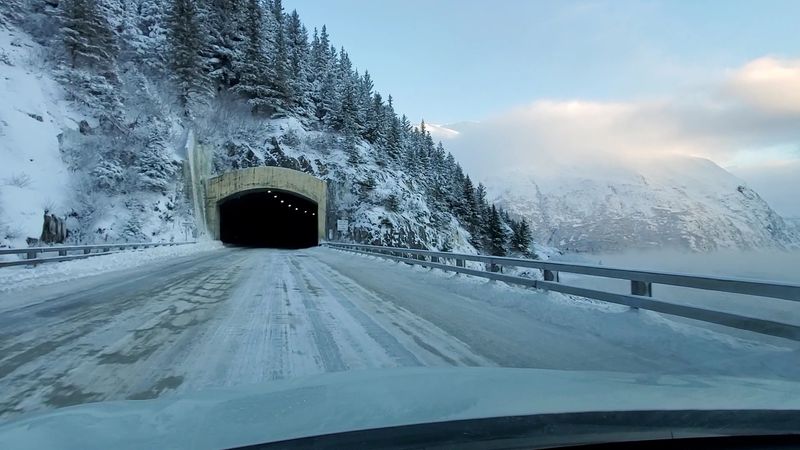
There is something genuinely surreal about queuing up in your car, watching a traffic light, and then rolling into the belly of a mountain. The Anton Anderson Memorial Tunnel is not just a quirky detail about Whittier.
It is the only road in, and that single fact shapes everything about how this town feels and functions.
Stretching 2.5 miles through Maynard Mountain, this tunnel holds the title of the longest combined vehicle and railroad tunnel in North America. Cars and trains share the same single lane, which means traffic alternates on a strict schedule.
In summer, vehicles heading into Whittier typically go on the half-hour, and those leaving go on the hour.
The tunnel was originally built during World War II as a military railroad passage. It was not opened to public vehicles until the year 2000, after a major conversion project.
Inside, the air feels cool and slightly damp, and the walls are rough-hewn rock. Emergency safe houses line the route, and powerful jet turbine ventilation systems keep the air moving.
Coming out the other side, blinking into the gray Alaskan light with mountains rising around you, genuinely feels like arriving somewhere secret.
Begich Towers: The Building That Is Basically the Whole Town
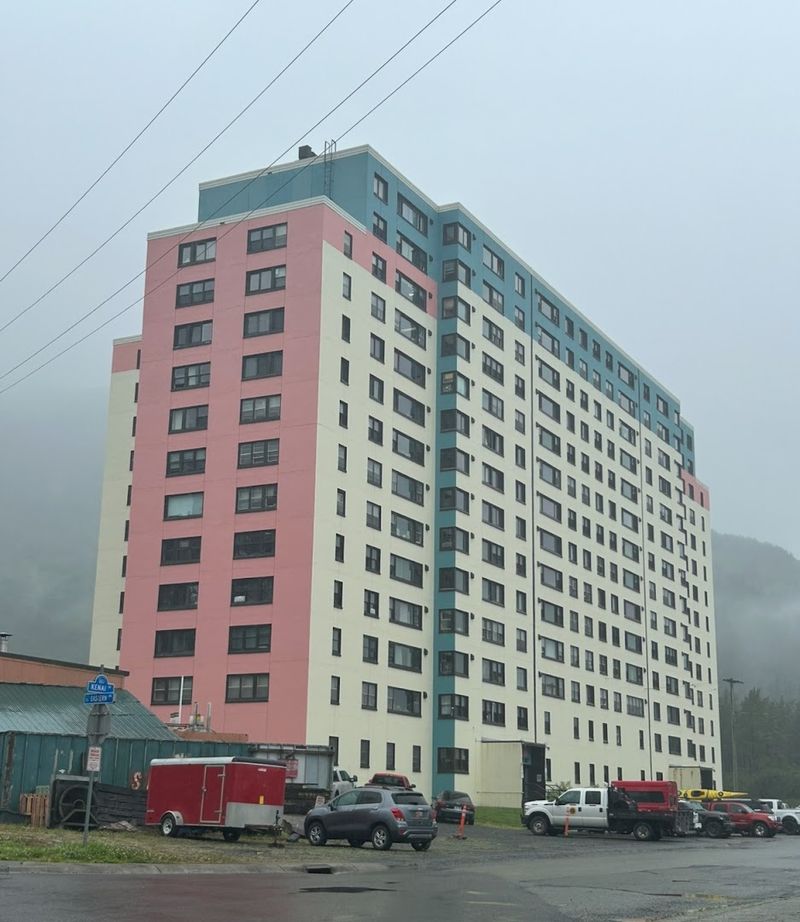
Imagine living in a building where your neighbors, your mail, your groceries, and your kids’ school are all under the same roof. That is not a hypothetical for Whittier residents.
It is just Tuesday.
Begich Towers is a 14-story concrete building that houses the majority of Whittier’s roughly 270 to 300 residents. Originally built as military barracks during World War II, it was later converted into residential apartments and community spaces.
Today, it contains a post office, a small grocery store, a library, and various other essential services. The local school is connected to the building through an underground tunnel, so kids never have to brave the fierce Alaskan weather just to get to class.
This setup earned Whittier the nickname “the town under one roof,” and it is easy to see why. The building has a certain weathered charm that matches the rugged landscape around it.
It is not glamorous, but it is practical in the most Alaskan way possible. Visiting as an outsider, you feel a strange mix of admiration and curiosity.
The community that has formed inside those concrete walls is tight-knit in a way that most neighborhoods never manage to achieve.
Military Secrets and WWII History Hiding in Plain Sight
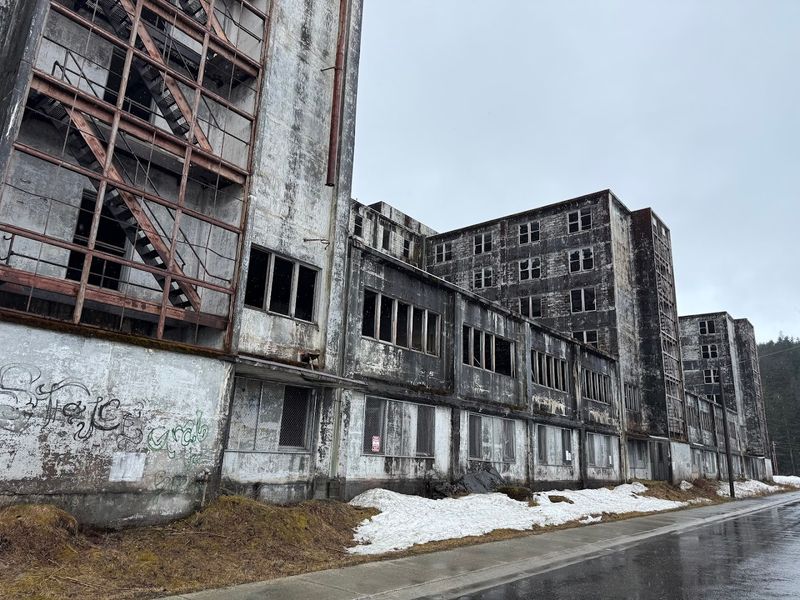
Whittier did not grow up as a fishing village or a trading post. It was born as a secret.
During World War II, the U.S. military chose this remote location specifically because it was hard to find, nestled between towering mountains and frequently hidden beneath a thick blanket of clouds.
The deep-water port here never freezes, making it strategically valuable year-round. Troops, supplies, and equipment moved through Whittier quietly, away from enemy detection.
The military presence shaped the town’s entire layout, which is why so much of what you see today still carries that utilitarian, no-nonsense quality. The Buckner Building, a massive abandoned military structure near the waterfront, is one of the most striking remnants of that era.
It has been called the city under one roof in its own right, once housing thousands of soldiers with everything they needed inside. Today it stands empty, slowly being reclaimed by moss and weather, a genuinely eerie landmark that history enthusiasts find hard to walk away from.
Wandering near it on a foggy afternoon, you get a real sense of just how deliberately hidden this place was meant to be. The history here is not in a museum.
It is built into the landscape itself.
Passage Canal and the Glacier-Fed Waters That Surround the Town
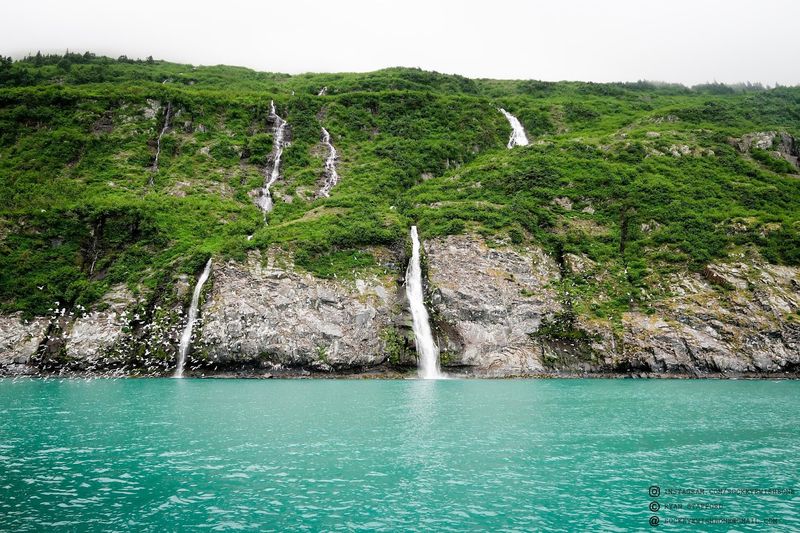
The water around Whittier is not ordinary harbor water. Passage Canal is a deep, glacier-fed fjord that stretches out from the town like a mirror reflecting the mountains above.
On a calm day, the reflections are almost too perfect, the kind of scene that makes you stop mid-sentence.
The canal is part of Prince William Sound, one of the most ecologically rich marine environments in Alaska. Sea otters float lazily near the docks.
Harbor seals pop their heads up without warning. On boat tours departing from Whittier, it is common to spot humpback whales, orca pods, and Steller sea lions within just a few miles of the harbor.
The surrounding mountains drop almost directly into the water, and glaciers cling to the peaks above. Several of those glaciers are visible right from town, which means you do not even need to hike to feel like you are deep in the wilderness.
Kayaking is popular here, and the calm sections of the canal offer a paddling experience that feels both peaceful and completely wild at the same time. The water temperature is cold enough to remind you that this is Alaska, not a tropical resort, and somehow that makes it even more appealing.
Wildlife Watching That Starts Before You Even Unpack
One of the first things I noticed stepping out near the Whittier harbor was a sea otter doing absolutely nothing in the most charming way possible. Just floating.
Completely unbothered. That pretty much set the tone for wildlife watching in this part of Alaska.
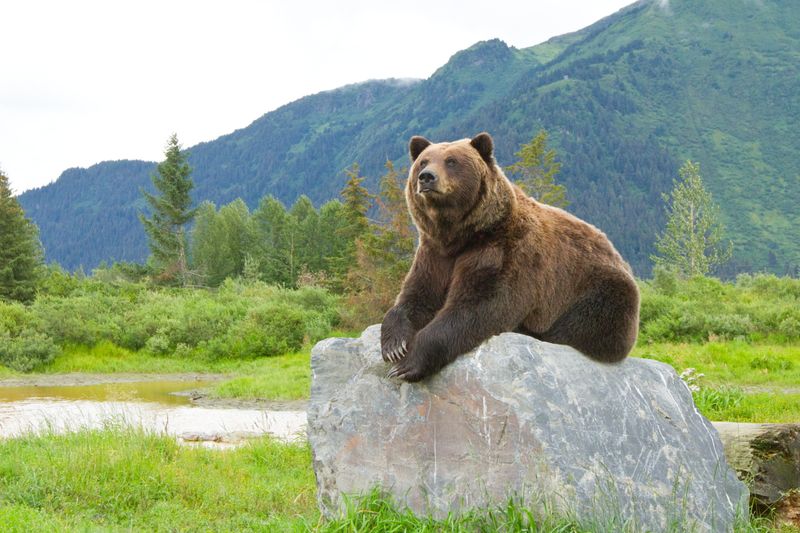
Whittier sits at the gateway to Prince William Sound, and the marine life here is extraordinary. Black bears occasionally wander the outskirts of town, especially during berry season.
Bald eagles are so common that they barely cause a stir among locals, though visitors tend to stop and stare every single time. Mountain goats pick their way along the rocky cliffs above the treeline, and Dall sheep are sometimes spotted in the higher elevations nearby.
Boat tours out of the harbor offer some of the best wildlife viewing in the region. Humpback whales breach in the sound, and orca pods travel through on their seasonal routes.
Puffins nest on rocky outcroppings near tidewater glaciers, and the birding in general is exceptional. You do not need a long itinerary or expensive gear to have memorable encounters here.
The animals are simply part of the landscape, living their lives right alongside the few hundred humans who call this remote place home.
Glacier Viewing and Outdoor Adventure Right Outside Town
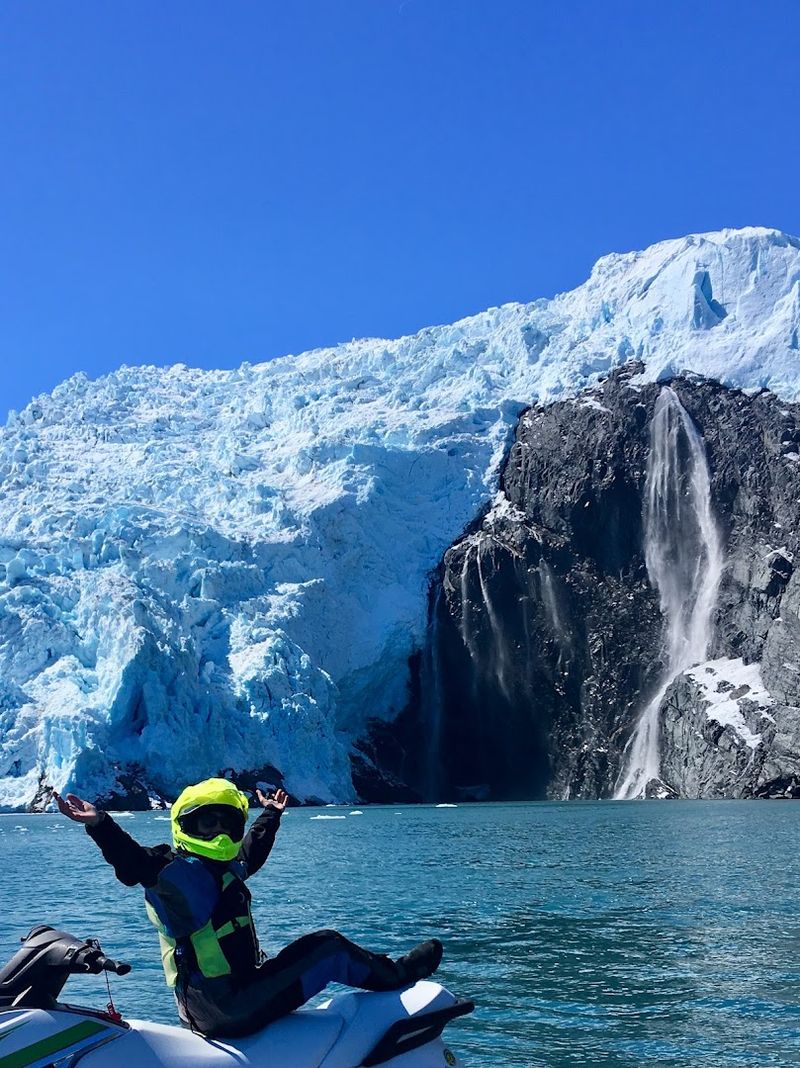
Not many towns can claim that you can see a glacier from the grocery store parking lot. Whittier can.
Portage Glacier is one of the most accessible glaciers in Alaska, and the area around it offers hiking, wildlife viewing, and the kind of raw natural scenery that reminds you just how small humans really are.
Blackstone Bay, reachable by boat from Whittier, is surrounded by multiple tidewater glaciers that calve directly into the water. Watching a chunk of ancient ice break off and crash into the sea is one of those moments that genuinely stops your breath.
The sound it makes, a deep crack followed by a thunderous splash, echoes off the surrounding mountains in a way that feels almost theatrical.
Hikers have options too. The Portage Pass Trail starts near the tunnel entrance and offers sweeping views of Portage Lake and the surrounding glacier fields.
It is a moderate hike that rewards effort quickly, with dramatic scenery appearing within the first mile. For those who prefer the water, kayaking tours and charter fishing trips depart regularly from the small boat harbor.
The outdoor adventure options here punch well above what you would expect from a town of fewer than 300 people.
Getting There, Getting Around, and What to Know Before You Go
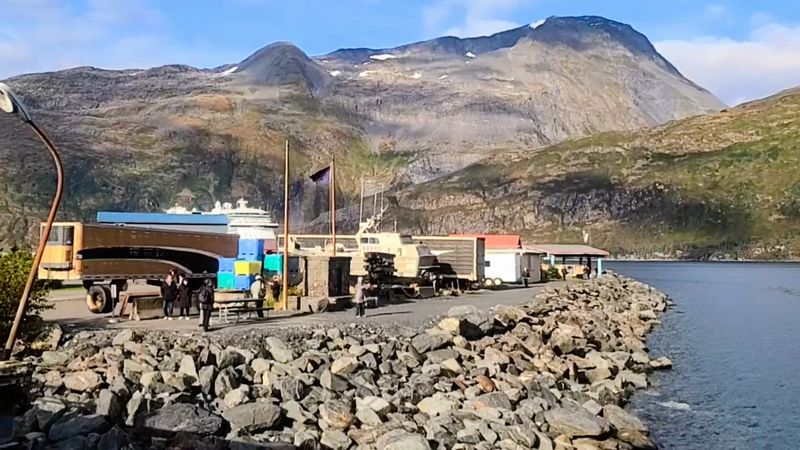
Planning a trip to Whittier takes a little more thought than your average destination. The town sits about 58 miles southeast of Anchorage, and the drive along the Seward Highway is stunning on its own.
Snow-capped peaks, braided rivers, and the occasional moose sighting make the journey feel like part of the experience before you even reach the tunnel.
Tunnel access is managed by the Alaska Department of Transportation, and the schedule changes seasonally. Summer hours are more frequent, while winter hours are reduced.
There is a toll to use the tunnel, and it is worth checking the schedule in advance so you are not sitting in line longer than necessary. The wait can actually be part of the fun, especially when you are parked beneath the mountain watching other travelers arrive with the same slightly disbelieving expressions.
Once inside Whittier, the town is small enough to walk most places. The harbor, Begich Towers, and the main visitor areas are all close together.
A handful of local businesses offer food, gear rentals, and guided tours. Cell service can be spotty, so downloading offline maps beforehand is genuinely useful.
Whittier is not a place you stumble upon accidentally. You have to choose it, plan for it, and drive through a mountain to get there.
That effort is absolutely worth it.
