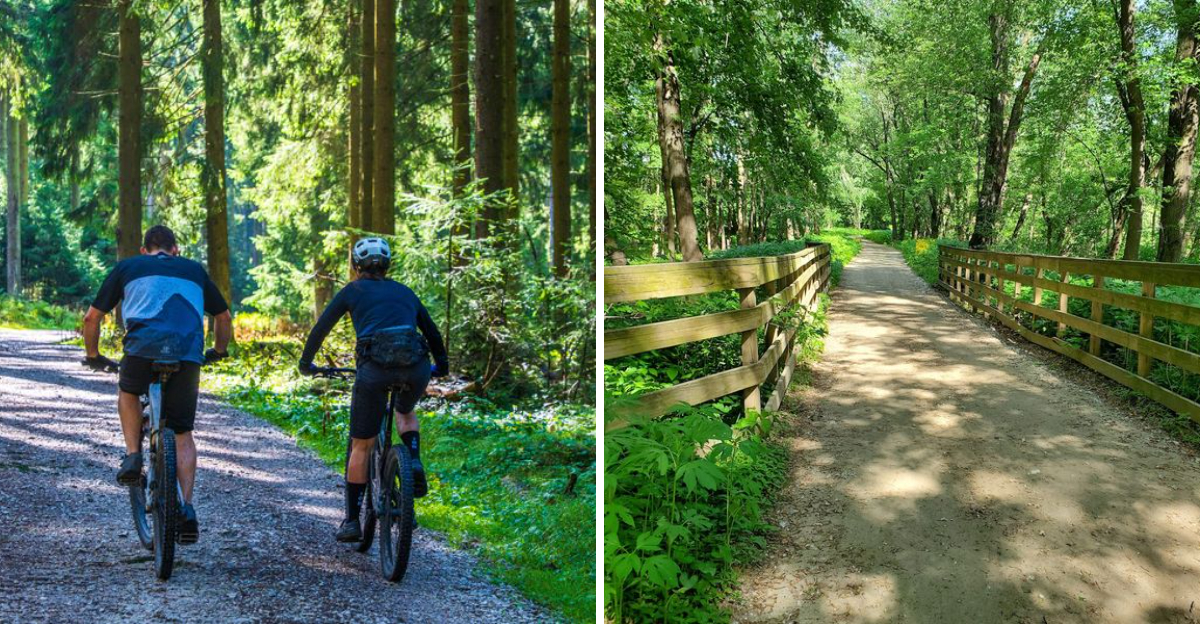
Fort Wayne, Indiana has a trail system that surprises most people the first time they hear about it. A scenic greenway stretches more than 25 miles through the heart of the city, following three converging rivers and linking 15 parks along the way.
Whether you prefer biking, walking, or jogging, this urban escape offers far more than a typical recreational trail.
Along the route, you will cross historic iron truss bridges dating back to the 1880s, wander through peaceful wetlands alive with wildlife, and discover scenic overlooks that make it easy to forget you are in a city.
It is no surprise this remarkable trail system earned designation as a National Recreation Trail in 2009. Whether you are looking for exercise, history, or a relaxing day outdoors, this gem delivers an experience well worth exploring.
Cross the Foster Park Footbridge Over the St. Marys River
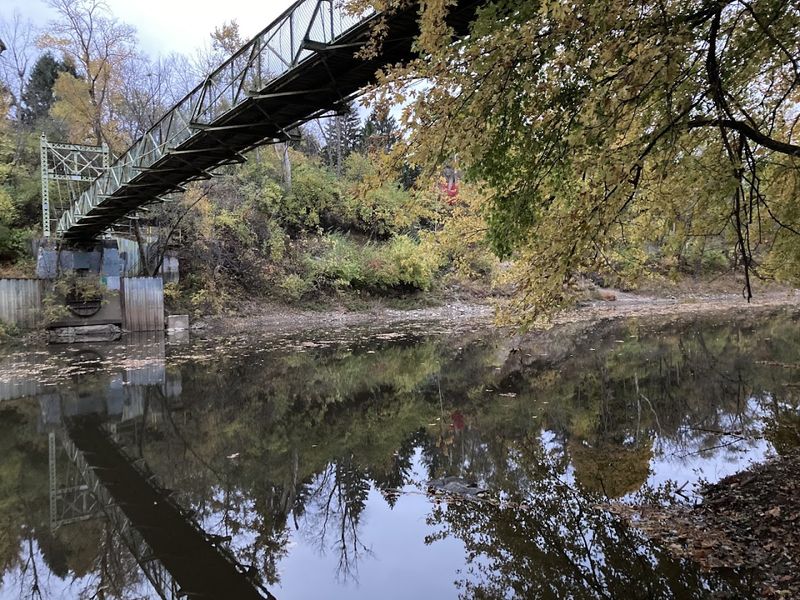
There is something quietly magical about a wire suspension bridge built a century ago that still carries people across a river today. The Foster Park Footbridge was constructed around 1920, and it remains one of the most charming crossings on the entire Rivergreenway system.
The bridge spans the St. Marys River and connects directly to Foster Park, located at 3900 Old Mill Road, Fort Wayne, Indiana. The park itself is one of the oldest in the city, so the footbridge fits right into the historic character of the area.
Walking across it, you feel a gentle sway underfoot, and the river below reflects the tree canopy overhead.
Foster Park surrounds the crossing with mature landscaping, open meadows, and shaded paths. Cyclists often slow down here just to take it in.
The combination of the old suspension design and the natural river setting creates a scene that feels far removed from city life, even though you are still well within Fort Wayne.
This section of the trail is also popular with birdwatchers in the early morning hours. Great blue herons are frequently spotted along this stretch of the St. Marys.
If you want a peaceful, unhurried part of the greenway experience, planning your ride to include the Foster Park Footbridge is a smart move. Bring a camera because the views here are genuinely photogenic year-round.
You Should See the Mechanic Street Bridge Up Close
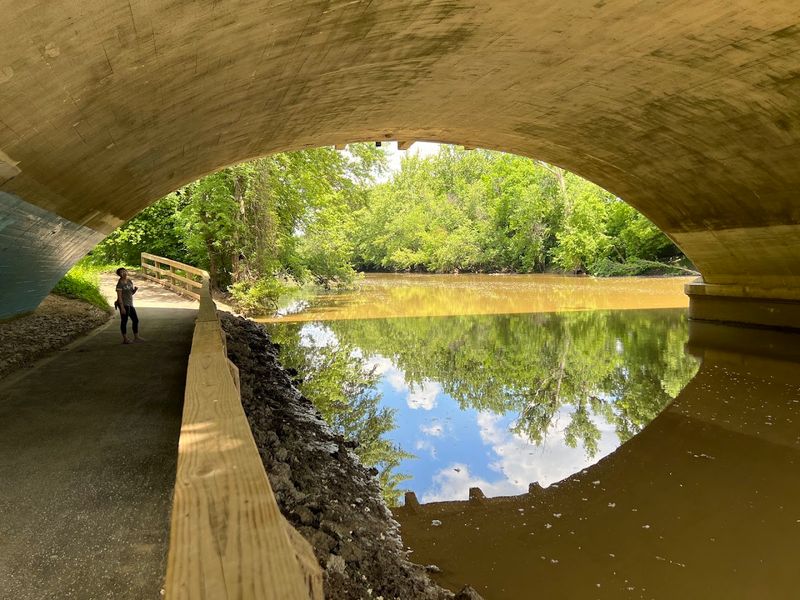
Built in 1898 by the King Bridge Company, the East Swinney Park Bridge carries a lot of history per square foot. It is also known as the Mechanic Street Bridge, and its metal truss design reflects industrial craftsmanship from an era when bridges were built to last well beyond anyone’s lifetime.
The bridge crosses the St. Marys River and connects to Swinney Park at 1600 W Jefferson Boulevard, Fort Wayne, Indiana.
Swinney Park is one of Fort Wayne’s most beloved green spaces, offering open lawns, mature trees, and a natural setting that pairs perfectly with the old bridge aesthetic.
Arriving here by trail rather than by car changes how you experience the whole area.
The bridge was designed specifically for pedestrian use, which means the deck is wide enough for cyclists and walkers to share comfortably. The metal truss overhead frames the sky in a way that feels almost architectural.
Looking back toward the park from the bridge midpoint gives you a sweeping view of the riverbank.
History enthusiasts will appreciate that this bridge survived more than 125 years of Indiana weather. It still functions as a working trail crossing today, which says a lot about the quality of its original construction.
Stopping here to read the interpretive signage nearby adds context to what you are looking at. This is one of those places where a short pause rewards you with far more than a quick pass-through would.
Plan Your Ride Across the Ron Venderly Suspension Bridge
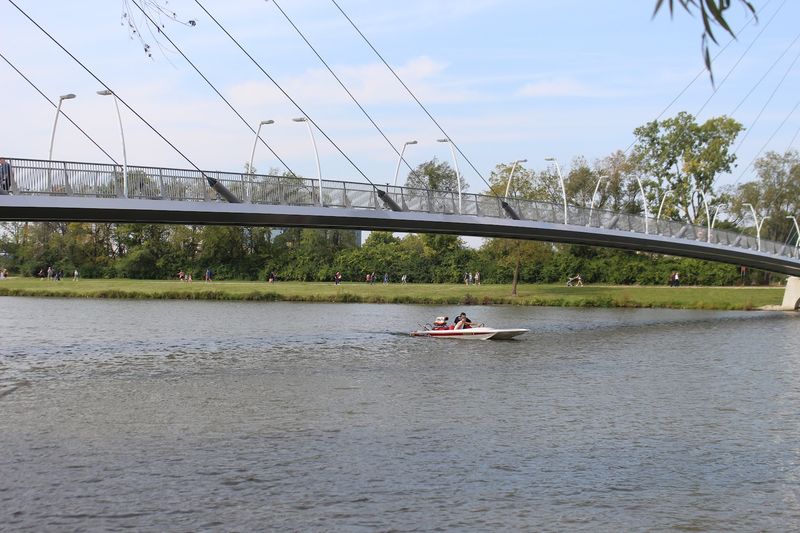
Not every reason to visit the Rivergreenway is about history. The Ron Venderly Family Pedestrian Bridge is proof that modern design belongs on this trail just as much as century-old ironwork.
Opened in 2009, this expansive suspension bridge spans the St. Joseph River with a clean, contemporary look that stands out against the natural surroundings.
The bridge connects Purdue Fort Wayne’s main campus to its western section, located at 2101 E Coliseum Boulevard, Fort Wayne, Indiana. For trail users, it serves as a dramatic and functional crossing that opens up access to a wider section of the greenway network.
The span is long enough that you can feel the full breadth of the St. Joseph River beneath you as you cross.
Cyclists especially appreciate this bridge because the approach on either side is well-maintained and clearly marked. The railing design allows for unobstructed views up and down the river.
On clear days, the reflection of the bridge cables in the water below makes for a striking visual.
What makes this crossing memorable is the contrast it creates. You go from wooded, natural trail sections to this bold modern structure, then back into the greenery on the other side.
That rhythm of old and new is one of the things that makes the Rivergreenway feel layered and interesting. The Venderly Bridge is one of the most photographed spots on the entire trail for good reason.
Bike Across the Wells Street Iron Truss Bridge
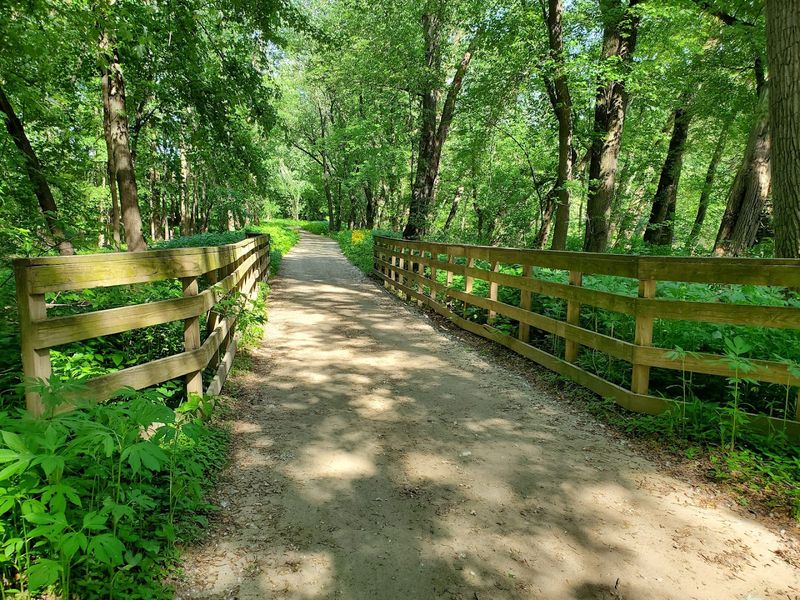
Most bridges you cross on a trail feel ordinary. The Wells Street Bridge is not ordinary.
Built between 1883 and 1884, this iron truss structure is one of the oldest surviving bridges of its kind in Indiana, and it now sits on the National Register of Historic Places. The bridge crosses the St. Marys River near Promenade Park in Fort Wayne, Indiana.
When you ride or walk across it, you can feel the age of the thing. The metal framework overhead casts shadows on the path below, and the river moves quietly underneath.
It feels less like a trail crossing and more like a moment from another century. Getting here is easy from the main Rivergreenway path.
The bridge is dedicated entirely to pedestrian and cyclist use, so no cars interrupt your experience. Families with younger kids find this bridge especially exciting because the open ironwork lets you see straight down to the water.
If you are into local history, this crossing alone is worth the trip. It connects the broader greenway to the Promenade Park area, which sits right where the St. Joseph and St. Marys Rivers meet the Maumee.
Arriving here at golden hour, when the light hits the rust-colored iron, makes for one of the most memorable views on the entire trail system.
Try the Crescent Footbridge Over the St. Joseph River
Opened in 2005, the Crescent Footbridge brings a striking modern silhouette to the Rivergreenway trail network. This impressive steel-arch pedestrian bridge spans the St. Joseph River, providing a smooth and scenic crossing that seamlessly integrates with the surrounding riverfront park system.
For riders and walkers approaching from either riverbank side, the bridge signals a clear transition point in the trail. The design is modern and intentional, with safety and aesthetics working together rather than competing.
During daylight hours, the structure still impresses. The clean lines and elevated perspective over the water give trail users an excellent vantage point for spotting local wildlife along the banks.
It directly links the Purdue University Fort Wayne campus trail loops to the western neighborhoods, making it an incredibly functional piece of the city’s trail infrastructure. Cyclists especially appreciate the wide concrete deck, which allows plenty of room to pass safely.
Stopping at the center of the span gives you an unobstructed look down the river, capturing the true spirit of Fort Wayne’s interconnected waterways.
Come Explore Eagle Marsh Through the Towpath Trail Connection
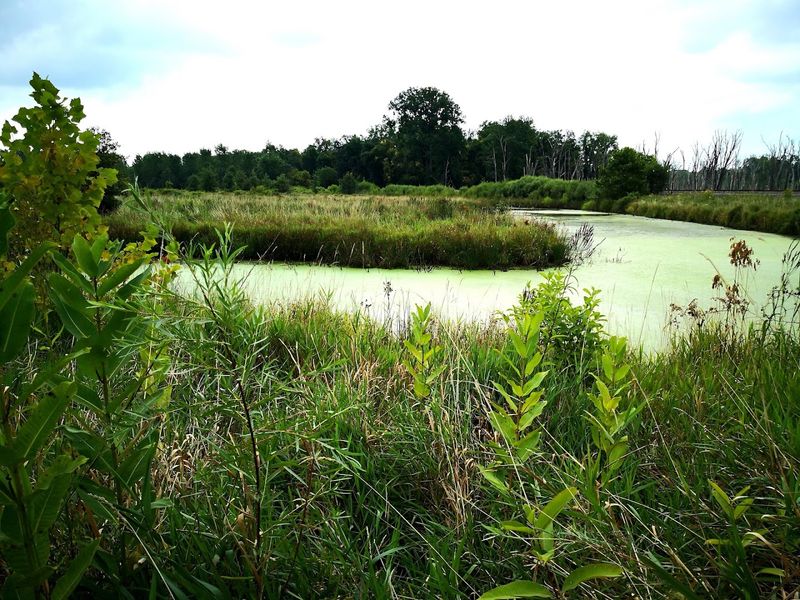
Eagle Marsh is the kind of place that makes you stop pedaling and just look around.
This 831-acre wetland preserve connects to the Rivergreenway through the Towpath Trail, which weaves through scenic marshlands before arriving at one of the most biologically rich natural areas in northern Indiana.
The preserve is located at 6801 Engle Road, Fort Wayne, Indiana.
Inside Eagle Marsh, over 14 miles of trails move through shallow-water wetlands, sedge meadows, prairies, and mature forests. The variety of habitats packed into one preserve is remarkable.
Migrating birds pass through here in large numbers during spring and fall, and the wetland canopy overhead creates a shaded, atmospheric corridor that feels genuinely wild.
The trail surface within the preserve is natural and unpaved in sections, so this part of the greenway experience is better suited for walking or hybrid biking rather than road cycling. The pace slows naturally here, and that is part of the appeal.
You are no longer moving through a city. You are moving through an ecosystem.
Wildlife sightings at Eagle Marsh are common and varied. Sandhill cranes, white-tailed deer, and numerous waterfowl species have all been documented here.
Bringing binoculars adds a lot to the experience. The transition from the paved greenway trail to the marsh preserve is one of the most dramatic environmental shifts on the entire route, and it rewards visitors who take the time to explore rather than rush through.
Make Time for Lindenwood Nature Preserve on Your Loop
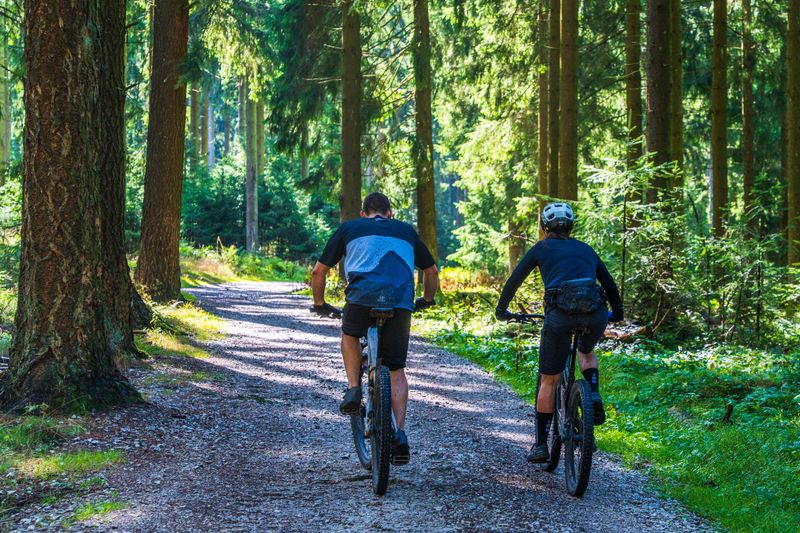
Lindenwood Nature Preserve earns its reputation quietly. This 110-acre wooded park sits at 600 Lindenwood Avenue, Fort Wayne, Indiana, and connects into the broader Rivergreenway network as one of its most serene natural stops.
The preserve centers on a mature oak-hickory forest that provides a level of canopy cover you rarely find inside city limits.
The trails here wind through the forest floor with a calm, unhurried quality. Roots and leaves mark the path in a way that feels authentic rather than manicured.
Several hiking trails branch through the preserve, giving visitors options based on how much time they want to spend. The entire atmosphere shifts when you enter the tree line.
It gets quieter, cooler, and noticeably more peaceful.
Wildlife observation is one of the main draws at Lindenwood. The forest supports a range of bird species, small mammals, and native plant communities that thrive under the old-growth canopy.
For anyone who has spent most of their greenway ride on paved surfaces, stepping into this preserve offers a grounding contrast.
Families with children find Lindenwood especially appealing because the trails are approachable without being boring. The trees are large enough to impress even kids who are not usually interested in nature walks.
Connecting this preserve to a longer Rivergreenway ride turns a simple bike outing into a genuinely layered experience. The greenway in Indiana does not just pass through nature here.
It lets you fully enter it.
