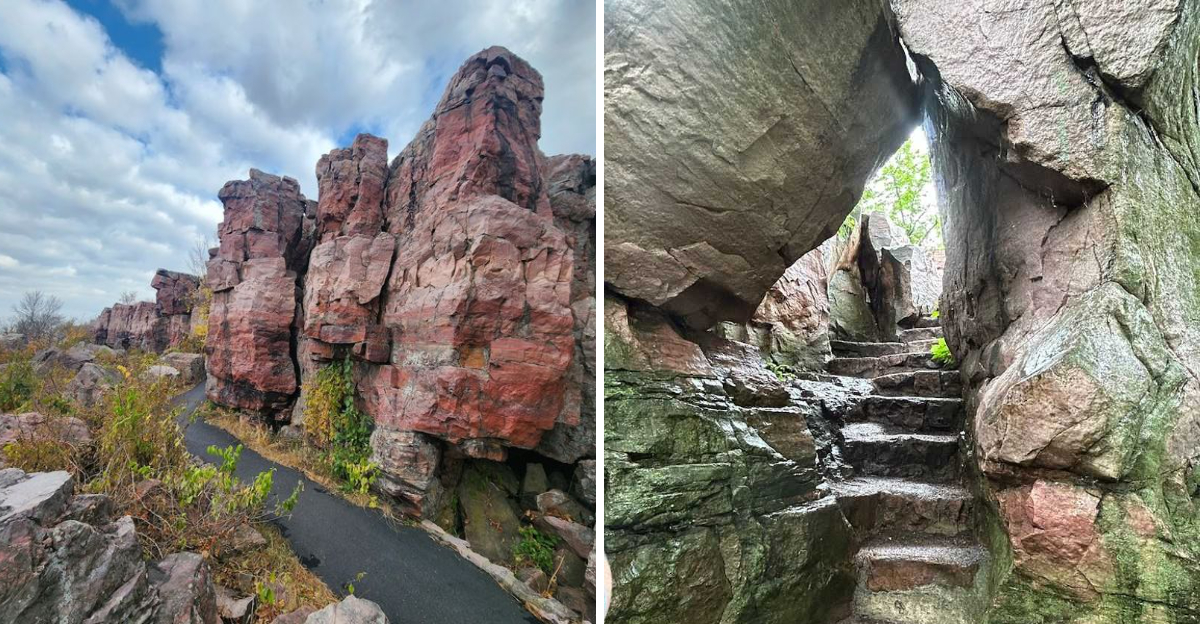
A sacred quarry where the red stone has been carved for centuries and the boulders hold a musical secret. I picked up a small hammer and tapped a rock and a clear ringing tone echoed back at me like a bell.
Minnesota has a natural area where the boulders “sing” when you strike them with metal or stone. The sound is unexpected and beautiful and makes you want to tap every rock you can find.
I stood there tapping different boulders and each one had its own pitch and personality like a silent choir waiting for a conductor. Minnesota really preserves a place where geology and music meet in a way you will not find anywhere else.
The prairie winds sweep across the open land while the quartzite formations glow red in the afternoon sunlight. I watched a family take turns tapping rocks while their youngest clapped with delight at every new sound.
The trails wind past waterfalls and tallgrass and ancient carvings left by people who came here long before us. You leave with the memory of stone music still ringing in your ears and a smile you cannot quite explain.
The Circle Trail Walking Loop
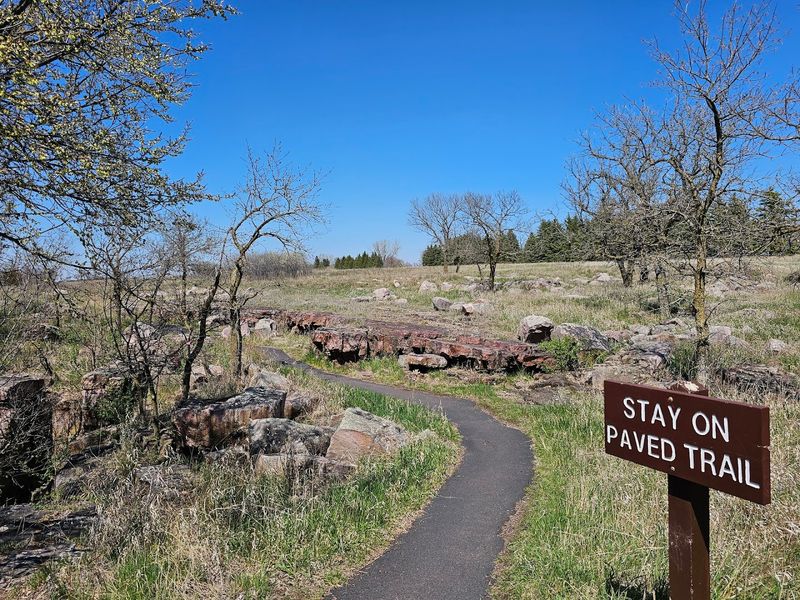
The Circle Trail is the main walking path at the monument. It is a paved loop that stretches about three-quarters of a mile.
Most visitors can complete it in under an hour without any difficulty.
The trail is mostly flat and well-maintained. It is accessible for people using wheelchairs or strollers.
Families with young kids tend to find it very manageable.
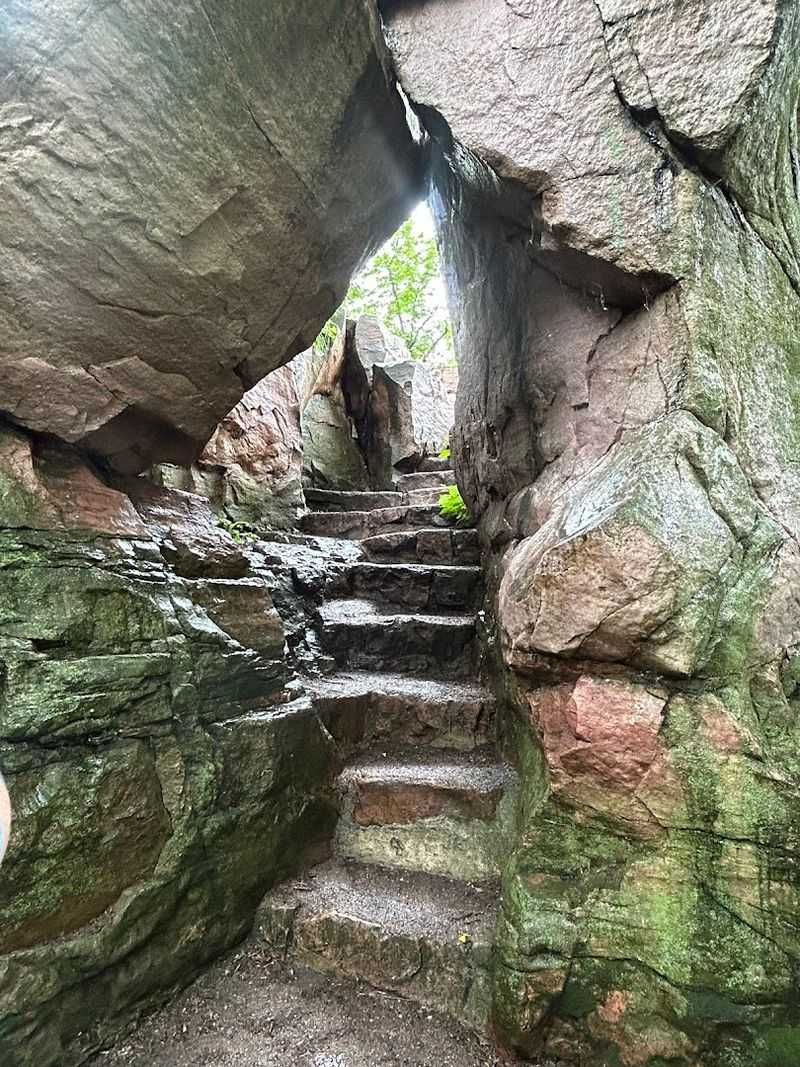
Along the way, the scenery shifts in small but interesting ways. You move through open prairie, past ancient rock faces, and alongside a quiet stream.
Each turn offers something new to notice.
Wildflowers bloom along the edges in warmer months. Prairie grasses sway gently in the breeze.
The whole loop feels peaceful and unhurried.
Dogs are welcome on the trail as long as they are on a leash. The path is paved, so it stays clean and easy underfoot.
I found myself slowing down naturally, just taking it all in rather than rushing through.
Winnewissa Falls and the Stream
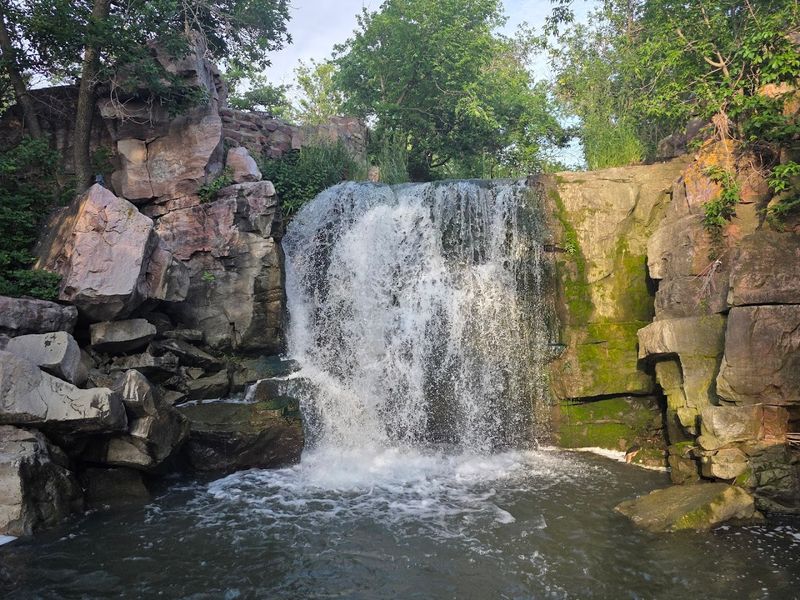
Tucked along the Circle Trail is a waterfall that catches most visitors off guard. Winnewissa Falls spills over ancient quartzite ledges in a gentle but photogenic cascade.
The sound of moving water adds a calming layer to the whole experience.
The stream runs alongside part of the trail before reaching the falls. It reflects the surrounding red and pink rocks in a lovely way.
Early morning light makes this spot especially worth photographing.
The waterfall is not enormous, but it feels perfectly placed within the landscape. It creates a natural focal point on the trail.
Benches nearby give you a place to sit and simply listen.
Turtles have been spotted sunning themselves on rocks near the water. Small critters and birds are common sights in this area.
The ecosystem around the stream feels quietly alive.
I stopped here longer than I planned to. The combination of the red stone, the green plants, and the sound of the water felt almost cinematic.
It is one of those spots you photograph and then just keep staring at anyway.
The Singing Boulders of Pipestone
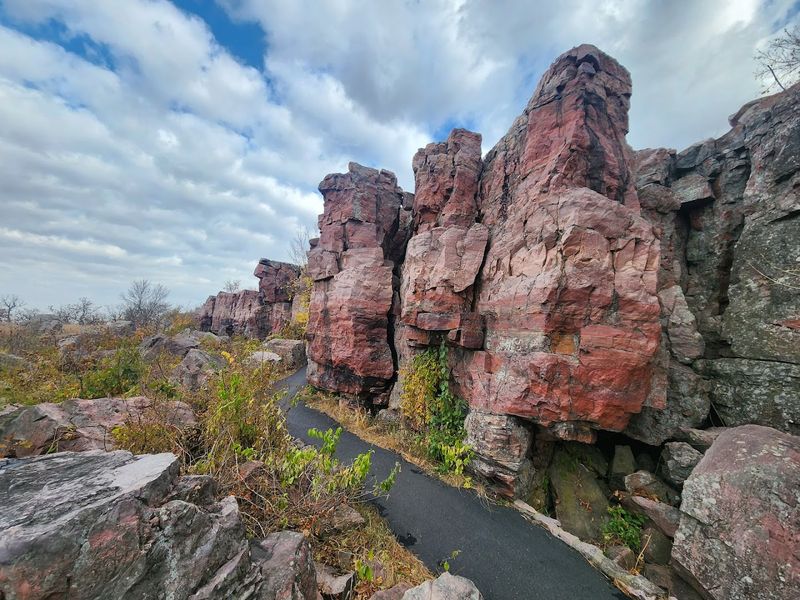
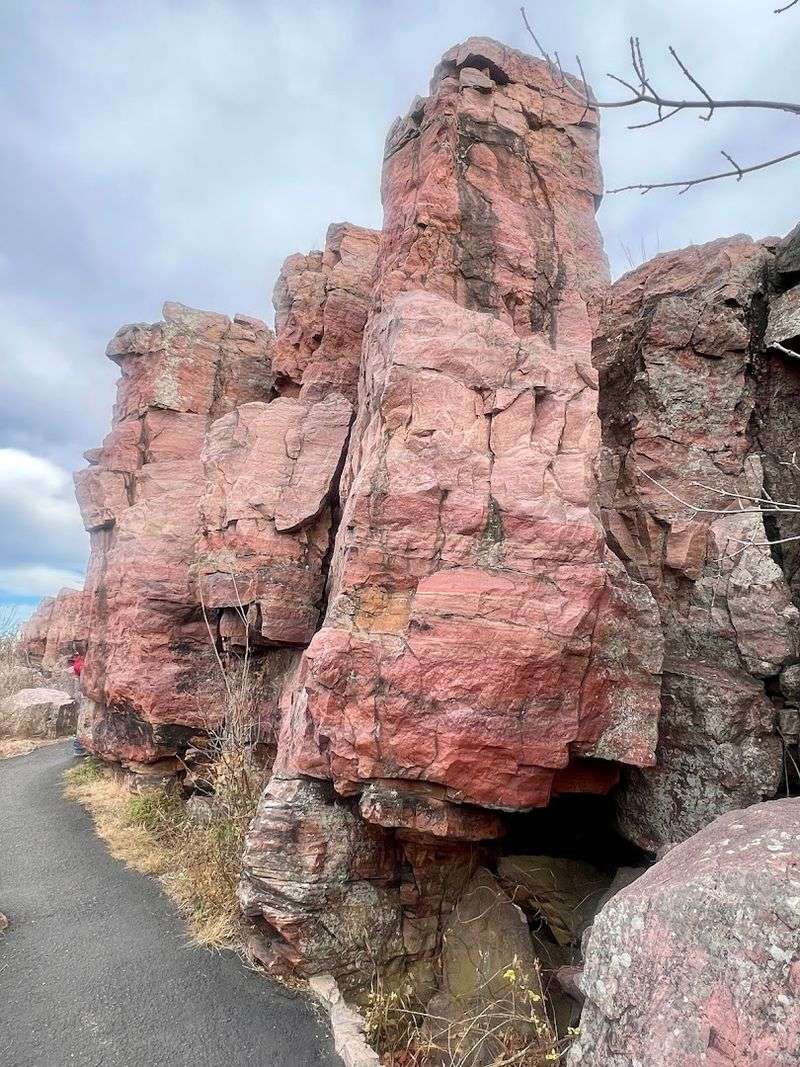
Tap one of the massive pink quartzite boulders here, and you might hear something unexpected. A clear, ringing tone rises up, almost like a bell.
Locals and rangers call them singing boulders, and the sound is genuinely surprising the first time you hear it.
The boulders are made of Sioux quartzite. This ancient rock is incredibly dense and hard.
That density is exactly what creates the musical resonance when struck.
These formations are estimated to be around 1.6 billion years old. They tower over the trail in dramatic pink and red hues.
Walking past them feels like stepping into a different era entirely.
The singing quality has fascinated visitors and scientists alike. Geologists explain it as a result of the rock’s crystalline structure.
The sound carries surprisingly far on a quiet prairie morning.
Bring a small hammer if you want to test it yourself. Park rangers are happy to point out the best spots.
It is one of those small moments that makes this place truly unforgettable.
The Visitor Center and Its Exhibits
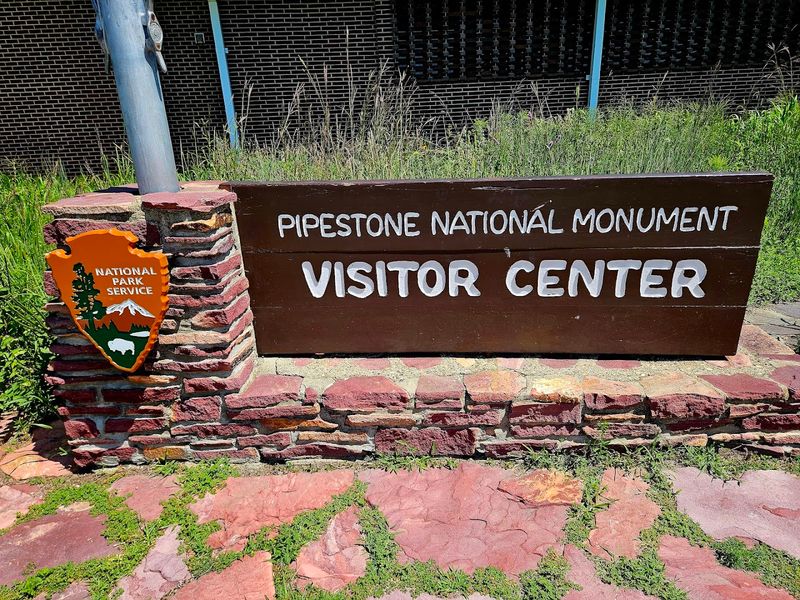
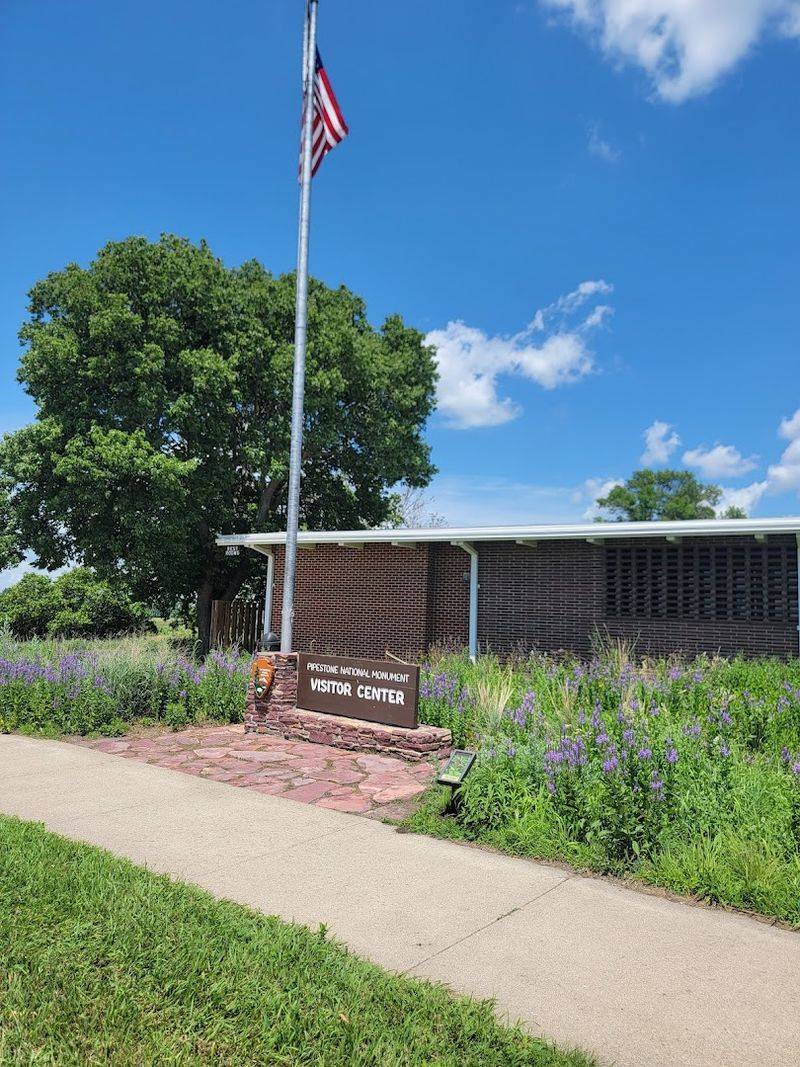
Starting your visit at the visitor center is genuinely worth doing. The exhibits inside cover the geological history of the site, the cultural significance of pipestone, and the traditions of the many tribes connected to this land.
It gives real context before you step outside.
A short film plays regularly inside the center. It does a good job of explaining why this place matters so deeply to Indigenous communities.
Watching it first makes the trail walk feel more meaningful.
Staff members are knowledgeable and approachable. They take time to answer questions without making you feel rushed.
The atmosphere inside is welcoming and educational without being overwhelming.
Petroglyphs are also highlighted in the exhibits. These ancient carvings offer a glimpse into how people have communicated through stone for generations.
Seeing them up close is quietly powerful.
The center is open daily from 8:30 AM to 4:30 PM. Admission to the monument is free.
That combination of quality information and no entry cost makes it an easy recommendation for anyone passing through southwest Minnesota.
Live Pipestone Carving Demonstrations
One of the most memorable parts of a visit here happens inside the visitor center. Native American artists carve pipestone right in front of you.
Watching raw red stone slowly become a ceremonial pipe is something you do not forget quickly.
The carvers are skilled and patient. They use hand tools to shape the soft stone with remarkable precision.
The process looks meditative, focused, and deeply intentional.
Visitors are welcome to watch and even ask questions. The artists are often happy to explain the process and the meaning behind the work.
Those conversations add a personal dimension that no exhibit panel can fully replicate.
Finished pieces are available for purchase in the gift shop. Buying directly from Indigenous artists means your money supports the community.
Each piece is genuinely handcrafted on site.
I watched one carver for a solid fifteen minutes without realizing how much time had passed. The rhythm of the work and the quiet focus in the room were surprisingly absorbing.
It felt like witnessing something real and rare.
The Ancient Petroglyphs
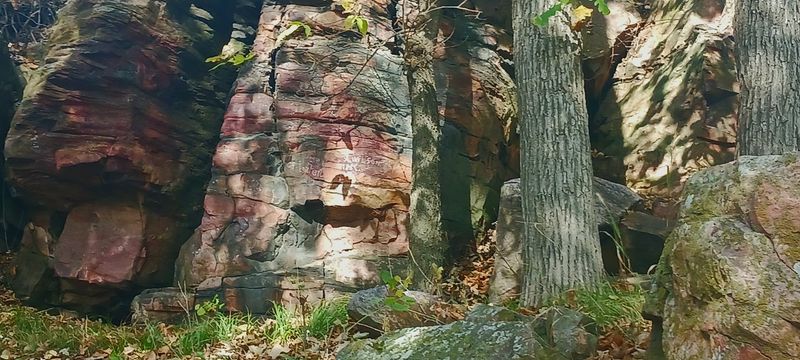
Hidden along the trail and highlighted in the visitor center are petroglyphs carved into the ancient quartzite. These markings were made by Indigenous peoples long before European contact.
They represent one of the oldest forms of communication left on this landscape.
The carvings are subtle at first glance. You have to slow down and look carefully to spot them fully.
That process of looking closely feels like a small act of respect.
Rangers recommend checking out the petroglyph descriptions in the visitor center before heading outside. Having that background makes the carvings more legible and more meaningful.
Context changes everything when reading ancient stone.
Photographs of the petroglyphs are allowed, but touching them is not permitted. Protecting them for future generations is a shared responsibility.
Signs along the trail remind visitors of this clearly and respectfully.
Seeing these carvings in person has a weight to it that photos cannot capture. The stone is real.
The marks are real. Knowing hands made them thousands of years ago in this exact spot is genuinely humbling.
Sacred Red Pipestone Quarries
The red stone here is not just pretty to look at. It is called catlinite, named after artist George Catlin who documented the site in the 1830s.
Indigenous peoples have quarried this stone for centuries to carve ceremonial pipes.
The quarries are still active today. Only Native Americans with tribal affiliation are permitted to quarry the stone.
That tradition remains alive and deeply respected within the monument’s boundaries.
Walking past the open quarry pits gives you a real sense of the effort involved. The pipestone sits beneath a thick layer of hard quartzite.
Reaching it requires serious physical work and patience.
Pipes made from this stone carry enormous spiritual meaning. They are used in prayer ceremonies and important tribal gatherings.
The stone itself is considered a gift from the earth.
Seeing the raw red stone in the ground for the first time is striking. The color is vivid, almost like dried clay mixed with rust.
It looks unlike any rock I had seen before arriving here.
Prairie Landscape and Wildlife
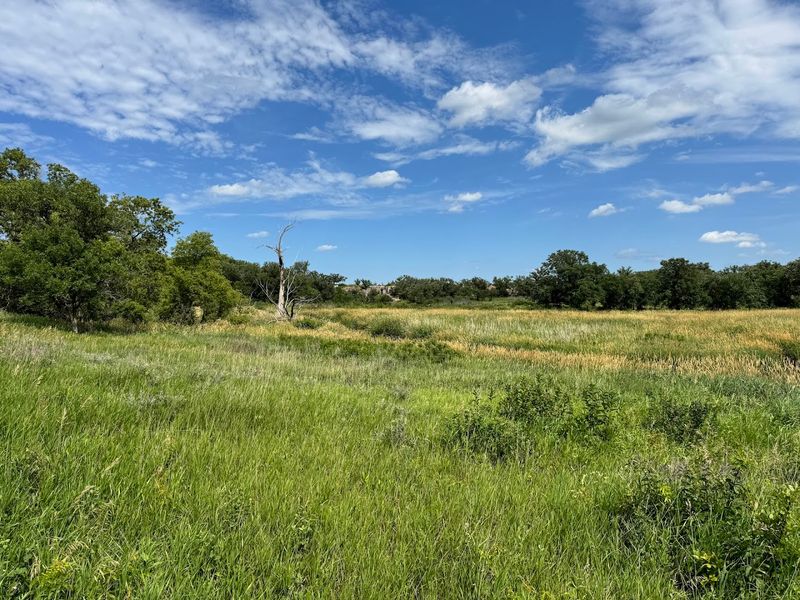
The land surrounding the monument is classic tallgrass prairie. It stretches out in every direction with a kind of open, honest beauty.
The grasses move in waves when the wind picks up, and the effect is almost hypnotic.
Wildflowers are scattered throughout the growing season. Purple coneflowers, goldenrod, and prairie clover are common sights.
The color they add to the landscape is vivid and cheerful.
Wildlife sightings are a regular part of a visit here. Turtles bask along the stream.
Birds call from the grasses, and small animals dart across the trail if you are patient enough to wait.
The prairie setting gives the monument a sense of wide-open solitude. Even when other visitors are around, the space feels generous and uncluttered.
That feeling of room to breathe is hard to find in most places.
Flowering trees along parts of the trail release a faint, sweet scent in spring and early summer. Walking through that fragrance while surrounded by ancient stone is a surprisingly lovely combination.
The Gift Shop and Indigenous Art
The gift shop at Pipestone is not your average souvenir stop. Every item sold there is handmade by Indigenous artists.
The selection includes carved pipestone pipes, beadwork, jewelry, and other culturally significant pieces.
Buying something here means supporting Native American artisans directly. The shop is intentional about that mission.
Staff are transparent about where the items come from and who made them.
The range of pieces available is genuinely impressive for a small shop. Some items are simple and affordable.
Others are elaborate works that reflect serious skill and many hours of labor.
Watching a piece being carved in the demonstration area and then finding finished examples in the shop creates a satisfying loop. You understand what went into making it.
That understanding changes how you value what you are holding.
Even if you do not plan to buy anything, browsing the shop is worth a few minutes. The craftsmanship on display is remarkable.
Planning Your Visit to Pipestone National Monument
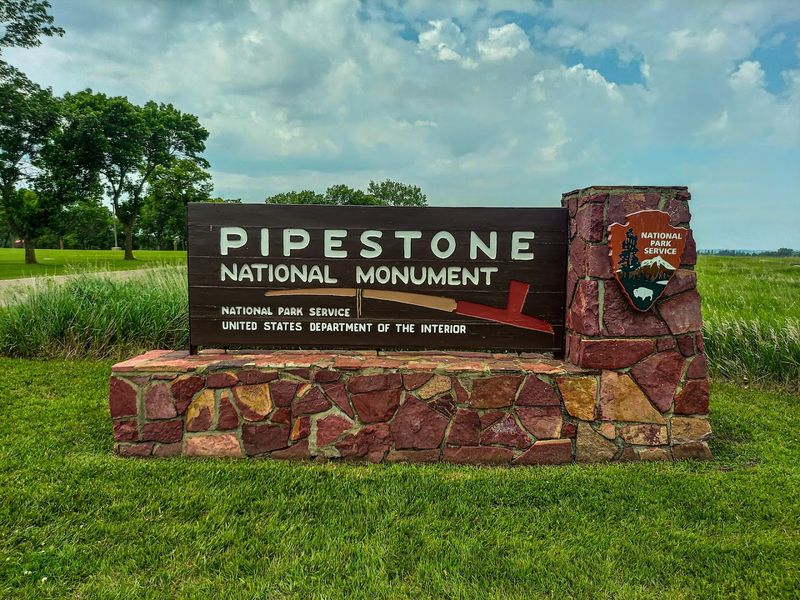
Getting to Pipestone National Monument is straightforward. The monument sits in the small city of Pipestone in southwest Minnesota.
It is a manageable drive from Sioux Falls, South Dakota, or from the Twin Cities for a longer road trip.
The visitor center opens at 8:30 AM every day of the week. It closes at 4:30 PM.
Arriving early gives you quieter trails and better light for photography.
Admission to the monument is completely free. Parking is available directly at the visitor center.
The lot is spacious and easy to navigate.
Leashed dogs are allowed on the trails. The paved path makes it accessible for most mobility levels.
Restrooms are available on site, which is always a practical detail worth knowing.
Plan to spend at least one to two hours to see everything comfortably. Rushing through would mean missing the carvings, the waterfall, and the quiet moments that make this place special.
