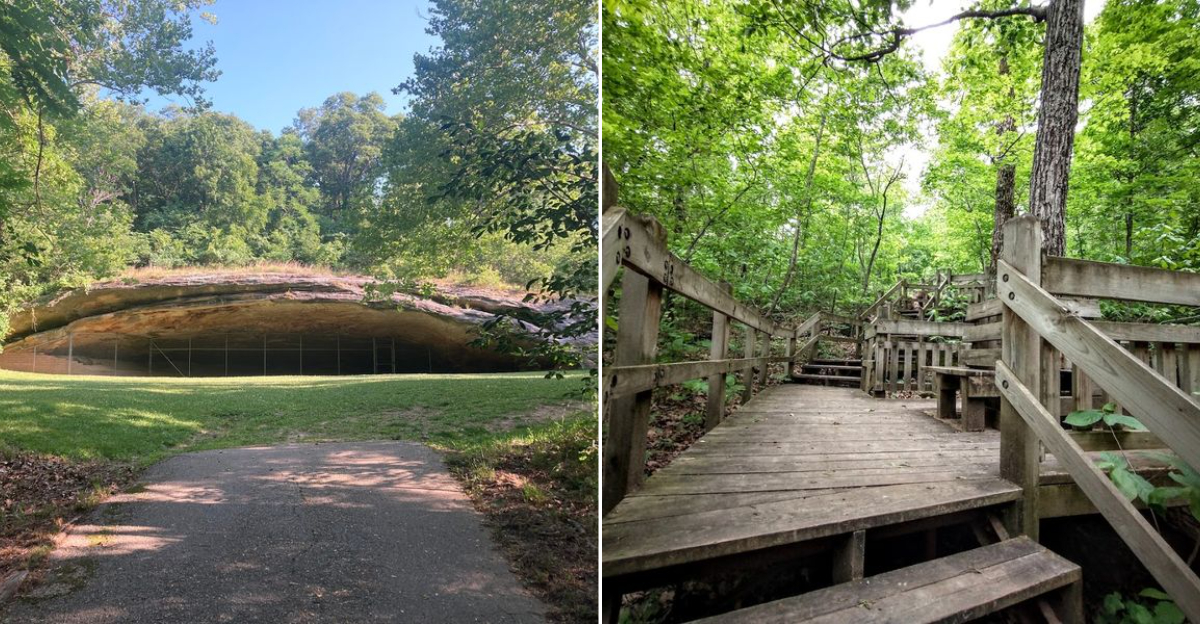
What if a single cave could rewrite the history of an entire region? That is exactly what happened at a Missouri state park, where archaeologists uncovered evidence of human life dating back thousands of years.
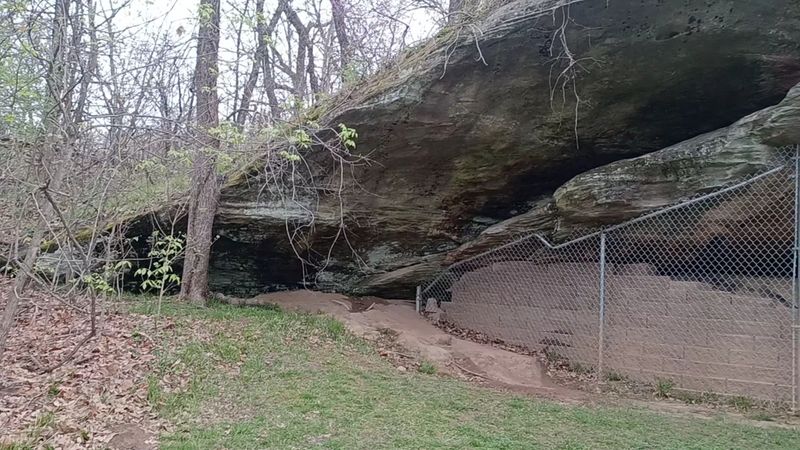
The cave mouth is wide and inviting, and the ground beneath it held stone tools, bone fragments, and fire pits from people who lived here long before written history. The discovery changed what experts thought about the earliest inhabitants of the area.
Today, you can walk up to the same cave entrance and see where these ancient people once gathered. The park is quiet and well-maintained, and the cave is a short walk from the parking lot.
It is a place where the past feels close enough to touch, and the sheer age of what lies beneath the surface makes you stop and think. A stop here is a journey into the deep past of the state.
Why The Cave Mouth Stops You Cold
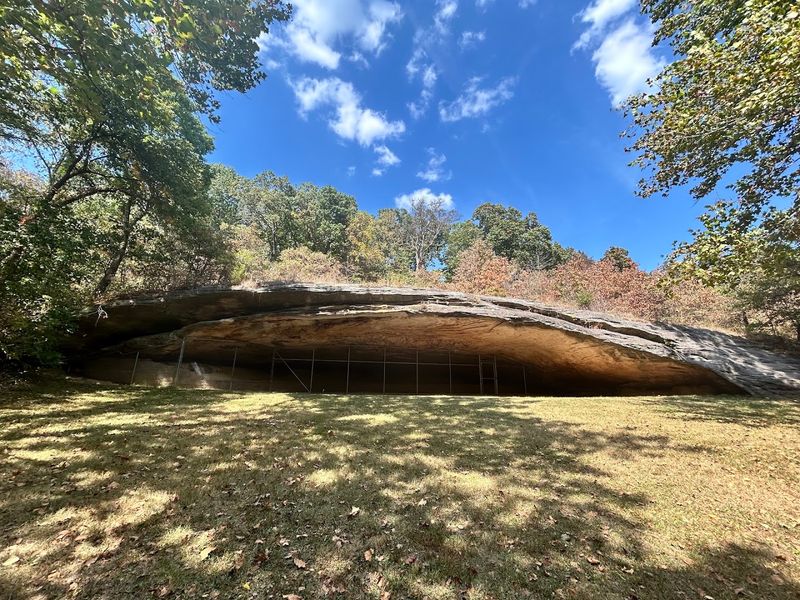
The first thing that hits you is how unbelievably human this place feels, even before you start thinking about archaeology. You walk up to that huge cave mouth, and it does not feel distant or museum-like at all.
It feels like the kind of shelter any person would notice right away and quietly trust.
That is what makes Graham Cave State Park so memorable for me, because the history here never feels abstract. Archaeologists found evidence that people used this rock shelter thousands of years ago, and standing there makes that idea land in a very direct way.
You are looking at real ground, real stone, and a real opening that once gave cover, shade, and safety.
I love places that let you connect the obvious dots without much effort, and this one absolutely does that. The bluff rises above you, the mouth of the cave spreads wide, and the whole setting explains itself with almost no drama.
Missouri has plenty of beautiful parks, but this one carries a different kind of weight.
By the time you leave the entrance area, you are not just thinking about scenery anymore. You are thinking about the long chain of ordinary lives that once unfolded right here.
That quiet shift in perspective is the whole reason this stop sticks with you.
Where You Will Actually Find It
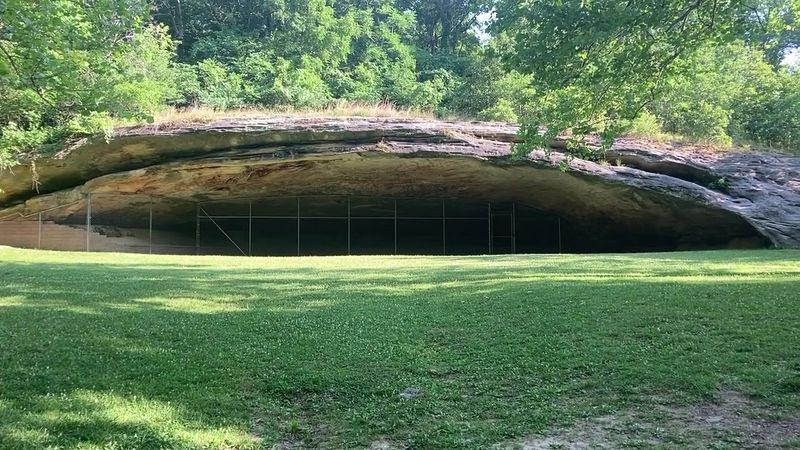
If you are wondering whether this place is hard to track down, it really is not. Graham Cave State Park sits at 217 Highway TT, Danville, MO 63361, and once you are in the area, the setting starts doing that nice slow reveal.
The roads feel rural in the best way, and the park arrives without any unnecessary fuss.
I always appreciate when a historic site still feels connected to the landscape around it, and that is exactly the case here. You are in Montgomery County, tucked into a stretch of Missouri that feels green, calm, and a little removed from the usual rush.
That matters, because the cave makes more sense when you see the hills, woods, and river country around it.
Getting there feels like part of the experience rather than a chore, which I honestly think helps. The park sits above the Loutre River, and the terrain gives the whole visit a sense of enclosure and age.
Even before you reach the trail, the setting starts nudging you into a different pace.
So if you are picturing some overbuilt attraction, let that idea go. This is much more grounded than that, and thankfully so.
The location lets the history stay central, while the surrounding Missouri landscape quietly backs it up.
Why Archaeologists Care So Much
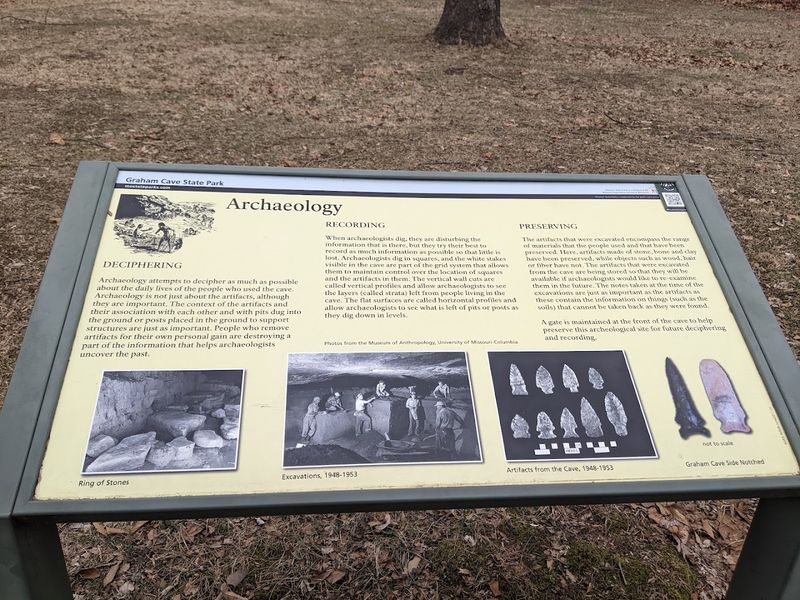
Here is where the place really starts to mess with your sense of time in the best way. Graham Cave is not important because someone imagined a good story about it.
It matters because excavations revealed solid evidence that people used this shelter deep in the ancient past.
When you read about the finds connected to early hunter-gatherer life, the cave suddenly feels less like a scenic stop and more like a preserved chapter of human routine. People sheltered here, prepared food here, and moved through this landscape long before Missouri looked anything like it does now.
That is a huge thought, but the site presents it in a way that still feels approachable.
I think that balance is what makes the park work so well for regular visitors. You do not need specialized knowledge to understand why this cave mattered.
Shelter, water, access to the surrounding land, and a defensible spot all make immediate sense the moment you stand there.
The more you think about it, the more the cave becomes less of a curiosity and more of a lived-in place. That shift is powerful, and honestly a little humbling.
You leave with a sharper feeling that ancient history was built from ordinary decisions made by real people.
The Size Of The Shelter Changes Everything
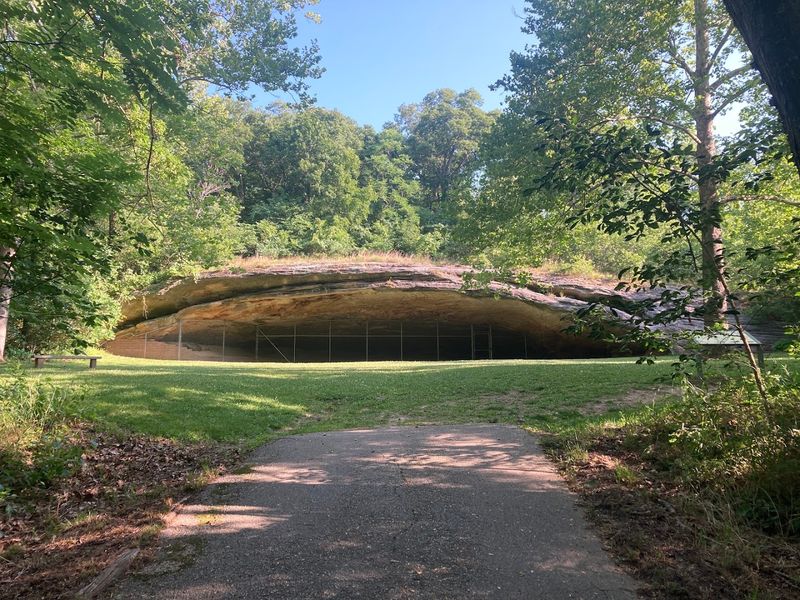
You can read all you want about a rock shelter, but the scale does not fully register until you are standing under it. The cave mouth at Graham Cave is broad enough that your body instantly understands why people would have used it.
It feels protective, open, and practical all at once, which is such a striking combination.
What surprised me most was how the shape of the shelter changes your emotional reaction to the place. It is not a cramped little hole in the hillside, and it is not some fantasy cave either.
It is a generous opening beneath stone, and that makes the human story attached to it feel much more believable.
You can imagine shade on a hot day, cover during bad weather, and a clear view of the surrounding area without having to force the picture. That is part of the magic here, honestly.
The cave mouth does not need dramatic interpretation, because its usefulness is written right into the rock.
Standing there, I kept thinking about how certain landscapes almost volunteer themselves to people. This is one of those places.
Missouri has no shortage of beautiful bluff country, but this shelter has a plainspoken logic that makes ancient life feel suddenly close.
The Surrounding Landscape Matters Too
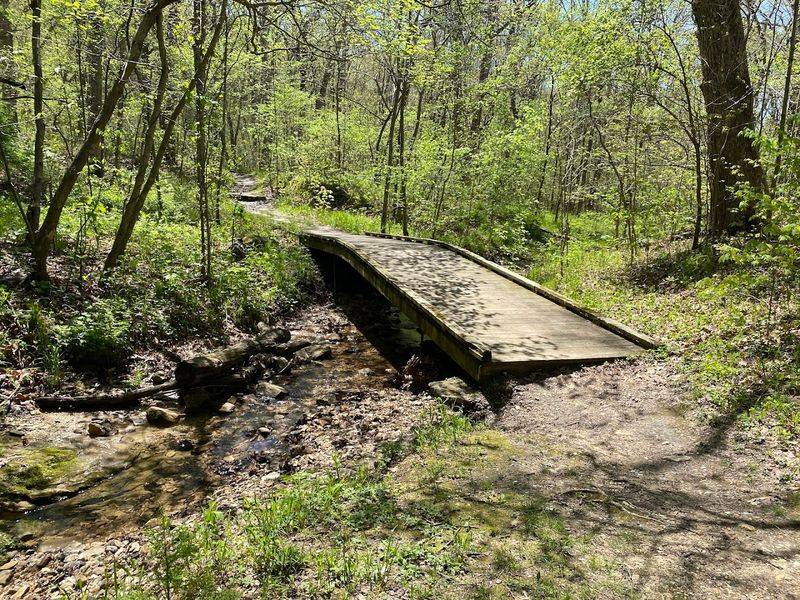
It would be easy to focus only on the cave and miss how much the surrounding land adds to the whole experience. This park sits in a beautiful stretch above the Loutre River, and the mix of woods, slopes, and openings gives the site real context.
You start to see why people would have moved through and used this area for a very long time.
I always think history lands harder when the environment still tells part of the story, and that definitely happens here. The terrain is varied without feeling theatrical, and the natural setting does a lot of quiet explanatory work.
Water nearby, shelter in the bluff, and usable land around it all come together in a way that feels practical.
On a simple visit, that might just register as good scenery, and honestly that is fine. But if you pause for a second, the landscape starts reading like evidence.
Missouri can be deeply pretty in a calm, understated way, and this park leans into that without trying to impress you too aggressively.
That is probably why the place feels so complete to me. You are not looking at history removed from its natural frame.
You are standing in the frame itself, and that makes the cave story feel much more alive.
The Signs And Exhibits Actually Help
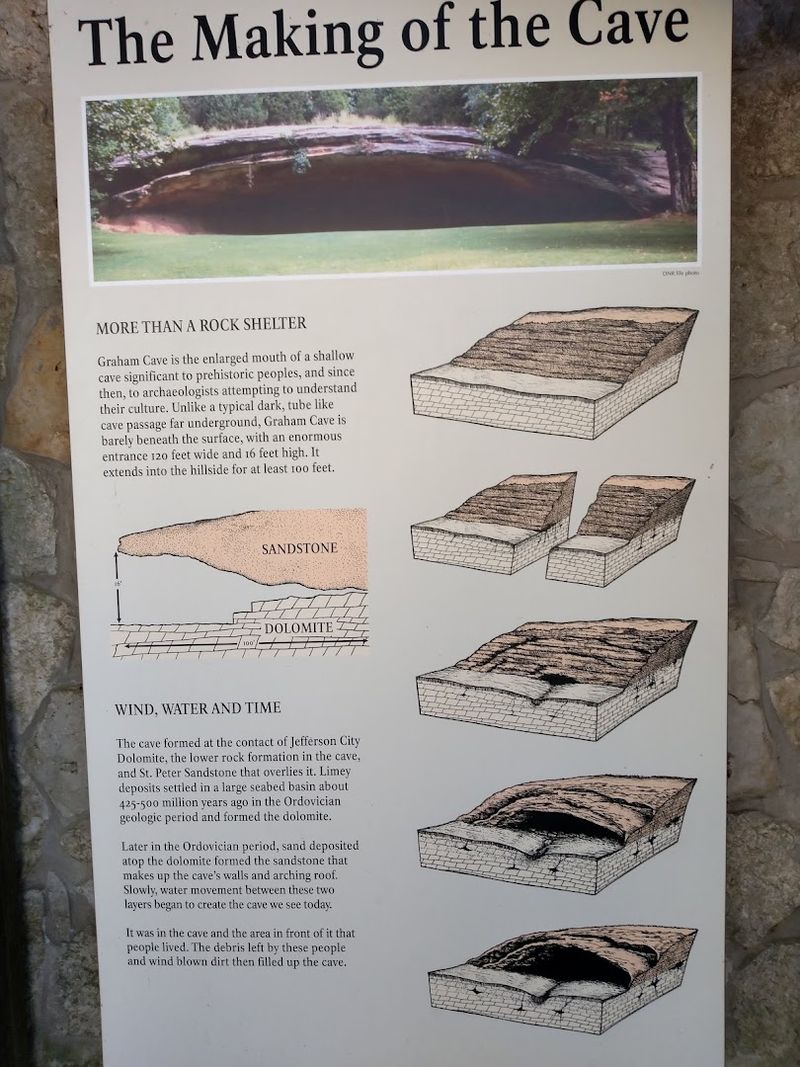
You know how interpretive signs can sometimes feel like homework pasted onto a trail? That is not how it felt here.
The exhibits around Graham Cave State Park give you just enough information to deepen the visit without pulling you out of the place itself.
I appreciated that the story of early people, archaeology, and natural history is spread through the park in a way that feels steady and readable. You can stop, take something in, and keep moving without losing the mood.
That matters, because the cave already has a strong presence and does not need a wall of text competing with it.
Good interpretation should make you notice more, not simply tell you what to think, and this park mostly gets that right. After reading a bit, the bluff looks different, the trail feels more purposeful, and the surrounding Missouri landscape gains a little extra depth.
You start connecting the human story to the physical setting in a more natural way.
For me, that is the sweet spot on a trip like this. I want context, but I still want room for my own reaction.
Graham Cave State Park leaves enough space for both, which is a big part of why the experience feels sincere rather than overproduced.
It Is Easy To Make A Day Of It
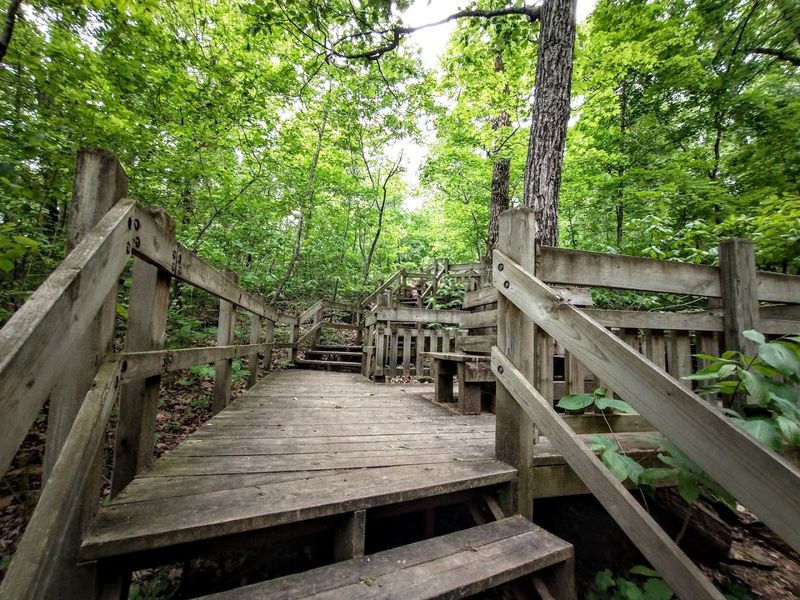
What I found especially nice is that the park does not force you into a quick in-and-out visit. You can come for the cave and still have plenty of room to linger, walk more, sit for a while, or stretch the day in a gentler way.
That makes the history feel woven into a real park experience instead of isolated behind a single attraction.
There are picnic areas, trails beyond the cave approach, access to the river, and campground amenities that make staying longer feel pretty comfortable. If you like balancing a little learning with a little loafing around outdoors, this place handles that mix really well.
You are free to take the archaeological significance seriously without feeling like the rest of the park has been forgotten.
I actually think that softer rhythm helps the site reach more people. Not everyone wants a tightly structured history lesson, and they do not need one here.
Missouri does a good job with parks that feel usable as well as meaningful, and this is a strong example of that.
So yes, the cave is the draw, but it does not have to be the whole day. You can build a slower visit around it and let the place open up gradually.
That relaxed pace suits Graham Cave better than any rushed checklist ever could.
The Family Story Behind The Park Stays With You
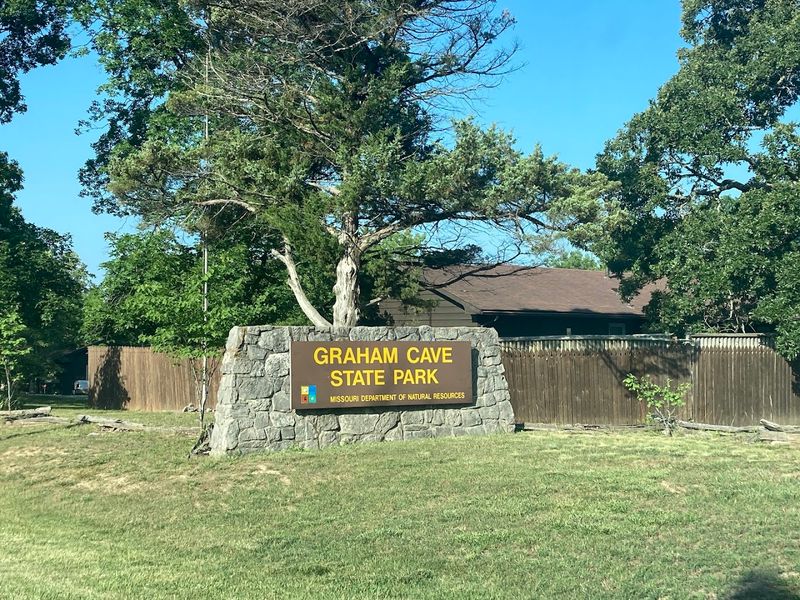
I always like knowing how a place actually made it into public hands, because that part of the story matters too. Graham Cave is named for Robert Graham, and the land remained connected to the Graham family for a long time before it became a state park.
That personal thread gives the site a slightly warmer feeling than you might expect from a major archaeological landmark.
What really stayed with me is that the land was eventually given to the state by Frances Graham Darnell, which helped preserve both the cave and the surrounding setting. Without choices like that, places with enormous historical value can be chipped away or quietly lost.
Here, the handoff to Missouri created a future for the site that regular visitors can still benefit from.
I think that legacy fits the mood of the park itself. Nothing about Graham Cave feels flashy or self-important, even though its significance is enormous.
The preservation story has that same grounded quality, where care for the place seems to matter more than attention.
By the end, that human chain becomes part of what you remember. Ancient visitors used the shelter, later families protected the land, and now you get to walk through it with both stories in mind.
That continuity gives the park a surprisingly personal kind of depth.
Why This Place Lingers After You Leave
Some places are fun for an afternoon and then they sort of dissolve on the drive home, but this one sticks. Graham Cave lingers because it gives you something larger than scenery while still feeling easygoing and real.
You leave carrying both the image of the cave mouth and the strange comfort of knowing people once relied on it.
I think that lasting effect comes from how naturally history and landscape meet here. Nothing feels forced, and nothing has to be dressed up to seem important.
The cave, the bluff, the trails, and the river setting all do their own quiet work until the whole park starts feeling bigger than it first appeared.
If you are even a little curious about deep human history, this Missouri park has a way of pulling you in without making a big show of it. And if you mainly came for a walk in the woods, you still end up with more than that.
It is rare to find a place that can be both intellectually interesting and emotionally calming at the same time.
That is probably the simplest way I can put it. Graham Cave State Park gives you a genuinely ancient story in a setting that still feels welcoming to modern visitors.
By the time you head out, the past does not feel far away anymore.
